
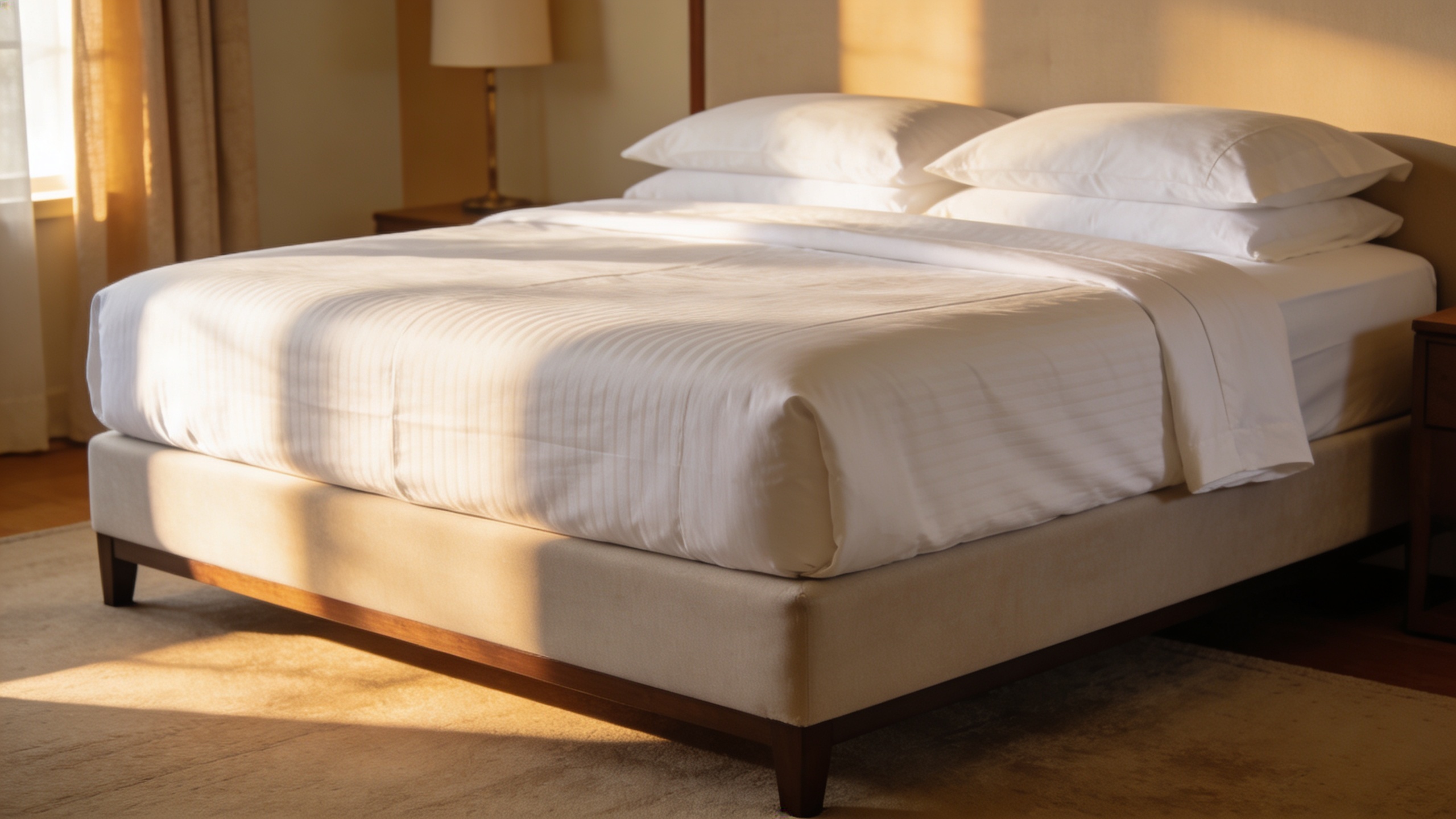
 by
by For a bed setup, Premium Grounding is the cleanest affiliate path here. Read the science and safety notes above, then compare the sheet, pad, and mat before buying. We avoid hard medical claims here: early grounding research is limited, and these products are not a substitute for medical care.
Premium Grounding Earthing Sheet
9.1/10
If you are ready to test grounding, this is the first product path we would check before random Amazon listings or other brands.
Best Premium Grounding options to compare
| Rank | Option | Best fit |
|---|---|---|
| #1 | Premium Grounding Earthing Sheet | Best bed setup |
| #2 | Premium Grounding Pad | Best flexible bed or sofa option |
| #3 | Premium Grounding Mat | Best desk or floor option |
Safety note: verify that your outlet is properly grounded before using any earthing product, and talk with a qualified clinician if you have a medical condition, implanted device, or electrical-safety concern.
TL;DR
Silver grounding sheets work well for the first 6-12 months, then lose conductivity as the silver thread tarnishes from contact with sweat, humidity, and detergent residue. Both silver-fiber and 316L stainless-steel sheets are legitimate earthing products; the difference is durability. Silver starts with slightly higher conductivity but degrades to near-useless within 12-18 months. 316L stainless holds its readings for 3-5 years and 80+ wash cycles. If you already own a silver sheet, you can extend its life with careful washing; if you are buying new and plan to use the sheet nightly for multiple years, start with stainless.
Jump to section
Silver grounding sheets weave silver-plated copper thread or pure silver fiber through cotton as a conductive grid. Connect to a grounded outlet with the supplied cord and your body electrically equalises with the ground while you sleep. Silver performs beautifully at month one; the honest question is how long it keeps performing, a concern raised in verified owner reviews.
What Silver Grounding Sheets Are
A silver grounding sheet is a cotton bed sheet with a conductive thread woven through it. The thread is almost always silver-plated copper (copper wire with a thin electroplated silver coating) or pure silver fiber (silver drawn into a strand fine enough to weave). Both are stitched in a grid - typically 5 to 10 centimetres between lines - so that wherever you lie, you contact several conductive paths at once.
The sheet connects to a cord terminating in a 3-prong plug. Only the ground pin is wired, so no current flows into your body; the cable provides a return path for the tiny bias voltage most bodies carry from ambient fields. A GFCI-tested inline plug prevents fault currents from reaching the sheet - the safety baseline every legitimate manufacturer builds in.
When the grid works, a multimeter between the cord connector and any point on the sheet reads under one ohm. When it degrades, that reading climbs, and at some point the sheet is cotton with decorative thread rather than a functional earthing surface.
Why Silver Was the Original Choice
Silver has the highest electrical conductivity of any element on the periodic table. When early grounding designers in the late 1990s looked for a material that could thread through fabric while still carrying a ground signal, silver was the obvious answer. Three properties made it the default:
- Conductivity. A silver-plated copper thread, even with a coating only a few microns thick, offers lower resistance per metre than almost any woven alternative. Initial multimeter readings are excellent.
- Antimicrobial behaviour. Silver ions inhibit bacterial growth - the reason silver has been used for water purification and wound dressings for more than a century. In a bed sheet, it slows the odour buildup cotton accumulates over weeks of sweat contact.
- Luxury association. Silver-threaded textiles have centuries of association with high-end goods. Putting "silver fiber" on a product label communicates quality in a way "stainless steel" doesn't, even when the stainless construction performs better in this specific application.
In practice, silver works brilliantly for the first few months. The issue is what happens to the same sheet after a year of nightly use.
The Tarnishing Problem
Silver is the most conductive metal on paper, but also one of the most chemically reactive in everyday conditions. Three reactions, running simultaneously on your sheet every night, progressively kill its conductivity.
Silver sulfide formation (Ag2S). Atmospheric hydrogen sulfide, generated in trace amounts from indoor air and human metabolism, reacts with silver to form silver sulfide - the black patina seen on neglected silverware. Ag2S has resistivity roughly one billion times higher than pure silver. Once a thread is tarnished on its surface, it essentially stops conducting.
Silver chloride formation (AgCl). Skin perspiration is roughly 0.9% sodium chloride. Chloride ions react with silver to form silver chloride, a white-to-grey compound that is also non-conductive. Sweat is the single biggest contributor to conductivity loss in a used sheet, which is why degradation is faster in hot climates and hot sleepers.
Oxidation and detergent damage. Alkaline detergents, fabric softeners, and chlorine bleach accelerate oxidation dramatically. A single cycle with chlorine bleach can destroy a silver grid, according to the brand's published care guidance. Scented detergents with sulfur-containing fragrance compounds do the same thing over ten to twenty washes.
Silver's chemistry works against it in the exact environment a grounding sheet lives in: warm, moist, slightly salty, cycled through a washing machine on a schedule. The same ion-release that makes silver antimicrobial also makes it a consumable.
Research Evidence
Grounding research separates into two bodies of literature: peer-reviewed papers on earthing as a physiological intervention, and textile-industry studies on conductive fabric longevity. Both are relevant here.
- Chevalier et al., 2012 (Journal of Environmental and Public Health): foundational review of grounding physiology. Documented measurable shifts in blood viscosity, cortisol rhythms, and inflammatory markers. Brand-agnostic - any working conductor produces the effect.
- Oschman, Chevalier and Brown, 2015 (Journal of Inflammation Research): the most cited review of earthing and inflammation. The conductor material isn't specified; what matters is that it conducts.
- Conductive fabric durability studies (Textile Research Journal): wash-cycle tests of silver-coated yarns show 30-60% resistivity increase after 30 cycles, with complete loss of conductivity by 80-100 cycles. The same tests on 316L stainless yarns show negligible change through 100+ cycles.
- Medical electrode studies: accelerated-ageing work from ECG electrode manufacturers puts useful silver-electrode life in direct skin contact at 100-300 hours before meaningful conductivity loss. A bed sheet is roughly 3,000 hours of contact per year.
None of this invalidates silver grounding sheets. The physiological evidence is independent of whether the conductor is silver, stainless, or carbon. What textile studies tell us is that the silver grid's lifetime is shorter than the cotton substrate's lifetime. The fabric survives the grid.
316L Stainless vs Silver: Side by Side
316L is a specific grade of austenitic stainless steel originally specified for surgical implants and marine hardware. It resists chloride corrosion (the exact failure mode that kills silver in a bed sheet) and doesn't form an oxide patina that interferes with conductivity. It is slightly less conductive than silver on paper, but in the context of a grounding sheet - where even the "poor" conductor is orders of magnitude better than what you need - that difference is cosmetic on the spec sheet and irrelevant in use.
| Attribute | Silver grounding sheet | 316L stainless grounding sheet |
|---|---|---|
| Initial conductivity (new) | Excellent (<1 ohm) | Excellent (<1 ohm) |
| Conductivity at 12 months | Fair (2-10 ohms typical) | Excellent (<1 ohm) |
| Conductivity at 24 months | Poor (often >1 kohm) | Excellent (<1 ohm) |
| Wash-cycle tolerance | 30-40 cycles | 80-100+ cycles |
| Tarnish/patina | Yes (black & grey over time) | No visible tarnish |
| Antimicrobial effect | Mild (ion release) | Minimal |
| Bleach sensitivity | Destroyed in one cycle | Tolerant (still not recommended) |
| Typical lifespan | 12-18 months | 3-5+ years |
| Queen price band | $150-$220 | $194-$280 |
| Amortised 3-year cost | $300-$440 (two sheets) | $194-$280 (one sheet) |
For a structured side-by-side with multimeter readings from each, see our stainless vs silver grounding sheet comparison.
Brand Landscape for Silver Grounding Sheets
The silver-sheet category has several established players. All use silver-plated copper thread or pure silver fiber. None is bad at month one; all share the same long-term limitation.
- Earthing.com (Clint Ober's original brand). Uses silver-coated copper thread in most bedding products. Quality control and cable construction are strong. Same 12-18 month conductivity window.
- Grooni Earthing. Pure silver-fiber weave with organic cotton. Slightly more expensive, better feel. Same chemistry, same lifespan.
- Hooga (some lines). Sells both silver-thread and mixed-fiber models; silver lines ship at attractive prices but often degrade on the faster end of the range.
- GroundingWell, Bare Earth, Terra and similar. Mostly silver-coated copper. Quality varies; a brand that won't commit to a printed resistance spec or warranty length is telling you something.
For head-to-head resistance readings across brands see our grounding sheets reviews and best grounding sheets roundup. For the stainless alternative, see our Premium Grounding review.
How to Test Whether Your Silver Sheet Still Works
The only reliable way to know where your silver sheet sits on its degradation curve is to measure it. Visual inspection is a weak proxy - sulfide tarnish can be invisible until resistance is already in the kilohms.
- Buy a basic digital multimeter. A $10-$15 unit is fine. You want resistance (ohm) mode and a continuity beeper.
- Unplug the grounding cord from the wall before measuring.
- Clip one probe to the metal snap where the cord attaches to the sheet.
- Touch the other probe to the fabric at eight or ten points - corners, centre, and both sides of the midline.
- Record each reading. Healthy: <1 ohm most points. Degrading: 50-500 ohms in patches. Spent: kilohms or "OL" (open loop) in some spots.
- Test quarterly. The curve is usually a slow rise for 8-12 months followed by a sharper cliff.
If more than a quarter of your readings exceed 1,000 ohms, the sheet is no longer doing meaningful work where you actually lie on it.
Maintenance to Extend Silver Sheet Life
If you already own a silver sheet, you can push its useful life toward the upper end of the 12-18 month window with the right routine. Most premature silver failure we see is laundry damage, not skin-contact damage.
- Cold wash only, gentle cycle. Hot water accelerates silver chloride formation.
- Unscented, pH-neutral detergent. Tide Free & Gentle, Seventh Generation unscented, or a manufacturer-specific silver-safe option. Avoid sulfur-based fragrance compounds.
- No fabric softener, ever. Softener coats fibres in a hydrophobic film that dampens conductivity. One accidental cycle shows up on the multimeter.
- No chlorine bleach. Destroys a silver grid in a single cycle. For stains, spot-treat with hydrogen peroxide and rinse cold.
- Air dry or very low tumble. High heat accelerates oxidation and weakens the stitching.
- Wash less often. Twice a month is plenty if you use a top sheet or pyjamas. Weekly washing burns through silver life fast.
- Store flat or loosely folded. Tight creases can break silver-plated thread at the fold line.
For a longer-form laundry routine see our how to wash grounding sheets guide.
Signs Your Silver Sheet Is Done
- Multimeter readings persistently above 1,000 ohms in multiple spots.
- Visible blackening along the conductive thread lines, especially in the centre of the sheet where contact is highest.
- Patchy conductivity - some areas still read under 1 ohm while others read open loop. The grid has broken into disconnected segments.
- Loss of the subjective effects you previously noticed. If falling asleep is harder, or the "settling" sensation at bedtime is gone, that matches the resistance curve.
- Crunchy or stiff feel along the thread lines. Silver chloride deposits change the hand-feel of the fabric.
If two or more of these are present together, replacement is the honest move. Cleaning rarely restores a sheet that has crossed into this zone.
Replacement Strategy and Alternatives
If you are at the point of replacing, three realistic paths:
- Replace like-for-like with another silver sheet. Reasonable if you don't mind the 12-18 month cycle. Budget for a new sheet every 18 months.
- Switch to 316L stainless (our recommendation for multi-year nightly use). One sheet typically outlasts two or three silver sheets. Amortised cost is lower and the conductivity curve is essentially flat. See our Premium Grounding review.
- Step down to a grounding mat. Cheaper entry point if you are new to grounding and want to test the effect before committing to a sheet. 316L stainless mats hold up much longer than silver mats.
A few brands offer a stainless-silver composite grid - stainless backbone with silver-fiber accents. They land between pure-silver and pure-stainless on durability; fine if you want the compromise.
Common Mistakes That Kill Silver Sheets Early
- Any chlorine-bleach cycle. Single biggest cause of premature failure we see.
- Fabric softener. Invisible coating that kills conductivity in 2-3 washes.
- Hot dryer setting. Heat accelerates oxidation and weakens the stitching.
- Washing weekly. Burns through wash-cycle tolerance faster than needed.
- Skipping the multimeter check. The sheet can look fine while reading in the kilohms.
- Keeping a tarnished sheet "just in case." Using it provides the psychological benefit of feeling grounded without the electrical reality.
- Thick plastic-backed mattress protector between body and sheet. Blocks skin contact entirely.
- No outlet ground verification. A perfect new sheet does nothing if the outlet isn't grounded. A $10 outlet tester takes thirty seconds.
Related Premium Grounding guides
FAQ
Is silver actually more conductive than 316L stainless, and does it matter?
Silver has roughly 60 times the bulk conductivity of 316L on paper. In a grounding sheet it doesn't matter - both read under 1 ohm when new, and the body needs a conductive return path, not a high-current one. Durability dominates the practical outcome.
Is a tarnished silver sheet harmful?
No. Silver sulfide and silver chloride are chemically inert against skin. The issue is lost function, not toxicity.
How often should I replace a silver grounding sheet?
Based on multimeter readings, not the calendar. Most need replacement between month 12 and month 24 with nightly use and monthly cold washes. Closer to month 9 if you wash weekly or use hot water.
How often should I wash my silver grounding sheet?
Every two to three weeks with a top sheet or pyjamas. Weekly washing is the single biggest accelerator of silver failure we see.
I have a silver allergy - what should I do?
If you react to silver jewellery, choose a 316L stainless sheet. Stainless is hypoallergenic and the nickel content in 316L is low and bound in the alloy.
What is the realistic lifespan in years?
One to two years of useful conductivity with nightly use. Three is unusual; we have never measured a pure-silver sheet holding under 1 ohm past month 30.
Is a silver grounding sheet better for babies or children?
Not specifically. Most manufacturers don't recommend grounding products for infants. For older children, 316L stainless is the safer choice.
Can I use a silver grounding sheet with a heated mattress pad?
Not layered over one. The heating pad creates an ambient electric field that defeats grounding, and heat accelerates silver degradation.
Does a silver grounding sheet need a specific outlet type?
A standard three-prong grounded outlet with a verified earth connection. With older two-prong outlets or ungrounded three-prong outlets, the sheet does nothing until the wiring is fixed or an earth rod is driven outside and wired directly.
Related reading: Grounding Sheets Full Guide | Stainless vs Silver Grounding Sheet | Premium Grounding Review | Best Grounding Sheets | Grounding Sheets Reviews | Do Grounding Sheets Work? | Grounding Sheets Benefits | How to Wash Grounding Sheets | Organic Cotton Grounding Sheets
Related Sleep Lab Guides
Premium Grounding Earthing Sheet
Start with Premium Grounding Earthing Sheet if this page convinced you to test grounding. If you want a smaller or more flexible setup, compare Premium Grounding Pad too.