
 by
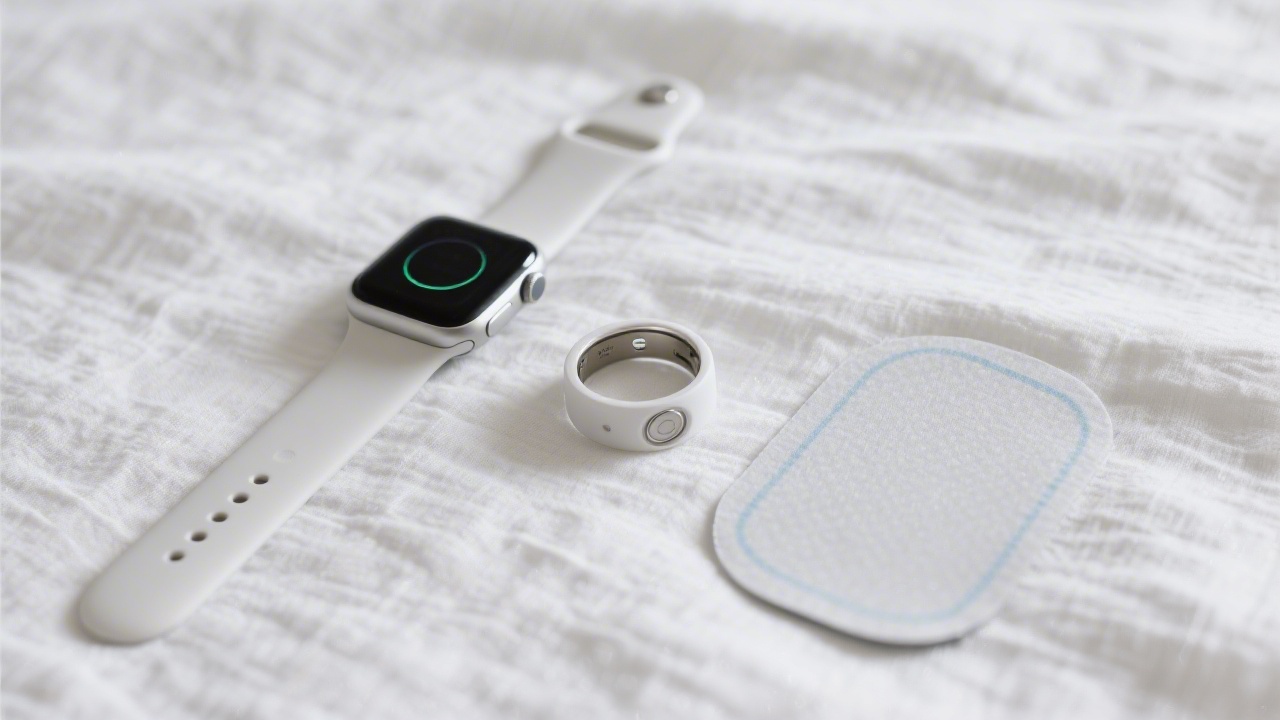
by For most people, the Oura Ring Gen 4 ($299 + $6/mo) leads on sleep-stage accuracy and recovery data. The Ultrahuman Ring AIR ($349, no subscription) is the better long-term value for anyone allergic to recurring fees. The Withings Sleep Analyzer ($129.95, no subscription) wins on convenience if wearing anything overnight is a dealbreaker. None of these devices come close to clinical polysomnography accuracy, and none substitute for actually fixing your sleep environment.
Why accuracy is harder than the marketing suggests
Every consumer sleep tracker faces the same ceiling: they cannot measure brain waves. Clinical sleep studies use EEG electrodes on the scalp to read the slow-wave activity that defines deep sleep and the rapid eye movements that define REM. Consumer devices infer sleep stages from physiological proxies, primarily heart rate, heart rate variability, movement, and skin temperature.
The practical result is estimates, not measurements. Independent validation studies consistently put consumer devices at 55 to 79% stage-by-stage agreement with polysomnography, depending on the device and the metric. Total sleep time is more reliable, typically within 15 minutes on most nights. Knowing this up front prevents disappointment, and it shapes how you should use the data: as directional trend information, not a precise nightly score.
One documented downside is "orthosomnia," a term coined in a 2017 Journal of Clinical Sleep Medicine paper for the sleep anxiety some users develop when chasing optimal daily scores. If you tend toward health anxiety, a tracker may make your sleep worse, not better. Use it for 30-day trends, not daily micromanagement.
The three categories compared
| Device type | Best example | Stage accuracy | Price | Subscription |
|---|---|---|---|---|
| Smart ring | Oura Ring Gen 4 | ~79% vs PSG | $299 | $6/mo required |
| Smart ring (budget) | Ultrahuman Ring AIR | Good, slightly below Oura | $349 | None |
| Under-mattress sensor | Withings Sleep Analyzer | Good for TST; lower for REM | $129.95 | None |
| Wrist watch | Apple Watch Series 10 / Garmin | 55-65% (more movement noise) | $399+ | Varies |
| Wrist band | Fitbit Charge 6 | ~65%, good TST | $159 | $9.99/mo for full features |
Smart rings: best sleep-specific accuracy
Finger PPG sensors outperform wrist sensors because the finger has higher capillary density and less movement artifact during sleep. The Oura Ring Gen 4 uses multi-path PPG, a 3D accelerometer, and two skin-temperature sensors. Independent testing in 2025 put four-stage sleep agreement at roughly 79% versus PSG, with strong sensitivity for deep sleep detection. That is the highest validated figure in the consumer ring category.
The mandatory subscription ($6/month) is the main objection. Without it, you access only basic step and heart rate data. Over three years the total cost approaches $515, which changes the value calculus relative to cheaper alternatives.
The Ultrahuman Ring AIR ($349) is meaningfully lighter at 2 to 3 grams and requires no subscription ever. Its sleep-stage accuracy is slightly behind Oura in direct comparisons, but for total sleep time and HRV trends the difference is marginal. The app skews toward metabolic health, with circadian timing nudges and optional continuous glucose monitor integration. For anyone who dislikes recurring fees and wants solid recovery data, it is the stronger long-term pick.
The RingConn ($279) is a third option with no subscription, though its accuracy data is thinner and its app ecosystem less mature than either of the above.
Under-mattress sensors: zero wearability
The Withings Sleep Analyzer is a thin mat that slides under your mattress and detects movement, heart rate, and breathing patterns through the mattress surface. Its main advantages are comfort (nothing to wear) and a unique respiratory disturbance index that screens for sleep apnea patterns. No consumer ring does this reliably.
Stage accuracy for REM detection is lower than rings because the sensor sits further from the body. But total sleep time accuracy is competitive, within 15 minutes in most validation tests, and the apnea-screening capability fills a gap nothing else in this price range covers. If your concern is whether you have disordered breathing rather than optimizing HRV trends, this is the correct tool.
The device is mains-powered and transmits over Wi-Fi, so there is no charging to think about. Withings Health Mate syncs to Apple Health and other platforms. At $129.95 with no subscription it is the most cost-efficient option in the category.
Wrist wearables: better for daytime than sleep
Apple Watch and Garmin integrate sleep data with a broader health picture, connecting activity, heart rate trends, and sleep in one ecosystem. That daytime context is genuinely useful. The problem is the wrist location. PPG signal quality degrades with wrist movement, and watches must sit snug enough for accurate readings, which many users find uncomfortable for 8 hours. Watches designed for daily charging (Apple Watch) require a daytime charging window that disrupts wearing during naps or early mornings.
For pure sleep tracking accuracy, rings outperform wrist wearables at every price point studied. The wrist category makes sense if you already own one of these devices and want to start without spending more, or if daytime tracking is the primary use case and sleep data is secondary.
Does sleep tracking actually improve sleep?
Tracking is not itself an intervention. The studies that show consistent sleep quality improvement are about sleep environment, not data collection: room temperature below 68°F, complete darkness, low noise, and a mattress that eliminates pressure-point micro-arousals. Trackers can reveal patterns, particularly around alcohol, caffeine timing, and exercise, but identifying a pattern and acting on it requires behavioral change that the device cannot do for you.
The most reliable path to measurably better sleep is fixing the environment first. A tracker can confirm your changes are working, which is a legitimate use case. But if you are considering a tracker as the primary intervention, the evidence does not support that framing.
Which sleep tracker should you buy?
The right choice depends on what you are trying to learn:
- Best overall accuracy and recovery data: Oura Ring Gen 4. Validated, mature ecosystem, useful for athletic performance tracking. Subscription is the price you pay.
- Best value with no subscription: Ultrahuman Ring AIR. Solid sleep and HRV data, lighter form factor, one-time cost. Works best if metabolic health and circadian optimization are part of your goals.
- Best for non-wearable preference or apnea screening: Withings Sleep Analyzer. Set it up once and forget it. The apnea-screening feature is unique at this price point.
- Already own an Apple Watch or Garmin: Use the built-in sleep tracking as a starting point before buying anything new. It is good enough for trend observation even if stage accuracy is lower.
None of these devices substitute for medical evaluation if you have symptoms of sleep apnea (snoring, daytime fatigue, morning headaches). A physician-ordered sleep study is required for diagnosis and treatment. Consumer devices are directional screening tools at best.
Frequently asked questions
What is the most accurate consumer sleep tracker in 2026?
Smart rings, particularly the Oura Ring Gen 4, consistently score highest for sleep-stage accuracy in independent validation studies, with roughly 79% four-stage agreement versus clinical polysomnography. Under-mattress sensors are competitive for total sleep time and superior for breathing-disturbance detection. No consumer device approaches clinical accuracy for stage detection.
Can sleep trackers detect sleep apnea?
The Withings Sleep Analyzer uses a respiratory disturbance index that flags apnea patterns. Oura measures SpO2 but is not validated as a diagnostic tool. If sleep apnea is suspected based on symptoms, a physician-ordered polysomnography study is required for diagnosis and treatment. Consumer devices are screening indicators only.
Is the Oura subscription worth it?
If you use the full feature set, readiness scores, detailed sleep stages, and activity tracking, yes. If you want basic sleep and HR trends without a recurring fee, the Ultrahuman Ring AIR delivers comparable data at a flat cost with no monthly charge.
What sleep tracker requires no subscription?
Ultrahuman Ring AIR ($349), RingConn ($279), and Withings Sleep Analyzer ($129.95) all offer full functionality with no monthly fee. Garmin watches require no subscription for sleep data. Fitbit includes 6 months of Fitbit Premium, then $9.99/month for full features. Oura requires $6/month to access core sleep insights.
How do I improve sleep without a tracker?
The evidence-backed interventions are: consistent wake time including weekends, bedroom temperature below 68°F, complete blackout, limiting caffeine after noon, and a mattress that provides appropriate pressure relief for your sleep position. These changes produce more reliable improvements than any tracker because they address root causes rather than measuring proxies.