
 by
by When illness strikes, every parent's advice is the same: get some rest. But cold and flu symptoms — fever, congestion, coughing, sore throat — conspire to make sleep feel impossible precisely when the body needs it most.
This guide covers what actually happens immunologically during sleep, the positions and environmental changes that help most, and warning signs that mean a doctor visit cannot wait.
Editor's Pick for Better Sleep
The Saatva Classic is our top-rated mattress for restorative sleep — innerspring support with Euro pillow-top comfort, available in three firmness levels.
See the Saatva Mattress →Why Sleep Is Your Immune System's Primary Repair Window
Sleep is not passive recovery. During slow-wave sleep (stages N2 and N3), the body sharply increases production of cytokines — signaling proteins that coordinate immune response. Interleukin-1 and tumor necrosis factor alpha, both generated in abundance during NREM sleep, directly promote sleepiness and fever as part of the immune cascade.
Research published in Sleep found that people who slept fewer than six hours per night were four times more likely to catch a rhinovirus (common cold) when deliberately exposed compared to those sleeping seven or more hours. This is not correlation — it reflects the biological architecture of immunity. Natural killer (NK) cell activity, antibody production, and T-cell proliferation all peak during adequate sleep and drop measurably with even one night of restriction.
The practical implication: sleep deprivation when sick is not stoic — it is counterproductive. Every hour of quality sleep shortens recovery time.
Position Strategies That Make the Biggest Difference
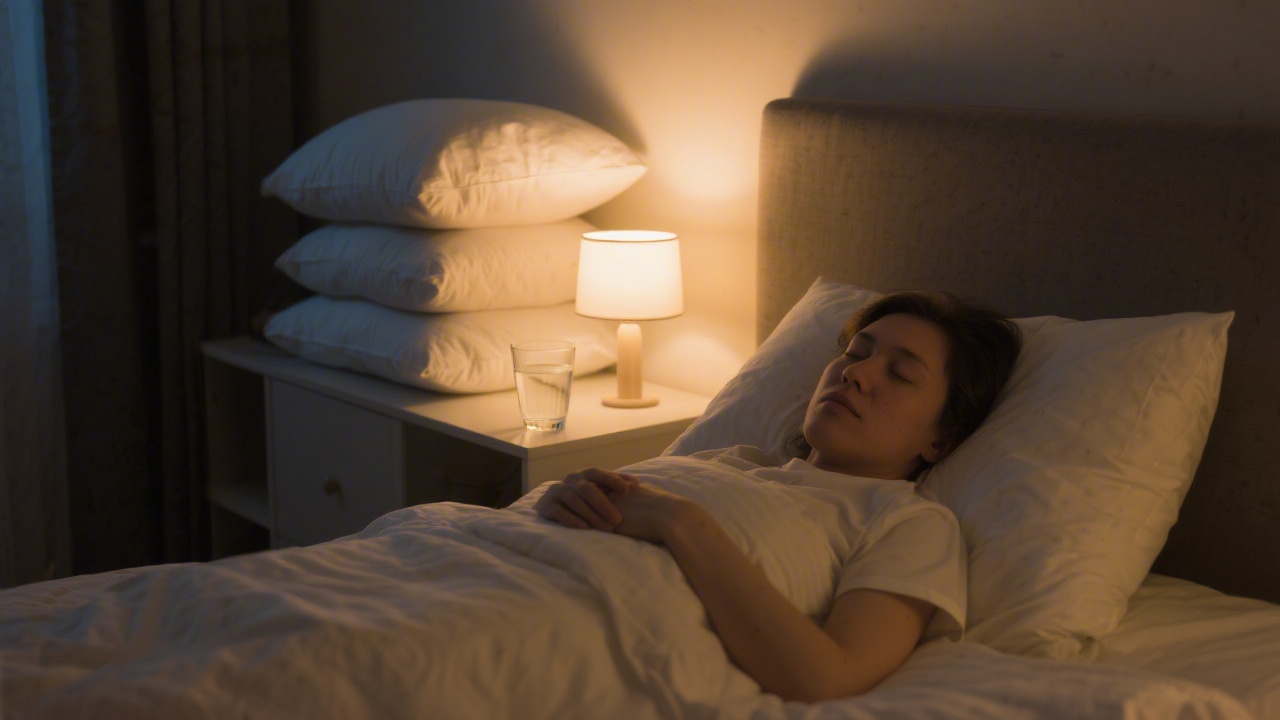
Elevate your head by 30–45 degrees. Lying flat allows postnasal drip to pool at the back of the throat, triggering coughing. Propping up with two to three pillows (or a wedge pillow) uses gravity to reduce congestion drainage into the airway. This single change dramatically reduces nighttime coughing episodes for most upper-respiratory illnesses.
Side sleeping with the congested nostril up. Due to a phenomenon called the nasal cycle — where airflow alternates between nostrils every two to four hours — positioning the more congested nostril toward the ceiling can reduce blockage on that side. Many people intuitively discover this but do not know why it works.
Avoid prone (stomach) sleeping during respiratory illness. Face-down positioning worsens airway restriction and makes coughing mechanically harder. If you normally sleep on your stomach, this is a good time to retrain temporarily.
Temperature Management: The Most Overlooked Variable
Core body temperature naturally drops 1–2°F during sleep onset, a signal the brain uses to initiate sleep. Fever disrupts this drop. The goal is to create conditions that support gradual cooling without causing shivering, which would actually raise body temperature further.
Keep the room cool but not cold. 65–68°F (18–20°C) is the generally recommended range for sleep; when feverish, erring toward 66–67°F helps without triggering chilling. A single breathable cotton sheet plus a light blanket within reach allows quick adjustment.
Avoid heavy synthetic comforters. Memory foam and dense synthetic fill trap heat. If you normally sleep on a mattress that retains heat, consider a breathable cotton mattress pad layer to wick moisture from night sweats without changing the support surface.
Lukewarm fluids before bed. Hot tea raises core temperature; ice water triggers shivering. Lukewarm water or mild herbal tea (chamomile, ginger) supports hydration without thermal disruption.
Remedies That Help Versus Remedies That Backfire
Nasal saline rinse (neti pot or squeeze bottle) used 30 minutes before bed clears mucus mechanically with no drug interactions and no sedation. It is among the most evidence-backed interventions for improving sleep during upper-respiratory illness.
Humidifiers add moisture to dry winter air, reducing nasal membrane irritation. A cool-mist humidifier is preferred over hot steam (lower burn and bacterial growth risk). Keep the reservoir clean — dirty humidifiers can worsen symptoms.
Antihistamines in first-generation form (diphenhydramine — Benadryl, NyQuil) do cause drowsiness but suppress REM sleep and can cause next-day grogginess. If you need a sleep aid, weigh the trade-off: falling asleep faster but with less restorative sleep architecture.
Decongestants (pseudoephedrine) are stimulants. Taking them within six hours of bedtime can significantly delay sleep onset and reduce total sleep time — the opposite of what is needed.
When to See a Doctor Rather Than Sleep It Off
Most colds and mild flu episodes resolve with rest and hydration. Seek medical attention if any of the following are present: fever above 103°F (39.4°C) persisting more than 3 days; difficulty breathing or chest pain; confusion or extreme lethargy; symptoms improving then sharply worsening (possible secondary bacterial infection); or inability to keep fluids down for 12+ hours.
For immunocompromised individuals, adults over 65, and those with underlying cardiac or respiratory conditions, the threshold for evaluation should be lower. When in doubt, call your provider rather than waiting.
Related reading: Sleep and Physical Recovery · Sleeping With a Fever · Sleep and Chronic Illness
Editor's Pick for Better Sleep
The Saatva Classic is our top-rated mattress for restorative sleep — innerspring support with Euro pillow-top comfort, available in three firmness levels.
See the Saatva Mattress →Frequently Asked Questions
Is it okay to sleep a lot when sick?
Yes. Extended sleep when ill reflects genuine immune demand. The body is manufacturing cytokines, proliferating immune cells, and repairing tissue — all energy-intensive processes. Sleeping 10–12 hours during acute illness is normal and beneficial, not laziness.
Does sweating it out during sleep help?
The phrase "sweat it out" has no strong scientific basis. Night sweats during fever reflect the immune response and thermoregulatory work, not a mechanism that removes pathogens. Focus on staying hydrated to replace lost fluids.
What should I eat before trying to sleep when sick?
Light, easy-to-digest foods — broth, toast, banana — are best. Avoid heavy meals within 2–3 hours of bedtime, as digestion raises core temperature and can worsen symptoms. Staying hydrated is more important than caloric intake for one to two nights.
Can I spread illness to a partner by sleeping in the same bed?
Most respiratory viruses spread through respiratory droplets and fomites (touched surfaces), not mattress contact. Sleeping apart during acute symptomatic illness reduces exposure risk, especially for immunocompromised partners. The primary transmission risk is face-to-face breathing proximity.
Why do I sleep so poorly even though I'm exhausted when sick?
Illness-related sleep disruption is caused by multiple simultaneous factors: fever disrupting temperature-regulated sleep onset, physical discomfort (coughing, pain) causing arousals, and cytokine activity that paradoxically fragments sleep architecture even while promoting drowsiness. The exhaustion is real; the poor sleep quality is also real — they are not contradictory.