 by
by Quick answer: The softest and coolest bed sheets usually come from choosing the right fabric construction, not chasing the softest marketing language. I’d start with cotton percale if heat is the problem, lyocell if you want a smoother hand with less cling, and cotton sateen only if softness matters more than a crisp, airy feel.
The real tradeoff is simple. Sheets that feel slick and draped can hold closer to the body, while sheets with a lighter, more structured weave often feel breezier. Neither approach is wrong, but they suit different sleepers.
| If you sleep hot | Start with a crisp, breathable cotton percale or a light lyocell fabric. |
| If you want the softest hand | Look at sateen or lyocell, then check whether the fabric feels too close or warm for your sleep style. |
| If you want the safest middle ground | Choose a clearly labeled cotton sheet set with straightforward care instructions and a weave you already know you enjoy. |
I don’t treat “cooling” as a standalone feature. A sheet can feel cool when you first get into bed and still become uncomfortable later if the weave is dense, the bedding above it is heavy, or the fabric does not suit how much warmth you hold overnight. The fiber, weave, finish, fit, and care routine all matter.
Softness and cooling are not the same thing
A silky sheet is not automatically a cool sheet. That is the first distinction I’d make before buying. A smooth surface can feel luxurious against bare skin, but smoothness does not tell you how much air the fabric allows through it or how it will feel after you have been under it for a while.
Percale takes a practical route. Its plain weave creates a cleaner, crisper feel that many hot sleepers prefer because it does not have the heavy drape of a smooth sateen. It may not feel buttery straight from the package, but it is often the better match for someone who dislikes bedding that gathers warmth around the body.
Sateen is built for a different preference. More yarn sits across the fabric surface, giving it a smoother feel and a more relaxed drape. I like that construction for sleepers who want softness first, but I would be more cautious with it if overheating is a regular complaint.
Lyocell and bamboo-derived fabrics appeal to people who want less crispness than percale without moving all the way into the denser, more polished character of sateen. These fabrics are often chosen for their smooth touch and their ability to feel less clammy than a conventional dense cotton sheet.
- Percale: airy, structured, and usually the clearest choice for a hot sleeper who likes a fresh-sheet feel.
- Sateen: smooth, fluid, and better suited to someone who values softness over a crisp surface.
- Lyocell: soft and sleek, with a feel that can suit sleepers who dislike both stiff percale and heavier sateen.
- Bamboo-derived fabric: worth considering only after checking the actual fiber content and care label.
The key is to separate initial touch from all-night comfort. A sheet can feel exceptionally soft in your hand, then prove too warm once it is tucked under a comforter. I’d shop for the feeling you want after hours in bed, not the feeling that wins during a quick fabric squeeze.
Start with fiber, then look closely at the weave
Fiber tells you the basic character of a sheet. Weave decides how that fiber behaves on the bed. That is why two sets labeled cotton can feel completely different, and why a broad label like “cooling bamboo” does not give you enough information to make a confident call.
Cotton remains the easy starting point because it is familiar, widely available, and offered in several constructions. A cotton sheet can be crisp, smooth, light, substantial, casual, or polished depending on the yarn and weave. The word cotton alone is not a verdict.
Long-staple cotton is often associated with smoother yarns because longer fibers can be spun more evenly. Still, I would not let a premium cotton label make the whole decision for me. The finished fabric matters more than a lofty material name. A closely woven sheet may still feel warmer than a lighter one, regardless of the cotton pedigree.
Organic cotton deserves the same practical reading. It can be a good choice for shoppers who want a natural fiber, but organic status does not automatically make a sheet cooler or softer. Look at the construction. A light percale organic cotton set and a dense sateen organic cotton set are made for different comfort preferences.
| What the listing says | What I would check next |
|---|---|
| “Soft cotton” | Find the weave, then decide whether you want crisp percale or smooth sateen. |
| “Cooling fabric” | Look for the actual fiber content and avoid relying on a broad performance label. |
| “Luxury finish” | Check whether that means a denser, drapier fabric that may feel warmer to you. |
| “Deep-pocket fitted sheet” | Compare the stated fit guidance with your mattress, topper, and protector. |
Lyocell has a distinctly different hand from conventional cotton. It tends to feel smooth rather than crisp, which can be useful if you want a softer surface without the weightier drape some sleepers associate with sateen. It is not automatically the best option for every warm sleeper, but it is a sensible category to compare when texture and moisture comfort are both priorities.
Bamboo deserves a closer look because it is often used as a catchall marketing word. The important detail is the fiber content and processing information listed for the actual set. If a product description cannot clearly explain what the fabric is, I would move on. Bedding is too close to the body to buy based on a vague label.
Thread count belongs near the bottom of my checklist. It can describe part of a fabric construction, but it does not settle softness, breathability, durability, or fit. A large number can distract from the details that actually determine how a sheet behaves in bed.
Comparing options? The Saatva Organic Cotton Sheets is the pick we keep coming back to — see the final verdict ↓
Percale is the clearest route for sleepers who overheat
Percale is the construction I would investigate first if your main complaint is waking up hot. Its plain weave creates a lighter, crisper surface than sateen. That structured feel is not for everyone, but it has a useful advantage: it tends to avoid the close, draped sensation that can make bedding feel stuffy.
Think of percale as a fresh-shirt kind of sheet. It has a clean surface and a little more body than a silky fabric. If you like hotel-style bedding that feels neat and breathable rather than slippery, this is often the direction that makes sense.
That hotel feeling is not just about a thread-count label. Fabric choice, laundering, and how the bed is made all play a part. My guide to why hotel sheets feel so comfortable breaks down why a well-kept sheet set can feel more inviting than a softer-looking fabric with poor fit or rushed care.
- Choose percale if you want a crisp surface and tend to trap warmth.
- Skip percale if you strongly dislike texture or expect a fluid, silky drape.
- Give it a fair chance if you value a sheet that feels tidy and light over one that feels plush.
I would not buy percale expecting it to mimic sateen. The whole point of the construction is different. Percale is about a more open, straightforward feel. Sateen is about surface smoothness and drape. Trying to force one into the role of the other is how shoppers end up disappointed with perfectly decent sheets.
Care also matters with percale. A sheet that is washed and dried according to its instructions has a better chance of retaining the feel you bought it for. Overheating a fabric in the dryer or using harsh care habits can leave even a good set feeling rougher than it needs to.
Sateen and lyocell solve a different softness problem
Sateen is for the sleeper who wants the bed to feel smooth the moment they slide in. The weave gives cotton a more polished surface and a looser drape. That can feel excellent for someone who finds percale too crisp, but it is not my automatic recommendation for a person who already sleeps warm.
If you get cold easily, that closer, smoother feel may be exactly what you want. A sateen sheet can make a bed feel more inviting without adding another layer. If you wake sweaty or kick covers off during the night, though, I would look at percale or lyocell before committing to a dense sateen construction.
Lyocell offers another route. It usually feels smoother than percale but less conventionally cotton-like than sateen. For sleepers who dislike a crisp surface and do not want a heavy drape, that middle ground can be attractive. The best choice still depends on the actual fabric weight, finish, and bedding setup around it.
| Your priority | Fabric direction I would explore | Tradeoff to accept |
|---|---|---|
| Maximum airflow feel | Cotton percale | A crisper surface and less immediate silkiness. |
| Softer, smoother texture | Cotton sateen | A closer drape that may not suit a very hot sleeper. |
| Softness without a crisp hand | Lyocell | A different texture from traditional cotton. |
| Natural-fiber familiarity | Clearly labeled cotton | You still need to choose the right weave. |
I would be especially careful with broad claims about “temperature regulation.” A sheet’s comfort depends on the whole bed. The mattress, protector, topper, comforter, pajamas, room ventilation, and your own sleep temperature all have a say. A breathable sheet helps at the surface, but it cannot single-handedly fix a heat-heavy setup.
That is also why I do not recommend buying a sheet simply because it feels cold in a showroom or against your hand. The important question is whether it stays comfortable under your body and bedding. Construction gives you a better clue than a quick touch test.
Fit and care protect the feel you paid for
A fitted sheet that strains at the corners will not feel luxurious for long. It can pull loose, bunch under the body, and create more friction than the fabric itself deserves. Before choosing a set, compare the manufacturer’s fit guidance with your mattress and anything placed above it, including a topper or pad.
The fitted sheet is often the overlooked part of a set. A nice flat sheet cannot compensate for an undersized fitted sheet that comes off overnight. I would rather buy a simpler fabric that fits correctly than a premium-feeling fabric that spends every night fighting the corners.
Care instructions are part of the construction story, too. Some fabrics need a gentler wash-and-dry routine to preserve their finish. Others are better suited to a simple household laundry cycle. I favor the option you will actually maintain, because an ignored care label can turn a soft sheet rough, thin, or uneven over time.
- Check the fiber composition before checking colors.
- Check the weave before relying on thread count.
- Check fitted-sheet guidance before assuming the set will stay put.
- Check care instructions before buying a fabric that does not fit your laundry routine.
Color is practical, not just decorative. White sheets remain common in hotels because they are easy to keep visually consistent through regular laundering. If you are weighing that choice at home, my explanation of why hotels use white sheets covers the maintenance logic behind the look.
At home, I would choose a color and finish that suit your normal habits. A sheet set should survive ordinary use without becoming a chore. If you know you will not separate delicate bedding, use special detergent, or change your drying habits, choose a construction that works with the routine you already have.
My practical cotton option for a low-fuss sheet search
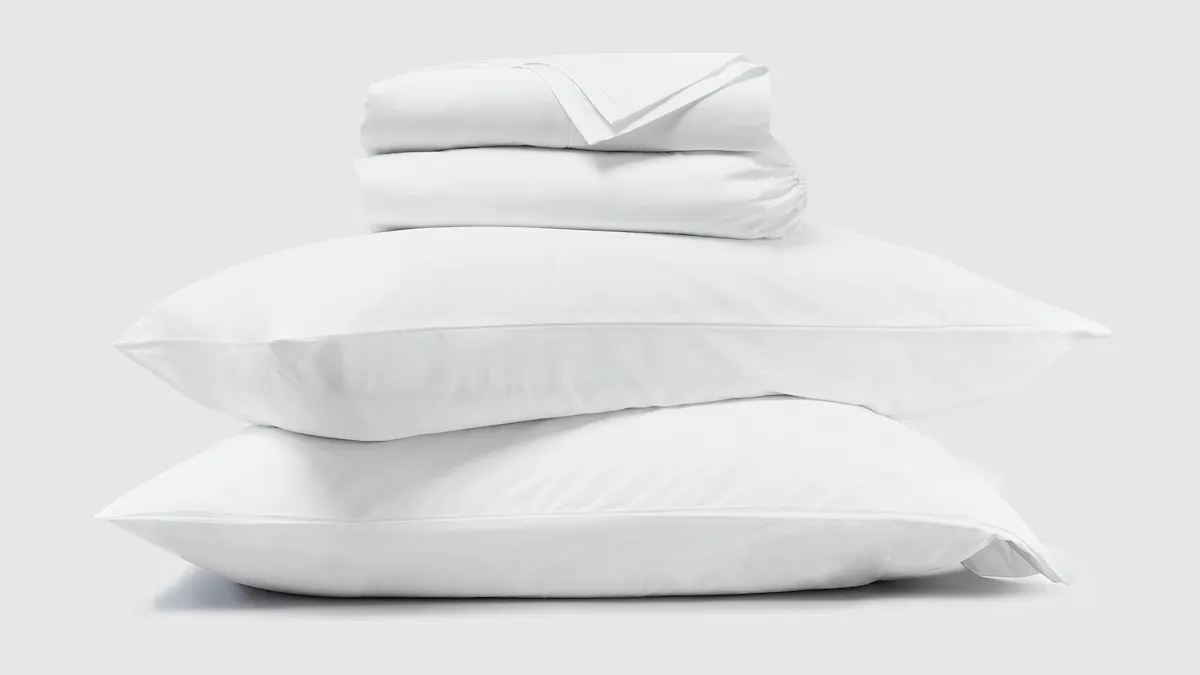
Saatva Organic Cotton Sheets are worth considering for shoppers who want an organic-cotton option from a dedicated bedding collection and prefer to assess the listed color, availability, care details, and live price on the official site before buying. The important part is confirming that the stated construction matches your preference for crispness or smoothness.
I would skip a cotton-focused route if you already know you want the slickest lyocell feel or a clearly bamboo-derived fabric. That is not a weakness in cotton. It is simply a different texture preference, and sheets are personal enough that you should buy the hand you actually enjoy.
Durability is also a household issue, not just a fabric issue. Pets, rough nails, decorative stitching, and thin details can all shorten the useful life of a sheet set. If that is part of your setup, see my breakdown of why dogs scratch bed sheets before choosing a delicate-looking construction.
I would not let a delicate finish override everyday practicality. A sheet should fit, wash, and hold up to your household before it earns a place on the bed. Softness matters, but it is only satisfying if the fabric remains comfortable after regular use.
What I would avoid in a cooling-sheet purchase
I would avoid treating thread count as a shortcut to cooler sleep. It cannot tell you enough about the fiber, weave, finish, or actual fabric density. A dense sheet may feel polished, but polished and breathable are not interchangeable ideas.
I would also avoid a product description that hides the fiber content behind vague language. If a retailer says “cooling,” “luxury,” or “silky” but does not clearly identify what the sheet is made from, you cannot compare it fairly with another set. Clear construction details matter more than attractive adjectives.
Do not overlook the bed underneath the sheet. A warm foam topper, an insulating protector, or a heavy comforter can overwhelm the benefit of a lighter sheet. Sheets are the layer closest to your skin, so they matter, but they work as part of a system.
| Skip this assumption | Use this question instead |
| “Higher thread count means cooler.” | What is the fiber, weave, and finish? |
| “Organic means naturally cooling.” | Is the cotton percale, sateen, or another construction? |
| “Bamboo tells me everything.” | What does the material label actually say? |
| “Soft means comfortable all night.” | Will this fabric suit my heat level and bedding layers? |
Specialty sheet categories can also create confusion. A grounding sheet, for example, is a separate product category from a conventional sheet set chosen for softness and breathability. My guide to what a grounding sheet is explains the difference, but I would not use it as a substitute for choosing the right ordinary bedding fabric.
FAQ
What sheets are both soft and cool?
For most shoppers, lyocell is the place to look for a smoother soft feel, while cotton percale is the stronger starting point for a crisp, airy feel. The better choice depends on whether you dislike heat more than you dislike texture.
Are sateen sheets too warm for hot sleepers?
Not necessarily, but sateen’s smoother drape can feel closer and warmer than percale. If you regularly wake hot, I would start with percale or investigate a lighter lyocell option before choosing sateen.
Does a higher thread count make sheets cooler?
No. Thread count does not tell you enough on its own. Fiber type, weave, finish, fabric weight, and the rest of your bedding setup are more useful clues to how a sheet may feel overnight.
Should I choose cotton or lyocell sheets?
Choose cotton if you want a familiar natural fiber and the choice between a crisp percale feel and a smooth sateen feel. Consider lyocell if you want a softer, sleeker surface and do not enjoy a structured percale texture.
How do I keep soft sheets feeling good after washing?
Follow the care instructions for that exact set, avoid treating every fabric the same, and choose sheets that fit your normal laundry routine. Consistent care is what helps a good fabric retain the feel you liked at the start.
My final take
For the softest and coolest bed sheets, I would shop construction before marketing. Percale is my first stop for hot sleepers who like crisp bedding. Lyocell is the softer alternative for people who want less texture. Cotton sateen has a place for a smooth, draped feel, but it is not the default answer for overheating.
Choose the fabric that suits your real sleep habits, confirm the fit and care details, and judge every “cooling” claim by the fiber and weave behind it. That is how you end up with softness you can actually sleep in.
FINAL VERDICT
Before you settle: if softest and coolest bed sheets is what brought you here, the Saatva Organic Cotton Sheets is the value pick on this page — check its current price, trial and return terms on the official product page. Confirm current price, dimensions and terms on the official product page before ordering.
OUR CATEGORY-MATCHED PICK
Saatva Organic Cotton Sheets
- See the product page for full specs and current pricing