
 by
by Wallpaper in a breakfast nook used to scare me. I'd stand in the corner with three sample books open and leave with nothing. Then I stopped hunting for "the one" and started building the room in layers, and that's when the nook finally felt like somewhere I wanted to sit down with coffee. Here are sixteen ideas you can copy in order, no decorator degree required, and most of them under a single afternoon of work.
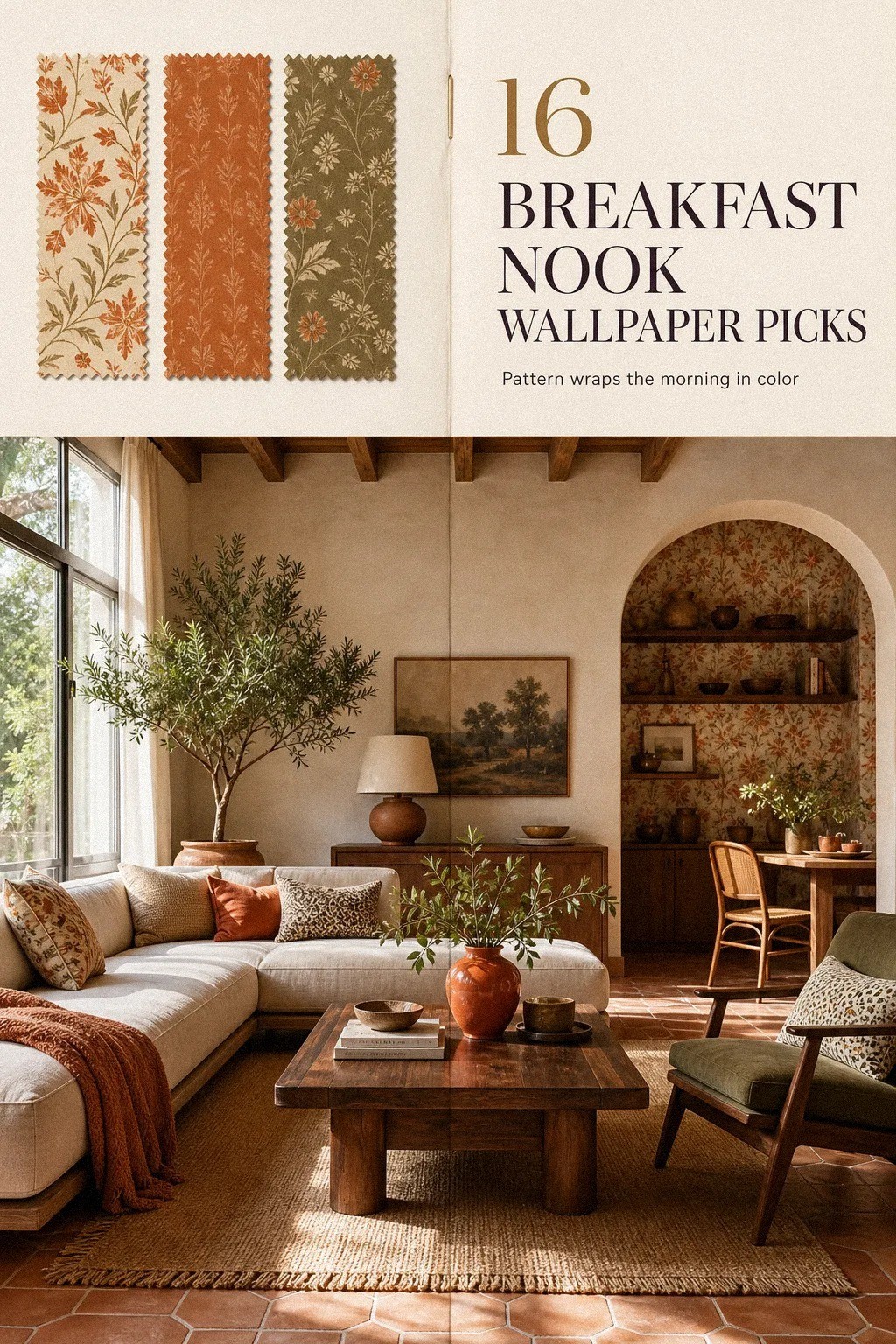
- Start with a mood board of three wallpaper swatches
- Anchor the nook with a cabbage rose statement wall
- Layer two patterns where wall meets ceiling
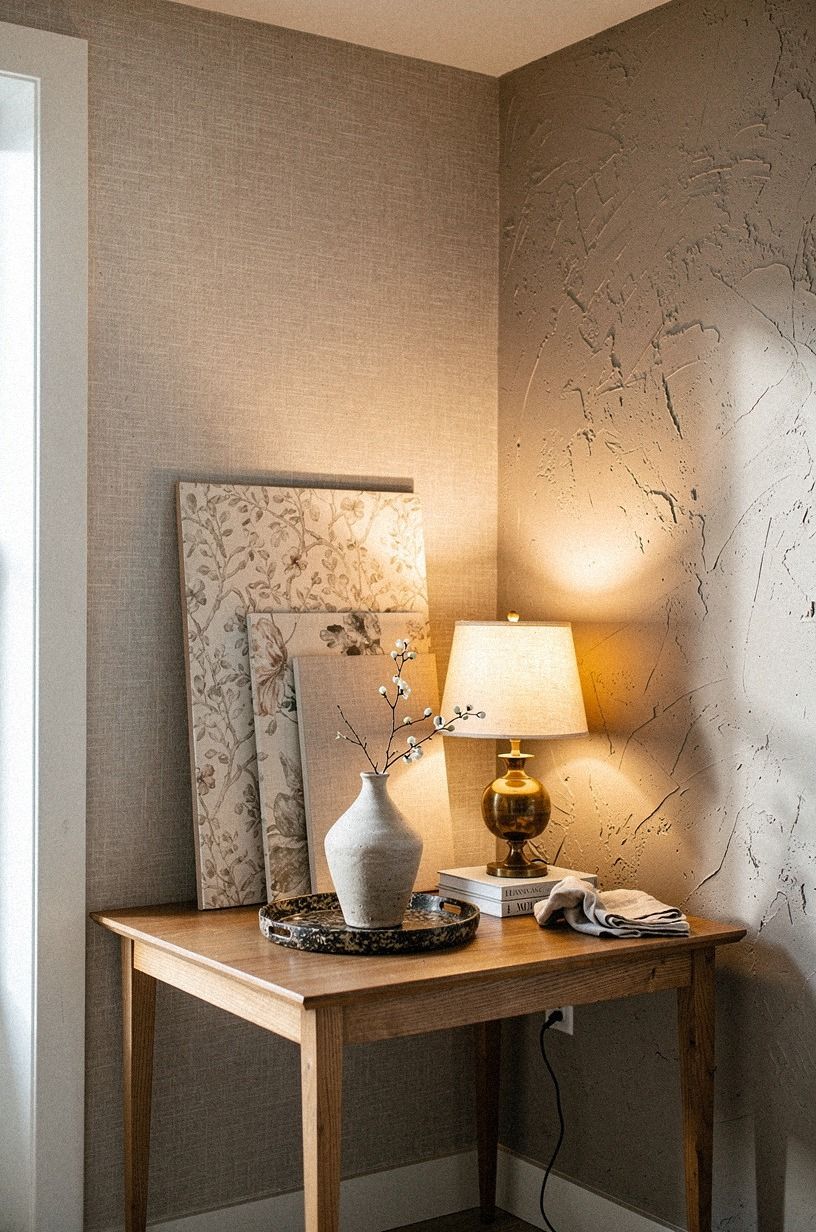
- Hang grasscloth panels inside the alcove
- Build a wainscot line beneath printed paper
- Should you paper the nook ceiling?
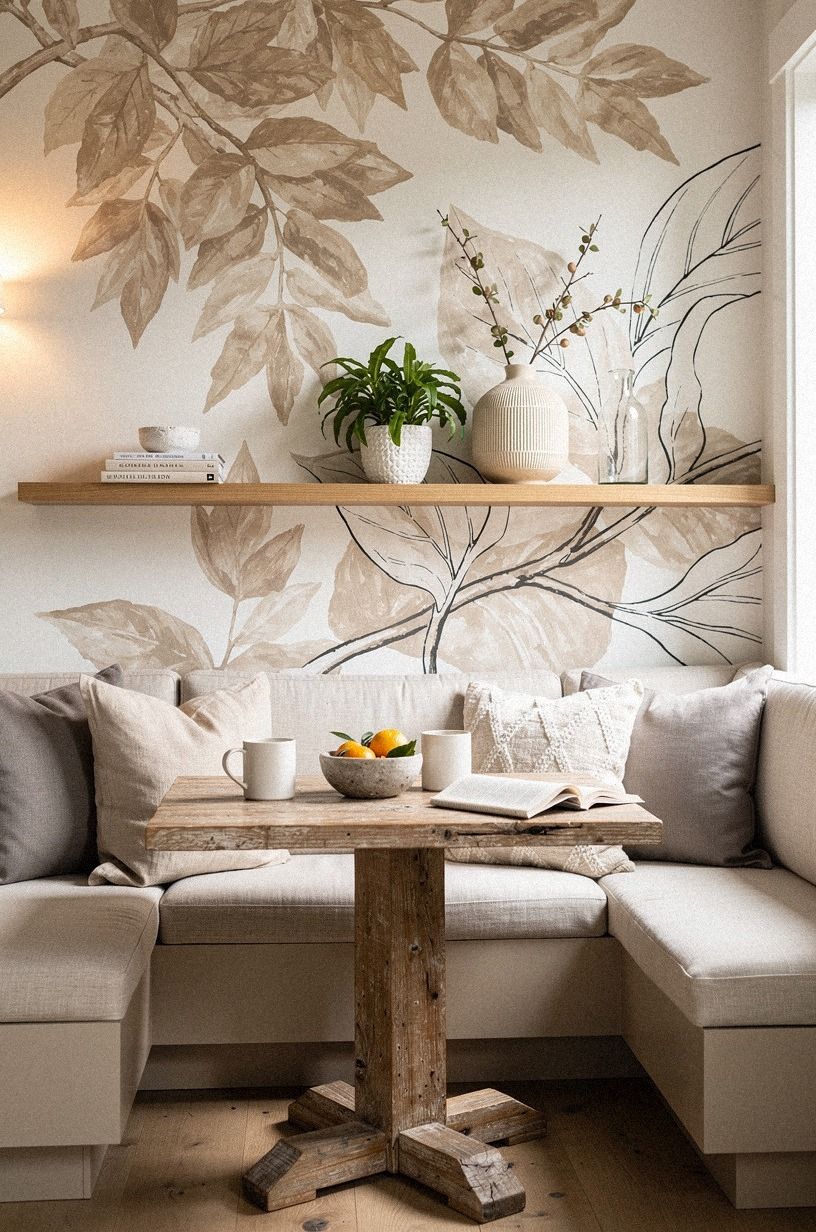
- Frame a botanical mural above the banquette
- Run ticking-stripe paper behind the bench
- What about a window seat wrapped floor-to-ceiling?
- Anchor with a House of Hackney chinoiserie panel
- Install peel-and-stick paper behind open shelves
- Hang a single dramatic floral behind the table
- Why paper the back of built-in benches?
- Build a faux-trellis effect with vine paper
- Is sisal-look texture the move for warmth without pattern?
- Pattern versus quiet: how do you make one wall feel intentional?
1Start with a mood board of three wallpaper swatches
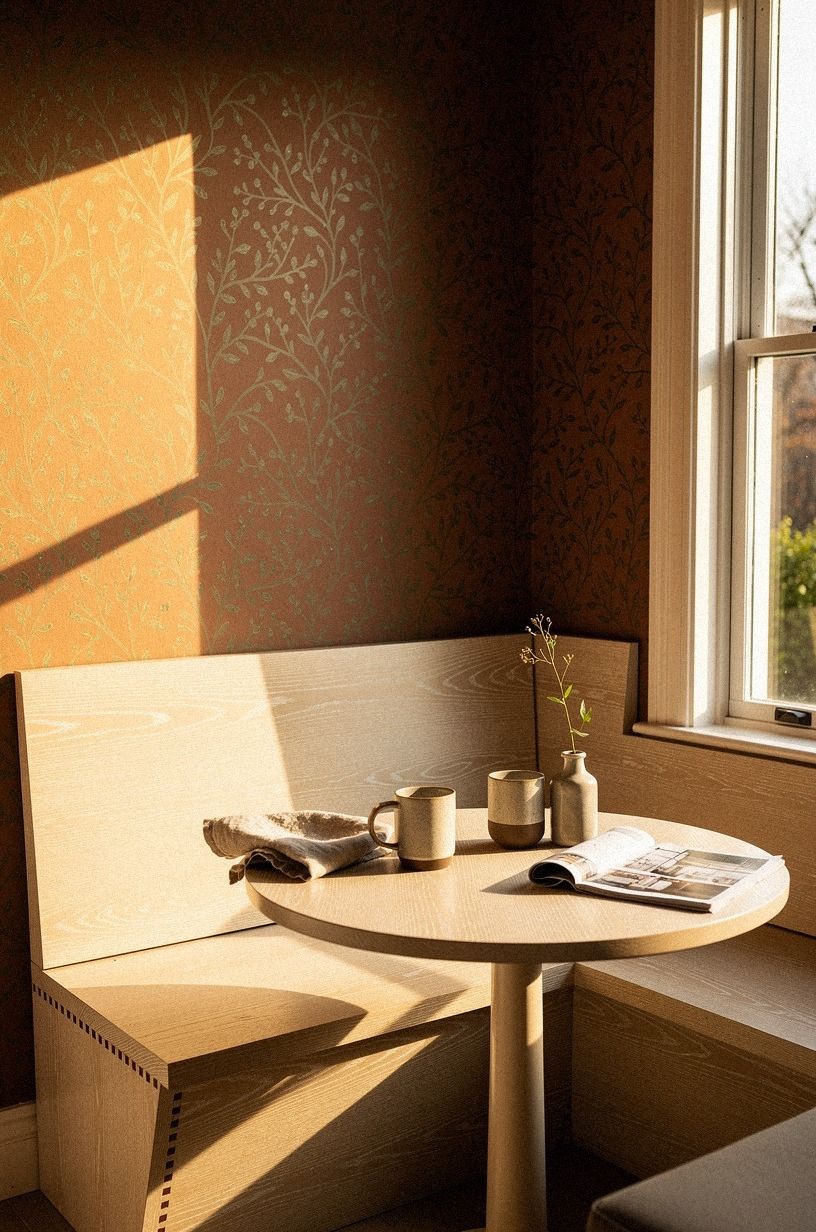
Before you commit to anything, build a tiny mood board. Three swatches leaning against the wall you're papering, plus a paint chip and one fabric scrap, tells you more in five minutes than any Pinterest board ever will. Tape them up where the morning light hits them and live with them for two days.
If you still love them on a Wednesday, you're safe.
Go oversized on the swatches if you can. A two-inch square of cabbage rose looks sweet in the sample book and terrifying across a whole wall.
Order the drop-matched memo samples from the brand (most ship them for under $10), and pin them at eye level where you'll see them pouring coffee. I've made the mistake of ordering a tiny swatch, falling for the colors, and then unrolling six feet of paper only to realize the scale was completely wrong. That's the kind of $400 lesson you only need once, and the swatch wall is your free do-over!
If your nook is tiny, lay the swatches on the actual table with a lamp on them. Light changes wallpaper more than people think, and a paper that reads "soft sage" at 10am can look "muddy olive" by dinner. And if you can't decide between two, the swatch wall will pick for you, because one of them will quietly bore you by day two.
2Anchor the nook with a cabbage rose statement wall
One cabbage rose mural on the back wall of the nook, and the whole corner stops apologizing for itself.
3Layer two patterns where wall meets ceiling
Two patterns in one tiny room sounds like a bad idea. It's not, if you let one of them stay quiet.
Run a small ticking stripe up the wall and a soft, washed paper on the ceiling. The stripe grounds the nook, the ceiling paper softens the acoustics (this matters more than people think in a hard-floored breakfast corner), and your eye reads "intentional" instead of "extra."
For the stripe, I like navy ticking on cream because it pulls double duty as a neutral. Anything louder and you'll be tired of it by next Easter.
For the ceiling, lean soft white with the faintest botanical, or a cloud-mural paper if you want to commit. The seam where the two meet should land at the top of your chair rail or the bottom of a simple wood picture rail, not floating in the middle of the wall.
If you're in the mood for a moodier corner instead of a bright one, my dark moody breakfast nook guide shows how to lean into the same wall-treatment idea with deeper color and richer paper.
4Hang grasscloth panels inside the alcove
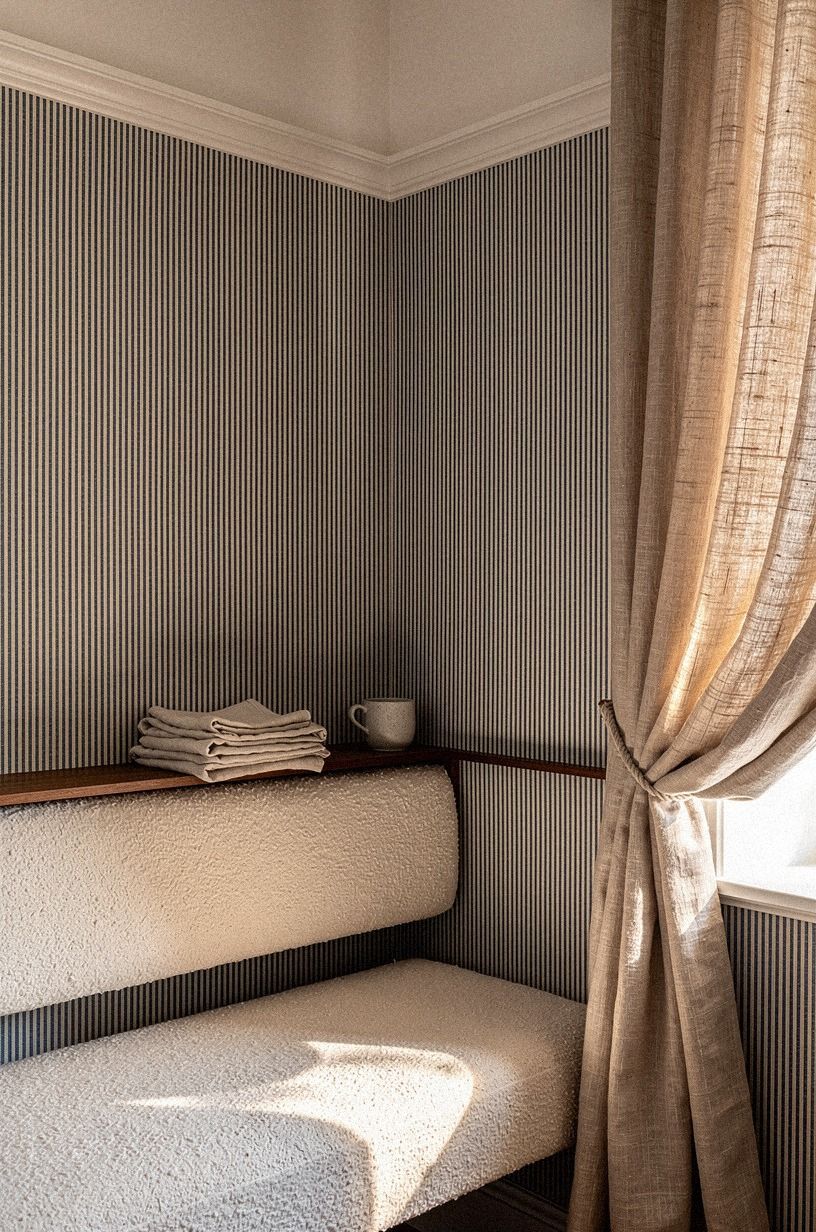
Grasscloth in an alcove is one of those moves that photographs beautifully and also feels right in person. The texture catches the side light and the seams almost disappear if you butt-join them tight and don't try to wrap corners. Real grasscloth, not the printed vinyl version, costs about $80-$150 a roll, and a small alcove uses two or three rolls depending on height.
Pick a deep emerald if your dining chairs are camel or warm oak, and oat or sand grasscloth if your chairs are black or painted. The color is doing the work, so keep the rest of the corner quiet: a wood table, one ceramic lamp, plain linen cushions. Skip the chandelier if you can; a slim unlacquered brass picture light mounted above the banquette does more for this paper than any overhead fixture.
One honest warning: grasscloth stains if you splash coffee on it. Order one extra roll and store it in a closet, because if you ever need a patch five years from now, that exact dye lot will be gone. For a deeper dive on grasscloth in small spaces, the corner breakfast nook guide walks through how this paper holds up in windowless corners.
5Build a wainscot line beneath printed paper
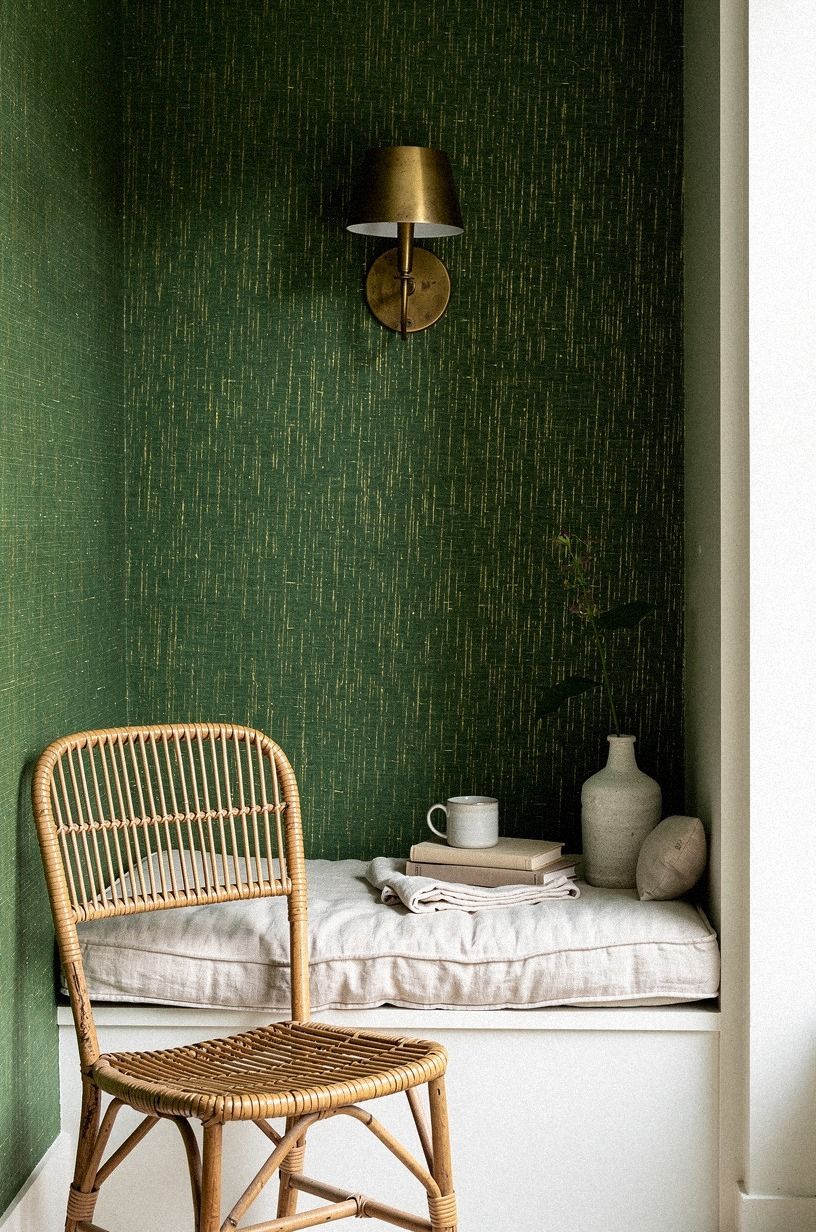
Wainscoting under wallpaper is the move that makes a breakfast nook feel like it was always meant to be there, even in a brand-new build. Run a simple shaker-style paneling up to about 36 inches, paint it in a moody color (Sherwin-Williams Evergreen Fog is a good middle ground), and paper above the line with a warm rust-and-oak botanical.
The line of the rail matters more than the paneling itself. Measure it so it lands roughly 6 inches above the chair back when you're seated. Too low and your elbow catches the rail; too high and the paneling stops looking like wainscot and starts looking like a half-wall.
If you don't want to commit to real wainscot, use beadboard panels from the home improvement store, primed and painted, then add a thin oak cap rail on top. The whole project runs about $150 in materials if you DIY it over a weekend, which is a lot less than the "wow" implies. For a full dining corner refresh, the wainscoting ideas roundup has every paneling style worth knowing before you pick one.
6Should you paper the nook ceiling?
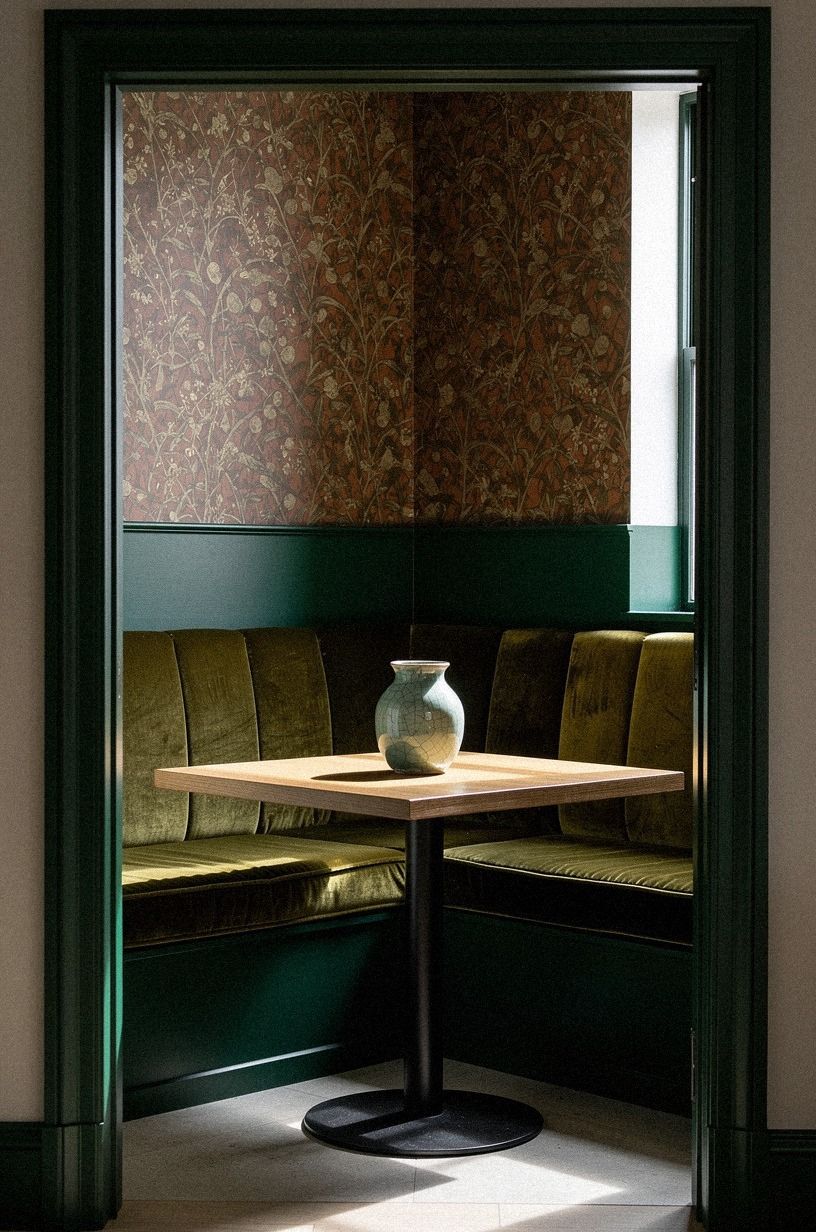
The ceiling is the most underused surface in most homes, and a breakfast nook is the perfect place to experiment because the surface is small.
7Frame a botanical mural above the banquette
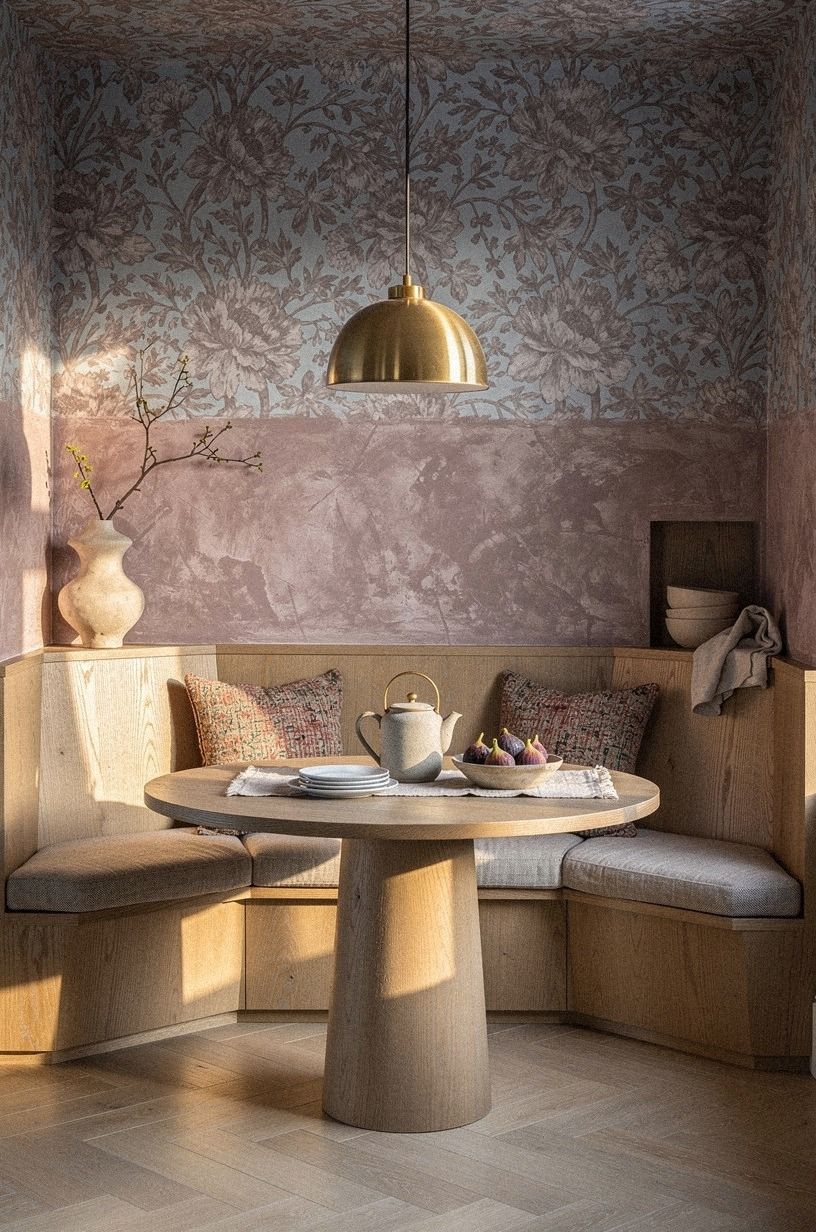
If you've got a longer banquette, you can fake the "mural over a sofa" look designers do in living rooms, scaled down to a nook. A warm white and camel botanical, framed out by a simple oak trim border like a giant piece of art, reads as one big statement instead of just paper on a wall.
The first rule is the trim. Without it, the mural bleeds into the wall paint and the eye doesn't know where to land.
With a 2-inch oak border, mitered corners, stained to match your table, the mural becomes a focal piece. Total materials for the trim: about $40 and an afternoon.
Pick a mural with large-scale leaves, not tiny ones. Tiny botanical prints on a nook wall look like a powder room.
Big leaves look like a greenhouse you want to drink coffee in. And the trim line should sit roughly 6 inches below the ceiling so it reads as art, not as a partial wall. For more on the long-banquette side of this look, my banquette seating ideas roundup covers cushion depth, table height, and bench width so the mural stays in proportion.
8Run ticking-stripe paper behind the bench
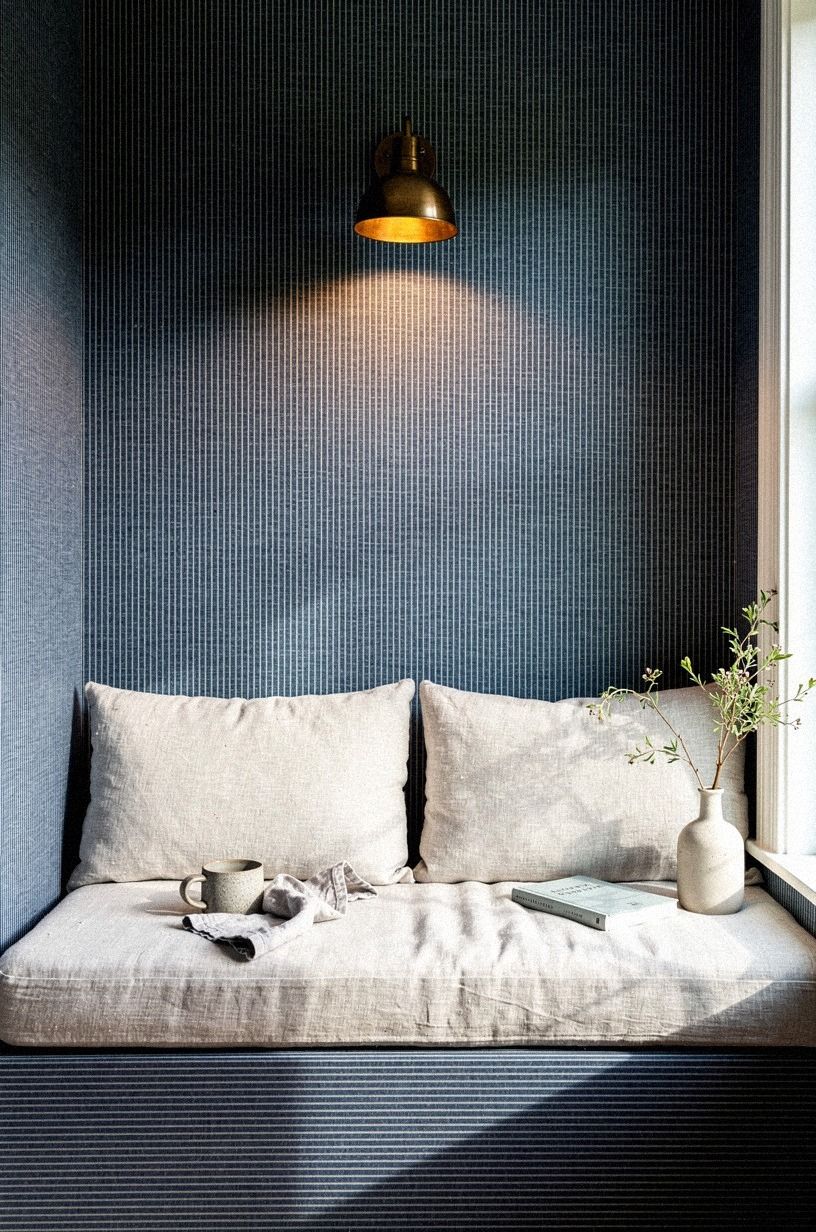
A long horizontal banquette loves a vertical stripe behind it. The contrast in direction makes the bench feel grounded and the paper feel taller, even though it's the same paper you could have wrapped the whole room. Midnight blue ticking on cream is the version I keep coming back to, because it works with warm wood, painted chairs, and rattan.
Two honest tips from doing this twice. First, pre-cut every strip before you paste.
Ticking has a tight repeat but if you offset your starting point, you'll see the mismatch forever. Second, wrap the inside of any open shelving in the same paper, even if it's only the back panel.
It pulls the whole nook together and costs one extra roll.
If midnight blue feels heavy for your morning coffee mood, try brick red ticking instead. Same energy, warmer, plays really nicely with cerused white oak and black iron. For a fuller look at the bench styling side, my breakfast nook decor roundup has the cushion-and-chair combinations that work with this paper.
9What about a window seat wrapped floor-to-ceiling?
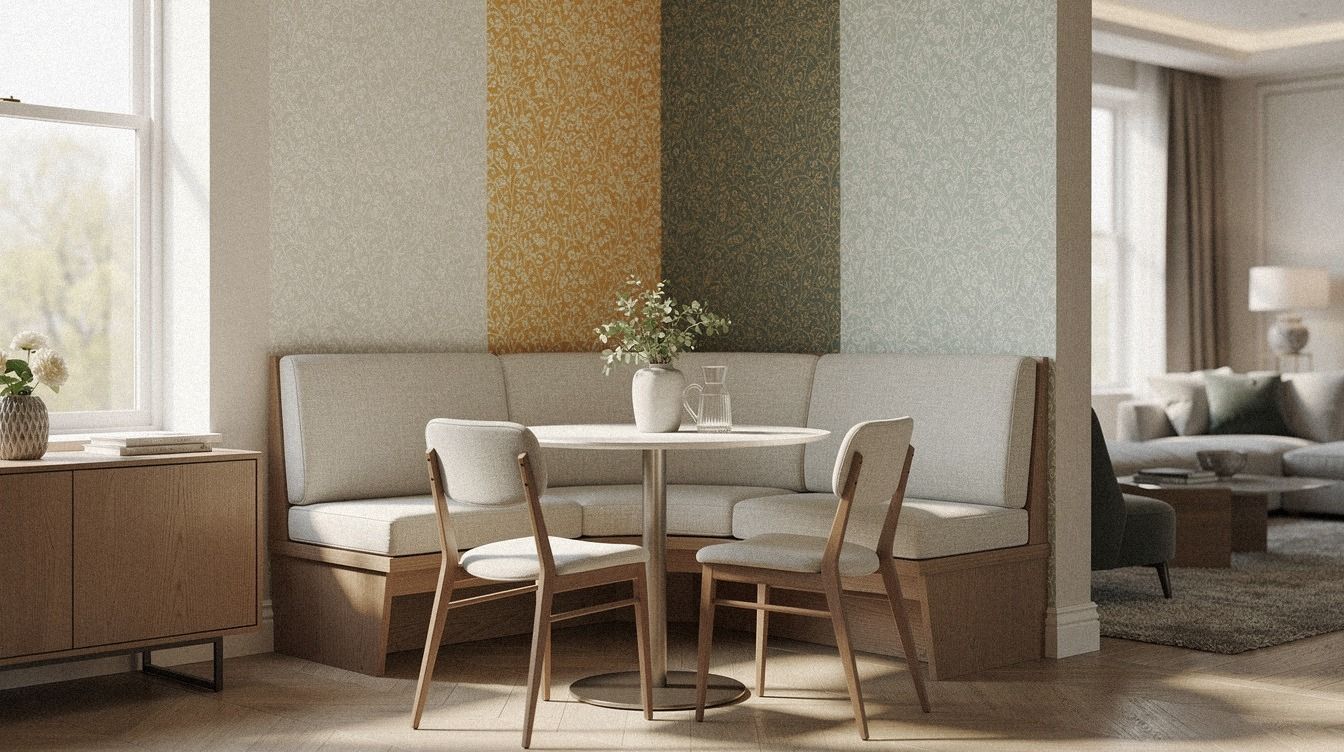
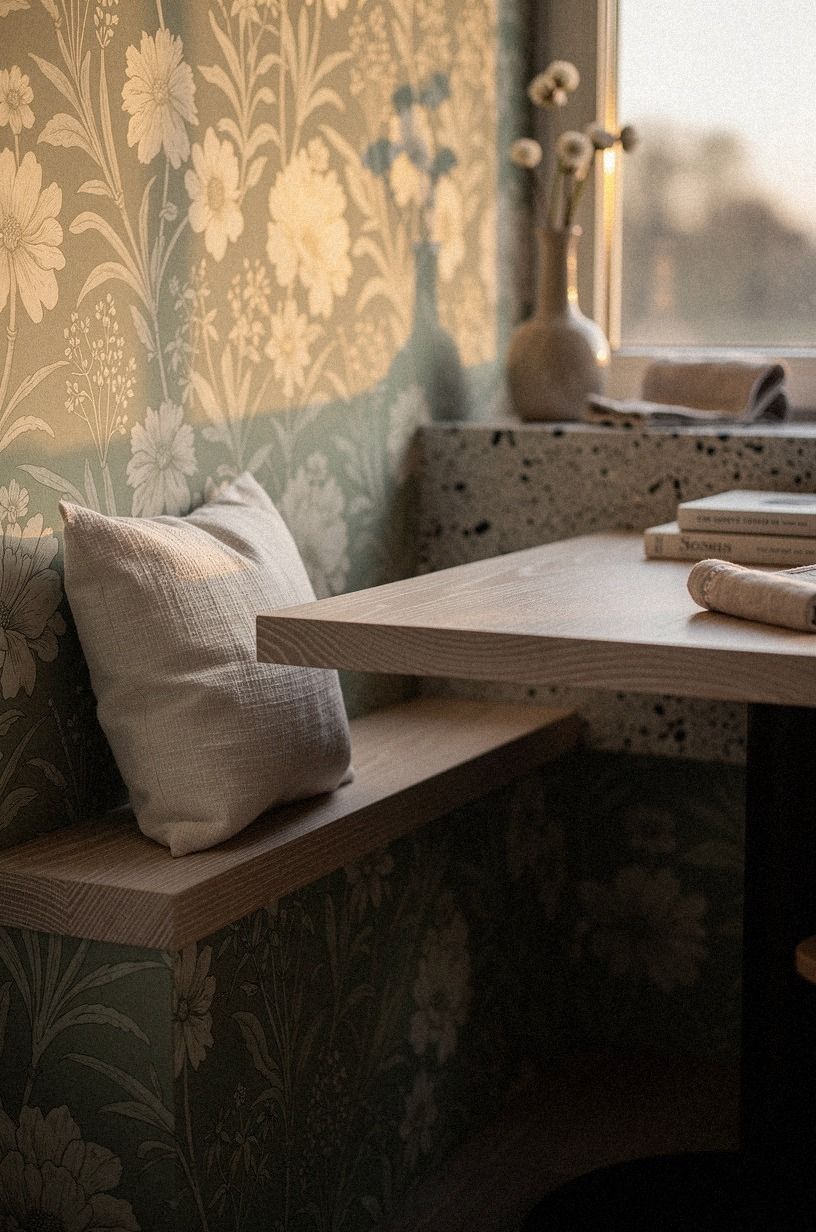
A window seat wrapped floor-to-ceiling in a sage and cream floral is one of those ideas that makes a small nook feel like a garden room.
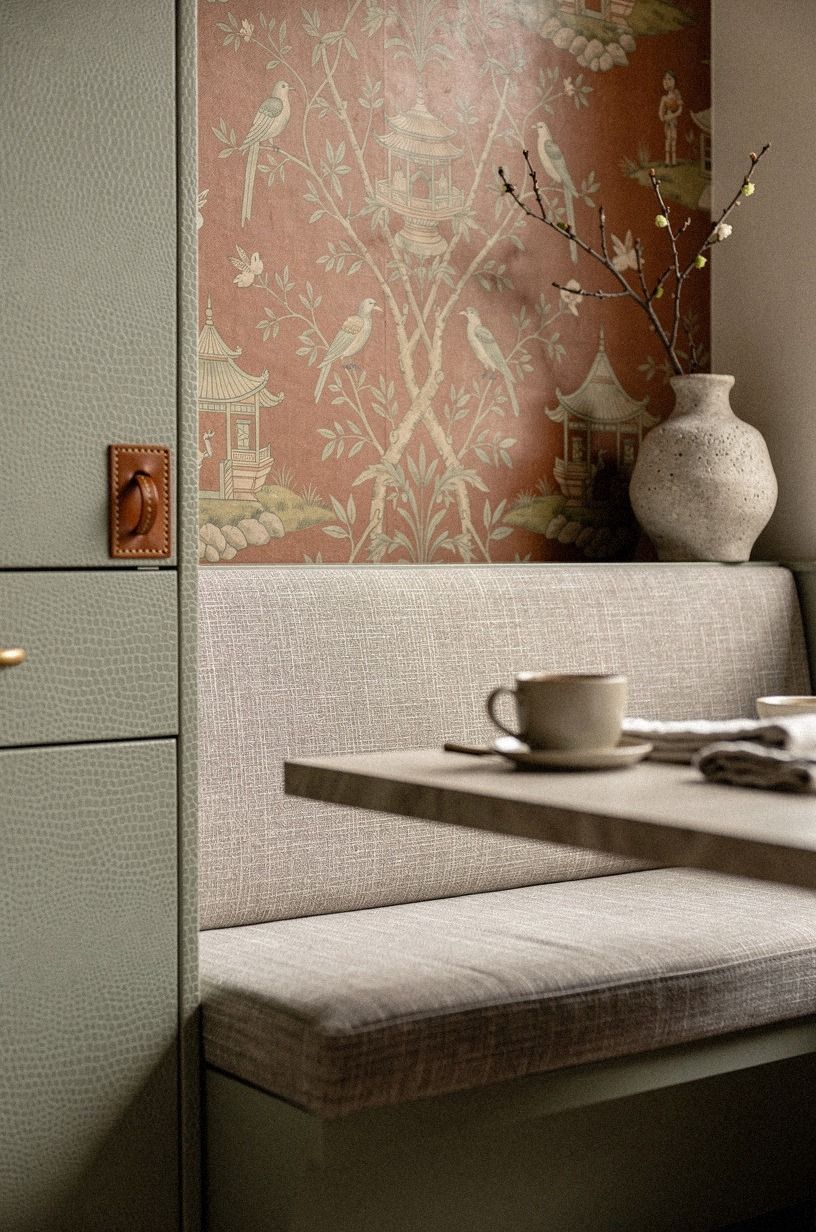
10Anchor with a House of Hackney chinoiserie panel
A hand-painted chinoiserie panel in the breakfast nook is the move that makes guests ask "where did you find this?" It's also the move that costs the most, but only if you go custom. Reproduction panels from House of Hackney in terracotta, stone, and soft green now run about $40-$90 a panel depending on size, and you only need one or two to anchor a corner.
Mount the panel like art, not like wallpaper. A thin gilded frame around it tells the eye this is a feature, and you can change out the paper on the rest of the nook whenever you're bored without disturbing it. Designers do this in powder rooms constantly and it works just as well in a nook.
If you're going true custom, budget $600-$1,200 for an artist-painted panel on canvas, mounted on a wood substrate. It's the kind of thing that survives three moves and still looks intentional. And if your nook is the awkward-corner kind, the corner breakfast nook guide shows where a single chinoiserie panel does the most work per square foot.
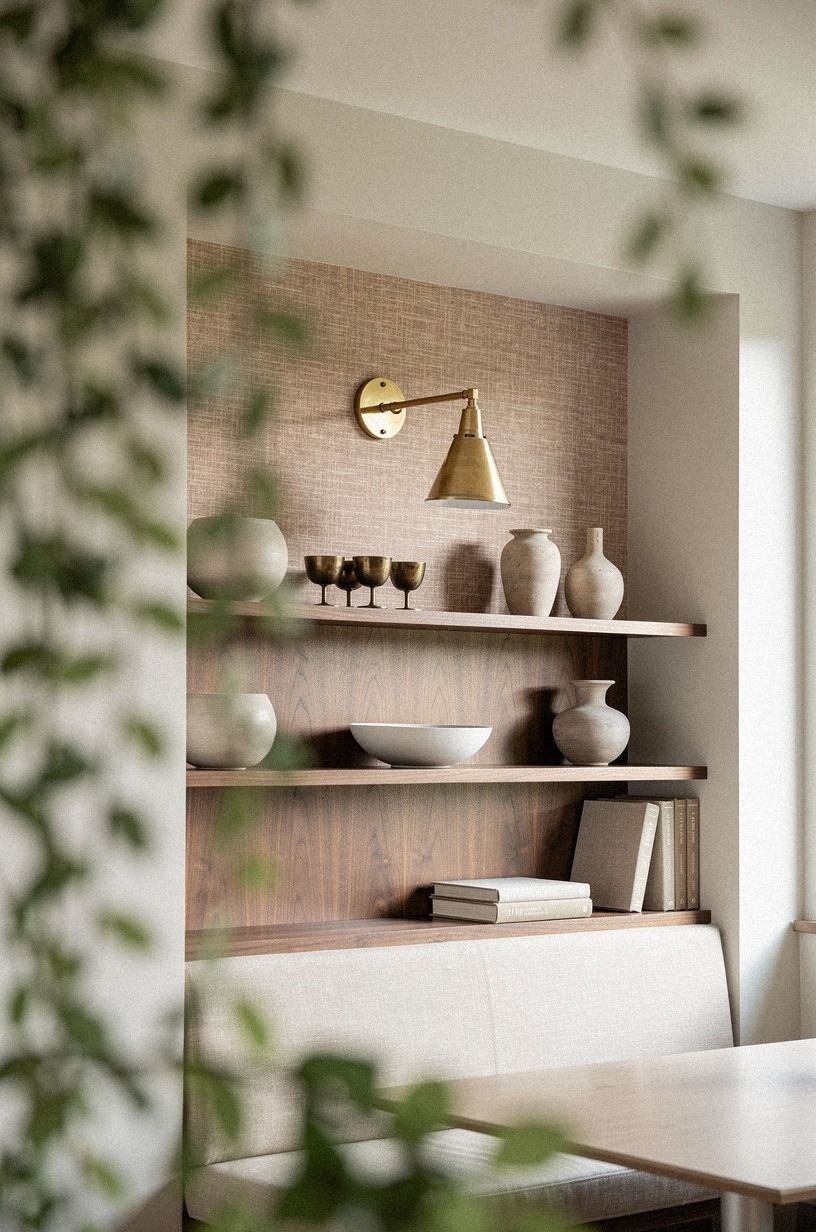
11Install peel-and-stick paper behind open shelves
Open shelves in a nook are a perfect excuse to use peel-and-stick paper. You'll never see most of the wall behind the dishes, but you'll see the strip right above the shelf line, and that's where a clay and linen paper earns its keep. The shelf becomes the frame; the paper becomes the art.
Pick a paper with enough texture or pattern to read at a distance, because the shelf contents will visually compete with it. A solid peel-and-stick reads as paint, not paper, and at that point just paint. A botanical, a faux grasscloth, or a small-scale geometric does the job.
Order 15% extra for peel-and-stick. The stuff is unforgiving on mis-cuts, and you will mis-cut at least one strip. Most brands include this in their calculator, but I'd double it for a nook with built-ins and inside corners.
If you're styling the shelves after the paper goes up, the breakfast nook decor roundup has the dish-and-vase arrangements that don't fight a busy paper.
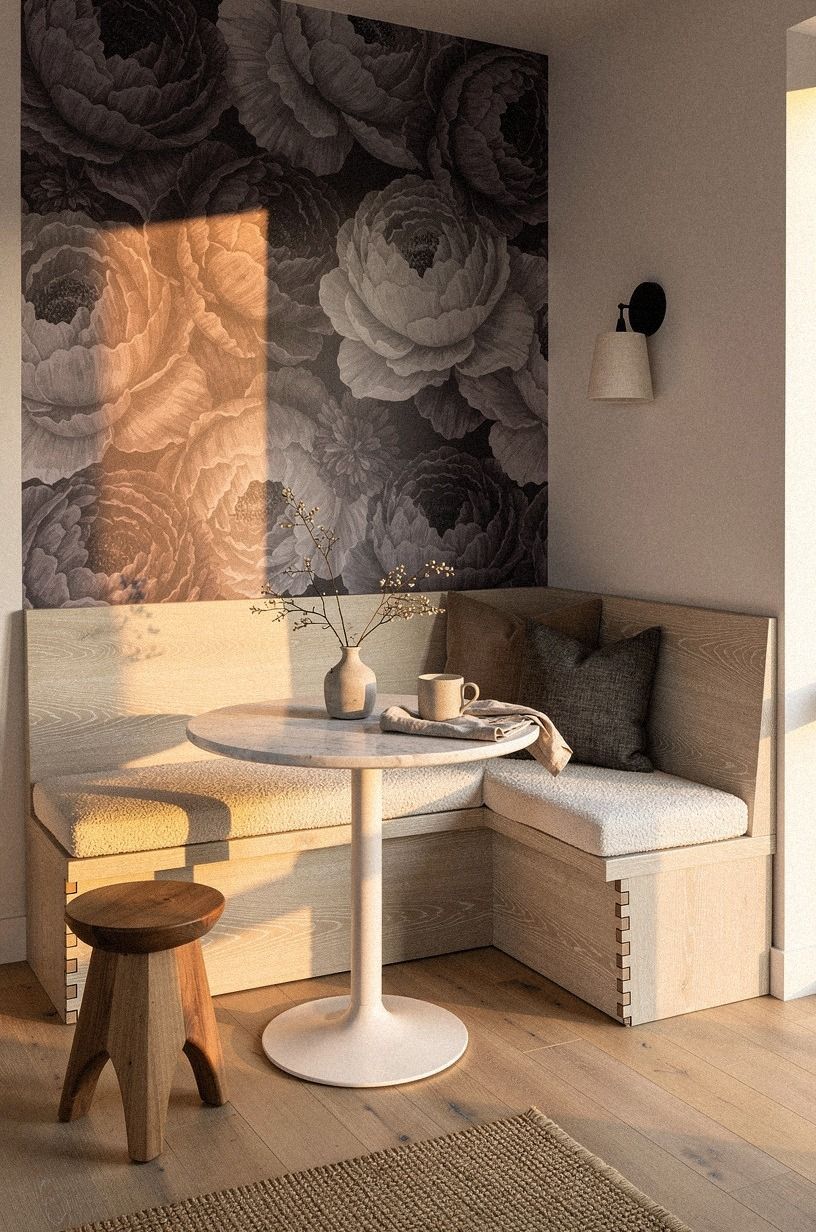
12Hang a single dramatic floral behind the table
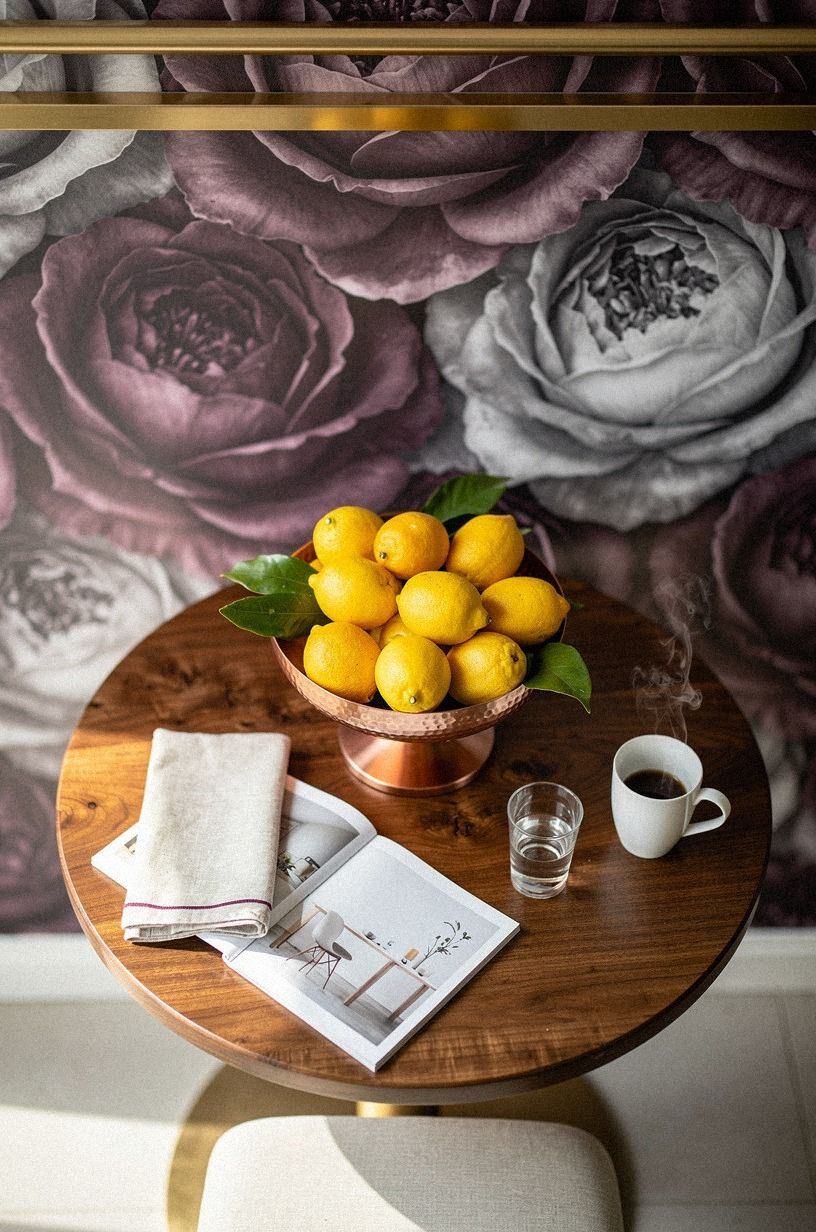
One oversized floral, behind the table only, hung like a single panel of art. Plum and grey on warm white, big enough that you can identify the flower across the room, and trimmed out in a thin oak frame so it reads as one big piece of art instead of a partial wall.
The drama here is in the cropping. You don't want to see the repeat.
Center the largest bloom directly behind where the centerpiece will sit, and let the rest of the pattern fade off into the trim. A good shop can cut a single panel to your wall size and skip the repeat entirely, which is the move that makes it look custom.
If you're in a rental, do this with a removable mural and a Command-strip-mounted frame. Yes, it sounds flimsy.
No, it does not look flimsy. And it'll survive a landlord walkthrough if you use the velcro-style strips instead of adhesive.
Worth it for the wow factor alone.
13Why paper the back of built-in benches?
The back panel of a built-in banquette is a sleeper surface.
14Build a faux-trellis effect with vine paper
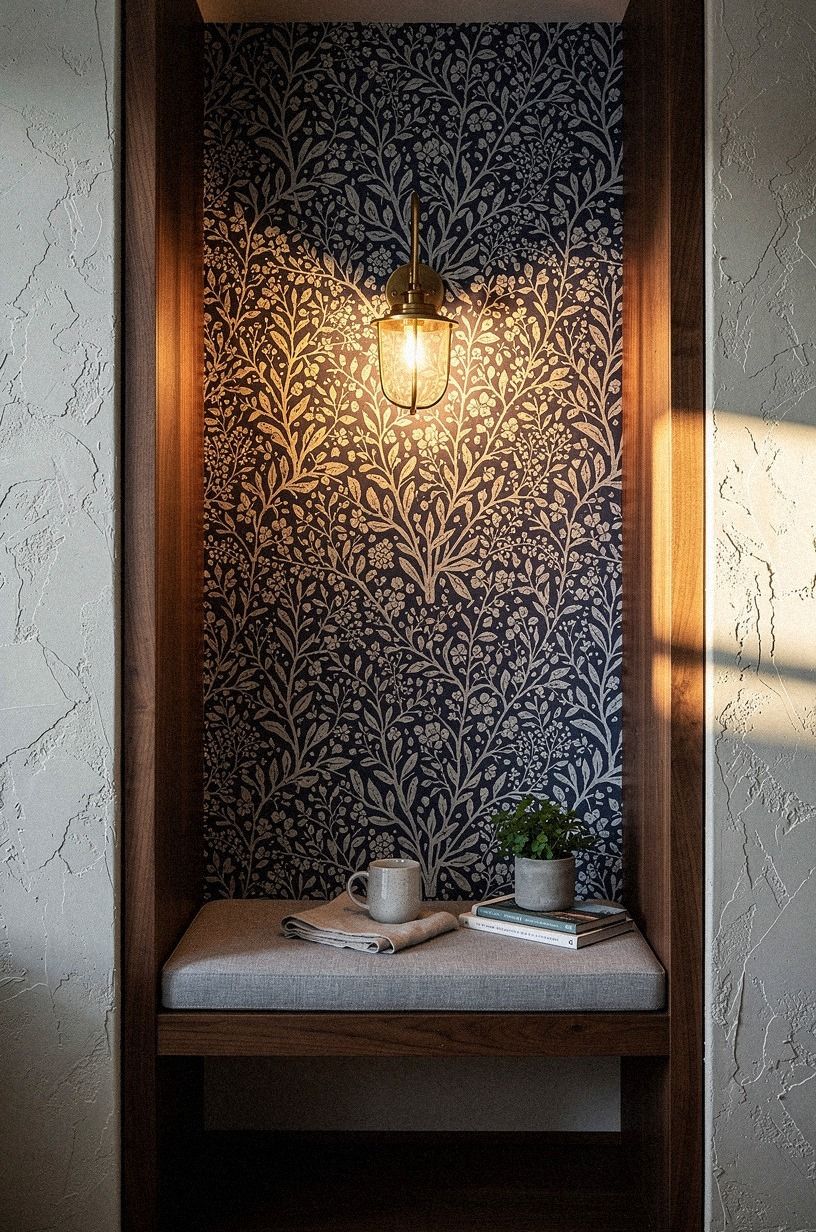
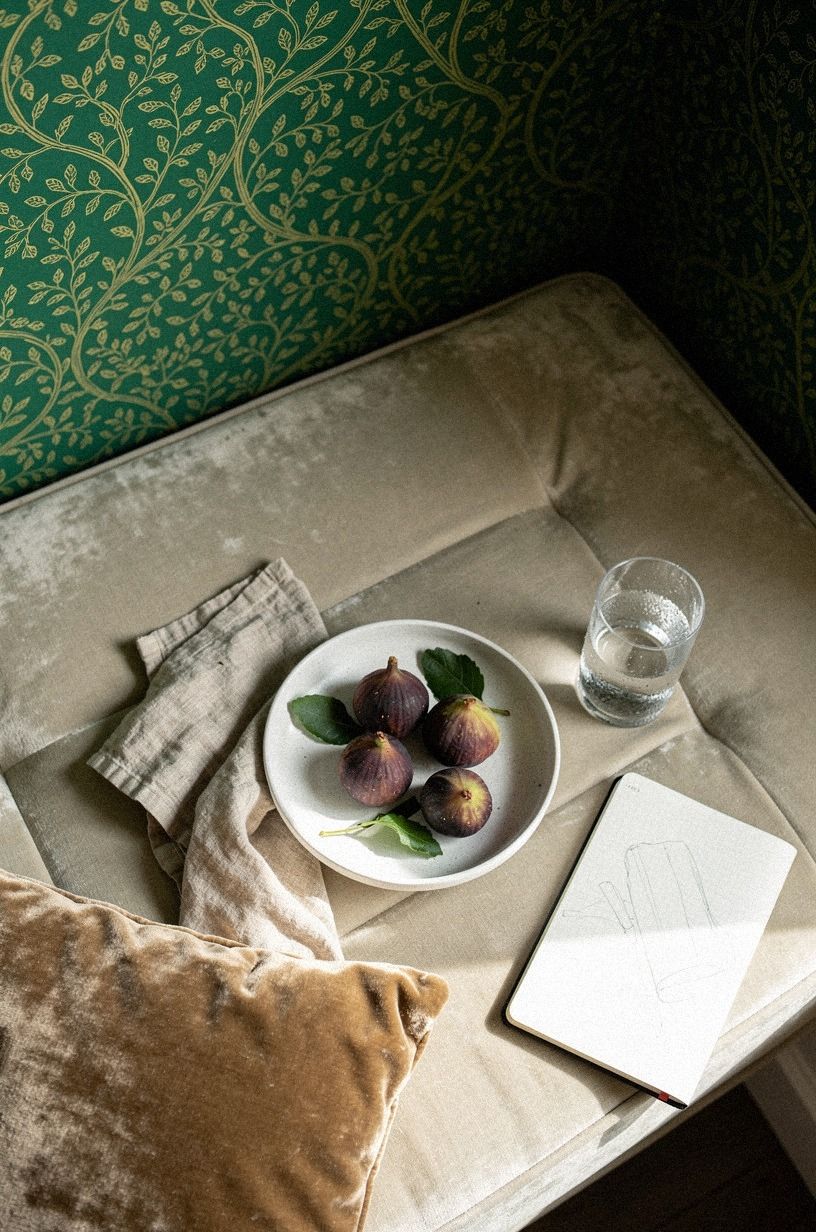
A faux-trellis emerald and gold vine paper on the seat walls of a banquette reads like an old conservatory, in the best way. The pattern is doing the architecture, so the nook feels grand even if the actual square footage is six feet by six feet.
Pick a paper where the vines are clearly drawn, not photo-realistic. The hand-drawn quality is what makes it feel like a European garden room instead of a hotel lobby. Pair it with unlacquered brass sconces, a small round table, and slipcovered chairs in oatmeal linen, and you'll feel like you're eating breakfast in a much more expensive house than you actually are.
For a deeper look at how this paper holds up in a nook with a bench, the dark moody breakfast nook guide shows the same vine-paper move with darker sconces and warmer chairs.
For the renters among us: yes, you can get this look in peel-and-stick. The brands have caught up. Order samples first, because the cheap versions read as "wallpaper of a vine" and the good versions read as "actual trellis."
15Is sisal-look texture the move for warmth without pattern?
A sisal-look textured paper in forest green and natural tones behind the banquette is the move when you want warmth without pattern.
16Pattern versus quiet: how do you make one wall feel intentional?
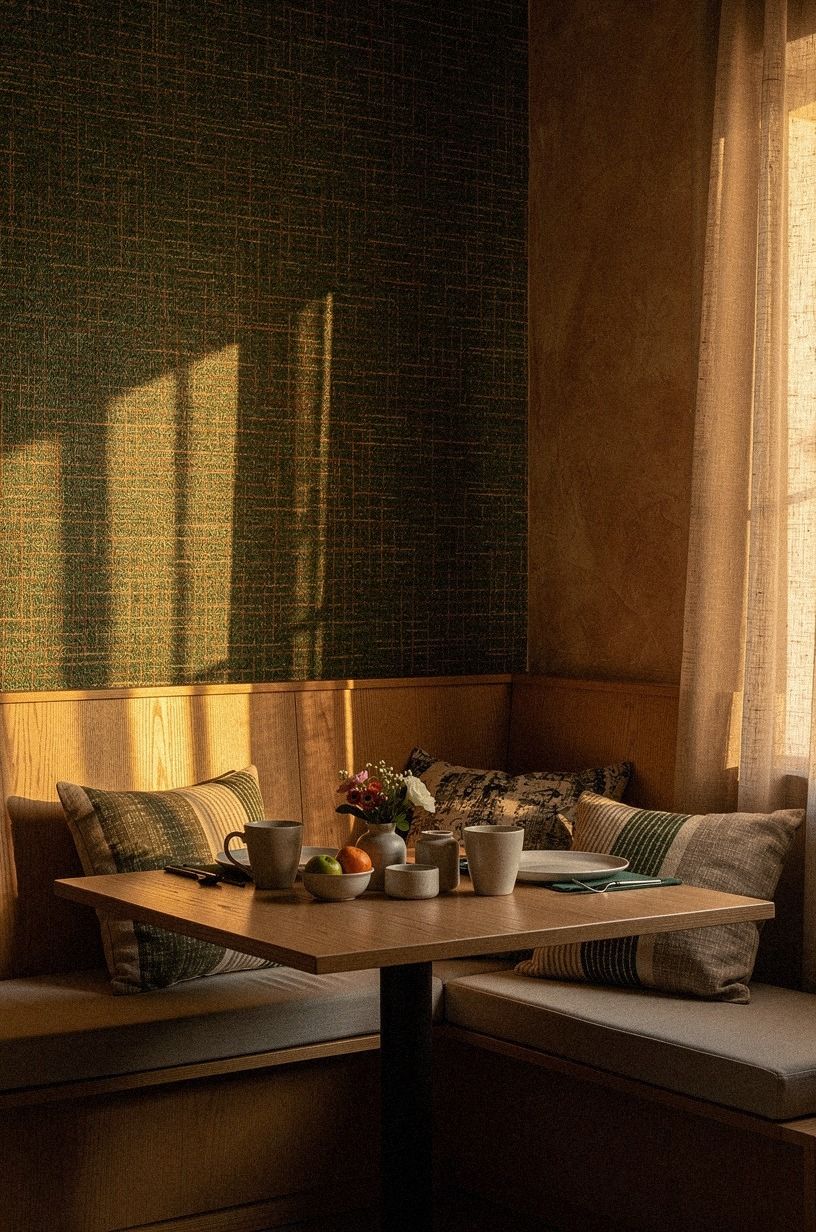
Last step, and the one most people skip: leave one corner of the nook alone. A single painted wall, a small framed sketch, a candle.
After fifteen layers of pattern and texture, the eye needs a place to land. The quiet corner is what makes all the other choices feel intentional instead of busy.
Paint that one wall in a tone from your most-used paper, slightly darker. If your main paper is sage and cream, the quiet wall is Farrow & Ball Pigeon or Benjamin Moore October Mist.
If your paper is plum and grey, the quiet wall is Farrow & Ball Plummett. The match should feel inevitable, not matched.
This is also the corner for the lamp. A small ceramic table lamp with a linen shade does more for the room at 7pm than any overhead fixture, and it earns its keep by lighting the one wall you didn't paper.
Done right, it's the kind of corner your guests remember. For a fuller look at the lighting-and-chair side of pulling this off, the sunroom breakfast nook guide has lamp-and-shade combos that work with papered walls too.
A quick note on what all this actually costs
Most of these projects live in the budget-to-mid range, and that's the honest answer. Real costs in 2026, US averages, for the nook projects above:
The peel-and-stick projects and the single-mural moves are where you get the most visual return for the least cash. Custom chinoiserie and millwork are beautiful, but only worth it if you're staying in the house long enough to enjoy them.
The wallpaper-buying mistake I keep seeing
Most people under-order paper. The math isn't intuitive because you need to account for the pattern repeat, the waste on the first and last strip, and any inside corners where the paper has to overlap.
For a typical breakfast nook with one accent wall, order two full rolls more than the calculator says. The leftover goes in the closet with the grasscloth patch you'll need in five years.
And test the paste. If you're going traditional (not peel-and-stick), mix the paste a little thinner than the box says for a nook with old drywall. Thick paste bubbles on imperfect surfaces, and you can't sand a bubble out of wallpaper.
What did I learn after papering four nooks in a row?
Here's the part I've learned the hard way: most people paper a nook like they're decorating a powder room, and that's backwards. A powder room is a space you walk through.
A breakfast nook is a space you sit in, day after day, for twenty minutes at a time. That changes everything about how you pick the paper.
You want something you can look at for years without getting tired of it, which usually means less pattern than you think and more texture than you expect. A small-scale botanical on the back wall, a textured grasscloth on the side, and one quiet painted corner will outlast a big loud mural. Loud murals photograph well on Pinterest and tire fast in real life.
I've watched two friends go the mural route and pull it down within eighteen months, both of them.
The other thing nobody tells you: paper a small nook on a Thursday or Friday, not a weekend morning. You want the paste to dry while you're not in the room. The smell of wallpaper paste is not romantic, and the first 24 hours of drying are when you'll notice it most.
By Sunday morning, it's gone, and you're drinking coffee in a nook that feels like yours.
If you're going for a moodier corner instead of a bright one, my dark moody breakfast nook guide shows which papers hold up in low light and which ones turn muddy. And if you want the full room to feel pulled together, the breakfast nook decor roundup has the cushion, chair, and lighting combinations that pair with every paper on this list.
And one more honest note: a wallpapered nook is one of those projects that ends up reading as "she hired someone" even when it's all peel-and-stick and a Saturday afternoon. If you're leaning into the whole corner makeover, the corner breakfast nook guide has the layout moves that make the paper feel like part of a designed room.
A Few Things Worth Answering
What is the best wallpaper for a small breakfast nook?
A small breakfast nook wants a paper that reads from across the room, not up close. Skip tiny prints and pick something with medium-to-large scale in a color that contrasts the wall paint. Farrow & Ball and House of Hackney both ship memo samples for under $10 so you can test the scale before you commit.
Where can I buy breakfast nook wallpaper on a budget?
IKEA, Target's Threshold line, and Wayfair's wallpaper section all carry peel-and-stick options under $30 a roll. For higher-end papers, West Elm and CB2 run sample programs that beat buying a full roll you're not sure about. And don't sleep on Facebook Marketplace for vintage rolls from closed design shops, you can find real grasscloth for half retail if you're patient.
How much does a breakfast nook wallpaper project cost?
A single accent wall in peel-and-stick runs about $150 to $400 including paste, tools, and one extra roll for mistakes. A quality grasscloth or mural on a small alcove lands around $600 to $2,000. Custom hand-painted chinoiserie starts near $1,500 and climbs fast.
Can I create a statement breakfast nook on a budget?
Yes! Three moves that cost almost nothing: paint one wall in a moody color that complements your paper choice, swap your existing shade for a linen drum, and add a ceramic table lamp for warm task lighting.
Total spend: under $150. Most of the "wow" in any nook comes from those three moves plus a single papered wall.
Is a statement wallpaper worth it in a small space?
It's worth it, and small spaces benefit more than big rooms. A bold paper in a tight nook reads as intentional and cozy; the same paper in a big dining room can read as underwhelming. Pick a pattern with enough scale to read at conversation distance, and let one wall do the work.
Is wallpaper a good idea for a rental breakfast nook?
Yes, and peel-and-stick has gotten so good that it's basically the modern renter's best friend. Tempaper, Hovia, and Wayfair's own brand all make removable papers that come off clean with a hair dryer and a little patience. Skip the landlord conversation entirely, and patch any nail holes when you move out.
Where I'd Start First
If I had to pick one, I'd start with the swatch board. Three samples, two days, no commitment.
It's the only step under twenty bucks that saves you from a four-hundred-dollar mistake. Pick the paper that still looks good on a Wednesday morning.
That's your nook.