
 by
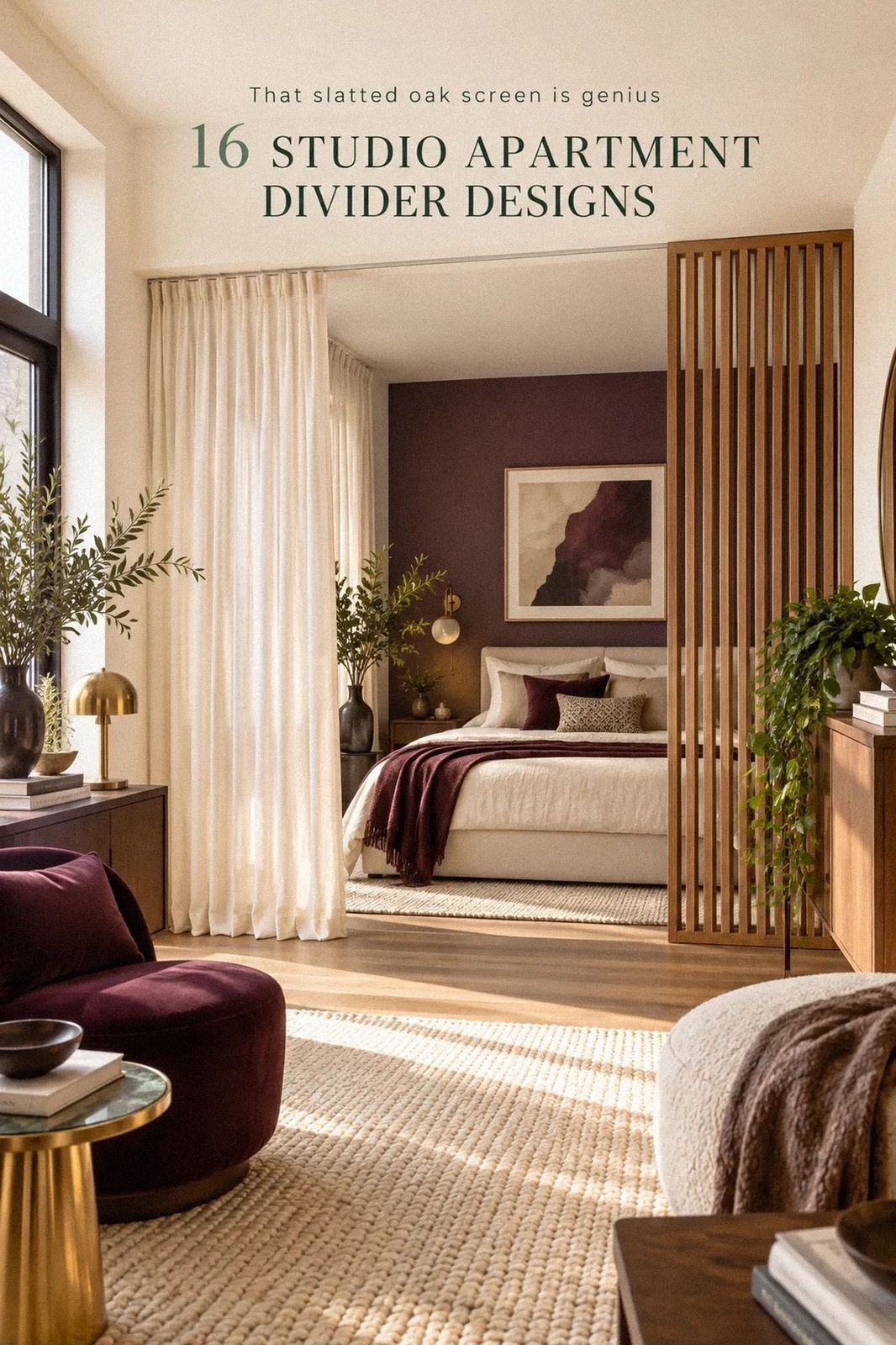
by Studio apartment divider ideas can create a real bedroom with a curtain, bookcase, or half wall, usually for far less than a renovation. I once placed a tall shelf beside the bed and blocked every bit of daylight. The room felt smaller overnight. Your divider needs privacy, airflow, and visual breathing room. That’s the whole game.
If you’re still deciding where the bed belongs, start with this studio apartment bedroom setup guide. It’ll help you test the layout before you commit to drilling, painting, or buying anything.
- Should a curtain wall float for a softer studio room divider?
- The Two-Wood Rule makes an open bookcase work harder
- Why does a cane screen create such warm privacy?
- Paint a half-height studio divider in two tones
- Could an IKEA HEMNES wardrobe become the room divider?
- Build the Three-Height Light Stack around the bed
- A rug can mark the sleeping zone without blocking light
- Swap open shelves for a slatted wood screen
- What belongs behind the headboard?
- Instead of walls, choose a headboard with presence
- Hang art to make the bed feel intentional
- The Three-Zone Curtain Plan gives a long studio structure
- Float a desk between work and sleep
- Budget contrast: choose the divider based on its honest cost
- Which divider should answer your three practical questions?
- Paint the studio divider with a warm color story
1Should a curtain wall float for a softer studio room divider?
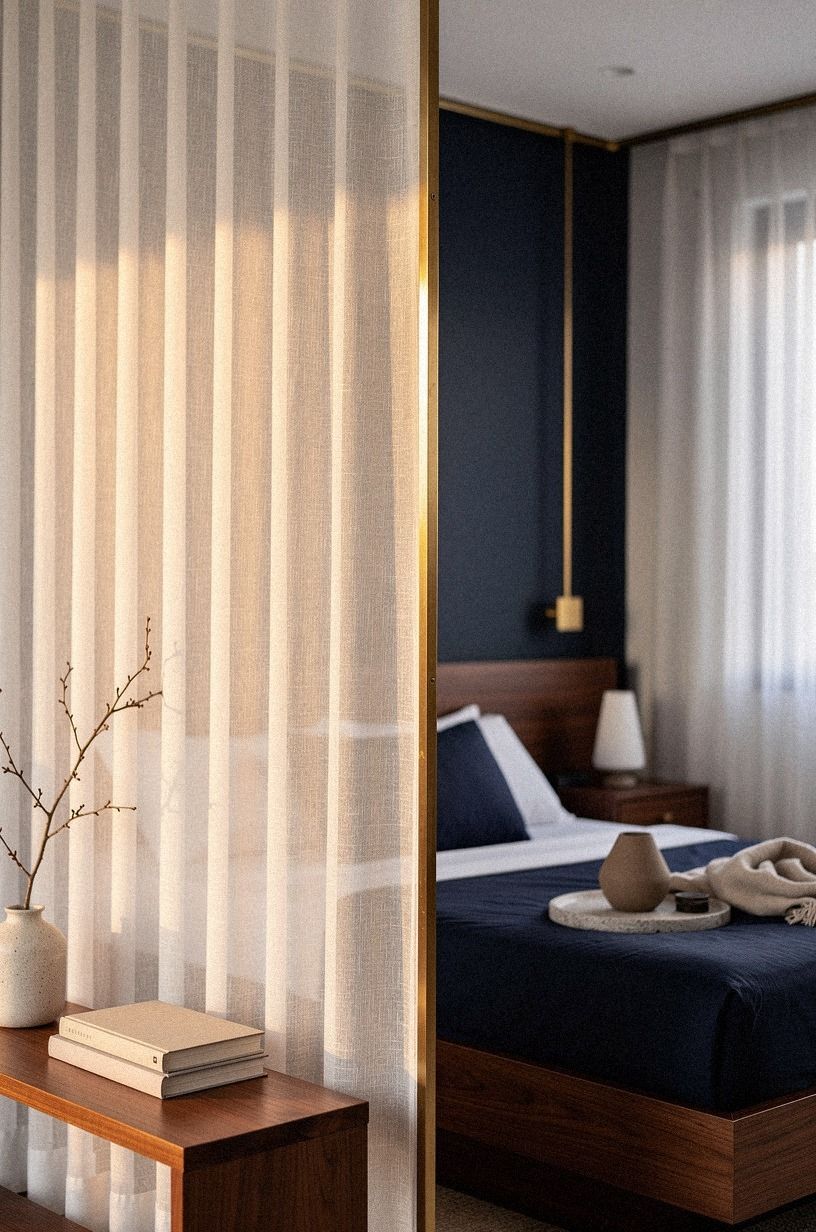
A ceiling-mounted curtain can give you the privacy of a bedroom without making your studio feel boxed in. Choose Belgian flax linen in a deep navy shade, then let the panels skim the floor instead of puddling. White walls and walnut furniture will keep the palette balanced, while an unlacquered brass track can develop a gentle patina over time.
I’d skip heavy velvet here. It’s dramatic, but it eats daylight and makes your sleeping area feel sealed off. A double-track system gives you a sheer layer for daytime and a room-darkening panel for sleep.
You’ll still see the room’s outline, which keeps your apartment from feeling chopped into pieces.
Mount the track several inches beyond the bed on both sides so your eye reads the curtain as architecture. A wider track creates a more generous, polished effect than a narrow rod. Compare your plan with these 10 studio apartment ideas that feel like a real home before you buy hardware.
The curtain also gives you flexibility when your routine changes. Open it completely while you’re cleaning or entertaining, then close it when the living room stays active late into the evening. That small shift can make the sleeping area feel surprisingly intimate!
2The Two-Wood Rule makes an open bookcase work harder
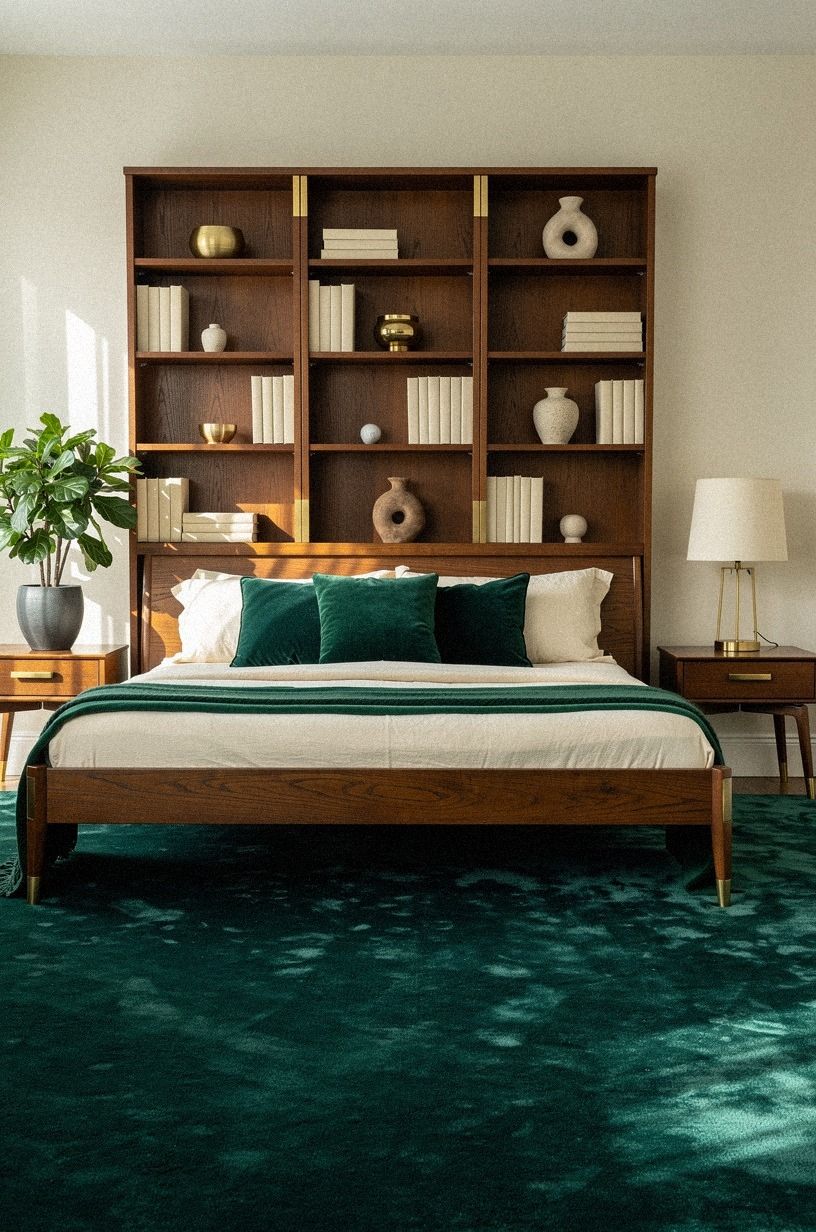
An open bookcase is one of the most useful ways to divide a studio apartment because it stores your life while giving the bed a visual boundary.
3Why does a cane screen create such warm privacy?
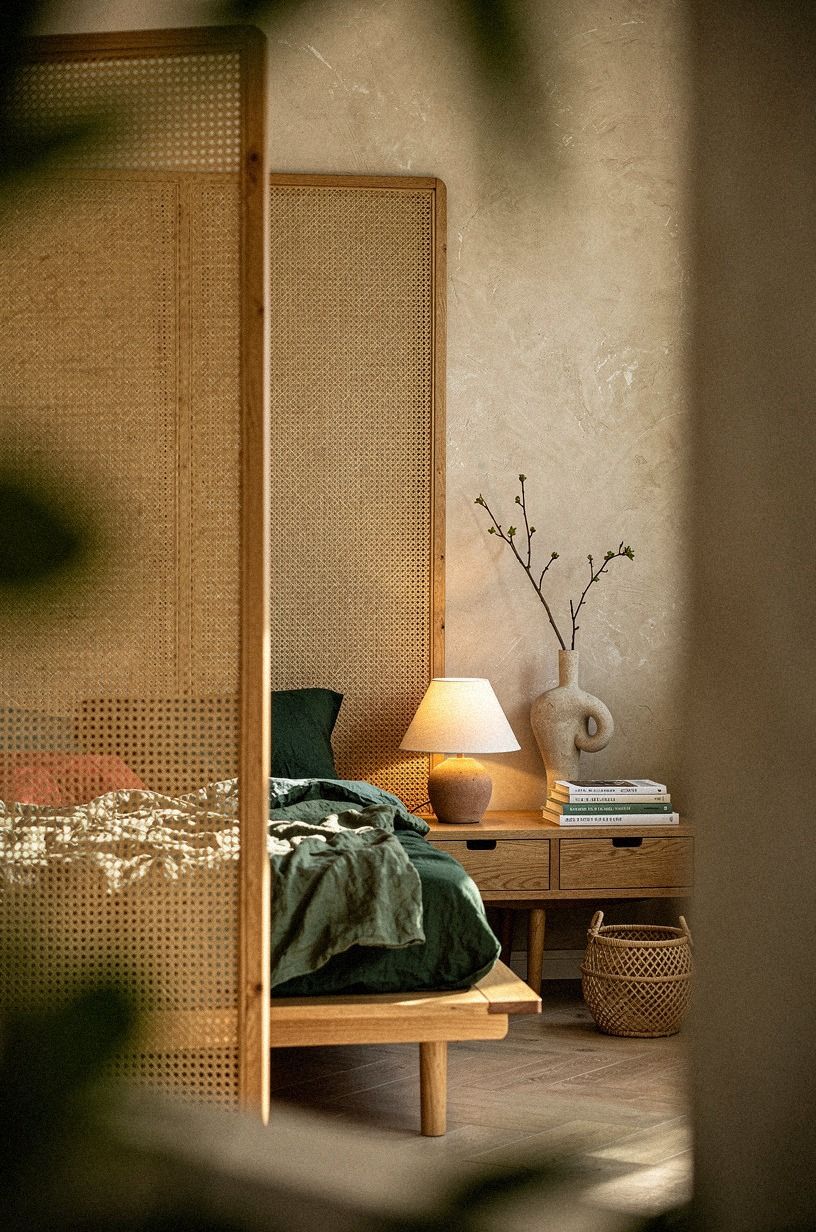
A folding screen gives you flexibility that a fixed divider can’t match. A forest green frame with rust accents and natural oak is my favorite direction because it filters the room into warmer layers instead of stopping it completely. Add a section of hand-applied Venetian plaster nearby for a softly textured backdrop.
Don’t buy the tallest, darkest screen you can find. Your room needs a little mystery, not a barricade. A natural oak frame with a hand-applied Venetian plaster finish looks more thoughtful than glossy black laminate, and it works with both soft bedding and industrial pieces.
The best placement is usually at the foot or side of the bed, leaving one open path into your sleeping zone. You’ll want to walk around the screen without squeezing past your nightstand. Warm oak also pairs nicely with Farrow & Ball Studio Green, especially if your apartment gets gray northern light.
A screen is also a forgiving first step. You can test the visual boundary for a week, then move it if the room feels too closed. For more color direction, browse this earthy bedroom layout guide.
4Paint a half-height studio divider in two tones
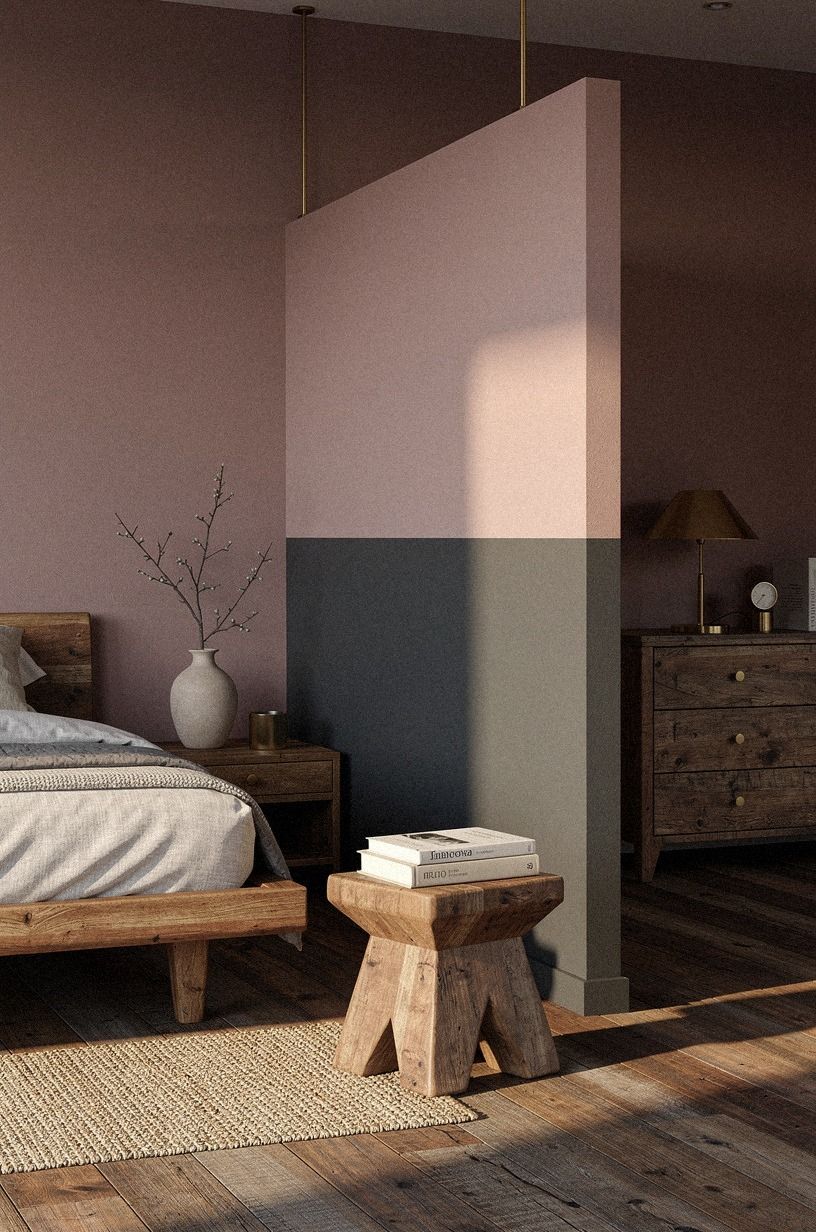
A painted half wall can suggest a separate bedroom while keeping the upper half of the room open.
5Could an IKEA HEMNES wardrobe become the room divider?
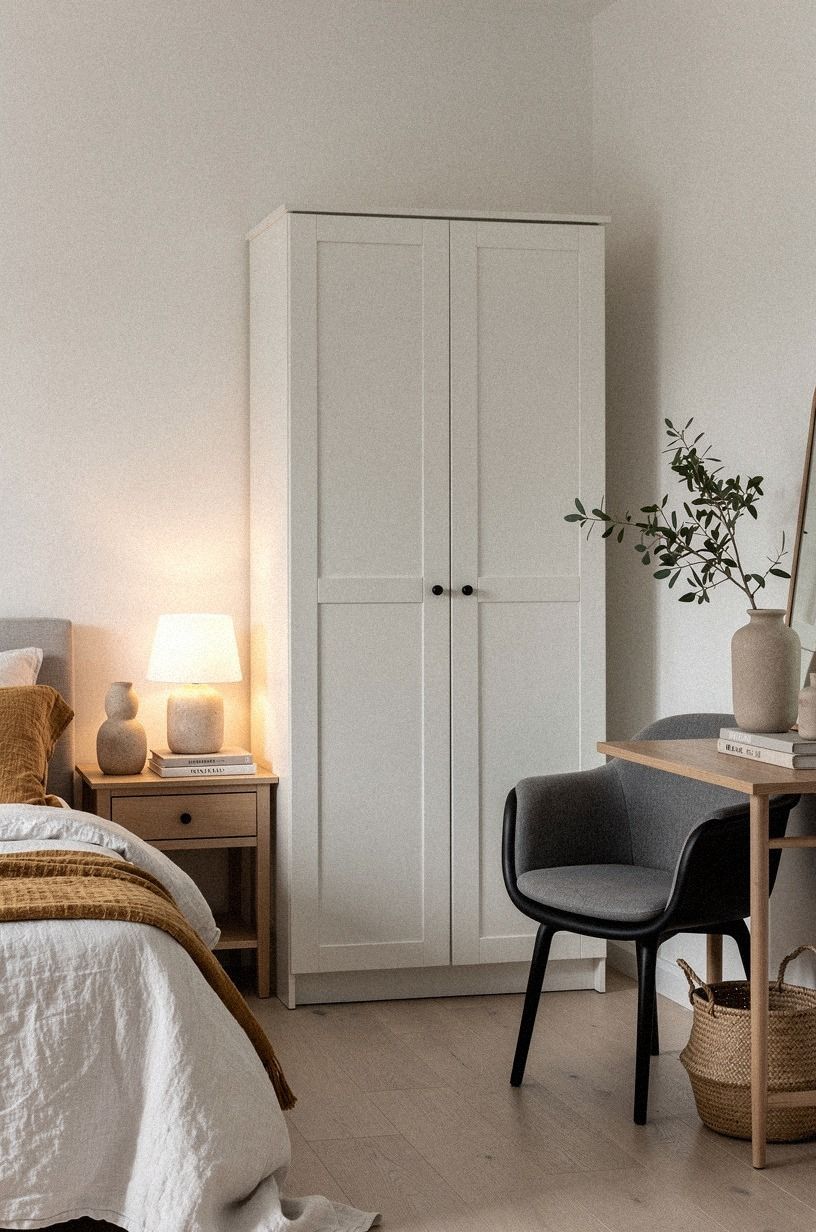
A wardrobe divider works hardest in a studio because it gives you privacy and serious storage at the same time. Choose a shallow IKEA HEMNES wardrobe or another piece with a finished back, then position it perpendicular to the wall. Your bed will feel tucked away, while clothing stays close to where you change.
I’d avoid an unfinished particleboard back facing the living area. You’ll see it every day, and it’ll make the apartment look temporary.
Paint the back a warm white, then add washed Belgian linen nearby or across a small panel if your lease permits it. Camel upholstery and black accents will keep the arrangement grounded.
Measure your walking path before buying anything. A queen bed is 60 by 80 inches, so you’ll need enough clearance for opening doors and making the bed. You’ll thank yourself later when laundry day doesn’t require a sideways shuffle.
A wardrobe can make the sleeping area feel wonderfully private, but it’s the least forgiving option if the studio is already dark. Pair it with a mirror, a nearby lamp, or a lighter rug so the division feels warm instead of heavy. This real-person bedroom budget is worth reading before you buy a large storage piece.
6Build the Three-Height Light Stack around the bed
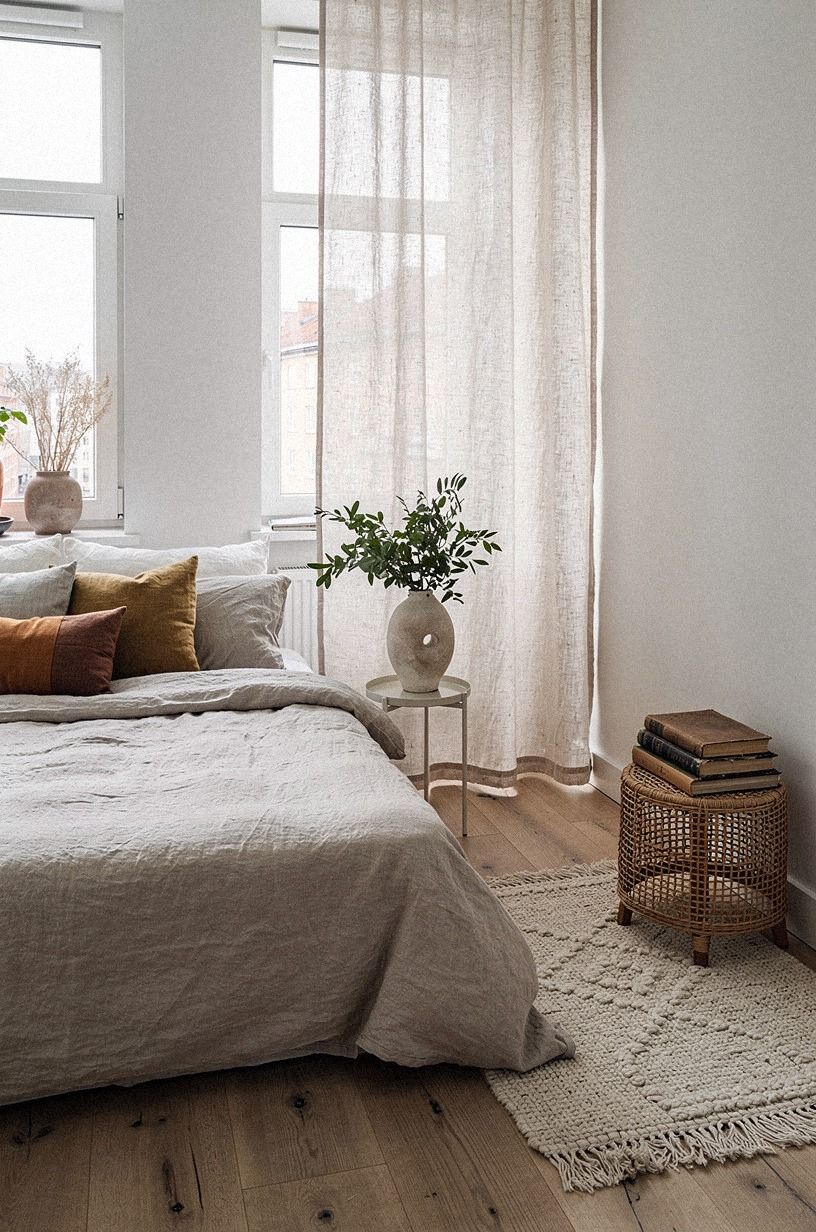
Lighting can divide a studio more convincingly than furniture. Use three heights around your bed: a low bedside lamp, a mid-level wall light, and a taller floor lamp near the divider. Cerused white oak accents will catch the glow and add texture without making the arrangement feel heavy.
The point isn’t brightness. You’re building layers so your bedroom has its own evening atmosphere while the living zone can stay brighter. I’d skip one overhead fixture as your only source.
It flattens every area into the same hard-lit rectangle.
Try a small ceramic lamp on the nightstand, a plug-in sconce above it, and an ivory-shaded floor lamp near the curtain. Copper details will warm the midnight-blue palette without making the bedroom feel dark.
You’ll get a pool of amber light that stops near the rug’s edge. This warm bedroom lighting inspiration can help you choose a calmer setup.
If your wiring is limited, use one excellent lamp and place it where you’ll actually read or unwind. A warm bulb around 2700K will make the bedroom feel restful, while a cooler ceiling light can stay off after dinner. The difference is immediate!
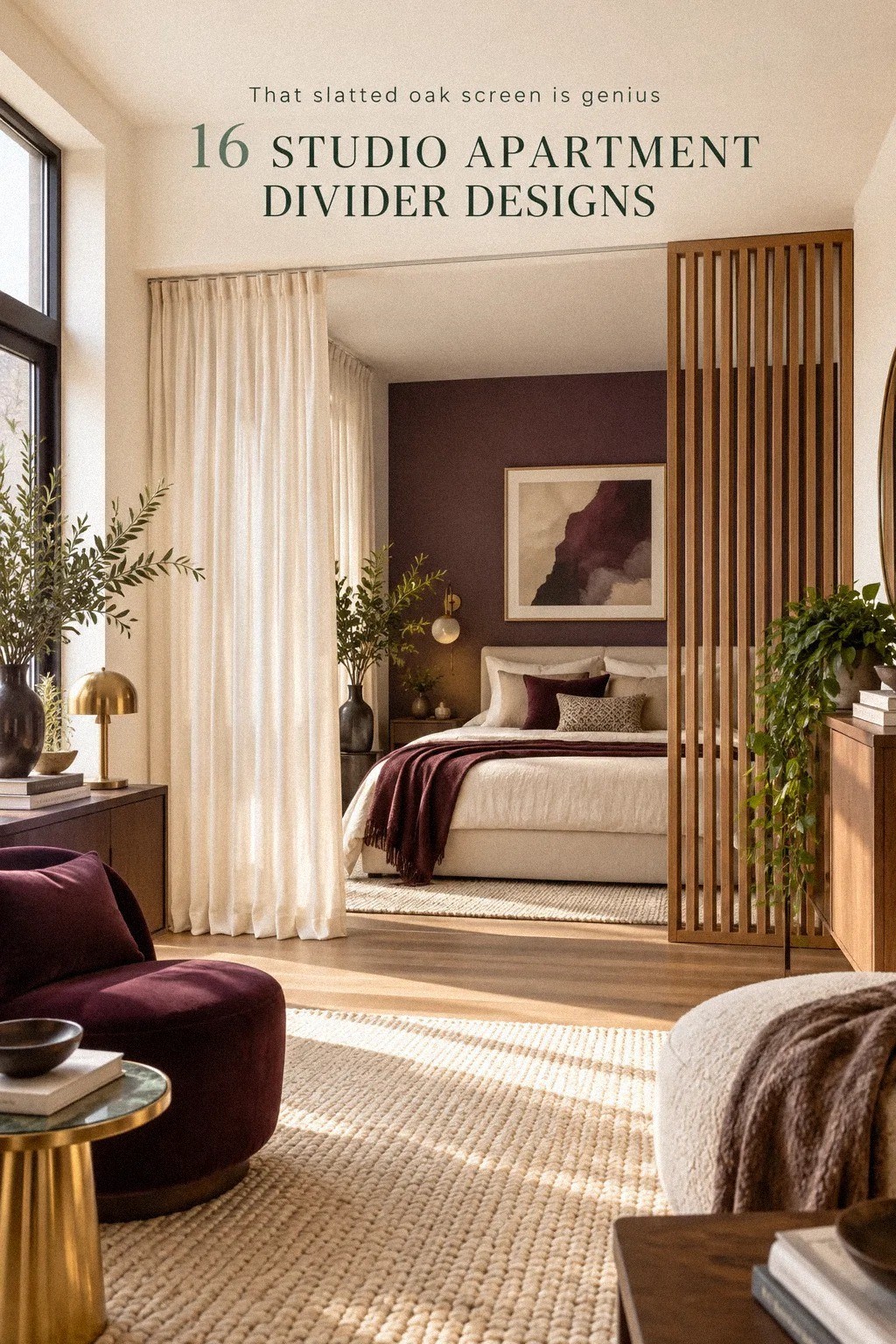
7A rug can mark the sleeping zone without blocking light
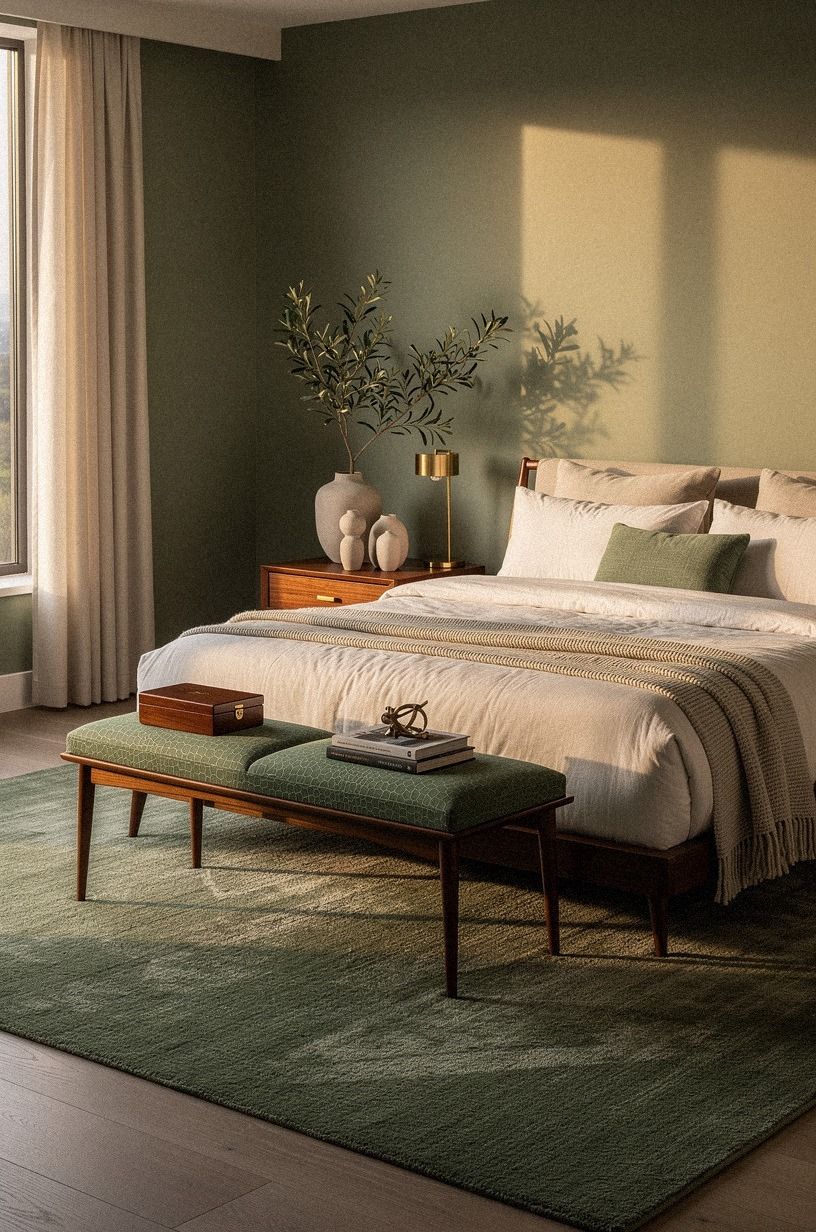
A rug won’t provide privacy, but it can make your bedroom feel like a separate room. Choose a flatwoven rug large enough to extend 18 to 24 inches past the bed. With a queen bed, an 8 by 10 rug gives you a generous landing zone and keeps your feet off a cold floor.
I’d rather see a simple rug used at the right scale than an expensive tiny one floating under the bed. Small rugs make your room look pieced together. Keep the main palette sage green, warm cream, and natural wood, then bring in shagreen accents on a nearby tray or small table.
You can layer a narrow runner beside the bed if an 8 by 10 rug doesn’t fit your budget. Just make sure the rug’s edge doesn’t become a trip point near the divider. Your sleeping area should feel grounded, not cluttered.
Let the rug repeat one color from the divider, bedding, or living-room upholstery. This earthy bedroom layout guide has useful color direction if the apartment feels visually disconnected.
8Swap open shelves for a slatted wood screen
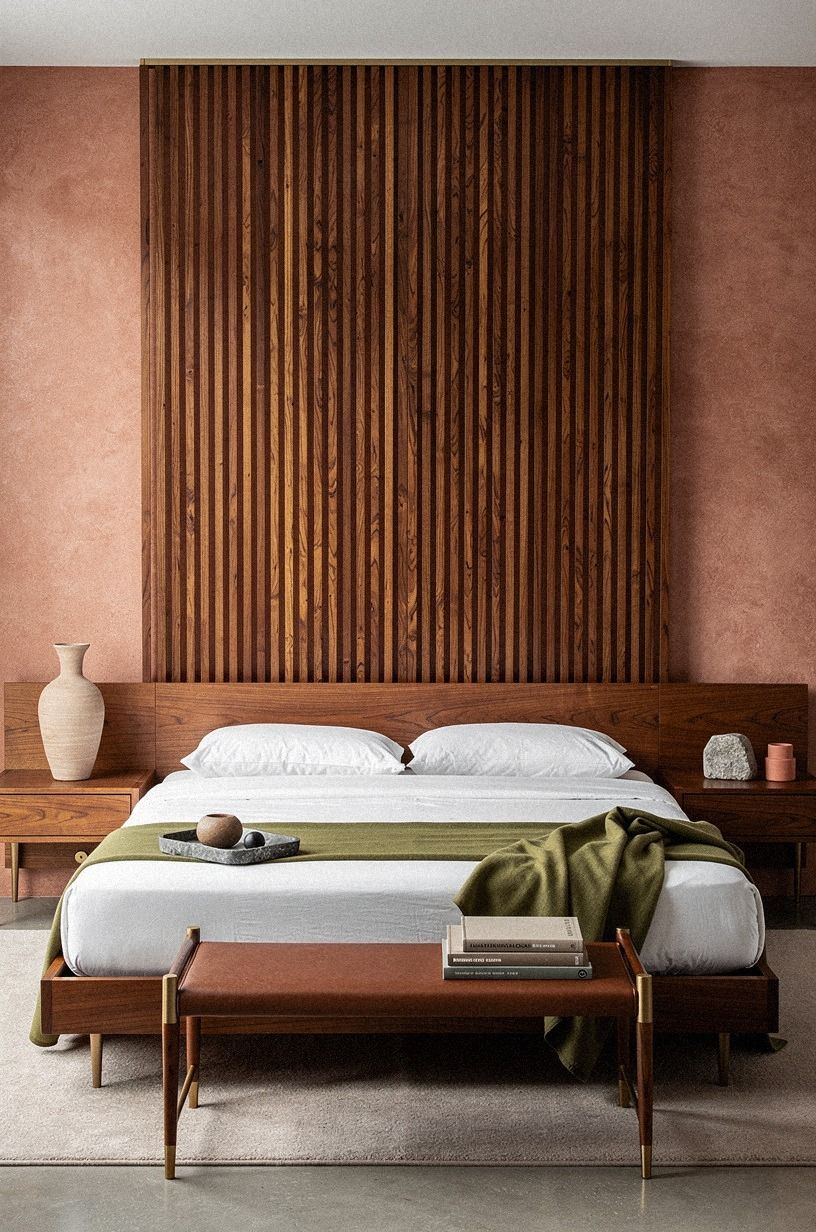
Vertical slats create separation while preserving the long sightlines that make a studio feel larger. Book-matched walnut is especially good here because the grain adds tactile texture without becoming visually heavy. Use terracotta, stone, and olive around it, then leave narrow gaps between the slats so air and light can pass through.
Your slatted screen should relate to something else in the room, such as a walnut coffee table or bed frame. Otherwise it’ll look like a random architectural sample.
I’d skip mixing three wood finishes. Two are enough to make the space feel collected.
Mount the screen securely if you’re using it beside the bed, especially if pets or children could pull on it. You don’t need to build a full wall. A partial screen near the pillow side can give you privacy while leaving the foot of the bed open.
For a more relaxed finish, soften the screen with a linen throw or a low plant nearby. Keep the accessories sparse, though.
The slats already provide rhythm, and too many objects will make the room feel busy. This Korean studio layout shows how much separation a small footprint can handle.
9What belongs behind the headboard?
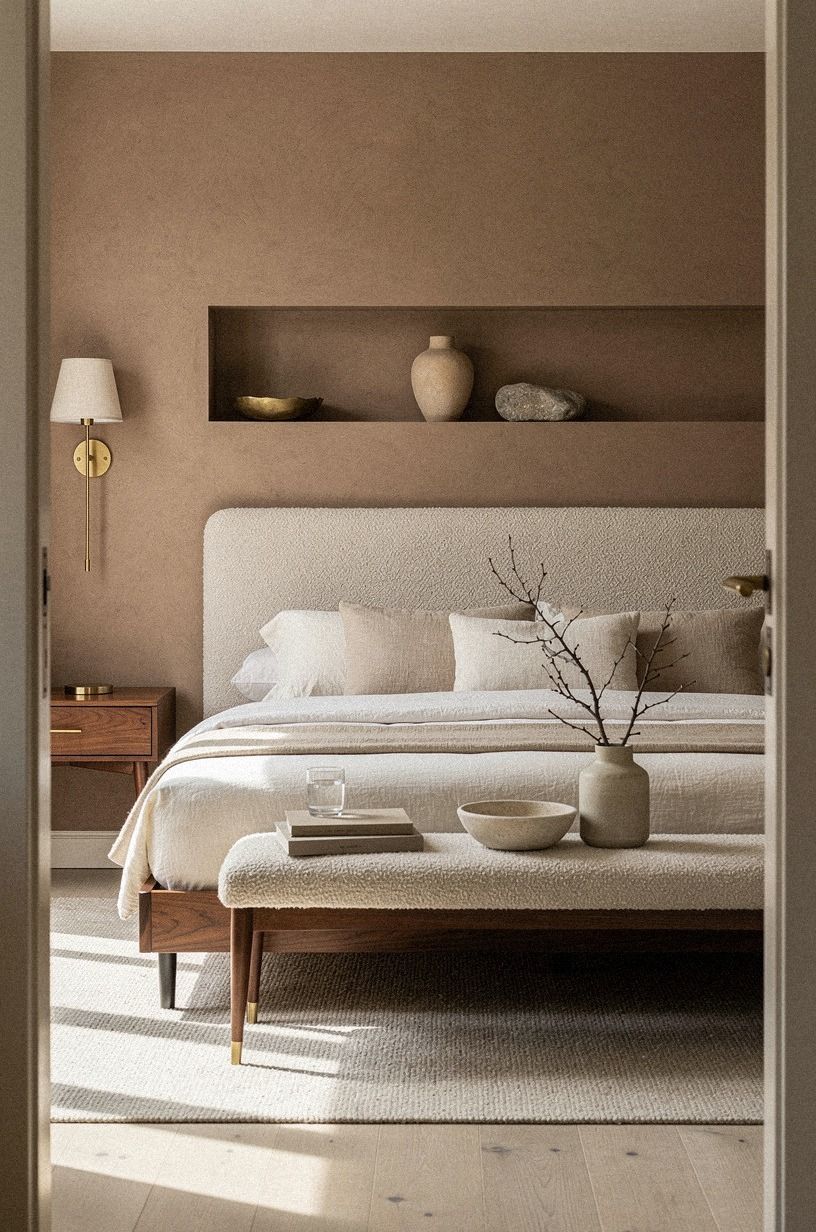
A low console creates a boundary without blocking your view. Place it behind the headboard, then style the top with a lamp, framed art, and a few books. An organic bouclé chair nearby will bring warmth to the living side and keep the apartment from feeling like a furniture showroom.
This idea works best when your bed faces the living room and you want a visual pause behind your pillow. You’ll still see across the studio, but the console tells your eye where one function ends. Add baskets underneath for extra blankets or off-season clothing.
I wouldn’t use a deep dining sideboard here. It’ll steal too much floor space and make the bed feel pushed into a corridor. Choose a low, narrow piece instead, then leave enough room for your bedding to hang without catching on the corners.
The console is especially useful when you want a divider that feels polished but not permanent. Keep its styling quiet and leave a clear path on both sides. This studio bedroom setup can help you compare the required clearances.
10Instead of walls, choose a headboard with presence
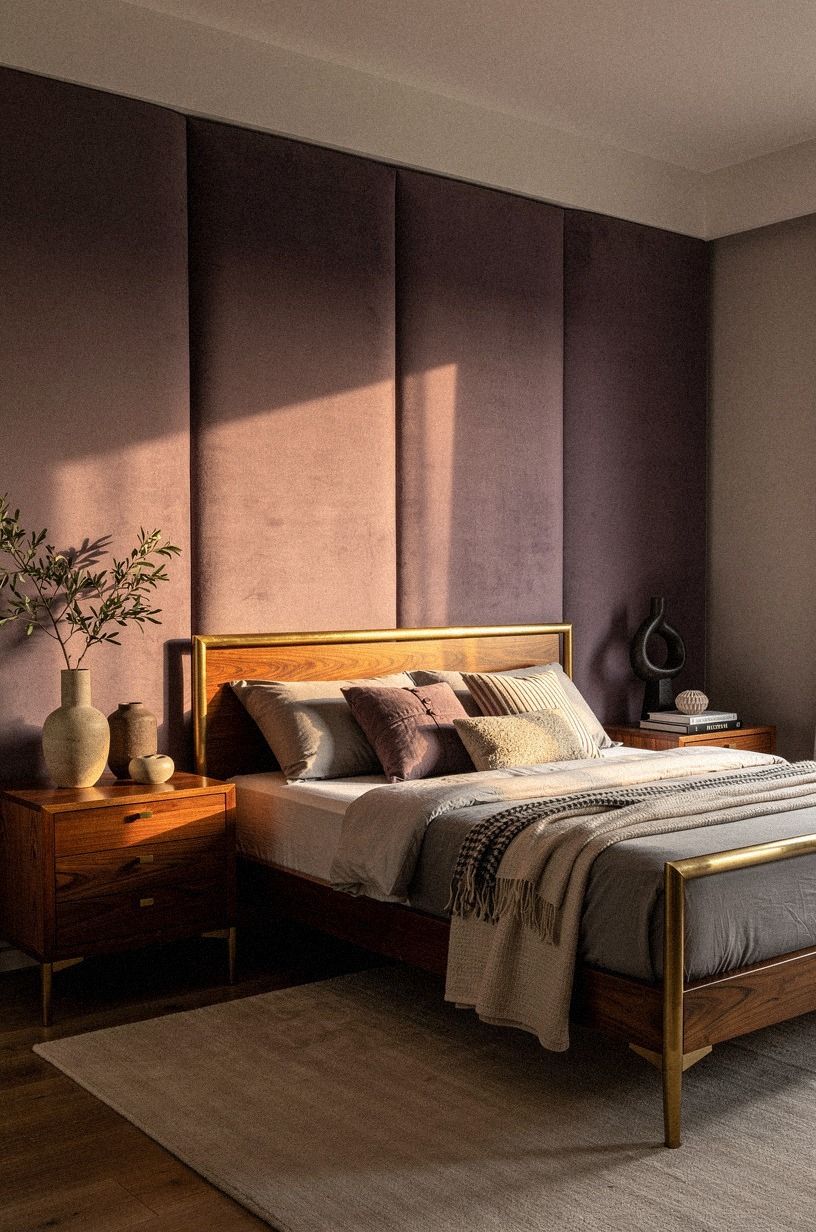
A tall upholstered headboard can act as a soft divider, especially when your bed sits in the middle of the studio. Choose plum upholstery with gray and rose-gold accents, then add an unlacquered brass lamp or table detail that will develop a softer patina over time. The headboard should rise above the mattress but not reach the ceiling.
You’ll want the headboard’s width to extend slightly beyond the mattress so it feels substantial. Don’t let it swallow the whole room, though. A king bed measures 76 by 80 inches, and that footprint can overwhelm a narrow studio faster than you’d expect.
I’d choose a queen unless you truly need the extra sleeping space. The smaller footprint leaves more room for a nightstand, a walkway, and a divider behind the bed. You can still make it feel generous with layered bedding and one oversized textile panel.
A curved headboard can soften a boxy apartment, while a squared design feels more architectural. Either way, keep the profile clean.
A strong headboard should anchor the room, not compete with every other piece. These studio apartment ideas include other ways to make one bed feel intentional.
11Hang art to make the bed feel intentional
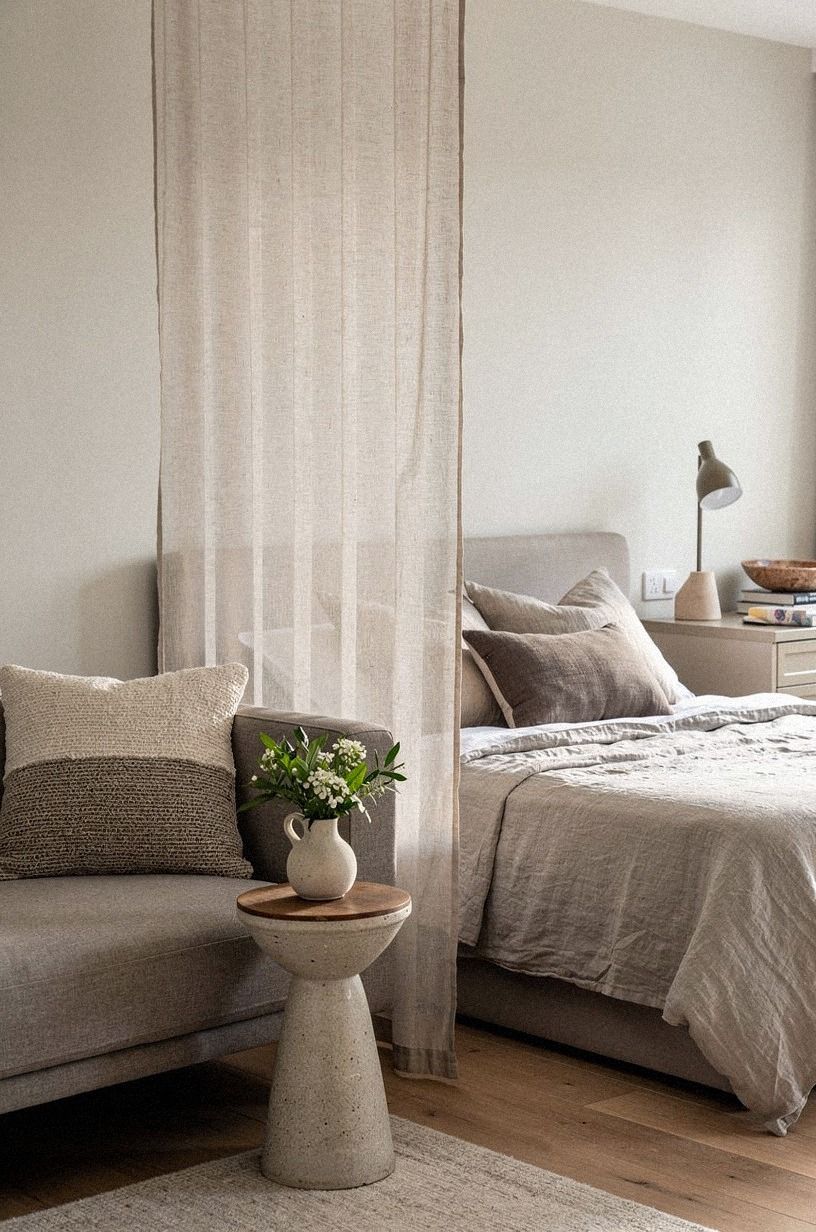
A large artwork panel can create a bedroom backdrop without adding another piece of furniture. Choose a deep-pile mohair velvet wall hanging in navy, white, and walnut tones. The goal is to give the wall behind your bed a clear visual purpose.
You don’t need a gallery wall here. Several small frames can look nervous when your apartment already has multiple functions competing for attention. One broad piece gives your eye somewhere to rest, and it’ll make the bed feel more anchored.
Hang the art low enough that it relates to the headboard, but leave room for pillows and lamps. I once placed a textile too high, and the bed looked disconnected from the wall. You’ll get a stronger result when the lower edge feels close to the furniture.
A dramatic abstract can work just as well as a textile panel. Look for a piece with one or two colors already present in the room. This earthy bedroom guide has helpful ideas for building a layered palette.
12The Three-Zone Curtain Plan gives a long studio structure
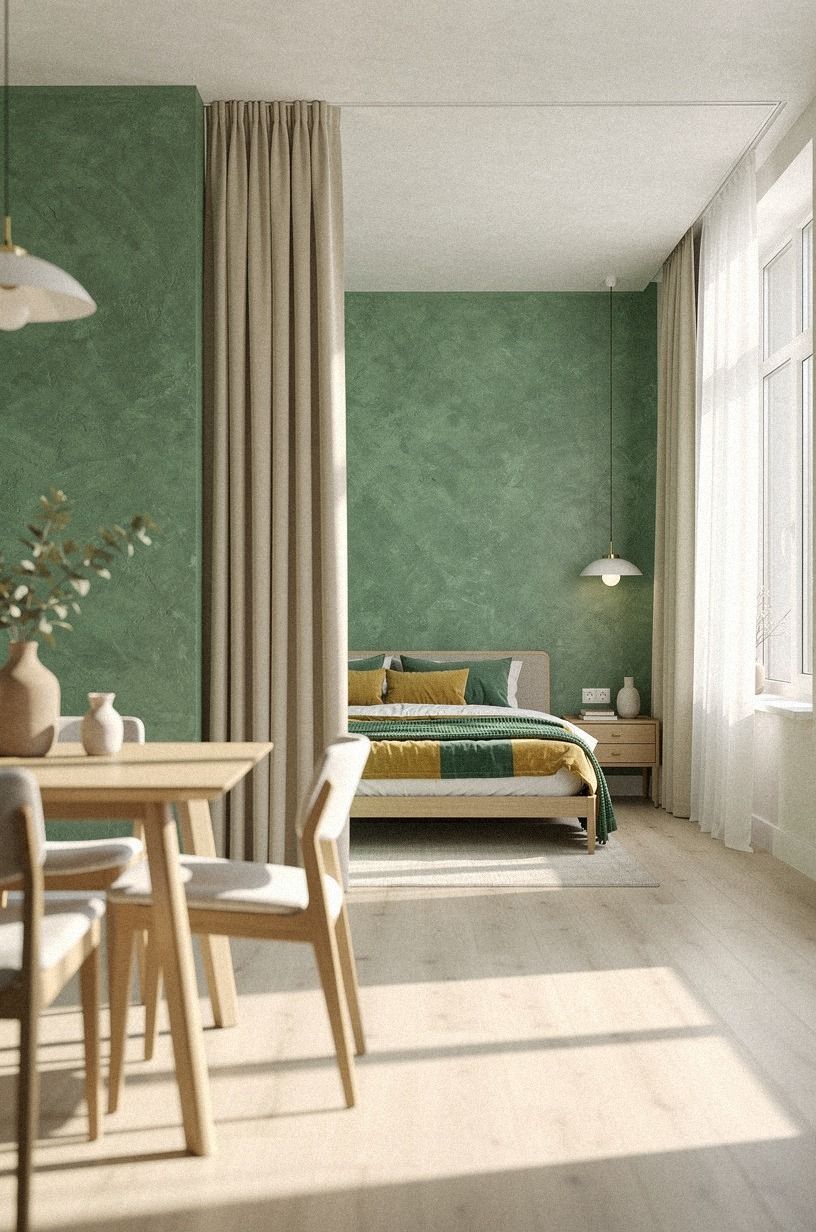
One curtain panel can divide the room, but three zones make the layout work harder. Use a sheer panel along the window, a heavier panel beside the bed, and a short fabric treatment near the closet. Keep the surrounding wall in hand-applied Venetian plaster, then use emerald, gold, and cream in the fabrics and accessories.
This plan is useful when your entry, kitchen, and bed all share one long sightline. You’ll guide movement with fabric rather than walls. Because the panels can move, you can open the apartment completely when friends visit.
Your curtain rods or tracks should coordinate, but the fabrics don’t need to be identical. I’d use a slightly darker bedroom panel so your sleeping zone feels quieter at night. For more small-space examples, look at this 400-square-foot Korean studio.
The trick is to repeat the same hardware finish while varying texture. A sheer cotton panel, a nubby linen panel, and a simple woven shade can feel related without looking staged. That mix gives the apartment a relaxed, editorial quality.
13Float a desk between work and sleep
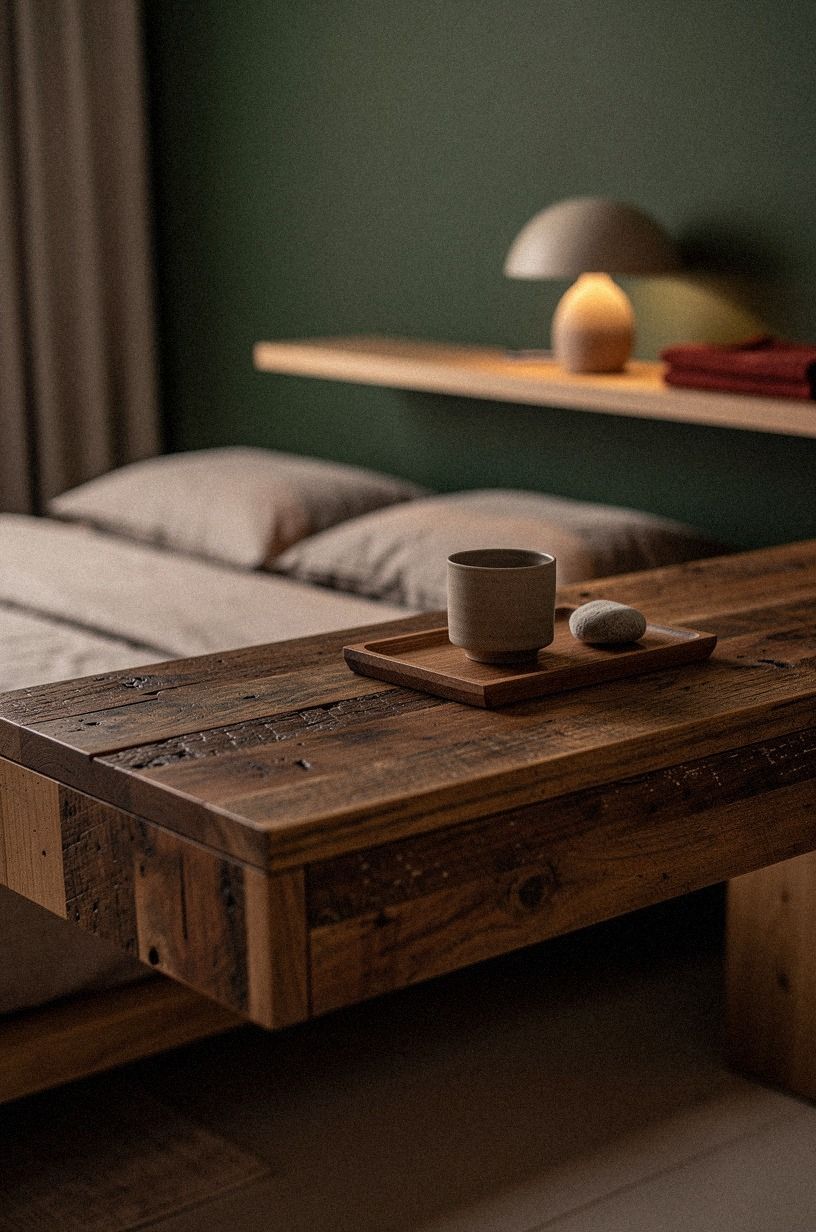
A desk can become a useful divider when you place it behind the bed rather than against a wall. Choose a slim reclaimed weathered teak desk with clean legs, then keep the surface restrained. Your work zone will face the living area while the bed gets a little separation behind it.
I’d never use a bulky executive desk in a studio. It’ll make the room feel like an office with a bed attached.
A narrow desktop, a small task lamp, and one drawer are enough for most daily work. You’ll preserve floor space and still have a proper place to focus.
Keep the desk chair from rolling into the sleeping area by using a flatwoven rug under the workspace. You’ll feel the change underfoot, and the two functions will read as separate. Don’t let the desk become a catch-all for laundry, mail, and chargers.
A wall-mounted shelf above the desk can hold the essentials without creating another bulky zone. This real-person bedroom budget is useful if you’re deciding where to spend on storage, lighting, or textiles.
14Budget contrast: choose the divider based on its honest cost
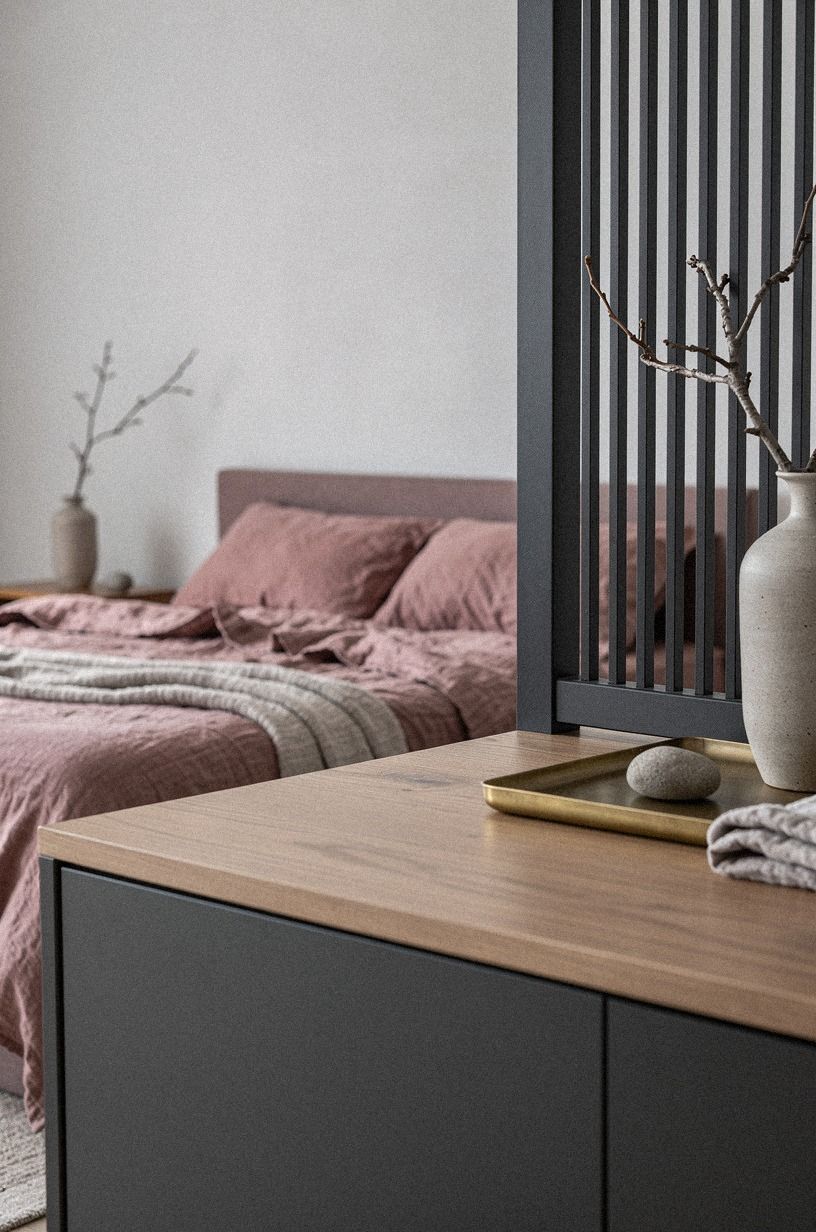
Your divider project can cost almost nothing if you work with what you own, or it can become part of a larger bedroom makeover. Typical US bedroom costs vary widely depending on whether you’re refreshing textiles or adding built-ins.
For most renters, I’d start with a curtain, rug, and better lighting. You’ll get privacy and warmth without spending on permanent construction. A wool rug alone can run $400 to $1,500, while linen drapes typically land around $120 to $400 per pair.
And if you’re working with a smaller budget, your free tools are still powerful: rearrange the bed, edit the furniture, and use existing textiles in a new zone. This real-person bedroom budget guide is worth reading before you buy anything.
The expensive option isn’t automatically the better one. A thoughtfully placed curtain can feel more elegant than a rushed built-in, especially when the apartment needs more light. Spend first on the pieces you touch, walk around, and see every night.
15Which divider should answer your three practical questions?
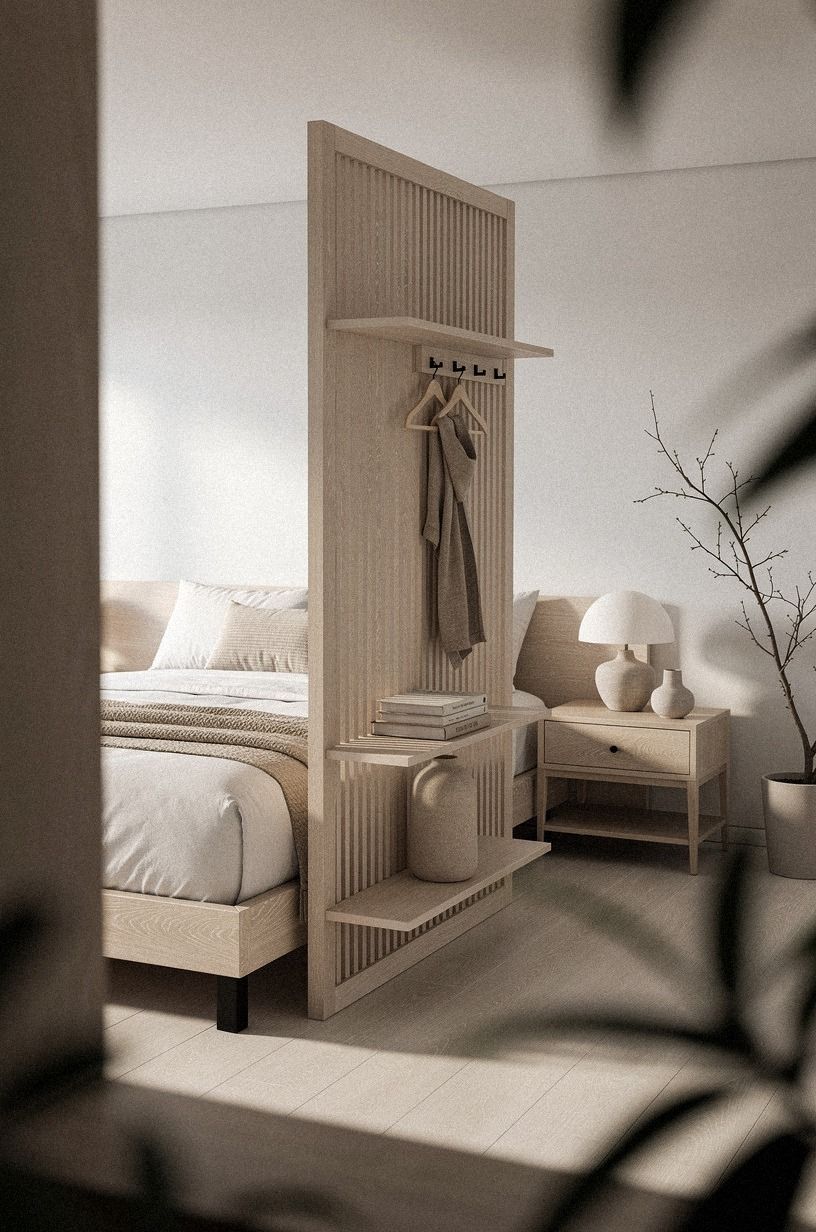
Before you choose a divider, ask yourself three practical questions: Can you sleep comfortably behind it? Can daylight still reach the living area?
Can you move through the apartment without bumping into it? If the answer is no, the prettiest screen won’t save the layout.
Your divider should also support the way you live. A curtain is best for flexible privacy, a wardrobe is best for storage, and a half wall is best when you want a stronger architectural boundary. A cerused white oak bedside table can add warmth without crowding the room, especially with warm white, camel, and black accents nearby.
What matters most is the relationship between the divider and the bed. Keep the nightstand near mattress height, generally 24 to 28 inches tall, so your lamp and phone are easy to reach. You’ll notice that small comfort every night.
Think about sound, too. A thick curtain or upholstered headboard can soften the apartment’s echo, while a slatted screen mainly changes sightlines.
If the living room stays loud, privacy needs to include acoustics. Browse these 10 studio apartment ideas before choosing based on appearance alone.
16Paint the studio divider with a warm color story
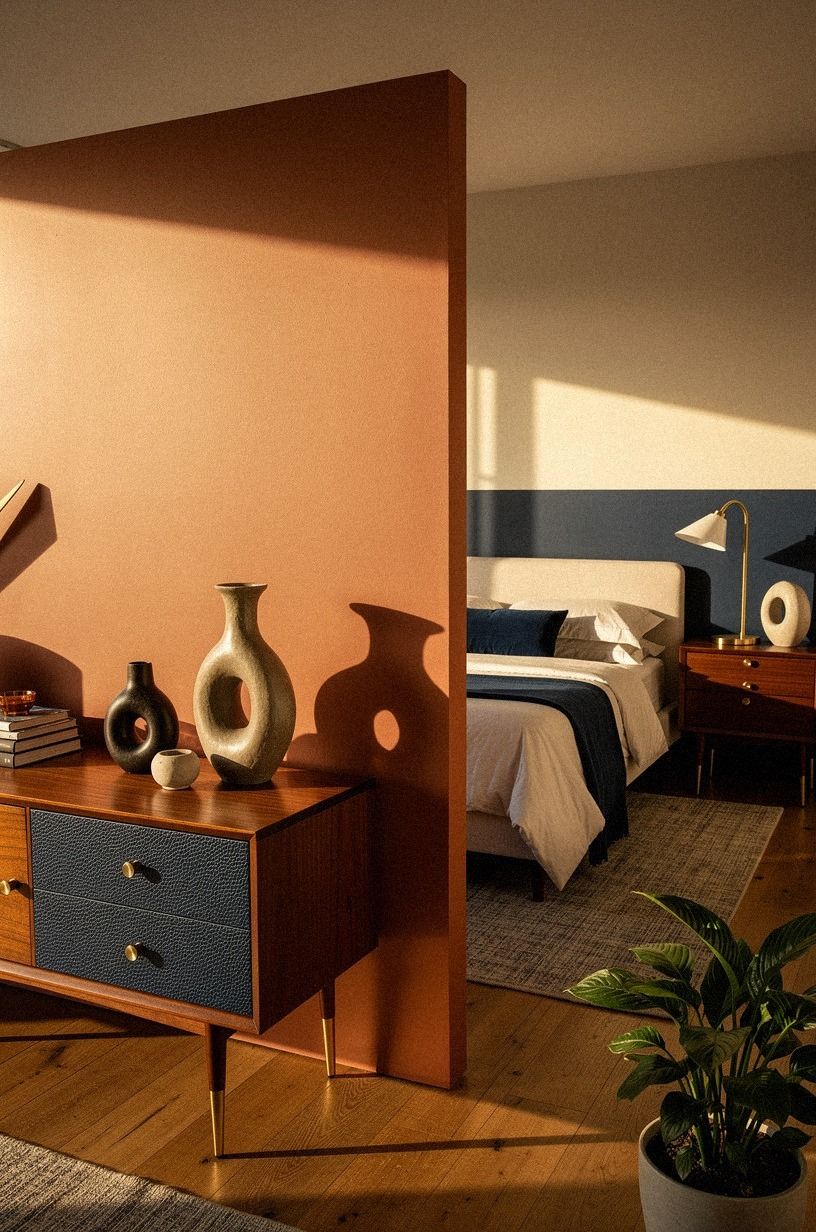
A divider feels more permanent when its color connects to the rest of the apartment. Use Benjamin Moore Hale Navy HC-154 on a wardrobe back, panel frame, or half wall, then repeat the shade with copper lighting and ivory textiles. Add shagreen accents to give the midnight-blue palette some tactile contrast.
I’d avoid using a cold gray beside the bed. It can make the sleeping zone feel flat, especially under evening bulbs. Farrow & Ball Pointing No. 2003 gives you a softer ivory, while a copper-toned accent will bring warmth without taking over the room.
And don’t match every object to the divider. A little contrast keeps your bedroom from looking staged.
Mix midnight blue, ivory, and copper, then let one darker element give the arrangement some weight. You’ll get a warm, lived-in room instead of a showroom corner.
If you want more drama, use the navy on a small panel or wardrobe back rather than across the entire apartment. The color will feel intimate and inviting without taking over the room. A focused color story can do more than a complicated divider!
The Design Choice I’d Make in a Studio
I’ve changed my mind about studio dividers more than once. At first, I wanted the strongest visual wall possible because privacy felt like the main problem. Then I lived with a tall, opaque shelf and realized I’d traded privacy for a cramped room.
The bed was hidden, but the apartment felt darker, and every morning started with a wall in my face.
Now I judge a divider by three things: what it hides, what it lets through, and what it stores. A curtain can hide the bed while allowing daylight to travel.
A bookcase can hold books and linens while leaving glimpses between the shelves. A wardrobe can give you the most privacy, but it needs a finished back and enough clearance to keep your walkway comfortable.
The smartest choice depends on your real frustration. If you can’t sleep because the living room stays active, choose a lined curtain.
If clothing is taking over your floor, use a wardrobe. If the apartment feels visually messy, pick a low console or open shelf and edit what you display.
You don’t need the most permanent option. You need the one that solves the problem you notice every evening.
I’d also spend money on the parts your body experiences: the mattress, the rug underfoot, the bedside light, and the bedding. A divider can look polished in the room, but your space has to feel good at midnight. Soft fabric, warm light, and a clear path to the bathroom will matter more than a fashionable partition.
And give yourself permission to leave one side open. A bedroom can feel private without being sealed off. That little view across the apartment may be exactly what keeps your studio airy, bright, and comfortable.
What People Always Want to Know
What is the best studio apartment divider for a small bedroom?
A ceiling-mounted linen curtain is usually the best choice because it gives you privacy without blocking daylight. Belgian flax linen feels softer than polyester, while an IKEA KALLAX works better if your priority is storage. You’ll want the divider to leave a clear walking path around your bed.
Where can I buy studio apartment divider pieces on a budget?
Look at IKEA, Wayfair, and Target first, then check Facebook Marketplace or a local thrift shop for screens and consoles. You don’t need a matching set. A secondhand shelf, fresh paint, and better lighting can create a warm bedroom zone for much less.
How much does a studio apartment divider makeover cost?
A simple refresh can fit inside the $200 to $800 budget tier if you use paint, bedding, shades, and art. A mid-range plan with a headboard, rug, custom drapes, and lighting typically runs $1,500 to $5,000. Rearranging your furniture is free.
Can I create a studio apartment divider on a budget?
Yes, and you can start without buying anything. Move the bed, use an existing bookcase as a boundary, and group your lighting around the sleeping zone.
For a paid upgrade, choose curtains before a built-in. You’ll gain privacy without committing your entire budget.
Is a studio apartment divider worth it in a small space?
Yes, because a clear bedroom zone can make a small apartment feel calmer and easier to use. Keep the divider partial, protect your walkway, and let daylight pass through. A rug extending 18 to 24 inches beyond the bed can strengthen the zone without adding bulk.
Is a studio apartment divider a good idea for a rental?
Yes. Tension rods, freestanding screens, removable wallpaper, and peel-and-stick panels can give you separation without permanent construction. You’ll still want to check your lease before painting or mounting a track.
For more rental-friendly layouts, browse these studio apartment ideas that feel like a real home.
Where I’d Start First
If I had to pick one, I’d start with a ceiling-mounted linen curtain. It gives you nighttime privacy, keeps daylight moving, and won’t steal the floor space your bed already needs. Pin the curtain idea for later and compare it with this basement studio apartment layout before you buy hardware.