 by
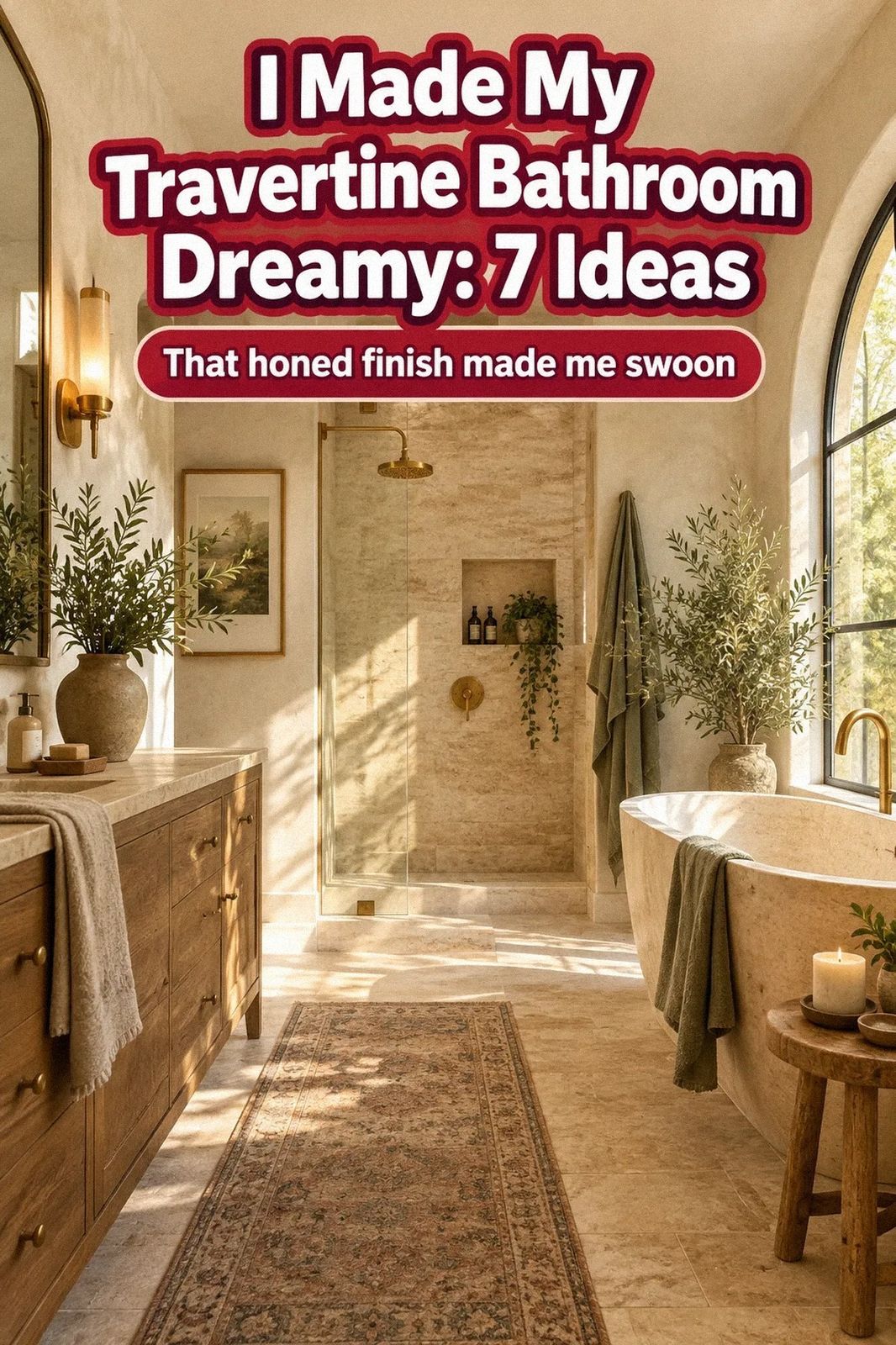
by *How to update a travertine bathroom (modernize it without replacing) starts with leaving the stone alone. I learned that after staring at my yellow-beige floor tiles for three years and assuming they were the whole problem.
They weren't. The room felt cold because every other choice fought the travertine.
I changed the paint, lighting, hardware, and the soft things I touched every morning. The bathroom finally felt warm, modern, and like mine.
The Travertine Wasn't the Problem in My Warm Stone Bathroom
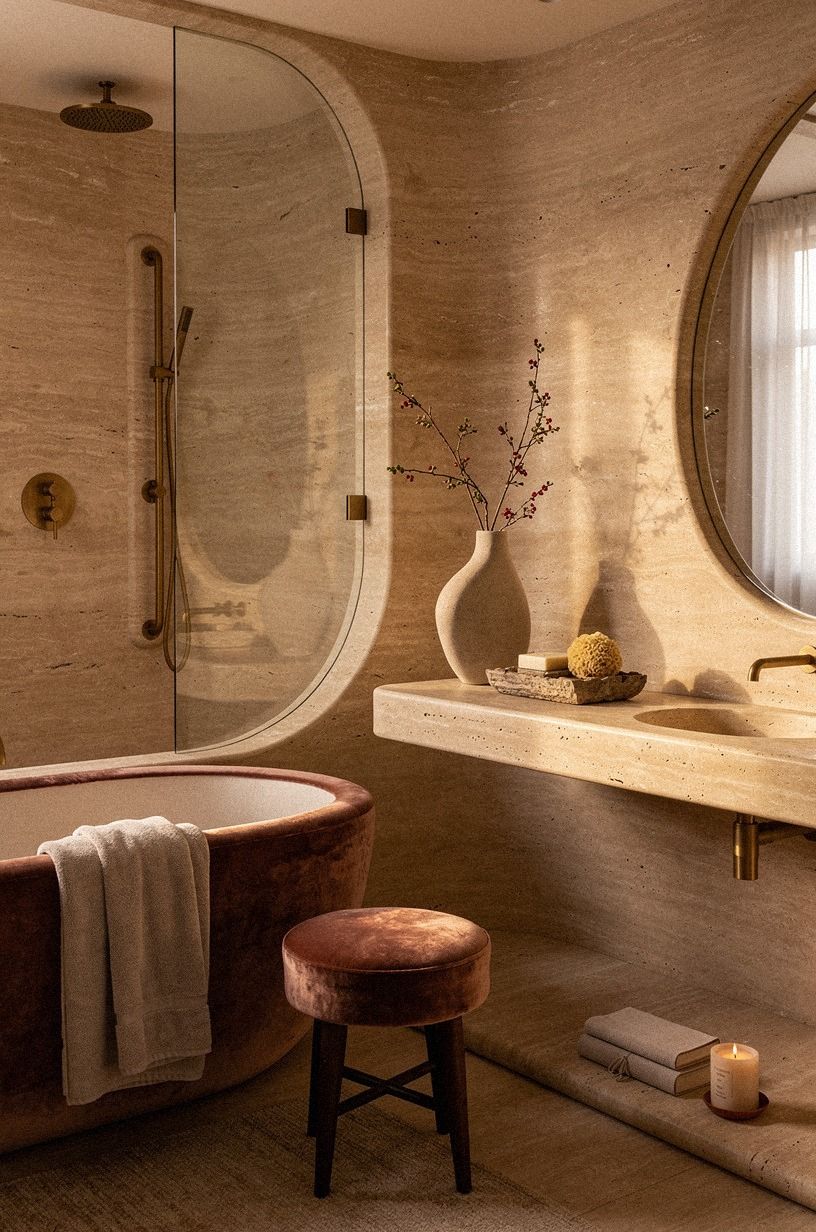
My bathroom had the full early-2000s package: tumbled travertine, dark grout lines, a builder-grade mirror, and lights that made my face look gray before coffee. The shower was a comfortable 36 by 36 inches, but the room still felt cramped because nothing had a visual resting place.


I kept browsing complete bathroom renovations, then closing the tabs. Replacing the tile would have meant dust, plumbing decisions, and a bill I wasn't ready to invite into my life. I decided the stone deserved a chance first.
But I had to stop treating it like an embarrassing leftover. I liked the small pits and uneven edges once I looked at them in daylight.
Too yellow. Too busy.
That was my first honest reaction, and it gave me somewhere to start.
I saved a few organic modern travertine bathroom ideas with warm stone and wood and noticed the same pattern: the best rooms didn't erase the stone. They lowered the visual noise around it.
I Let the Stone Choose a Modern Travertine Palette
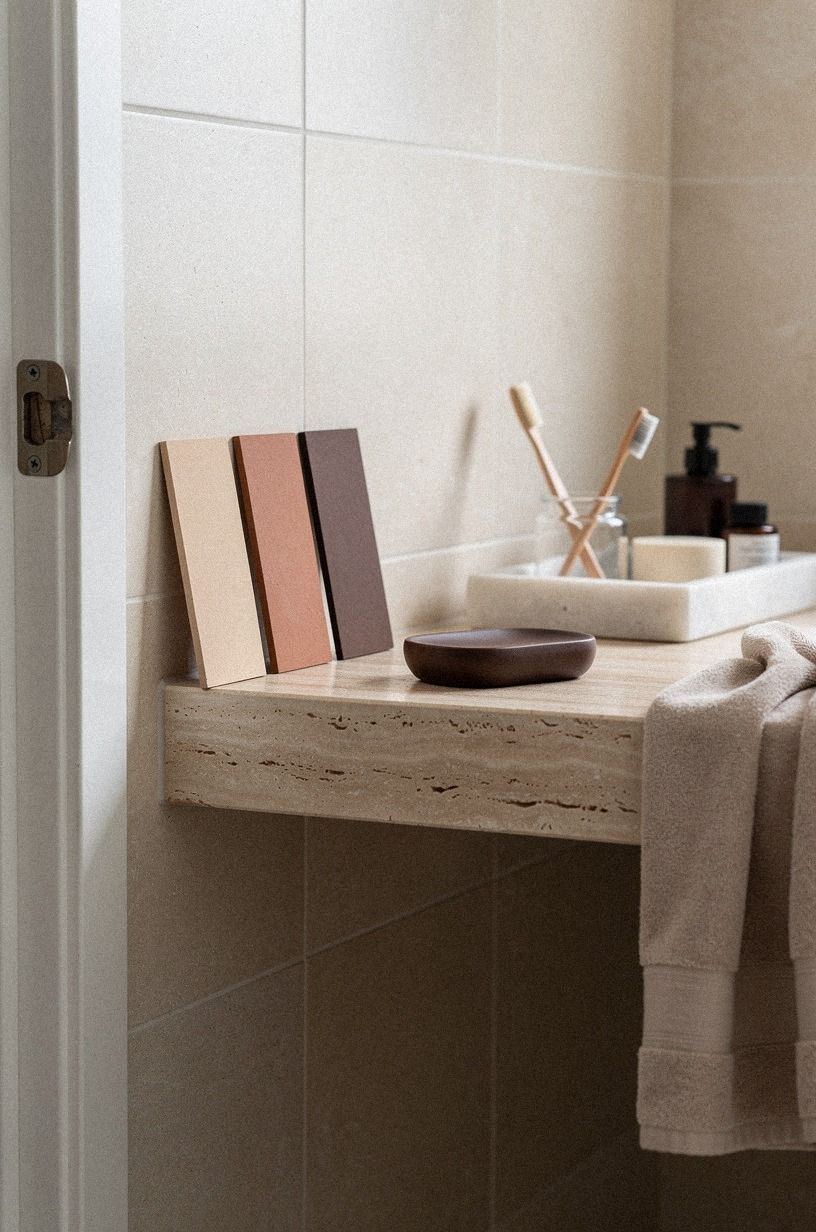
I tested paint samples beside the floor instead of beside the white trim. That small change mattered. Farrow & Ball Hague Blue No.30 made the travertine look orange, so I rejected it immediately.
Dramatic, yes. Right for my bathroom, no.
Benjamin Moore Chestertown Buff HC-9 was the winner. It has enough warmth to connect with the stone without turning the room beige-on-beige. I painted the walls and left the ceiling bright, which kept the low room from feeling heavy.
I considered Sherwin-Williams Sea Salt SW 6204 because every bathroom mood board seemed to love it. But the cool green made my travertine look dull and slightly pink. I wasn't willing to make the floor look stranger just to chase a popular color.
And I didn't paint the vanity white. That would've created a hard, disconnected block under the mirror. The existing wood tone was imperfect, but it echoed the deeper marks in the stone, so I cleaned it, lightly sanded the worst spots, and used a warmer finish.
For your own room, tape samples at eye level and check them in morning and evening light. A warm stone bathroom needs a color that can sit beside the floor at 7 a.m., not just look good under a store's bright ceiling panels.
I Changed the Pieces My Hands Touched
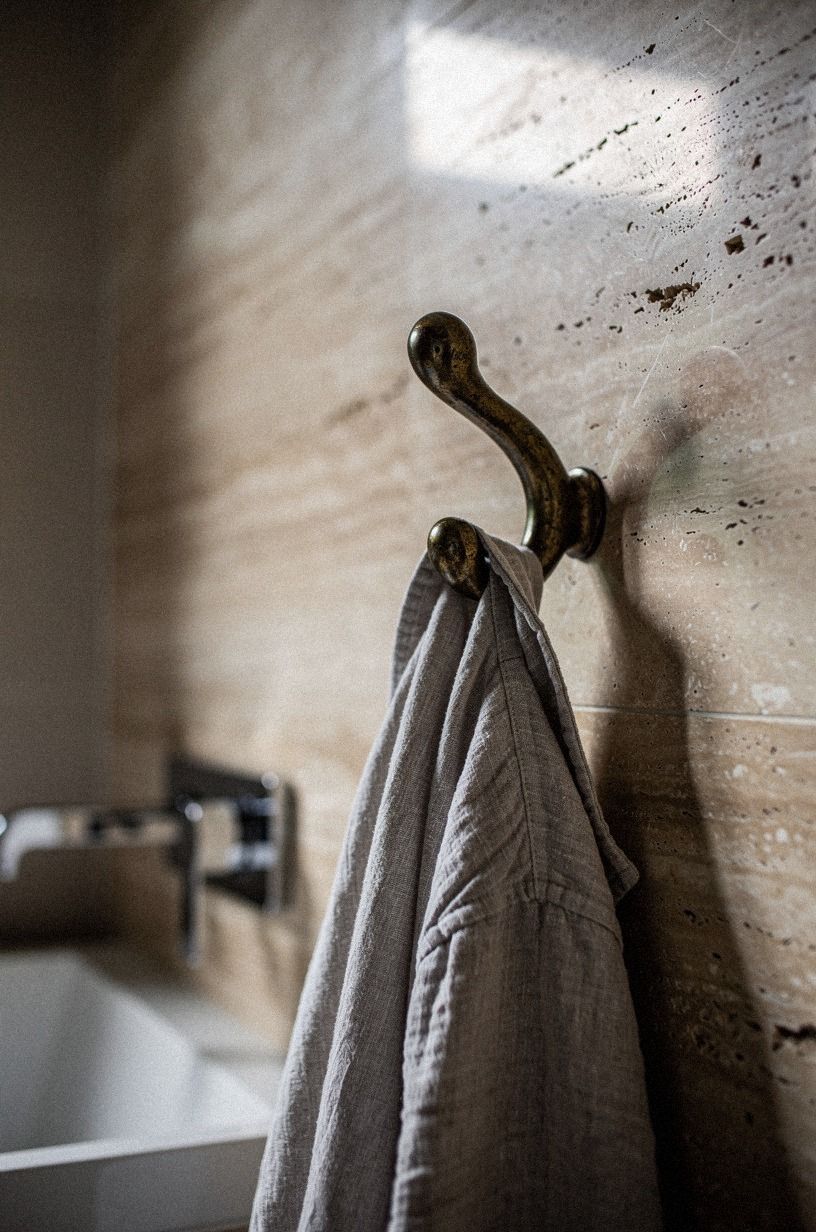
The vanity height was already close to the standard 32 to 36 inches, so I didn't replace it. I changed the pieces that made the room feel cheap instead. A slim framed mirror replaced the wide frameless one, and a simple faucet in muted metal gave the vanity a quieter outline.
I chose brushed nickel over bright brass. That opinion surprised me because I usually love brass, but shiny brass would have pulled attention straight to the faucet. The travertine already had enough movement.
I wanted the hardware to sit back.
The towel fabric made more difference than I expected. I brought in thick cotton towels in oat and cream, then added a small bath mat with a low, flat weave.
No fringe. No loud pattern.
Just texture that softened the hard floor under my feet.
But I didn't buy a matching bathroom set. Matching sets made the space feel staged, and I wanted it to feel like a room I used every day. One ceramic cup, a wood stool, and a single amber glass bottle were enough.
I wasn't sure the stool would earn its space. It did. Now it holds my towel, catches the afternoon light, and gives the long vanity wall one grounded shape instead of a row of objects.
The Piece My Whole Bedroom Is Built Around
Natural materials, a 365-night home trial, free white glove delivery. Decide in your own room, not a showroom.
I Softened the View From the Bed
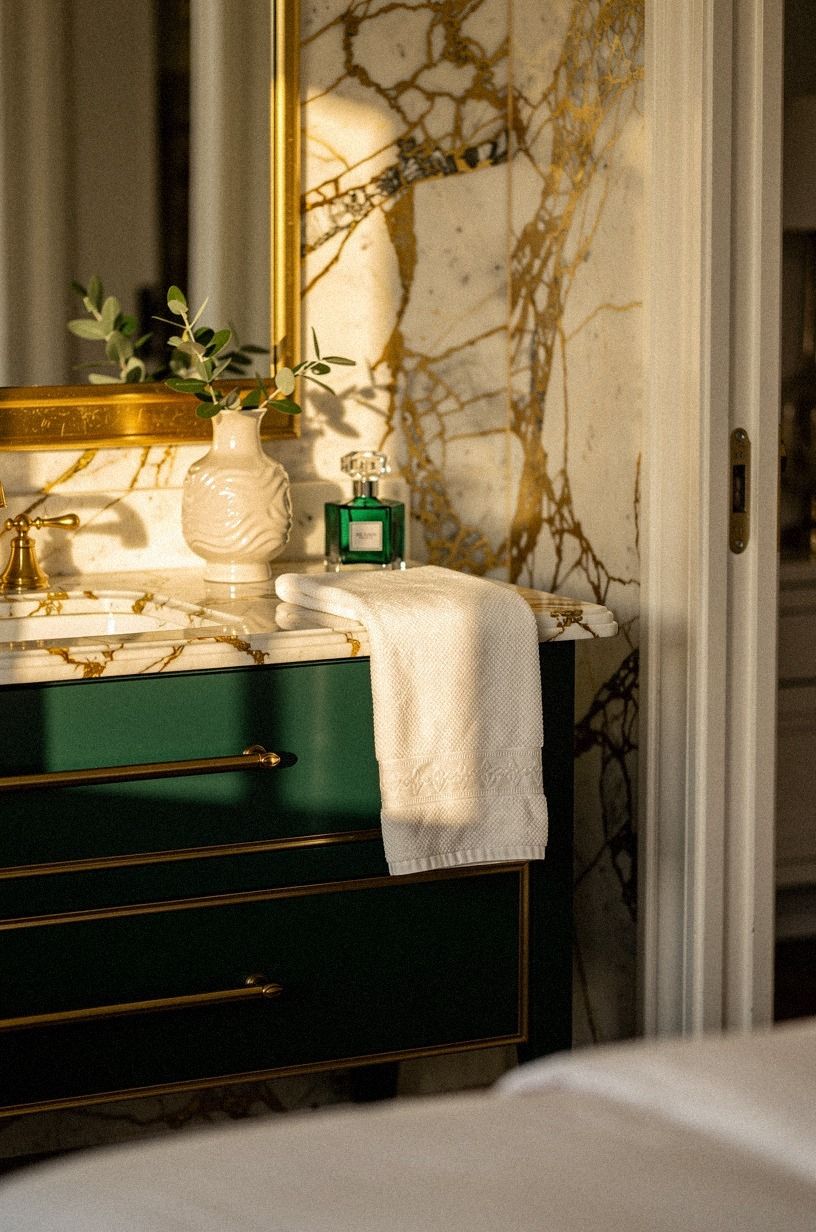
The bathroom door opens toward my bedroom, so I could see the vanity from bed. That made the update feel bigger than a tile problem. Every night, the bathroom was part of the bedroom's visual field, and the two rooms were telling completely different stories.
I started with the bed because it was the first thing I saw in the morning. I replaced the old mattress with Zenhaven, then used Organic Cotton Sheets in a warm ivory tone. The softer palette made the travertine look less dated from across the room.
That wasn't a bathroom purchase, exactly. It was the decision that helped me understand the suite as one space.
I didn't want a polished vanity beside a tired bed. I wanted the path from pillow to shower to feel calm.
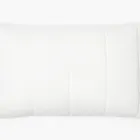
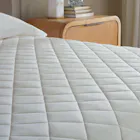
I added an Organic Quilted Pillow at the back of the bed, not as decoration, but because I needed one pillow that held its shape while I read. Then I used an Organic Mattress Pad to soften the bed without making it feel too tall.
I can't claim those choices will fix anyone else's sleep or allergies. They changed my comfort, and that's all I can honestly say. The bedroom felt quieter, which made the bathroom's warm colors feel intentional instead of random.
For a small suite, this connection matters. You don't need identical finishes in both rooms. You need one repeated note, such as ivory cotton, warm wood, or muted metal, so your eye doesn't stop at the doorway.
I Made the Lighting Do More Work
The old vanity bulbs were the last thing I wanted to deal with, which usually means they were the thing I needed to deal with first. They threw a flat white glare across the travertine and made every grout line look darker.
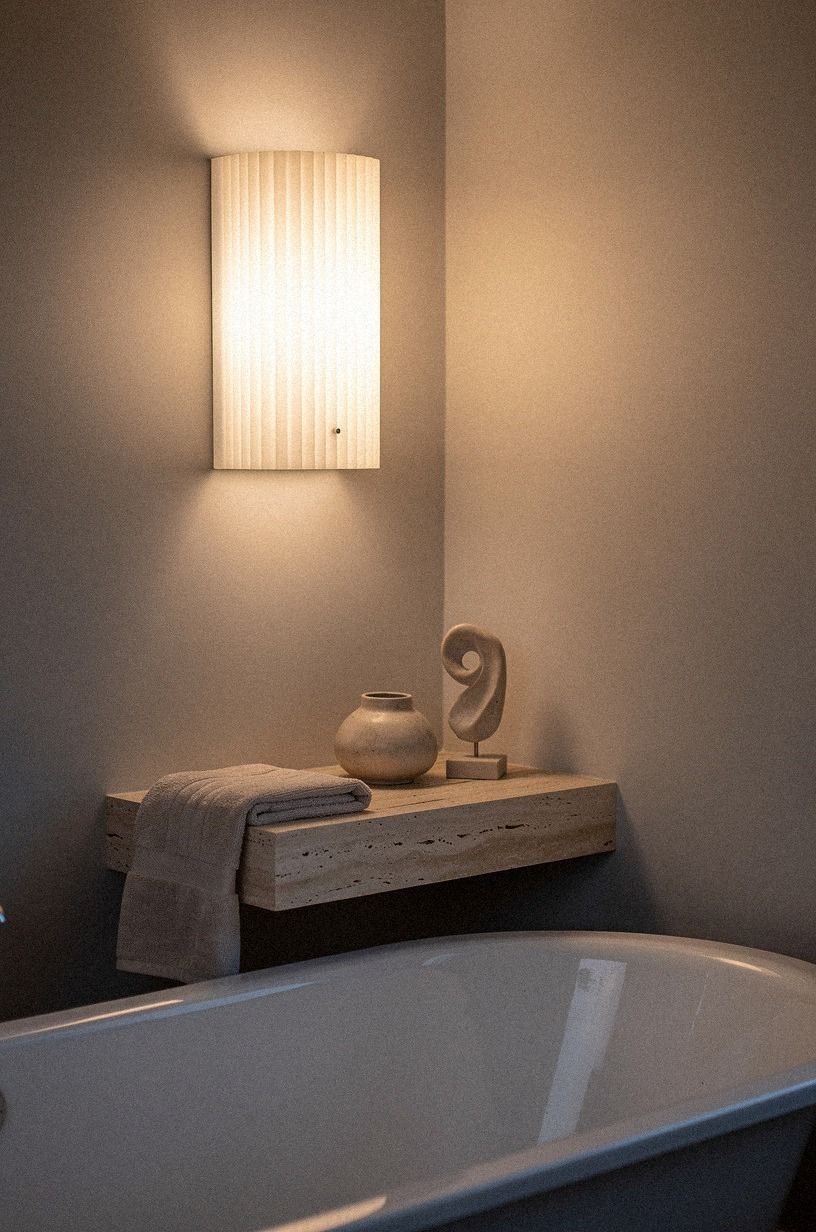
I replaced the fixture with a simple two-light design and chose warm bulbs. The light now lands on the mirror and walls instead of blasting the entire room. At night, the uneven stone catches small shadows rather than looking like a grid of stains.
And I kept one overhead light. I know the usual advice is to remove it, but I need strong light for cleaning.
The difference was adding a dimmer and using the vanity light first. Your bathroom can be practical without looking like a utility room.
I also removed three small decorative objects from the counter. One soap dispenser stayed.
A shallow stone dish stayed. The rest went into a drawer.
That edit was free, and it worked better than another purchase. The counter finally showed enough surface for the travertine backsplash to breathe. If you want a spa-like direction, compare that restrained approach with these travertine spa bathroom ideas, especially the examples that use texture instead of clutter.
What I Wouldn't Repeat
I would not start with accessories again. I bought a basket, a framed print, and a decorative tray before fixing the lighting, and every one of them looked silly under those harsh bulbs. I wasted time styling a problem that needed a switch.
I also regret waiting so long to test paint. For months, I assumed modernizing the room meant covering the travertine. It didn't.
The stone became easier to live with once the walls stopped arguing with it.
The one compromise I still notice is the grout. I cleaned it thoroughly, but I didn't recolor or replace it. Some lines remain darker than I want, especially around the shower.
I considered a full grout refresh, then decided the labor would push this project beyond the calm, contained makeover I wanted.
But if I were starting again, I would budget for that step earlier. Clean grout helps, and tired grout can make good stone look neglected. I just wouldn't rip out an entire floor to chase a perfectly uniform surface.
The room is not magazine-perfect. One corner of the vanity has a tiny water mark, and the old cabinet doors still have a little swelling near the sink. Those flaws bother me less now because the whole space has a clear direction.
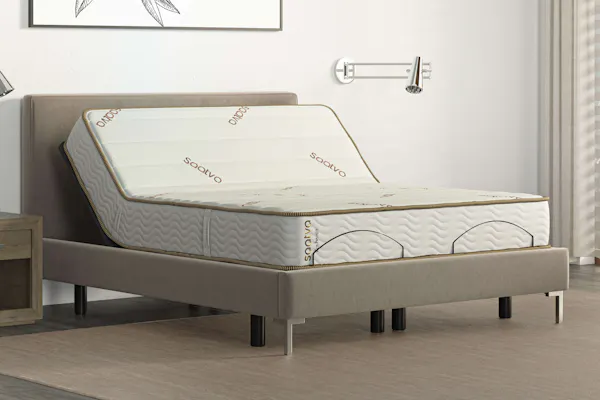 My pick for a healthier bedroomZenhavenTalalay latex, organic cotton, 365-night trial, lifetime warranty, free white glove delivery.See the Zenhaven
Build Your Own Healthier Bedroom
Sale pricing runs on orders over $1,000, and the 365-night trial gives you a full year of nights to be sure.
The Bathroom Now
I would start with the paint if you want to update travertine without replacing it. It changes what the stone looks like, costs less than demolition, and gives every later decision a steadier place to land.
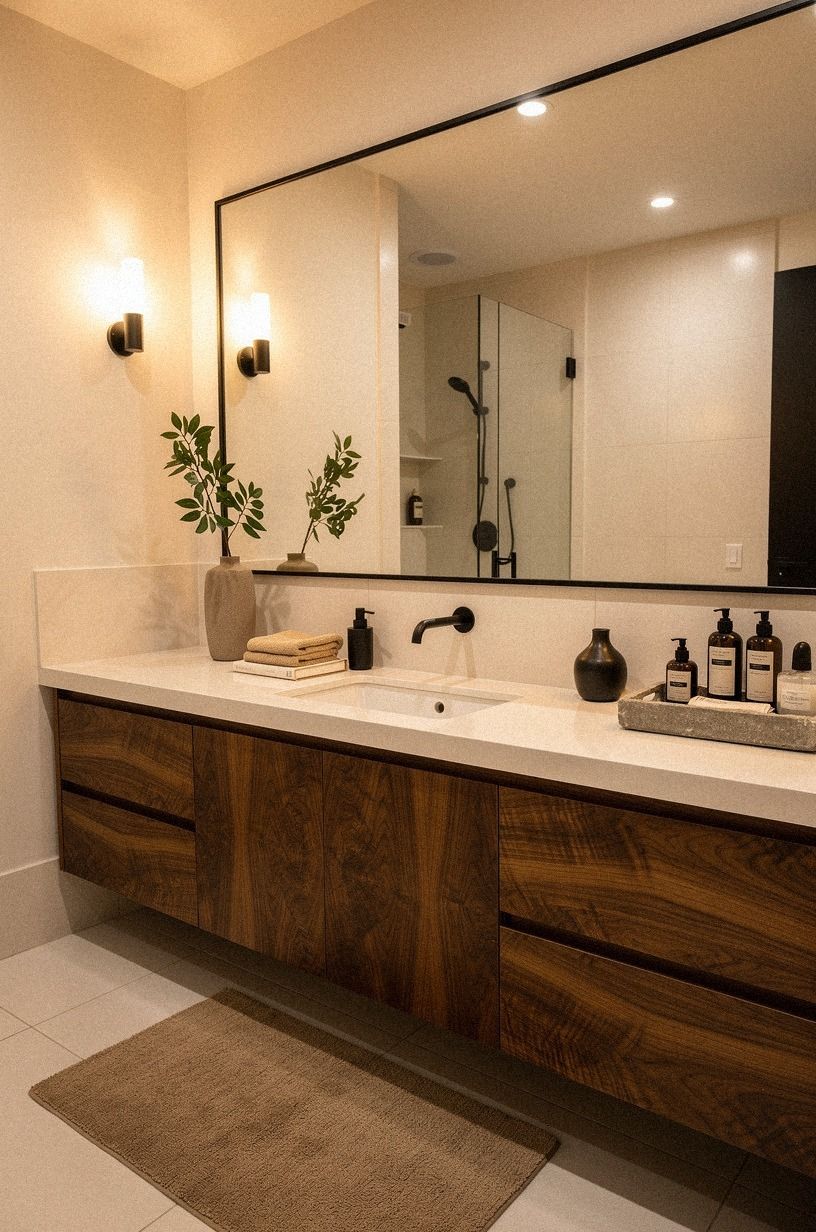
Now the vanity light glows against the buff wall, the cream towel hangs from the wood stool, and the bathroom door opens toward a bed that feels just as soft. The travertine floor is still uneven under my feet. That is the part I kept.
{ "meta_title": "How to Update a Travertine Bathroom Without Replacing It",