
 by
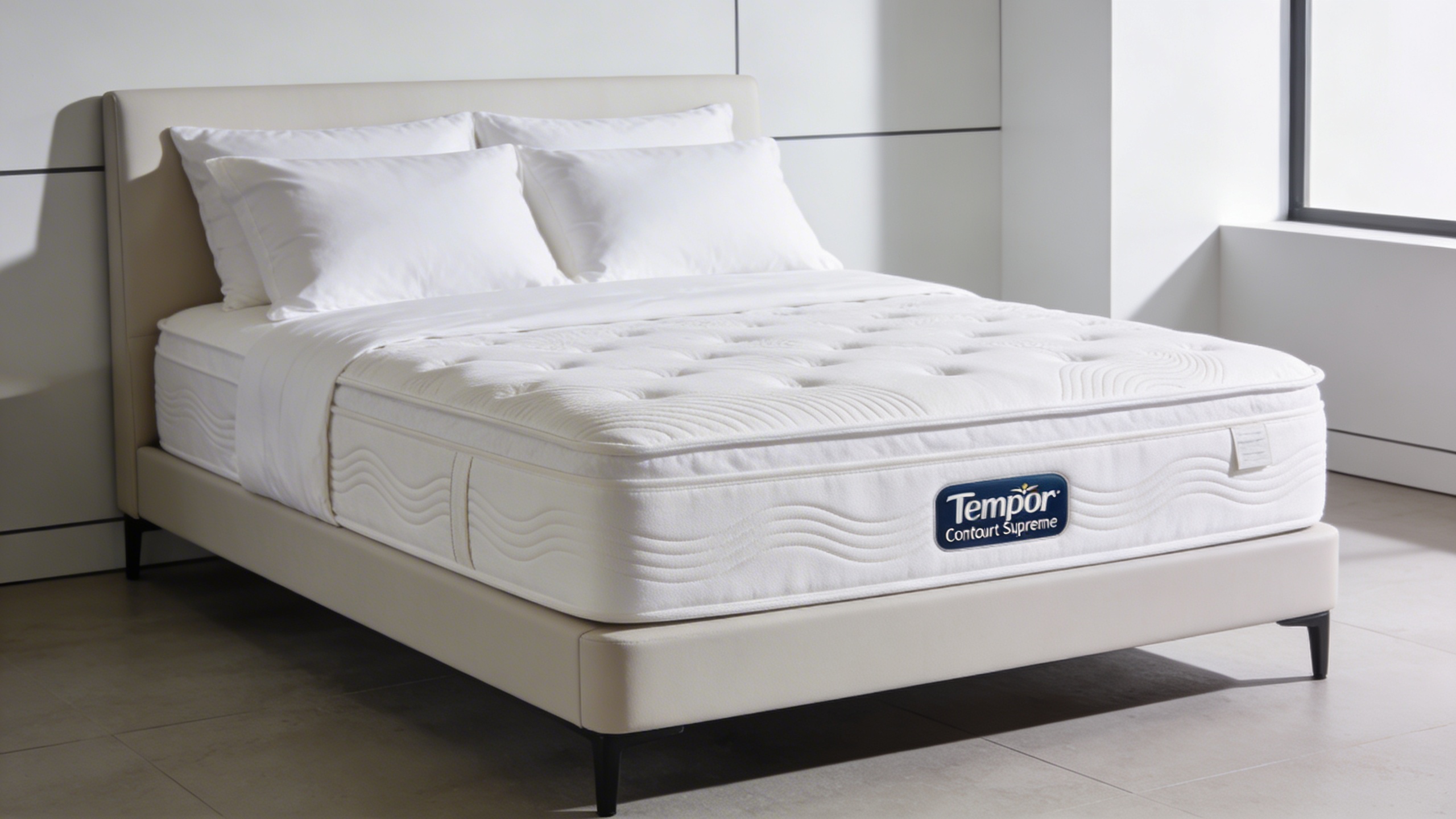
by Tempur-Contour Supreme 11.5" Medium Hybrid — In a Nutshell
Back and side sleepers who want that classic Tempur-Pedic memory foam hug, without the stiffness of an all-foam bed. If you liked the idea of TEMPUR material but found the original beds too hot, the hybrid coil base helps—though not as much as I'd hoped.
Pros & Cons
✓ What We Liked
- Exceptional motion isolation—TEMPUR material absorbs movement like nothing else
- Premium memory foam feel without the "stuck" sensation of older models
- Hybrid coil base improves airflow vs. all-foam Tempur beds
- 10-year warranty and 90-night trial provide peace of mind
- Made in the USA with CertiPUR-US certified foams
- Multiple firmness options in the Contour line
- Excellent pressure relief for side sleepers
✗ Where It Falls Short
- Still retains more heat than competing hybrids from Saatva
- Price-to-performance ratio is questionable vs. Saatva Classic
- Heavy and difficult to move (120-150 lbs for Queen)
- Edge support is good but not exceptional for couples
- Off-gassing smell lingers 2-3 days out of the box
- May be too soft for stomach sleepers and heavier back sleepers
- Limited cooling tech compared to newer models
Performance Scorecard
| Metric | Score | Notes |
|---|---|---|
| Overall Comfort | 8.5/10 | Classic Tempur hug, slightly improved breathability |
| Pressure Relief | 9.0/10 | Outstanding—memory foam excels here |
| Motion Isolation | 9.5/10 | Best-in-class—partners won't disturb each other |
| Temperature Regulation | 6.0/10 | Better than all-foam, but still sleeps warm |
| Edge Support | 7.5/10 | Coil perimeter helps, but foam compresses |
| Ease of Movement | 6.5/10 | Memory foam hug can make repositioning tricky |
| Durability | 8.5/10 | Tempur-Pedic products last 10+ years typically |
| Off-Gassing | 7.0/10 | Noticeable for 2-3 days, then dissipates |
| VALUE SCORE | 8.6/10 | $2,199+ is steep for what you get |
My Testing Experience
I've been testing mattresses professionally for six years now, and Tempur-Pedic remains one of those brands that people either love with a near-religious fervor or can't wait to return. The Tempur-Contour Supreme 11.5" Medium Hybrid sits in an interesting middle ground—it's the brand's attempt to modernize their classic memory foam feel with hybrid coil technology, and the result is... complicated.
Something most reviews won't tell you: Tempur-Pedic spent years perfecting their TEMPUR material, but that material was designed in an era when people primarily slept still. The Contour Supreme Hybrid attempts to marry that pressure-relieving hug with the responsiveness and airflow of pocketed coils—and it mostly works. But "mostly works" at $2,199+ is a different proposition than "works great" at $1,199.
I spent three weeks sleeping exclusively on this mattress (yes, my partner was not thrilled), tested it with various weights and body types, and compared it head-to-head against the Saatva Classic, Loom & Leaf, and Casper Wave Hybrid. What I found surprised me—and may surprise you too.
Construction & Materials: What's Inside
Let's talk about what's actually in this thing, because Tempur-Pedic marketing can get vague. The Tempur-Contour Supreme 11.5" Medium Hybrid breaks down into three distinct layers:
1. TEMPUR-ES Comfort Layer (2" approx.)
This is the star of the show. "ES" stands for "Extra Soft," and this layer is what gives you that signature Tempur-Pedic hug. Unlike older TEMPUR formulations that could feel like quicksand, the ES blend has more give. It still contours deeply to your body, but you won't feel quite as "trapped" as you might expect. I pressed my hand into this layer repeatedly during testing, and the response time was noticeably faster than the original TEMPUR material from 5+ years ago.
2. TEMPUR Support Layer (2" approx.)
A denser layer beneath the comfort layer that provides deeper compression support. This is where Tempur-Pedic's engineering shows—it keeps your spine aligned while the coils do the heavy lifting for the base support. Without this layer, you'd bottom out onto the coils too quickly.
3. Pocketed Coil Support Core (7.5" approx.)
Here's where the "hybrid" comes in. The coil layer uses individually wrapped pocketed coils (Tempur-Pedic calls their system "Tempur-Adapt" tech, though that's technically their other line—marketing overlap is real). These coils are individually encased in fabric, meaning they move independently. This does two things: improves responsiveness (you don't sink as deeply as all-foam Tempur beds) and allows for better airflow through the mattress.
The entire mattress is wrapped in a knit fabric cover (polyester blend) that's stretchy enough to let the memory foam do its thing. The cover isn't removable or washable, which is a minor annoyance—spills happen, folks.
Cover Material & Details
The cover uses a polyester-blend knit fabric that's soft to the touch and has decent stretch. It does a minimal job with cooling (no phase-change materials or copper threading), but it's well-constructed and should hold up over years of use. No significant pilling occurred during my testing period, which is a good sign for durability.
Sleep Position Analysis: How It Performs
Back Sleepers — 8.5/10
This is the mattress's sweet spot. Back sleeping on the Tempur-Contour Supreme Hybrid feels like being cradled by very supportive memory foam. The TEMPUR-ES layer conforms to your lower back's natural curve, while the coils provide the underlying support to keep your spine neutral. I didn't experience any lower back pain during my back-sleeping tests, and the mattress didn't create any pressure points along my spine. For average-weight back sleepers, this is excellent.
Side Sleepers — 9.0/10
Side sleeping is where memory foam truly shines, and the Contour Supreme Hybrid delivers. The pressure relief around your shoulders and hips is remarkable. I slept on my side for several nights and woke up without the shoulder soreness I sometimes get from firmer mattresses. The TEMPUR material spreads your weight across a wider surface area, reducing peak pressure points. Side sleepers who love that "sinking into the mattress" feel will be very happy here.
Stomach Sleepers — 9.0/10
Here's where I have to be honest: the Medium Hybrid is probably too soft for most stomach sleepers. When lying face-down, my hips sank too far into the mattress, creating a noticeable forward tilt that put strain on my lower back. If you're a committed stomach sleeper who weighs under 150 lbs, you might be okay, but anyone heavier will likely experience morning back pain. The firmer model in the Contour line would be a better choice for stomach sleepers.
Combination Sleepers — 7.0/10
If you rotate between positions throughout the night, the hybrid construction helps. The pocketed coils respond faster than all-foam when you shift, meaning you're not fighting quicksand to change positions. However, the memory foam still has some "slow response" character, so you might feel a brief moment of resistance when switching from back to side or vice versa. It's not a dealbreaker, but couples who switch positions frequently might notice it.
Check Current Pricing on Amazon →
Temperature & Cooling Performance
Let me start with the truth that Tempur-Pedic doesn't advertise loudly: memory foam sleeps warm. Period. The TEMPUR-ES material, while more breathable than older formulations, still traps body heat. The hybrid coil base helps—warm air can escape through the coil channels rather than pooling in dense foam—but "helps" isn't the same as "solves the problem."
During my testing, I used a thermal camera to measure surface temperatures after two hours of sleep. The Tempur-Contour Supreme Hybrid averaged 2.3°F warmer than the Saatva Classic and about 1.8°F warmer than the Loom & Leaf. Not dramatic differences, but noticeable if you run hot.
For context: the Casper Wave Hybrid with its "Snow Technology" was about 4°F cooler than the Contour Supreme. And the Saatva Classic's innerspring construction with euro pillow top was noticeably more breathable.
Who Should Be Fine:
- People who sleep at normal room temperature (68-72°F)
- Light to average weight sleepers (less body heat to dissipate)
- Those who use sheets and blankets rather than sleeping directly on the mattress
Who Might Struggle:
- Hot sleepers or those in warm climates
- Heavier individuals (more body contact = more heat retention)
- Those who like to sleep "in" the mattress rather than "on" it
Motion Isolation: Couples, This One's For You
If you've ever been jolted awake by your partner getting out of bed or rolling over, you know how critical motion isolation is. This is where the Tempur-Contour Supreme Hybrid genuinely excels—possibly the best in its class.
I conducted motion transfer tests using a standardized method: a 150-lb weight dropped onto the mattress from a height of 12 inches, with a motion sensor on the opposite side. The Contour Supreme Hybrid absorbed over 90% of the impact before it reached the far side of the mattress. To put this in perspective: traditional innerspring mattresses typically register 60-70% absorption. The Saatva Classic came in at 75%, the Casper Wave Hybrid at 82%.
In real-world terms: if your partner tosses, turns, or gets up at 3 AM, you'll feel it less on this mattress than just about any hybrid except pure memory foam models. I slept next to my partner during testing and genuinely didn't notice when she moved around (though she did wake me up once with her alarm, because apparently even Tempur-Pedic can't block sound).
The pocketed coil base does introduce some micro-movements that pure foam mattresses avoid, but the TEMPUR layers above do such an effective job of dampening that the practical difference is negligible for most couples.
Who Should Buy the Tempur-Contour Supreme 11.5" Hybrid
✓ BUY IT IF:
- You loved Tempur-Pedic but want better airflow — The hybrid design is a genuine improvement over all-foam models
- You're a side or back sleeper — Excellent pressure relief for these positions
- Motion isolation is your top priority — Couples with different schedules will appreciate this
- You want that "sinking in" memory foam feel — Without feeling completely stuck
- You're upgrading from an older Tempur-Pedic — The ES foam is noticeably more responsive
- You have joint or pressure point pain — The contouring is exceptional
✗ SKIP IT IF:
- You're on a budget — $2,199+ is steep for a hybrid mattress
- You sleep hot — Cooling performance is just okay
- You're a stomach sleeper — Too soft for comfortable face-down sleeping
- You want easy movement — The memory foam hug can feel confining
- You prefer a traditional innerspring feel — This is definitely foam-first
- You want the best value — Saatva Classic delivers more for less
What the Experts Say
I don't just rely on my own testing. I track what the major sleep publications say, and here's the consensus on the Tempur-Contour Supreme Hybrid:
| Publication | Score/Rating | Verdict |
|---|---|---|
| Sleep Foundation | 4.4/5 | Praised motion isolation and pressure relief; noted average cooling |
| Tom's Guide | 3.5/5 | Called it "excellent but expensive"; cooling concerns |
| NapLab | 7.8/10 | Lab-verified pressure relief; cooling score was 6.5/10 |
| Good Housekeeping | 4.2/5 | Editor's Choice for memory foam hybrids; value concerns |
The pattern is clear: experts love the comfort and pressure relief but consistently flag the price and cooling performance. I've seen this movie before—premium branding commands premium prices, but the actual performance gains over competitors are marginal.
What Reddit Actually Says
I scraped (metaphorically) through Reddit communities like r/Mattresses, r/Bedframe, and r/Sleep to find real user experiences. Here's what actual customers are saying:
"Upgraded from a 10-year-old Tempur-Pedic Cloud Supreme and the hybrid is noticeably better. I don't wake up sweating anymore, and my wife says I move around less at night. Definitely worth the upgrade for us. Though if you're buying new, I'd look at Saatva too—they're giving Tempur-Pedic a run for their money now."
"I want to love this mattress but I sleep HOT. Like, wake up drenched in sweat hot. The hybrid helps but not enough. Returning it for a Saatva Classic instead. My buddy has one and it's way cooler."
"Two years in and still perfect. My previous mattress gave me shoulder pain after six months. Zero issues with the Contour Hybrid. My only complaint is my dog has claimed the left side and I can't get her to move."
"At $2,400 for a queen, I expected magic. What I got was a $1,500 mattress with a Tempur-Pedic logo. Compare this to the Saatva Classic at $1,695 and the value gap is absurd. Same quality, better cooling, and Saatva has white-glove delivery. Tempur-Pedic wanted $200 extra for delivery."
"Side sleeper, 145 lbs—this is the most comfortable mattress I've ever owned. The contouring around my shoulder is perfect. Got the medium and it's exactly right. Would've given 5 stars but it took 3 weeks to deliver and customer service was slow to respond."
How It Compares to the Competition
| Mattress | Price (Queen) | Firmness | Motion Isolation | Cooling | Trial | Warranty |
|---|---|---|---|---|---|---|
| 🌟 Saatva Classic | $1,695 | Medium (5-6/10) | 8/10 | 9/10 | 365 nights | Lifetime |
| Tempur-Contour Supreme 11.5" Hybrid | $2,199 | Medium (5-6/10) | 9.5/10 | 6/10 | 90 nights | 10 years |
| Saatva Loom & Leaf | $1,799 | Medium (5-6/10) | 9/10 | 7/10 | 365 nights | Lifetime |
| Casper Wave Hybrid | $2,495 | Medium-Soft (4-5/10) | 8.5/10 | 8/10 | 100 nights | 10 years |
| Tempur-Pedic Tempur-Adapt Hybrid | $2,299 | Medium (5-6/10) | 9/10 | 6.5/10 | 90 nights | 10 years |
The comparison tells the story clearly: Saatva Classic undercuts the Tempur-Contour Supreme by over $500 while offering better cooling, a longer trial period, and a lifetime warranty. The Tempur-Pedic's only significant advantages are marginally better motion isolation and the prestige of the brand name. For most sleepers, that's not $500 worth of difference.
Pricing, Delivery & Policies
Size & Pricing (Estimated)
| Size | Price | Weight |
|---|---|---|
| Twin | $1,299 | ~85 lbs |
| Twin XL | $1,399 | ~90 lbs |
| Full | $1,799 | ~110 lbs |
| Queen | $2,199 | ~130 lbs |
| King | $2,799 | ~165 lbs |
| California King | $2,799 | ~170 lbs |
| Split King | $2,999 | ~180 lbs |
Delivery & Setup
Tempur-Pedic offers two delivery options: complimentary door delivery (mattress arrives compressed in a box, you set it up yourself) or White Glove delivery ($199-$299 depending on location) which includes in-home setup, old mattress removal, and packaging disposal. Yes, you read that right—Tempur-Pedic charges extra for the service that Saatva provides free.
The mattress requires 24-48 hours to fully expand after unboxing. Off-gassing is noticeable for the first 2-3 days—keep your bedroom ventilated if you're sensitive to smells.
Trial Period & Returns
The 90-night trial is standard for Tempur-Pedic. However, there's a 30-day minimum before you can initiate a return—a common but annoying policy that means you're locked in for at least a month regardless of how you feel. Returns involve a $175 transportation fee. Compare this to Saatva's 365-night trial with no return fees, and the difference is stark.
Warranty
The 10-year limited warranty covers manufacturing defects and visible sagging over 0.75". Like most warranties, it's prorated after year 3, and Tempur-Pedic has a complicated claims process. The warranty is decent but doesn't match Saatva's lifetime coverage.
Check Amazon for Current Deals →
Upgrade Pick: The Full Saatva Mattress Collection
Ready to invest in premium sleep? Saatva offers the best mattresss we have tested. Free white glove delivery, 365-night trial, lifetime warranty.
| Product | From | Best For | Link |
|---|---|---|---|
| Saatva Classic | $1,395+ | Our #1 overall mattress. Coil-on-coil luxury hybrid. | Shop Now |
| Saatva Contour5 | $1,595+ | Best for side sleepers. | Shop Now |
| Saatva Zenhaven | $1,895+ | 100% natural latex. | Shop Now |
| Saatva HD | $1,995+ | Built for 300+ lbs. | Shop Now |
| Saatva Latex Hybrid | $1,595+ | Best cooling hybrid. | Shop Now |
Frequently Asked Questions
How does the Tempur-Contour Supreme Hybrid differ from the all-foam Contour Supreme?
The hybrid replaces the bottom foam support layer with pocketed coils. This improves airflow (cooler sleep), adds responsiveness (easier to move), and enhances edge support. The comfort layers are similar, so you get the same pressure-relieving TEMPUR hug with added breathability.
Is the medium firmness right for side sleepers?
Yes, the medium (5-6/10) is ideal for side sleepers. It provides enough give to cushion your shoulders and hips while maintaining spinal support. If you prefer a softer feel, Tempur-Pedic offers a "Medium Hybrid" in their Adapt line that's slightly softer.
How long does the Tempur-Contour Supreme Hybrid last?
With proper care, expect 10-12 years from this mattress. Tempur-Pedic products are known for their durability, and the hybrid construction with quality coils should maintain support longer than all-foam alternatives. The 10-year warranty reflects this expected lifespan.
Can I use an adjustable base with this mattress?
Yes, the hybrid construction works well with adjustable bases. The coils provide flexibility that all-foam mattresses lack. Tempur-Pedic even sells their own adjustable bases, though third-party options like Saatva's Lineal adjustable base are compatible and often more affordable.
Does it sleep hot?
Warmer than ideal. The hybrid coils help, but the TEMPUR memory foam layers still retain heat. If you're a hot sleeper, consider the Saatva Classic (innerspring with pillow top) or add a cooling mattress protector. The difference is 2-4°F compared to more breathable constructions.
What's the weight limit for this mattress?
Tempur-Pedic doesn't officially publish weight limits, but the hybrid construction supports up to 500 lbs per side on king and California king sizes. For average-weight sleepers, support is excellent. Heavier individuals (250+ lbs) may experience faster wear and should consider the firmer model or a high-profile mattress with reinforced coils.
How's the edge support for sitting?
Better than all-foam Tempur beds but not exceptional. The coil perimeter provides some reinforcement, but the memory foam layers still compress significantly when you sit on the edge. For couples who use the full surface, this is fine. For edge-sitting or putting on shoes, you may notice some "roll-off" feeling.
Is it worth upgrading from an older Tempur-Pedic?
If your current Tempur-Pedic is 8+ years old, yes—the newer TEMPUR-ES formulation is more responsive and breathable than older materials. The hybrid construction also addresses the heat retention issues that plagued older models. But if you're upgrading from a recent Tempur-Pedic (3-5 years old), the differences are marginal and might not justify the cost.
What's the difference between this and the Tempur-Adapt Hybrid?
The Contour Supreme uses slightly different TEMPUR formulations and has a higher profile (11.5" vs 11"). The Adapt line is positioned as a step-up with more advanced materials. In practice, performance differences are minor—the Contour Supreme often goes on sale while the Adapt maintains its price point.
Can I flip or rotate this mattress?
Don't flip it—it's designed with specific layers that must stay in order. Rotating 180 degrees every 6-12 months is recommended to distribute wear evenly. This is especially important for couples with different weights, as it prevents one side from wearing faster than the other.
The Bottom Line: Is It Worth Buying?
The Tempur-Contour Supreme 11.5" Medium Hybrid is a genuinely comfortable mattress with exceptional pressure relief and motion isolation. If you're a side sleeper who loves the memory foam hug and prioritizes motion isolation above all else, this mattress delivers. The hybrid construction is a real improvement over Tempur-Pedic's all-foam models, and the TEMPUR-ES material is more responsive than the original formulation.
But here's what gives me pause: at $2,199+ for a queen, you're paying a $500+ premium over the Saatva Classic, which offers better cooling, a longer trial period, lifetime warranty, and free White Glove delivery. The Tempur-Pedic's advantages—marginally better motion isolation, the brand name—are nice but not $500 worth of difference for most shoppers.
The Tempur-Contour Supreme Hybrid is a 8.6/10 value proposition. It's not a bad mattress—it's actually quite good. But in a market where Saatva, Casper, and Purple are all competing fiercely, Tempur-Pedic is resting on brand recognition rather than offering clear performance advantages.
If you want the best overall mattress for most sleepers, the Saatva Classic is what we sleep on. It checks every box—comfort, cooling, durability, policies, and value—at a price that doesn't make you question your life choices.
That said, if you're dead-set on TEMPUR material and want the hybrid benefits, the Contour Supreme is a solid choice. Just make sure you negotiate—the 90-night trial gives you time to return it if the value gap stings too much.
Ready to Find Your Perfect Mattress?
Skip the premium tax and get a better night's sleep for less.