 by
by Quick answer: The Symphony Pillow by Tempur is a well-built dual-sided pillow for back and side sleepers. It's a good buy, but I'd also weigh the Saatva Pillow before paying premium-tier money.
- Dual-sided ergonomic design: one flatter side for back sleepers, one sloped side for side sleepers, per the manufacturer's product pages.
- Made from TEMPUR material, the slow-conforming pressure-relieving foam the brand built its name on.
- Removable, machine-washable cover included, per retailer listings.
Updated July 2026 · Reviewed for accuracy
The Symphony Pillow by Tempur does one thing most pillows don't: it gives you two distinct sleeping surfaces in a single pillow. Flip it one way and you get a gentler, flatter profile for back sleeping. Flip it the other way and a sloped contour cradles your neck for side sleeping. That's the pitch, per the manufacturer's product pages, and it's a genuinely smart idea.
But is a dual-sided TEMPUR foam pillow worth premium-tier money? I've spent a decade digging into bedding materials and construction, and here's my honest read: the design is sound, the foam is proven, and the main question is whether your sleep style actually needs this shape. Let's get into it.
What the Symphony Pillow by Tempur Actually Is
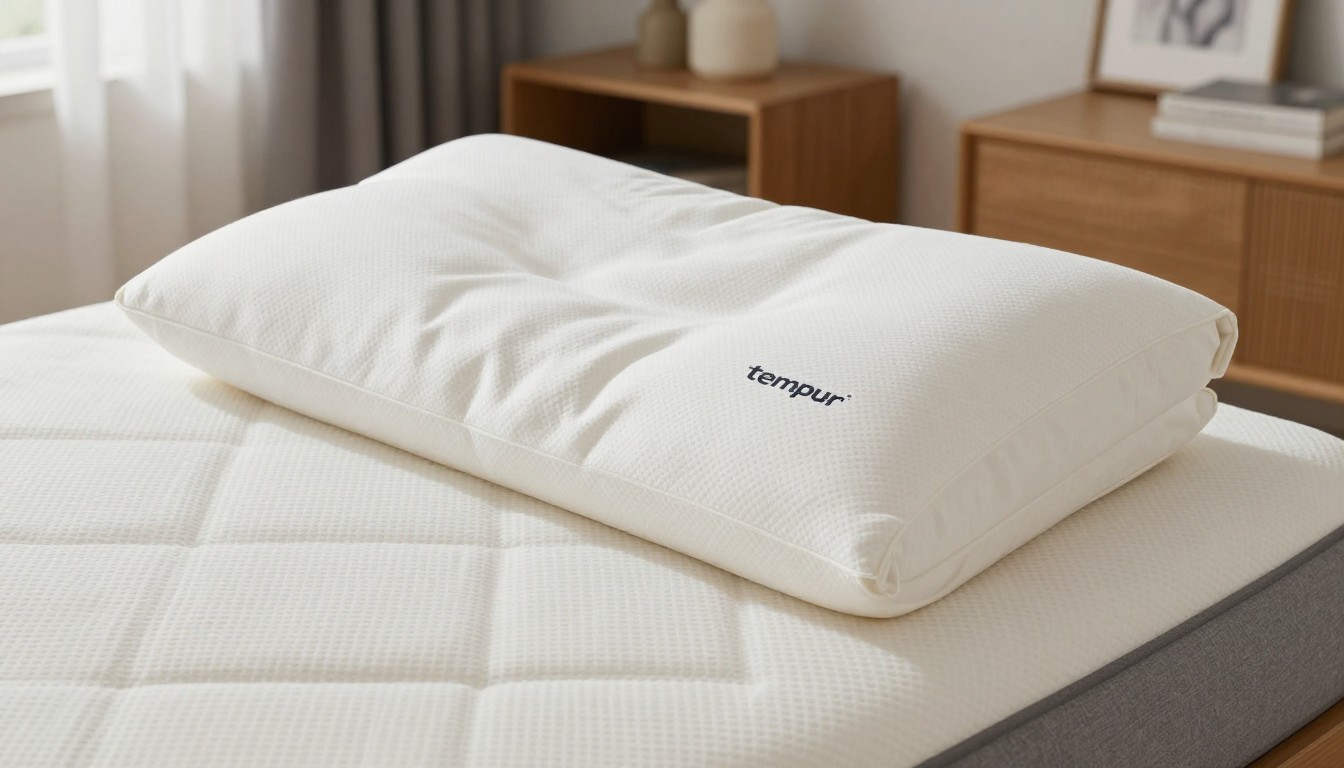
The Symphony is a contoured, ergonomic pillow built around a single piece of TEMPUR material. Per the manufacturer's product pages, the defining feature is the dual-sided profile. One face runs flatter and more traditional, aimed at back sleepers who need moderate lift under the neck. The other face carries a more pronounced slope, shaped to fill the gap between shoulder and head when you're on your side.
TEMPUR material deserves a word here. It's the pressure-relieving viscoelastic foam originally developed from NASA-related research, and it behaves differently from standard memory foam. It responds slowly. It molds to your head and neck with gradual conformity rather than springy pushback. According to verified owner reviews across retailer listings, that slow response is exactly what fans love and what newcomers sometimes need a few nights to adjust to.
The build is simple and that's a strength. One foam core, one purpose. There's no shredded fill to shift around, no adjustable loft to fiddle with. You pick your side of the pillow and it holds its shape night after night, which per owner feedback is one of the most consistent positives in the Symphony line.
Construction note: A solid TEMPUR core means zero fill migration. If you've ever woken up punching a lumpy pillow back into shape, a one-piece contoured core solves that permanently.
How It Feels for Back and Side Sleepers
Here's where the dual-sided design earns its keep. Back sleepers generally need a pillow that supports the natural curve of the neck without pushing the chin toward the chest. The flatter side of the Symphony does that, per the manufacturer's positioning, and owner reviews back it up: back sleepers consistently report good neck alignment without that propped-up feeling thicker pillows cause.
Side sleepers have a different problem. The shoulder creates a gap, and a pillow that's too low lets the head tilt down, straining the neck all night. The sloped side of the Symphony is shaped to fill that space. According to independent reviews of the Symphony line, side sleepers tend to gravitate to the contoured face within a night or two and stay there.
Stomach sleepers, be honest with yourselves here. A contoured ergonomic pillow of this height profile is rarely a good match for face-down sleeping, and per retailer listings and owner feedback, the Symphony is no exception. If you sleep on your stomach, both sides of this pillow will likely feel too tall. I'd point you toward a low-loft option instead.
One more thing worth knowing: TEMPUR material has an adaptation curve. Multiple owner reviews mention the pillow feeling firmer than expected on the first few nights, then softening into a more personalized fit as the foam responds to body heat and repeated use. That's normal for this foam family, not a defect. If you're coming from a down or polyfill pillow, expect a short break-in period before you judge it.
Comparing options? The Saatva Pillow is the pick we keep coming back to — see the final verdict ↓
Cooling, Heat, and the Cover
Dense viscoelastic foam holds heat. That's physics, not a flaw specific to Tempur, and it's the most common criticism in owner reviews of TEMPUR-material pillows generally. The Symphony's standard version relies on its fabric cover for airflow, per retailer listings, so hot sleepers should go in with realistic expectations: this is not a cool-to-the-touch pillow in its base form.
Worth noting: per the manufacturer's market-specific pages, some regions carry SmartCool variants of Tempur's pillow lines with upgraded cooling covers. Availability varies by country, so if sleeping cool is your top priority, check whether a cooling-cover edition of this design exists where you live before settling for the standard version.
Heat checklist before you buy:
- Do you already sleep hot on memory foam? Expect similar behavior here.
- Is a cooling-cover edition available in your market? Check the official site.
- Do you use breathable pillowcases? They matter more on dense foam than on down.
The cover itself is a practical win. Per the manufacturer's care instructions, it's removable and machine washable, which matters more than people think. Pillows absorb sweat and oils nightly, and a washable cover is the difference between a pillow that stays fresh and one that gets quietly grimy. Wash the cover per the tag instructions, air it fully dry, and never soak the foam core itself.
Durability and Long-Term Value
Solid-core TEMPUR pillows have a strong durability reputation, and the reasoning is structural. There's no fill to clump, flatten, or separate. The foam either holds its resilience or it doesn't, and according to long-term owner reviews, TEMPUR material tends to keep its shape far longer than shredded-foam or fiberfill alternatives. The contour you buy is the contour you keep.
That said, treat the care instructions seriously. Moisture is the enemy of this foam. Per the manufacturer's guidance, the core should never be submerged or machine washed, and any dampness needs to air-dry completely before the cover goes back on. Ignore that and you shorten the pillow's life no matter how good the foam is.
On price: the Symphony sits in the premium tier of Tempur's pillow lineup, and exact pricing shifts by country, retailer, and current promotions, so check the live price on the official site or your local retailer rather than trusting any figure I could print here. Per the manufacturer's warranty terms and retailer listings, it's backed by a multi-year manufacturer warranty, which is meaningfully better coverage than the no-warranty reality of most budget pillows. Verify the current warranty length with your retailer at purchase, since terms vary by market.
Value framing: A premium pillow that holds its shape for years often costs less per night than a cheap pillow replaced annually. The math favors durable construction, and a solid TEMPUR core is about as durable as pillow construction gets.
Symphony Pillow by Tempur: Who Should Buy, Who Should Skip
Buy it if you're a back or side sleeper who wants structured neck support rather than a soft sink. Buy it if you've liked memory foam before and want a pillow that holds its shape indefinitely. Buy it if a washable cover and a real manufacturer warranty matter to you.
Skip it if you're a stomach sleeper, a very hot sleeper with no cooling-cover option in your market, or someone who wants a moldable, fluffy pillow you can scrunch into shape. The Symphony is the opposite of scrunchable. It's a fixed ergonomic tool, and it's excellent at that job and nothing else.
If you like the Tempur approach but want to compare within the family first, my broader Tempur-Pedic pillow review breaks down how the brand's lineup differs, and the Tempur Cloud pillow review covers the softer sibling if the Symphony's firmness sounds like too much.
A Strong Alternative Worth Comparing
The Symphony is a good pillow. I'll say that plainly. But before you commit, I tend to recommend also looking at the Saatva Pillow, especially if you're not fully sold on a fixed contoured shape. Saatva's bedding is handcrafted with the same premium positioning the brand brings to its mattresses, which are among America's best-selling luxury mattresses, and the company backs its products with flexible financing, a generous in-home trial, and a long warranty, per the brand's own policies.
The real difference is philosophy. The Symphony locks you into an ergonomic contour that either fits your neck or doesn't. The Saatva approach is a more traditional pillow shape with premium materials, which suits a wider range of sleepers and positions. If you're a combination sleeper who flips between back and side all night, that flexibility is worth real money. Check the current offer on Saatva's site and weigh it against the Symphony's live price before deciding.
And if part of what draws you to a premium pillow is that hotel-bed feeling, my piece on why hotel pillows are so comfortable explains what actually creates that sensation, and the Wyndham hotel pillows roundup covers a very different style of pillow worth considering.
FAQ
Is the Symphony Pillow by Tempur good for side sleepers?
Yes, it's one of the pillow's core use cases. Per the manufacturer's product pages, the sloped side of the dual-sided design is shaped specifically to support the neck and shoulders in a side-sleeping position, and owner reviews from side sleepers are consistently positive.
Is the Symphony Pillow good for stomach sleepers?
Generally no. Both sides of the contoured profile tend to sit too high for face-down sleeping, per owner feedback. Stomach sleepers usually need a low, soft pillow to keep the neck neutral, and a fixed ergonomic contour works against that.
Does the Symphony Pillow sleep hot?
Dense TEMPUR material retains more heat than down or shredded fill, and some owner reviews mention warmth. Cooling-cover variants exist in certain markets per the manufacturer's pages, so check availability locally if you sleep hot.
How do you clean the Symphony Pillow?
Per the manufacturer's care instructions, the fabric cover is removable and machine washable. The foam core itself should never be machine washed or submerged in water. Wash the cover per the tag, and make sure everything is completely dry before reassembling.
Does the pillow feel firm at first?
According to verified owner reviews, yes, TEMPUR material often feels firmer out of the box and softens as it responds to your body heat over the first several nights. Give it a short adjustment period before deciding it's not for you.
FINAL VERDICT
Bottom line for a Tempur Symphony pillow shopper: if you're not fully sold on a fixed contoured shape, the Saatva Pillow is the safer buy — 45-day free returns and a washable organic cotton cover mean you can test it risk-free.
OUR CATEGORY-MATCHED PICK
Saatva Pillow
- Shredded natural latex core, per saatva.com
- 45-day free returns
- Machine-washable organic cotton cover