 by
by Quick answer: Tuft & Needle suits budget shoppers wanting a simple medium-firm foam bed; Purple fits sleepers after a bouncier, pressure-relieving grid feel. Neither thrills you? I point people to the Saatva Classic.
- Tuft & Needle builds all-foam mattresses; Purple's popular models layer a polymer grid over foam or coils, per the manufacturers.
- Both brands sell standard US sizes and back purchases with a risk-free home trial and long-term warranty coverage, per their policy pages.
- Owner feedback splits on feel: Tuft & Needle reads as even and medium-firm, Purple as bouncy with deeper contouring.
Updated July 2026 · Reviewed for accuracy
Here's the short version. Tuft & Needle sells a simple, sensibly priced all-foam mattress with a medium-firm feel. Purple sells a bouncier, stranger bed built around a stretchy polymer grid. Both are good mattresses. They just suit different bodies, different sleep positions, and different budgets.
I've spent years picking apart how beds are built, and this matchup is one of the cleaner contrasts in the market: minimalist foam versus an engineered polymer lattice. Let's get into what that actually means for your sleep.
Construction: stacked foam versus a polymer grid
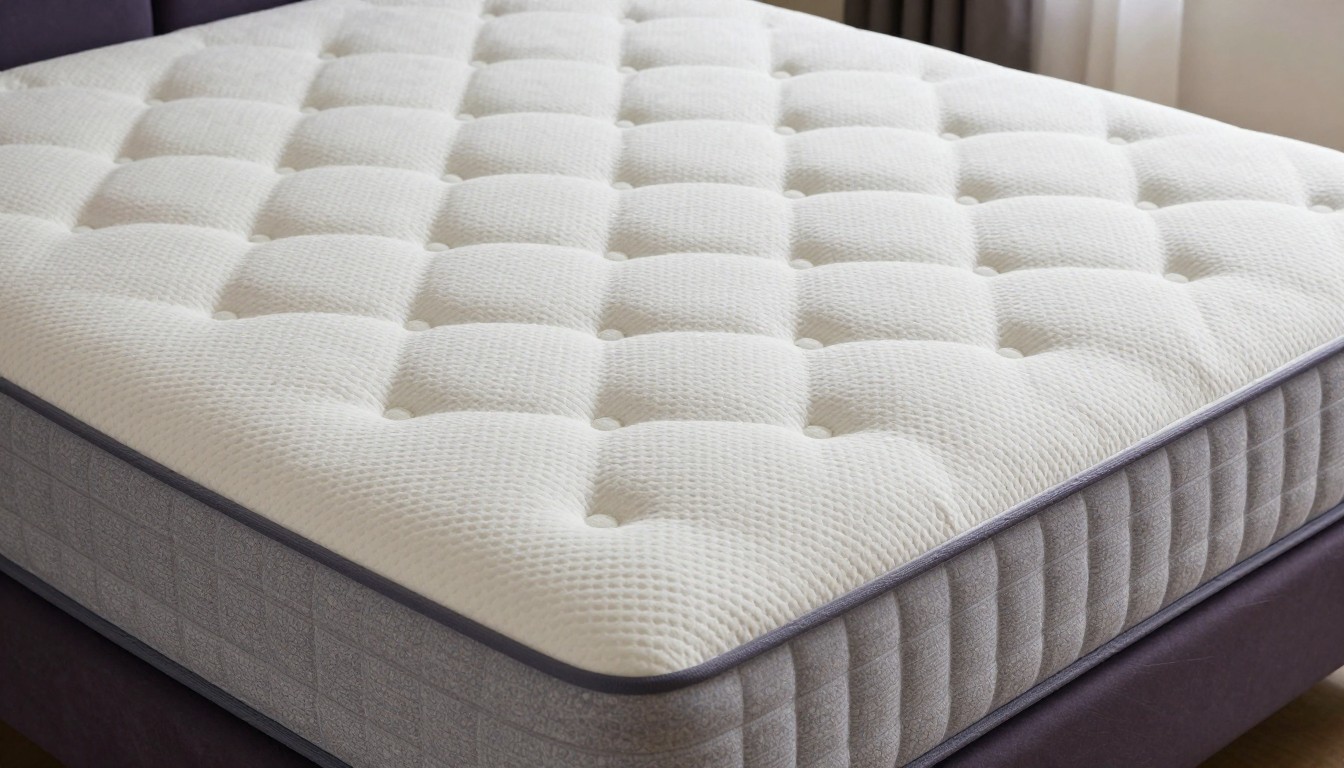
Tuft & Needle pours everything into stacked foam. A breathable cover, a comfort layer of adaptive-style foam, a denser support core beneath it. Per the manufacturer, even the brand's upgraded versions stay close to that formula. Simple is not an insult in mattress building. Fewer materials means fewer things that can fail over the years, and the feel stays consistent from one version to the next. If you want a bed you never have to think about, this philosophy has real appeal.
Purple went the opposite way. Its signature is a grid-like polymer comfort layer, a stretchy open lattice that buckles under your heavy parts and holds firm under your light ones. What's underneath that grid depends on the model. Some builds pair it with foam alone, while the hybrid variants add coils, which changes the height, the bounce, and the price. Purple sells its hybrids in tiered versions that step up in thickness and cushioning, per the brand's lineup, so compare the exact model you're eyeing rather than the whole family at once. Model-for-model is the only fair way to run this comparison.
| Tuft & Needle | Purple | |
|---|---|---|
| Construction | All-foam | Polymer grid over foam or coils (hybrid variants) |
| Feel | Medium-firm, even compression | Bouncy, contouring, pressure-relieving |
| Profile | Mid-height for a foam bed | Taller, varies by hybrid tier |
| Cooling | Breathable for an all-foam build | Grid designed for airflow; hybrids ventilate more |
| Motion isolation | Strong foam absorption | Good; grid can pass slightly more movement |
| Price tier | Entry to mid-range | Mid to upper-range, hybrids higher |
| Sizes | Twin through Cal King | Twin through Cal King, some split options |
| Trial & warranty | Home trial plus long-term warranty | Home trial plus long-term warranty |
One question foam shoppers ask me constantly is what's actually inside the cover. If that's on your mind, my write-up on whether Tuft & Needle mattresses contain fiberglass covers the materials question in detail before you commit.
Feel and firmness for different sleepers
Press your palm into the Tuft & Needle and the whole surface gives evenly. That's the foam personality in one gesture: no dramatic sink, no surprise pushback, just a steady medium-firm cradle. Back sleepers and stomach sleepers tend to do well on that kind of support, because the hips stay level instead of hammocking into the surface. Combination sleepers who hate feeling stuck also do fine here, since the foam responds quickly when you change position.
Purple's grid behaves differently on purpose. Where your weight concentrates, the lattice walls buckle and let pressure escape; where you're lighter, they stay upright and supportive. According to verified owner reviews, that translates into pronounced pressure relief at the shoulders and hips, which is exactly what side sleepers chase. The trade-off is the surface feel itself. It's springy, a little unusual under the hand, and per owner feedback some sleepers find the grid initially firmer than they expected before it conforms to them.
The Nut's tip: the grid is the main reason people either love Purple or send it back. If you've never slept on a polymer lattice, give the home trial a fair stretch of nights before judging. First impressions of this material are famously unreliable.
Match the bed to your sleep position and the choice gets easier. Strict back and stomach sleepers usually land on Tuft & Needle's even support. Dedicated side sleepers, and anyone with sore shoulders or hips, usually land on Purple's contouring. Keep in mind that firmness perception also shifts with body weight and with the specific model, since Purple's hybrid tiers soften or firm up the grid experience depending on how much cushioning sits above and below it.
Comparing options? The Saatva Classic is the pick we keep coming back to — see the final verdict ↓
Cooling, motion transfer, and edge support
Airflow is the grid's best party trick. An open polymer lattice lets heat escape sideways and upward instead of pooling under your body, and per the brand the layer is designed specifically to move air. In the hybrid variants, the coil layer adds another escape route for warm air. Owner feedback frequently describes Purple as sleeping cooler than dense foam, and hot sleepers are one of the groups I'd most readily steer toward it.
Tuft & Needle holds its own for an all-foam bed. Foam-only mattresses carry a reputation for sleeping warm, but this build can sleep cooler than some rival all-foam constructions, thanks to a simpler layer stack that traps less heat than thick, dense memory foam designs. I'd still give the cooling edge to Purple, particularly in hybrid form, but Tuft & Needle is far from the sweatiest foam bed on the market.
Sharing a bed with a restless sleeper? Filter owner reviews by your exact size before deciding. Motion behavior shifts as the sleep surface gets wider, and a queen doesn't always behave like a king.
For couples, both brands perform well on motion isolation per owner feedback, just for different reasons. Foam deadens movement at the source, which is why all-foam beds are the classic pick for light sleepers. Purple's grid absorbs plenty of motion too, though the springy lattice can pass a touch more movement across the surface than flat foam does. If your partner climbs in and out of bed all night, Tuft & Needle has the slight conceptual edge.
Edge support is the one place I'd nudge heavier sitters toward a hybrid. Perching on the perimeter compresses any foam-only mattress more than a coil-backed build, and that's construction physics rather than a brand flaw. If you sleep right up to the edge, or you sit there every morning to put on shoes, Purple's hybrid variants carry the structural advantage. Neither brand's foam-only options will feel like a bench at the border, so set expectations accordingly.
Price, sleep trial, and warranty coverage
Price is the clearest gap between these two brands. Tuft & Needle sits in the entry-to-mid bracket for foam mattresses, while Purple lands in the mid-to-upper range, and its hybrid variants climb from there. Exact numbers move with promotions and model refreshes, so check the current price for your size on each brand's official site before you commit. Stale price tables are how shoppers get burned.
Both brands back their beds with a risk-free home trial and long-term warranty coverage, per their policy pages. The details differ, though, and the details are where value hides. Read whether the warranty is full or limited, what sag depth counts as a covered defect, and whether returns are genuinely free in your region. Shipping terms can carry exceptions for certain states, which matters if you live outside the contiguous US.
Two minutes of fine print before you buy:
- Current price for your size on the official site
- Whether the trial includes free returns where you live
- Full versus limited warranty wording
- The sag-depth threshold that triggers coverage
I've covered the paperwork side of Tuft & Needle separately, and it's worth a skim before you order either brand. My guide to the Tuft & Needle return policy walks through the return window and logistics, and the piece on filing a Tuft & Needle warranty claim shows what the coverage process actually looks like in practice. Knowing the exit terms before you buy is just smart shopping.
Tuft and Needle vs Purple: who should buy which
By now the pattern should be clear. This isn't a good-versus-bad matchup. It's a fit question, and the fit comes down to your position, your temperature, and your budget.
Buy Tuft & Needle if:
- You want a straightforward medium-firm foam bed with no learning curve
- Budget is a real constraint and you'd rather spend less for solid basics
- You sleep on your back or stomach and like even, level support
- You share the bed and prioritize motion deadening over bounce
Buy Purple if:
- Pressure relief at the shoulders and hips is your top priority
- You're a dedicated side sleeper who finds flat foam unforgiving
- You run warm and want a comfort layer engineered for airflow
- You like a bouncy, responsive surface that's easy to move on
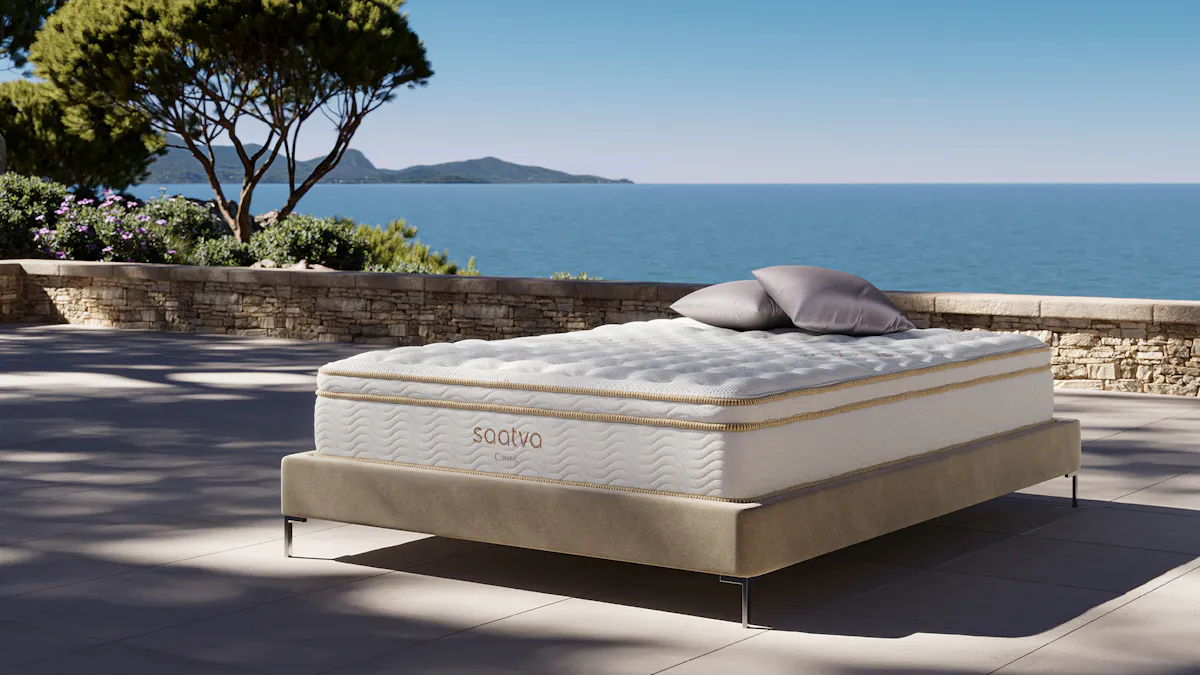
There's a third scenario worth naming. Some shoppers land on this comparison because they've outgrown budget foam, but neither a plain foam bed nor a polymer grid sounds like the answer. If that's you, the Saatva Classic is the alternative I tend to recommend: America's best-selling luxury mattress, handcrafted in the USA, with flexible financing, a generous home trial, and lifetime warranty coverage, per the manufacturer. It sits in the premium tier, so check the current offer on the official site.
And if price is the whole story, my Zinus vs Tuft & Needle comparison covers how the cheaper end of this bracket stacks up. Between those two guides, the budget question is fully answered.
FAQ
Is Tuft and Needle or Purple better for side sleepers?
Purple, in most cases. The polymer grid buckles under shoulders and hips, which is the exact pressure relief side sleepers need, according to verified owner reviews. Tuft & Needle's even foam compression tends to suit back and stomach sleepers better.
Which mattress sleeps cooler, Tuft and Needle or Purple?
Purple gets the edge. The grid layer is designed to promote airflow, per the brand, and the hybrid variants add coil ventilation on top of that. Tuft & Needle still sleeps cooler than many dense all-foam builds, so neither is a bad pick for warm sleepers.
Do Tuft and Needle and Purple have the same trial and warranty?
Both brands advertise a risk-free home trial and long-term warranty coverage, per their policy pages. The wording differs on return logistics, regional exceptions, and what counts as a covered defect, so read the terms for your exact model and location before ordering.
Is Purple worth the extra money over Tuft and Needle?
That depends on whether you'll actually use the grid. If you want pronounced pressure relief and better airflow, the upcharge buys a genuinely different comfort layer, not just marketing. If a plain medium-firm foam feel already works for you, Tuft & Needle delivers the essentials for less.
Which is better for couples?
Both perform well on motion isolation per owner feedback, though they get there differently. Tuft & Needle's foam deadens movement at the source, while Purple's grid can pass slightly more motion across the surface. If your partner is restless, filter current owner reviews by your size before choosing.
FINAL VERDICT
Before you settle: if tuft and needle vs purple is what brought you here, the Saatva Classic is the value pick on this page — more home-trial and warranty coverage than the alternatives covered here. Confirm current price, dimensions and terms on the official product page before ordering.
OUR CATEGORY-MATCHED PICK · UP TO $625 OFF
Saatva Classic
- 365-night home trial and lifetime warranty, per saatva.com
- Handcrafted in the USA, free white-glove delivery
- Flexible financing available