 by
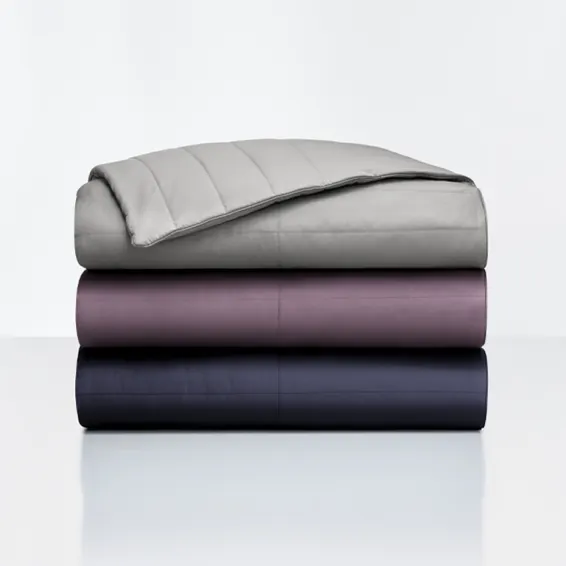
by Quick answer: A weighted blanket helps some autistic sleepers settle at night. Start near one-tenth of body weight, go lighter for kids. Hot sleeper? Sleep Number's True Temp™ Weighted Blanket is the temperature-smart pick.
- Deep pressure is the draw: steady, distributed weight gives predictable sensory input, though published evidence is mixed and every response is individual.
- The common sizing rule is roughly one-tenth of the user's body weight, with lighter options and supervision for children.
- Fabric matters as much as fill: breathable, washable covers keep heat and cleanup under control.
Updated July 2026 · Reviewed for accuracy
If bedtime in your house runs on a tight sensory budget, you've heard the pitch already: heavy blanket, calmer night. Sometimes it works exactly like that. Sometimes the blanket is on the floor by morning. This guide is about stacking the odds. What weight to pick, what fill to pick, what to avoid, and when to skip the idea entirely.
Why deep pressure appeals to so many autistic sleepers
A weighted blanket is just deep pressure delivered passively. Instead of a hug that ends, the sleeper gets steady, evenly distributed touch for hours. For a nervous system that runs hot at bedtime, that kind of predictable input can feel organizing rather than stimulating.
The usual explanation is that firm, constant pressure gives the sensory system one clear signal to anchor to, instead of processing every rustle, seam, and draft in the bedding. You don't need to buy into any particular theory to see the practical appeal: the input stays the same all night, and "the same" is calming for a lot of autistic sleepers.
Across verified owner reviews, plenty of parents and autistic adults describe the same arc: less tossing, faster settling, fewer middle-of-the-night wake-ups. The blanket becomes part of the routine, and routines do a lot of quiet work in autistic households.
I'll be honest about the evidence, though. Published studies are mixed, and responses vary hugely from one sensory profile to the next. Some autistic people love firm pressure. Others find any weight on their body unbearable, and no amount of marketing changes that. The sleeper is the only real test.
The pattern in owner feedback: a weighted blanket either becomes non-negotiable bedtime gear within the first week, or it's rejected on night one. There is rarely a middle ground, which is why a seller's return policy matters so much on this purchase.
If you want the broader sleep science beyond ASD, I've covered whether weighted blankets actually help you sleep in a separate piece. The short version there matches this one: promising for many, universal for nobody.
How heavy should a weighted blanket be for ASD?
The rule of thumb used by most occupational therapists is roughly one-tenth of the user's body weight. Some adults prefer an extra pound or two on top of that. For children, I'd err on the lighter side of the rule, not the heavier side, and I'd never size up "so they can grow into it." This is not a winter coat.
Distribution matters as much as total weight. Look for blankets stitched into small pockets or channels, so the fill stays spread across the body instead of pooling at one end. A blanket that concentrates its weight into one heavy lump feels restrictive rather than calming, and restrictive is the fast lane to rejection.
The Nut's rule: stuck between two weights? Buy the lighter one. A slightly-too-light blanket still delivers pressure. A too-heavy one gets kicked off the bed, and now you own a very expensive rug.
One more sizing tip that saves returns: trial the blanket during a calm daytime moment first. Drape it over the legs while the sleeper reads or watches something familiar. Bedtime is the worst possible moment to introduce a new sensory input, because you're testing the blanket and the day's accumulated overload at the same time.
| Sleeper | Weight approach | Fabric priority | Watch out for |
|---|---|---|---|
| Young child | Lighter end, well under one-tenth if unsure | Breathable, machine-washable | Supervision; they must push it off alone |
| Older child or teen | Around one-tenth, adjusted gradually | Durable, texture they choose themselves | Don't force it if they reject the feel |
| Adult | Around one-tenth, preference rules after that | Whatever texture feels calming | Heat build-up under synthetic covers |
| Hot sleeper | Same rule, never size up | Cooling fabric, removable cover | Overheating cancels the calming effect |
Comparing options? The True Temp™ Weighted blanket is the pick we keep coming back to — see the final verdict ↓
Fillings and fabrics: what's inside matters more than the logo
Cut open most weighted blankets and you'll find one of three fills. Glass beads are small, dense, and quiet, and they spread evenly, which is why they dominate the better end of the market. Plastic poly pellets are bulkier and can shift audibly when the sleeper moves, though they're common in budget options. Microbead fills show up occasionally and sit somewhere between the two.
I've broken down everything that ends up inside weighted blankets elsewhere, but the ASD-specific take is simple: noise and texture. A pellet fill that rustles against the fabric can be a dealbreaker for a sound-sensitive sleeper, and glass beads are usually the quieter fill by a wide margin.
- Glass beads: quiet, dense, even pressure. My default recommendation.
- Plastic pellets: cheaper and bulkier, sometimes audible when shifting.
- Mixed or microbead fills: less common; scan owner reviews for noise complaints.
Fabric is the second half of the decision. Cotton breathes. Minky and fleece feel plush but trap heat, and their raised texture is polarizing: some tactile-seeking kids love stroking it, others can't stand it. If you're buying for a child, a removable, washable cover isn't a nice-to-have. It's the difference between a blanket that survives real life and one that doesn't.
Check how the cover attaches, too. Corner ties or a full zip keep the weighted inner from sliding into one corner lump inside the cover. Owner reviews of cheaper blankets complain about exactly this, and a lumpy blanket undoes the even pressure you paid for.
The heat problem nobody mentions in the product photos
Weight plus synthetic fabric equals warmth. That's physics, not a brand flaw. For autistic sleepers who run hot or react badly to overheating, a heavy blanket can tip from calming to unbearable fast, and a sweaty, overstimulated kid is nobody's idea of a win.
The fixes are boring but effective: breathable outer fabrics like cotton or bamboo-style blends, glass bead fill with less insulating bulk, and a removable cover you can strip off in warm months. I've written separately about why weighted blankets sleep hot and what actually helps, and most of that advice applies double here.
Season matters more than buyers expect. A blanket that's perfect in January can be unusable in July, which is another argument for removable covers: strip the heavy outer layer, keep the weighted inner, and the bedtime routine survives the weather. For a kid whose sleep depends on sameness, that continuity is worth real money.
A small number of blankets are engineered specifically around temperature regulation rather than treating cooling as an afterthought. If heat is your household's dealbreaker, that's the category to shop, and I've flagged my pick further down.
Safety rules for kids and vulnerable sleepers
Safety rules on this purchase aren't fine print. They are the product. Weighted blankets are not for very young children, full stop. And at any age, the sleeper must be able to push the blanket off without help. If they can't, the blanket is too heavy for them, no matter what any size chart says.
A few more rules worth treating as fixed. The blanket should never wrap tight around the chest or abdomen. It should never cover the face or head. It should come off easily in the dark, half-asleep. Standard safety guidance also says to skip weighted blankets entirely when there are breathing difficulties, unless a clinician who knows the sleeper has signed off.
Non-negotiable: the sleeper must be able to remove the blanket on their own, every time, even half-asleep. If that's in doubt, go lighter or don't buy at all.
For younger or nonverbal children, supervise early use until you're confident the blanket is welcome and manageable. Watch what the child actually does, not what you hoped would happen. And if the child sees an occupational therapist, one short conversation before you buy can save the entire trial-and-error cycle. Deep pressure tools are their home turf, and they can often tell you whether the child's sensory profile points toward weight, toward compression sheets, or away from both.
What I'd actually look for when buying
Strip away the marketing and my checklist is short. Even fill distribution in small stitched pockets. A removable cover that survives the washing machine. A breathable outer fabric. A weight near one-tenth of body weight. And a seller with a straightforward return policy, because individual response is the whole ballgame and you genuinely cannot predict it in advance.
My shortlist criteria:
- Small stitched pockets so the fill can't pool
- Glass bead fill for quiet, even pressure
- Removable, machine-washable cover
- Breathable fabric if the sleeper runs warm
- A return window long enough for a real at-home trial
If overheating is the main worry in your house, the True Temp™ Weighted Blanket from Sleep Number is the one I'd shortlist first. Plenty of autistic sleepers run hot, and per the manufacturer this one is designed around temperature regulation rather than simply adding weight, which is exactly the right design brief for a hot, sensory-sensitive sleeper. It sits in the premium tier, so check the current price and trial terms on the official site before you commit.
If budget is tighter, resist the cheapest marketplace listing. Blankets at the bottom end often skip the washable cover and use pellet fills that owners describe as noisy and prone to bunching. A mid-range blanket with glass beads and a removable cover usually outlasts a bargain one by years, and longevity matters more here than in most purchases: once a weighted blanket becomes part of a nightly routine a child depends on, replacing it is a disruption, not a shopping trip.
FAQ
Are weighted blankets safe for autistic children?
For older children who can push the blanket off independently, yes, with supervision at first and a weight on the lighter side of the one-tenth rule. They're not appropriate for very young children, and any breathing or mobility concerns warrant a quick chat with your child's clinician first.
Do weighted blankets actually work for autism?
Honestly, it depends on the sleeper. Published research is mixed, but across verified owner reviews many families describe calmer bedtimes and fewer night wake-ups. I keep a broader overview of weighted blankets for autism updated separately if you want the full picture.
How do I know if the weight is right?
Start near one-tenth of body weight and watch what happens over several nights. Signs it's too heavy: the blanket ends up on the floor, the sleeper complains of feeling stuck, or they wake up overheated. Slightly too light still works; too heavy never does.
Can a weighted blanket make my child overheat?
Yes, especially under synthetic covers. Choose breathable fabrics, glass bead fill, and a removable cover you can strip in warm months. If the sleeper wakes sweaty, treat that as a design mismatch to fix, not a phase to wait out.
Glass beads or plastic pellets, which fill is better?
Glass beads, in most cases. They're denser, quieter, and distribute more evenly, which suits sound- and texture-sensitive sleepers. Plastic pellets cost less but can rustle and bunch, and owner reviews of budget pellet blankets mention noise surprisingly often.
FINAL VERDICT
Before you settle: if weighted blanket for asd is what brought you here, the True Temp™ Weighted blanket is the value pick on this page — the strongest trial-and-return terms of the options covered here. Confirm current price, dimensions and terms on the official product page before ordering.
OUR CATEGORY-MATCHED PICK
True Temp™ Weighted blanket
- Sleep Number's True Temp™ Weighted Blanket is the temperature-smart pick
- If overheating is the main worry in your house, the True Temp™ Weighted Blanket from Sleep Number is the one I'd shortlist first