
 by
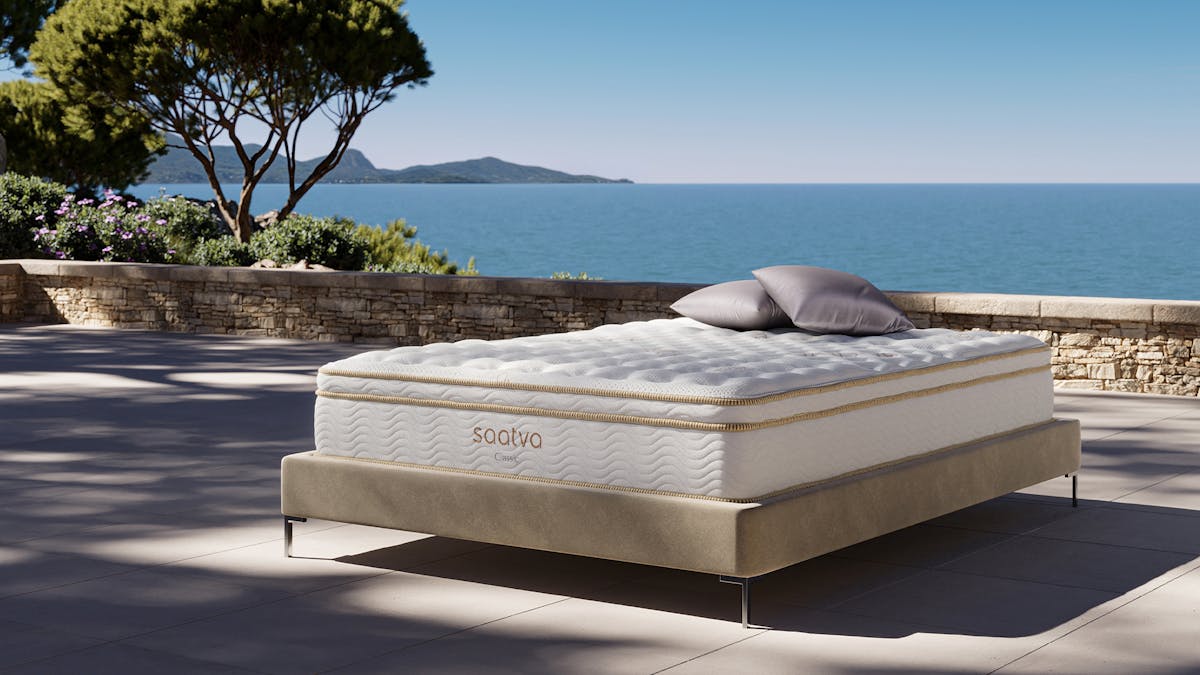
by Twin XL and queen mattresses share the same 80-inch length, but the queen is 22 inches wider (60 vs 38 inches). A twin XL is for solo sleepers in dorms, small rooms, or split-king adjustable setups. A queen fits couples and solo sleepers who want room to spread out. For either size, the Saatva Classic is our top recommendation: available in all sizes including twin XL for split-king pairs, with free white-glove delivery and a 365-night trial.
Saatva Classic
9.4/10
- Available in twin XL (for split-king pairs) and queen, same great build in both
- Dual-coil construction with zoned lumbar foam reinforcement
- Free white-glove delivery, setup, and old-mattress removal
- Outstanding edge support and cooling airflow through open coil system
- Ships uncompressed, not in a box, requires someone home for delivery
- $99 return fee if you decide to return during the trial
Whether you're furnishing a dorm with a twin XL or upgrading to a queen for two, the Saatva Classic delivers the same hotel-quality innerspring feel in every size, with delivery and setup handled for you.
Twin XL vs Queen: Side-by-Side Dimensions
Before comparing use cases, it helps to see all the relevant sizes together. The table below includes a standard twin for reference.
| Size | Width | Length | Best For | Minimum Room Size |
|---|---|---|---|---|
| Twin | 38 inches | 75 inches | Kids, budget guest rooms, sleepers under 5'5" | 7 x 10 ft |
| Twin XL | 38 inches | 80 inches | Tall solo sleepers, dorms, split-king setups | 8 x 10 ft |
| Queen | 60 inches | 80 inches | Couples, solo sleepers who want space | 10 x 10 ft (10 x 12 ft preferred) |
| King | 76 inches | 80 inches | Couples wanting maximum width, co-sleeping families | 12 x 12 ft |
The key takeaway: twin XL and queen have identical length. The entire difference comes down to 22 inches of width, roughly the span of your shoulders. That gap matters enormously for couples, but for a tall solo sleeper it simply means extra unused mattress.
Who Should Choose a Twin XL
The twin XL was designed with one specific problem in mind: standard twin mattresses (75 inches long) leave taller sleepers with their feet hanging off the edge. Adding those five extra inches brings the twin XL to 80 inches, the same length as a queen, king, or California king.
At 38 inches wide, a twin XL gives a solo sleeper plenty of room, but is far too narrow for two people. This is a solo-sleeper mattress, full stop.
Ideal twin XL scenarios:
- College dormitories. Most dorm bed frames are built around the twin XL standard. Verify your school's frame dimensions before buying; the vast majority run 38 x 80 inches.
- Tall sleepers over 6 feet. The extra five inches over a standard twin means feet stay on the mattress.
- Small guest rooms or studio apartments. A twin XL takes up less floor space than a queen, meaningful in a tight room.
- Teenagers. Kids who've outgrown their standard twin but share a room often do well with a twin XL.
- Split-king adjustable setups. Two twin XL mattresses side by side create a standard king footprint with independent adjustability for each sleeper.
For a deeper look at twin XL picks, see our guide to the best twin XL mattresses.
Who Should Choose a Queen
The queen is the best-selling mattress size in the United States, and the reason isn't complicated: it fits the most people in the most rooms. At 60 x 80 inches, it offers enough width for two average adults to sleep without constant contact.
Ideal queen scenarios:
- Couples. Two adults sharing a queen each get approximately 30 inches, workable for most partners who don't mind being close.
- Solo sleepers who want space. If you sleep diagonally, spread out, or share with a pet, a queen gives you room a twin XL can't.
- Master bedrooms. A queen fits well in bedrooms of 10 x 12 feet or larger.
- Upgrading from a full. A queen is 5 inches longer and 6 inches wider than a full, a noticeable improvement.
See our full roundup of the best queen mattresses to find top-rated options across every budget and sleep style.
The Split-King Connection: Why Twin XL Matters for Couples
There is one scenario where a couple ends up on twin XL mattresses: the split-king setup. A split king consists of two twin XL mattresses placed side by side on a king-size frame, creating a combined sleeping surface of 76 x 80 inches, identical to a standard king.
The appeal is motion isolation and adjustable-base compatibility. When two separate mattresses sit on a dual adjustable base, each partner can raise or lower their head and foot positions independently. One person can elevate for acid reflux or snoring while the other lies flat. Each side can also be a different firmness level.
If a split king is on your radar, the twin XL is the building block, not a consolation prize. The Saatva Classic is available in twin XL and ships with the same white-glove delivery regardless of size. Learn more in our complete mattress size guide.
Room Size: Will It Actually Fit?
Mattress dimensions alone don't tell the full story. A bed frame adds several inches on every side, and you need walkable clearance around the bed, ideally at least 24 inches on the sides you use.
Twin XL room requirements: A minimum room size of 8 x 10 feet works for a twin XL with basic clearance. A 10 x 10-foot room gives comfortable space for the bed plus a small dresser or desk.
Queen room requirements: Plan for at least 10 x 10 feet as a floor, but 10 x 12 feet is more comfortable for a queen with two nightstands.
If your room is under 100 square feet, a twin XL typically gives you better functional space. Once a room hits 10 x 12 or larger, a queen becomes the smarter long-term choice.
Price Differences
Twin XL mattresses are generally less expensive than queens of the same model, less material, lower manufacturing cost. Expect a twin XL to run roughly $100 to $300 less than the equivalent queen at most price points.
This makes a twin XL a smart budget move if a solo sleeper genuinely doesn't need the extra width. A queen bought for a couple is money well spent compared to constant elbow battles on a narrower bed.
You can find affordable options in our guide to the best twin mattresses and our broader single vs twin comparison.
Twin XL vs Queen: Quick Decision Guide
- Outfitting a college dorm? Get a twin XL. Nearly all dorm frames require it.
- Over 6 feet tall and sleeping alone? Twin XL covers your length without wasting width.
- Share the bed with a partner? A queen is the minimum comfortable size for two adults.
- Room under 100 square feet? A twin XL fits more comfortably.
- Building a split king with an adjustable base? You'll need two twin XLs.
- Sleep with a pet or move around a lot? A queen gives you the space.
For solo sleepers in a dorm or small room, twin XL is the right call. For couples or anyone who wants space, go queen. In either size, the Saatva Classic is our top pick for build quality and service, with a 365-night trial and free white-glove delivery.
Frequently Asked Questions
Is a twin XL the same length as a queen?
Yes. Both a twin XL and a queen are 80 inches long. The only dimensional difference is width: a twin XL is 38 inches wide and a queen is 60 inches wide. A standard twin is shorter at 75 inches.
Can two people sleep on a twin XL?
Technically yes, but not comfortably for regular use. At 38 inches wide, two adults would each have about 19 inches of sleeping space. A twin XL is designed for solo sleepers. Couples should start at queen size at minimum.
Do two twin XL mattresses make a king?
Yes. Two twin XL mattresses placed side by side on a king-size frame create a split king measuring 76 x 80 inches, the same dimensions as a standard king. This configuration is popular with couples using adjustable bases.
What is the best mattress size for a college dorm?
Twin XL is the standard for college dormitories across the United States. Most institutional bed frames measure 38 x 80 inches. Always confirm with your school, but twin XL is correct in nearly every case.
How much more does a queen cost than a twin XL?
Pricing varies by brand and model, but a queen typically costs $100 to $300 more than the same mattress in twin XL. The difference reflects the additional materials required for a wider mattress.
Is a twin XL good for a spare bedroom?
It depends on your guests. A twin XL works well for a dedicated guest room serving single visitors, especially taller ones. If you expect couples to stay, a queen is a better investment.
What is the difference between a twin and a twin XL?
Both are 38 inches wide. The difference is length: a standard twin is 75 inches long, while a twin XL is 80 inches (five inches more). That extra length matters for sleepers over roughly 5'10". See our detailed single vs twin bed breakdown.