
 by
by A twin is 38″ wide and a double (full) is 54″ wide—both 75″ long. That 16-inch gap is the only real difference. Solo adults and kids under 12 fit a twin; solo adults who want room to move and guest rooms fit a double. Couples should skip both and go straight to a queen.
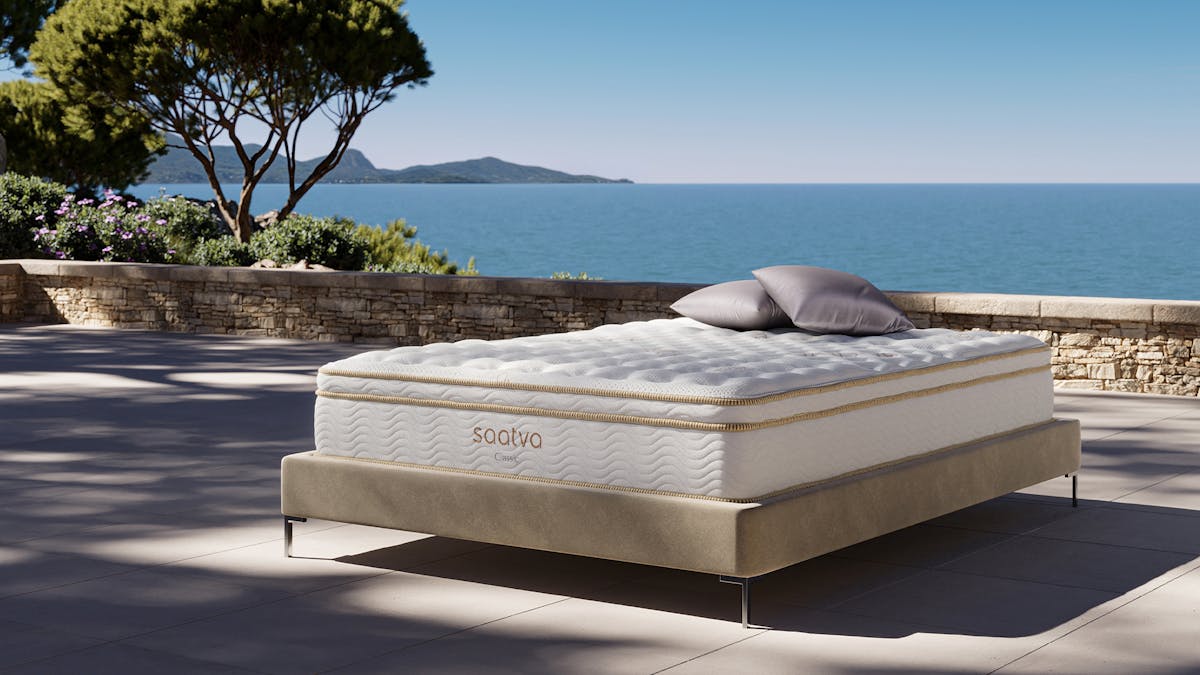
Saatva Classic
9.2/10
- Available in every size from twin through split king—right for whichever size you choose
- Dual-coil construction with reinforced lumbar zone; 3 firmness levels cover all sleep styles
- Free white-glove delivery, setup, and old-mattress removal
- 365-night home trial, lifetime warranty
- Not compressed-in-a-box; delivery is scheduled, not same-day
- $99 return fee applies during the trial window
Whether you end up going twin or double, the Saatva Classic is the mattress we’d put on either frame. Its three-firmness lineup and 365-night trial mean you can fine-tune long after delivery—something box mattresses rarely offer.
Twin vs Double: The key size difference
The single most important fact: a twin mattress is 38 inches wide and 75 inches long. A double (also sold as a full) is 54 inches wide and 75 inches long. Same length, different width—16 inches separates them.
Those 16 inches matter more than the number suggests. A solo adult on a twin has roughly shoulder width plus a few inches per side. That same adult on a double has 54 inches, which feels genuinely spacious. Two adults sharing a double each get about 27 inches—roughly the width of a standard office chair—which is tight for regular use.
One thing that trips up many shoppers: double and full are the same size. The names are used interchangeably across every retailer, and both always mean 54 inches by 75 inches. See our guide on double vs full beds for the full naming history.
Size comparison table
| Size | Width | Length | Best for | Minimum room |
|---|---|---|---|---|
| Twin | 38″ | 75″ | Kids, bunk beds, solo adults under 5′5″ | 7′ × 10′ |
| Double / Full | 54″ | 75″ | Solo adults, teens, guest rooms, snug couples | 10′ × 10′ |
| Twin XL | 38″ | 80″ | Taller teens, college dorms, single adults over 6′ | 8′ × 10′ |
| Queen | 60″ | 80″ | Couples, solo adults who want extra space | 10′ × 10′ |
Who should sleep on a twin
A twin is the standard choice for children. Kids under 12 rarely need 54 inches, and the smaller footprint fits easily in a typical child’s bedroom. Twin frames are also the default size for bunk beds and loft beds.
Solo adults under about 5 feet 5 inches can sleep fine on a twin. The 75-inch length works, and for anyone who sleeps curled or on one side without sprawling, 38 inches is sufficient.
The twin’s real strength is versatility in tight spaces and multi-bed setups. For more depth, see our best twin mattress recommendations and our guide to best mattresses for kids.
One gap worth noting: taller kids and teens. A standard twin’s 75-inch length stops working once someone exceeds about 6 feet. A twin XL adds 5 inches of length at the same width. Our comparison of single vs twin helps sort out the naming confusion on the smaller end.
Who should sleep on a double (full)
A double is the entry point into adult sleeping comfort for solo sleepers. At 54 inches wide, one person has room to shift positions, sleep with arms extended, or accommodate a pet without feeling pinned. For a teenager transitioning out of a twin, a double is a natural upgrade that fits most standard bedrooms.
Guest rooms are another strong use case. A double accommodates one adult comfortably and two adults in a pinch, without requiring the full room footprint of a queen.
For couples, a double is workable but not ideal for the long term. Each person gets about the width of a crib at night. A queen at 60″ × 80″ adds 6 inches of width and 5 inches of length—usually a better investment for two people sharing regularly.
For a full breakdown of the double as a standalone size, our full-size mattress guide covers top picks in detail.
Room size requirements
A twin occupies 31.6 square feet of floor space. Standard guidelines recommend at least 24 inches of clearance on the sides and foot of the bed, so a twin works in rooms as small as 7 feet by 10 feet.
A double occupies 45 square feet. The minimum workable room is around 10 feet by 10 feet, though 10 by 12 gives comfortable clearance. If a bedroom is under 100 square feet, a double can feel crowded once you add a dresser and nightstand.
Upgrading a child from twin to double
The transition from twin to double typically makes sense between ages 10 and 14, depending on height and how much the child moves at night. The 75-inch length stays the same across both sizes, so length alone is not the trigger. The real driver is width: a child starting to feel cramped at 38 inches is ready for more space.
If your child is approaching 6 feet, a twin XL at 38″ × 80″ may be a better intermediate step than a full. For most early teens, a double is the standard upgrade.
Budget note: expect to pay $100 to $250 more for a comparable double over a twin from the same brand. Given the longer useful life of the larger mattress, most families find the gap worth it.
Bedding and frame costs
Twin bedding is consistently the least expensive size on the market. Twin frames start under $60 for a basic metal option.
Double/full bedding runs about 20 to 30 percent more than twin equivalents. Full sheets are a standard size that every major bedding brand carries. Frames for fulls cost roughly $80 to $150 for a solid basic option.
One practical point: twin and double sheets are not interchangeable. A twin fitted sheet will not stretch to cover a 54-inch double mattress. If you’re upgrading, plan on a full set of new bedding.
FAQ
Is a double bed the same as a full bed?
Yes. Double and full refer to the exact same dimensions: 54 inches wide by 75 inches long. The names are interchangeable across all retailers and manufacturers.
How much wider is a double than a twin?
A double is 16 inches wider. A twin is 38 inches wide; a double is 54 inches wide. Both sizes share the same 75-inch length.
Can two adults sleep on a double bed?
Two adults can share a double, but each person gets roughly 27 inches of width—about the width of a standard office chair. It works for petite couples or occasional use, but most adults sharing regularly find a queen significantly more comfortable.
Will twin sheets fit a double mattress?
No. Twin fitted sheets are sized for a 38-inch mattress and will not stretch to cover a 54-inch double. You need full/double-size sheets for a double mattress.
Is a twin long enough for adults?
A standard twin is 75 inches (6 feet 3 inches) long, which fits adults up to about 6 feet. Anyone taller should consider a twin XL (38″ × 80″) or a full-size mattress.
What’s the difference between a twin and a twin XL?
A twin XL is the same 38 inches wide as a standard twin but adds 5 inches of length, reaching 80 inches. That extra length makes it a better fit for taller teens and college students.
When should I upgrade my child from a twin to a double?
Most families make this move between ages 10 and 14. Key signals: the child feels cramped at 38 inches wide, they’re approaching 6 feet in height, or they’re moving to a room with space for the larger size. See our mattress size guide for more.