
 by
by The best mattress for rotating shift workers combines reliable cooling, strong motion isolation, and a balanced medium feel that works across every sleep position. Our top pick is the Amerisleep AS3: its open-cell Bio-Pur foam sleeps cooler than traditional memory foam for warm daytime rooms, and its near-complete motion isolation keeps a partner's early departure from waking you mid-recovery sleep. For a luxury innerspring alternative, the Saatva Classic offers dual-coil airflow, a 365-night trial covering a full year of rotation cycles, and white-glove delivery.
Best Mattress for Rotating Shift Workers (2026): Sleep Through Any Schedule
The best mattress for rotating shift workers should feel balanced and medium, work for any sleep position you collapse into, and handle warm daytime rooms plus a partner moving on a normal schedule. The Amerisleep AS3 fits that profile: it is a medium-feel all-foam bed built to balance support and softness for every sleep position, uses open-cell Bio-Pur foam that sleeps cooler than traditional memory foam, and delivers near-complete motion isolation so a partner leaving at 6 a.m. won't wake you mid-sleep. It ships with free shipping and returns, a 100-night trial to evaluate across a few rotation cycles, and a 20-year warranty. For a luxury innerspring alternative with coil-driven airflow and white-glove delivery, the Saatva Classic remains the runner-up. A mattress does not treat shift work sleep disorder; consult a doctor for persistent symptoms.
Amerisleep AS3
9.0/10
- 10/10 motion isolation (NapLab): a partner leaving at 6 a.m. will not wake you
- Bio-Pur open-cell foam runs cooler than traditional memory foam, useful for daytime sleep in warm rooms
- HIVE 5-zone support relieves hip and shoulder pressure during exhaustion-driven side sleep
- CertiPUR-US certified, made in the USA, free shipping
- 100-night trial is shorter than the Saatva's 365 nights, fewer rotation cycles to evaluate
- Sleepers over 230 lb may prefer the firmer AS5 Hybrid for long-term support
If your primary concern is motion isolation, no mattress in this category does it better. The AS3's near-perfect 10/10 NapLab score means a partner leaving mid-sleep barely registers. Its Bio-Pur open-cell foam also runs noticeably cooler than standard memory foam, an important advantage for daytime sleep.
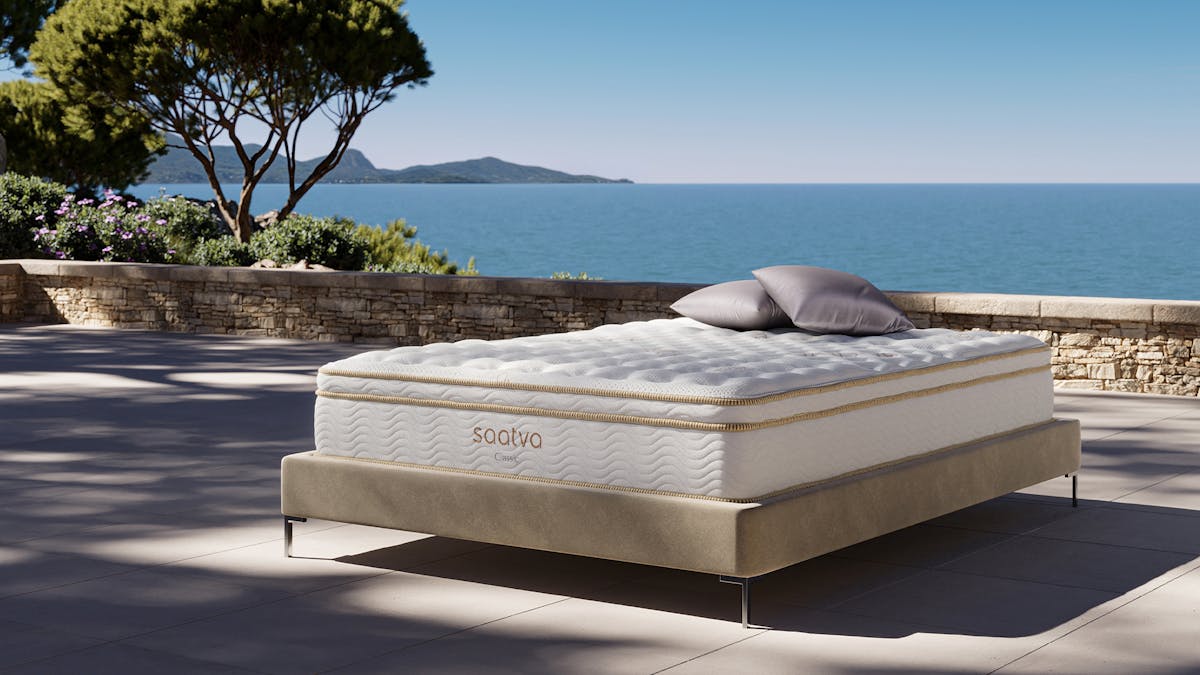
Saatva Classic
9.3/10
- Dual-coil construction allows continuous airflow through the support layer, keeping surface temperature down during warm daytime sleep windows
- 365-night trial is the most practical window for shift workers, giving you a full year to evaluate across every rotation cycle
- Free white-glove delivery, setup, and old mattress removal, no physical effort on a post-shift day
- Lifetime warranty on dual-tempered steel coil construction
- Moderate motion isolation compared to all-foam beds: coils transfer more movement than dense foam
- $99 return fee applies during the trial period
- Ships flat, not compressed in a box, so requires a specific delivery window
For rotating shift workers, the 365-night trial is a genuine structural advantage: a standard 100-night window may not cover enough schedule variations to know whether a mattress actually works for you. Add the Saatva Classic's superior coil-driven cooling for warm daytime rooms and white-glove setup that requires zero effort from you, and this is a luxury innerspring alternative for irregular sleep.
Why rotating shifts are harder on sleep than fixed nights
Fixed night-shift workers have it hard, but their bodies eventually settle into a stable off-peak rhythm. Rotating shift workers never get that luxury. Every schedule change forces a partial re-entrainment of the circadian system, a process that takes three to seven days under the best conditions. When the rotation cycle is shorter than that, you are essentially experiencing perpetual social jet lag.
Three consequences matter most for mattress selection:
- Daytime sleep in warm rooms. If you are sleeping between 8 a.m. and 4 p.m., ambient temperatures can be 10 to 15 degrees higher than a typical nighttime bedroom. A mattress that traps heat makes light circadian sleep even lighter.
- Household activity during sleep windows. Partners, children, and roommates are on normal schedules. Motion transfer from a co-sleeper or a partner leaving for work at 6 a.m. is one of the most common reasons rotating shift workers report waking mid-sleep.
- Pressure buildup from extended rest attempts. When you cannot fall asleep easily, you spend more time in bed trying. Mattresses with inadequate pressure relief lead to position shifting, which itself breaks sleep continuity.
What to look for in a mattress as a rotating shift worker
Trial period length
This matters more for rotating shift workers than for any other sleeper profile. A 100-night trial may cover two or three rotation cycles, which is rarely enough to know whether a mattress performs across all your sleep windows. A 365-night trial means you can evaluate the bed across a full calendar year of schedule variations before committing.
Temperature regulation
Daytime sleep rooms are typically 8 to 12 degrees warmer than overnight, and your core body temperature needs to drop 1 to 2 degrees to initiate and maintain sleep. A mattress that retains heat counteracts that process. Coil-based hybrids allow air to circulate through the support layer. For all-foam beds, open-cell construction such as Bio-Pur foam performs significantly better than closed-cell traditional memory foam, though coil cores still outperform foam in peak-heat situations.
Motion isolation
If your partner is on a standard schedule, they will enter and exit the bed while you are mid-sleep. Dense all-foam beds are the best isolators. Pocketed coil hybrids with thick memory foam comfort layers perform well. The Amerisleep AS3 scores 10/10 in NapLab's standardized transfer test at 2.11 m/s² compared to an 8.80 m/s² category average, near-complete isolation of movement across the sleep surface.
Pressure relief without full immersion
You need enough contouring to reach deep-sleep stages without sinking so far that repositioning becomes disruptive. Medium to medium-firm beds hit this balance for most body types. Side sleepers, the default sleep position when falling asleep from exhaustion, should look specifically for hip and shoulder pressure relief. See our best mattress for side sleepers roundup for that profile.
Durability
Rotating shift workers often sleep more total hours per 24-hour cycle than average, not from luxury but from recovery need. A mattress that sags prematurely undermines both pressure relief and spinal alignment. Look for high-density foam bases (1.8 lb/ft³ or higher for poly foam, 4 lb/ft³ or higher for memory foam) and tempered steel coils in hybrids.
How the top picks compare
| Mattress | Type | Cooling | Motion isolation | Trial | Queen price |
|---|---|---|---|---|---|
| Amerisleep AS3 | All-foam | Above avg for foam | 10/10 (NapLab) | 100 nights | $1,249 (queen) |
| Saatva Classic | Dual-coil hybrid | Outstanding (coil airflow) | Moderate (7.4/10) | 365 nights | $2,229 |
Sleep hygiene for rotating shift workers
A great mattress is one part of a functional sleep environment. For rotating schedules, what surrounds the bed matters too.
Control light aggressively. Circadian rhythm is driven primarily by light exposure. Daytime sleep without blackout coverage is physiologically difficult. Blackout curtains or a quality sleep mask are non-negotiable.
Keep the room between 65°F and 68°F. Core body temperature drops during the transition to sleep. If the room is 74°F at 9 a.m. and your mattress retains heat, that temperature drop never happens efficiently. A cooling mattress combined with a cool room is more effective than either alone.
Build a consistent pre-sleep routine regardless of the clock. Rotating workers who maintain the same 20 to 30 minute wind-down sequence, whether it is 6 a.m. or 10 p.m., report faster sleep onset. The routine acts as a behavioral cue that substitutes for the light-dark cycle your circadian rhythm is missing.
Protect your sleep window from household noise. White noise machines or earplugs handle the acoustic side of disruption. Motion isolation from your mattress handles the physical side. You need both.
For related reading on managing sleep with a partner on a different schedule, see our guide to the best mattress for couples. If cooling is your primary concern, our best cooling mattress roundup covers the full field.
Frequently asked questions
What mattress firmness works best for shift workers?
Medium to medium-firm is the most broadly effective range. It provides enough contouring for pressure relief without the excessive sinkage that increases heat retention and makes repositioning harder. If you primarily side-sleep after exhausting shifts, lean toward medium. Back or stomach sleepers do better with medium-firm to firm.
Does mattress cooling actually matter for daytime sleep?
Yes, and more than most people expect. Daytime room temperatures are typically 8 to 12 degrees higher than overnight, and your core body temperature needs to drop 1 to 2 degrees to initiate and maintain sleep. A mattress that traps heat counteracts that process. Hybrid mattresses with coil cores and gel or open-cell foam comfort layers perform significantly better than dense all-foam beds in warm environments.
How important is motion isolation for shift workers with partners?
Very important, especially if your partner is on a standard schedule. If they are getting up and going to bed while you are mid-sleep, motion transfer is a real disruption risk. All-foam beds like the Amerisleep AS3 are best for this, with NapLab recording 2.11 m/s² transfer versus 8.80 m/s² category average. The Saatva Classic has moderate isolation, which is why it pairs well with a partner who is considerate about movement.
How long do mattresses last under heavy shift-worker use?
Shift workers who sleep 7 to 9 hours per day during recovery periods put more wear on a mattress than the typical sleeper. A quality hybrid with tempered coils and high-density foam should remain supportive for 8 to 10 years. Lower-density foam mattresses often show sagging within 4 to 5 years under heavier use. Check the foam density specs before purchasing.
Can a mattress help with shift work sleep disorder?
A mattress addresses the physical environment of sleep, temperature, pressure, and motion, but shift work sleep disorder is a clinical condition involving circadian misalignment that may require medical evaluation. The right mattress removes barriers to sleep quality, which matters when your available sleep window is already compressed, but it does not replace light therapy, melatonin protocols, or other interventions a doctor may recommend.
For rotating shift workers, the balanced medium feel, cool Bio-Pur foam, and near-complete motion isolation of the Amerisleep AS3 make it the most practical all-round pick. If you want a luxury innerspring alternative with coil-driven airflow and a 365-night trial, the Saatva Classic is the runner-up.
This guide is part of our Best Mattress by Use Case hub, compare all the top picks and narrow down your choice there.