
 by
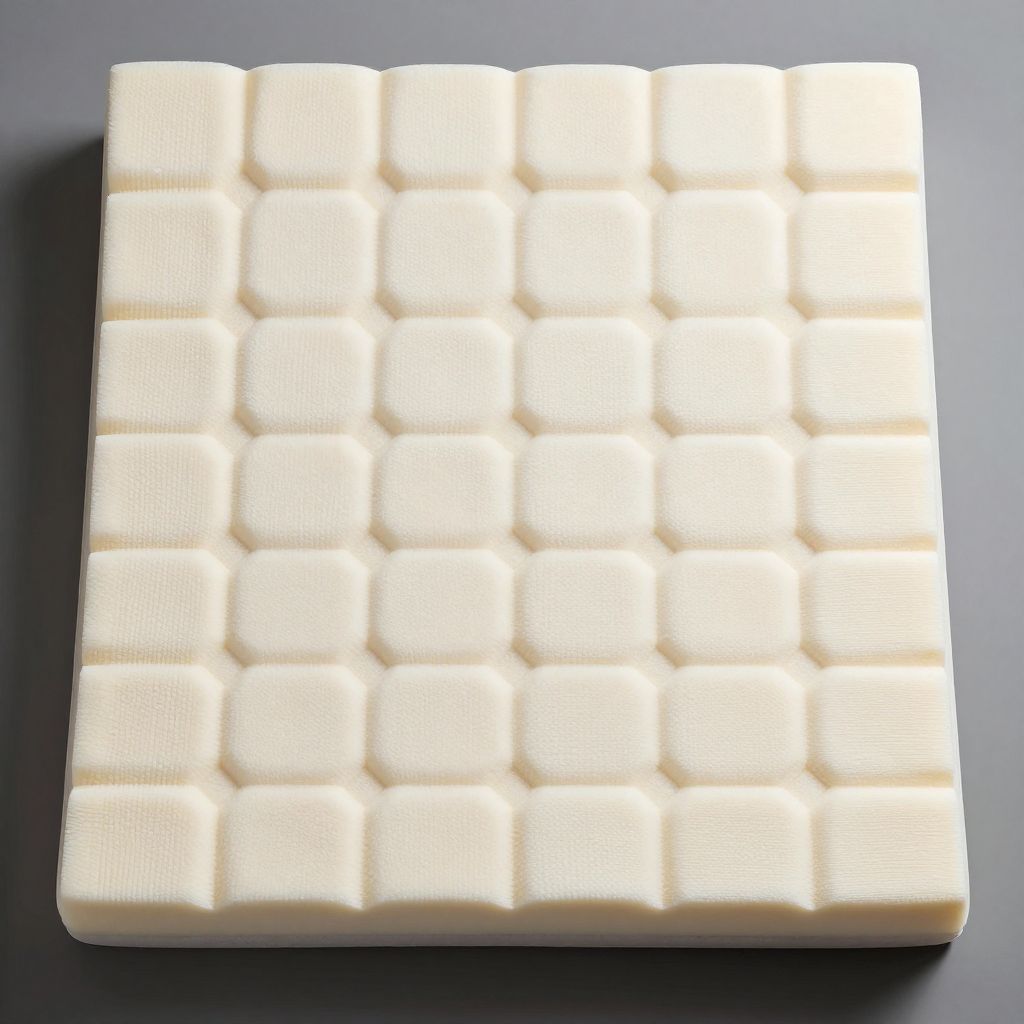
by HIVE stands for Harnessing Intelligent Ventilation and Energy. It's Amerisleep's proprietary 5-zone foam pattern that segments the comfort layer into firmer support zones at the head and lumbar, with softer pressure-relief zones at the shoulder and hip. The result is a mattress that simultaneously supports your spine and relieves pressure at the points where most people develop side-sleeper pain.
HIVE is the structural feature that distinguishes the Amerisleep AS2, AS3, AS4, and AS5 from other memory foam mattresses on the market. Casper, Nectar, and Tuft & Needle use single-density foam comfort layers. Tempur-Pedic uses uniform-density Tempur foam. HIVE is the answer to a specific clinical question: how do you support the lumbar curve while softening at the lateral hip for side sleepers?
How HIVE 5-Zone Construction Works
Standard memory foam mattresses use a single density of foam in the comfort layer. Whatever pressure the body applies gets responded to identically across the whole bed surface. This works fine for back sleepers (whose weight distributes relatively evenly), but it causes two problems for side sleepers:
- Hip sink. The lateral hip applies 25-35 lb of pressure on a single contact point. On a uniform-density mattress, the hip sinks too deep and the lumbar curve flattens, creating lower-back strain.
- Shoulder compression. The lateral shoulder applies 35-45 lb on a single contact point. On a too-firm mattress, the shoulder gets compressed and the spine bends laterally above it, creating upper-back tension.
HIVE solves both problems by mapping the foam density to the body's pressure pattern. The 5 zones run head-to-foot:
| Zone | Body region | Firmness role | Why this density |
|---|---|---|---|
| Zone 1 | Head & neck | Firmer (medium-firm) | Supports cervical spine without pillow over-engineering |
| Zone 2 | Upper back & shoulder | Softer (plush) | Allows lateral shoulder to sink, prevents upper spine misalignment |
| Zone 3 | Lumbar & lower back | Firmer (medium-firm) | Active lumbar support, prevents waist sag for side and back sleepers |
| Zone 4 | Hip & pelvis | Softer (plush) | Allows lateral hip to sink, prevents trochanteric pressure points |
| Zone 5 | Legs & feet | Firmer (medium-firm) | Supports leg weight without sagging, improves circulation |
The Amerisleep AS3 implements this pattern using Bio-Pur memory foam in the comfort layer (open-cell plant-based foam that runs cooler than petroleum memory foam). The firmer zones are denser foam patterns; the softer zones use lower-density hexagonal cuts that compress more under pressure.
HIVE vs Non-Zoned Foam Mattresses
Most memory foam mattresses on the market use uniform-density foam in the comfort layer. The market leaders without zoning:
- Casper Original — uniform 3 lb/ft³ foam, no zoning
- Nectar Original — uniform 3-4 lb/ft³ gel memory foam, no zoning
- Tuft & Needle Original — uniform adaptive foam, no zoning
- Tempur-Pedic Cloud — uniform Tempur memory foam, no zoning (Tempur's argument is that the Tempur material self-adapts to pressure)
Brands with their own zoning systems:
- Helix Midnight Luxe — DynamicResponse 3-zone coil layer (not foam zoning)
- Saatva Classic — Lumbar Zone Active Spinal Wire (a single zone, not 5)
- WinkBeds Plus — 8-zone coil layer for heavier sleepers
- Brooklyn Bedding Aurora Luxe — some models have 4-zone hex foam
HIVE is the most-zoned all-foam construction in the direct-to-consumer mattress market.
Who Benefits From HIVE Zoning
HIVE is most valuable for:
- Side sleepers under 230 lb. The shoulder and hip zones are softer than the lumbar zone, which prevents the classic side-sleeper trade-off (too soft = waist sag, too firm = hip pressure).
- Combination sleepers. The zones adapt regardless of whether you're sleeping on your side, back, or stomach in that moment.
- Lower back pain sufferers. The firmer lumbar zone provides active support that prevents the lumbar curve from flattening at night.
- Hip pain side sleepers. The plush hip zone gives the trochanteric pressure point room to sink.
- Shoulder impingement / rotator cuff issues. The plush shoulder zone reduces compression.
HIVE is less critical for:
- Stomach sleepers. Stomach sleeping needs uniform firm support; zoned softness at the hip actually causes problems for this position.
- Very heavy sleepers (350+ lb). HIVE's foam compresses too much at the plush zones for very heavy sleepers; better picks at this weight are WinkBeds Plus or Saatva HD.
- Couples with motion isolation as priority. HIVE's zone variation isn't as motion-isolating as uniform-density foam (though still better than coil hybrids).
Amerisleep Mattress Models With HIVE (2026)
| Model | Firmness | Best for | 2026 current deal |
|---|---|---|---|
| Amerisleep AS1 | Firm 8/10 | Stomach sleepers (limits hip sink) + back sleepers wanting maximum firmness | $600 off ~$999 Queen |
| Amerisleep AS2 | Medium-firm 6-7/10 | Back pain + back sleepers + combo sleepers + sciatica (clinically optimal firmness) | $600 off ~$1,099 Queen |
| Amerisleep AS3 (most popular) | Medium 5-6/10 | Most side sleepers + combo + couples + hip pain + general balanced firmness | $600 off ~$1,099 Queen |
| Amerisleep AS4 | Medium-soft 4/10 | Side sleepers + shoulder pain + plush feel preference | $600 off ~$1,249 Queen |
| Amerisleep AS5 | Soft 3/10 | Side sleepers under 130 lb + extra-plush preference + side sleepers with trochanteric bursitis | $600 off ~$1,449 Queen |
| Amerisleep AS3 Hybrid | Medium 5-6/10 | Couples wanting edge support + couples + side sleepers wanting hybrid feel | $600 off ~$1,599 Queen |
| Amerisleep Organica | Medium-firm 6-7/10 | Organic / natural mattress buyers + couples + back sleepers | $600 off ~$1,799 Queen |
The Amerisleep AS3 is the most popular HIVE-zoned mattress because the medium firmness (5-6/10) covers the broadest sleep position range. For back pain specifically, the AS2 (firmer 6-7/10) is the clinical pick.
HIVE vs Saatva's Lumbar Zone Active Spinal Wire
HIVE and Saatva's Lumbar Zone are both zoned-support technologies but they target different parts of the spine:
| Feature | HIVE (Amerisleep) | Lumbar Zone (Saatva) |
|---|---|---|
| Construction | 5-zone foam pattern with firmness variation | Active Spinal Wire (steel reinforcement strip in the lumbar third) |
| Zones | 5 zones head-to-foot | 1 zone (lumbar third) |
| What it does | Softens at shoulder + hip; firms at lumbar + head + feet | Reinforces lumbar coil layer for stronger lumbar support |
| Best for | Side sleepers, combination sleepers, hip pain | Back sleepers, lumbar disc issues, lower back pain |
| Material | Bio-Pur memory foam (Amerisleep) | Steel wire + pocket coils (Saatva Classic hybrid) |
| Construction type | All-foam | Hybrid (innerspring + foam top) |
For pure side sleepers with hip pain, HIVE is the stronger pick. For back sleepers with lumbar disc issues, the Lumbar Zone Active Spinal Wire is the stronger pick. The Saatva Classic is also available with the Plush Soft firmness (3-4/10) for side sleepers wanting pressure relief on a hybrid platform.
HIVE Zoning FAQs (2026)
What does HIVE stand for?
HIVE stands for "Harnessing Intelligent Ventilation and Energy." It's Amerisleep's proprietary 5-zone foam construction pattern with firmness variation between body regions.
Is HIVE worth the price difference?
For side sleepers and people with back, hip, or shoulder pain, HIVE delivers measurable improvement over uniform-density memory foam. Side-sleeper customers consistently report better pressure relief and reduced morning stiffness on Amerisleep AS3 compared to Casper Original or Nectar at similar price points.
How many zones does HIVE have?
HIVE has 5 zones running head-to-foot: head zone (firmer), shoulder zone (softer), lumbar zone (firmer), hip zone (softer), and leg zone (firmer).
Which Amerisleep mattress is best for HIVE benefit?
The Amerisleep AS3 (medium 5-6/10) covers the broadest sleep position range with HIVE zoning. For back pain specifically, AS2 (medium-firm 6-7/10) is the clinical pick. For shoulder pain side sleepers, AS4 (medium-soft 4/10) maximizes shoulder zone plushness.
HIVE vs Saatva Lumbar Zone: which is better?
HIVE has 5 zones (full-body zoning); Saatva's Lumbar Zone is single-zone (lumbar third). HIVE is better for side sleepers with hip pain. Saatva Lumbar Zone is better for back sleepers with lumbar disc issues. Both are clinically credible technologies addressing different sleep position challenges.
Does HIVE zoning affect motion isolation?
Slightly. Zone variation creates micro-density differences that can cause minor motion to telegraph between zones. However, all-foam construction still isolates motion better than hybrid construction, so the Amerisleep AS3 motion isolation (8.5/10 NapLab score) outperforms the Saatva Classic hybrid (6.5/10 NapLab score) overall.
How long does HIVE foam last?
HIVE-zoned Bio-Pur foam at 4-5 lb/ft³ density typically lasts 10-12 years per customer-reported lifespan. The Amerisleep 20-year warranty covers structural defects beyond that window. Foam density and HIVE zoning don't reduce lifespan compared to uniform foam — both are equivalent.
Bottom Line
HIVE zoning is the structural reason Amerisleep mattresses (AS2, AS3, AS4, AS5) outperform similarly-priced memory foam mattresses for side sleepers and people with back, hip, or shoulder pain. The 5-zone foam pattern with firmness variation specifically addresses the side-sleeper trade-off (waist sag vs hip pressure) that uniform-density mattresses can't solve.
For 2026 Memorial Day shoppers, the Amerisleep AS3 with code brings the Queen to roughly $1,099 with the 20-year warranty and 100-night trial. The HIVE technology is included at every Amerisleep model price point.