
 by
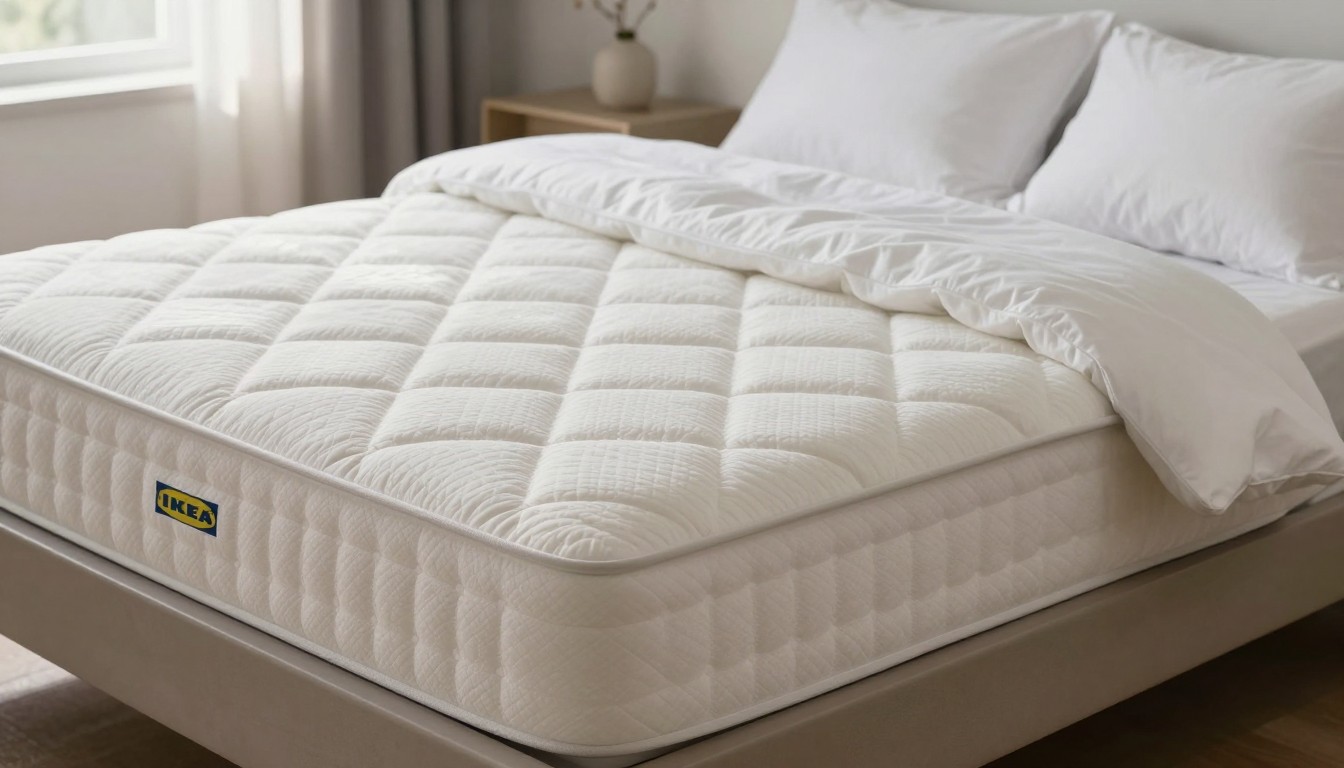
by Quick answer: For the ikea comforter duvet, choose the warmth level first, the fill material next, and the exact insert-and-cover fit last. IKEA’s own category guidance treats the duvet insert and duvet cover as separate products, while its UK listings organize inserts by tog. Check the current product label before buying because model names, warmth descriptions, materials, and care instructions can vary by market.
- Choose warmth for the room: A hot sleeper in a warm bedroom needs a different insert from a cold sleeper in an unheated room.
- Choose fill for the feel: Down feels loftier and lighter, while fibre fills generally feel denser and are often easier to care for where the label permits machine washing.
- Check fit before style: Compare the insert and cover measurements rather than relying on familiar US bed-size names.
- Read the care label: Washing and drying instructions depend on the exact fill and shell construction.
My verdict on the ikea comforter duvet is straightforward: it can be a sensible bedding system once you separate warmth, fill, and fit into different decisions. The confusing part is the vocabulary. IKEA generally uses “duvet” for the filled insert, while the removable fabric layer is the duvet cover.
I wouldn’t choose by product name or package appearance alone. The insert controls most of the insulation and weight. The cover controls much of the surface feel, appearance, and day-to-day washability. Treating those as separate jobs makes the range much easier to understand.
What IKEA means by duvet, comforter, and cover
IKEA’s category pages distinguish the duvet from the duvet cover. The duvet is the filled and quilted insert that supplies warmth. The cover is the removable fabric envelope placed around it. They are normally sold separately, so a shopper who wants the complete system needs to check what the package actually includes.
A conventional American comforter combines those jobs more closely. It has a finished outer shell and can be used without another decorative layer. A duvet insert may look plain because it is intended to remain inside a washable cover. That difference affects laundry, styling, and replacement costs more than it affects the basic purpose of the bedding.
If you already own a suitably sized comforter, you may be able to use that comforter as a duvet insert. Check how evenly it fills the cover and whether the corners can be secured. A bulky comforter inside a tight cover can bunch, while a small comforter inside a roomy cover can slide toward one side.
The construction shortcut: Think of the insert as the thermal layer and the cover as the contact-and-care layer. The cover receives more direct wear and washing. The insert needs room to retain its loft and distribute fill evenly.
A duvet system makes sense for people who like changing the look of a room without replacing the insulated layer. A finished comforter is simpler for someone who dislikes removing and reinstalling covers. My fuller guide to duvet vs comforter explains that practical difference in more detail.
Tog and warmth labels matter more than the model name
Tog describes thermal insulation. A lower tog indicates less insulation, while a higher tog indicates more. IKEA’s UK duvet category listings use the tog scale across lighter and warmer options. In other markets, the same shopping decision may be expressed through words such as light, warm, or extra warm, so read the current label rather than assuming that a familiar model name has identical specifications everywhere.
Tog is not a quality grade. A warmer duvet is not automatically better, and a lighter duvet is not necessarily cheaper or less substantial. The useful rating is the one that suits the sleeper, the room, and the rest of the bedding.
Start with the bedroom. A warm room, heat-retaining mattress, shared bed, or naturally warm sleeper generally calls for less insulation. A cool room and a sleeper who regularly feels cold may call for more. The duvet cover also affects the experience, but its weave and fabric usually change airflow and surface feel more than the insert’s core warmth rating.
- Choose a lighter insert if you often push bedding away during the night.
- Choose more insulation only when the room and your sleep habits justify it.
- Account for other layers, including blankets, mattress protectors, and heat-retaining sleep surfaces.
- If two people have very different warmth needs, separate inserts may be easier to manage than one compromise duvet.
IKEA has also described some all-season models as layered inserts that can be used separately or fastened together. That can be a flexible construction, but availability and assembly are model-specific. Confirm the current product description instead of assuming every all-season option uses the same design.
How down, feathers, and fibre fill change the feel
Down consists of soft clusters that hold air with relatively little mass. From a materials standpoint, that creates a lofty, low-burden feel. Down can recover its shape well when it is kept clean, fully dried, and stored without prolonged compression. Its care requirements deserve close attention because residue, moisture, and excessive heat can reduce loft.
Feather-and-down blends include flatter feathers with firmer quills. They tend to feel denser and more substantial than a fill dominated by down clusters. The shell construction matters because weak seams or a loosely woven fabric can make escaping quills more noticeable over time.
Polyester fibre fill usually creates a more even, compact layer. It can be practical for frequently used guest bedding or households that value straightforward care, provided the specific care label permits machine washing. Its main durability tradeoff is compression: repeated pressure can flatten fibre webs and create thinner areas.
Lyocell and mixed fibre fills need a close label check. “Blend” means the performance depends on the complete composition, not merely the most marketable fibre named on the package. Shell fabric, fill distribution, and total insulation all affect how the duvet handles warmth and moisture.
| Fill construction | Likely character | Reader fit | What to inspect |
|---|---|---|---|
| Down | Lofty warmth with less perceived weight | Sleepers who dislike a dense blanket pressing down | Warmth rating, fill information, shell, and care label |
| Feather-and-down blend | More weight and drape, with less cloud-like loft | People who prefer a more substantial cover | Quill containment, seam quality, and fill migration |
| Polyester fibre | Even and relatively dense for its warmth | Guest rooms and care-focused households | Clumping, flat zones, and model-specific wash instructions |
| Lyocell or mixed fibre | Performance varies with the full blend and shell | Shoppers prioritizing moisture handling | Complete fibre percentages and current care directions |
The Sleep Judge’s coverage of IKEA down comforters emphasizes fill power as an important selection point. I would treat that as one part of the construction rather than a substitute for the warmth label. Fill power concerns loft efficiency, while tog concerns insulation. A down insert can have attractive loft characteristics and still be the wrong warmth for your room.
Shell fabric and quilting decide how evenly the fill behaves
The shell around the fill does more than keep fibres contained. A tighter weave can help resist feather leakage, while the quilting pattern limits how far the fill can migrate. Large open channels may allow more movement. Smaller enclosed sections can keep distribution steadier, although they also introduce more stitched areas.
Look across the insert while it is laid flat. Unevenly filled compartments, visibly empty corners, or fill piled against one seam can translate into inconsistent warmth. These details matter most with loose fills such as down and feather blends, but synthetic batting can also fold or separate if its internal attachment points weaken.
Corner loops are another practical detail. If both insert and cover have compatible loops or ties, securing them can reduce twisting and bunching. Do not assume that every IKEA insert, every IKEA cover, or every cross-brand pairing uses the same fastening system. Check the current product photographs and description.
My materials check: Read the shell fibre, fill composition, warmth label, quilting layout, and care instructions as one system. A premium-sounding fill cannot compensate for the wrong insulation or a cover that does not fit.
IKEA and US sizing do not always line up neatly
Bed-size names are not enough for a cross-brand match. IKEA’s bedding follows its own market-specific sizing, and a cover labeled for a familiar bed category may not match a US insert with the same category name. Compare the measurements printed for the exact insert with those listed for the exact cover.
A cover that is much roomier than the insert can leave loose fabric and encourage the fill to migrate. A cover that is too tight can compress the insert, pull at closures, and keep the corners from settling properly. A small difference may be manageable, but the shape and fastening points matter along with overall width and length.
I prefer buying the insert and cover from a compatible range when possible. If you mix brands, check both product labels and confirm that any corner ties line up with usable loops. The ties help manage movement, but they cannot correct a major size mismatch.
Fit rule: Match actual measurements before matching color or pattern. The cover can be changed later. A poorly fitted insert will keep bunching no matter how good the fabric looks.
Installation technique also matters. Trying to shake a large insert into place can leave the top corners empty and the lower edge overloaded. The rolling approach described in how to cover a comforter with a duvet cover can make it easier to align the corners before unrolling the finished bundle.
Shared beds need enough usable coverage, but sizing up blindly can create a new cover-fit problem. Decide how much side drape you want, then choose an insert and cover that match each other at that size. That is more reliable than buying an oversized insert for a smaller cover.
Comfort, weight, and cooling are separate decisions
Warmth and physical weight are related, but they are not identical. Down can supply considerable loft without the dense feeling of a heavily filled synthetic duvet. Feather blends usually add more drape. Fibre fills can feel flatter and more planted even when the warmth category looks similar.
Cooling is equally easy to oversimplify. A breathable cover may help moisture and air move at the surface, but it does not cancel an overly warm insert. Hot sleepers should begin with the insulation level, then consider the cover weave and fill character.
Surface texture mostly comes from the duvet cover because that is the layer against the sleeper. The insert shell still matters for noise, flexibility, and fill containment, but a crisp cover can make a soft insert feel crisper, while a brushed cover can make the same insert feel warmer and less airy.
- If pressure from bedding bothers you, prioritize loft with lower perceived weight.
- If you like a tucked, substantial feel, a denser fill may suit you better.
- If heat is the concern, reduce insulation before trying to solve the problem with cover fabric alone.
- If noise is the concern, inspect shell stiffness and read current owner feedback for the exact model.
Washing and drying without flattening the insert
The care label on the exact IKEA model takes priority over general advice. Synthetic, down, and blended fills may require different wash cycles, detergents, drying temperatures, or professional care. Product families can also change, so instructions remembered from an older insert may not apply to a current one.
Too much detergent can leave residue that binds loose fill and reduces loft. Excessive heat can damage delicate fill or synthetic fibres. A crowded machine can prevent proper rinsing and can place heavy stress on wet seams, particularly with a large insert.
Drying is the stage I would take most seriously. An insert can feel dry at the shell while remaining damp inside its quilted compartments. Follow the label, allow enough drying time, and pause to separate clumps if the instructions permit. Dryer balls may help redistribute compatible fills, but use them only when they do not conflict with the manufacturer’s directions.
- Wash the removable cover more often than the insert.
- Treat spots promptly so the entire insert needs less frequent washing.
- Use only the detergent type and amount appropriate for the care label.
- Return the duvet to the bed only after the interior fill is fully dry.
Durability depends on loft, seams, and storage
Loft loss is the main performance issue to watch. Synthetic fill can compress in areas that receive repeated pressure. Down clusters tend to recover more readily when cared for correctly, while feathers can shift and reveal thinner compartments. None of those changes necessarily means the shell has failed, but they can make warmth less even.
Inspect the duvet in daylight after spreading it flat. Persistent cold-looking zones, hard clumps that will not separate, open seams, escaping fill, or an insert that no longer regains its shape are more useful replacement signals than age alone. A well-kept insert may remain comfortable after a neglected one has already become uneven.
Storage can either preserve or crush loft. Clean and dry the duvet according to its label, then keep it in a breathable container with room to expand. Long-term vacuum compression can make recovery harder, especially for fibre fills that have already begun to flatten.
- Gently redistribute the fill when compartments start looking uneven.
- Keep body oils and spills away from the insert by using a removable cover.
- Repair a small seam opening before repeated movement enlarges it.
- Avoid storing the insert while it is damp or tightly compressed.
Who is likely to enjoy the IKEA duvet system
IKEA’s approach suits shoppers who want the warmth layer and decorative layer separated. It is especially practical if you like changing covers, want the cover to handle routine washing, or need to select insulation independently from surface fabric.
It is less convenient if you want one finished piece that goes straight onto the bed, dislike installing duvet covers, or intend to mix products without checking measurements. Shoppers seeking detailed model-level fill disclosures should also read the current listing carefully instead of inferring construction from the range name.
| Likely a good fit | Reason to pause |
|---|---|
| You want to wash the outer layer separately. | You prefer a finished comforter with no removable cover. |
| You are willing to choose warmth and fill independently. | You are shopping by model name without checking the warmth label. |
| You can match the insert and cover measurements. | You expect US and IKEA size names to match automatically. |
If the unresolved question is which overall bedding format fits your routine, my guide, comforters or duvet, explains how laundering, styling, and bed-making differ between the systems.
A premium cover to consider after choosing the insert
The core decision should remain the insert: correct warmth, suitable fill, compatible dimensions, and manageable care. Only after those points are settled does it make sense to consider a more premium cover.
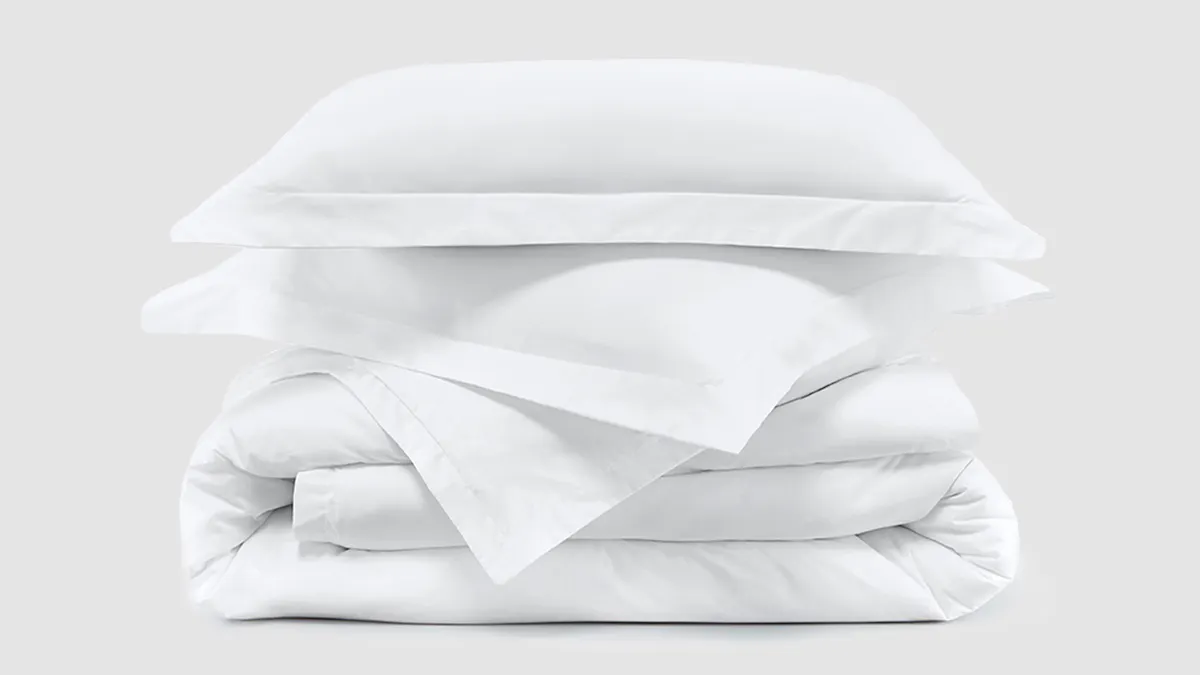
The Saatva Percale Duvet is a separate premium-tier cover option to inspect at that stage. Verify its current materials, package contents, measurements, care instructions, price, and terms on the official site before deciding whether it suits your insert. It does not replace the warmth or sizing checks above.
FAQ
What does IKEA comforter duvet mean?
The phrase ikea comforter duvet usually points to IKEA’s duvet bedding system rather than one universal model. The duvet is the filled insert that supplies warmth, and the duvet cover is the removable outer layer. Check the current package description so you know which piece is included.
Do I need a cover with an IKEA duvet?
An IKEA duvet insert is intended to be paired with a compatible cover. The cover provides the finished surface, helps keep body oils away from the fill, and can usually be removed for more routine washing. Confirm that the chosen cover fits the insert and has compatible fastening points.
Which tog or warmth level should I choose?
Choose according to bedroom temperature, personal heat preference, shared-body warmth, and the other layers on the bed. IKEA’s UK listings use tog, while another market may use descriptive warmth categories. A hotter sleeper should generally lean lighter, while a cold sleeper in a cool room may prefer more insulation.
Will an IKEA duvet fit a US duvet cover?
It may, but the category name alone is not reliable. Compare the exact measurements of the insert and cover, then check their shape and fastening system. A close match helps prevent empty corners, compressed fill, and migration inside the cover.
Can I machine wash an IKEA down duvet?
Follow the care label for the specific model. Some filled inserts may permit machine washing, while others may require different treatment. Down needs thorough drying to restore loft, and excessive detergent or heat can leave the fill clumped or damaged.
ONE OPTION WORTH COMPARING
Shopping as well as reading? Here is one current option worth comparing: the Saatva Percale Duvet. Check today’s price, sizing and return terms on the official product page before you order.
Saatva Percale Duvet
- The Saatva Percale Duvet is a separate premium-tier cover option to inspect at that stage
The verdict
The IKEA duvet system is easier to buy once you stop treating the insert and cover as one product. Pick insulation for the sleeper and room, choose fill for weight and loft, then match the insert to a cover using actual measurements.
I would buy only after reading the current model label from top to bottom. Get warmth, construction, fit, and care right, and the result should feel intentional rather than like two pieces of bedding forced together.