
 by
by Our top recommendation for this category:
The NASA Origin Story (and Why It Matters)
Memory foam was developed by NASA in the 1960s to improve crash protection and pressure distribution in aircraft seats. The material — technically called viscoelastic polyurethane foam — was designed to absorb and distribute energy on impact rather than pushing back immediately against pressure. It didn't reach the consumer market until Tempur-Pedic introduced the first memory foam mattress in 1992.
The NASA origin is relevant because it explains the foam's core properties: it's engineered for energy absorption and pressure relief, not for bounce or responsiveness. That design intent shapes everything about how it performs as a sleep surface.
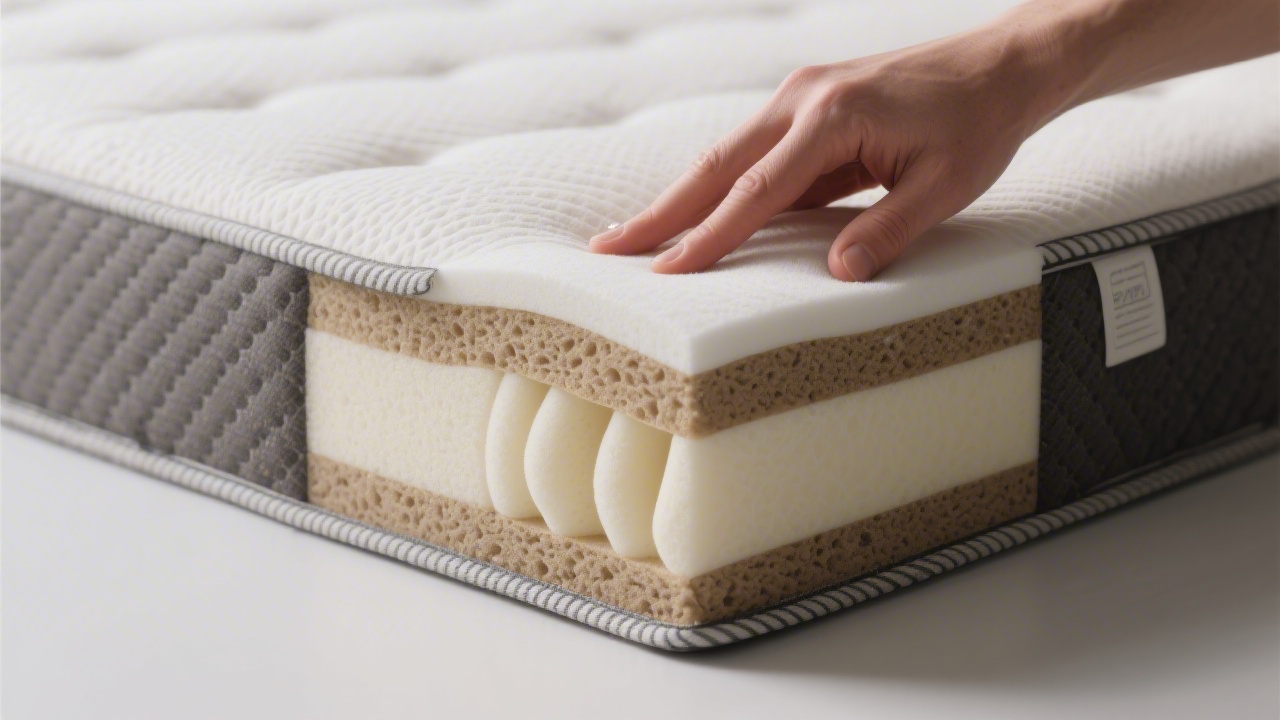
How Viscoelastic Foam Actually Works
Viscoelastic means the material has both viscous (slow-moving, fluid-like) and elastic (returnable to original shape) properties. When you press into memory foam, two things happen simultaneously:
First, the foam softens in response to body heat — the polyurethane structure becomes less rigid as temperature increases. Second, the foam slowly deforms to match your body contour, distributing pressure across a larger surface area instead of concentrating it at contact points like hips and shoulders.
When you move or get up, the foam returns to its original shape — but slowly, in 5-60 seconds depending on density and temperature. This slow recovery is what gives memory foam its characteristic "quicksand" feel and its name.
Foam Density: The Number That Actually Matters
Foam density is measured in pounds per cubic foot (PCF). This determines durability and feel:
Low density (2-3 PCF): Budget foam. Softer feel, faster recovery, less durable. Common in mattresses under $500. Will develop body impressions within 2-4 years.
Medium density (4-5 PCF): The standard for quality memory foam mattresses. Good pressure relief, reasonable durability (7-10 years), moderate heat retention.
High density (5+ PCF): Luxury foam. Firmer, slower recovery, most durable. Saatva's Loom & Leaf uses 5 PCF foam. Lasts 10-15+ years under normal use. More expensive but significantly better long-term value.
The Heat Retention Problem
Traditional memory foam's biggest weakness is heat buildup. The viscoelastic structure that makes it conform to your body also traps heat — it softens with warmth, which means the more heat it absorbs, the softer and more enveloping it becomes. Hot sleepers often find themselves sinking deeper as the night progresses.
Modern memory foam addresses this with three approaches: gel infusion (cooling gel beads or gel swirls mixed into the foam), open-cell structure (more porous foam that allows airflow), and copper or graphite infusion (heat-conductive materials that draw heat away). Gel infusion helps somewhat in the first hour but loses effectiveness by morning. Open-cell structure is more consistently effective. Copper and graphite infusion work throughout the night but add cost.
Who Benefits Most from Memory Foam
Memory foam excels for: side sleepers (pressure relief at hips and shoulders), people with joint pain or arthritis, lighter-weight sleepers (under 130 lbs) who don't sink through the comfort layer, and couples who need motion isolation (memory foam absorbs movement rather than transferring it across the mattress).
Memory foam is a poor match for: hot sleepers (even improved versions retain more heat than latex or innerspring), combination sleepers (slow recovery makes repositioning feel effortful), and heavier sleepers (over 230 lbs who may sink too deeply into lower-density foam).
Memory Foam vs. Latex vs. Hybrid
Latex foam (natural or synthetic) provides similar pressure relief but with faster response, better temperature neutrality, and greater durability. It costs more but sleeps cooler. Hybrid mattresses combine a memory foam or latex comfort layer with innerspring coils — this addresses the heat retention problem while maintaining pressure relief. For most sleepers who want memory foam feel without the heat, a hybrid with a quality memory foam comfort layer is the optimal choice.
Ready to upgrade? Our top pick for this category:
Frequently Asked Questions
Is memory foam bad for hot sleepers?
Traditional memory foam retains heat significantly. Modern versions with open-cell structure, gel infusion, or copper infusion sleep meaningfully cooler — but still warmer than latex or innerspring. Hot sleepers who want memory foam should look for hybrid options or high-density open-cell foam with copper or graphite infusion.
What is the difference between memory foam and regular foam?
Regular polyurethane foam (like sofa cushion foam) springs back immediately when pressure is removed. Memory foam (viscoelastic polyurethane) responds to heat and pressure, conforms slowly, and recovers slowly. The slow recovery gives memory foam its pressure-relief properties.
How long does memory foam last?
Quality memory foam (4-5 PCF density) lasts 7-10 years. High-density foam (5+ PCF) can last 12-15 years. Budget memory foam under 3 PCF typically develops body impressions within 2-4 years. Foam density is the single best predictor of mattress longevity.
Can you flip a memory foam mattress?
No. Memory foam mattresses are single-sided by design — the comfort layer is on top, the support core on the bottom. Flipping places the support core surface-up, removing all comfort layer benefit. Rotating 180 degrees (head to foot) every 3-6 months is recommended instead.
What density memory foam is best?
For most sleepers, 4-5 PCF is the sweet spot — good pressure relief, reasonable durability, and manageable heat retention. High-density 5+ PCF foam is better for heavy sleepers and anyone prioritizing longevity. Low-density foam under 3 PCF is fine for guest rooms or occasional use but not for primary sleep surfaces.
Disclosure: MattressNut may earn a commission from affiliate links in this article. We test products independently and recommend only what we believe provides genuine value.