
 by
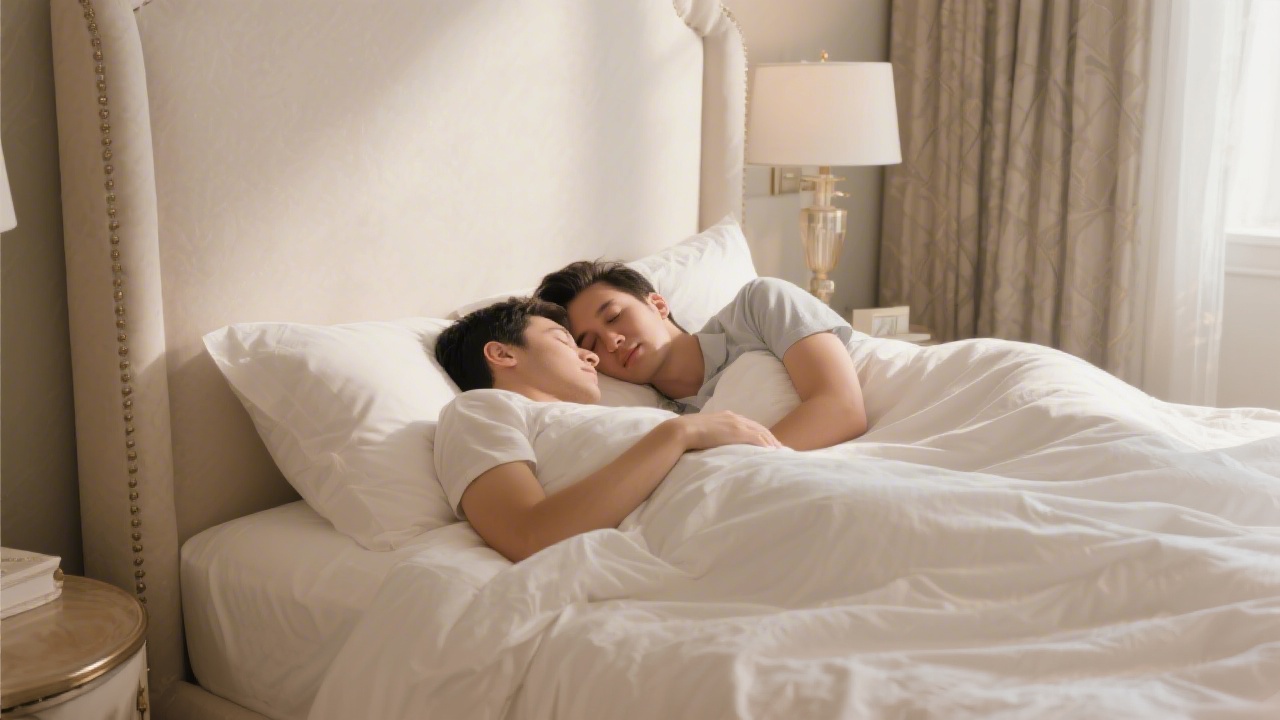
by Saatva Classic uses individually wrapped coils that minimize motion transfer while maintaining support — designed for couples.
Motion transfer is one of the most practically important mattress specifications for couples, and one of the least well explained. Here is a precise definition: motion transfer is the measurement of how much movement from one person on a mattress is transmitted through the mattress structure and felt by the other person. Low motion transfer means you can get out of bed at 3 am without your partner registering significant movement. High motion transfer means every adjustment is shared.
Why Motion Transfer Happens
A mattress is a connected structure. When weight or movement is applied at one point, the force travels through the materials until it dissipates. How far and how strongly that force travels depends on the materials and their construction:
- Interconnected coil systems — where coils are connected by helical wire — transmit motion across the full mattress surface. This is why older traditional innerspring mattresses have poor motion isolation.
- Individually pocketed coils — where each coil is enclosed in its own fabric pocket — allow coils to compress independently. Movement compresses nearby coils without engaging the full coil grid, significantly reducing transmission.
- Memory foam absorbs and dissipates movement within the foam cell structure. The viscoelastic properties that give memory foam its distinctive feel also make it the best motion isolation material available at scale.
- Latex is resilient and bouncy, which means it returns energy rather than absorbing it. This produces higher motion transfer than memory foam but typically lower than interconnected coil systems.
Motion Transfer by Mattress Type
Memory Foam: Excellent
All-foam mattresses with memory foam comfort layers offer the best motion isolation of any mainstream mattress category. Movement is absorbed within the foam structure and dissipates quickly. The tradeoff is that some people find all-foam mattresses trap heat and feel too isolating — the same material that absorbs motion also tends to hug the body and limit ease of movement.
Hybrid with Pocketed Coils: Good
A well-designed hybrid with individually pocketed coils achieves good motion isolation while maintaining the responsive feel and airflow benefits of a coil system. The coils flex independently, and the foam or latex comfort layer above them adds additional dampening. This is the most common recommendation for couples who want motion isolation without the heat retention of all-foam.
Latex: Moderate
Natural latex is bouncy and resilient. Movement is not transmitted widely across the surface, but the material returns energy upward rather than absorbing it. Couples where one partner moves significantly may find latex less satisfying than memory foam for motion isolation, though it is substantially better than traditional innerspring.
Traditional Innerspring: Poor
Connected coil systems transmit motion efficiently. This is why hotel mattresses — often traditional innerspring — are frequently cited as contributors to disturbed sleep when sharing a bed with a restless partner. If motion transfer is a significant issue, a traditional innerspring mattress is not the right solution regardless of other comfort attributes.
How to Evaluate Motion Transfer Before Buying
In a showroom, have one person lie still on one side while the other makes normal sleep movements — rolling over, getting up — on the other side. This simple test reveals motion characteristics more accurately than any specification sheet. For online purchases, look for independently tested motion transfer scores from sources that use standardized weight-drop or accelerometer testing.
The water glass test at home: place a full glass of water on one side and sit down heavily on the other, then roll over. How much the water moves is an approximate proxy for motion transfer. Memory foam mattresses typically show minimal water disturbance; traditional innerspring shows obvious waves.
Motion Transfer and Sleep Quality
For couples where one or both partners move significantly during sleep, motion transfer has measurable effects on sleep continuity. Even brief micro-awakenings — too short to remember but enough to interrupt deep sleep cycles — accumulate across a night. Partners who sleep lightly or wake frequently are disproportionately affected. Reducing motion transfer is one of the more direct ways to improve sleep quality without changing any other variable in the sleep environment.
Related Reading
What is pressure relief in a mattress? | How long to break in a new mattress? | How to choose pillow firmness
Frequently Asked Questions
What is motion transfer in a mattress?
Motion transfer is the degree to which movement on one side of a mattress is transmitted to and felt on the other side. When a partner shifts position or gets out of bed, motion transfer determines whether that movement disturbs the other sleeper. Lower motion transfer means movement on one side produces minimal disruption on the other side.
Which mattress type has the lowest motion transfer?
Memory foam mattresses have the lowest motion transfer of any standard mattress type. The viscoelastic properties of memory foam absorb and dampen movement locally rather than transmitting it through the structure. Latex and hybrid mattresses with individually pocketed coils offer moderate-to-good motion isolation. Traditional interconnected coil innerspring mattresses have the highest motion transfer.
Does motion transfer matter if you are a deep sleeper?
If one partner is a consistently deep sleeper who is not woken by movement, motion transfer is less critical. However, even people who consider themselves deep sleepers are often disturbed by significant motion events — a partner getting up at 2 am, restlessness from insomnia — without fully waking. Reduced motion transfer improves sleep architecture measurably for both partners, regardless of self-reported sleep depth.
How is motion transfer tested?
The standard test involves placing a full glass of water on one side of the mattress and dropping a 10-pound weight or performing significant movement on the other side, observing how much the water disturbs. More controlled laboratory testing uses accelerometers to measure vibration amplitude and frequency on the non-disturbed side. For home evaluation, this simple water glass test is a reasonable indicator.
Can a mattress topper improve motion transfer?
A memory foam topper added to a high-motion-transfer mattress can meaningfully reduce surface motion transfer. However, it does not address structural motion transmission through the coil system or foam core. A topper is a reasonable improvement measure for couples experiencing issues on a firmer hybrid or innerspring mattress they want to keep.
Saatva Classic: individually wrapped coils, lumbar zone support, 3 firmness options — made for couples with different sleep preferences.
Affiliate disclosure: This site earns a commission from qualifying purchases at no additional cost to you.