
 by
by Most people need a medium to medium-firm mattress (5–6 out of 10). Side sleepers do best at 3–5, back sleepers at 5–7, and stomach sleepers at 7–8. Our top pick for versatile firmness is the Saatva Classic, which comes in three firmness levels (Plush Soft, Luxury Firm, Firm) so you can dial in the exact feel, with a 365-night trial to confirm it at home. The Amerisleep AS3 is the best all-foam alternative at a fixed medium 5/10.
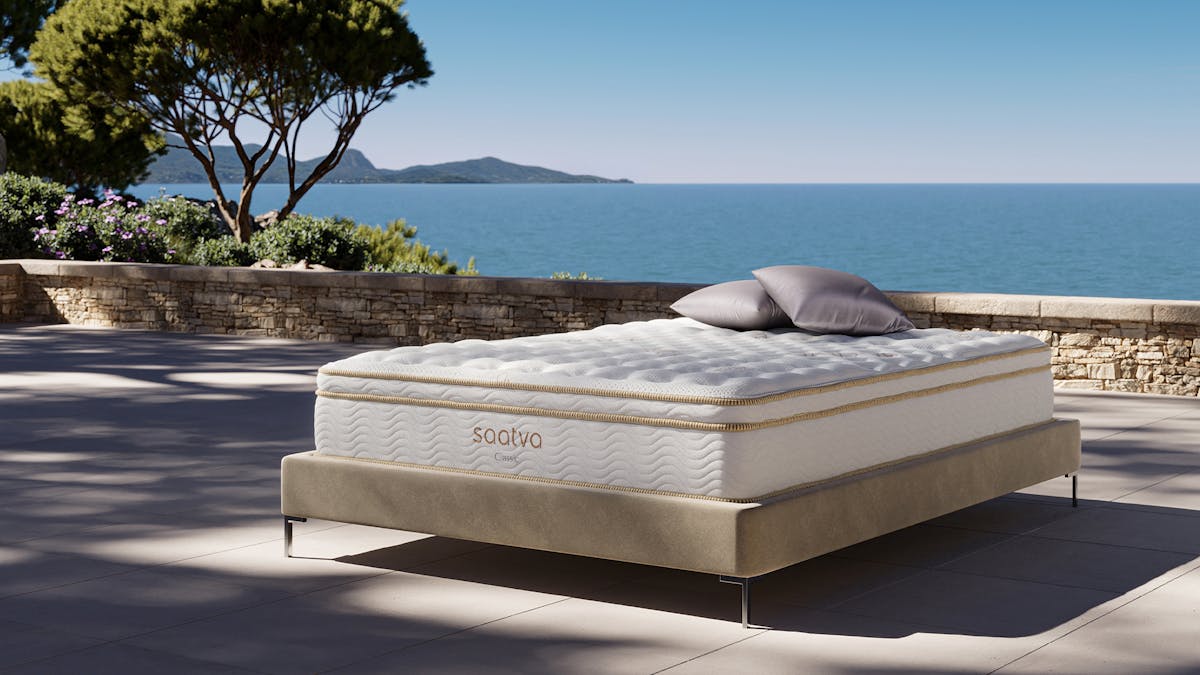
Saatva Classic
9.2/10
- Three firmness choices (Plush Soft 4/10, Luxury Firm 6/10, Firm 8/10) in one model, covering every major sleep position
- Dual-coil construction with a reinforced lumbar zone pad delivers genuine support, not just surface firmness
- Outstanding edge support with perimeter coils, so the usable sleep surface extends to the mattress edge
- Free white-glove delivery, setup, and old-mattress removal included
- 365-night trial, lifetime warranty, and made in the USA
- $99 return fee during the trial period
- Heavy at about 110 lb queen, not well-suited to frequent moving
- More coil bounce than an all-foam mattress, so motion isolation is moderate
The Saatva Classic is the standout pick for firmness because it removes the guesswork entirely: three firmness options in one model let you choose Plush Soft for side sleeping, Luxury Firm for back sleeping, or Firm for stomach sleeping. The 365-night trial window, twice as long as most competitors, gives you enough time to move through the break-in period and still initiate a return if the feel is wrong.
The 1–10 firmness scale explained
Mattress firmness runs on a 1–10 scale, but no industry body standardizes it. Two mattresses marketed as "medium" may feel noticeably different. Independent reviewers assign firmness scores based on pressure-mapped sinkage tests, which is the method we use at MattressNut. The table below reflects those test-based averages.
| Scale | Label | Feel | Best for |
|---|---|---|---|
| 1–2 | Extra Soft | Deep cloud-like sink | Lightweight side sleepers only (<130 lb) |
| 3–4 | Soft | Significant contouring, clear body hug | Side sleepers, lighter sleepers |
| 5 | Medium | Even balance of comfort and push-back | Combo sleepers, average-weight back/side |
| 6 | Medium-Firm | Slight give, solid support | Back sleepers, heavier side sleepers, most popular firmness |
| 7–8 | Firm | Minimal sink, strong flat surface | Stomach sleepers, back sleepers 230+ lb |
| 9–10 | Extra Firm | Almost no give | Stomach sleepers, clinical back conditions (on physician advice) |
Firmness by sleep position
Sleep position is the single biggest factor in choosing firmness. The contact points, pressure zones, and spinal alignment requirements differ entirely across positions.
Side sleepers — Soft to Medium (3–5)
The shoulder and hip take the most load in side sleeping. Both joints need to sink a few inches into the mattress so the spine stays horizontal rather than arching upward. A mattress at 6 or higher keeps the shoulder forced outward, creating rotator cuff and neck tension. At 130–230 lb, a medium 5 works for most side sleepers. Under 130 lb, a soft 3–4 gives the contouring those lighter contact forces need. The Saatva Classic in Plush Soft (4/10) hits the lower end of this range cleanly.
Back sleepers — Medium-Firm (5–7)
Back sleeping spreads weight across a larger surface, so a bit more firmness works. The priority is lumbar support: the lower back must not sag into a hammock shape, nor should it bridge above the mattress surface. A medium-firm 6 is the most commonly recommended firmness for back pain relief, confirmed in a 2015 Sleep Health study by Jacobson et al. that found medium-firm surfaces reduced chronic non-specific back pain over 12 weeks. The Saatva Classic in Luxury Firm (6/10) lands squarely in this range.
Stomach sleepers — Firm (7–8)
Stomach sleeping puts the hips at risk of sinking below the shoulders, forcing the lumbar spine into hyperextension. A firm mattress prevents that hip drop. At 7–8 out of 10, the hips stay level. Below 7, most stomach sleepers develop morning lower back stiffness within a few weeks. The Saatva Classic Firm option at 8/10 is designed precisely for this position.
Combination sleepers — Medium (5–6)
Combination sleepers shift positions throughout the night. A medium 5–6 covers both the contouring needed for side sleeping phases and the support needed for back sleeping phases. Responsive materials like pocketed coils help the mattress push back quickly as position changes rather than holding a body impression.
How body weight changes the equation
Heavier sleepers compress mattresses more deeply, which means what feels like a medium to a 150 lb person can feel like a soft to a 250 lb person. Adjust the firmness recommendation by one to two points based on your weight range.
| Body weight | Adjustment | Why |
|---|---|---|
| Under 130 lb | Go 1–2 points softer than standard | Less compression, standard medium may feel firm |
| 130–230 lb | Standard recommendations apply | Most firmness ratings are calibrated for this range |
| 230–300 lb | Go 1–2 points firmer than standard | Greater compression, standard medium may feel soft |
| 300+ lb | Firm + reinforced support core required | Standard foam compresses too deeply, look for higher-density bases or hybrid coil cores |
Best mattresses for every firmness level
Amerisleep AS3
9.0/10
- HIVE 5-zone layer gives firmer support under the lumbar, softer contouring at the shoulders
- Medium 5/10 is the most versatile single firmness for back, side, and combo sleepers at average weight
- Plant-based Bio-Pur foam sleeps cooler than standard memory foam
- CertiPUR-US certified, made in the USA, 20-year warranty
- Single firmness only, no option to choose firmer or softer in the same model
- Softer edge support than a hybrid due to all-foam construction
- Strict stomach sleepers and people over 230 lb may prefer the firmer AS2
If you know you want a fixed medium 5/10 and prefer an all-foam feel with active lumbar zoning, the AS3 delivers that with a solid 100-night trial. The HIVE layer adjusts firmness by body zone rather than applying one flat feel, which is why it handles mixed sleep positions well despite being a single-firmness model.
Puffy Lux
8.6/10
- Cloud-like soft feel with enough support to avoid sag, good for lightweight and side sleepers
- Climate-adaptive cover and cooling gel infusion reduce heat retention
- Lifetime warranty, 101-night trial, ships free
- Not firm enough for stomach sleepers or heavier back sleepers
- Less responsive than coil-based beds, combination sleepers may feel sluggish repositioning
For side sleepers and lighter-weight individuals who find most mattresses too firm, the Puffy Lux delivers a softer surface that still maintains support in the mid and lower back. A good pick for anyone whose main complaint with prior mattresses is hip or shoulder pressure.
PlushBeds Botanical Bliss
8.7/10
- GOLS-certified organic latex with adjustable firmness layers you can physically rearrange inside the cover
- More responsive than foam, bounces back quickly for combination sleepers
- Naturally cooler than memory foam, no off-gassing, GOTS-certified wool and cotton cover
- 25-year warranty, exceptional longevity
- Higher price point than most competitors
- Heavier than foam beds, requires two people to reposition layers
The Botanical Bliss is the best option if you want to buy one mattress and adjust firmness as your needs change without returning it. The layer-rearrangement system is genuine and takes about 10 minutes. Best for sleepers who want latex responsiveness and cannot decide between soft and medium.
How the top firmness picks compare
| Mattress | Type | Firmness options | Trial | Queen price |
|---|---|---|---|---|
| Saatva Classic | Dual-coil hybrid | Plush Soft / Luxury Firm / Firm | 365 nights | ~$1,395 |
| Amerisleep AS3 | All-foam Bio-Pur | Medium 5/10 (single) | 100 nights | From $1,049 |
| Puffy Lux | Foam hybrid | Soft-Medium 4.5/10 | 101 nights | From $1,099 |
| PlushBeds Botanical Bliss | Organic latex | Soft / Medium / Medium-Firm | 100 nights | From $1,699 |
Firmness and support are not the same thing
Firmness is how the mattress feels on first contact, the surface sensation under your hand. Support is how well the internal structure holds spinal alignment over the full night. A mattress can be soft on the surface and still provide excellent support if the base layer is dense enough. Conversely, a mattress can feel firm but fail to support properly if the internal foam has degraded or was never designed with zoned pressure zones.
The clearest example: a latex hybrid with a 3-inch soft Talalay comfort layer over zoned pocketed coils can feel like a soft 4/10 but provide better lumbar support than a flat firm foam at 7/10. The Saatva Classic illustrates this well: the Plush Soft option feels noticeably softer on the surface than its actual support quality would suggest, because the dual-coil core and reinforced lumbar zone are doing the structural work underneath.
Why a new mattress may feel firmer or softer after break-in
Foam and latex compress slightly over the first 30 to 60 nights as materials settle under body weight. Most mattresses soften by approximately 0.5 to 1 firmness point during this period. If your new mattress feels firmer than expected, give it 30 nights before judging. If it feels softer than expected after 60 nights, that is outside normal break-in range and warrants initiating a return under the trial policy.
This is the primary reason 100-night trials exist: the 30-night mandatory waiting period at some brands aligns with the break-in window, so you are evaluating the settled feel, not the first-night feel. The Saatva Classic's 365-night window is intentionally generous precisely because innerspring coils take longer to settle than foam.
Couples with different firmness needs
The gap between partners' preferences is most common when one is a side sleeper and the other is a back or stomach sleeper. Three approaches work reliably:
- Three-firmness single model: the Saatva Classic comes in Plush Soft, Luxury Firm, and Firm. Couples who disagree significantly can each pick a firmness and run two twin XLs on a split-king frame, same model, different feel on each side.
- Medium 5–6 compromise: covers the overlap zone if the difference is no more than 2 firmness points apart. Works well for couples where one person is a side sleeper and the other a back sleeper at average weight.
- Split king setup: two twin XL mattresses with different firmness on an adjustable base. Each person sleeps on their ideal surface with no compromise. An adjustable bed frame makes this setup possible.
Frequently asked questions
What mattress firmness is best for back pain?
Medium-firm (6 out of 10) is the most consistently recommended firmness for lower back pain. A 2015 Sleep Health study by Jacobson et al. found medium-firm mattresses reduced chronic non-specific back pain significantly over 12 weeks. The key is pairing medium-firm feel with zoned lumbar support. The Saatva Classic in Luxury Firm (6/10) with its reinforced lumbar zone pad is the most complete single option for this.
Is a firmer mattress always better for your back?
No. Extra-firm mattresses stop the pelvis from settling, which can compress lumbar discs. The ideal is medium-firm with active lumbar zoning, not the firmest available. For side sleepers, going too firm creates hip and shoulder pressure point pain, which is a different form of back strain.
What firmness do hotels use?
Most upscale hotel brands (Marriott, Hilton, Westin) use mattresses in the medium-firm 6–7 range. The goal is a surface that feels luxurious to a guest coming from any sleep position. The Saatva Classic Luxury Firm at 6/10 is the closest consumer equivalent to that hotel-bed feel.
Can I tell mattress firmness before buying?
Not reliably from brand descriptions alone. Firmness marketing labels are not standardized, so one brand's "medium" is another's "medium-firm." The safest approach is to find a model that independent testers have rated numerically or to use a long trial window to confirm the feel yourself at home. Brands offering 100 or more nights give you enough time to move past the break-in period.
How long does it take to adjust to a new mattress firmness?
Most people adapt within 2 to 4 weeks. If the mattress still feels wrong at 4 weeks, that is likely a genuine mismatch, not an adjustment lag. Longer trials (100 to 365 nights) give you the full break-in period plus a comfortable window to initiate a return if needed.
Most sleepers land in the medium to medium-firm range (5–6 out of 10). Adjust one to two points softer for side sleeping or lighter body weight, one to two points firmer for stomach sleeping or heavier body weight. The Saatva Classic is our top pick because its three firmness options and 365-night trial remove the guesswork. The Amerisleep AS3 (medium 5/10, 100-night trial) is the best all-foam alternative if you prefer that feel.