
 by
by Quick answer: what type of sheets are the coolest? Cotton percale is my most dependable starting point for a crisp, breathable bed. Linen suits sleepers who want an especially airy but textured fabric. Lyocell and bamboo viscose make more sense if you prefer a smoother drape. Fiber matters, but weave, fabric weight, fit, and the rest of your bedding decide how cool the sheets feel through the night.
- Choose cotton percale for a matte, crisp surface that doesn’t hug the body.
- Consider linen when airflow matters more than silky softness.
- Look at Lyocell or bamboo viscose when you want a smoother, more fluid sheet.
- Be cautious with dense sateen, heavy microfiber, and unexplained “cooling” labels.
Updated July 2026 · Reviewed for accuracy
If you’re asking what type of sheets are the coolest, my verdict is cotton percale for the best all-around balance of airflow, familiar care, and crisp comfort. Linen is the stronger fit for people who enjoy texture, while Lyocell and bamboo viscose serve sleepers who dislike the dry hand of percale. I wouldn’t choose from the fiber name alone. The finished fabric is what touches you for hours.
I separate initial coolness from overnight comfort. A slick sheet can feel cool when you first get into bed, yet drape closely enough to become stuffy later. A crisp fabric may not deliver the same dramatic first touch, but its looser contact with the skin can feel more comfortable over a full night. That distinction is more useful than a generic cooling badge.
The coolest sheet is a construction, not just a fiber
A material label gives me only the starting point. Cotton can be woven into airy percale or denser sateen. Regenerated cellulose fibers can become light, fluid sheets or substantial fabrics with a close drape. Linen can be open and relaxed or finished with enough weight to feel less breezy than expected.
The weave controls how yarns cross, how compact the surface becomes, and how the sheet rests against the body. I also look at fabric weight. Two sets made from the same named fiber may handle heat differently if one is thin and open while the other is heavy, brushed, or tightly finished.
Drape matters because fabric needs space around it for warm air and moisture to move. A sheet that clings closely may feel warmer even if the fiber is commonly marketed as cooling. A flatter, crisper sheet tends to create less continuous contact, which is one reason percale and linen remain useful choices for sweaty beds.
The Nut’s construction rule: Read a sheet label in this order: fiber, weave, fabric feel, fit, and care. I treat thread count and cooling language as supporting details, not the verdict.
Why cotton percale is my practical default
Percale uses a simple over-under structure that creates a matte, crisp face. It generally feels less fluid than sateen and doesn’t settle as closely around the body. That physical separation is the main reason I start with percale when someone says their bedding feels sealed, sticky, or overly soft.
Cotton percale also has a familiar feel. Some sets begin quite crisp, then relax with regular use and appropriate laundering. This isn’t the right texture for everyone. A sleeper who wants a slippery or silky surface may find percale too dry, even if its construction suits a warmer bed.
| Sheet construction | Typical surface character | The tradeoff I’d consider |
|---|---|---|
| Cotton percale | Crisp, matte, and less clingy | Can feel firm or dry to people who prefer silky sheets |
| Cotton sateen | Smooth, lustrous, and more draped | May feel closer and warmer around the body |
| Linen | Textured, relaxed, and airy | Its rumpled appearance and initial firmness aren’t for everyone |
| Lyocell | Smooth, fluid, and soft against the skin | The exact weave and weight still need attention |
| Bamboo viscose | Soft, flowing, and less crisp | The word bamboo says little about the finished construction |
| Microfiber | Smooth and often tightly constructed | Cooling performance can be difficult to judge from marketing alone |
Sateen gets its smoother face from longer yarn floats across the surface. That construction produces sheen and a supple drape, but it can also create more contact around the sleeper. I don’t consider sateen unusable for a warm sleeper. I simply want stronger evidence from the fabric’s weight and feel before choosing it over percale.
A cotton label without a weave name leaves an important question unanswered. If cooling is the priority, I’d rather see percale stated clearly than rely on broad phrases such as premium cotton or hotel quality. Those terms don’t explain the structure that determines how the sheet behaves.
Best fit for percale: You like a freshly made, crisp bed and want the sheet to lie over you rather than wrap closely around you. Skip it if softness means silky drape in your personal comfort vocabulary.
Linen prioritizes airflow over polish
Linen has a more irregular, textured hand than fine cotton or regenerated cellulose fabric. Its relaxed structure can feel airy because the sheet doesn’t usually cling in the same way as a slick, fluid textile. For humid bedrooms or sleepers who dislike close-fitting fabric, that character can be a real advantage.
The tradeoff is tactile. New linen may feel firmer than expected, and its rumpled appearance is part of the material’s personality. Some people enjoy that casual texture, while others interpret it as roughness. Cooling value doesn’t help if the surface keeps you awake for a different reason.
Linen also varies by finish and fabric weight. I wouldn’t assume every linen set is equally breezy merely because the package names the fiber. Feel the fabric if possible, inspect how substantial it looks, and avoid treating a heavy decorative linen as interchangeable with lighter bedding.
- Choose linen if texture, relaxed drape, and an airy feel appeal to you.
- Choose percale if you want crispness with a more conventional cotton surface.
- Choose a smoother cellulose-derived fabric if both linen and percale feel too dry.
Lyocell and bamboo viscose take the smoother route
Lyocell and bamboo viscose occupy a different comfort lane from percale and linen. These fabrics commonly have a softer, more fluid surface, so they can satisfy a warm sleeper who doesn’t want a crisp sheet. Their close drape is worth noticing, though. Smoothness and breathability aren’t interchangeable qualities.
Lyocell is the fiber name I find more informative than a plant-focused marketing phrase. A seller may emphasize eucalyptus or another cellulose source, but the source plant doesn’t describe the finished weave, weight, or fit. I’d judge the actual textile rather than assume a botanical label settles the cooling question.
Bamboo viscose deserves the same scrutiny. Bamboo identifies the starting plant, while viscose identifies the resulting fiber category. Sets bearing that name can differ in hand and construction, so I look for a clear fabric description and realistic care directions. “Bamboo cooling sheets” by itself is too vague for a confident decision.
Texture checkpoint: If percale feels papery and linen feels too rugged, Lyocell or bamboo viscose may be the more comfortable compromise. Just don’t mistake a silky first touch for proof of better airflow all night.
Cool to the touch is not the same as cool all night
First-touch coolness is easy to notice in a showroom or after a sheet has been sitting in an air-conditioned room. Sustained comfort is harder to judge. It depends on how the fabric drapes, how readily dampness spreads away from one spot, and how much heat the surrounding bedding retains.
A smooth surface can initially feel refreshing because it makes broad, even contact with the skin. That same close contact may become less appealing later if the sheet feels clingy. A matte percale surface produces less of that instant slick sensation, but its structure may feel less enclosing over time.
This is why I’m cautious with added cooling finishes. Unless the maker explains what the finish is and how it should be cared for, the word cooling tells me very little about the underlying fabric. A sound fiber-and-weave combination is easier to evaluate than an unexplained treatment.
| Question to ask | Why it matters |
|---|---|
| Does the sheet feel crisp or clingy? | Drape changes how much fabric stays in continuous contact with you. |
| Is the weave named? | Fiber alone doesn’t reveal how compact the finished surface is. |
| Does the fabric feel unusually heavy? | A substantial build may behave differently from a lighter sheet using the same fiber. |
| Are the cooling details explained? | Specific construction information is more useful than an unsupported badge. |
Thread count can distract from the useful details
Thread count doesn’t measure airflow, drape, or moisture handling by itself. A dense sheet can carry an impressive count while feeling closer and heavier than a simpler percale. That makes thread count a poor first filter for someone whose main problem is overheating.
I start with the fiber and weave, then examine the fabric’s apparent weight and finish. Only after that do I consider thread count as a supporting specification. This order keeps a large package number from overpowering the construction details that affect real comfort.
Our guide to what is a good thread count for sheets explains how to read that label in context. The useful takeaway here is straightforward: a bigger count doesn’t automatically mean a cooler, softer, or more durable sheet.
Label check: I want to see the actual fiber, weave, care method, and pocket information. If the package leads with thread count and says almost nothing about construction, I don’t have enough information to judge cooling.
Fit changes how breathable sheets behave
A fitted sheet that is too shallow may pull tight across the mattress and repeatedly slip from the corners. One that is excessively loose can gather beneath the sleeper. Neither problem changes the fiber, but both can make an otherwise comfortable fabric irritating to use.
Measure the full mattress profile with any topper or padded protector in place. A pillow top or separate comfort layer changes the depth the fitted sheet must cover. I also look for secure elastic and a pocket shape that matches the bed instead of relying on a vague deep-pocket description.
Flat sheets need enough room to move without creating a thick wad around the legs. If you don’t use a flat sheet, the duvet cover or blanket becomes the next layer affecting heat. Lightweight sheets can only do part of the work when the layers above them are dense and insulating.
The mattress protector matters as well. A less breathable protector sits directly beneath the fitted sheet and may dominate the surface feel. If a new percale set still feels unexpectedly stuffy, I’d inspect the protector and topper before deciding the sheets have failed.
- Measure the mattress with every permanent layer installed.
- Keep the fitted sheet flat rather than stretched or bunched.
- Judge the protector, blanket, and duvet as part of the same sleep system.
- Use room ventilation to support the fabric instead of expecting sheets to solve the entire environment.
Care determines whether the texture stays comfortable
The care label should control the routine. Excess heat and rough drying can leave some fabrics feeling stiffer or more worn, while an incompatible wash method may change the finish that made the sheet appealing. I wouldn’t apply one aggressive laundry routine to percale, linen, and regenerated cellulose sheets without checking their instructions.
Residue also changes how bedding feels. Too much detergent or an unsuitable laundry additive can leave fabric less pleasant against the skin. The answer isn’t a homemade treatment applied indiscriminately. It’s consistent washing that follows the textile maker’s directions.
Sweat, skin oils, and everyday buildup can make any sheet feel less fresh between washes. Our explanation of what happens when you don’t change sheets covers that maintenance issue in more detail. A sensible routine supports comfort, but it doesn’t turn a dense fabric into an airy one.
Retire a set when thinning, torn corners, damaged elastic, or an unpleasant surface makes it frustrating to use. The guide to what to do with old bed sheets offers practical next steps once the fabric no longer belongs on the bed.
Care note: Buy a sheet whose routine suits your household. Delicate fabric isn’t a practical cooling solution if its care requirements make you avoid washing or using it.
How I’d choose for a specific sleeping style
| Your priority | My starting point | What to verify |
|---|---|---|
| Crispness with less cling | Cotton percale | The label clearly identifies the percale weave |
| Airy texture and relaxed looks | Linen | The initial texture feels acceptable to you |
| Smoothness without sateen’s cotton feel | Lyocell | The weave, weight, and care method are disclosed |
| Soft, fluid drape | Bamboo viscose | The finished textile is described beyond the bamboo label |
| Silky cotton surface | Sateen, with caution | The close drape doesn’t bother you in a warm room |
If you’re undecided, begin with the texture you can tolerate night after night. A technically breathable sheet isn’t useful if you dislike its hand enough to replace it. Percale and linen occupy the crisper side of the spectrum, while Lyocell and bamboo viscose generally sit on the smoother side.
Then inspect the weakest part of your existing setup. If sheets bunch, solve fit. If the bed feels stuffy beneath you, inspect the protector. If the upper bedding traps warmth, a lighter sheet may provide only a limited change. This system view prevents the sheet label from taking blame for every layer.
I’d leave price until after these construction checks. A premium sheet can still be wrong for your preferred texture, while a simpler percale may fit the job cleanly. Materials and build give you a better basis for comparison than prestige language.
FAQ
What type of sheets are the coolest for hot sleepers?
My answer to what type of sheets are the coolest is cotton percale for a crisp all-around option, linen for a textured and airy feel, and Lyocell or bamboo viscose for smoother comfort. The best match depends on weave and drape as well as the named fiber.
Are cotton sheets cool enough for a sweaty bed?
Cotton can work well if it uses a breathable percale construction. I’d be more cautious with dense cotton sateen because its smoother face and closer drape may feel warmer. The word cotton alone isn’t enough to distinguish those two experiences.
Why can sateen feel warmer than percale?
Sateen uses longer surface floats that create a smooth, supple face. That fabric commonly drapes closer to the body than matte percale. Percale’s simpler over-under structure tends to feel crisper and less enclosing, which is why I prefer it as the starting point for a warm sleeper.
Do cooling sheets need a high thread count?
No. Thread count doesn’t directly tell you how open, heavy, or clingy a fabric will be. Start with fiber and weave, then assess the finished fabric and fit. Treat thread count as context rather than a cooling score.
Are bamboo sheets cooler than linen?
I wouldn’t make that blanket claim. Bamboo viscose usually appeals to people seeking softness and fluid drape, while linen suits those comfortable with a more textured, relaxed surface. Their finished weave and weight can matter more than the plant named on the label.
A restrained organic-cotton example
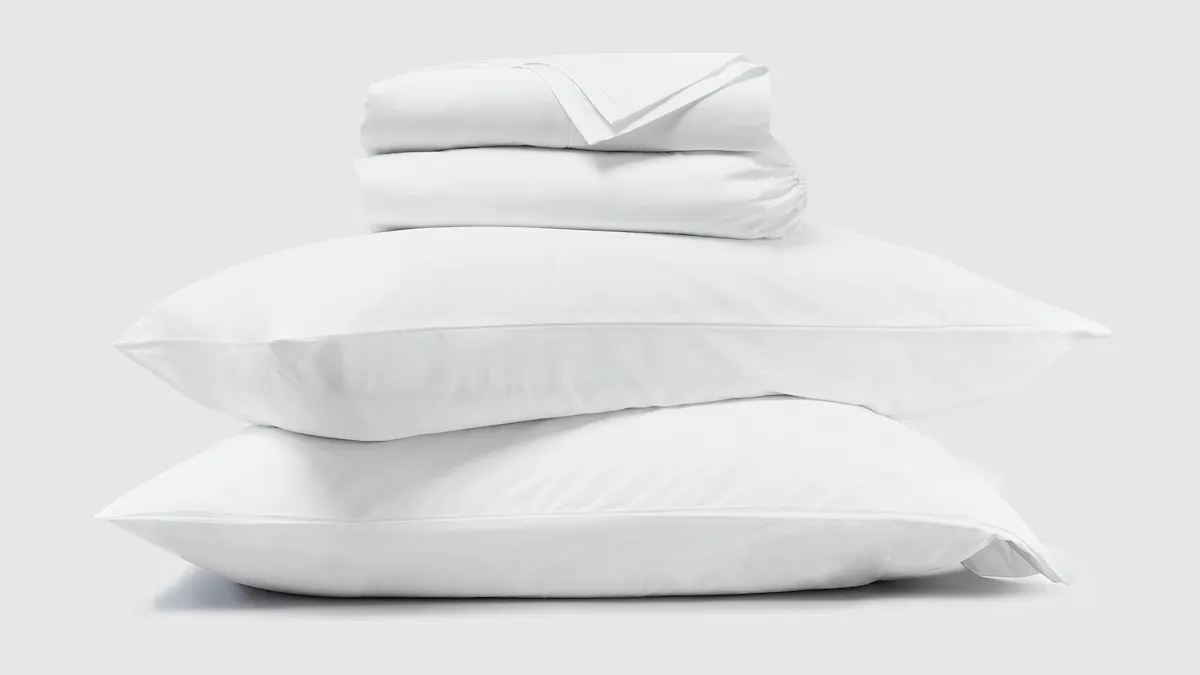
For readers who prefer organic cotton, Saatva Organic Cotton Sheets are one contextual example in this category. I wouldn’t treat the product name alone as proof that the set is the coolest choice. Its suitability still depends on the disclosed weave, fabric feel, pocket fit, and care directions matching your bed.
This isn’t a reason to interrupt the material decision with brand shopping. Settle the texture question first. If you want crispness, focus on percale construction. If you want silky drape, an organic-cotton label won’t by itself tell you that the fabric will feel right.
OPTIONAL PRODUCT REFERENCE
The guide above answers the target question. If a currently sold option is useful as a separate shopping reference, compare the Saatva Organic Cotton Sheets without treating it as the subject or winner of this page. Confirm current price, dimensions and terms on the official product page before ordering.
Saatva Organic Cotton Sheets
- A restrained organic-cotton example For readers who prefer organic cotton, Saatva Organic Cotton Sheets are one contextual example in this category
Final verdict
Cotton percale is where I’d start for a cooler-feeling bed because its crisp construction tends to cling less than sateen. Linen is the better texture-specific choice for sleepers who value an airy, relaxed sheet. Lyocell and bamboo viscose fill the smoother side of the market, but their weave and weight still deserve inspection.
Ignore the biggest cooling slogan and examine the fabric itself. Match the weave to your preferred feel, make sure the fitted sheet lies flat, account for the protector and upper bedding, then follow the care label. That construction-first approach is the clearest route to sheets that feel less clammy beyond the first touch.