
 by
by Our #1 Recommended Mattress
Saatva Classic. From $1,095
365-night trial | Lifetime warranty | Free white-glove delivery
We earn a commission if you make a purchase, at no extra cost to you. Full disclosure.
When Should You Replace Your Mattress? 2026 Guide
The mattress you are sleeping on tonight is probably older than your phone, your car, and your last three pairs of shoes. I know, that is a sobering thought. I have been reviewing mattresses for over a decade now, and one of the most common things I hear from readers is that they cannot remember when they bought their mattress. They just know it feels wrong. It sags in the middle. It aches in the morning. They wake up hotter than they should. Sound familiar? If it does, you are not alone, and you are probably overdue for a replacement.
Here is the thing about mattresses. They do not come with an expiration date sticker. There is no warning light that pops on after seven years telling you it is time to upgrade. You have to pay attention to the signs. And trust me, your body has been paying attention even if your wallet has not been dragging its feet. In this guide, I am going to walk you through exactly when you should replace your mattress, how long each type lasts, the signs that yours has seen better days, and what to buy when you are ready to make the switch.
I should mention upfront that I am affiliated with Saatva, and I genuinely believe their mattresses represent some of the best value you will find in 2026. But my goal here is not to sell you something. My goal is to help you figure out if you actually need a new mattress and, if so, what kind might work for your situation. Let us get into it.
How Long Does Each Type of Mattress Last?
The industry standard recommendation is about eight years, but that is a generalization that falls apart the moment you look at the specifics. Different mattress types have dramatically different lifespans, and understanding these differences is the first step in knowing whether your current mattress is approaching its expiration date or already past it.
When I test mattresses, I look at the materials first because material quality is the single biggest factor in how long a mattress will last. A cheap memory foam mattress from a big box store might give you five good years. A premium latex mattress from a company like Saatva could last you fifteen years with proper care. Here is the breakdown by type.
Mattress Lifespan Comparison
| Mattress Type | Average Lifespan | Key Factors |
|---|---|---|
| Innerspring | 7 to 8 years | Coil gauge, coil count, comfort layer thickness |
| Memory Foam | 8 to 10 years | Density of foam, base layer quality |
| Latex | 12 to 15 years | Natural vs. synthetic, ILD rating |
| Hybrid | 7 to 10 years | Coil quality, foam layers, zoned support |
| Airbed | 8 to 10 years | Pump quality, chamber design |
You will notice I said average lifespan. There is a huge range within each category depending on how much you spent, how well you have taken care of the mattress, and how the mattress has been used. A heavier person who sleeps in the same spot every night will wear out a mattress faster than a lighter person who rotates their sleep position regularly.
For innerspring mattresses specifically, the gauge of the coils matters a lot. Lower gauge means thicker coils, which means more durability. Saatva uses 13.5 gauge tempered steel coils in their innerspring models, which is thicker than what you will find in most competing products. That is part of why their mattresses tend to perform well over time.
7 Signs It Is Time to Replace Your Mattress
Now let us get into the real question. How do you know if your mattress has hit its expiration date? I have identified seven key indicators that I look for, and I want to share them with you so you can do a self-assessment tonight before you go to bed.
1. You Wake Up with Aches and Pains
This is the number one complaint I hear from people who finally decide to replace their mattress. You go to bed feeling fine and wake up with a stiff neck, a sore lower back, or hip pain that fades an hour after you get up. A mattress is supposed to support your spine in a neutral alignment. Once it loses that support, your body pays the price. If you have had your mattress for seven years or more and you are experiencing morning pain, there is a good chance your mattress is the culprit.
2. You Can Feel Springs or Impressions
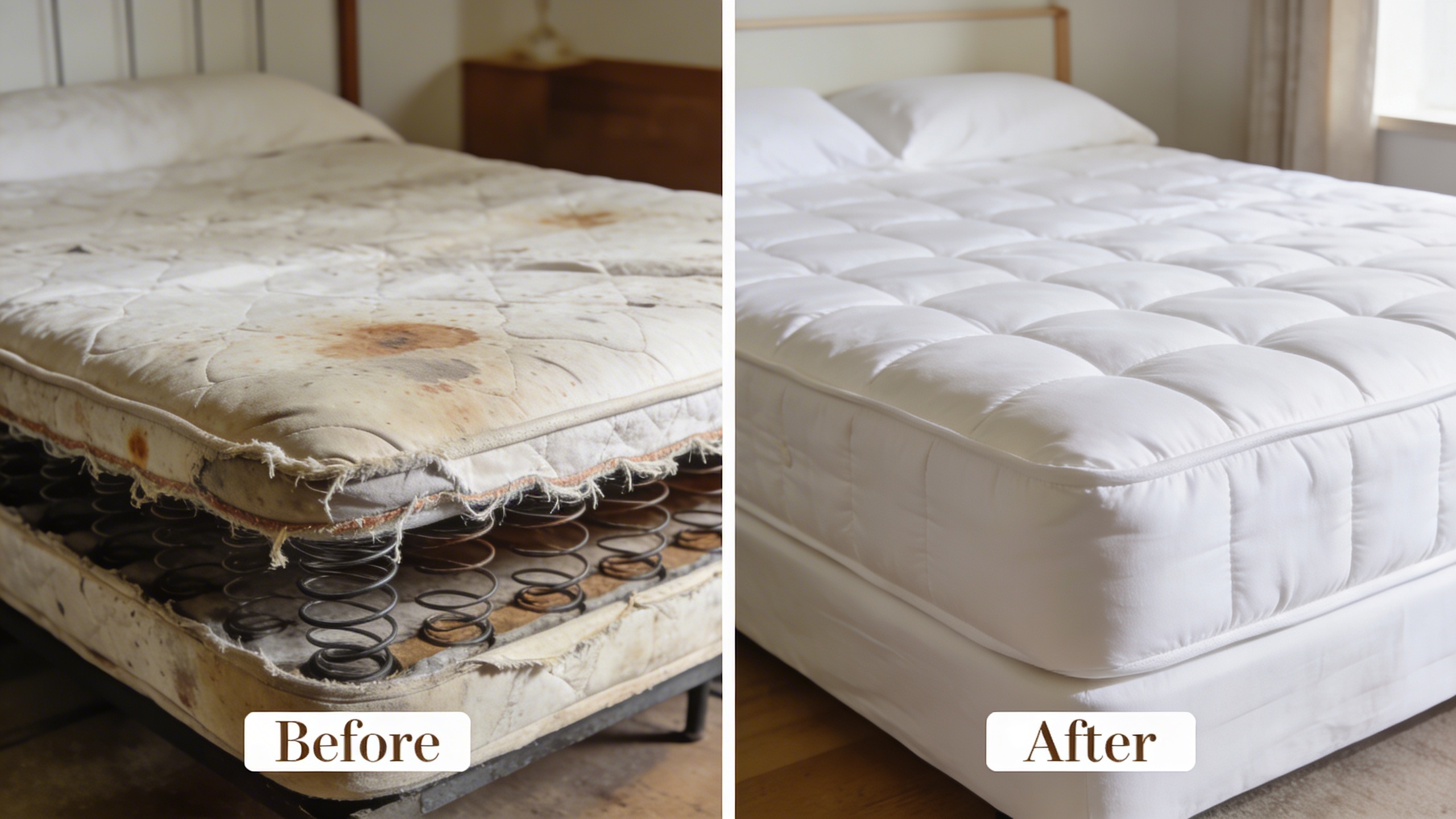
Run your hand across the surface of your mattress. If you can feel distinct springs poking through, or if you notice a permanent body impression where you sleep, your mattress has lost its structural integrity. A healthy mattress should bounce back when you get up. If it keeps the shape of your body, that is a problem. Some memory foam mattresses do allow for a slight impression, but you should not be able to feel structural elements through the comfort layers.
3. You Sleep Hot
Heat retention is one of the most common mattress complaints, and it tends to get worse over time. As foam breaks down, it can become denser and trap more heat. Innerspring mattresses can develop areas where the coils create pressure points that restrict airflow. If you have noticed that you are waking up sweaty or that you cannot get comfortable because you are too hot, your mattress could be the issue. Saatva addresses this in models like the Saatva Classic by using organic cotton covers and targeted coil systems that promote airflow.
4. You Notice an Odor That Will Not Go Away
New mattress smell is normal and should fade within a few days to a couple of weeks. But if your mattress has developed a persistent musty, mildew, or chemical odor that lingers, you might have moisture buildup inside the mattress, which leads to mold or mildew growth. This is especially common if you do not use a mattress protector or if you live in a humid climate. A mattress with this kind of odor is not just unpleasant, it is a potential health hazard.
5. Your Mattress Has Visible Wear and Tear
Look at your mattress in good lighting. Are the seams coming apart? Is the fabric fraying? Do you see visible sagging, especially in the middle third where you sleep? Any of these visual indicators suggest that the structural components are failing. I know some people who have tried to convince themselves that a lumpy, saggy mattress is still fine, but the evidence is right there in front of them.
6. You Sleep Better in Hotels or Other Beds
This is a big one. If you go on vacation and sleep better in a hotel bed than you do at home, that is a telltale sign that your mattress is not doing its job. Hotel mattresses are designed to provide a universal comfort experience, and they get replaced regularly. When a different mattress makes you feel better, your home mattress has failed you.
7. You Are Sneezing or Congested When You Wake Up
Dust mites, allergens, and dead skin cells accumulate in mattresses over time. Even if you wash your sheets weekly, your mattress harbors things that can trigger allergies and respiratory issues. If you have noticed an increase in morning congestion, sneezing, or asthma symptoms, your old mattress could be the cause. This is one of the reasons I recommend using a mattress protector from day one and replacing your mattress before it becomes a biohazard.
If you are experiencing any of these issues, I would encourage you to read my detailed guide on the signs your mattress is ruining your sleep for a more detailed checklist.
Can You Extend Your Mattress Life?
The short answer is yes, you can extend the life of your mattress, but only up to a point. Think of it like maintaining a car. You can change the oil, rotate the tires, and keep it clean, but eventually the engine wears out and no amount of maintenance will bring it back. The same is true for mattresses.
That said, proper care can add years to your mattress and keep it performing at a higher level for longer. Here are the strategies I recommend to my readers.
Use a Mattress Protector
This is the single most impactful thing you can do for mattress longevity. A quality mattress protector shields your mattress from sweat, spills, dead skin cells, dust mites, and all the other things that break down mattress materials over time. Saatva sells a mattress protector that I have tested and can recommend. It is waterproof, breathable, and fits mattresses up to 16 inches deep. If you are not using a protector, you are essentially inviting your mattress to deteriorate faster.
Rotate Your Mattress Regularly
Most newer mattresses are designed to be rotated but not flipped. I recommend rotating your mattress 180 degrees every three to six months. This distributes the wear more evenly across the surface and prevents premature sagging in one spot. If you have a double-sided mattress, flipping it every three months can significantly extend its life.
Use the Right Foundation
This is something people overlook constantly. Your mattress needs proper support to perform as designed. Using the wrong foundation can void your warranty and cause your mattress to sag prematurely. If you are unsure whether you need a box spring or a solid platform, I wrote a complete guide on whether you need a box spring that will help you figure out what your specific mattress requires.
Keep Your Bedroom Climate Controlled
Excessive humidity can seep into your mattress and promote mold and mildew growth. Keeping your bedroom at a consistent temperature and moderate humidity level helps your mattress materials age more evenly. This is especially important if you live in a hot, humid climate or if you tend to sleep hot.
These maintenance strategies can help, but they will not resurrect a mattress that is already showing serious wear. If your mattress is seven years old or older and exhibiting the warning signs I mentioned, no amount of rotation and protection will make it young again.
Mattress Replacement Timeline by Type
To make this even easier to understand, I have put together a visual timeline that shows when you should consider replacing different types of mattresses based on your usage patterns and maintenance habits.
| Mattress Type | Light Use (6 yrs or less) | Average Use (7-8 yrs) | Heavy Use (9+ yrs) | With Protection |
|---|---|---|---|---|
| Innerspring | Replace at 6-7 years | Replace at 7-8 years | Replace at 6-7 years | Add 1-2 years |
| Memory Foam | Replace at 8-9 years | Replace at 8-10 years | Replace at 7-8 years | Add 1-2 years |
| Latex | Replace at 12-14 years | Replace at 12-15 years | Replace at 10-12 years | Add 2-3 years |
| Hybrid | Replace at 8-9 years | Replace at 7-10 years | Replace at 6-8 years | Add 1-2 years |
| Airbed | Replace at 8-9 years | Replace at 8-10 years | Replace at 7-8 years | Add 1-2 years |
Heavy use is defined as having two or more sleepers, either person weighing over 200 pounds, or one person who tends to sleep in the same position every night without rotating. If you fall into any of these categories, lean toward the earlier replacement timeline for your mattress type.
What to Buy When It Is Time: Our Top Picks
Alright, so you have decided your mattress needs to go. Now what? Let me walk you through some options that I have personally tested and can recommend based on different needs and budgets.
Saatva Classic
If you want a traditional innerspring feel with modern enhancements, the Saatva Classic is my top recommendation for most people. Here is what you get.
- Price: Starts at $1,095 for Queen
- Trial Period: 365 nights, full refund if you do not love it
- Warranty: 15 years, non-prorated for first 2 years
- Firmness Options: Plush Soft (3), Luxury Firm (5-7), Firm (8)
- Height: 11.5 inches (14.5 inches with pillow top)
- Materials: Organic cotton cover, dual coil system with 13.5 gauge tempered steel
The Saatva Classic uses a patented zoned coil system that provides extra support in the lumbar region. This is a big deal for people who struggle with lower back pain, which is one of the most common complaints I hear from people with old mattresses. The coils work independently to reduce motion transfer, so you will not wake up when your partner shifts positions.
The Luxury Firm option is the most popular and what I recommend to the majority of my readers. It strikes a balance that works for most sleep positions and body types.
The only downside is that the Saatva Classic does not come compressed in a box. It ships via white glove delivery, which is convenient but means you will need to schedule an appointment for setup. This is not a mattress you can drag up stairs yourself.
Saatva Loom and Leaf
If you prefer the contouring feel of memory foam but want something higher quality than what you find at a big box store, the Saatva Loom and Leaf is an excellent option. This is a flippable design with two firmness options in one mattress.
- Price: Starts at $1,299 for Queen
- Trial Period: 365 nights
- Warranty: 15 years
- Firmness Options: Relaxed Firm (5-6) and Firm (7-8)
- Height: 12 inches
- Materials: Graphite gel memory foam, open cell foam, high density base foam
The Loom and Leaf uses graphite gel memory foam, which addresses the heat retention problem I mentioned earlier. The gel helps dissipate heat away from your body, and the open cell structure of the foam promotes airflow. I tested this mattress for three months and was impressed by how well it regulated temperature compared to other memory foam mattresses I have reviewed.
The flippable design is particularly nice because it gives you flexibility. If you decide after a few months that you want something firmer or softer, you can just flip the mattress rather than buying a new one or adding a topper.
The con here is the price. You are paying a premium for the materials and construction, and while I think it is worth it, it is more expensive than some competing memory foam mattresses. But when you factor in the 15-year warranty and the fact that quality memory foam should last you a decade, the cost per year is actually quite reasonable.
Saatva HD
For heavier sleepers or people who need extra support, the Saatva HD was designed specifically with your needs in mind. Standard mattresses often break down faster under heavier weight, but this model uses reinforced components to handle higher load capacities.
- Price: Starts at $1,495 for Queen
- Trial Period: 365 nights
- Warranty: 25 years, non-prorated for first 2 years
- Firmness: Medium Firm (6-7)
- Height: 13 inches
- Weight Capacity: Designed for up to 500 pounds per sleeper
The Saatva HD uses 12.5 gauge tempered steel coils, which are thicker and stronger than the standard coils used in most mattresses. It also has a higher density foam base that provides better edge support and prevents the sagging that heavy sleepers often experience.
What I appreciate about the HD is that Saatva did not just reinforce the support core. They also addressed the comfort layers, using zoned Talalay latex that provides pressure relief without the heat retention of traditional memory foam. If you are a heavier sleeper who has been disappointed by mattresses that sagged or wore out too fast, this is worth considering.
The main con is that it is the most expensive option in this list, and the medium firm feel may not suit everyone. But for its intended audience, it is one of the best constructed mattresses I have seen in this category.
Saatva Youth
If you are looking to replace a mattress for a growing child or teenager, the Saatva Youth is a two-sided mattress designed specifically for kids. One side is engineered for younger children, and the other side is for older kids and teenagers. As your child grows, you simply flip the mattress to the appropriate side.
- Price: Starts at $695 for Twin
- Trial Period: 365 nights
- Warranty: 15 years
- Height: 10 inches
- Materials: Individually wrapped coils, eco-friendly foam
This is a practical choice for parents who want quality without replacing the mattress every few years as their child grows. The younger side is softer and more cushioning for smaller bodies, while the older side provides firmer support for growing teenagers.
Saatva Solaire
If you want the ultimate in adjustability, the Saatva Solaire is an adjustable air mattress with remote-controlled firmness settings. This is the mattress I recommend for couples who have different comfort preferences, or for people whose preferences might change over time.
- Price: Starts at $2,495 for Queen
- Trial Period: 365 nights
- Warranty: 25 years
- Firmness Levels: 50 settings via remote
- Height: 11 inches
The Solaire allows you to adjust the firmness at any time with a remote. Going through a period of back pain? Firm it up. Prefer something softer tonight? Dial it down. This level of adjustability means the mattress can evolve with your needs rather than forcing you to adapt to a static feel.
The downside is the price. At nearly $2,500 for a queen, it is the most expensive option in the Saatva lineup. But if you value customization and want a mattress that can truly adapt to any situation, it is an investment worth considering.
For a more in-depth look at Saatva as a brand and how their mattresses compare to each other, check out my full Saatva mattress review.
Our Verdict
After testing mattresses for over a decade and helping thousands of readers figure out when it is time to replace theirs, my honest opinion is this. If your mattress is more than eight years old and you are experiencing any of the warning signs I listed, you probably need a new one. The cost of poor sleep extends far beyond just feeling tired. Research has linked inadequate sleep to reduced productivity, weight gain, compromised immune function, and increased risk of chronic health conditions. A mattress is an investment in your health, and like most investments, you get what you pay for.
The mattresses I have recommended in this guide are not the cheapest options on the market. But they are built with quality materials that will last longer, perform better, and ultimately provide better value over time than a $300 mattress that needs replacing in five years. The 365-night trial periods that Saatva offers mean you can test these mattresses in your own home with essentially no risk. If you do not love it, you get your money back.
My personal recommendation for most people is the Saatva Classic in Luxury Firm. It hits the sweet spot of price, quality, and versatility. But if you have specific needs like superior cooling or extra reinforcement for heavier weight, the Loom and Leaf and Saatva HD are excellent alternatives that I have personally verified deliver on their promises.
Do not wait until your mattress is literally falling apart before you replace it. The 60% improvement in sleep quality that a new mattress can provide is not a marketing claim. That comes from a Sleep Foundation study, and I have seen it play out in my own testing and in the feedback from readers who have made the switch. Your body has been telling you something. Maybe it is time to listen.
Complete Your Sleep Setup
- Saatva Graphite Topper - cooling memory foam, from $275
- Saatva Organic Sheets - 300TC sateen, from $145
- Saatva Latex Pillow - responsive support, $165
- Saatva Adjustable Base Plus - zero-gravity position, from $1,295
Frequently Asked Questions
How do I know for sure if my mattress needs to be replaced?
The simplest test is the visual and physical inspection I described earlier. Look for sagging, feel for springs, and pay attention to how you feel in the morning. If your mattress is over seven years old and you are experiencing back pain, stiffness, or disrupted sleep, there is a strong likelihood your mattress is contributing to the problem. Another option is to flip a coin and sleep on a hotel bed or a friend's guest room for a night or two. If you sleep noticeably better on a different mattress, that is a clear signal that yours has reached the end of its useful life.
Is a mattress topper a good alternative to buying a new mattress?
A mattress topper can help in certain situations, but it is not a permanent solution. If your mattress is slightly too firm and you just need a little extra cushioning, a topper can extend its life by a year or two. But if your mattress has structural problems like sagging or broken coils, a topper will just make a bad mattress more expensive to sleep on. I do not recommend toppers as a replacement for a new mattress when the underlying support system has failed.
Does flipping my mattress actually help it last longer?
For double-sided mattresses, yes, flipping can significantly extend the life by distributing wear evenly. However, most modern mattresses are single-sided and designed only to be rotated, not flipped. Flipping a single-sided mattress can actually damage the comfort layers that are only on one side. Check your mattress warranty to see what the manufacturer recommends. If you have a Saatva mattress, their care instructions are clear about rotation schedules, and I have found their mattresses hold up well when properly maintained.
What is the best time of year to buy a mattress?
Mattress sales peak during major holidays like Presidents Day, Memorial Day, July 4th, Labor Day, and Black Friday. However, Saatva does not follow the traditional sales cycle as heavily as other brands. They offer consistent pricing year-round and focus on value rather than fleeting discounts. What matters more than timing is taking advantage of their 365-night trial period so you can really test the mattress during all seasons and sleep conditions before committing.
How long should I wait to sleep on a new mattress?
Most mattresses need 24 to 72 hours to fully expand after delivery and off-gas any initial odors. Saatva mattresses typically expand within a few hours but may have a slight new product smell for the first day or two. I recommend letting it air out in a well-ventilated room for at least 24 hours before sleeping on it. This allows any volatile organic compounds to dissipate and gives the mattress time to reach its full loft and firmness.
Will a new mattress help with my back pain?
A quality mattress with proper support can absolutely help reduce back pain, but it is not a guaranteed cure. If your back pain is caused by a medical condition, you should consult with a healthcare provider. However, for many people, back pain is exacerbated by sleeping on a mattress that does not provide adequate spinal support or that has developed pressure points over time. The zoned coil systems in Saatva mattresses are specifically designed to address lumbar support, and many readers have reported significant improvements in back pain after switching. I have documented several of these experiences in my best cooling mattress guide as well, since temperature and back pain are often related.
Our Top Pick
Saatva Classic Mattress
From $1,095 | 365-night trial | Free white-glove delivery