
 by
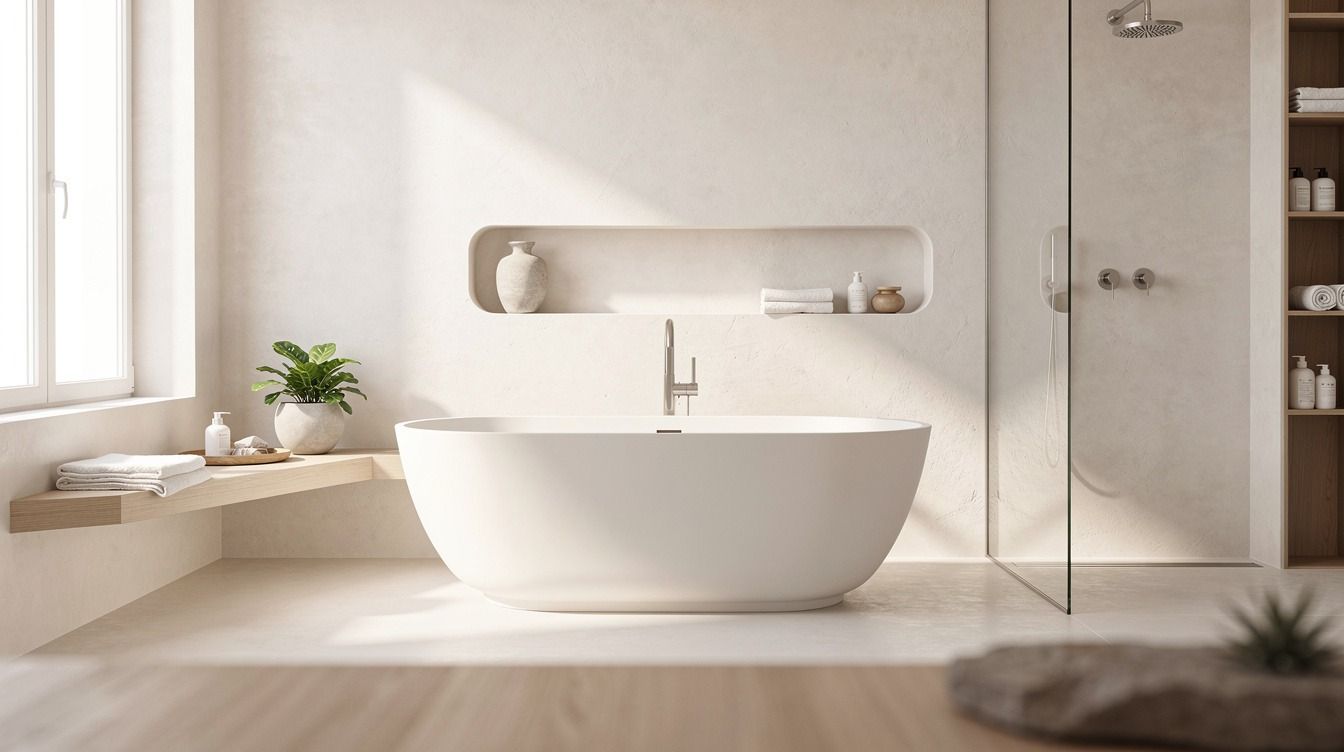
by White microcement bathroom ideas work because they remove the grout grid that makes a small room feel chopped up. I learned that after living with a busy tiled bath that always looked dusty by noon. Your goal isn't a cold white box. It's a bright, soft room with enough texture that you’ll want to linger.
- Start with the no-grout canvas
- Measure your clearances before the trowel goes on
- Build the Soft-Edge Rule around one warm material
- Anchor your vanity at 32 to 36 inches
- Could your shower wall carry the contrast?
- Layer the Three-Height Light Stack
- Mix one imperfect surface into the white field
- Float a slim oak shelf instead of adding cabinets
- Choose microcement over faux marble for the floor
- Frame the mirror with a quiet metal finish
- Seal the room like you mean it
1Start with the no-grout canvas
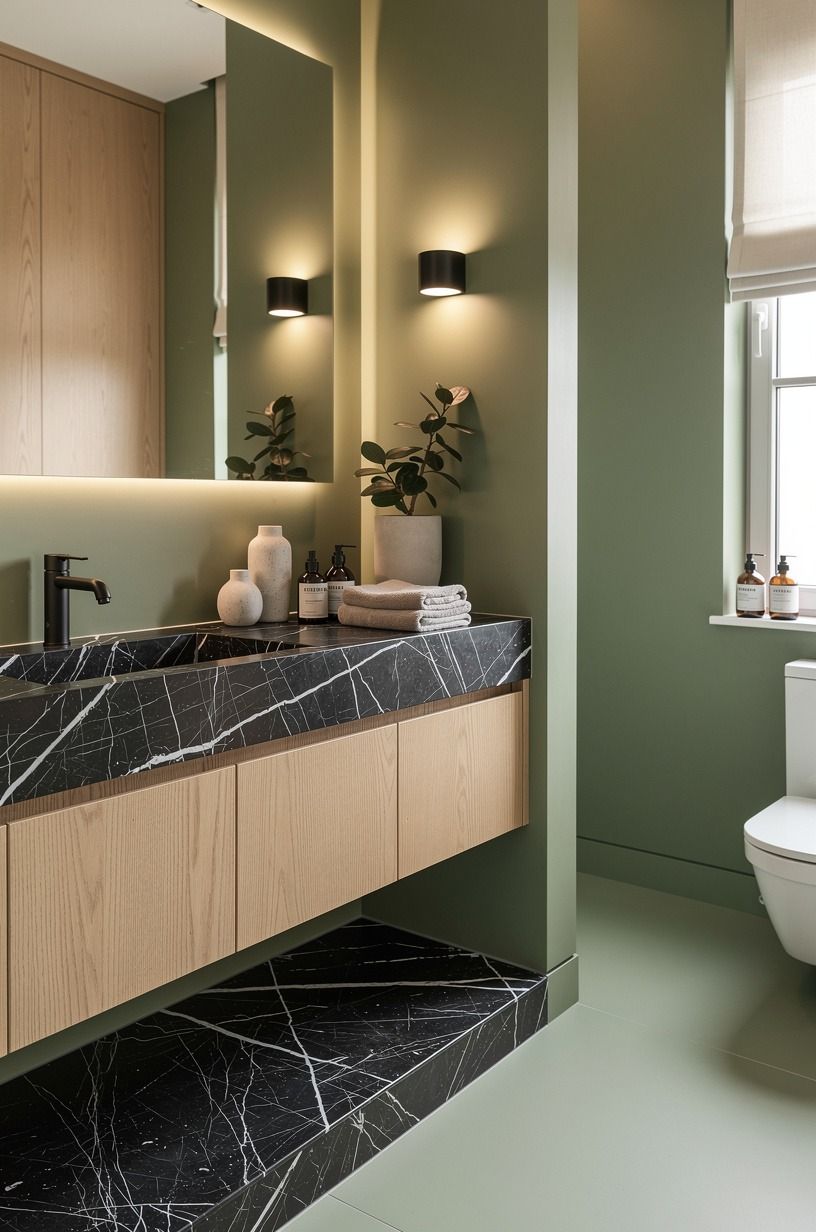
Ask for a warm cream finish across the walls first, then decide whether your floor should match. You’ll get the calmest result when sage green, natural wood, and Nero Marquina black marble give the room a little depth.
I’d skip bright optic white here. It can turn blue under a vanity light and make your skin look tired.
Choose a warm cream sample and hold it against your existing toilet and tub. Your Benjamin Moore White Dove OC-17 paint chip is a useful comparison point, even if the final surface isn’t paint. And if you’re weighing finishes, these microcement bathroom ideas for a seamless no-grout look show why the continuous surface carries the whole room.
Typical cost by tier (US averages):
2Measure your clearances before the trowel goes on
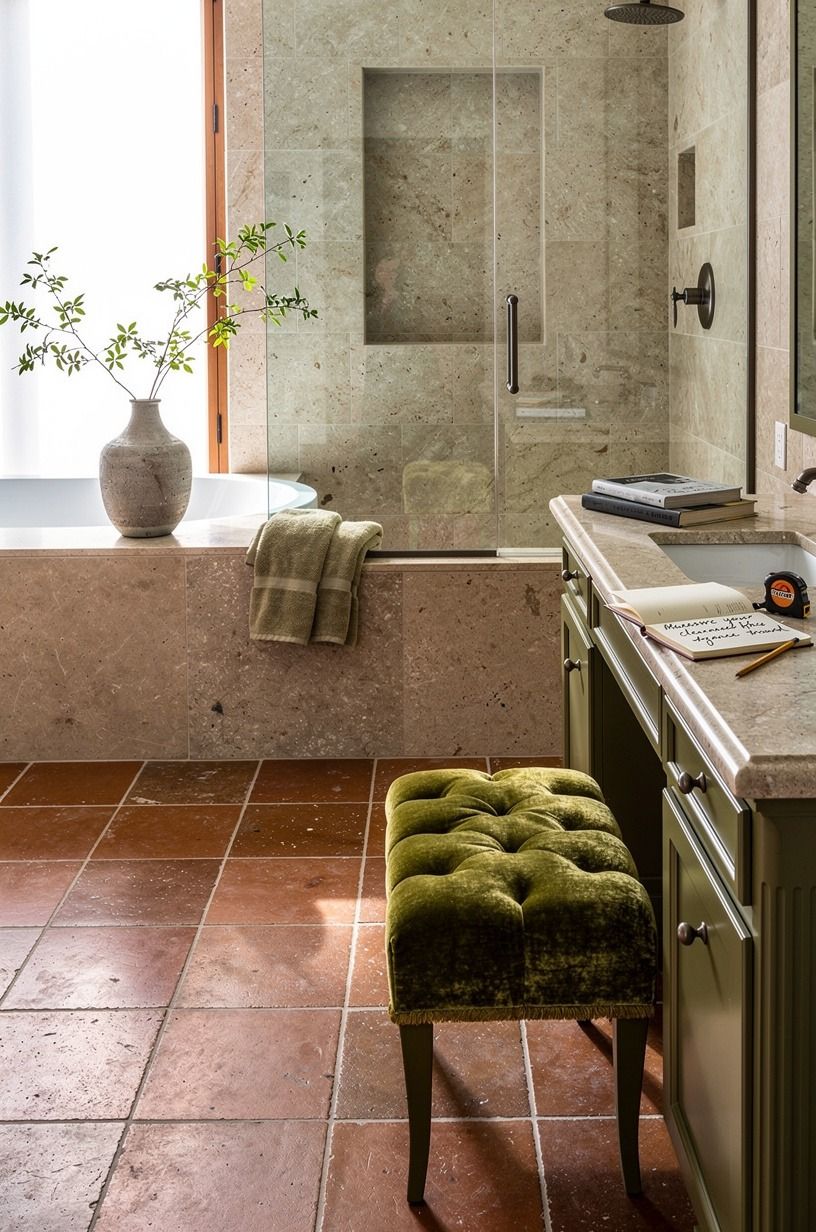
A terracotta, stone, and olive bathroom still has to work on a rushed Tuesday morning. Keep at least 21 in of toilet clearance in front of the bowl, and don’t let a new vanity swallow the path to the shower. A deep-pile mohair velvet seat can feel luxurious, but it shouldn’t make you sidestep a cabinet door every day.
For a shower, 36 x 36 in is the comfortable minimum worth protecting. I’ve seen people shave that down to gain a larger vanity, and it’s the wrong trade. You notice a cramped shower every single day; you won’t notice two extra inches of counter once your toiletries spread across it.
3Build the Soft-Edge Rule around one warm material
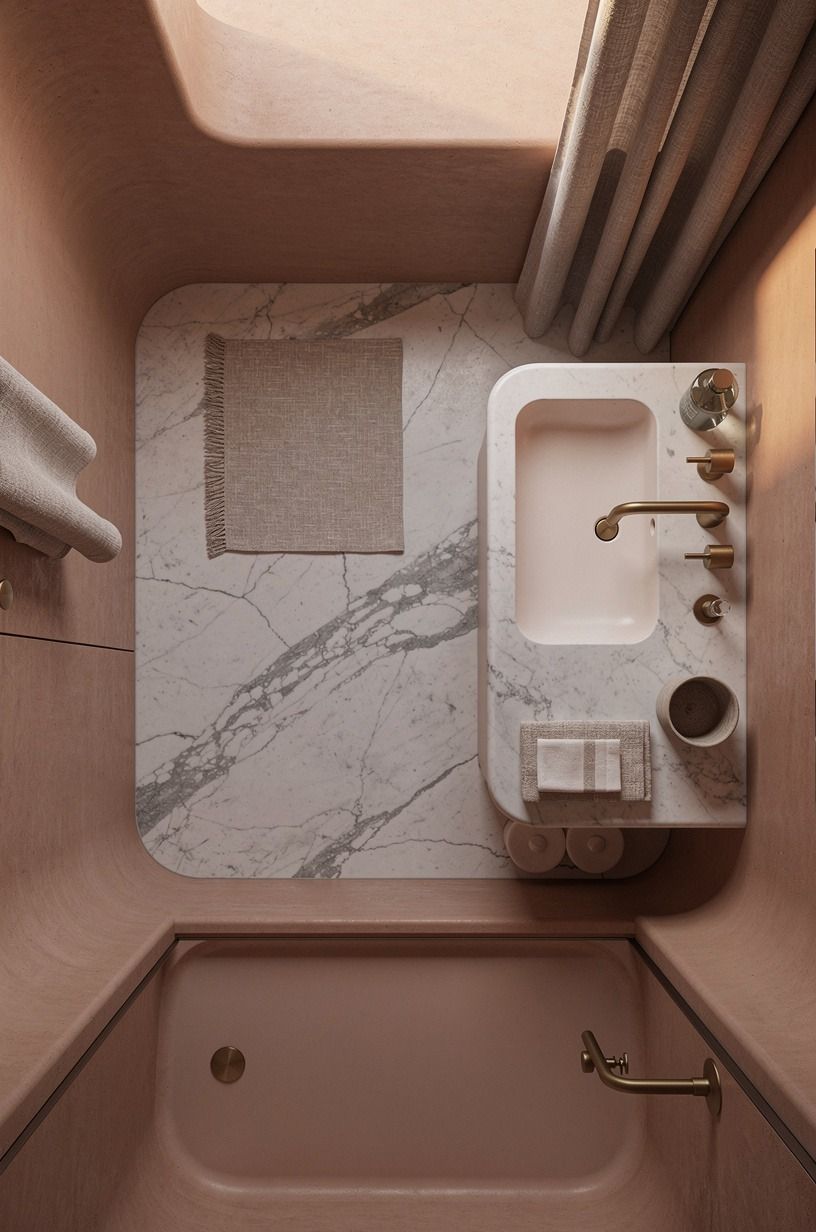
The Soft-Edge Rule is simple: every hard white plane needs one material with a little give. Your answer might be Belgian flax linen at the window, a 600gsm Turkish cotton bath mat, or a Carrara marble ledge with subtle gray veining beside the tub. Softness is what keeps the minimalist bathroom aesthetic from feeling like a clinic.
Use two textiles in nearby warm tones instead of matching everything. A clay towel and a linen curtain have more life than a hotel-white set, especially beside aged brass.
But don’t bring in fluffy gray rugs. Gray against white microcement is the fastest route to a room that feels like a waiting area.
4Anchor your vanity at 32 to 36 inches
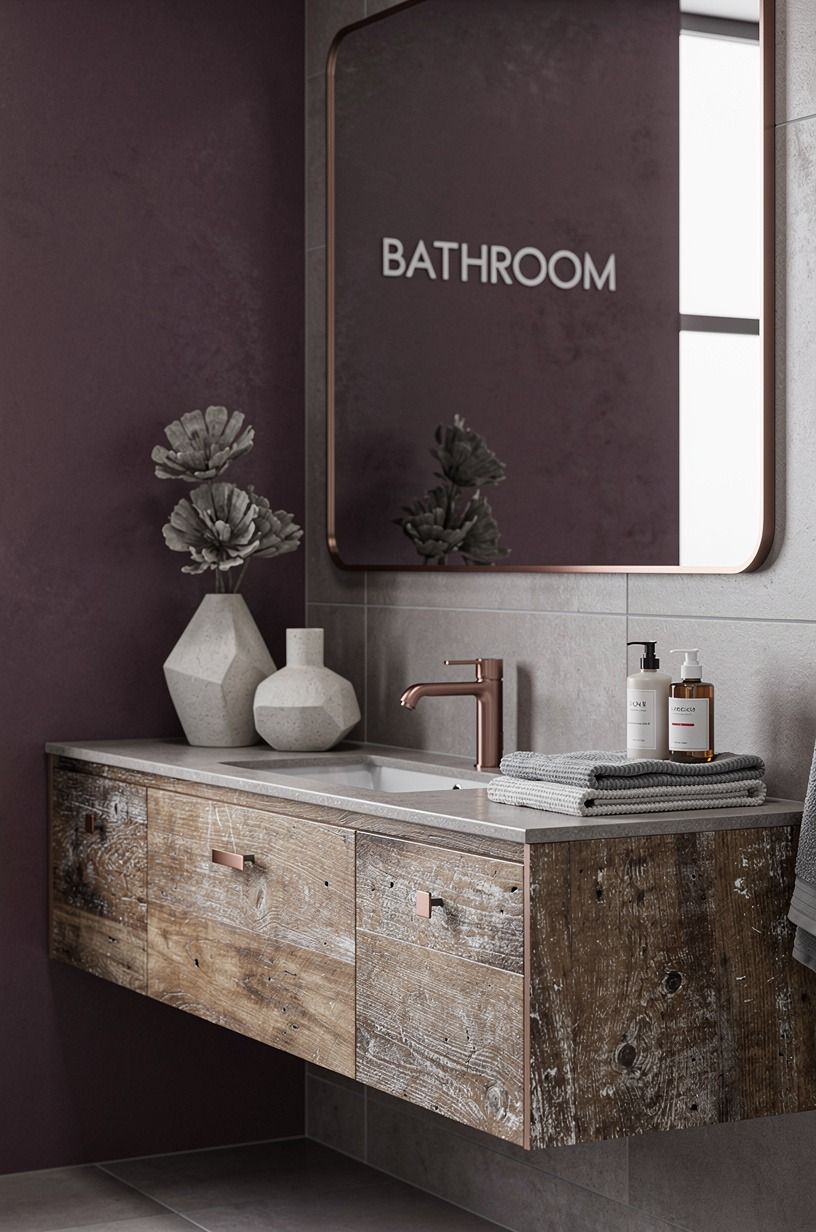
Set your reclaimed, weathered teak vanity between 32 and 36 in high so your sink doesn’t feel oddly low or perched like a bar counter.
5Could your shower wall carry the contrast?
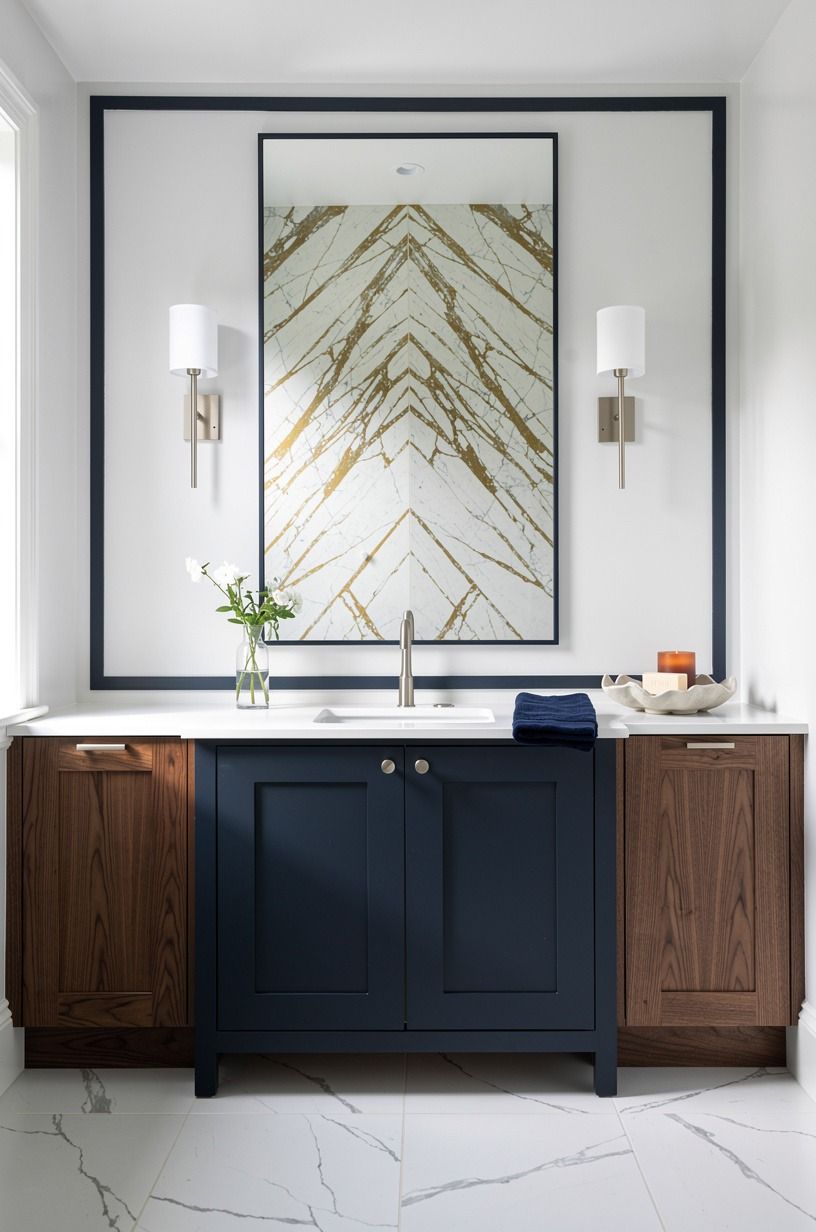
Yes, and your shower is the place to spend contrast carefully. Keep three walls in white microcement, then bring in navy, white, and walnut around Calacatta marble with gold veining. The deep blue makes the surrounding white look warmer, not colder.
You don’t need a full dark shower to get that effect. A recessed shelf lined in Calacatta marble will do it, especially when the gold veining catches the light.
For a lighter version, browse these white zellige tile bathroom ideas. Your microcement gets to stay the lead while the marble adds one refined note.

6Layer the Three-Height Light Stack
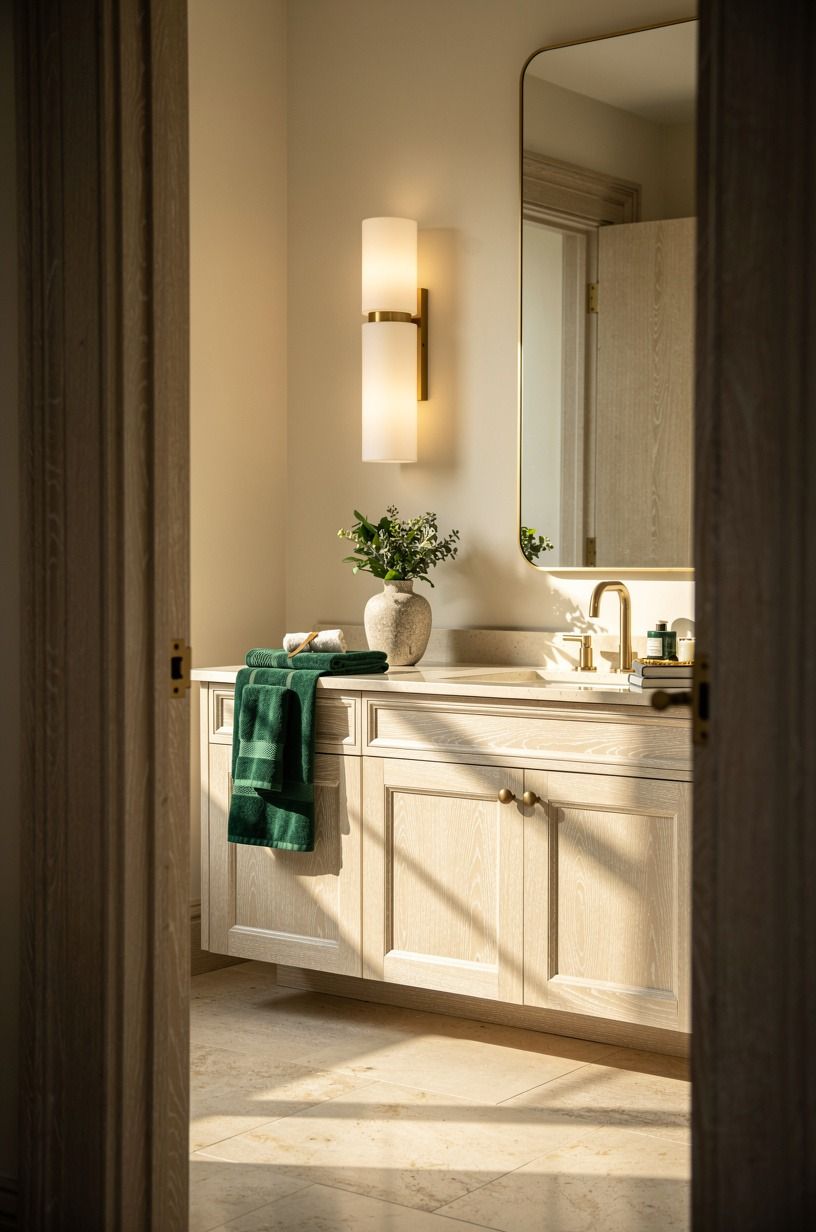
The Three-Height Light Stack uses ceiling light, face-level light, and one lower glow near the floor or tub. Your overhead fixture handles cleanup; your sconces make the mirror useful; a low lamp or concealed strip makes late baths feel genuinely relaxing. One ceiling can light everything, but it can’t flatter everything.
Hang unlacquered brass sconces near eye level on both sides of the mirror, not above it. You’ll avoid the shadow under your eyes, and the brass will develop a soft patina instead of staying yellow and shiny. A cerused white oak vanity keeps the emerald, gold, and cream palette from feeling too formal.
And yes, dimmers matter! A bright, calming bathroom needs different light at 7 a.m. and 10 p.m.
7Mix one imperfect surface into the white field
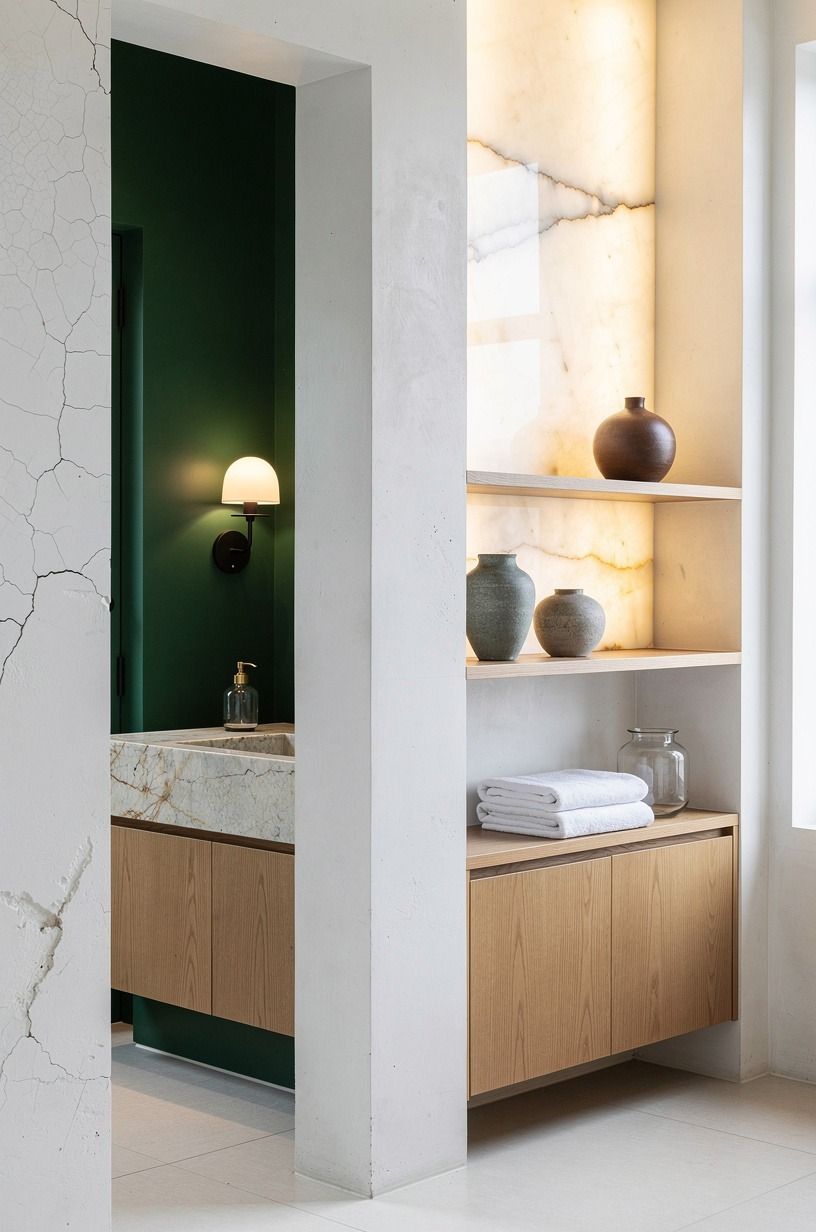
White microcement can be refined, but too much uniformity starts to look synthetic. Add one surface that has natural variation: backlit translucent onyx, a ribbed glass shade, or a hand-thrown ceramic basin. Your room needs a place for the eye to pause.
I went back and forth on vessel sinks because they photograph well and can be annoying in real life. I’d skip a tall bowl in a compact bath. It steals counter space and splashes more than people admit.
A low-profile onyx basin works beautifully with forest green, rust, and natural oak while keeping your routine easier.
8Float a slim oak shelf instead of adding cabinets
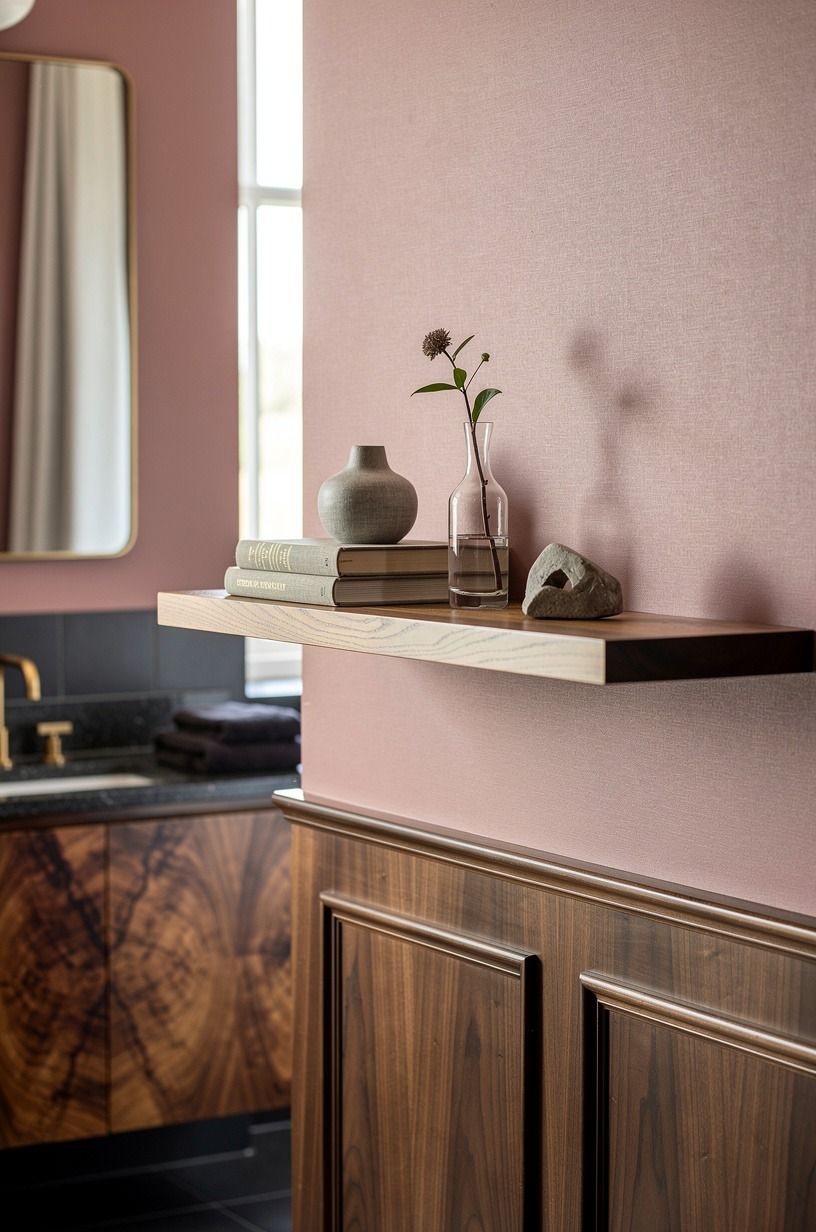
A single 3/4-inch book-matched walnut shelf above the toilet can hold the things you reach for without crowding your walls. Your shelf should be slim enough that it reads as a line, not a second vanity. Twenty-four inches wide is often plenty for a small dusty rose, charcoal, and brass bathroom moment.
Folded Turkish towels. A ceramic dish for rings.
One small branch in a squat vase. That’s enough. But don’t stack six baskets up there; open storage gets messy fast, and microcement makes clutter look louder because the background is so quiet.
This is where your restraint pays off.
9Choose microcement over faux marble for the floor
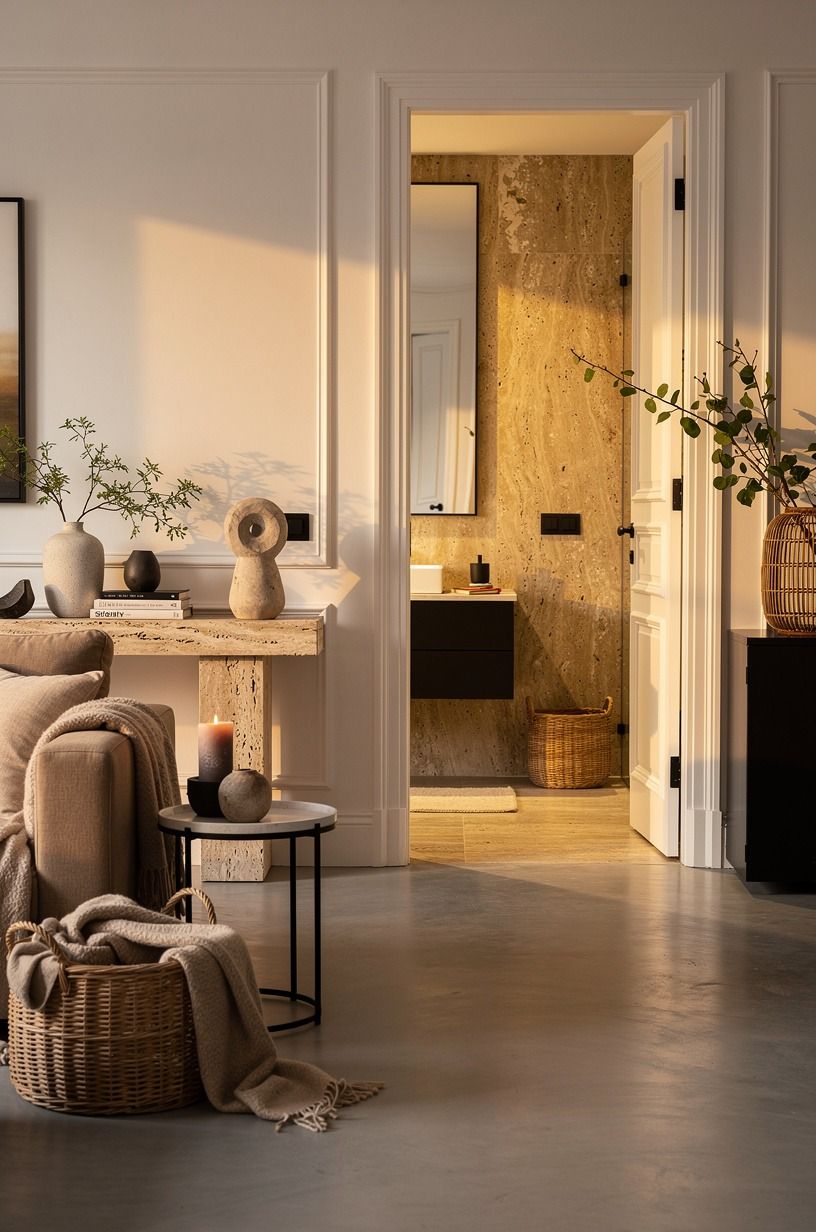
Choose warm travertine over faux marble if your room is small and you want a floor with quiet, natural variation.
10Frame the mirror with a quiet metal finish
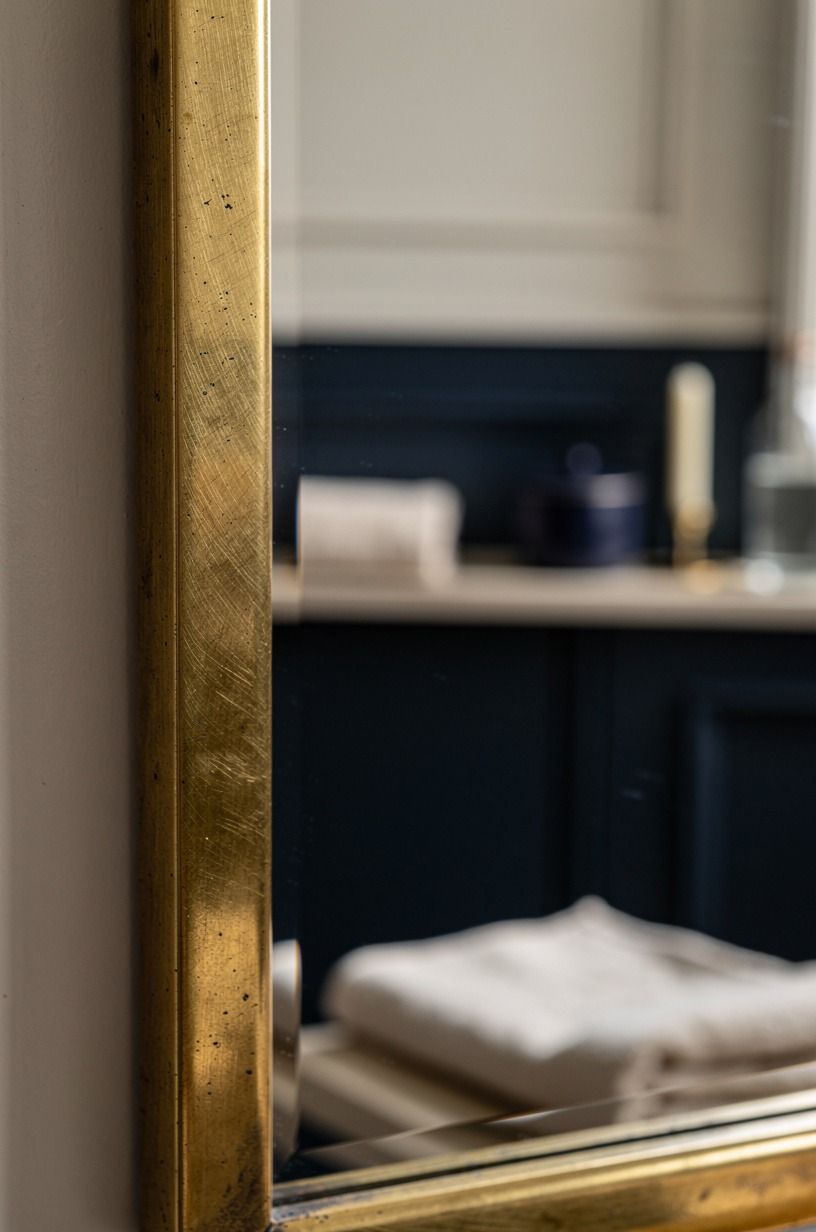
Use a thin unlacquered brass mirror frame when your walls are white and your vanity is wood. It gives your face-level zone definition without cutting the room into pieces. Your mirror should be wider than the sink but narrower than the vanity, so it feels intentional instead of undersized.
An unlacquered brass faucet typically lands around $120 to $450, and it’s one of the few visible upgrades I’d happily prioritize. Chrome isn’t wrong, but it can look chilly beside a midnight blue and ivory bathroom.
Brass brings a gentle glow at night, especially next to warm bulbs. Tiny change, big difference!
11Seal the room like you mean it
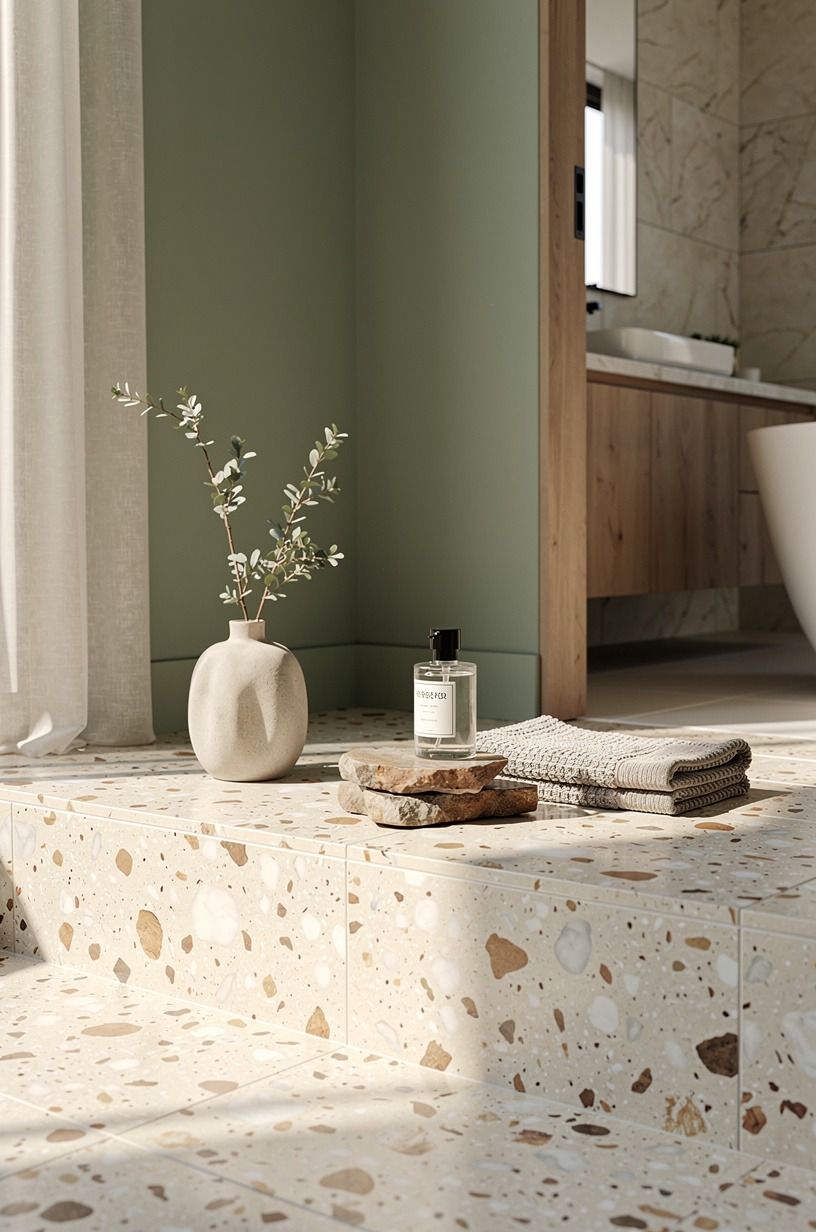
Your final step is sealing, and this is where people get impatient.
Why white microcement feels right right now
I think white microcement is having a moment because people are tired of bathrooms that look assembled from a catalog. For years, the default remodel was a white subway tile wall, a marble-look counter, matte-black faucet, and a row of grout lines demanding attention.
It was clean. It was also repetitive.
Microcement gives you a different kind of luxury: a wall that looks hand-finished, a floor that doesn’t interrupt itself, and a surface that changes slightly when daylight moves across it.
The appeal isn’t that it’s blank. It’s that it’s forgiving.
Your towels can be rumpled. Your oak stool can have a water ring.
A pale microcement room leaves space for ordinary life, which is more inviting than a bathroom that feels too precious to use. And it works with almost any direction you already like: quiet organic modern, warm Mediterranean, minimal Japanese-inspired, even a more dramatic brass-and-blue room.
I’ve also learned not to treat it as a magic answer. White microcement isn’t cheap paint, and it isn’t maintenance-free just because there’s no grout to scrub.
You need good prep, a reliable waterproofing plan, and a person who understands wet areas. Still, I’d choose it over a giant expanse of fake marble every time.
Fake marble tries to impress you from across the room. Microcement waits until you’re close enough to see the hand of the person who made it.
That feels more honest.
If you want a moodier version, these luxury microcement bathroom ideas are a useful next stop. Your bright room doesn’t have to be bland. It just needs a few materials with a pulse.
What People Always Want to Know
What is the best white microcement bathroom look for a small bathroom?
A pale wall-to-floor finish with a floating oak vanity is the strongest choice for a small bath because it keeps your sightline open. IKEA GODMORGON oak-effect storage gives you warmth without visual bulk, while a thin brass mirror adds contrast.
Where can I buy white microcement bathroom pieces on a budget?
Start with IKEA, Target Threshold, and Wayfair for mirrors, towel rails, and basic vanities. Your best secondhand find is often a solid wood stool from Facebook Marketplace or a thrift shop. Skip chipped particleboard pieces near water.
How much does a white microcement bathroom makeover cost?
A light cosmetic refresh usually costs about $200 to $1,200, while a bathroom with new lighting and a vanity can reach $3,000 to $9,000. Paint and textile swaps are the low-cost part; wet-area installation is where your budget rises.
Can I create a white microcement bathroom on a budget?
Yes, and you don’t need to coat every surface. A white painted wall, a warm shower curtain, and a wood stool can echo the look for far less. Your free move is clearing the counter until only daily essentials remain.
Is white microcement worth it in a small space?
Yes, it’s especially worth it in a small room because fewer grout lines make your walls and floor feel less broken up. A continuous surface gives your eye a longer path, so the bathroom reads wider than its footprint.
Is white microcement a good idea for a rental?
Yes, if you keep permanent work off the landlord’s surfaces. Removable vinyl floor covering, a tension-rod linen curtain, and peel-and-stick sconces can give your rental a similar warm look. Don’t apply true microcement without written approval.
Where I’d Start First
If I had to pick one step, I’d start with the warm off-white microcement sample. You can’t rescue a blue-white wall with brass and towels; every other choice will fight it. Pin your favorite finish for later, then test it beside your fixtures in daylight.