
 by
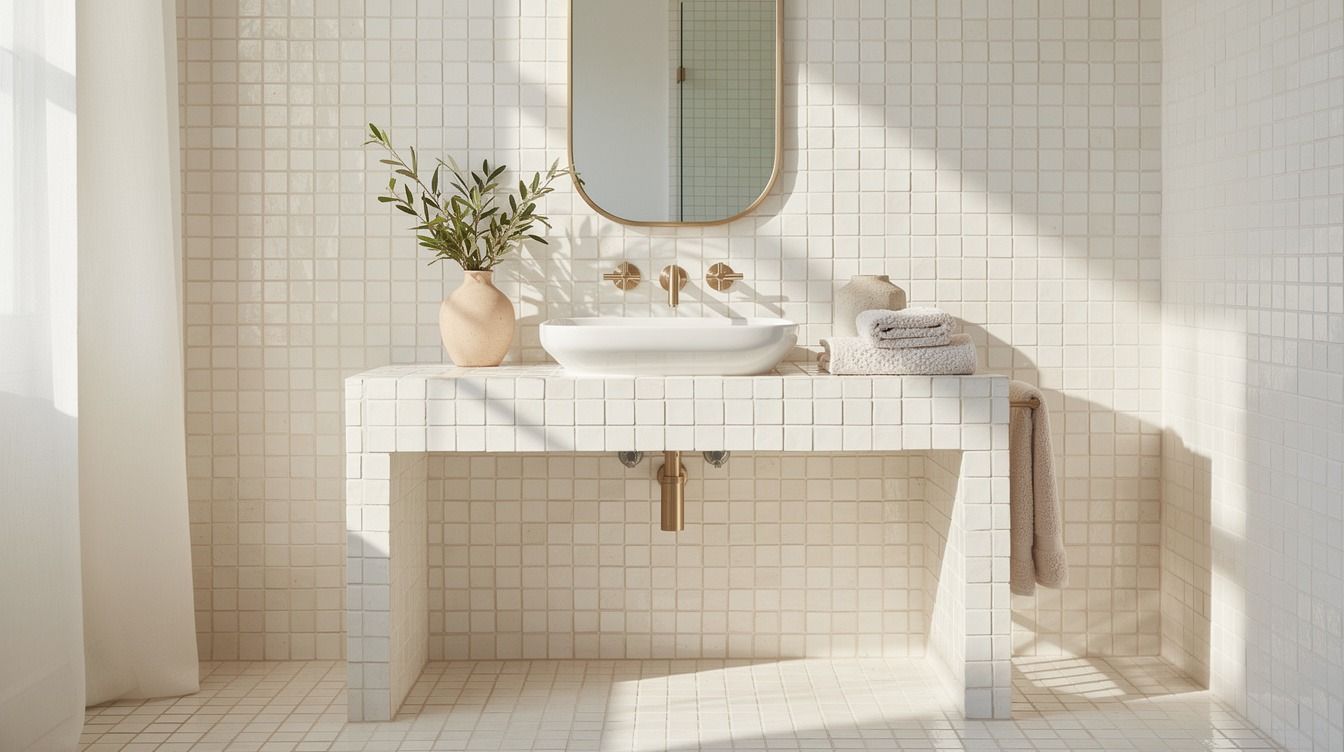
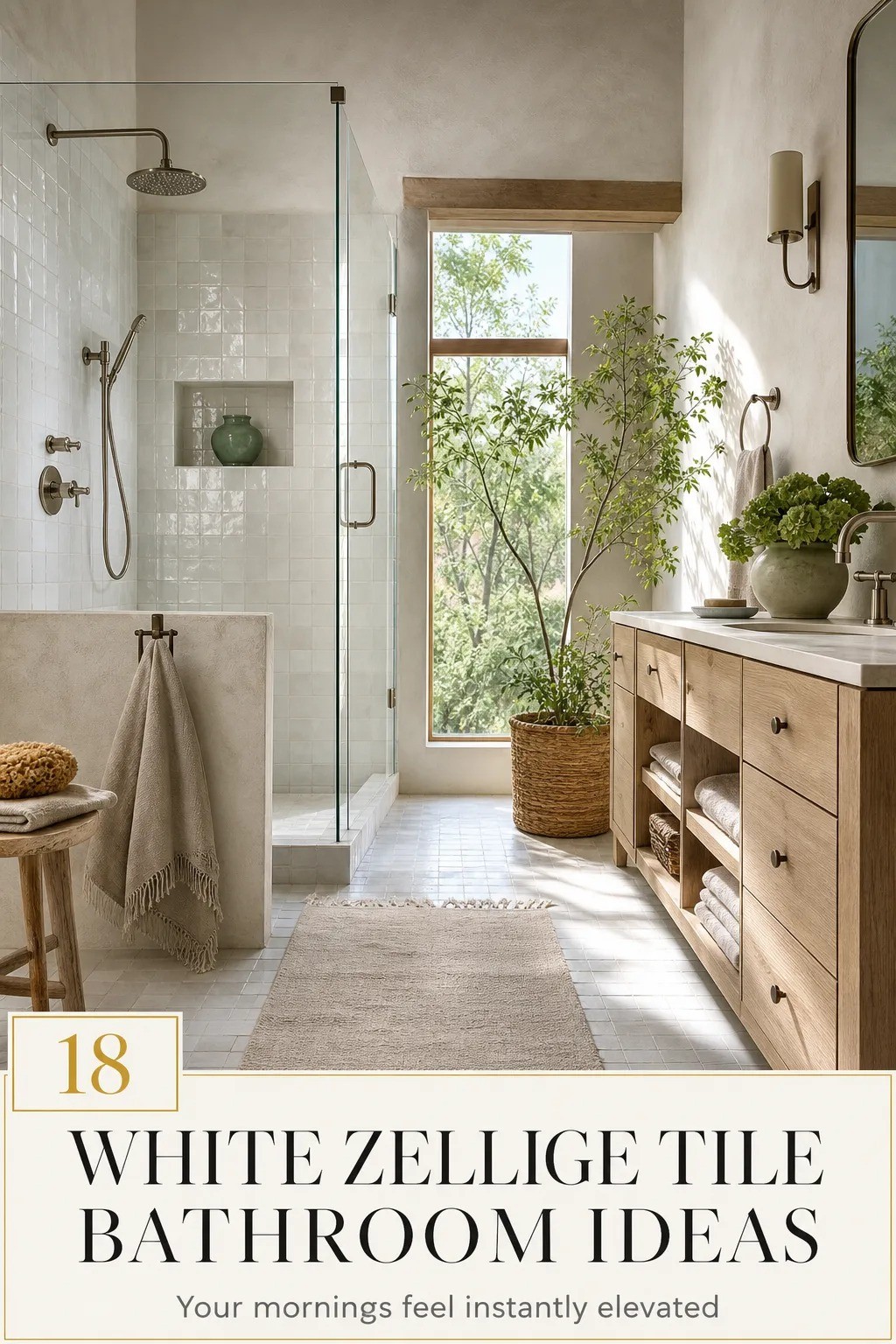
by A white zellige tile bathroom works because its uneven glaze catches light instead of bouncing it back like a flat white box. I learned that after living with a cold, glossy bath that looked clean but never inviting. The handmade surface changed everything. And you don’t need a giant renovation to get there.
- Start with the light you already have in a white zellige tile bathroom
- Measure the shower before you fall for a tile sample
- Use the Soft-White Test before choosing your grout
- Anchor a white zellige shower with one quiet floor material
- Build the Two-White Rule around undertones
- Hang a mirror that gives the tile breathing room
- Choose brushed brass over shiny chrome for warmth
- Follow the Three-Height Light Stack around the vanity
- Let a 32-36 in vanity hold the visual weight
- Mix a moody paint color into the room next door
- Frame the tub instead of tiling every available wall
- Add linen that makes the gloss feel lived-in
- Use the Hardware Echo Method with one repeat finish
- Keep toilet clearance honest before adding furniture
- Layer a white zellige tile bathroom with one useful ledge
- Choose a shower curtain that softens hard lines
- Budget the tile work before you chase the full-room look
- Finish with the Imperfect Glow Check at night
1Start with the light you already have in a white zellige tile bathroom
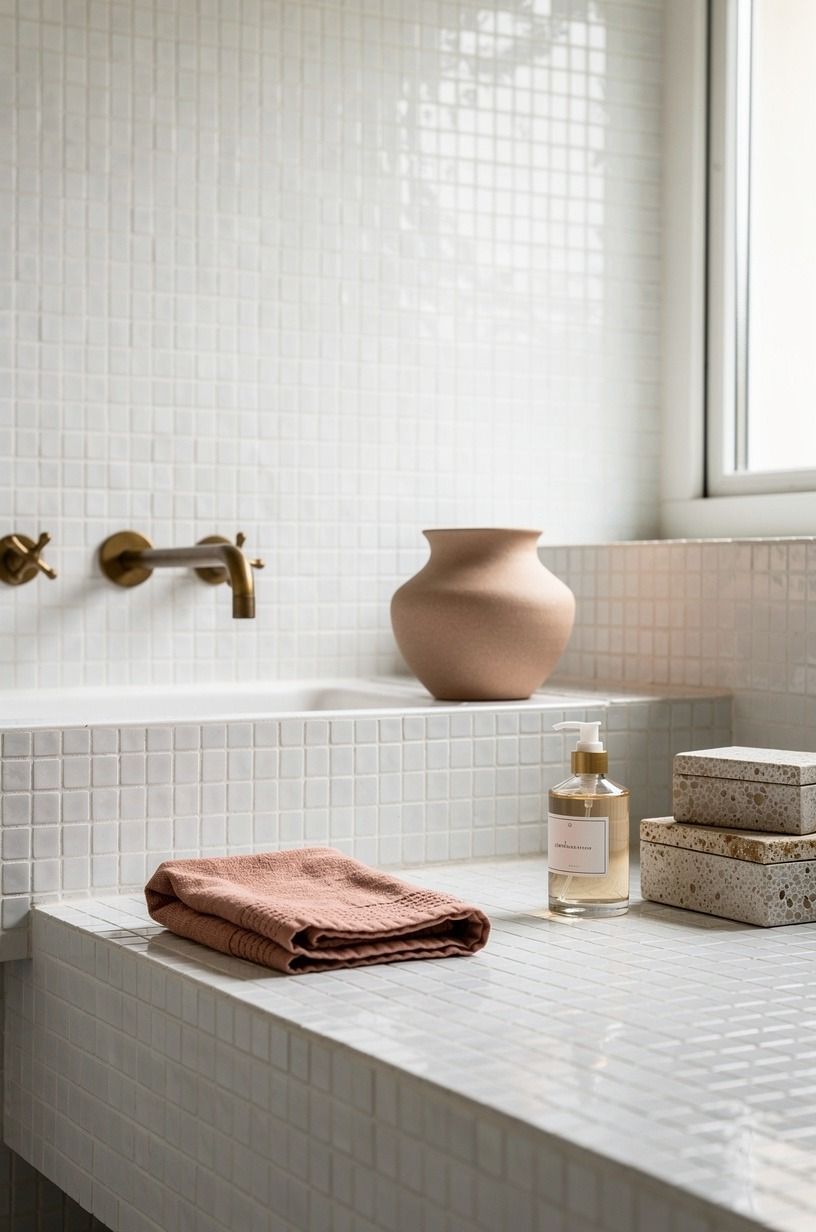
Watch your bathroom at 8 a.m., noon, and after sunset before you order tile. You’ll see whether your walls need a soft white or whether they can handle a brighter, more reflective finish. hand-glazed white zellige looks gentle with clay, linen, and aged brass, especially when shagreen accents add a little depth.
I’d skip pure optical white in a windowless room because it can read like a dentist’s office. Choose a creamier batch with milk, ivory, and faint sand variation, then let your existing daylight do the work. A white zellige tile bathroom should feel calm, not clinical.
2Measure the shower before you fall for a tile sample
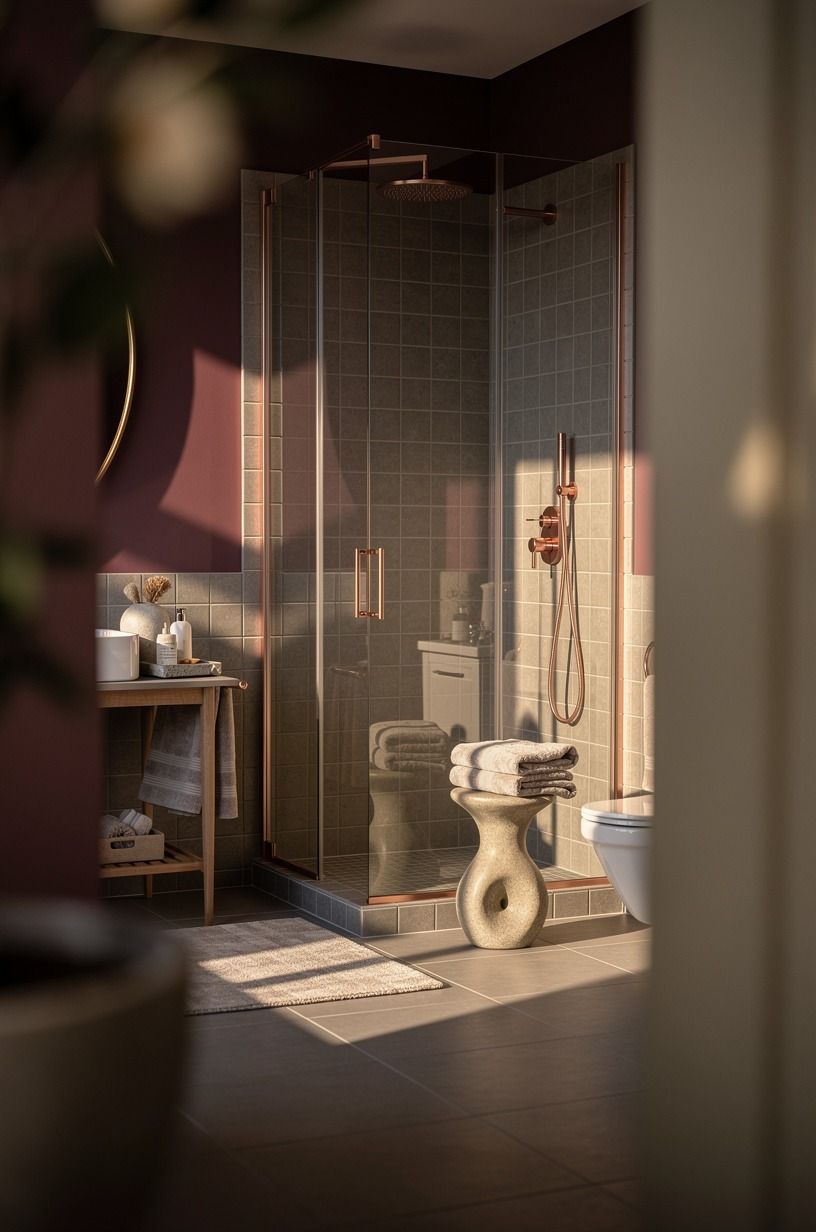
A comfortable shower needs at least 36x36 in of clear space, and that measurement matters more than the photo in your saved folder. A plum, gray, and rose-gold scheme can feel unexpectedly soft with washed Belgian linen nearby, but the layout still has to work first.
3Use the Soft-White Test before choosing your grout
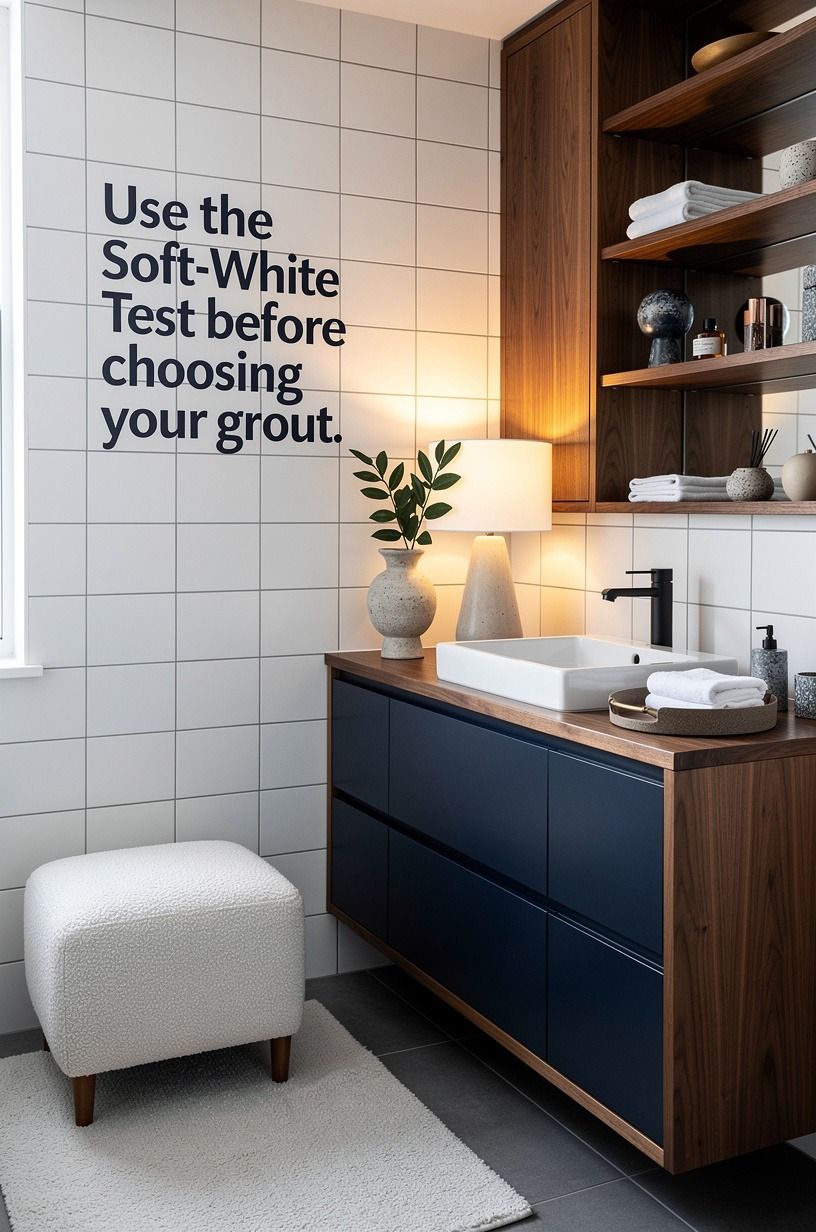
Tape three grout swatches beside your tile: warm white, pale gray, and soft beige. Then step back. Mapei Warm Gray grout often gives white tile enough definition without turning every handmade edge into a checkerboard.
You don’t need contrast everywhere. In fact, I’d avoid charcoal grout with white zellige unless you want a loud graphic grid, because it makes the tile’s lovely variation look busy. A navy, white, and walnut mix with organic bouclé can keep the surface serene while the uneven glaze still has its little moment.
4Anchor a white zellige shower with one quiet floor material
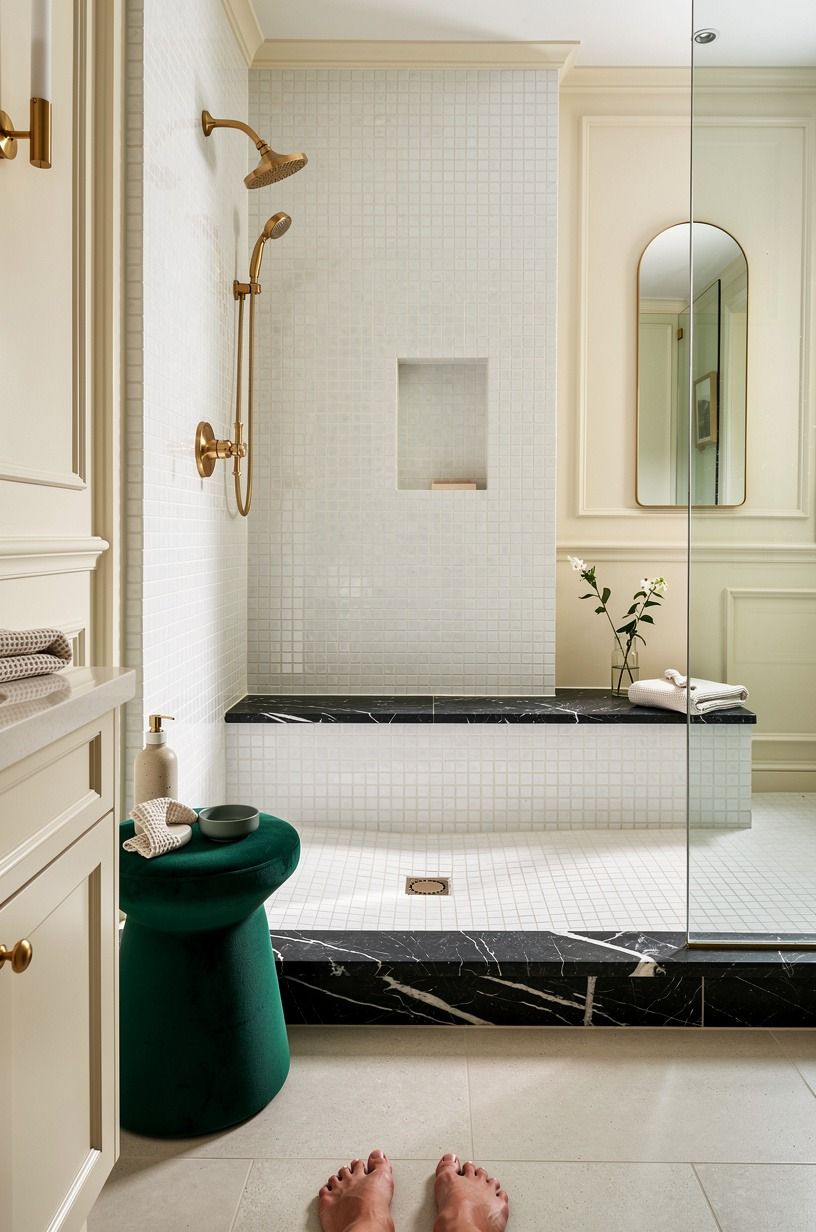
Your wall tile can be lively if the floor knows how to behave. Nero Marquina black marble with white veins gives the room a crisp counterpoint to emerald, gold, and cream without competing with the glossy wall. It makes a white zellige shower feel grounded rather than floaty.
For a small bath, you can carry the same floor into the shower without chopping up the room. But choose a finish with grip. Pretty is useless if you’re tiptoeing on a wet floor every morning.
5Build the Two-White Rule around undertones
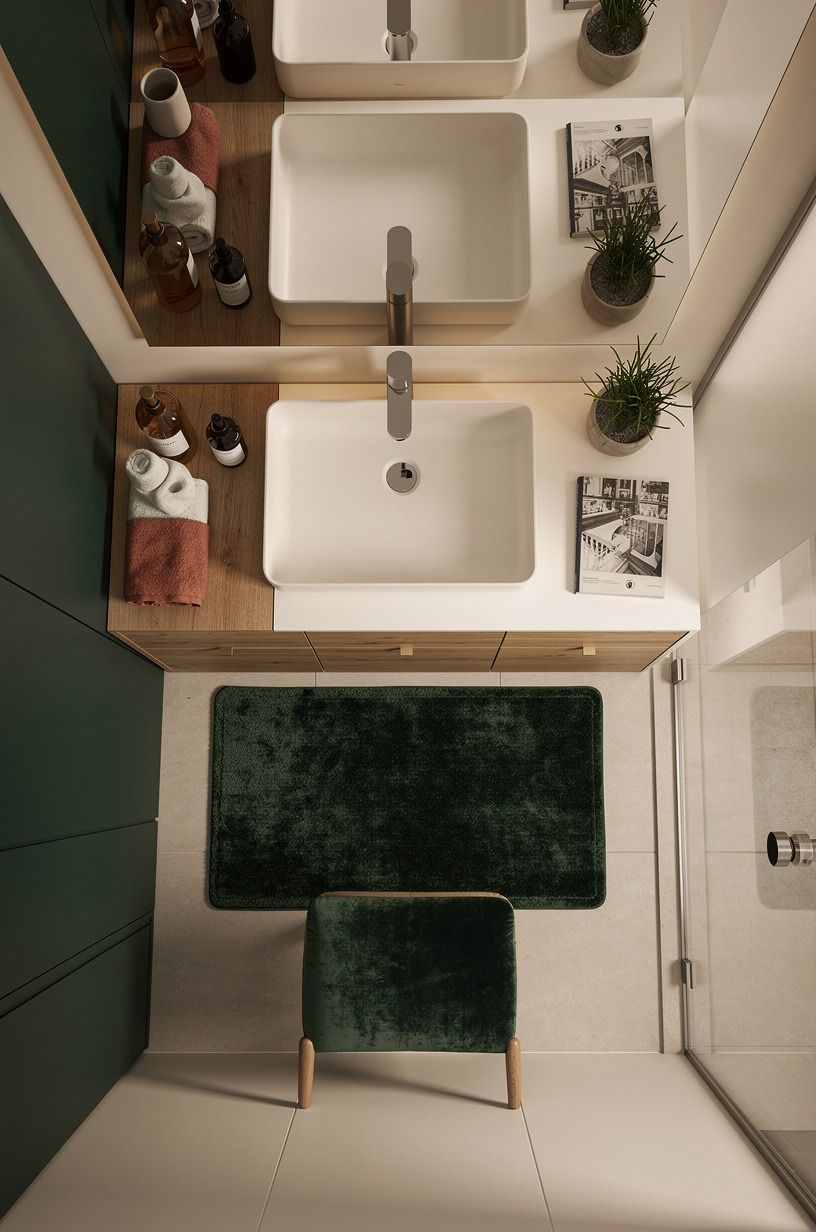
Pick two whites only: one for tile and one for paint or cabinetry. More than that, and your bathroom starts looking like a paint-store accident. Benjamin Moore White Dove OC-17 works well beside creamy white tile because it has enough warmth to soften the handmade glaze.
You’ll notice the difference most around the ceiling line and vanity. I’ve paired cool cabinet white with warm zellige before, and the room looked faintly green by afternoon.
Not disastrous, just annoying. Keep your whites related, then bring contrast in through forest green, rust, natural oak, and deep-pile mohair velvet.
6Hang a mirror that gives the tile breathing room
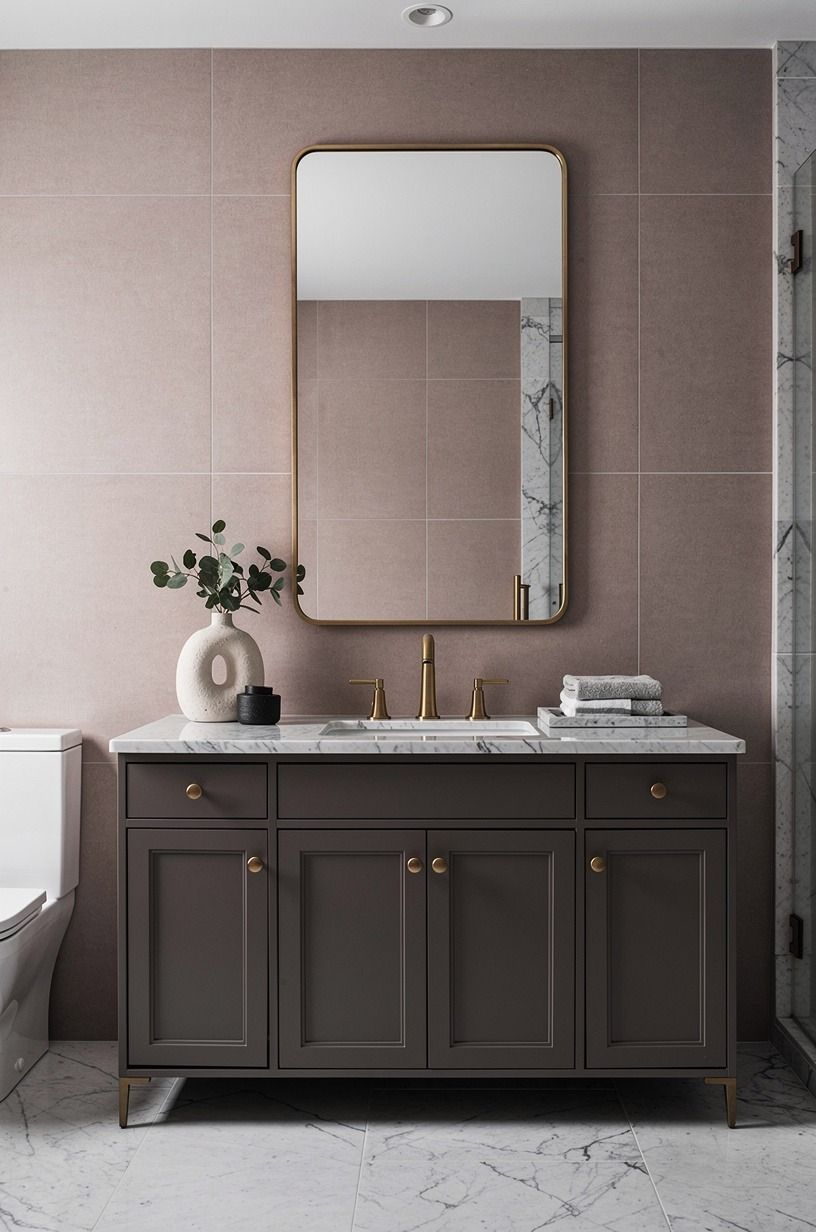
Leave a margin of visible tile around your mirror instead of covering the whole feature wall. A slim aged bronze rounded mirror works beautifully with dusty rose, charcoal, brass, and Carrara marble with subtle gray veining. You’re framing texture, not hiding it.
Try to center the mirror on the sink, not necessarily the wall. Those aren’t always the same thing in an older bathroom, and that’s fine. But if your mirror is too wide, the room loses the bright, imperfect rhythm you paid for.
7Choose brushed brass over shiny chrome for warmth
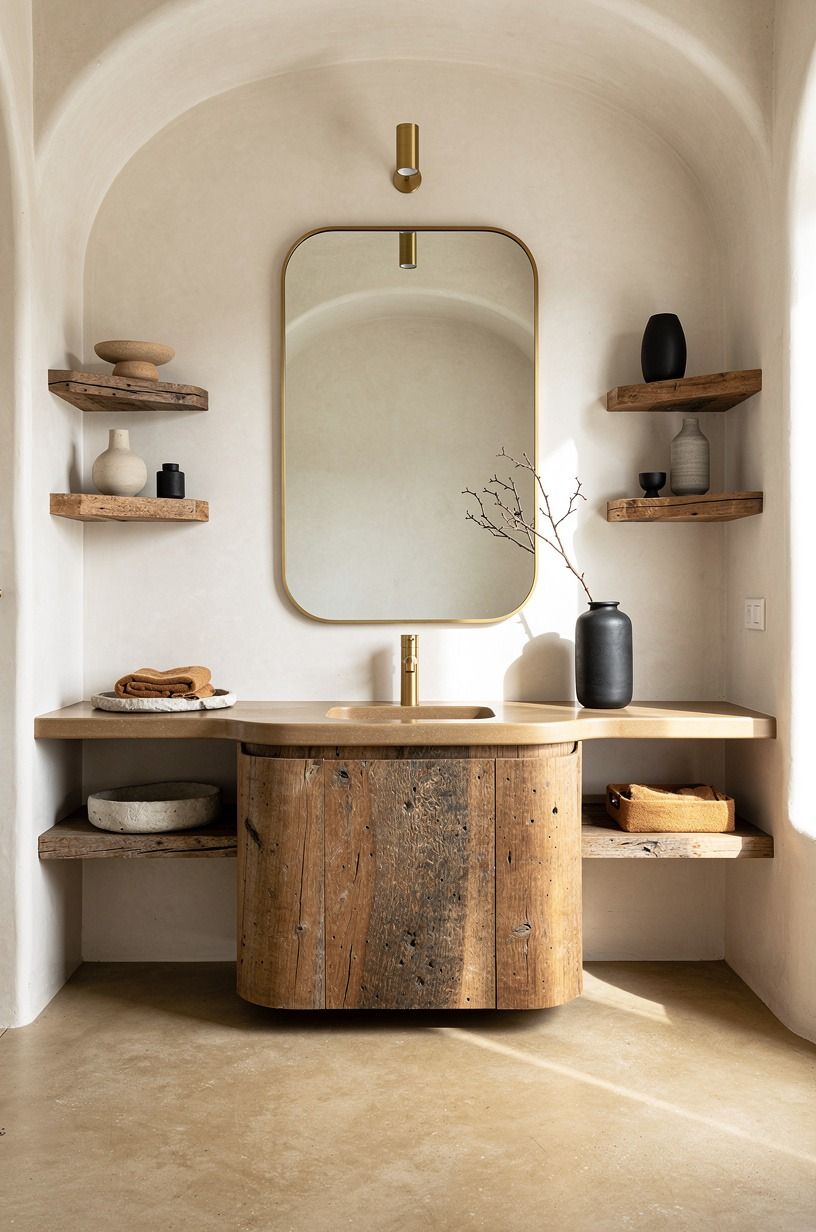
A brushed brass faucet typically costs $120-$450, and it’s one of the few places where a warmer finish earns its keep. Warm white, camel, black accents, and reclaimed weathered teak make that finish feel relaxed instead of overly polished.
8Follow the Three-Height Light Stack around the vanity
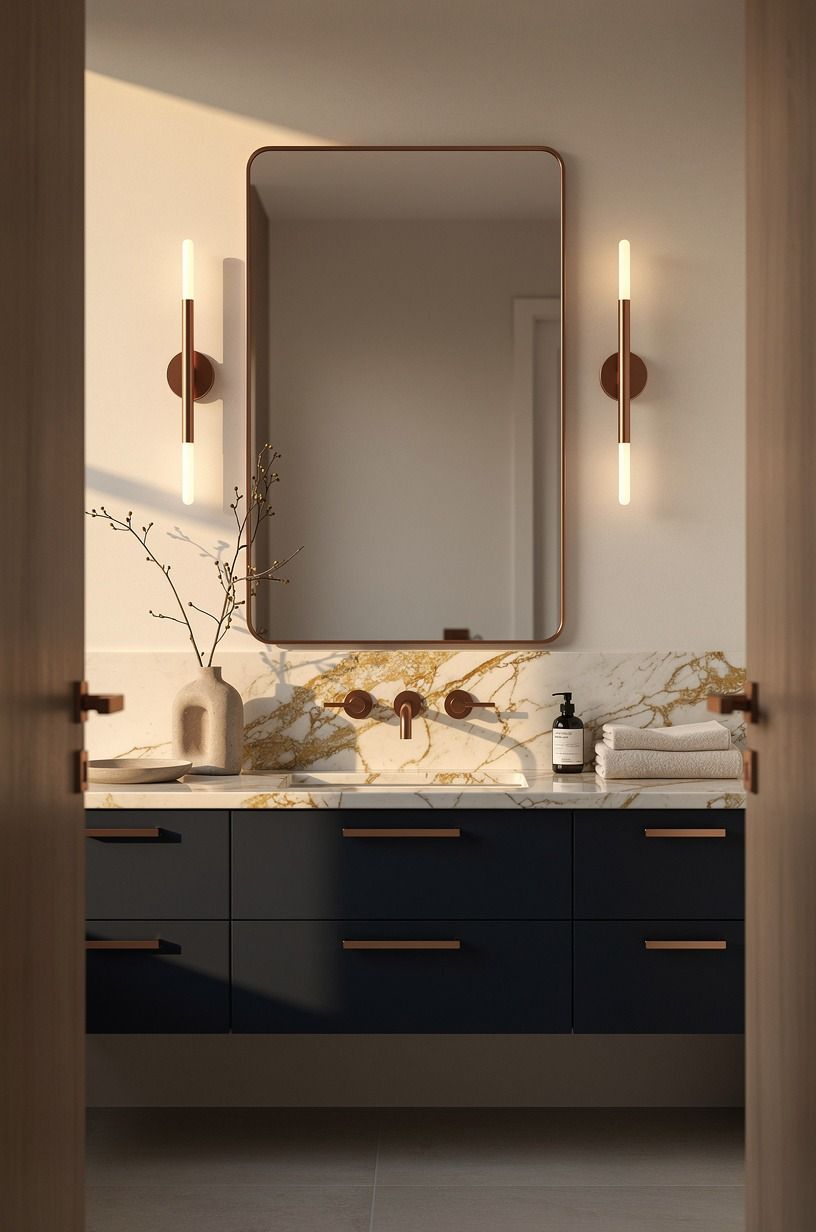
Give yourself three light levels: ceiling light, face-level light, and a lower pool of glow. aged brass sconces at either side of the mirror make makeup and shaving less frustrating than a lone ceiling fixture. Midnight blue, copper, ivory, and Calacatta marble with gold veining give that warmth somewhere rich to land.
You can use a dimmer to keep the room relaxing after dark. And don’t mount sconces too high just to make them look dramatic; you’ll want the light close to cheek level, where it’s useful. That practical choice is what keeps the bathroom elegant.
9Let a 32-36 in vanity hold the visual weight
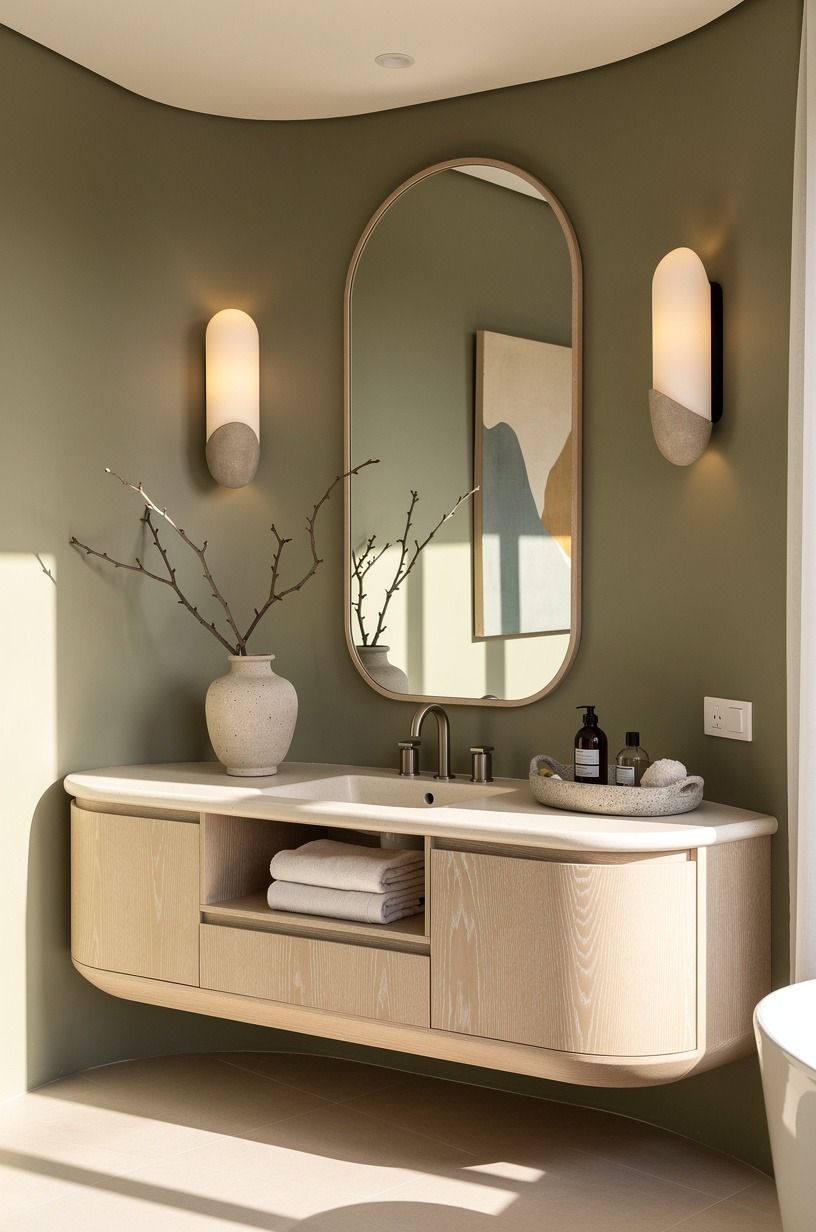
A standard vanity height falls between 32-36 in, so start there and adjust only if your household has a real reason. A sage green vanity in cerused white oak can carry visual weight while keeping the room warm, cream-toned, and grounded.
10Mix a moody paint color into the room next door
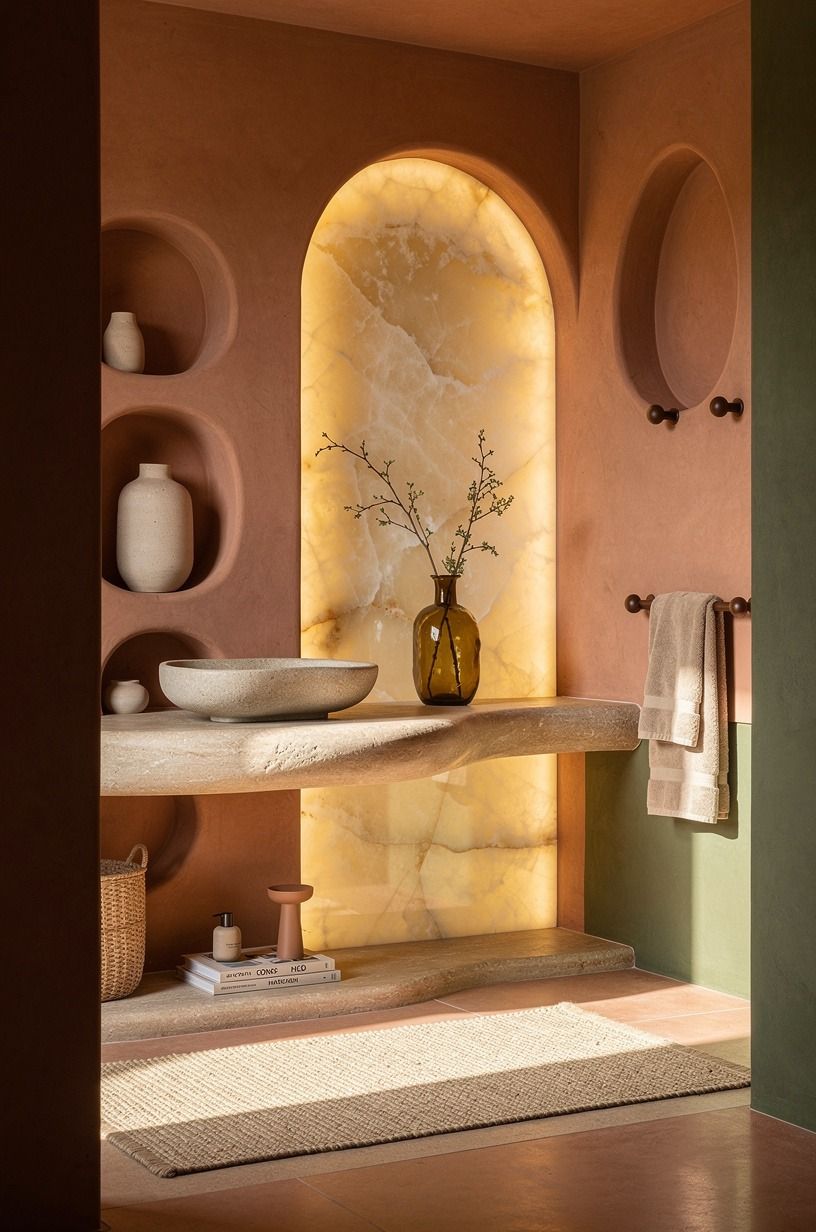
If your bathroom opens onto a bedroom or hall, use the transition to add depth. Farrow & Ball Hague Blue No. 30 makes white zellige look warmer by contrast, especially beside terracotta, stone, olive, and a backlit translucent onyx accent.
Don’t paint every bathroom wall dark unless you have generous light. You can use the deeper color on the door, trim, or adjoining wall instead.
A little moody edge makes the white tile more captivating. Too much simply eats the brightness you wanted.
11Frame the tub instead of tiling every available wall
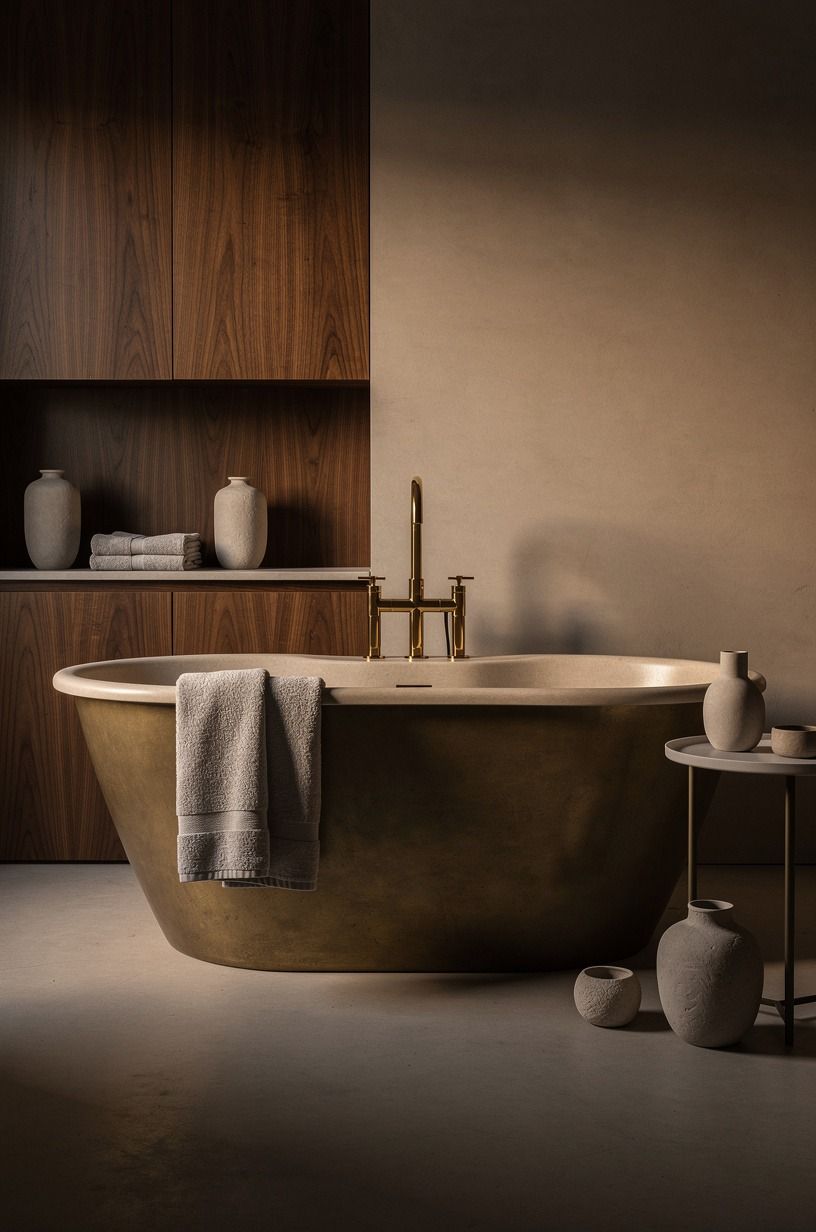
A standard tub is 60x30 in, and that gives you a useful visual boundary. Tile the wall behind it, return the tile around the corner if needed, then stop. white zellige field tile feels more special against clay, linen, aged brass, and book-matched walnut when it has an edge.
You don’t need to wrap the entire room to prove you committed. I’d rather spend the extra budget on proper waterproofing and one good light fixture than cover a dry wall no one will notice. Restraint is the expensive-looking part.
12Add linen that makes the gloss feel lived-in
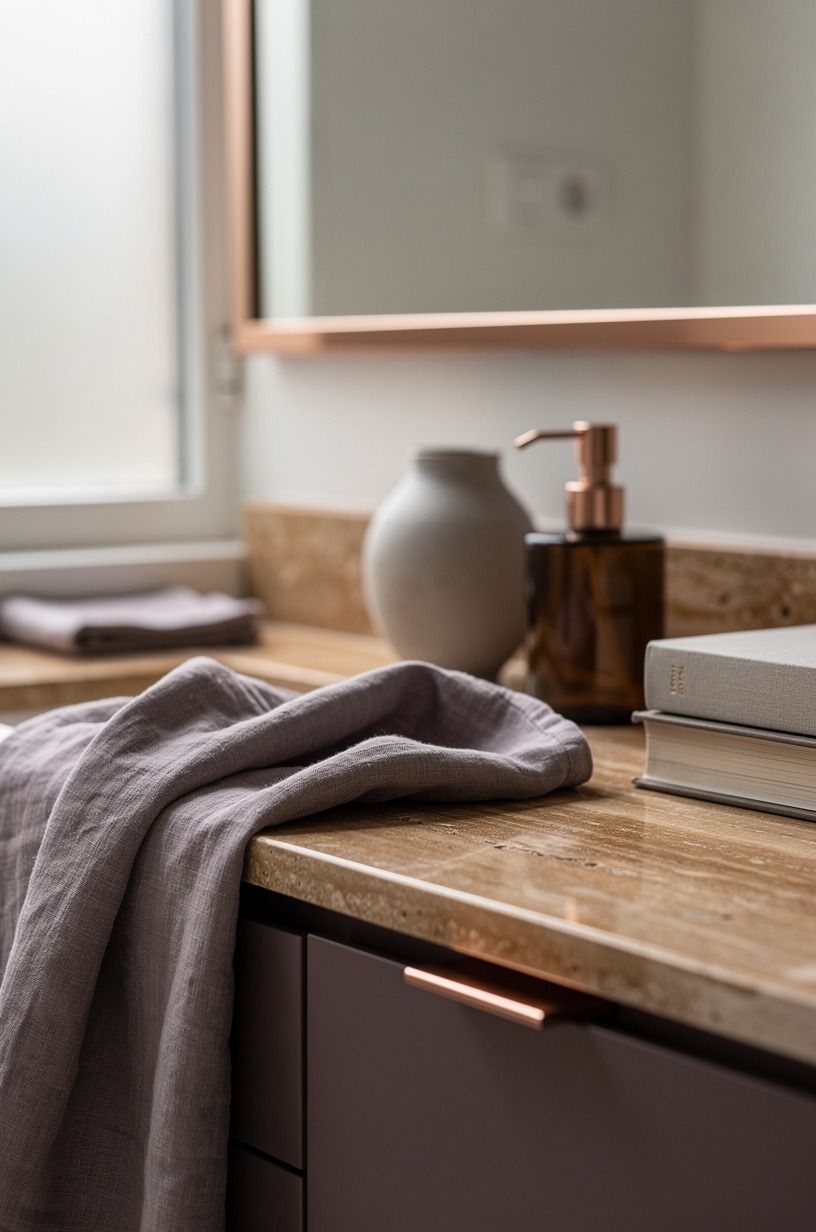
Bring in fabric before you add more decor. Plum, gray, and rose-gold notes pair naturally with warm travertine, especially through a washed linen shower curtain or thick hand towels.
13Use the Hardware Echo Method with one repeat finish
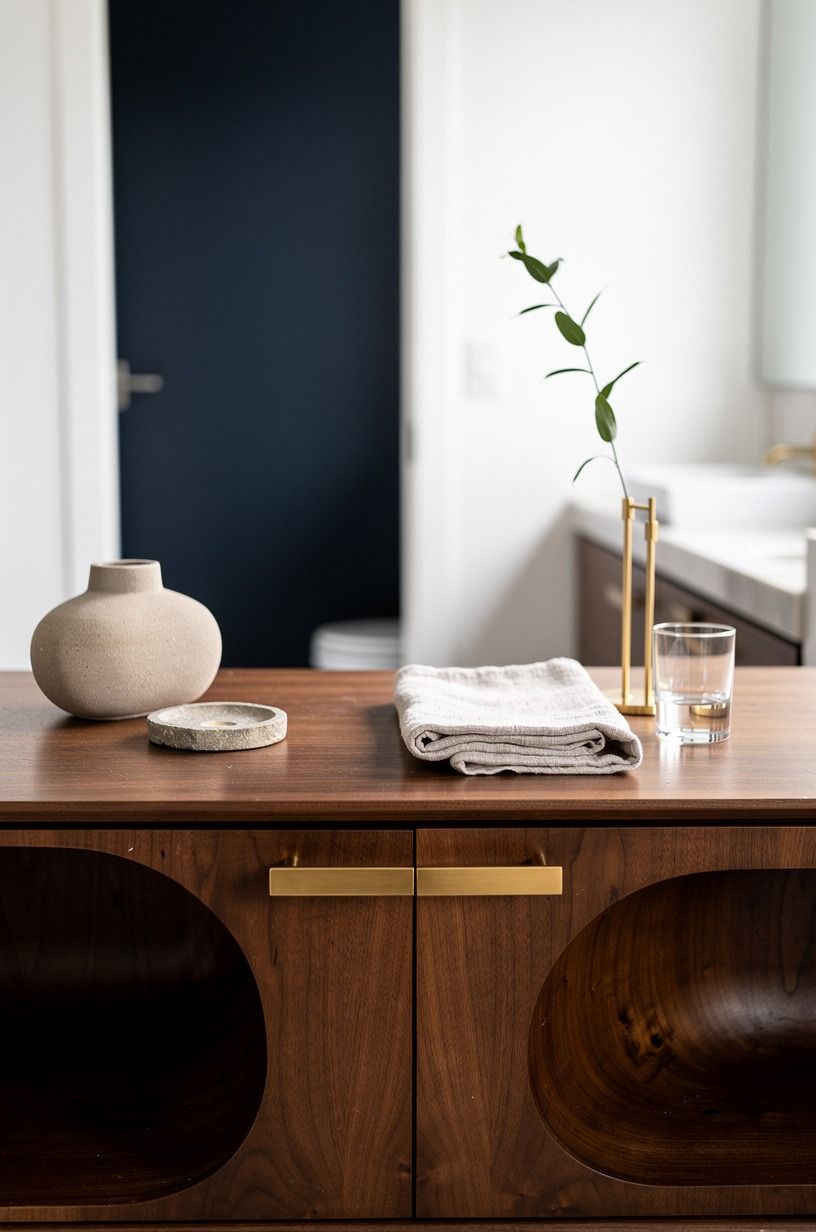
Repeat your metal finish three times: faucet, mirror, and one small detail. unlacquered brass cabinet pulls can be that third note, and they’ll mellow as steam and daily use touch them. Against navy, white, walnut, and organic bouclé, your eye reads the repetition.
You shouldn’t repeat brass twelve times. That’s where the room starts looking themed.
Use one darker interruption, maybe a black frame or walnut stool, so the warm metal has something to push against. A little friction helps.
14Keep toilet clearance honest before adding furniture
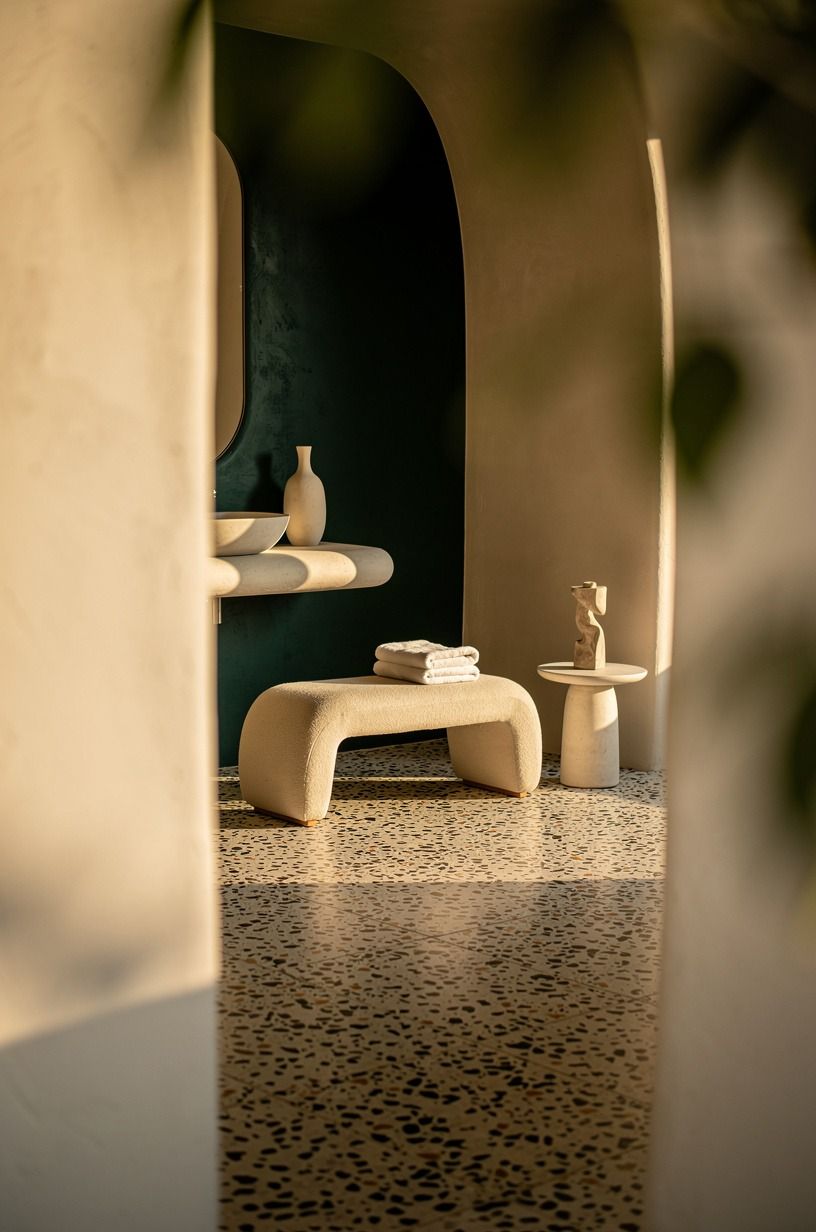
You need at least 21 in of clear space in front of the toilet. Emerald, gold, cream, and oversized-chip terrazzo can bring personality to the room, but none of it is worth squeezing past a cabinet every day.
15Layer a white zellige tile bathroom with one useful ledge
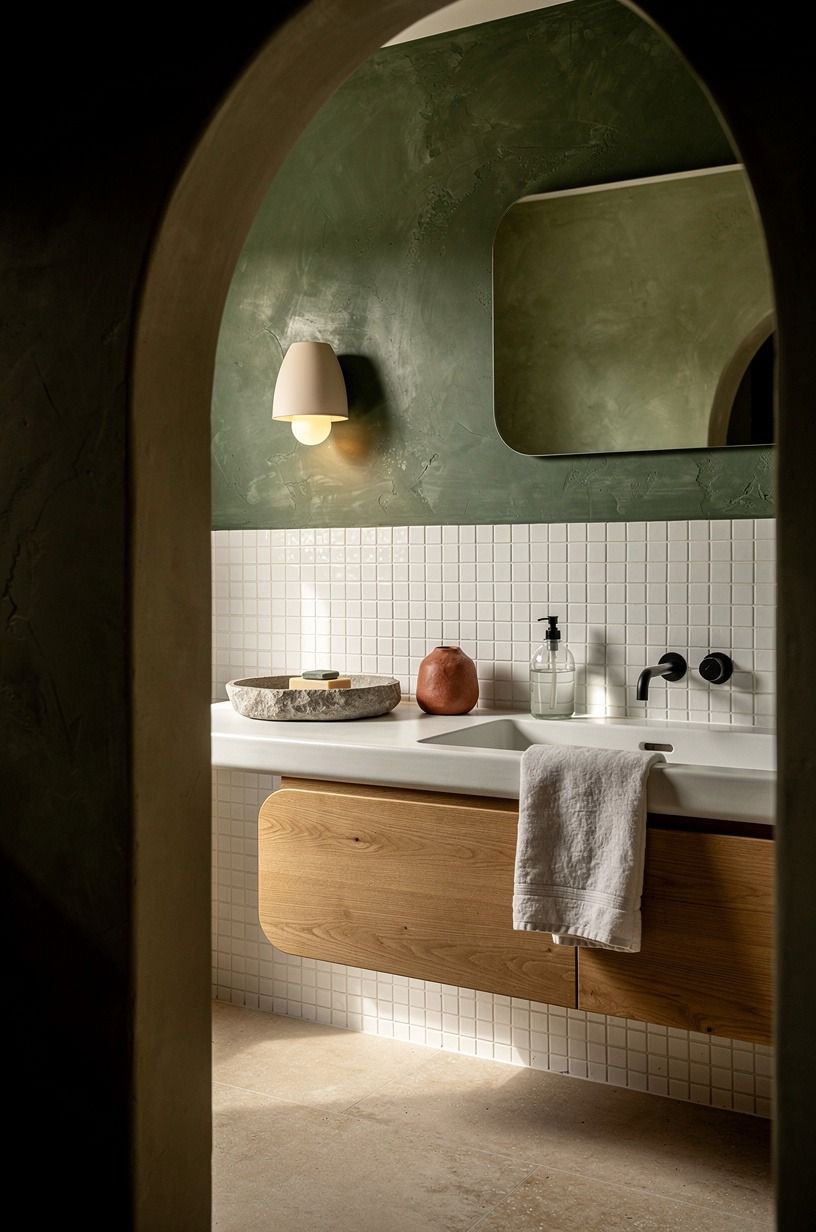
A narrow ledge near the tub or shower gives you a place for soap without turning the room into a shelf display. hand-applied Venetian plaster in a forest green, rust, and natural oak scheme can make the ledge feel integrated without adding another busy stone.
You’ll want the ledge to solve a daily problem: shampoo, a razor, a book you’ll probably get wet anyway. Don’t fill it with seven decorative bottles. The best bathroom styling has some empty space, because your morning clutter will arrive soon enough.
16Choose a shower curtain that softens hard lines
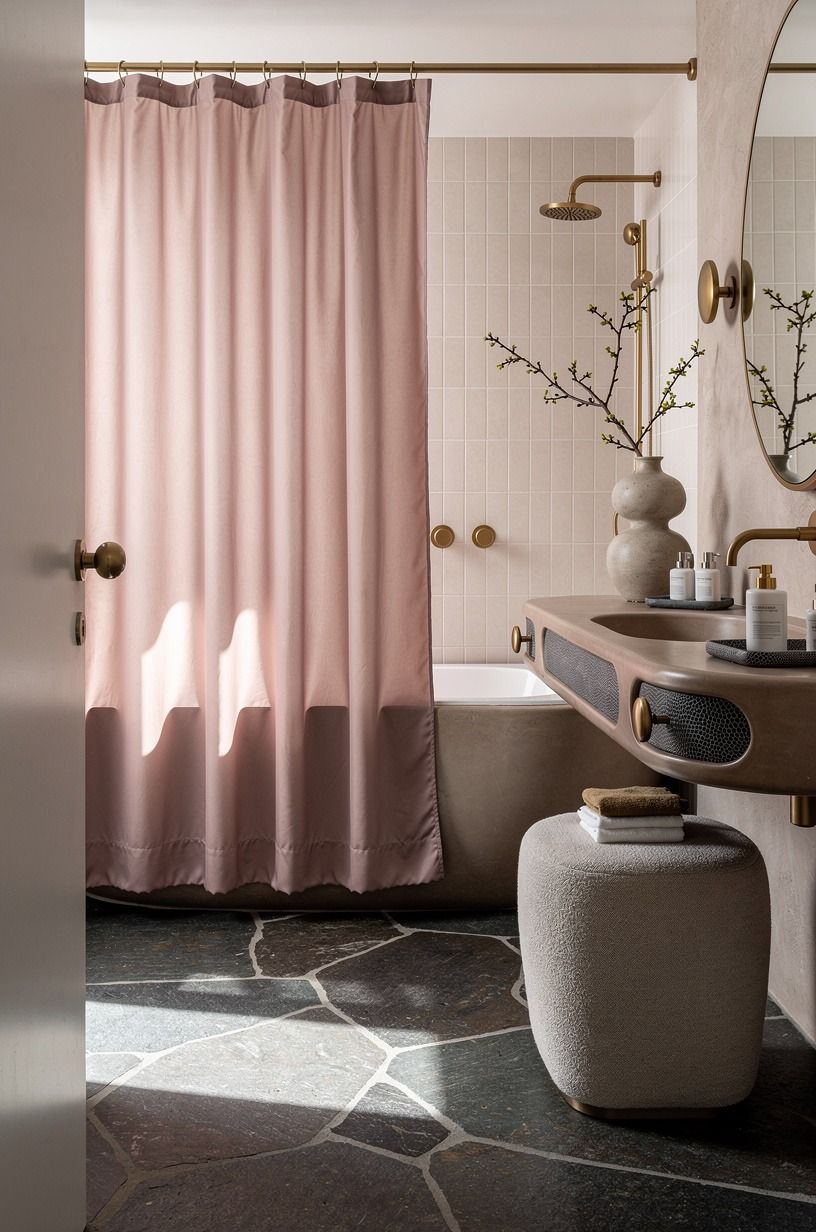
In a tub-shower setup, a curtain is a major wall, not an afterthought. Dusty rose, charcoal, brass, and subtle shagreen accents make a soft woven curtain feel considered without making the tile disappear.
17Budget the tile work before you chase the full-room look
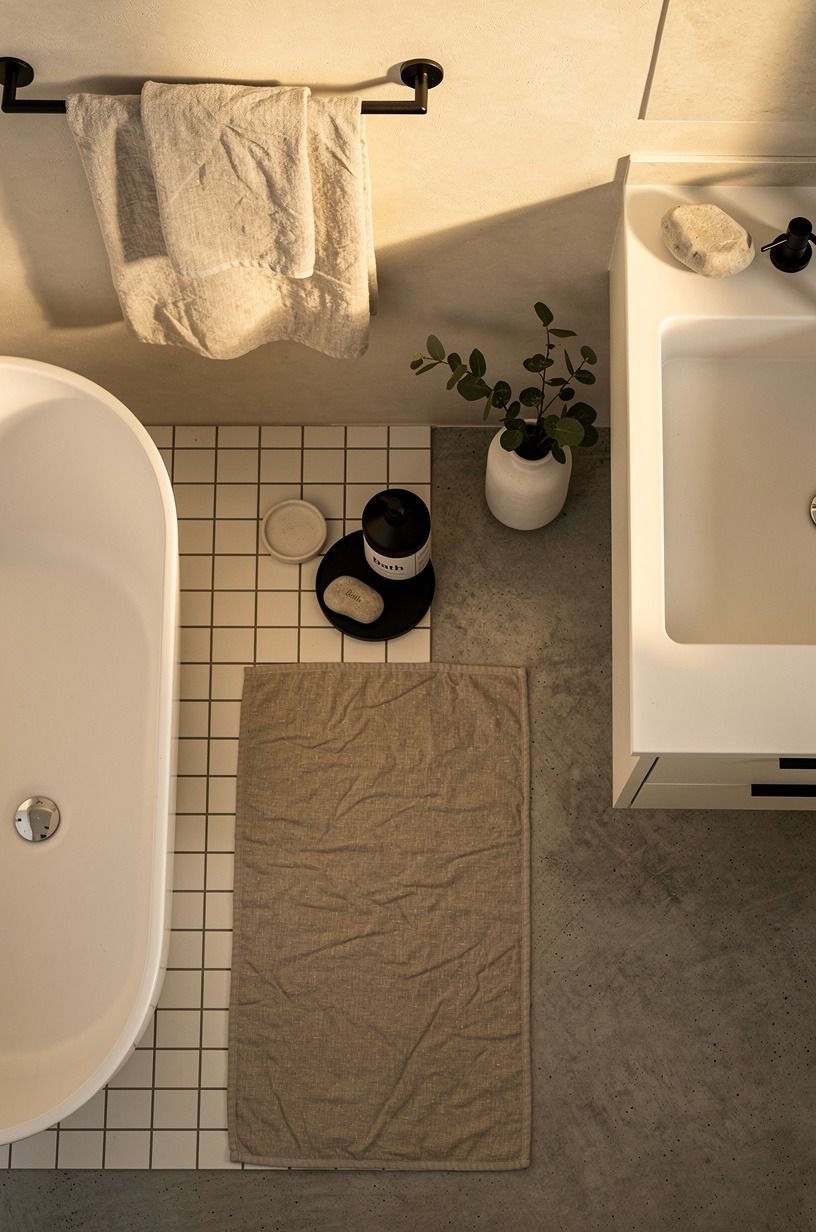
Zellige tile typically runs $15-$35 per sq ft, while subway tile usually lands around $2-$10 per sq ft. That gap is why I’d use zellige where your eye lands first: the vanity wall, shower niche, or tub surround. You don’t have to tile every inch to get the luminous effect.
You can keep your existing floor and still make a meaningful change. I’d put the money into installation and layout before a fancy marble top.
Washed Belgian linen, warm white, camel, and black accents can make a modest plan feel finished. Bad spacing is forever; a plain counter can be changed later.
For quieter alternatives, browse soft earthy zellige bathroom ideas.
18Finish with the Imperfect Glow Check at night
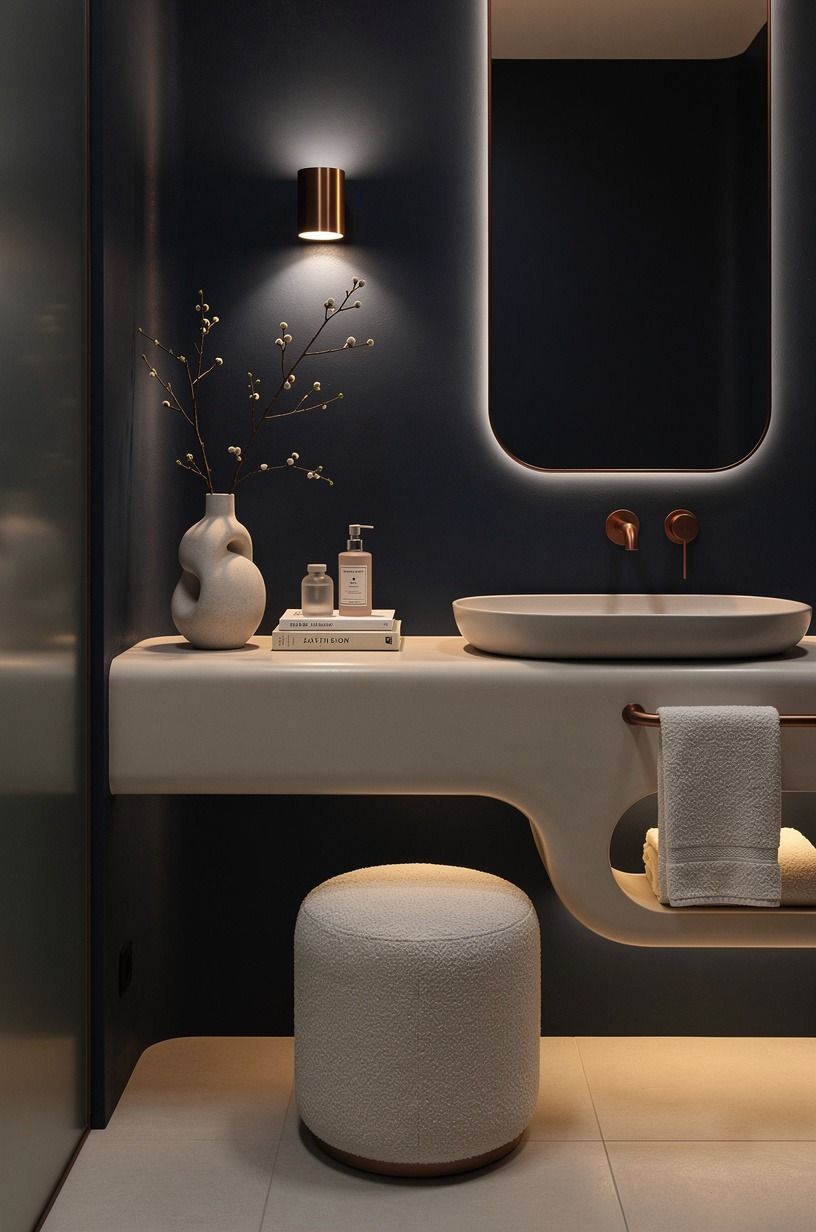
Turn off the overhead light and look at the room with only sconces or a dim vanity lamp. This is where white zellige earns its place. warm 2700K bulbs make the glaze look soft and luminous alongside midnight blue, copper, ivory, and organic bouclé, while cooler bulbs flatten it into a plain white grid.
You’ll know you’re done when the room feels good with a towel on the floor and a toothbrush on the counter. Not staged.
Not precious. Just warm, calming, and ready for a real Tuesday night.
Why I Think White Zellige Is Worth the Fuss
I went back and forth on white zellige for a long time because I thought white tile was the safe option, and safe can get dull fast. But zellige isn’t really about being white.
It’s about the way a handmade surface refuses to behave like a printed backdrop. One tile catches a silver edge of morning light.
The next one looks almost cream. A third holds a tiny ripple in the glaze that you only see when you’re brushing your teeth at night.
That inconsistency is the point. You can buy a lot of smooth tile that looks great in a showroom, then install it in a bathroom and wonder why the room feels flat.
White zellige asks for a bit more care, especially around grout choice and lighting, but it pays you back every day in small ways. The wall looks different in rain.
It looks different with candlelight. It even looks different when the shower steam starts to cloud the mirror.
I wouldn’t use it in every bathroom. In a hard-working family bath with zero natural light and several rushed kids, a durable white porcelain may be the saner choice.
But if you’re making a primary bath, a powder room, or a small guest space that should feel welcoming, I’d choose the imperfect surface. It has life.
And honestly, rooms with life are the ones you remember.
What People Always Want to Know
What is the best white zellige tile bathroom idea for a small bathroom?
Use white zellige on one focal wall or inside a shower, then keep the remaining walls quiet. 4x4-inch handmade tile gives a small bathroom texture without making it feel chopped up, especially with a pale grout and a wall-mounted mirror.
- One tiled wall - Pale oak vanity - Warm metal fixtures
Where can I buy white zellige tile bathroom pieces on a budget?
Look at IKEA, Target, and Wayfair for mirrors, textiles, and storage, then reserve your tile budget for a small feature zone. Facebook Marketplace can turn up solid wood stools or vintage mirrors that add more character than a new plastic accessory.
- IKEA towel storage - Target linen-look curtain - Secondhand wood stool
How much does a white zellige tile bathroom makeover cost?
A light refresh can cost about $200-$1,200, while partial tile and a new vanity often land around $3,000-$9,000. Paint and textile changes are the cheapest place to start, and keeping existing plumbing saves serious money.
- Existing layout retained - New mirror and faucet - Partial tile placement
Can I create a white zellige tile bathroom on a budget?
Yes, and you should start with a small tiled area rather than a full-room install. A feature-wall approach lets you use the handmade tile where it matters, then add affordable paint, towels, and a secondhand mirror around it.
- Tile behind vanity - Removable lighting upgrade - Washed linen towels
Is a white zellige tile bathroom worth it in a small space?
Yes, small spaces often make zellige feel more intimate because you’re close enough to see its variation. Reflective handmade glaze also helps bounce light around, as long as you don’t crowd the floor with bulky storage.
- Floating vanity - One strong mirror - Clear toilet zone
Is white zellige tile a good idea for a rental?
Yes, if you use removable versions around low-splash areas and keep permanent work off the lease. Peel-and-stick tile panels can give you the look behind a vanity, while a tension rod and soft curtain add warmth without damage.
- Removable tile panels - Tension-mounted storage - Adhesive wall hooks
Where I’d Start First
If I had to pick one step, I’d start with the grout and tile sample together. A warm grout keeps handmade white zellige from looking like a cold grid, while bright white grout can erase the irregular edges that make the tile worth buying. Pin that pairing before you order.