
 by
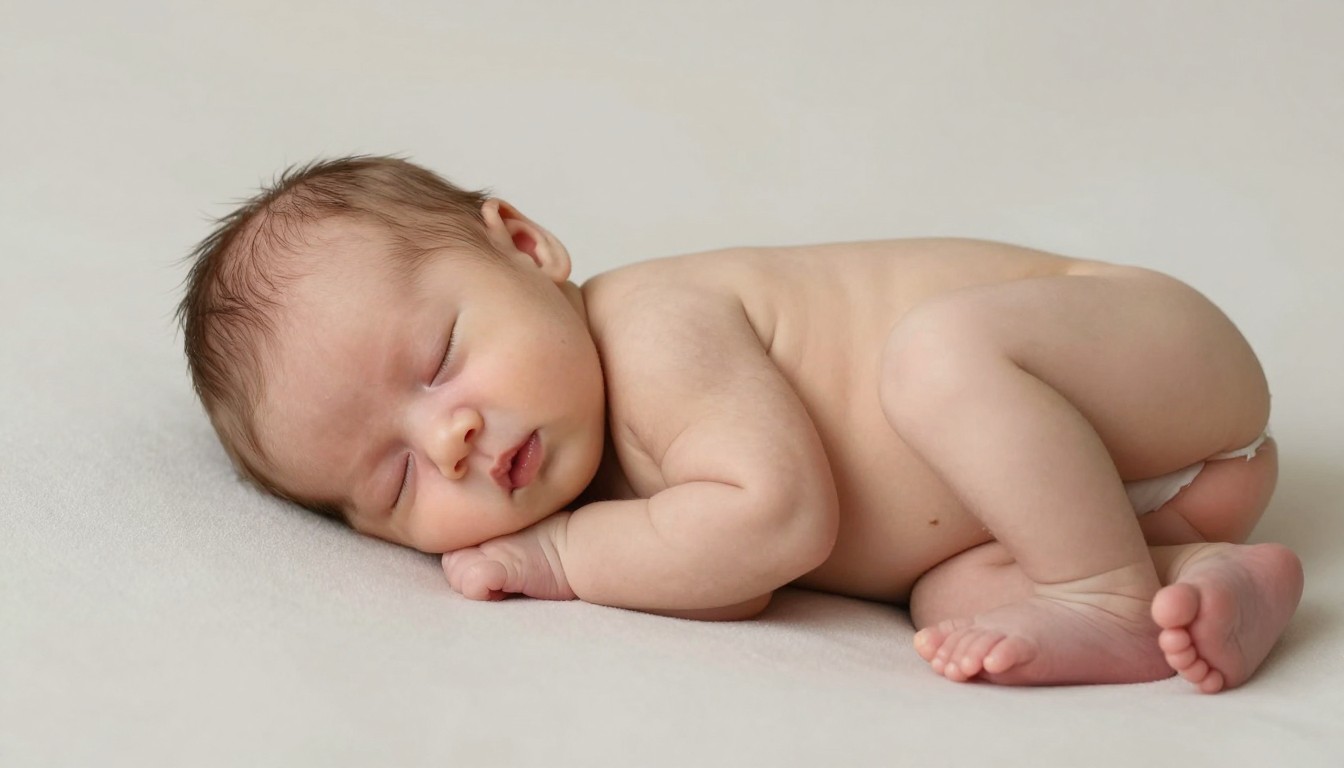
by Quick answer: A sleeping newborn may jerk because of active-sleep twitching or the Moro reflex, according to Huckleberry. Observe the pattern, soothe if needed, and ask your baby’s clinician about anything concerning.
- Huckleberry identifies the Moro, or startle, reflex as one common reason young babies jerk or flail during sleep.
- The same source says sleep twitching may also relate to REM sleep or brain development.
- Huckleberry says safe, snug swaddling may reduce Moro-related movement, but it won’t stop every type of twitching.
Updated July 2026 · Reviewed for accuracy
If your newborn jerks in his sleep but otherwise keeps sleeping, active-sleep twitching or the Moro reflex may explain what you’re seeing. Huckleberry discusses both possibilities, which is why I wouldn’t assume that every jump, twitch, or flail has the same cause.
The sensible first step is observation, not diagnosis. Watch what happens before and after the movement, use plain words to describe it, and take anything you can’t confidently identify to your baby’s clinician.
Why newborns can jerk while they’re sleeping
A small jump and a sudden flail can look similar from the side of the crib, but Huckleberry describes more than one possible explanation. Its guide to baby twitching discusses movement connected with REM sleep or brain development, while its active-sleep explainer also links some tiny jerks and jumps to the Moro reflex.
The Moro reflex is also called the startle reflex in Huckleberry’s explanation. That label is useful because it describes a sudden-looking movement, but it still doesn’t let a parent identify the cause of every jerk by sight alone.
Huckleberry’s active-sleep article offers another piece of context: some muscle activity may help a baby’s developing nervous system learn to coordinate movement. I’d treat that as an explanation for why sleep can look surprisingly busy, not as a way to diagnose a particular episode at home.
The useful distinction: “Jerking” is a description of what you saw. Active-sleep twitching and the Moro reflex are possible explanations cited by Huckleberry. They aren’t labels to assign confidently from one brief observation.
Sound can add to the confusion. What to Expect describes it as normal for babies to make noise during sleep and discusses how crying can also happen without a straightforward, fully awake moment. A jerk accompanied by a sound therefore gives you more to observe, but it doesn’t provide a diagnosis.
How to observe the movement without guessing
Start with one concrete detail: did your baby appear to remain asleep after the movement? That observation won’t tell you the medical cause, but it helps separate a passing sleep event from a moment that led to waking and a need for soothing.
Next, replace the broad word “jerk” with a literal description. Words such as jump, twitch, startle, or flail communicate what you saw without claiming to know why it happened. If several movements occurred, describe the sequence rather than trying to name it.
| What you notice | What the cited guidance supports | Useful next step |
|---|---|---|
| A small twitch or jump while your baby appears asleep | Huckleberry says some sleep twitching may relate to REM sleep or brain development. | Note what moved and whether sleep continued. |
| A sudden startle or flailing movement | Huckleberry identifies the Moro reflex as one common reason for this type of movement. | Record what happened immediately before and after it. |
| Noise or crying while your baby still seems sleepy | What to Expect explains that babies can make noise and cry during sleep. | Watch for waking and soothe your baby if needed. |
| Movement you can’t describe confidently | The cited explanations can’t identify an individual baby’s movement remotely. | Write down what you saw and ask your baby’s clinician. |
Context matters more than an elaborate theory. Note whether your baby was already asleep, whether a sound occurred, whether the movement ended on its own, and whether your baby needed comforting afterward. Those details keep the conversation factual.
If you can safely capture the movement on video without delaying care or disturbing your baby, that may preserve details that are difficult to describe later. The recording still isn’t a home diagnostic tool; it’s simply something concrete you can offer your clinician.
What to do when your newborn jerks in sleep
If a brief jerk occurs and your baby still appears asleep, I wouldn’t rush to label it or repeatedly intervene just to see whether it happens again. Pause, observe the whole baby rather than focusing only on one moving arm or leg, and see whether sleep continues.
If your baby wakes or cries, respond with the familiar soothing approach you normally use. What to Expect’s discussion of babies crying during sleep supports a calm response based on whether the baby actually needs settling, rather than assuming every sound or movement means the same thing.
A practical response:
- Watch what happens before and after the jerk.
- Describe the movement without assigning it a cause.
- Note whether your baby stayed asleep, woke, made noise, or needed soothing.
- Save questions or a safe recording for your baby’s clinician.
- Seek immediate help if you believe your baby is in immediate danger.
Swaddling deserves a narrow answer. Huckleberry says snug, safe swaddling may reduce sudden movements caused by the Moro reflex. The source also says it won’t stop all twitching, including movement related to REM sleep or brain development.
That means swaddling isn’t a test. If a movement decreases, that doesn’t prove its cause; if it continues, that doesn’t identify a problem. Because the appropriate method depends on your baby and circumstances, use guidance from your baby’s clinician rather than improvising from a short online description.
I’d also avoid turning the night into a series of experiments. Changing several things at once makes it harder to describe what actually happened. Keep your response simple, preserve the details you noticed, and use professional guidance for any baby-specific decision.
Build a clearer picture of your newborn’s sleep
A short record is more useful than saying the jerks happen “all the time” or “only sometimes.” You don’t need technical language. A plain description of the movement and its context gives your baby’s clinician something specific to discuss.
Details worth recording:
- Whether your baby appeared asleep before and after the movement
- Which part of the body seemed to move
- Whether it looked like a twitch, jump, startle, or flail
- Whether there was crying or another sound
- What happened immediately beforehand
- Whether your baby needed soothing afterward
If the bigger challenge is understanding how these moments fit into the whole night, my guide to a newborn sleep schedule can help you organize the broader sleep pattern. Keep the two questions separate: a schedule describes when sleep happens, while your notes describe the movement you saw.
Don’t borrow expectations from a different stage of childhood. The questions parents ask later are different, which is why the separate guide to how much sleep a 6-year-old needs deals with school-age sleep rather than newborn movement.
A written log should support a conversation, not feed endless checking. Once you have a clear description, decide whether you’re comfortable continuing to observe or whether you want personal guidance. If you remain uneasy, that uncertainty itself is a fair reason to contact your baby’s clinician.
When personal medical guidance is the right next step
No article can examine your baby or determine exactly what a particular movement means. Huckleberry offers plausible explanations for sleep twitching and startle-like movements, but those general explanations don’t replace individual assessment.
I’d contact your baby’s clinician whenever the movement worries you, you can’t confidently describe what you’re seeing, or you want help deciding how to respond. You don’t need to arrive with a diagnosis. Bring observations and questions.
Useful questions for the clinician:
- Could this description fit sleep twitching or the Moro reflex?
- Would a video of the movement be useful?
- What details should I watch for if it happens again?
- Is swaddling appropriate in my baby’s circumstances?
- Should my baby be seen rather than observed at home?
If you believe your baby is in immediate danger, don’t wait for an article or routine online reply. Contact the appropriate urgent or emergency service where you live. This guide can explain published possibilities, but it can’t make that decision for a specific newborn.
The key is not to swing between panic and dismissal. A calm description, the context around the movement, and advice from someone who can assess your baby are far more useful than trying to match a short sleep clip to a label online.
FAQ
Is it normal for a newborn to jerk while sleeping?
Huckleberry presents sleep twitching and the Moro reflex as common explanations for jerking or flailing in young babies. That provides context for the behavior, but it can’t confirm that a particular movement in your baby is normal.
Can REM sleep make my newborn twitch?
Huckleberry specifically refers to twitching related to REM sleep as one reason movement may continue despite swaddling. It also mentions brain development, so not every sleep twitch should automatically be called the Moro reflex.
Is the Moro reflex the same as sleep twitching?
Not necessarily. Huckleberry discusses the Moro reflex as a reason for sudden startle-like movement while also describing twitching associated with REM sleep or development, so the terms shouldn’t be treated as interchangeable without personal guidance.
Will swaddling stop my newborn from jerking?
Huckleberry says snug, safe swaddling may reduce sudden Moro-related movement, but it won’t stop every twitch. Treat it as a possible soothing measure under appropriate guidance, not as proof of what caused the movement.
What should I tell my baby’s clinician?
Describe what moved, what the motion looked like, whether your baby appeared asleep before and afterward, and whether there was crying or a need for soothing. If you safely recorded the event, ask whether the clinician would like to see it.
My bottom line: Huckleberry identifies active-sleep twitching and the Moro reflex as possible explanations for newborn sleep jerks. Observe without guessing, soothe when needed, and get personal guidance whenever the movement leaves you concerned.