
 by
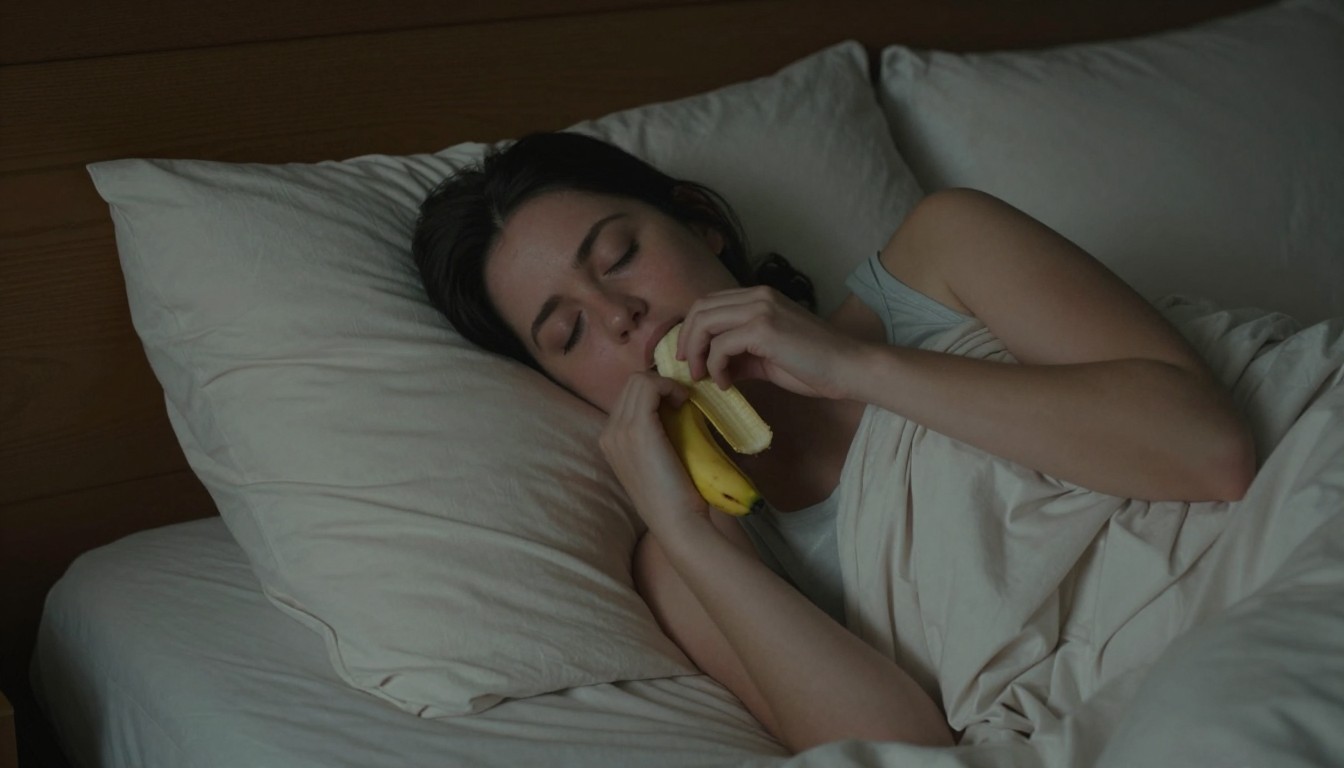
by Quick answer: Yes, a banana may help you relax before sleep, but it isn’t a dependable sleep treatment. Verywell Health links the idea to tryptophan, magnesium, and potassium.
- Verywell Health says tryptophan can be converted into hormones associated with sleep.
- According to Verywell Health, magnesium supports muscle relaxation and may improve sleep quality.
- Verywell Health links potassium with physical relaxation and fewer nighttime muscle cramps.
Updated July 2026 · Reviewed for accuracy
My take is simple: a banana is a reasonable bedtime food, not a sleep remedy. The nutrient explanation is plausible, but it doesn’t prove that eating one will make you fall asleep faster or stay asleep longer.
If you enjoy bananas and feel hungry at night, there’s little reason to dismiss the idea. Just keep the expectation realistic. A food can support winding down without acting like an on-off switch for sleep.
Why a banana might help you sleep
Tryptophan, magnesium, and potassium form the main case for eating a banana before bed. Verywell Health identifies each of these nutrients as a possible contributor to relaxation or sleep, although the proposed role differs from one nutrient to another.
Tryptophan gets most of the attention. According to Verywell Health, the body can convert it into hormones involved in sleep. That gives the banana theory a logical pathway, but a pathway isn’t the same thing as a guaranteed result after eating a particular food.
| Nutrient | What the named source says | What that means in practice |
|---|---|---|
| Tryptophan | Verywell Health says it can be converted into sleep-related hormones. | It makes the sleep claim plausible, but doesn’t predict how strongly you’ll respond. |
| Magnesium | Verywell Health connects it with relaxed muscles and improved sleep quality. | It may support physical settling rather than directly making you fall asleep. |
| Potassium | Verywell Health links it with relaxation and the prevention of nighttime muscle cramps. | It may be relevant if physical tension or cramping is disturbing your comfort. |
The distinction in the final column matters. A nutrient can participate in a process associated with sleep without making a banana a sedative. Verywell Health’s explanation supports a cautious “it may help,” not a confident “it will work.”
Magnesium and potassium strengthen the relaxation argument, but they don’t tell us how noticeable the effect will be. I’d view them as supporting parts of the banana’s nutritional profile, not proof that the fruit has a special or immediate bedtime effect.
The useful distinction: The named nutrients offer a possible reason a banana could support relaxation. They don’t establish that a banana reliably changes sleep onset, total sleep, or nighttime waking.
The most defensible answer is therefore conditional. Eating a banana might make winding down easier for some people, particularly if hunger or physical restlessness is part of the problem. The source doesn’t show that everybody will notice a difference.
What the evidence does and doesn’t establish
Verywell Health uses possibility-based language: a banana can help because of its nutrients. That wording is appropriate. It leaves room for individual differences and avoids turning a nutritional explanation into a promise.
The source’s published takeaways don’t tell us how often bedtime bananas work, how large the change might be, or whether any effect is immediate. They also don’t establish an exact serving or a precise time at which the fruit must be eaten.
That missing detail limits the verdict. We can explain why a banana might support sleep, but we can’t responsibly promise a particular outcome or prescribe a perfect bedtime-banana routine.
What the evidence supports:
- A banana contains nutrients that Verywell Health associates with relaxation and sleep-related processes.
- Eating one before bed may be a reasonable option for somebody who already wants a nighttime snack.
- The result, if any, shouldn’t be treated as certain or identical for every sleeper.
What it doesn’t support: guaranteed sleep, a cure for persistent insomnia, or a precise formula that everybody should follow.
A Healthy Food Style item on Pinterest also suggests eating bananas, milk, and pineapple before bed as a response to insomnia. That item shows how common the idea has become, but its promotional wording doesn’t establish that the combination works better than a banana alone.
I’d give more weight to a clearly explained mechanism than to a catchy bedtime-food claim. Even then, a mechanism remains only part of the answer. The outcome you care about is whether you actually feel comfortable, wind down, and sleep well.
How to try a bedtime banana sensibly
If you’re hungry before bed and already enjoy bananas, eating one is a straightforward option. There’s no need to build an elaborate recipe around it or treat it as a compulsory step in your nighttime routine.
The named sources don’t establish an ideal timing window. I wouldn’t pretend there’s a magic moment that turns an ordinary banana into a sleep aid. Choose a time that feels comfortable and fits naturally into your evening.
A practical approach:
- Eat a banana because you want a light bedtime food, not because you expect it to knock you out.
- Keep the rest of your routine familiar so you can judge whether the choice feels useful.
- Pay attention to hunger, physical comfort, and how settled you feel afterward.
- Don’t force the habit if eating late or choosing that food doesn’t suit you.
It also helps to separate two questions: “Does this food contain relevant nutrients?” and “Does eating it at night help me?” Verywell Health gives support for the first question. Your experience determines whether the second answer is useful to you.
Avoid changing the snack, bedtime routine, and sleep environment all at once if your aim is to understand the banana’s role. That isn’t a clinical experiment. It’s simply a clearer way to notice whether the food fits your evening.
If you’re unsure whether the snack itself or its timing is the problem, our guide to late-night eating and sleep explores that broader issue. A banana doesn’t sit outside the usual considerations simply because it contains nutrients associated with relaxation.
My rule: If the banana feels comfortable and helps settle hunger, it may earn a place in your routine. If it feels like a chore or creates discomfort, the nutrient theory isn’t a reason to persist.
There’s also no basis here for assuming that more is better. The evidence described by Verywell Health explains why the food might help, but it doesn’t provide a dose-response rule. Keep the choice ordinary rather than turning it into a nightly project.
When a banana probably won’t solve the problem
The nutrient explanation may miss the point if hunger or physical settling isn’t what keeps you awake. Tryptophan, magnesium, and potassium can form a plausible sleep-related pathway while still being irrelevant to the particular difficulty you’re having that night.
A banana also won’t guarantee sleep on demand. Verywell Health’s takeaways support possible relaxation, not control over whether you fall asleep, remain asleep, or wake feeling restored.
A banana is the wrong answer to the question if:
- You’re looking for a guaranteed or immediate sleep effect.
- You aren’t hungry and would be eating only because of the claim.
- Eating near bedtime consistently feels uncomfortable for you.
- Your sleep difficulty is persistent enough to need individual professional guidance.
In those situations, adding a food may distract from identifying what actually needs attention.
Persistent sleep trouble deserves more than a string of food experiments. A qualified health professional can consider your individual circumstances in a way that a general article about banana nutrients cannot.
If food doesn’t seem relevant, you may prefer to examine a non-food option. Our explanation of whether weighted blankets help with sleep covers a separate approach without assuming that a bedtime snack is necessary.
My bottom line on eating a banana before bed
Will eating a banana help you sleep? It might. Verywell Health gives a sensible nutrient-based explanation involving tryptophan, magnesium, and potassium, but that explanation stops short of proving a predictable effect.
I’d consider a banana if you’re already hungry, you like the food, and eating it at night feels comfortable. I wouldn’t eat one solely because a headline implies that it works like a sleep treatment.
The Nut’s verdict: A bedtime banana is a plausible, low-pressure option, not a cure. Its nutrients may support relaxation, but your response matters more than the theory.
Other foods raise similar questions, and they shouldn’t be lumped together without direct comparisons. If you’re considering a different fruit, see our separate guide on cherries and sleep. The banana information discussed here doesn’t establish that either choice is universally better.
Keep the decision proportionate. If a banana settles hunger and fits your routine, that’s useful. If it makes no noticeable difference, you haven’t missed a secret sleep rule.
FAQ
Will eating a banana make me fall asleep?
It may help you relax, but it can’t guarantee that you’ll fall asleep. Verywell Health links bananas with tryptophan, magnesium, and potassium, all of which contribute to the proposed explanation rather than a certain outcome.
Which banana nutrient is most closely linked to sleep?
Verywell Health highlights tryptophan because it can be converted into hormones associated with sleep. The same source also identifies magnesium and potassium as relevant to muscle relaxation and nighttime comfort, so the claim isn’t based on a single nutrient alone.
How long before bed should I eat a banana?
The named sources don’t establish an exact timing window. If you choose to eat one, use a time that feels comfortable and fits your normal evening rather than following an unsupported countdown.
Should I eat a banana every night for better sleep?
There’s no evidence here that a nightly banana is required. It may be worth keeping in your routine if you enjoy it and find it helpful, but there’s no reason to force the habit when you aren’t hungry or don’t notice a benefit.
Can a banana cure insomnia?
No cure claim is supported by the named source. Verywell Health presents bananas as a food that may help through sleep-related nutrients, while the Healthy Food Style Pinterest item’s “tricks against insomnia” framing doesn’t prove a treatment effect.