
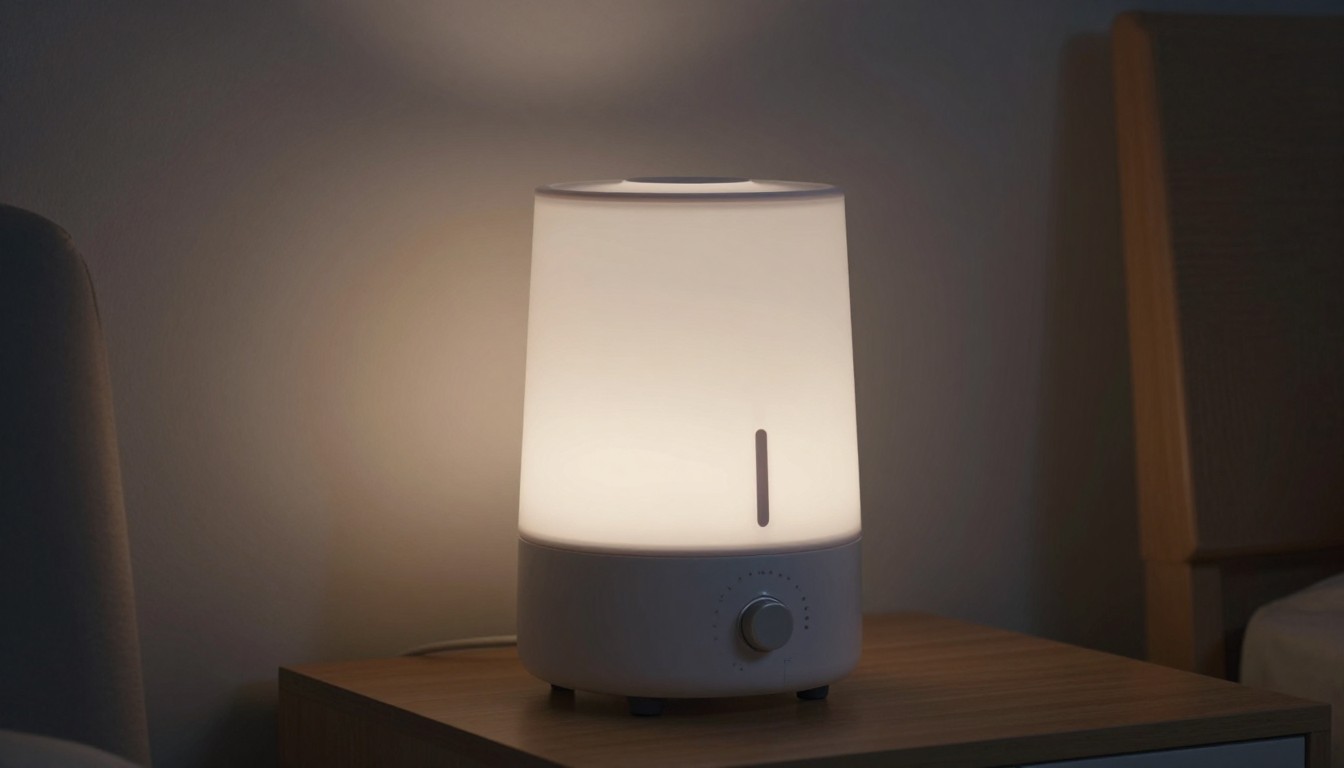
 by
by Quick answer: A room humidifier may help only when snoring tracks with a dry-feeling bedroom. It isn’t a dependable fix for persistent snoring or a substitute for medical evaluation.
- A humidifier’s direct job is to add moisture to room air.
- It doesn’t change sleep position or physically support the head and neck.
- Visible condensation or a musty room means adding more moisture is the wrong move.
Updated July 2026 · Reviewed for accuracy
My take is simple: treat a humidifier as a comfort tool first and a narrow snoring experiment second. If the noise changes consistently as the room feels less dry, it may be useful. If the snoring stays the same, stop treating humidity as the main issue.
What a humidifier actually changes
A humidifier changes one room variable: moisture in the air. That’s the entire logic behind trying one for snoring. It can make an uncomfortably dry bedroom feel less parched, but greater comfort doesn’t automatically mean quieter sleep.
The device doesn’t reposition your body, change the angle of your head or identify why the sound is happening. That distinction matters. Snoring may coincide with dryness, yet the two observations aren’t necessarily cause and effect.
I’d consider a humidifier plausible only when the pattern is specific. The bedroom feels dry, the sleeper notices the same dry sensation and the snoring becomes more noticeable under those conditions. Even then, the result should be judged by repeatable changes rather than expectations.
| Factor | Does a humidifier change it? | What that means |
|---|---|---|
| Room-air moisture | Directly | This is the device’s only direct target. |
| Dry-feeling bedroom | Potentially | The room may feel more comfortable if low moisture was the problem. |
| Sleep position | No | A separate positional pattern needs a different response. |
| Cause of snoring | No | A humidifier can’t diagnose or rule out an underlying concern. |
That’s why I wouldn’t buy one solely because “humidifier” and “snoring” appear in the same search. First establish whether dryness is genuinely part of the bedroom pattern.
Clues that dry air may be part of the pattern
A repeatable change between dry-feeling and comfortable rooms is more useful than one parched morning. A single night contains too many moving parts to tell you much by itself.
A humidifier is more reasonable to try when:
- The bedroom regularly feels dry before you switch the device on.
- Dry sensations and noisier sleep seem to occur together.
- The pattern changes between rooms or periods with noticeably different moisture levels.
- Adding modest moisture produces a repeatable change while the rest of the routine stays broadly similar.
These are clues, not proof. Waking with a dry-feeling mouth doesn’t establish that the room caused it, and quieter sleep after one humidifier session doesn’t establish that the device fixed anything. Look for consistency.
Pay attention to the room as well as the sleeper. If windows remain clear, bedding stays dry and the space smells normal, the output may be reasonable. If surfaces become damp or the room develops a musty quality, the experiment has gone too far.
The Nut’s tip: Don’t chase the strongest mist setting. Use the least output that makes the room feel comfortable, then watch for a consistent change in the snoring pattern.
A device display can provide context if the model includes one, but it shouldn’t overrule what’s happening in the room. Damp glass, wet furniture or moisture reaching the bed are clear reasons to reduce the output.
When a humidifier probably won’t help
Condensation is the clearest sign that more output isn’t the answer. If the room already feels comfortable or damp, adding moisture has little practical logic as a snoring strategy.
The same applies when the noise remains unchanged across different room conditions. If snoring sounds much the same whether the air feels dry or comfortable, dryness is unlikely to be the whole explanation. Continuing to increase the mist just adds a new bedroom problem without addressing the existing one.
Position is another useful separator. If the pattern changes with the sleeper’s posture or head angle, a humidifier can’t account for that change. It doesn’t move the body or provide physical support.
Don’t use a humidifier as a medical test.
A quieter night doesn’t prove that a health concern is absent, and an unchanged night doesn’t identify a cause. If you or a bed partner are worried about breathing during sleep, get advice from a qualified clinician.
I’d also skip humidifier shopping if the only argument is that moisture must be helpful. Start with the actual pattern in the room. Without a dryness connection, the device is just a guess.
How to use one without overdoing the moisture
The lowest useful output is better than a bedroom filled with visible mist. The goal is a comfortable room, not maximum water use or a dramatic cloud beside the bed.
Let the specific unit’s manual control placement, water choice, cleaning and safe operation. Humidifier designs differ, so generic shortcuts can conflict with the instructions for the model you own.
Practical setup checklist
- Place the unit on a stable surface as directed by its manual.
- Aim the output so it doesn’t wet the pillow, mattress, wall or nearby electronics.
- Use only the water and additives permitted by the manufacturer.
- Empty and clean the unit according to its instructions rather than waiting for odor or visible residue.
- Reduce the setting if moisture collects on nearby surfaces.
- Stop using it if the room becomes persistently damp or musty.
Don’t add fragrance or oils unless the humidifier was specifically designed for them. A pleasant scent isn’t evidence that the unit is working better, and an unsupported additive can complicate cleaning.
Noise matters too. A humming or bubbling unit may disrupt the room even if it improves the dry feeling. That doesn’t mean the humidifier affected snoring; it means one nighttime sound has been added beside another.
Finally, resist constant adjustment. If the output changes repeatedly during the night, it becomes harder to connect any result with a stable room condition. Set it conservatively, observe the room and make the next change deliberately.
How to judge whether it worked
One unusually quiet night is weak evidence. Compare several ordinary nights and record what happened without turning the process into a complicated sleep study.
Track broad observations: whether the room felt dry, comfortable or damp; whether the snoring seemed quieter, unchanged or louder; and whether the sleeper’s position differed. Note anything obviously unusual so it doesn’t distort the comparison.
| Observation | Reasonable interpretation |
|---|---|
| The room feels better and snoring repeatedly decreases | Humidity may be contributing, but the result isn’t a diagnosis. |
| The room feels better but snoring is unchanged | Keep the device for comfort if desired, not as a snoring fix. |
| Snoring changes mainly with body position | Position deserves more attention than room moisture. |
| The room becomes damp without a consistent benefit | Reduce or stop the output rather than adding more moisture. |
A bed partner’s observation can be useful, but it remains subjective. A phone recording can also capture a rough pattern, though it shouldn’t be treated as a diagnosis or a measurement of breathing health.
If position appears more relevant, read my guide to whether wedge pillows help with snoring. A wedge addresses body angle, which is a different variable from room moisture.
Don’t automatically jump from a humidifier to taping the mouth. That approach raises a separate set of questions, covered in my guide to mouth taping and snoring. Bedroom experiments should stay cautious, especially if the cause of the noise isn’t clear.
My verdict: who should try one and who should skip it
If the only repeatable result is a less dry-feeling bedroom, the humidifier has still done its basic job. That makes it a comfort device, not evidence of a snoring cure.
Worth a cautious try
- The room genuinely feels dry.
- Snoring seems to worsen under the same dry conditions.
- You can monitor the room for dampness.
- You’re willing to stop if no consistent benefit appears.
Skip it as a snoring fix
- The bedroom already feels comfortable or damp.
- Snoring doesn’t change with room moisture.
- The pattern appears more closely tied to position.
- You’re relying on the device instead of seeking help for a breathing concern.
My verdict is a qualified yes. A humidifier may help a narrow group of sleepers whose snoring pattern overlaps with noticeable dryness. It won’t explain persistent snoring, and it shouldn’t delay a conversation with a clinician when the noise is regular, disruptive or worrying.
FAQ
Can a humidifier stop snoring completely?
I wouldn’t expect that. A humidifier changes room-air moisture, so any benefit is most plausible when dryness is part of the pattern. It doesn’t address position, physical support or concerns that need professional evaluation.
Is warm mist or cool mist better for snoring?
There isn’t a sound basis for calling either type the better snoring solution. Choose according to the unit’s safety instructions, cleaning requirements and suitability for your room, then judge the result by comfort and a repeatable change rather than the style of mist.
Should the humidifier sit right beside the bed?
Follow the placement directions for the specific model. If the mist is wetting the pillow, mattress, wall or nearby furniture, move the unit or reduce its output rather than letting moisture collect around the bed.
Can too much humidity make snoring worse?
More moisture isn’t automatically more useful, but a damp room alone doesn’t establish what happened to the snoring. Condensation, wet surfaces or a musty smell are enough reason to lower the setting or stop, regardless of whether the nighttime noise changed.
What should I do if a humidifier doesn’t help?
Stop treating dryness as the main lever and look at the pattern again, including sleep position and head angle. If the snoring remains persistent, disruptive or concerning, a qualified clinician is better placed than another bedroom gadget to assess the situation.