
 by
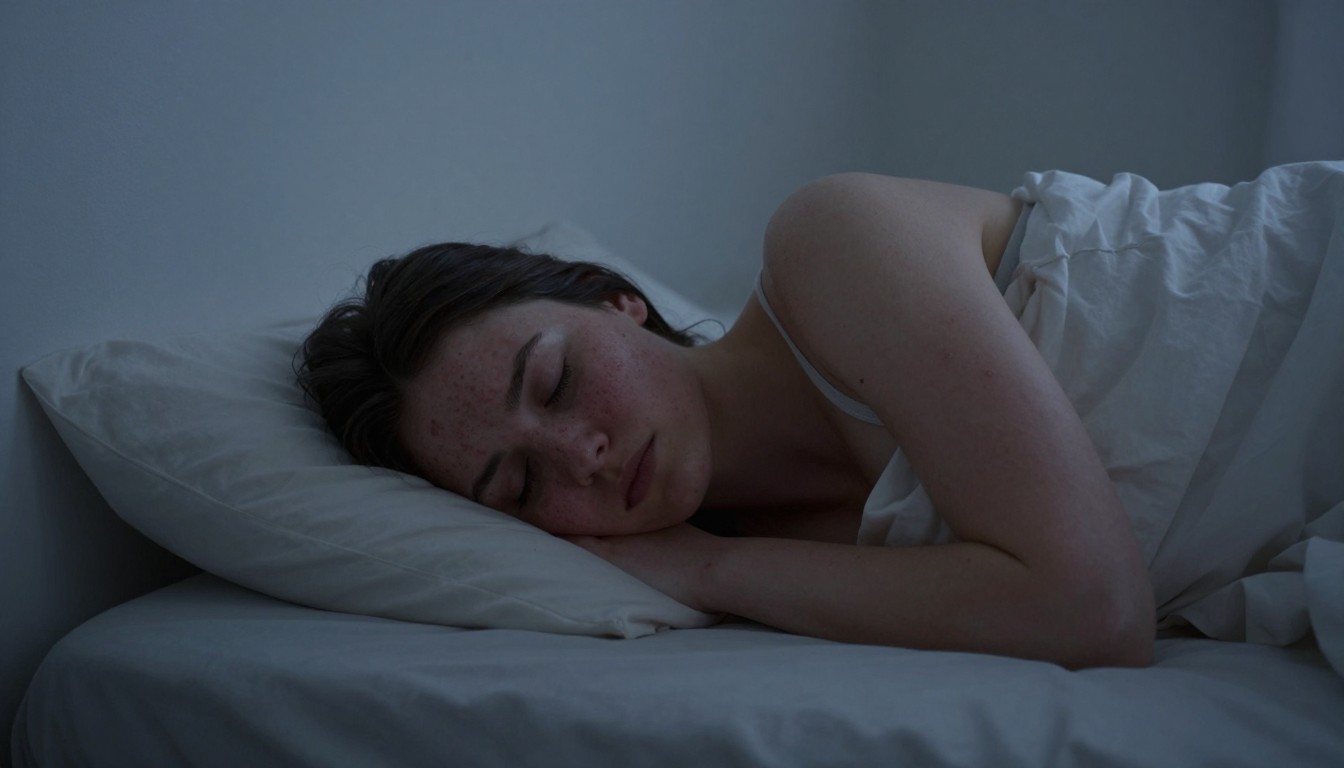
by Quick answer: The PMC review and Clear Ritual indicate that sleeping late can contribute to pimples, especially if sleep quality suffers. Bedtime alone doesn’t prove the cause, so try a steadier schedule and watch for a repeatable pattern.
- A systematic review hosted by PMC assessed 18 studies on acne and sleep quality.
- Clear Ritual reports that pushing past the natural sleep window may affect cortisol, sebum production, and skin repair.
- Wisp identifies insufficient rest and associated stress-hormone changes as a possible link between sleep and breakouts.
Updated July 2026 · Reviewed for accuracy
My read is that “cause” is too strong. A late bedtime may create conditions that make a breakout more likely, but a pimple appearing after a late night doesn’t prove that sleep was responsible.
The useful question is whether your schedule is repeatedly reducing the amount or quality of your sleep. That’s where the connection described by the cited sources becomes more credible.
It also helps to separate bedtime from how much and how well you sleep. Those details can change the answer.
Does sleeping late directly cause pimples?
A systematic review titled Sleep Disturbances and Acne: A Comprehensive Review, available through PubMed Central, assessed 18 studies examining sleep quality and acne. The review reports that poor sleep quality can exacerbate skin issues, but that doesn’t mean a late clock time acts as a direct switch for every breakout.
That distinction matters. “Can contribute” means sleep may be part of the conditions surrounding a breakout. It doesn’t establish that bedtime was the only cause, or even the main cause, in a particular person.
Clear Ritual makes a more specific argument about timing. Its article on sleeping late and acne says staying awake past the body’s natural sleep window may raise cortisol, increase sebum production, and disrupt skin repair. The article presents those changes as conditions in which hormonal or inflammatory breakouts may become more likely or worsen.
The careful interpretation
- Late sleep can be a contributing factor.
- Poor sleep quality appears more relevant than a clock time viewed in isolation.
- A breakout after a late night is an observation, not proof of causation.
- The cited sources don’t establish a universal bedtime at which pimples begin.
I’d therefore avoid the absolute claim that sleeping late causes pimples. The defensible answer is that it may raise the likelihood of acne worsening, particularly when the late schedule also means inadequate or disturbed rest.
For a closely related explanation using acne terminology, see our guide to sleeping late and acne.
Why a late sleep schedule may affect breakouts
Cortisol, sebum, and overnight skin repair are the mechanisms identified in the Clear Ritual article. According to that source, repeatedly staying awake beyond the natural sleep window may increase stress-hormone activity, encourage greater oil production, and interfere with the skin’s normal repair process.
Wisp supports the narrower point that insufficient sleep can play a role in acne. Its discussion says a lack of rest may cause stress hormones such as cortisol to spike. That makes sleep loss an important part of the question, rather than treating “late” as nothing more than the position of the hands on a clock.
The PMC review adds broader context. Its assessment focuses on the relationship between sleep quality and acne, including possible mechanisms and implications. It reports that poor sleep quality can exacerbate skin issues, which supports an association without proving that every person who goes to bed late will develop pimples.
How the proposed connection works
A late schedule may lead to insufficient or poorer-quality sleep. Clear Ritual and Wisp connect that disruption with stress-hormone changes, while Clear Ritual also identifies sebum and impaired skin repair. Together, those conditions may make an existing tendency toward breakouts harder to manage.
This is a chain of possible effects, not a guaranteed outcome. The sources don’t supply a precise delay between a disrupted night and a visible breakout. They also don’t establish that everyone’s skin responds in the same way.
I’d pay more attention to repeated sleep disruption than to an occasional late bedtime. A persistent pattern fits the explanations in the cited articles more closely, although it still can’t diagnose the cause of a particular breakout.
Is bedtime or sleep quality the bigger issue?
The PMC paper centers on sleep quality, while Clear Ritual discusses going beyond the natural sleep window. Neither source establishes a universal clock-time deadline that separates skin-friendly sleep from breakout-causing sleep.
That leaves an important ambiguity in the phrase “sleeping late.” It may mean falling asleep later and losing rest. It may mean shifting both bedtime and wake time while preserving the time allocated to sleep. It may also describe an irregular schedule that changes from night to night.
| Sleep pattern | What the cited sources support | What remains uncertain |
|---|---|---|
| Later bedtime with less rest | Wisp links insufficient rest with stress-hormone changes, and the PMC review reports an acne connection with poor sleep quality. | The sources don’t show that a particular pimple came from that disrupted night. |
| Later bedtime with enough time for sleep | Clear Ritual still raises sleep timing and the natural sleep window as possible considerations. | The cited material doesn’t isolate clock time from sleep quality well enough to predict an individual breakout. |
| Changing bedtime and inconsistent rest | This pattern may include the poor-quality or insufficient sleep discussed by the PMC review and Wisp. | Timing alone can’t identify which part of the changing schedule matters most. |
| Late wake time by itself | The cited sources don’t identify waking late as a standalone cause of pimples. | A wake time doesn’t reveal how long or how well someone slept. |
The strongest case for a connection is a late schedule that repeatedly cuts rest or leaves sleep feeling poor. That pattern directly overlaps with the sleep-quality concerns examined in the PMC review and the insufficient-rest explanation from Wisp.
A late but stable schedule is less clear. The Clear Ritual article suggests that missing the natural sleep window may matter, but the material here doesn’t establish an exact cutoff or show that clock time works independently of sleep duration and quality.
My view: Treat bedtime as a clue. Treat reduced or poor-quality sleep as the more meaningful pattern. Neither is a diagnosis, and neither proves why an individual spot appeared.
How to check whether sleep is contributing
Bedtime, wake time, perceived sleep quality, and the timing of breakouts give you a practical starting point. Keep a plain record long enough to include both ordinary nights and nights when your schedule runs late.
Record what happened without trying to label the type or cause of each spot. Note whether you felt rested, whether your sleep was interrupted, and whether anything else in your normal routine changed. The purpose is to compare patterns, not to diagnose yourself.
A useful sleep-and-skin log
- Write down when you tried to sleep and when you woke.
- Describe sleep quality in ordinary words such as restful, interrupted, or difficult.
- Note when a breakout became noticeable.
- Record unusual stress or a change to your normal routine.
- Keep your interpretation separate from the observations.
Try not to overhaul your sleep schedule and skin routine at the same time. If several habits change together, you won’t know which change, if any, lined up with the difference you noticed.
Look for recurrence. A pimple after a late night may be coincidence, while a similar pattern appearing repeatedly gives you a better reason to investigate the sleep connection. Even then, a personal log shows association rather than medical causation.
If you move your sleep window earlier, judge the change by the broader pattern rather than expecting an immediate result. The cited sources don’t provide a timetable for skin changes, so a rapid promise would be invented.
What would weaken the sleep explanation?
Breakouts that continue with no apparent relationship to sleep timing or quality make bedtime a less convincing explanation. They don’t reveal the actual cause, but they’re a reason not to keep blaming the clock without professional guidance.
What sleep changes are reasonable?
A stable schedule is useful because it lets you examine the factor discussed by Clear Ritual without pretending that sleep is an acne treatment. Aim to stop repeatedly pushing past your natural sleepiness, particularly if doing so shortens your rest.
If late scrolling is what delays sleep, Wisp’s discussion of late-night scrolling and insufficient rest gives you a sensible place to intervene. Set a stopping point that leaves enough room for sleep, then make the schedule repeatable rather than chasing a supposedly perfect bedtime.
There’s no evidence here for a universal hour that everyone must be asleep. Work schedules and personal routines differ, and the cited sources don’t give a clock-time prescription. The goal is to reduce avoidable sleep loss and poor-quality rest.
Reasonable
- Use a steadier sleep window.
- Leave enough time for restful sleep.
- Track whether breakouts and disrupted sleep repeatedly coincide.
- Keep expectations modest.
Not supported
- Claiming that a certain bedtime prevents pimples.
- Assuming every breakout came from staying awake late.
- Promising that earlier sleep will clear acne.
- Treating a personal pattern as a diagnosis.
I wouldn’t make several aggressive changes just because a spot appeared after a late night. A simpler schedule adjustment gives you a cleaner observation and avoids turning a possible contributing factor into a certainty.
Keep unrelated nighttime symptoms separate. If the issue is waking with a dry mouth as well as poor sleep, our guide to extremely dry mouth while sleeping addresses that question on its own terms.
My verdict and when to seek professional help
The PMC review’s assessment of 18 studies makes the sleep-acne relationship worth taking seriously, but it doesn’t justify blaming every pimple on a late bedtime. Clear Ritual and Wisp offer plausible explanations involving sleep disruption and stress-hormone changes, not a guaranteed cause-and-effect rule.
If breakouts are persistent, painful, worsening, leaving marks, or causing significant concern, I’d speak with a qualified healthcare professional rather than relying on bedtime changes alone. The same applies if disturbed sleep keeps affecting how you feel or function.
Clear Ritual specifically discusses hormonal and inflammatory acne in connection with late sleep, but those labels shouldn’t be self-assigned from an article. A clinician can assess the skin itself and consider details that a sleep log can’t resolve.
Bottom line: Sleeping late may contribute to pimples when it disrupts sleep quality, reduces rest, or pushes you beyond your natural sleep window. It isn’t proof of cause. Use a steadier schedule as a practical experiment, not as a promised cure.
FAQ
Can a late night cause pimples the next day?
The cited sources don’t establish that a particular late night produces a visible pimple by the next day. They support a possible connection between disrupted sleep and acne, but an isolated timing match can’t prove causation.
If I sleep late but get enough rest, will I still break out?
That isn’t settled by the sources here. Clear Ritual raises the timing of the natural sleep window, while the PMC review emphasizes sleep quality, so a late clock time without lost or disturbed rest can’t be treated as a guaranteed trigger.
Does waking up late cause pimples?
The cited material doesn’t identify waking late as a direct cause. Wake time alone doesn’t show when you fell asleep, how restful the sleep was, or whether your schedule was disrupted.
Will going to bed earlier clear my pimples?
There’s no guarantee in the cited sources that an earlier bedtime will clear acne. A steadier, earlier schedule may remove a possible aggravating factor, especially if it improves inadequate or poor-quality sleep, but it isn’t a substitute for professional care.
How can I tell whether my sleep schedule is involved?
Track sleep timing, perceived sleep quality, and breakouts without changing several routines together. A recurring pattern can make the connection more plausible, but only a qualified healthcare professional can evaluate persistent skin concerns and help determine what else may be involved.