
 by
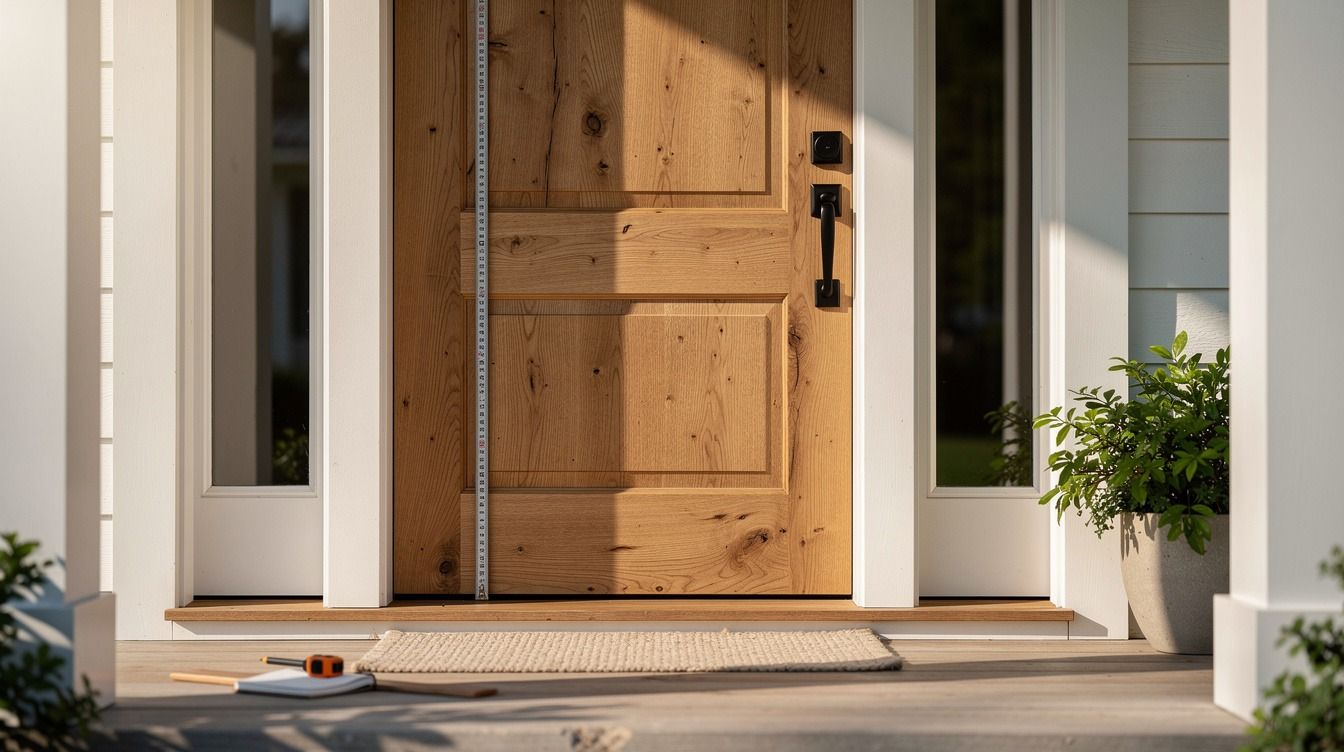
by Wooden front door ideas work best when you choose the door, hardware, light, and porch materials as one warm composition. I learned that after pairing a reclaimed weathered teak slab with a disconnected metal finish and regretting it every morning. This guide walks you through 18 practical steps, from measuring the opening to protecting the finish. Your entrance will feel intentional, not staged.
- Measure the Opening Before You Choose the Door
- Choose a Wood Species With Visible Grain
- Apply the Two-Wood Rule
- Match the Door to the Architecture
- Decide Whether to Stain or Paint
- Sand and Seal Every Exposed Edge
- Build the Three-Height Light Stack
- Swap Hardware for a Stronger Hand Feel
- Measure the Opening Before You Choose the Door
- Choose a Wood Species With Visible Grain
- Apply the Two-Wood Rule
- Match the Door to the Architecture
- Decide Whether to Stain or Paint
- Sand and Seal Every Exposed Edge
- Build the Three-Height Light Stack
- Swap Hardware for a Stronger Hand Feel
- Frame the Entrance With Simple Trim
- Hang One Oversized Wreath
- Anchor the Threshold With a Textured Mat
- Add Greenery That Echoes the Grain
- Paint the Surround for Quiet Contrast
- Choose Contrast Over Perfect Matching
- Plan the Budget Before You Buy Pieces
- Protect the Door From Weather
- Style a Small Porch Without Crowding It
- Finish the Entrance With a Night Check
1Measure the Opening Before You Choose the Door
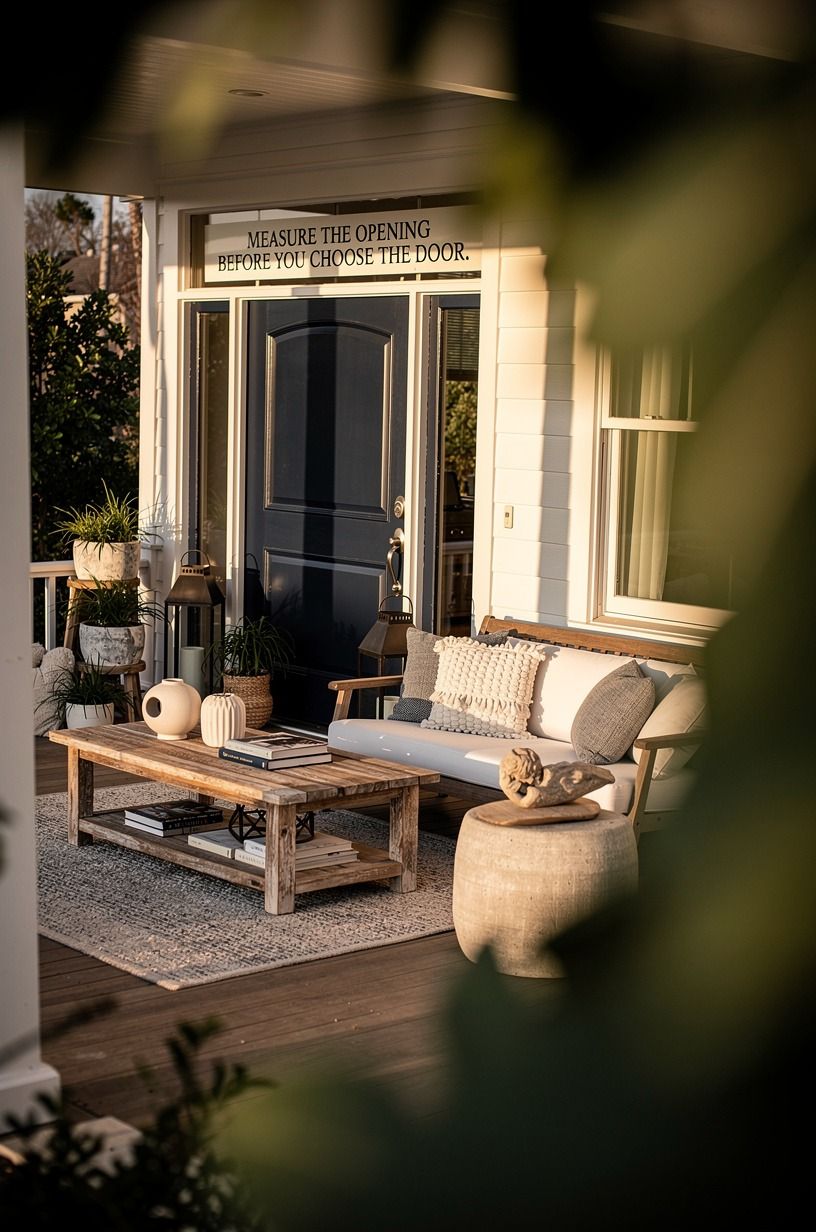
Start by measuring your existing opening at the top, middle, and bottom. Record the narrowest width, the height from threshold to header, and the wall depth around the frame. You’ll want those numbers before you browse wood exterior front doors, because a handsome reclaimed weathered teak slab won’t help if your jamb needs rebuilding.
Check the swing, hinge side, and threshold height too. Your door should clear the rug, storm door, and porch step without scraping.
I once chose a thick teak door that left barely 1/4 inch beneath the threshold, and winter swelling made it drag. Write everything down. A calm, inviting entrance begins with boring accuracy.
2Choose a Wood Species With Visible Grain
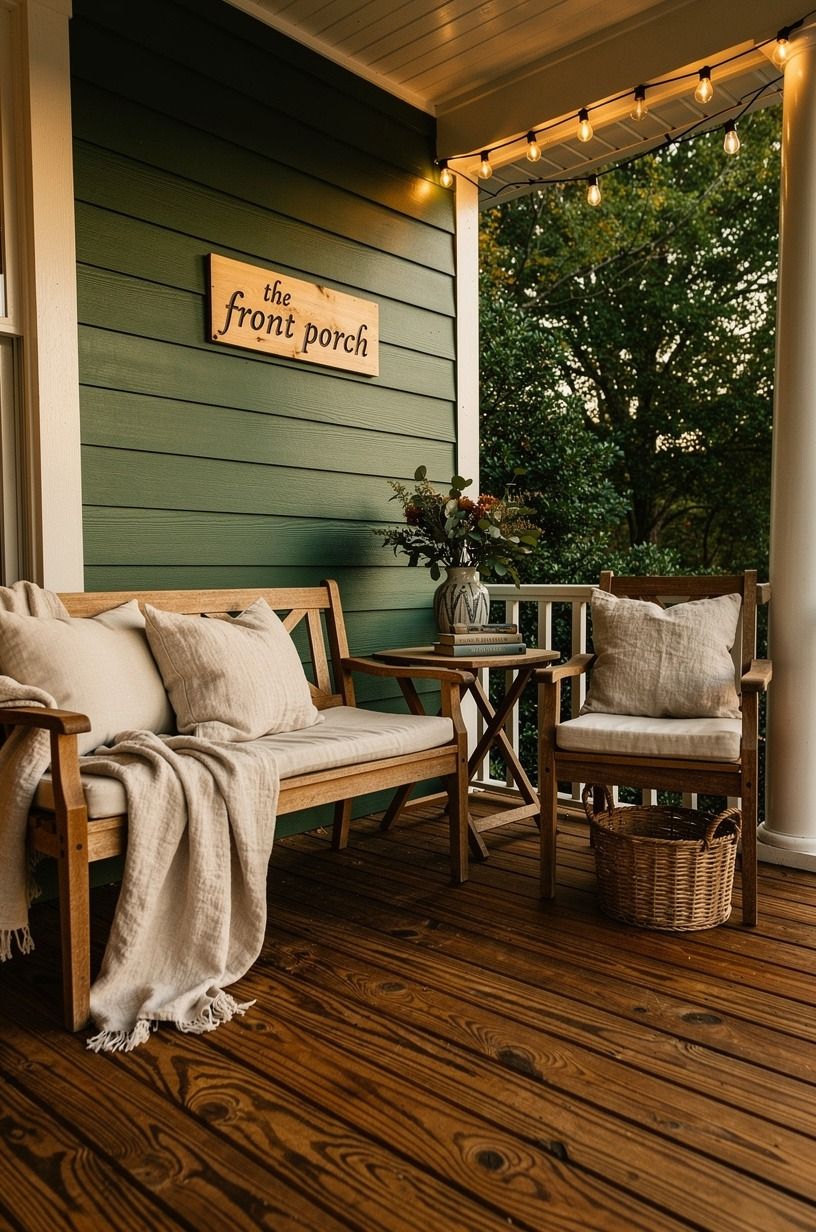
Choose the species according to your weather exposure and the mood you want. White oak has a quiet, refined grain and suits a modern entrance, while special walnut brings darker, earthy warmth. Cedar reads more rustic and aromatic, but you’ll need to accept its softer surface and quicker visual weathering.
Hold finish samples outside, not under a showroom lamp. Your porch light, siding, and afternoon sun will change the color. Washed Belgian linen in emerald, gold, and cream can soften the harder grain around the entrance.
If you’re drawn to a pale door, compare it with white front door ideas for crisp timeless curb appeal. I’d skip a very orange stain beside red brick because the undertones compete instead of settling into a welcoming rhythm.
3Apply the Two-Wood Rule
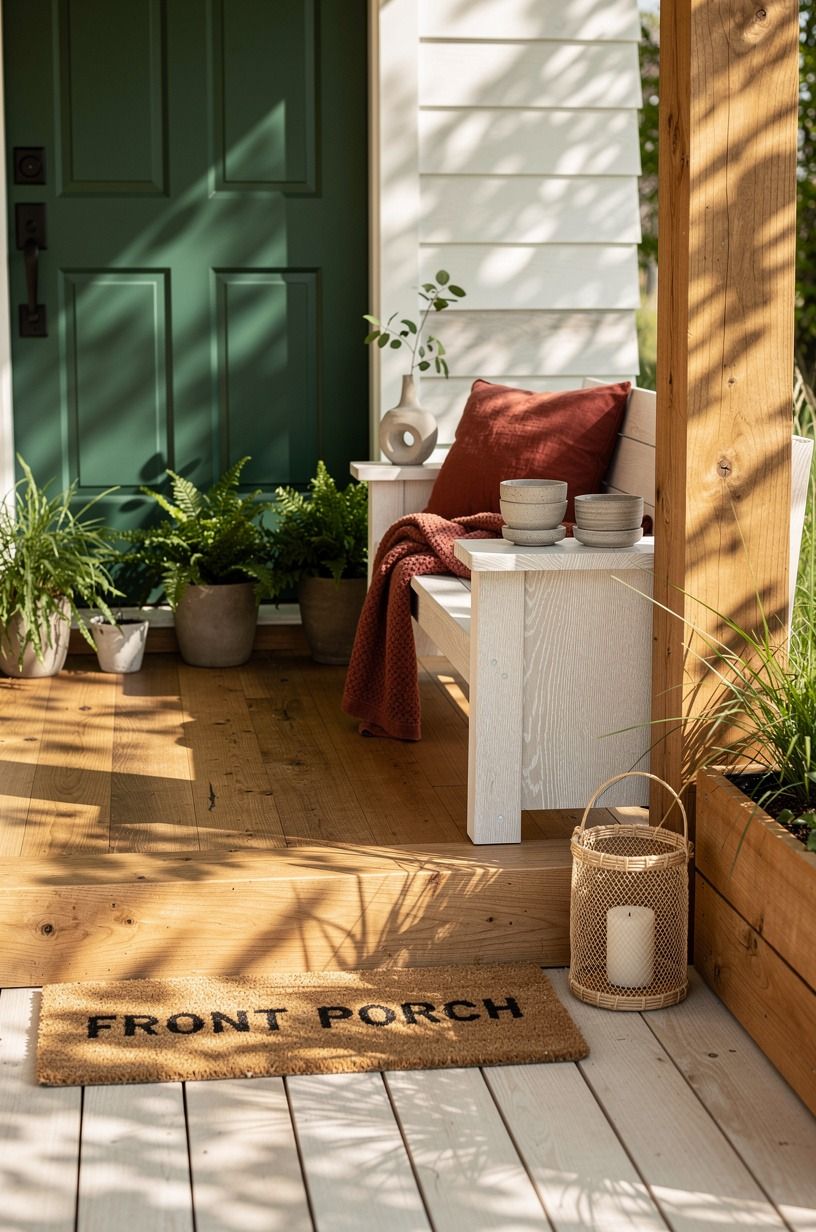
Use the Two-Wood Rule: let cerused white oak and one natural-oak note relate, then use forest green and rust as contrast while every other wood tone steps back.
4Match the Door to the Architecture
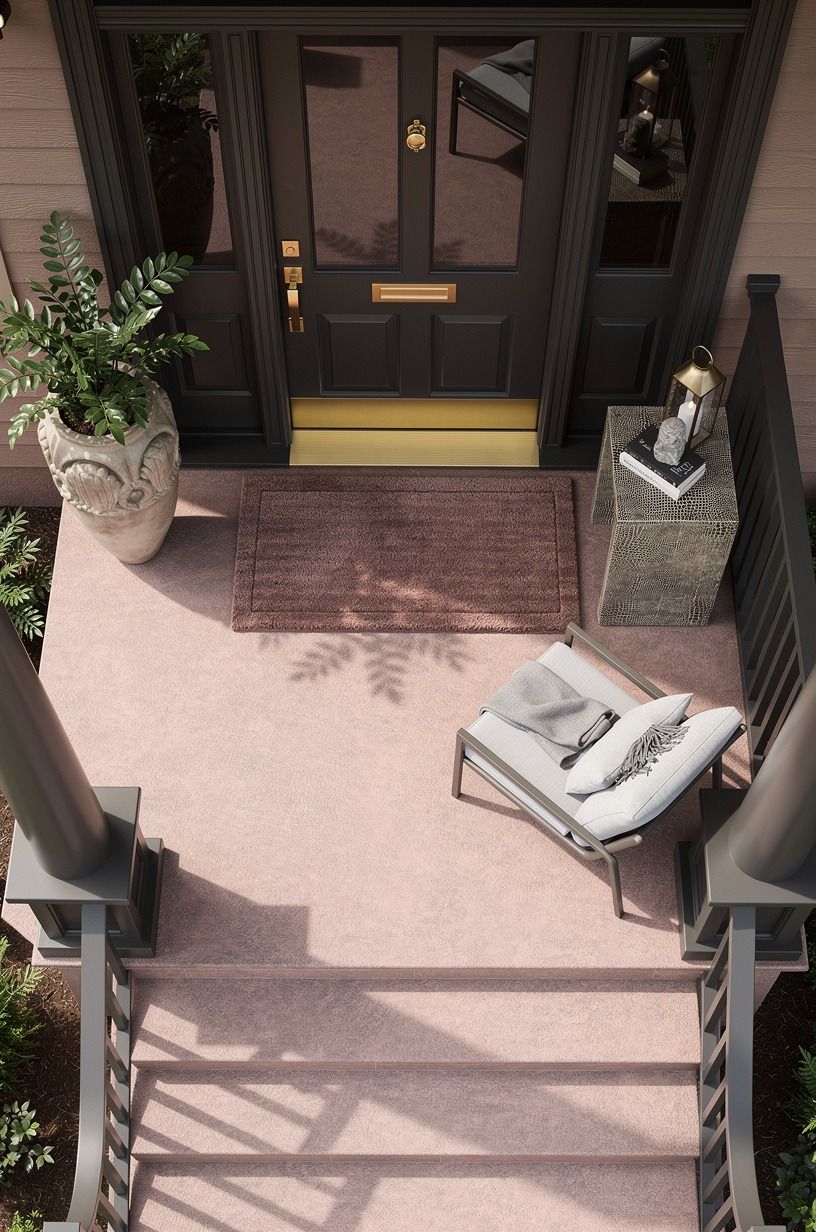
Match the profile to your home before you chase a trend. A three-panel door suits a traditional façade, while a flat slab with narrow vertical glass feels modern and quietly bold. If your house has low rooflines, a tall wood exterior front door can add useful vertical emphasis without making the porch feel busy.
Look closely at your window muntins, siding lines, and porch columns. Your entrance should answer those shapes.
For a sharper façade, compare the proportions with modern front door ideas for sleek curb appeal. I’d avoid ornate carving on a simple ranch home; restrained shagreen accents with dusty rose, charcoal, and brass will feel more rooted.
5Decide Whether to Stain or Paint
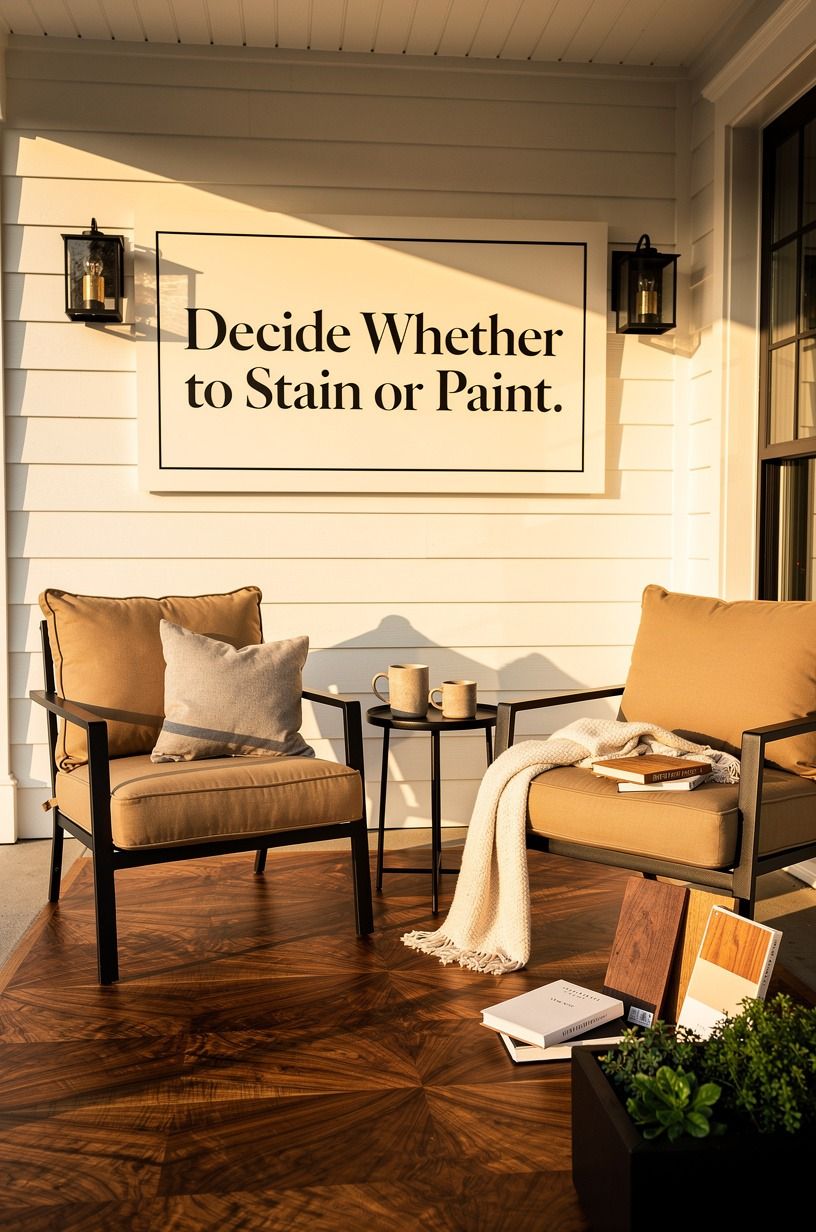
Should you stain or paint your wooden front door? Stain wins when the grain is the feature, while paint wins when you need a stronger color block or easier visual contrast. Farrow & Ball Pointing No.2003 can make book-matched walnut feel warm and light, but it will hide much of the wood character.
If you want a softer camel neutral, test Benjamin Moore Chestertown Buff HC-9 on a separate board. You’ll see the undertone change from morning to evening.
I’d choose stain for a beautiful clear-grain slab and paint for a knotty or mismatched door. Your decision should solve the door’s visual weakness, not follow a color chart.
6Sand and Seal Every Exposed Edge
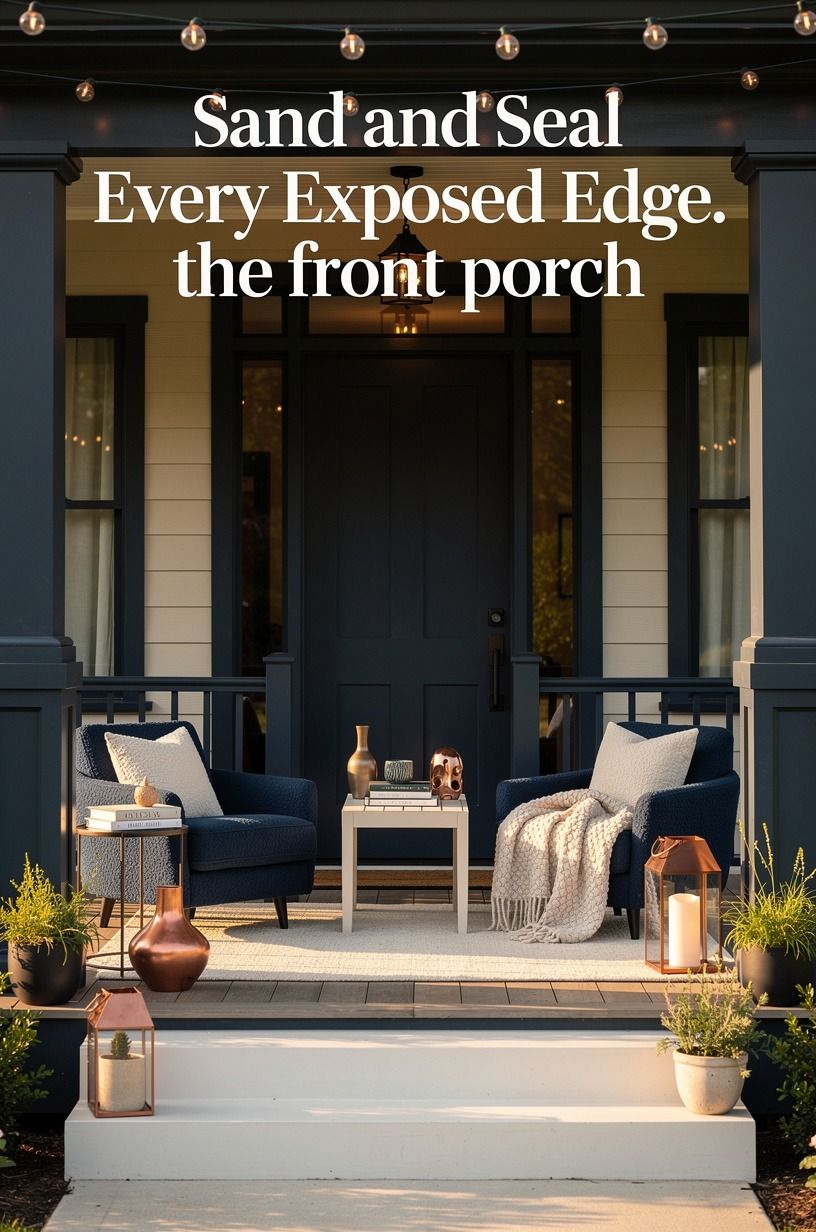
Prepare the door before adding style. Sand raised grain, especially around the lower rail, hinge edge, and handle bore.
Then seal every exposed surface with a finish rated for exterior use. The bottom edge matters more than people expect because rainwater and damp porch air collect there.
Use a marine-grade clear finish if you want to keep the grain visible, and inspect it each spring. You don’t need a glossy surface; satin usually looks more natural and hides fingerprints.
I skipped the bottom edge once, and the finish failed there first. For a related warm-material reference, browse limestone bathroom ideas for soft warm natural stone, then keep the entry palette around midnight blue, copper, and ivory.
7Build the Three-Height Light Stack
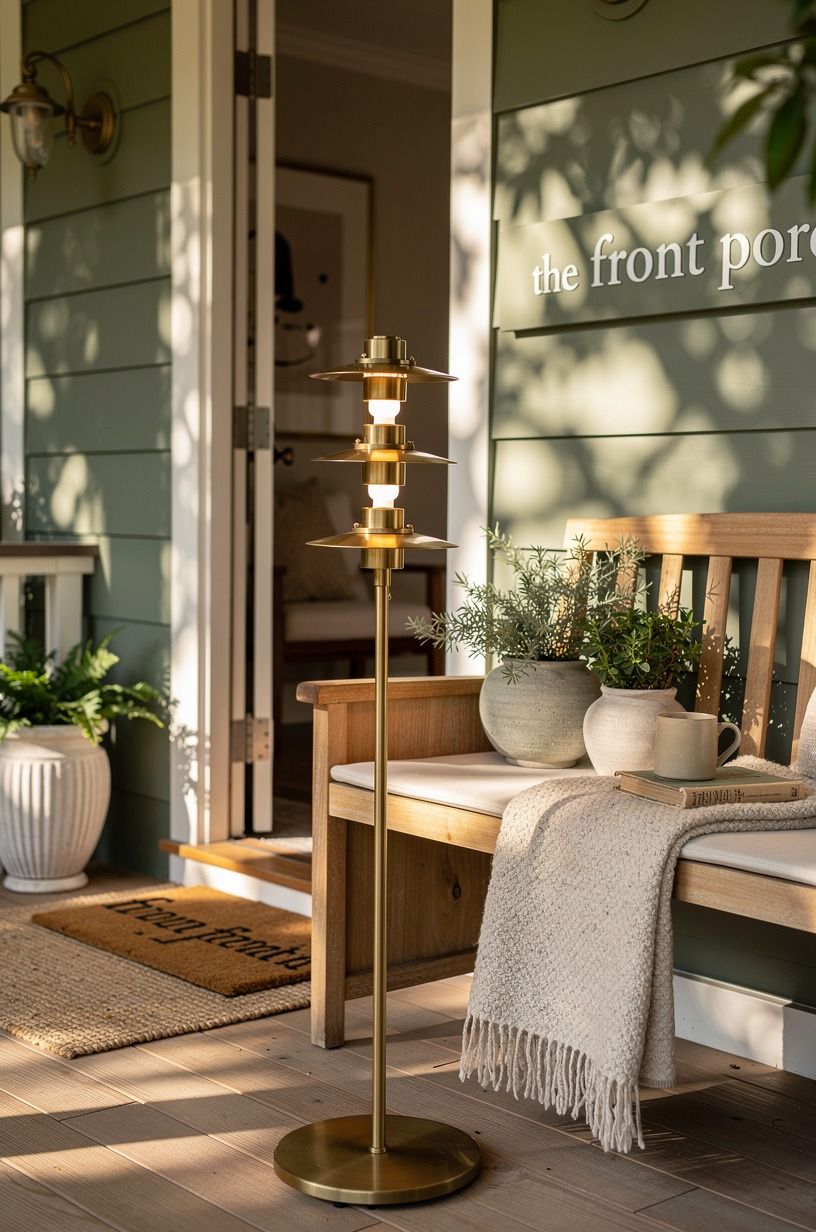
Create the Three-Height Light Stack with a light near eye level, a lower glow near the threshold, and a small point of illumination beside the house number. Your porch will feel more comforting when the light doesn’t come from one harsh fixture above the door.
Choose unlacquered brass developing patina to support sage green, warm cream, and natural wood. A warm bulb keeps the wood soft; blue-white light can make it look gray.
And if you’re choosing between one oversized lantern and several small sources, I’d choose the layered approach. Your eye moves naturally from the handle to the mat to the steps, which makes the entrance feel settled.
8Swap Hardware for a Stronger Hand Feel
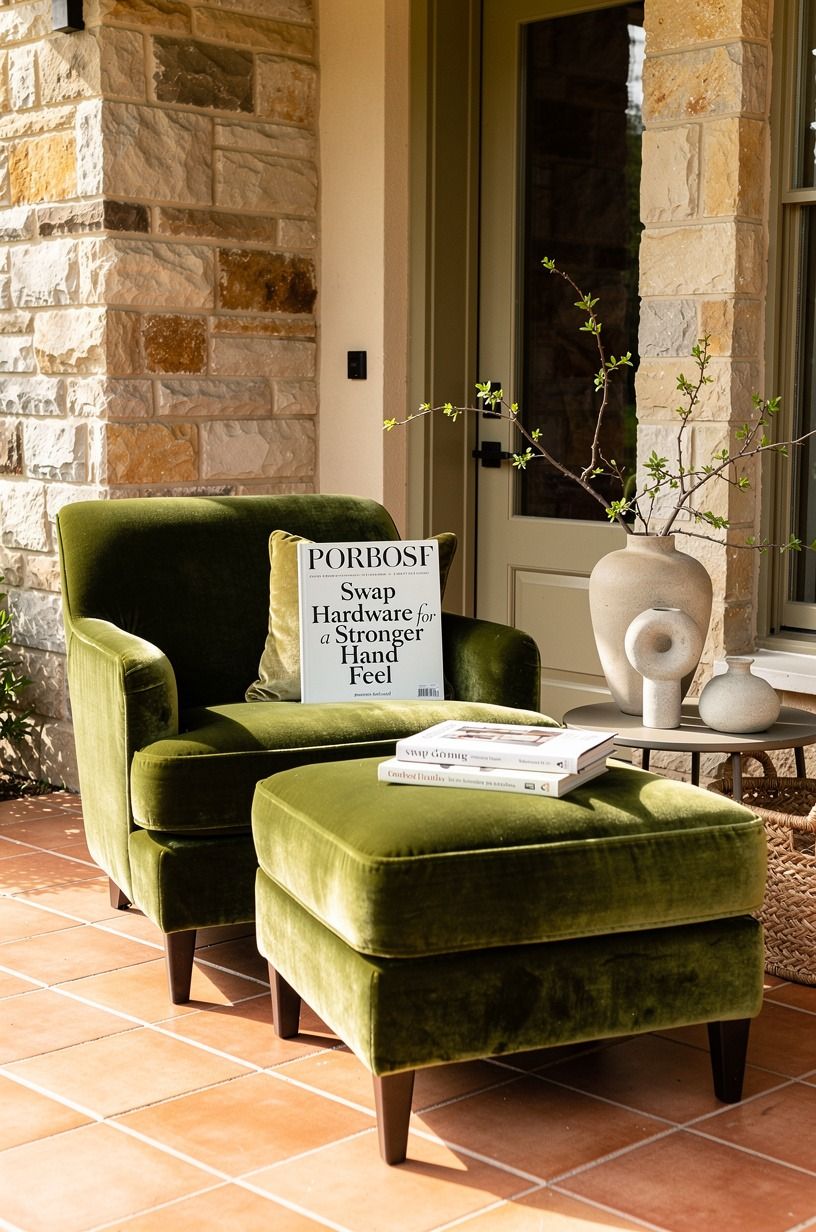
Replace weak hardware before adding decorative pieces. A substantial lever or pull gives your door a tactile moment, especially beside deep-pile mohair velvet in terracotta, stone, and olive tones. You’ll notice the difference every time you leave with full hands and need one quick push.
Keep the backplate proportionate to the door rails. A narrow vertical pull can emphasize height, while a round knob feels more traditional.
Your hardware doesn’t need to match the porch light perfectly, but the undertones should agree. I’d skip bright chrome against terracotta and olive because the contrast feels clinical. For an alternative color direction, see yellow front door ideas for a sunny welcome.
9Frame the Entrance With Simple Trim
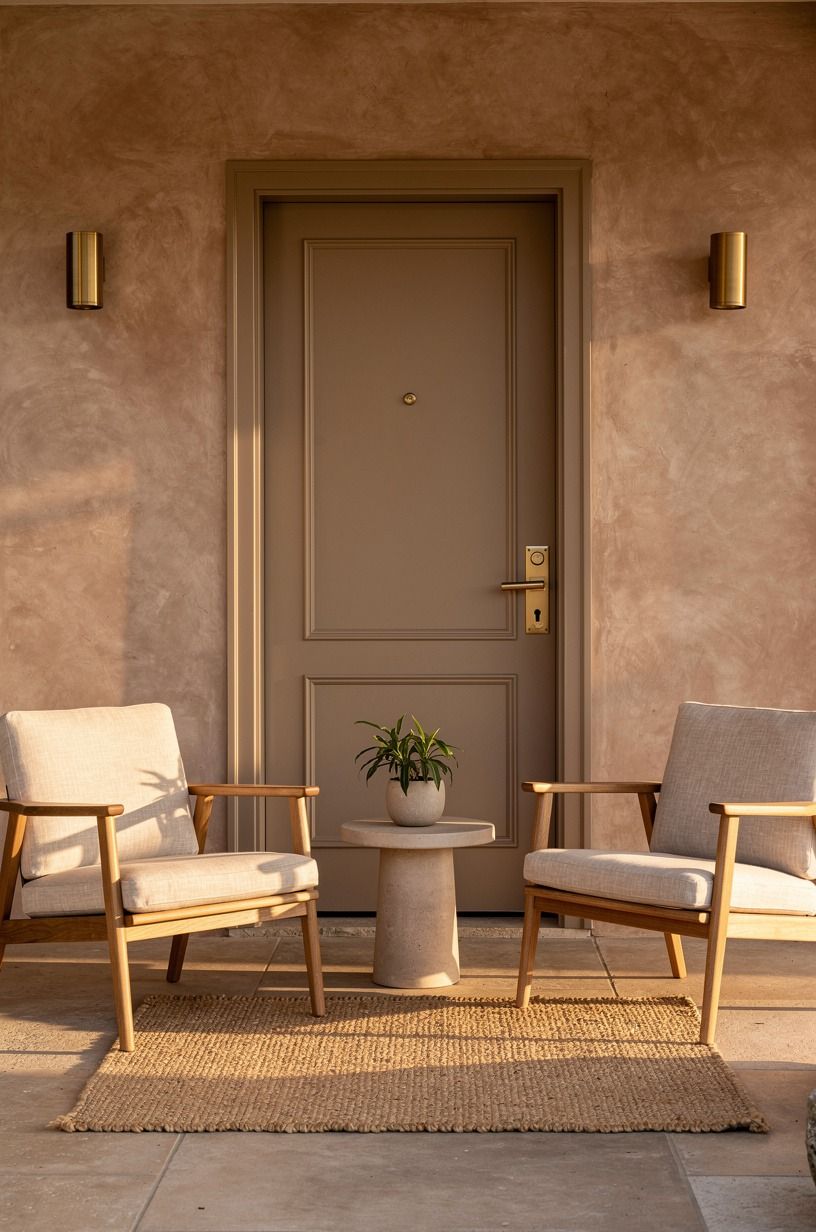
Frame the door with trim that gives the wood room to breathe. Hand-applied Venetian plaster around the opening can soften the line without adding ornament.
10Hang One Oversized Wreath
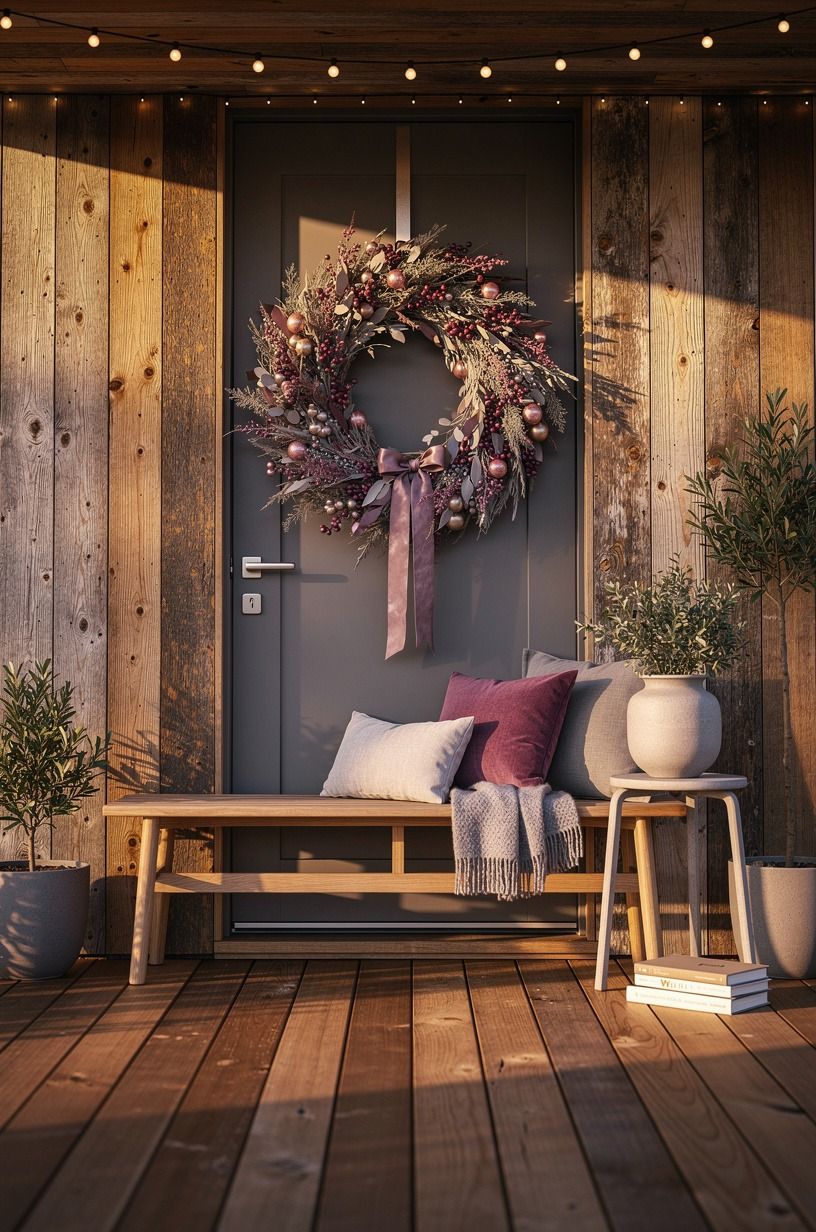
Hang one oversized wreath rather than several small decorations. A ring of dried foliage with plum and grey tones, finished by one rose-gold detail, gives a reclaimed weathered teak door organic movement through several seasons. Keep its diameter large enough to read from the sidewalk, but leave your hardware visible so the entrance remains practical.
Use a removable over-door hanger if you’re renting, or a centered hook for a permanent installation. You’ll want the wreath high enough that it doesn’t hit your shoulder when the door opens.
I’d skip shiny plastic greenery because it catches porch light in a distracting way. For seasonal inspiration, DIY Halloween front door wreaths that survive wind and rain offer useful weather-minded ideas.
11Anchor the Threshold With a Textured Mat
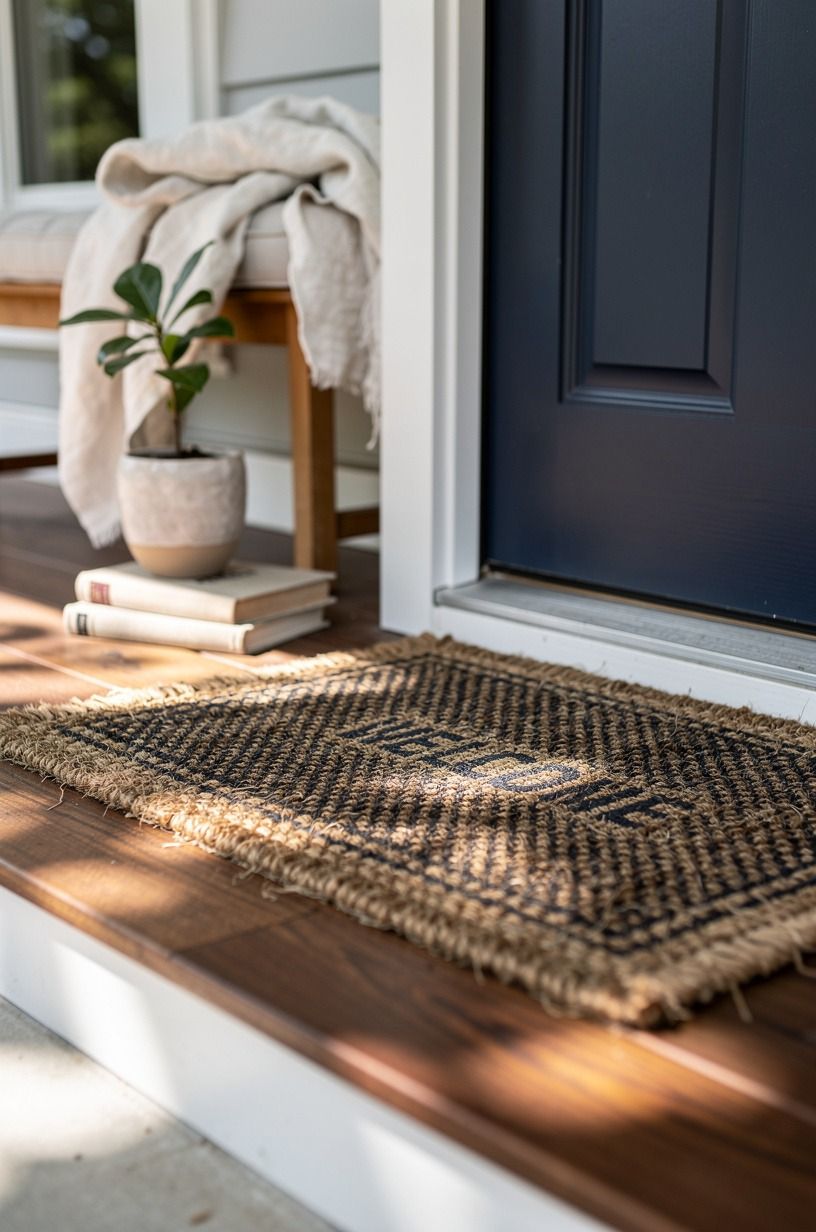
Anchor the threshold with a mat that has visual weight and a practical weave. Choose a navy-and-white woven texture with the soft look of washed Belgian linen, then repeat a walnut tone nearby. Your mat should sit completely inside the swing path, with no curled corners waiting to catch a shoe.
Choose a simple stripe or border rather than a greeting in oversized letters. But if your door is very plain, the navy can create the contrast it needs.
I’d use white edging near walnut and keep the surrounding wood warm. And measure first.
A mat that’s too short makes your entrance feel unfinished, even when the door itself is lovely.
12Add Greenery That Echoes the Grain
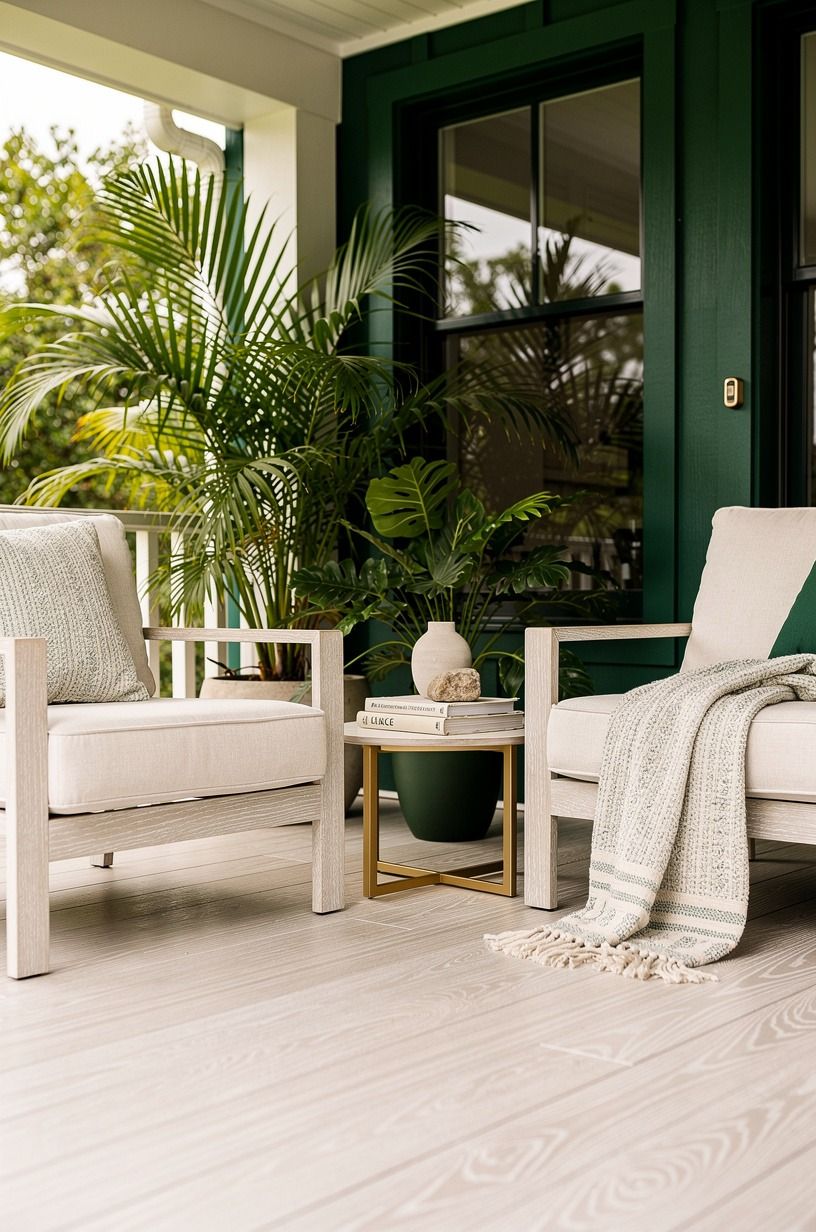
Add plants with leaf shapes that support the door instead of covering it. A tall cerused white oak planter with emerald foliage and a small gold-toned accent gives an elegant feeling, while cream-colored foliage can make a shaded porch feel softer. Your plant choice should follow the light, wind, and watering reality of the entrance.
Place one taller planter on the hinge side and keep the handle side clear. You’ll create asymmetry without blocking movement.
If your porch is narrow, choose a columnar planter rather than a wide bowl. Why force yourself to squeeze past decoration every morning?
I’d rather see one healthy plant than three neglected pots. The door needs breathing room to look warm and welcoming.
13Paint the Surround for Quiet Contrast
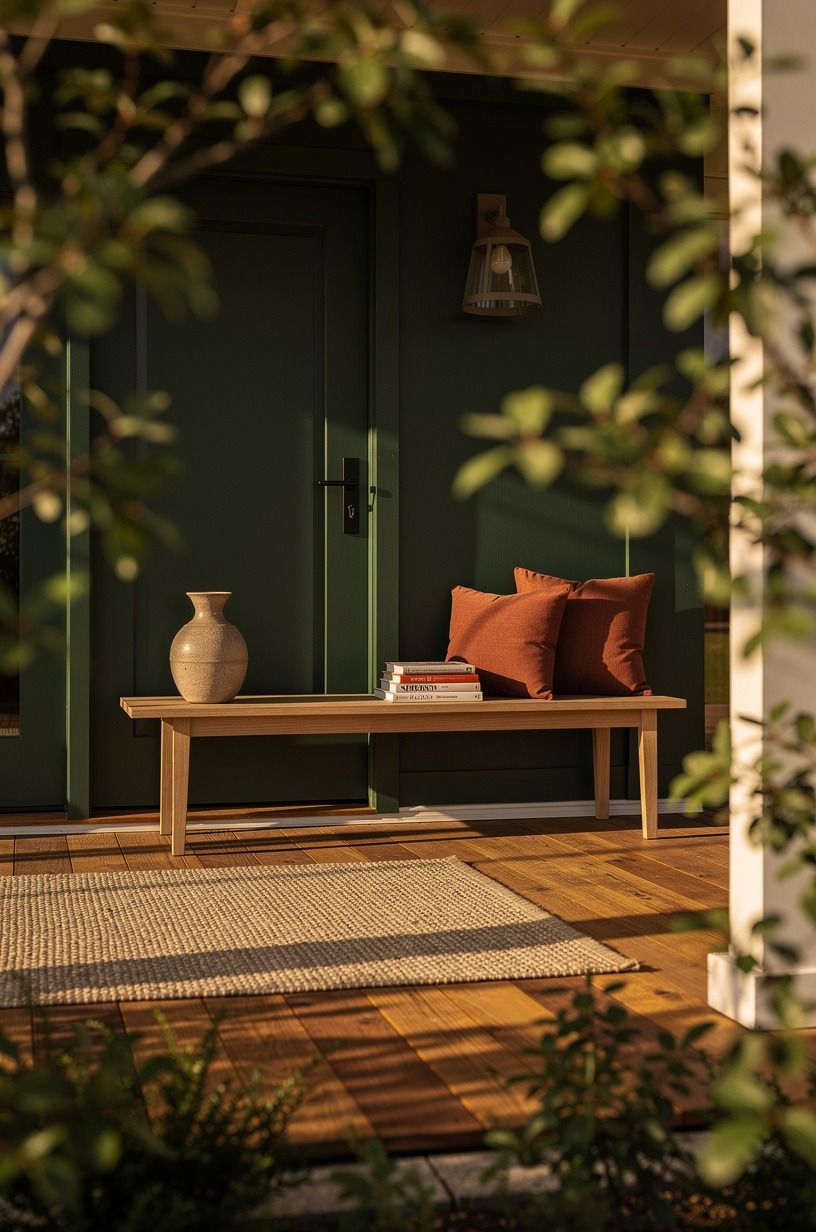
Paint the surround when the door itself needs a stronger boundary. Farrow & Ball Studio Green No.93 can make natural oak feel richer and calmer, while Benjamin Moore Chestertown Buff HC-9 brings a rust-leaning warmth beside shagreen accents. Test the color beside your actual siding because outdoor light can intensify green and blue undertones.
Use the surround to connect the door with the rest of your home. Your porch will look more sophisticated when the paint repeats one small detail from the siding, shutters, or planters.
I’d avoid a stark black surround on a tiny entry unless you want a dramatic effect. It can make the opening feel narrower and more formal than you intended.
14Choose Contrast Over Perfect Matching
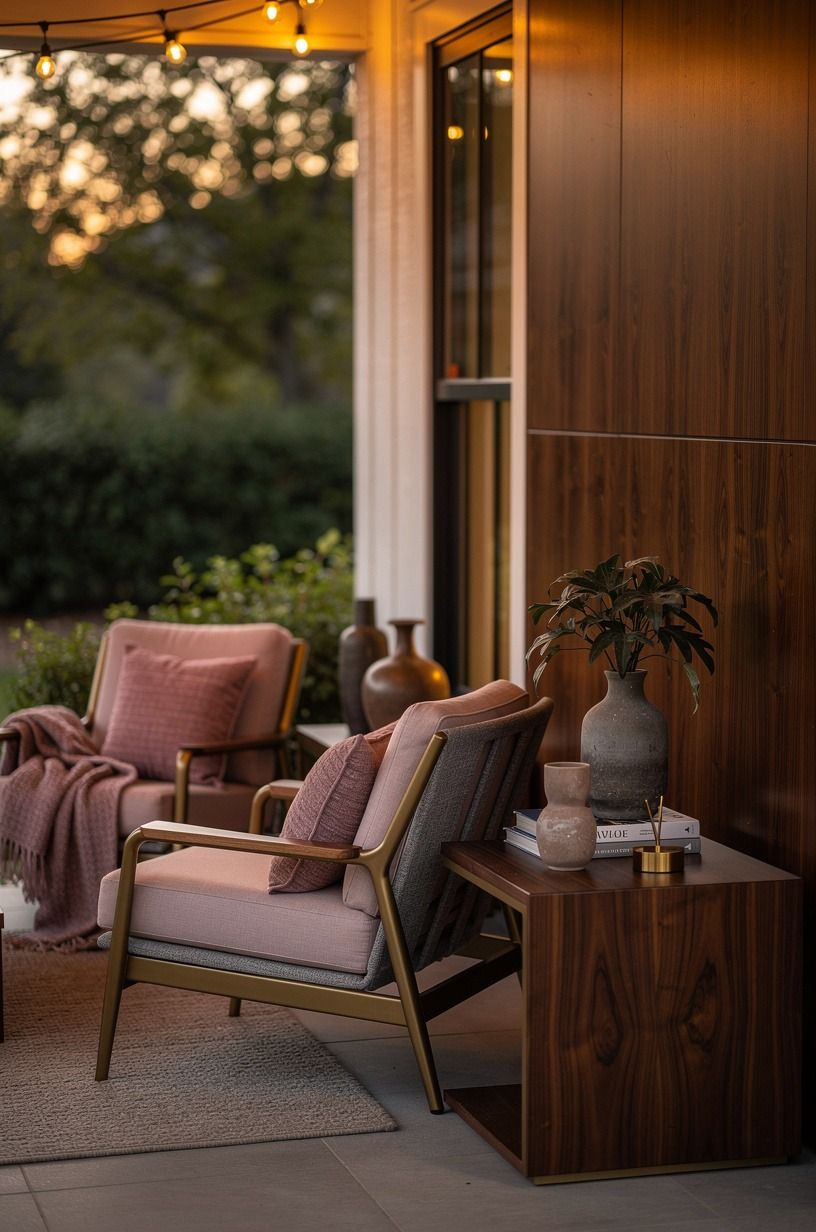
Choose contrast over perfect matching when your façade feels flat. Book-matched walnut, dusty rose, charcoal, and one brass detail can create depth without making every finish agree.
15Plan the Budget Before You Buy Pieces
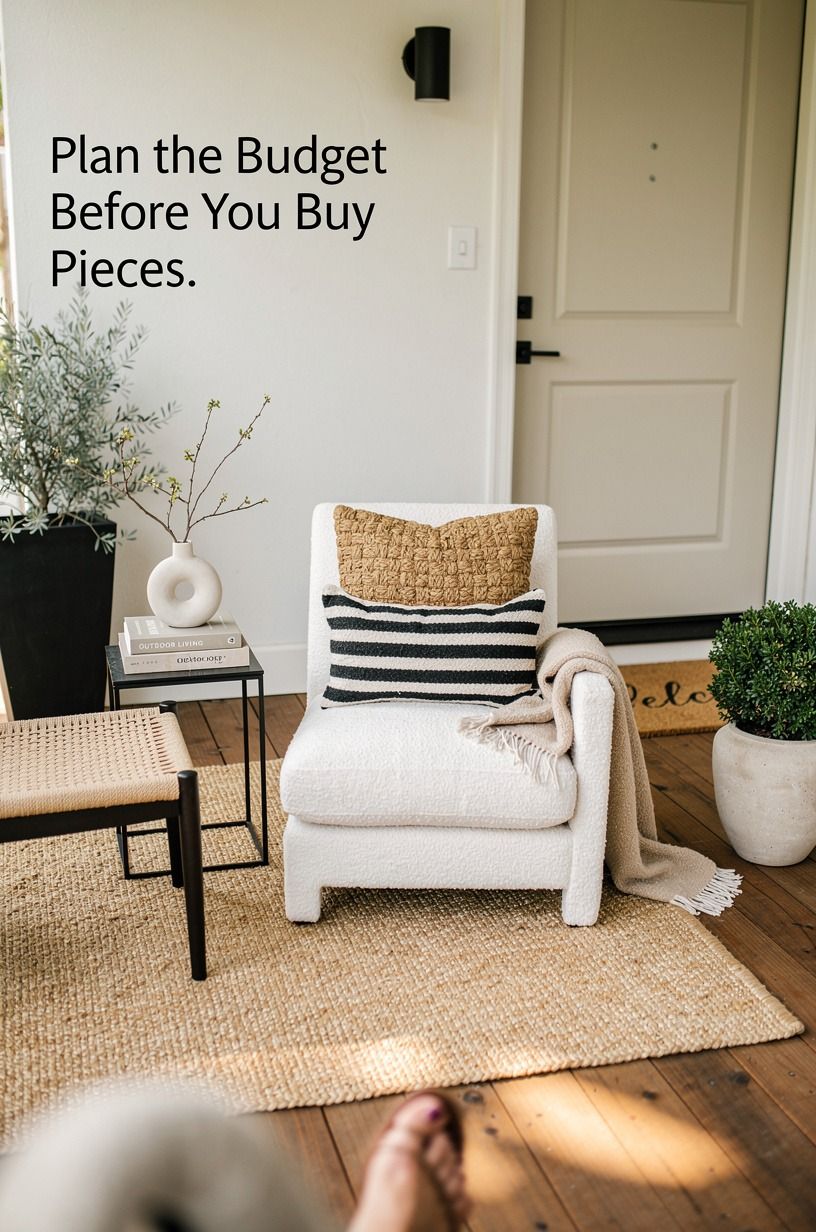
Plan your budget in tiers, then decide which part deserves your attention first. A door refresh might involve only cleaning, hardware, paint, and a mat, while a full entry rebuild can include millwork and a new threshold. You’ll make calmer choices when your spending has a visible order.
The following typical US figures are useful benchmarks for the broader living-room materials and furnishings that often connect to an entry redesign, especially an organic-bouclé seat in warm white, camel, or black. They’ll help you judge where a small styling project sits beside larger home investments.
For a second reference, these material ranges show how quickly quality surfaces can change the budget:
16Protect the Door From Weather
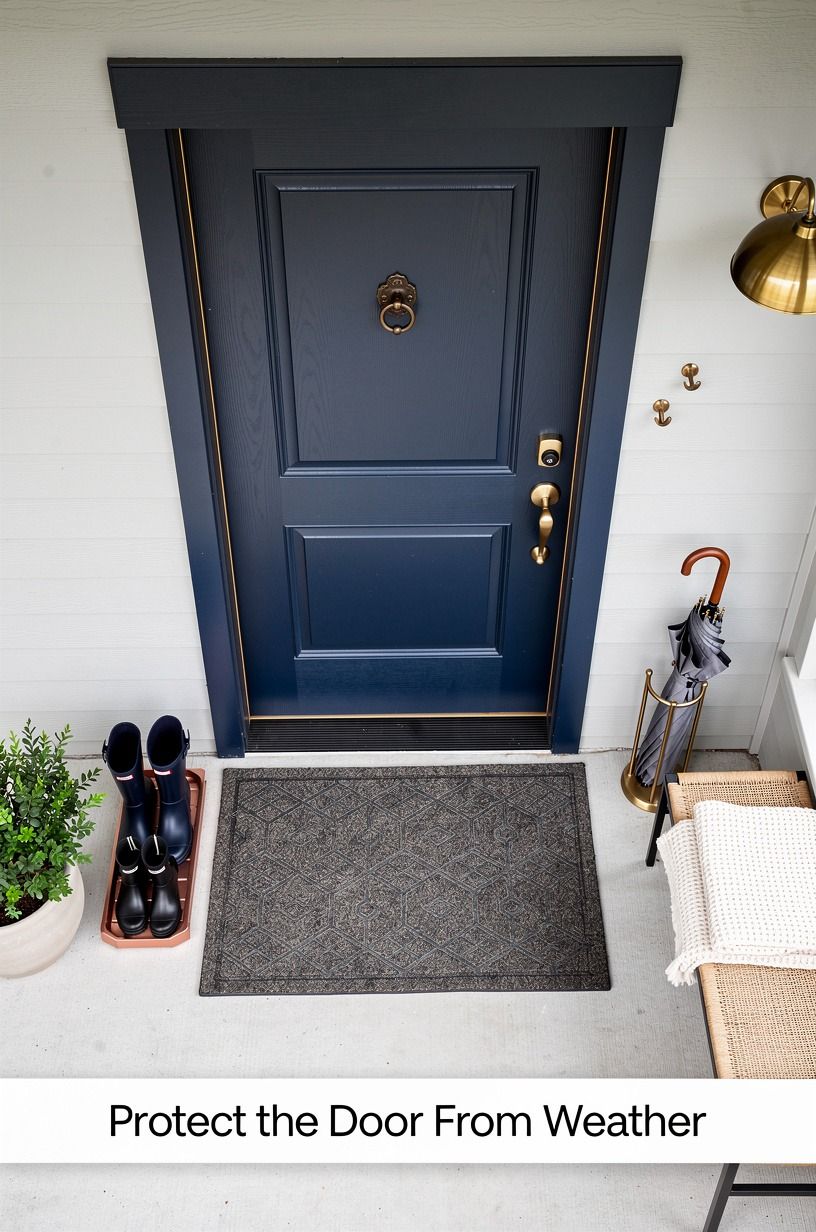
Protect the finish before the first wet season, especially when midnight blue, copper, ivory, and unlacquered brass developing patina are doing the visual work.
17Style a Small Porch Without Crowding It
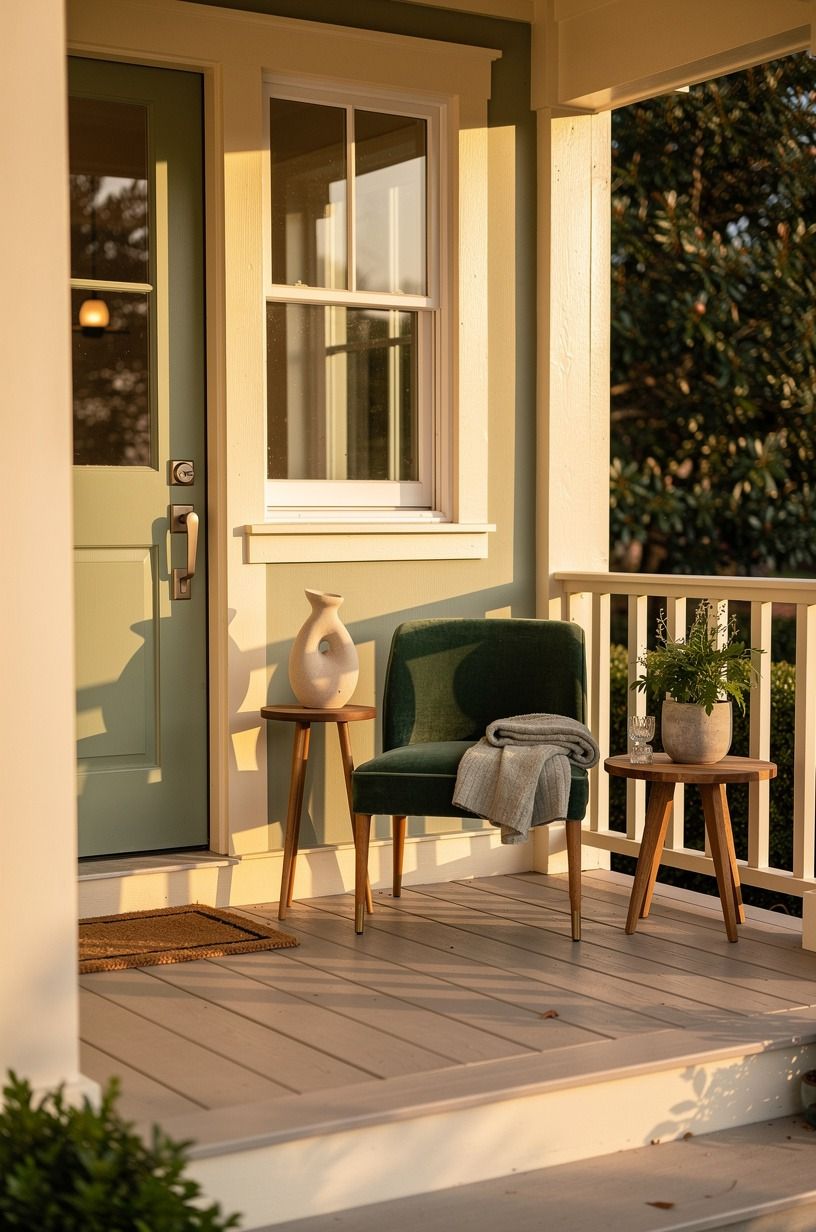
Style a small porch with one vertical element, one soft layer, and one useful light. A narrow IKEA KALLAX birch-effect unit won’t belong outside, but the same restrained idea can become a slim natural-wood bench with a deep-pile mohair velvet cushion in sage green under cover. Your goal is an airy arrival, not a storage pile.
Keep the clear walking path generous and place plants at the edges. A 9x12 rug belongs in a large room, not a shallow porch, so choose a mat that fits the threshold without forcing the door inward.
But don’t leave every surface empty. A small brass number, a soft doormat, and one leafy plant can make your entry feel intimate and complete.
18Finish the Entrance With a Night Check
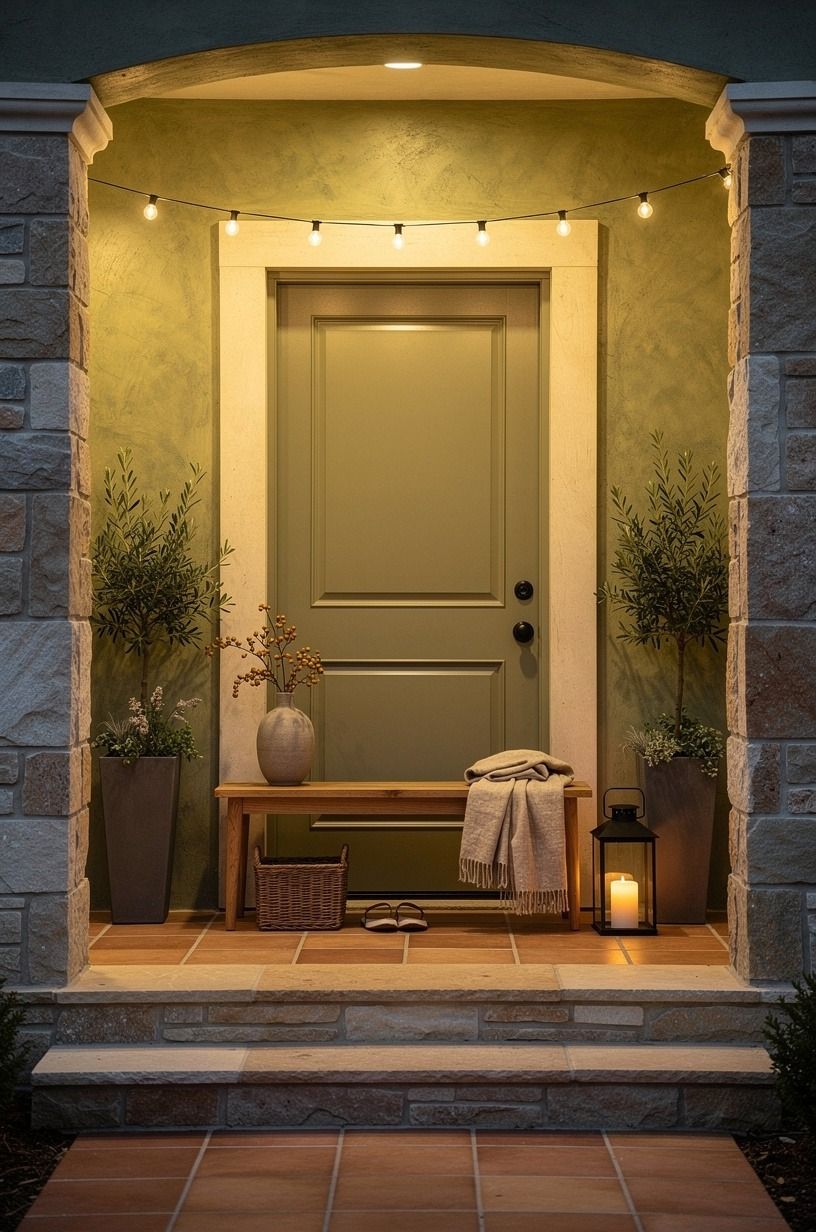
Finish by checking the door after sunset. Stand at the sidewalk, then at the path, and notice what your eye sees first. You’ll find weak spots that disappear in daylight, such as a dark handle against hand-applied Venetian plaster, a lost house number, or a light that throws glare across the grain.
Make one adjustment at a time. Lower the bulb brightness, shift the planter, or add a small reflective number rather than piling on more décor.
I’d choose a softly lit handle over another ornament every time. Your front door should feel peaceful when you arrive late, and that evening test tells you whether the design works after dark.
The Door I Would Choose After Living With Wood
I’ve changed my mind about wooden doors more than once. At first, I wanted the strongest grain and the darkest stain, something dramatic enough to announce itself from the curb. Then I lived with a walnut slab through wet mornings, muddy shoes, and the yellow porch light that comes on before sunrise.
The darker finish showed every water mark, and the heavy hardware felt cold in my hand.
What worked better was a quieter door with a visible grain, a satin finish, and one warm metal detail. It didn’t demand attention, but it made the entry feel more welcoming each time I came home. That distinction matters.
A front door isn’t a flat decoration; it’s the surface you touch when you’re carrying groceries, greeting friends, or trying to get inside during a storm.
I’d also spend more time on the threshold than on seasonal decoration. A good mat, clean seal, and comfortable light do more for the daily experience than another wreath ever will.
If your budget is limited, start there. You can add plants and color later, but a poorly sealed door keeps asking for attention.
The best choice depends on your house, your weather, and your patience for upkeep. Still, I’d rather see honest wood with a few marks than a flawless finish that feels disconnected from the people living behind it. Your entrance should age with you, not keep pretending it’s untouched.
The Questions I Get Asked Most
What is the best wooden front door idea for a small front porch?
A slim wood slab with vertical grain and one tall planter is the best choice for a small porch because it preserves clear walking space. Choose a reclaimed teak tone or pale oak, then pair it with an IKEA or Article-style narrow bench indoors rather than crowding the threshold.
Where can I buy wooden front door pieces on a budget?
Look at IKEA, Wayfair, and Target for mats, lighting, planters, and removable décor. Facebook Marketplace and thrift shops can also provide useful secondhand pieces. You’ll often find solid wood stools or brass hardware that need cleaning rather than replacement.
How much does a wooden front door makeover cost?
A styling-only makeover usually runs about $100 to $300, depending on what you already own. Free improvements include cleaning the slab, rearranging planters, checking the light, and removing clutter before you buy anything new.
Can I create a wooden front door look on a budget?
Yes, and you can start with three low-cost moves: clean and reseal the existing door, replace one weak hardware piece, and add a textured mat. Your entrance will feel warmer without a full renovation, especially when the wood grain is already in good condition.
Is a wooden front door worth it in a small space?
Yes, because a small entrance benefits from one strong natural material instead of many decorative objects. Visible grain adds depth without taking floor space. Keep your mat shallow, use one vertical plant, and choose a light that washes the wall rather than the whole porch.
Is a wooden front door a good idea for a rental?
Yes, if you use no-damage additions such as a removable wreath hook, a tension-mounted curtain inside the entry, and a freestanding planter. Your landlord’s rules still matter, so avoid drilling into the slab or frame unless you have written approval.
Where I’d Start First
If I had to pick one step, I’d start with sealing the door’s lower edge. Water damage begins where you don’t look, and every wreath or planter depends on a sound slab. Pin this guide for later, then check the threshold the next time it rains.