
 by
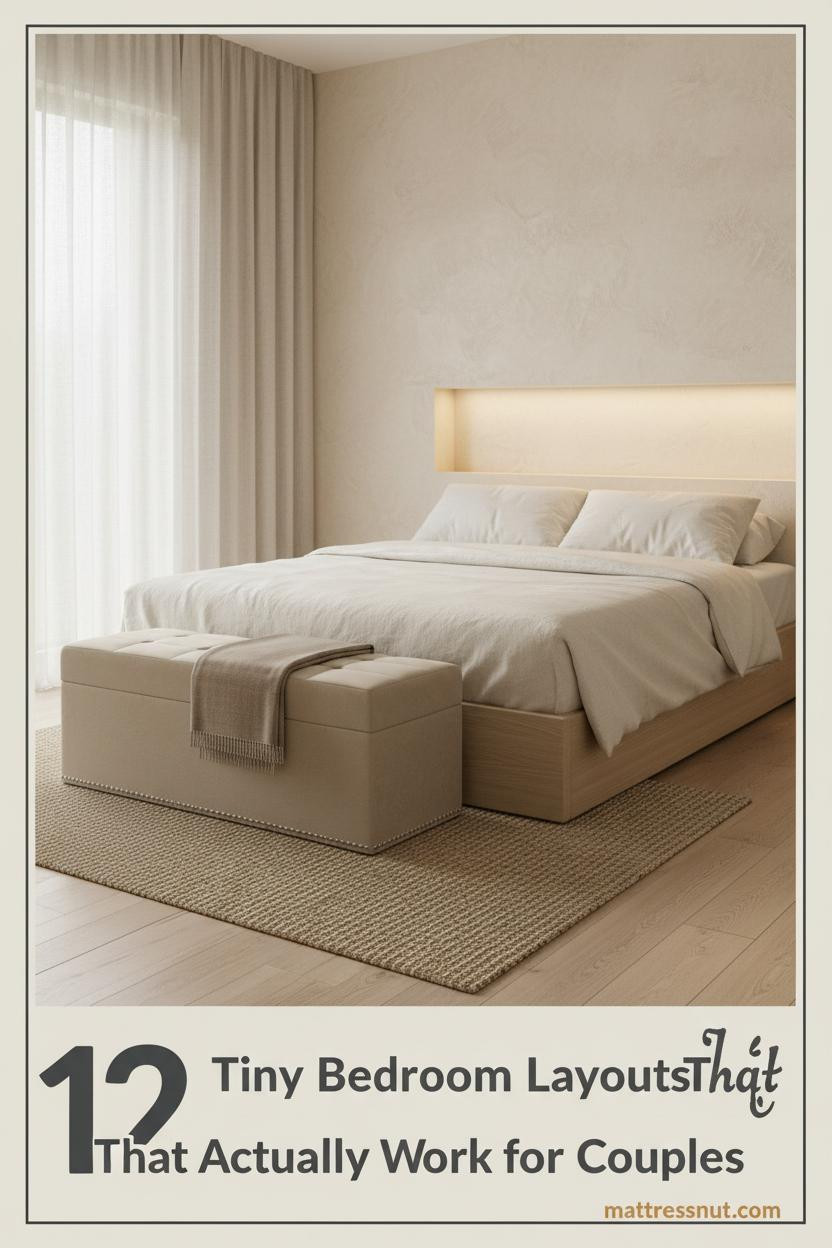
by Tiny bedroom ideas for couples almost always fail for the same reason: too much furniture, not enough floor. The fix isn’t a bigger room. It’s a smarter layout.
The Low-Profile Bed That Opens Up Your Whole Room
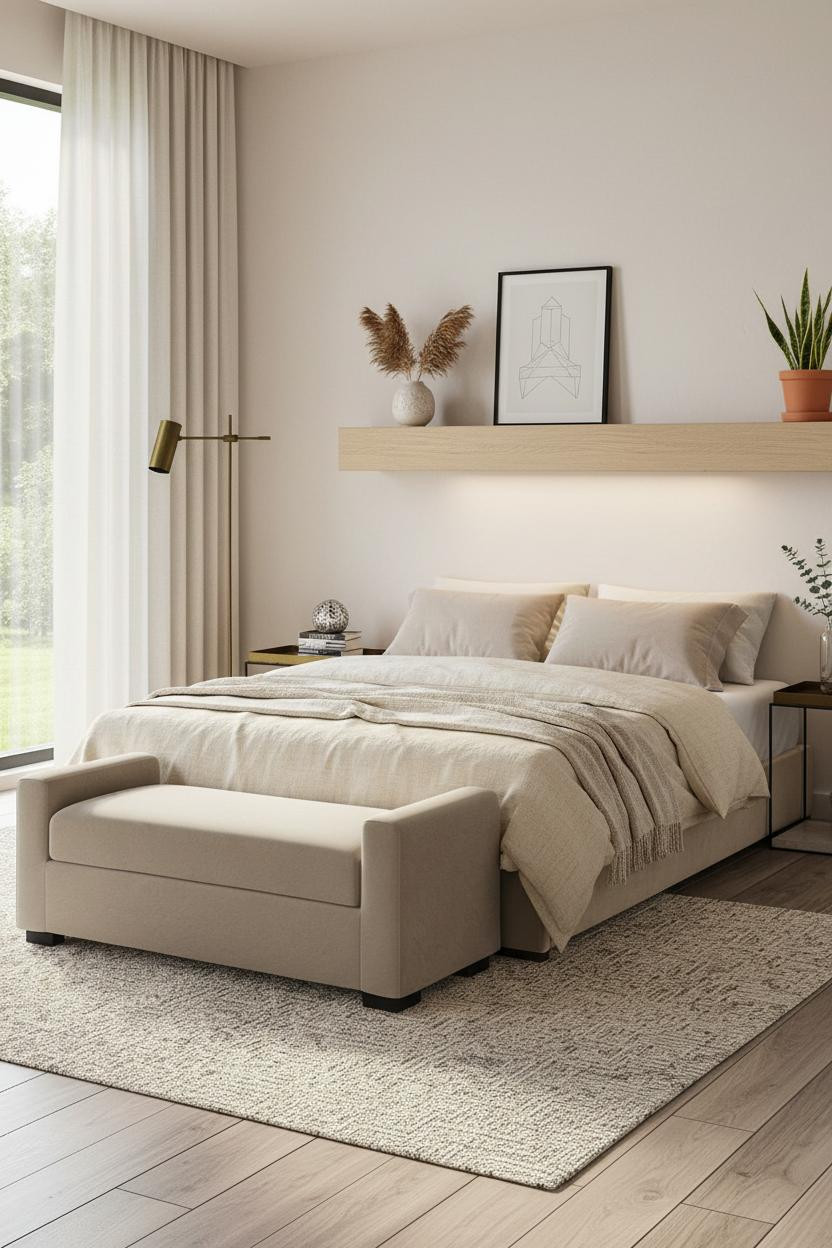

A low-profile platform bed does more for a tiny couple’s bedroom than any paint color or mirror trick ever will.
Why it works: The low oak frame keeps the sightline clear across the room, so the walls feel farther apart than they actually are, and the cream linen bedding keeps everything feeling light.
Steal this move: Add a cushioned bench at the foot instead of a second dresser. Same square footage, but now you have seating, a landing spot for clothes, and a visual anchor all in one.
When the Foot of the Bed Is Wasted Space
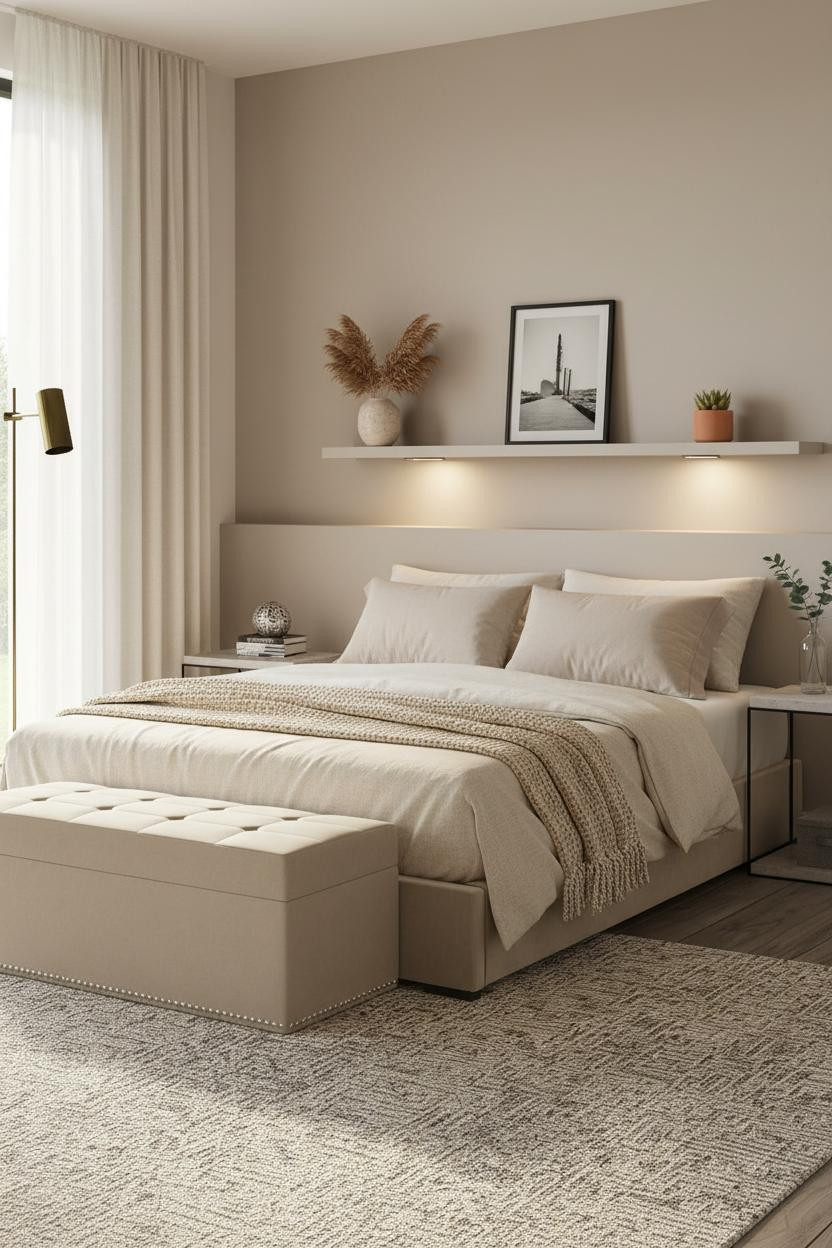
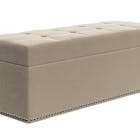
Most couples lose a full zone of their bedroom to a messy pile at the foot of the bed. That’s fixable.
What makes it work: A storage bench in warm natural oak sits flush with the footboard and handles blankets, off-season layers, and everything that would otherwise end up on the floor.
The smarter choice: Skip the blanket chest with a hinged lid (hard to access, takes up the same space) and go with a bench that does double duty as hidden storage and extra seating for two.
The Floating Shelf Trick That Makes Walls Feel Taller
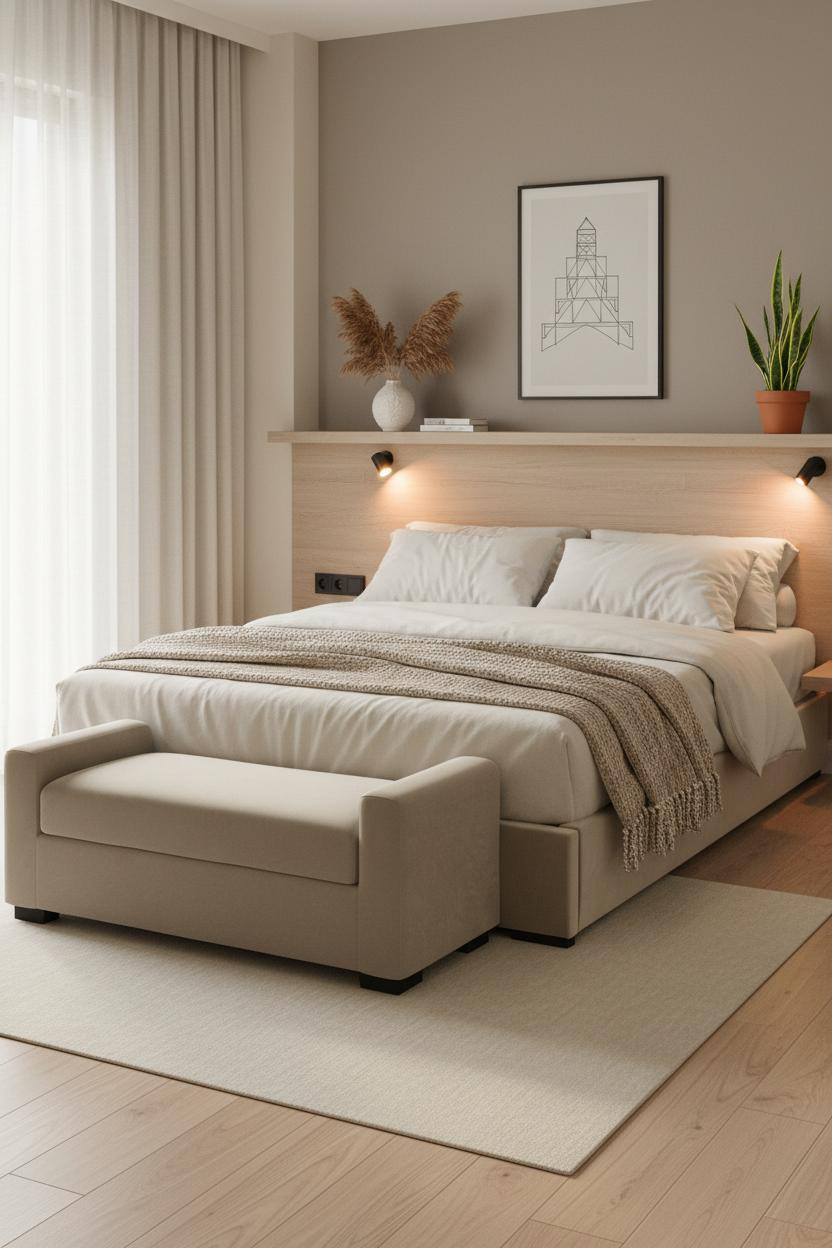
I keep coming back to this layout because it solves three problems at once: no bulky nightstands, no wasted wall space, and no cluttered headwall.
Why it feels expensive: A full-width floating oak shelf spanning the headwall with an integrated recessed reading lamp creates one clean horizontal line that draws the eye across the room rather than stopping it.
Pro move: Place a cushioned bench at the foot and you’ve defined two distinct zones in a tiny room. Sleeping zone, sitting zone. Done, without adding square footage.
Why Cream Walls Work Harder Than White In Small Rooms
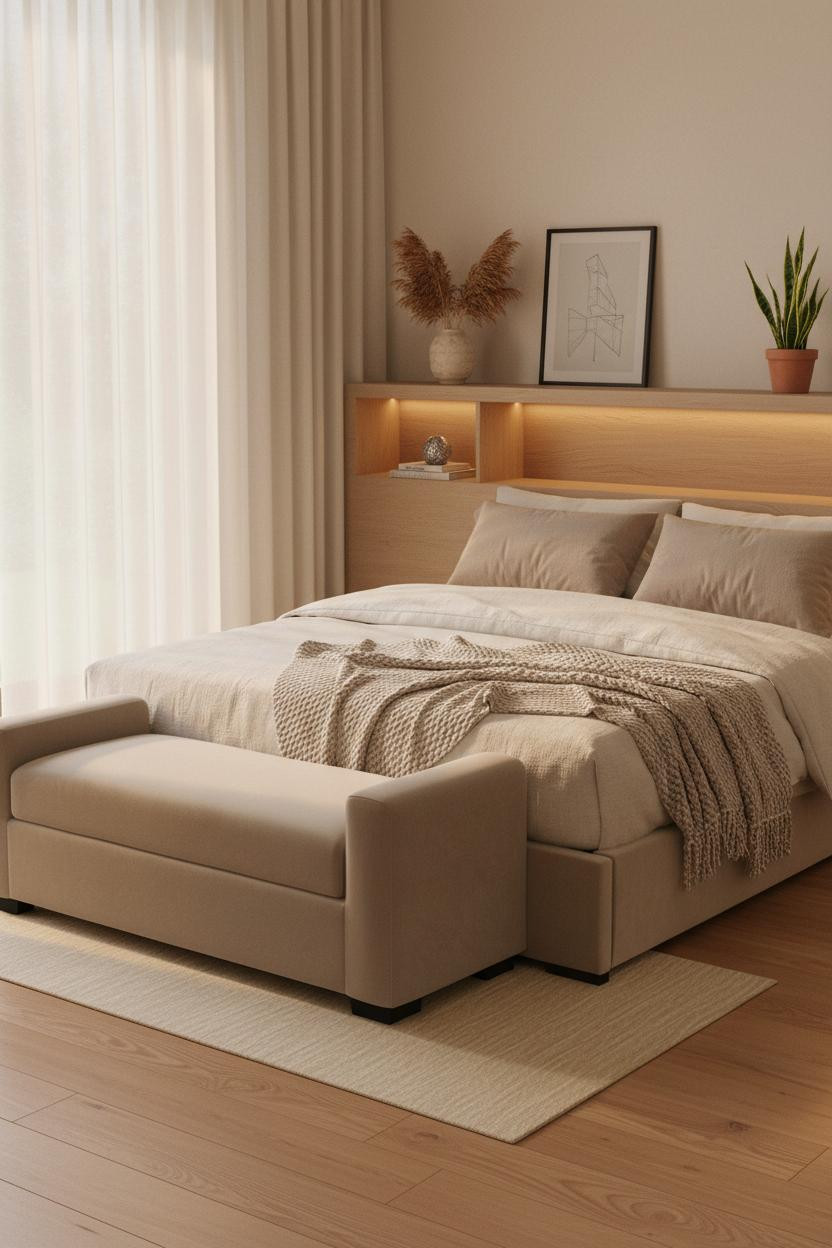
Bright white walls in a tiny bedroom can actually feel clinical and harsh, especially under afternoon light. Warm cream plaster is the better call.
Why the palette works: The warm cream plaster walls bounce light without the cold blue undertone that pure white picks up, and it makes the natural oak wood planks read richer rather than yellow.
Avoid this mistake: Don’t mix cool-toned whites with warm oak furniture. The contrast looks unintentional in a small room where every surface is visible at once.
Small Bedroom Layout: The Bench at the Foot Changes Everything
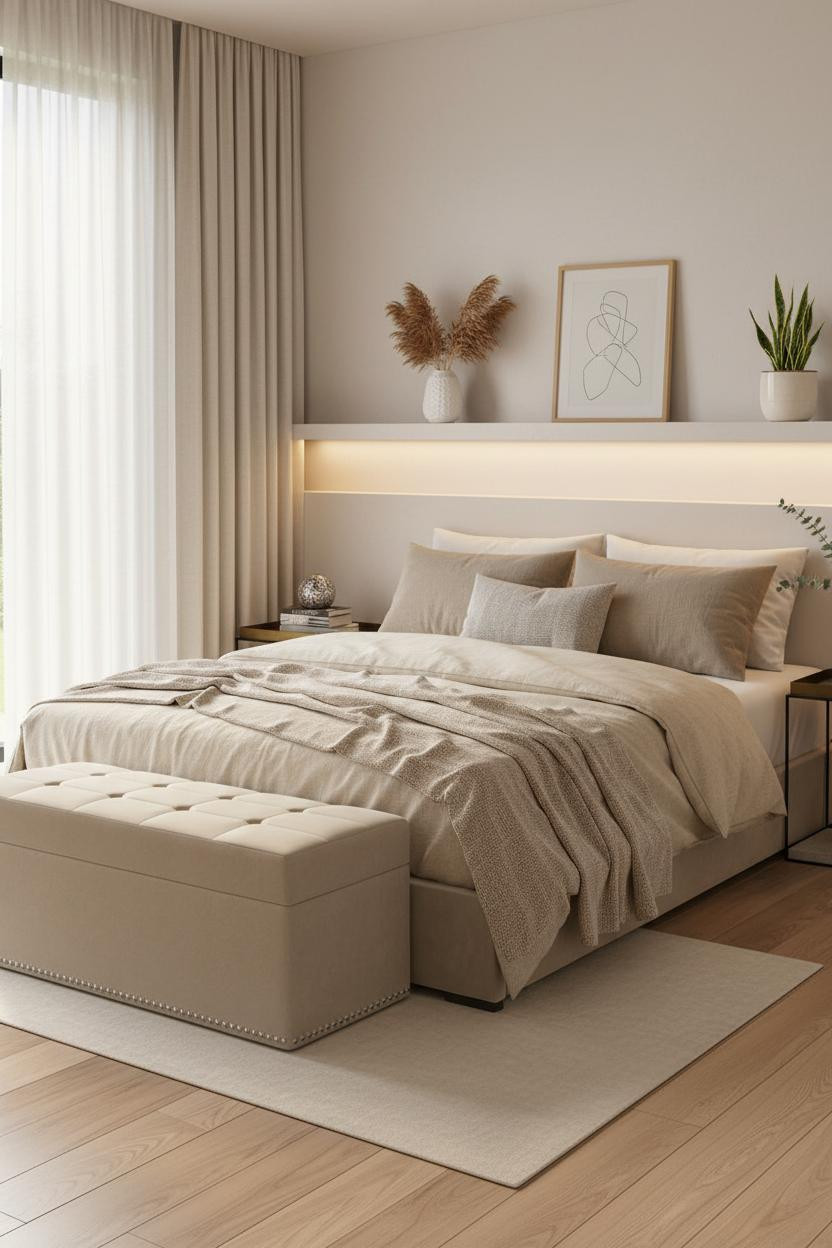
The foot-of-bed zone is the most underused space in a tiny master bedroom, and it’s usually the most visible when you walk in.
Design logic: A natural oak storage bench at the foot grounds the bed visually, giving the whole layout a finished edge instead of just trailing off into open floor.
Where to start: If you’re working on a small bedroom layout for couples, get the bed and bench sorted first before adding anything else. Everything else can layer in after.
I Thought I Needed More Storage. I Needed Less Furniture
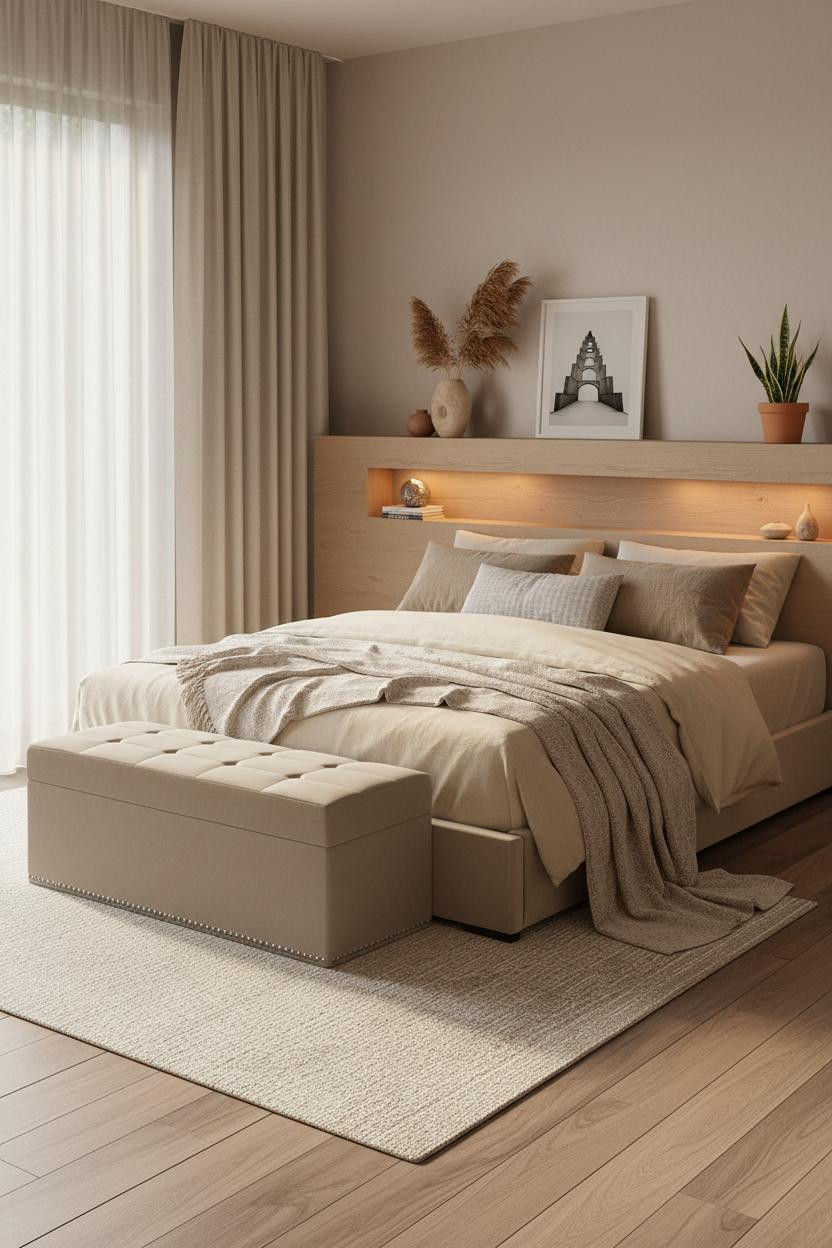
The two-dresser setup is the single biggest mistake couples make in compact master bedrooms. It eats the floor and closes the room down.
What carries the look: Two ceramic vessels with dried pampas grass on the floating shelf replace heavy framed art without adding visual weight, keeping the mushroom beige headwall calm and open.
The easy win: Swap one dresser for a storage bench at the foot and move the rest into the closet or under the bed. You’ll get back more usable floor than you expect.
The Warm Greige Accent Wall That Defines Without Closing In
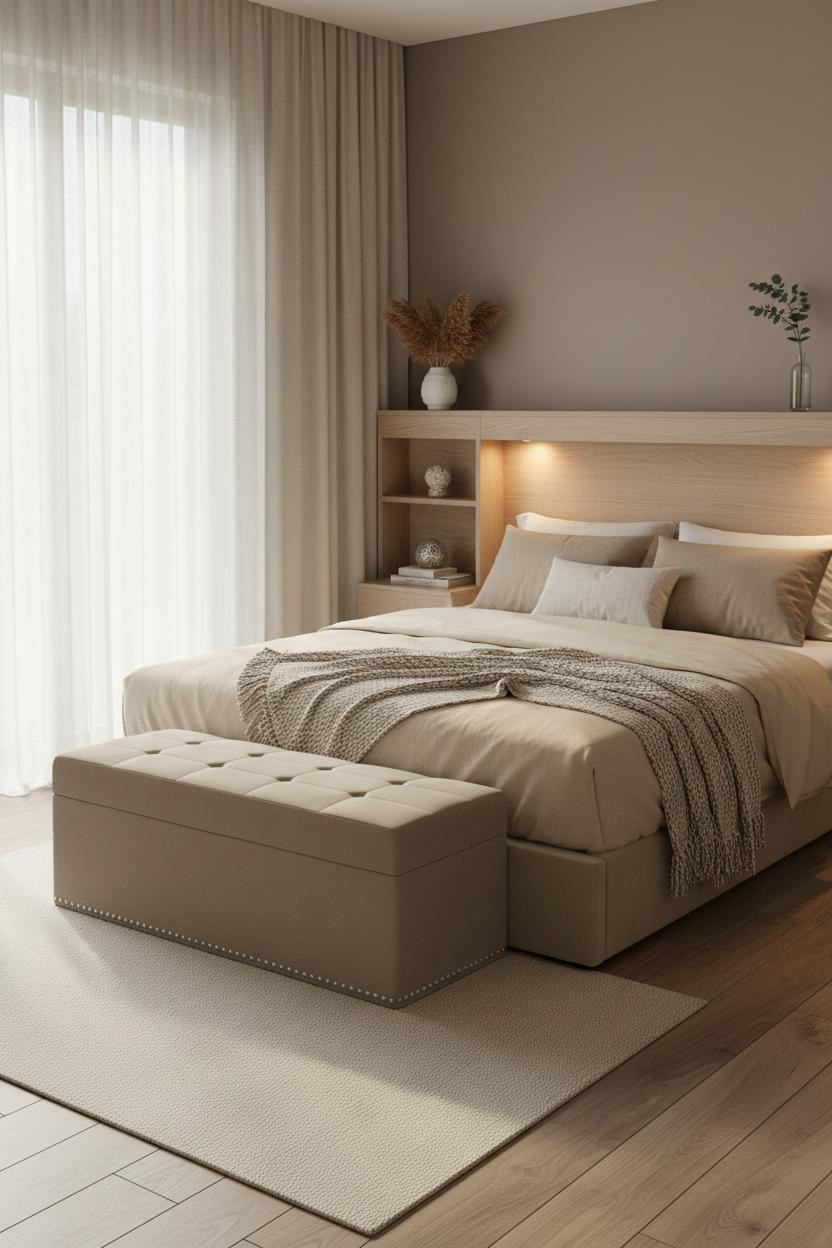
A warm greige accent wall behind the headboard is the easiest way to give a tiny couple’s bedroom a defined sleeping zone without building anything.
Why it feels intentional: The slightly deeper mushroom greige on the headwall makes the floating shelf and reading lamp look like they belong there, not like they were added later as an afterthought.
What not to do: Don’t go too dark with the accent wall in a room under 150 square feet. One shade deeper than the remaining walls is plenty. More than that and the room starts to feel like a cave.
Soft Sage Makes a Tiny Room Feel Larger, Not Smaller
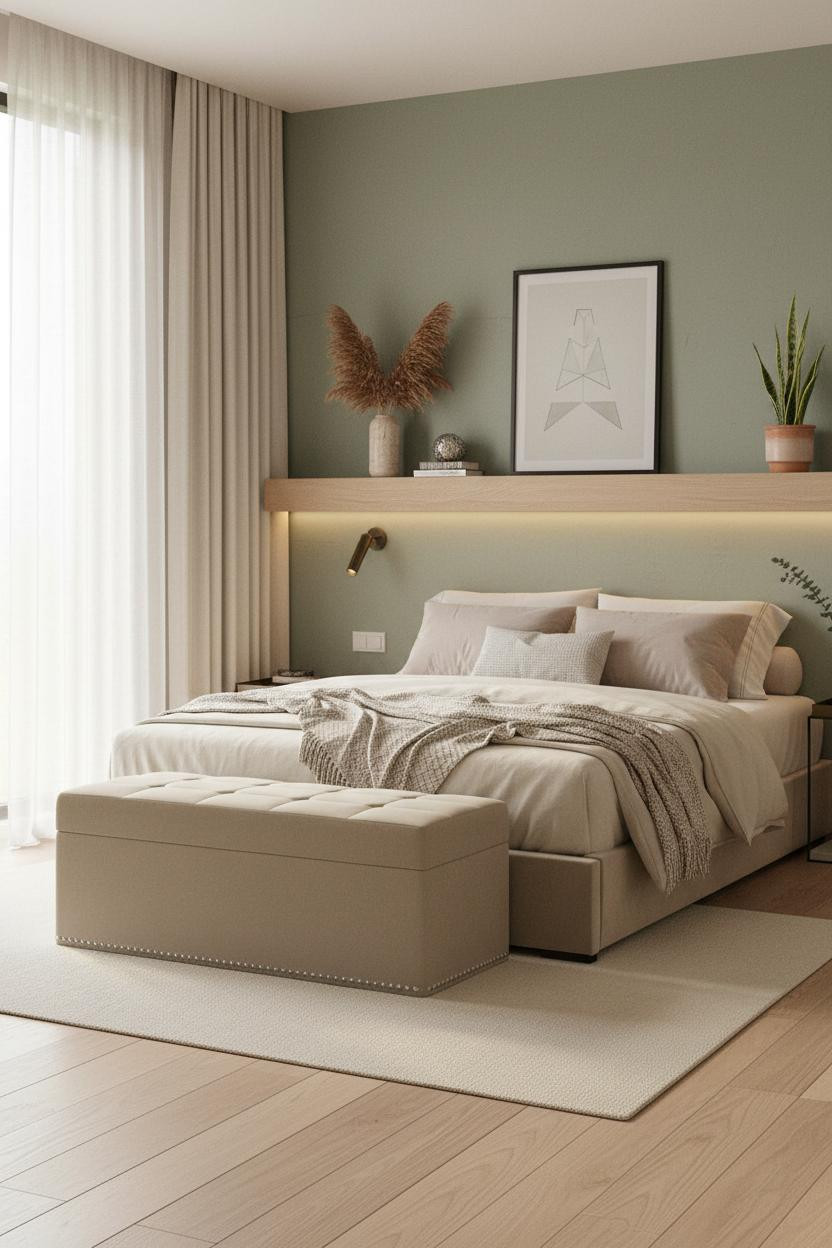
Pale soft sage on the headboard wall is a counterintuitive move that actually works, even in the smallest rooms (and I was skeptical too).
What softens the room: The pale sage plaster finish absorbs the warm morning light rather than bouncing it, which gives the room a calm, settled quality that pure white never quite achieves.
Best for: Couples who want a bit of color but don’t want to commit to anything bold. Sage reads almost neutral in daylight and only shows its green at dusk.
The Warm Taupe Headwall Trick I Keep Recommending
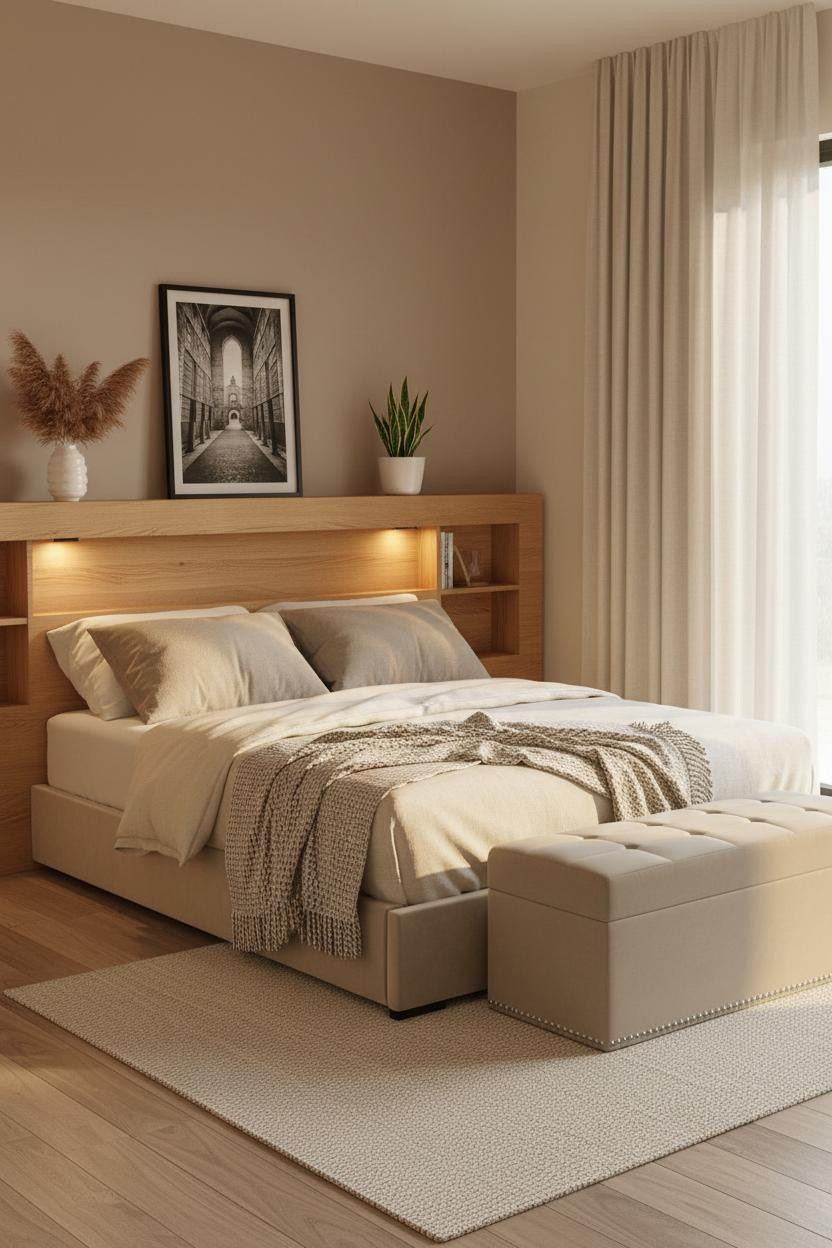
Warm taupe on the headwall with cream on the remaining three walls is the color formula I’d use in almost any tiny couple’s bedroom without hesitation.
Why it holds together: The warm taupe plaster bridges the natural oak furniture and cream linen bedding without creating any jarring contrast, so the room reads as one cohesive palette instead of several separate choices.
Worth copying: Pair this with a low-profile platform bed and a jute-blend runner at the foot. Three elements, one complete look.
Late Afternoon Light and Why Your Lamp Placement Matters
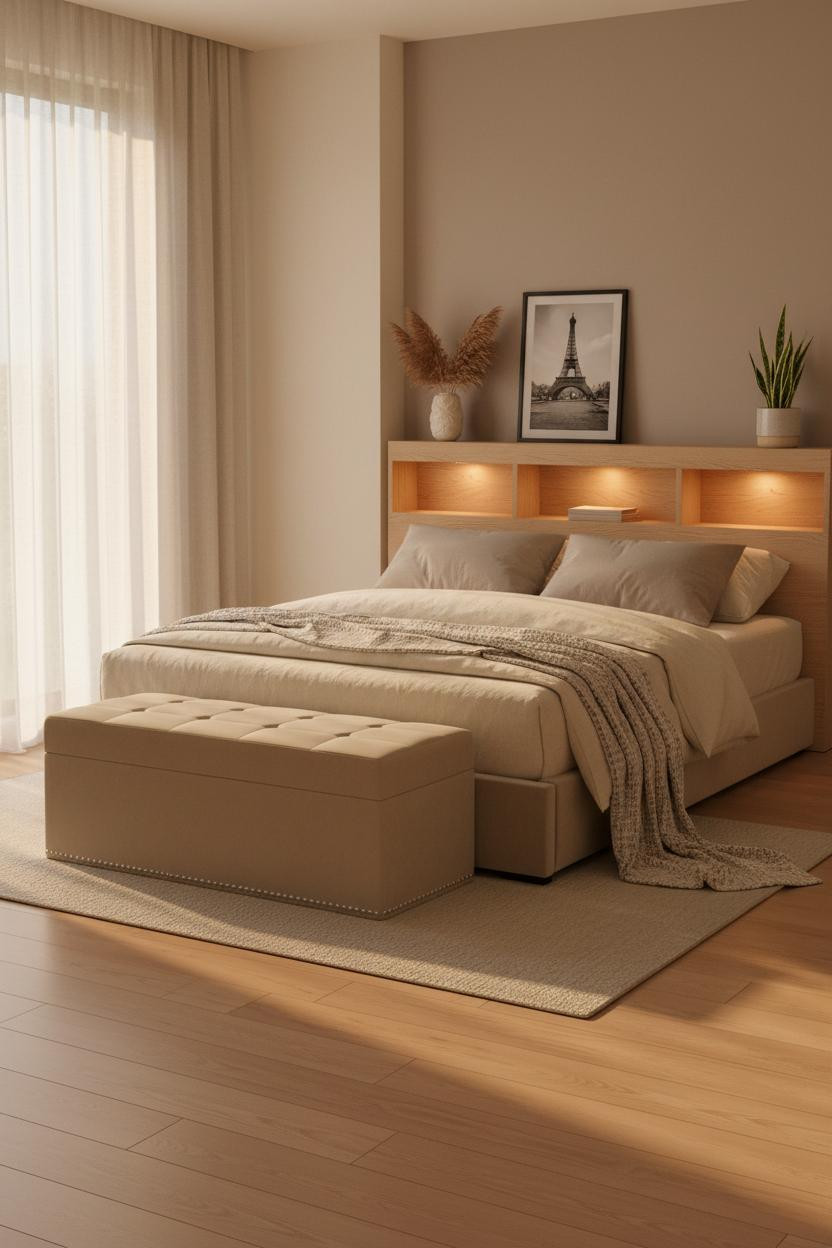
Late afternoon golden light coming through sheer linen curtains is the best free design tool in a tiny bedroom, but only if your artificial light doesn’t fight it.
Where the luxury comes from: A recessed 2700K reading lamp integrated into the floating headboard shelf pools warm amber directly onto the pillows, so both light sources layer together rather than canceling out.
The common miss: Overhead ceiling lights in a tiny bedroom kill the mood instantly. Turn them off after 7pm and let the warm shelf lamp do all the work.
Why a Dove Grey Headwall Reads Warmer Than It Sounds
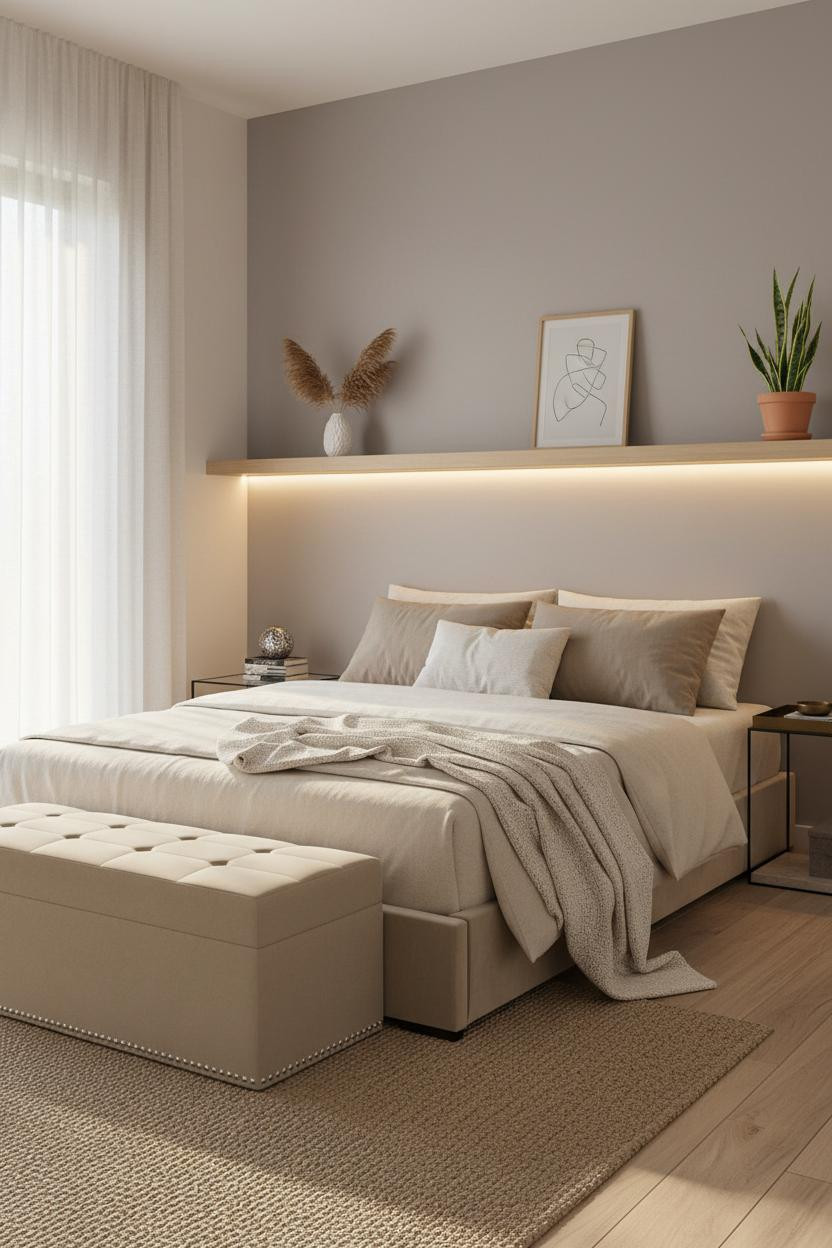
Dove grey sounds cold on paper, but paired with warm white walls, a natural jute runner, and a warm LED strip at 2700K, it reads soft and settled rather than clinical.
What gives it presence: The dove grey plaster headwall acts as a quiet backdrop that makes the warm white linen bedding glow slightly, which is the opposite effect you get from an all-white room.
The finishing layer: A chunky cream wool throw draped over the footboard with one corner left rumpled is the detail that makes the room feel lived-in rather than staged. And honestly, it takes about three seconds.
The Under-Bed Storage Layout That Couples Always Overlook
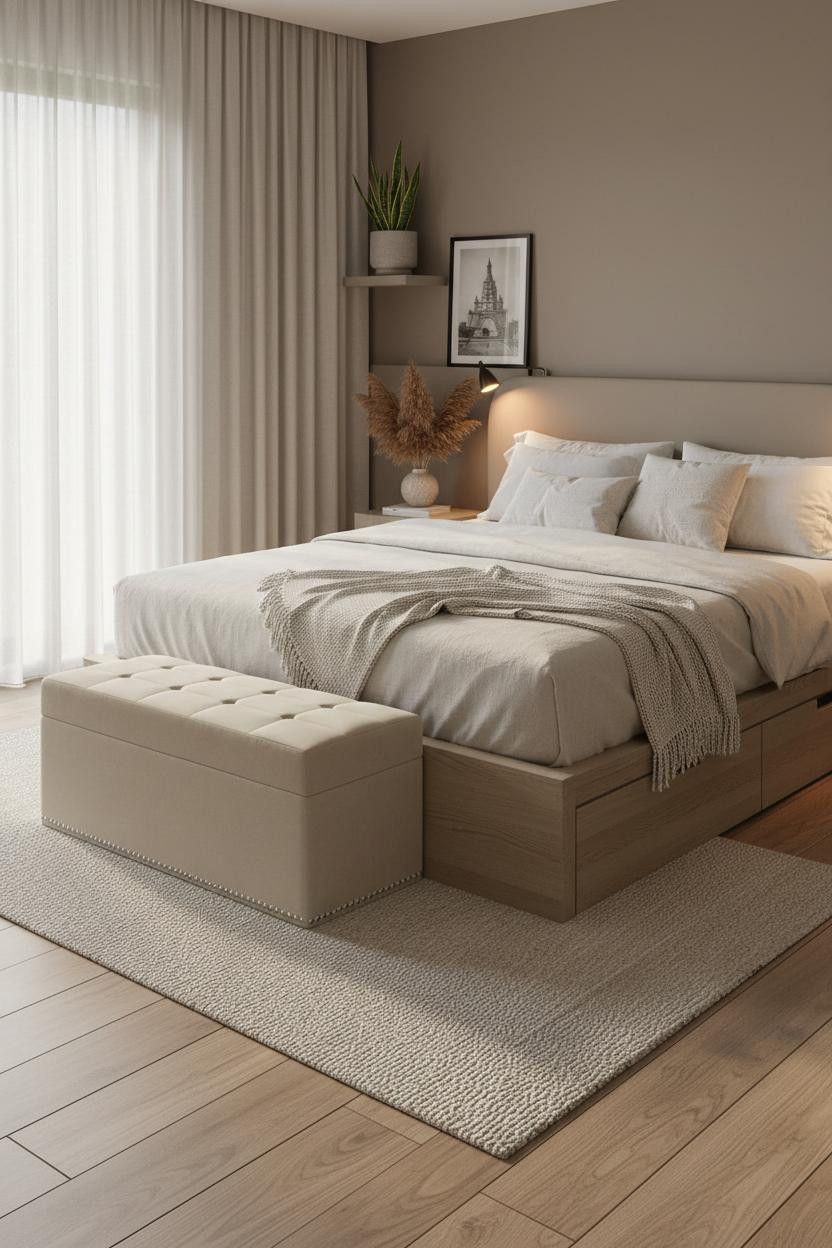
For two people sharing a very small bedroom, integrated under-bed storage drawers are more useful than any closet organizer you’ll ever buy.
The real strength: Under-bed drawers built into the platform base keep the floor completely clear, which makes the room look bigger from the doorway and keeps both partners from fighting over closet space.
If you change one thing: Commit to a platform bed with integrated storage before anything else in a tiny couple’s bedroom. The layout decisions that follow get a lot easier once the bed is sorted.
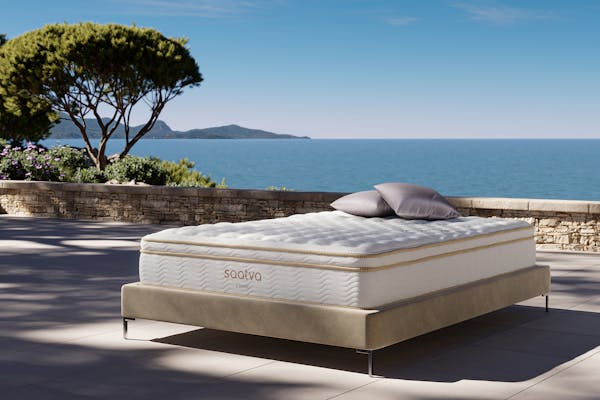
Our #1 Pick
Saatva Classic Mattress
America’s best-selling online luxury innerspring. 365-night trial, lifetime warranty, free white glove delivery.
Shop Saatva Classic
The Foundation Of Every Beautiful Bedroom
All the layout decisions in a tiny bedroom for couples eventually come back to one thing: the mattress. Get the furniture right and the wrong mattress will still leave both of you tired, stiff, and crowding each other’s side of the bed.
The Saatva Classic uses a dual-coil support system that keeps the surface stable even when two people move independently through the night. The breathable organic cotton cover and Euro pillow top give it that pulled-together hotel feel that’s hard to explain until you sleep on it.
But it isn’t magic. It’s just good engineering underneath a well-made surface. And in a small bedroom where the bed takes up half the room, that surface is the one thing worth getting right.

The rooms people save are the ones where nothing looks accidental. Start with the bed, build the layout around it, and edit everything else down until only what’s useful stays.