
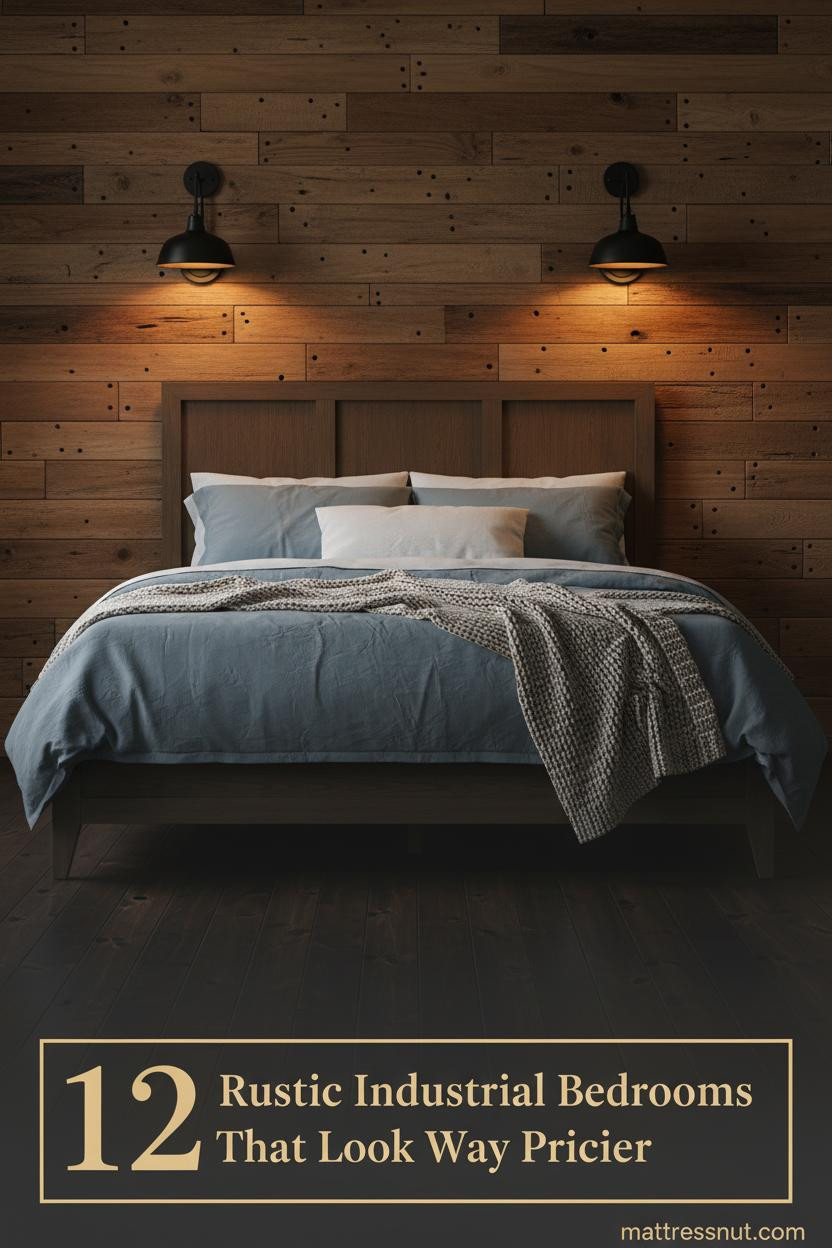
 by
by The first time I walked into a well-done rustic industrial bedroom, I didn't think "industrial." I thought: collected. Like someone lived there for years and just kept the things that mattered.
That's the whole trick with this style. Raw materials do the heavy lifting, and nothing needs to match.
The Reclaimed Wall That Changes Everything
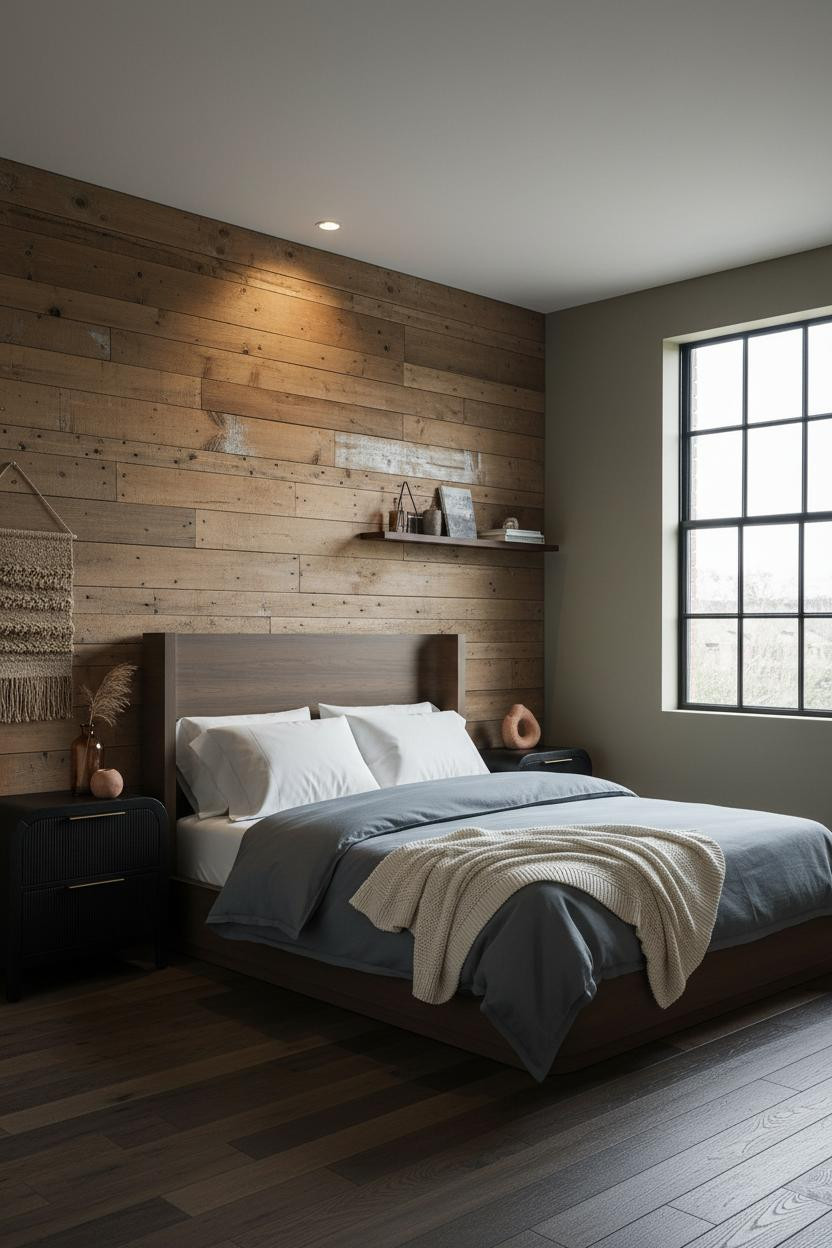

This is the kind of room that makes you want to slow down the moment you're in it.
Why it holds together: The reclaimed timber plank wall, honey-brown boards with visible nail holes and staggered edges, does more texture work than any paint color could. Each board reads differently, which keeps the whole wall from feeling flat.
Steal this move: Layer a chunky-knit throw over slate bedding at the foot of the bed. The contrast between rough planks and soft woven fabric is what makes the room feel lived-in rather than staged.
Corrugated Steel Behind the Bed Actually Works
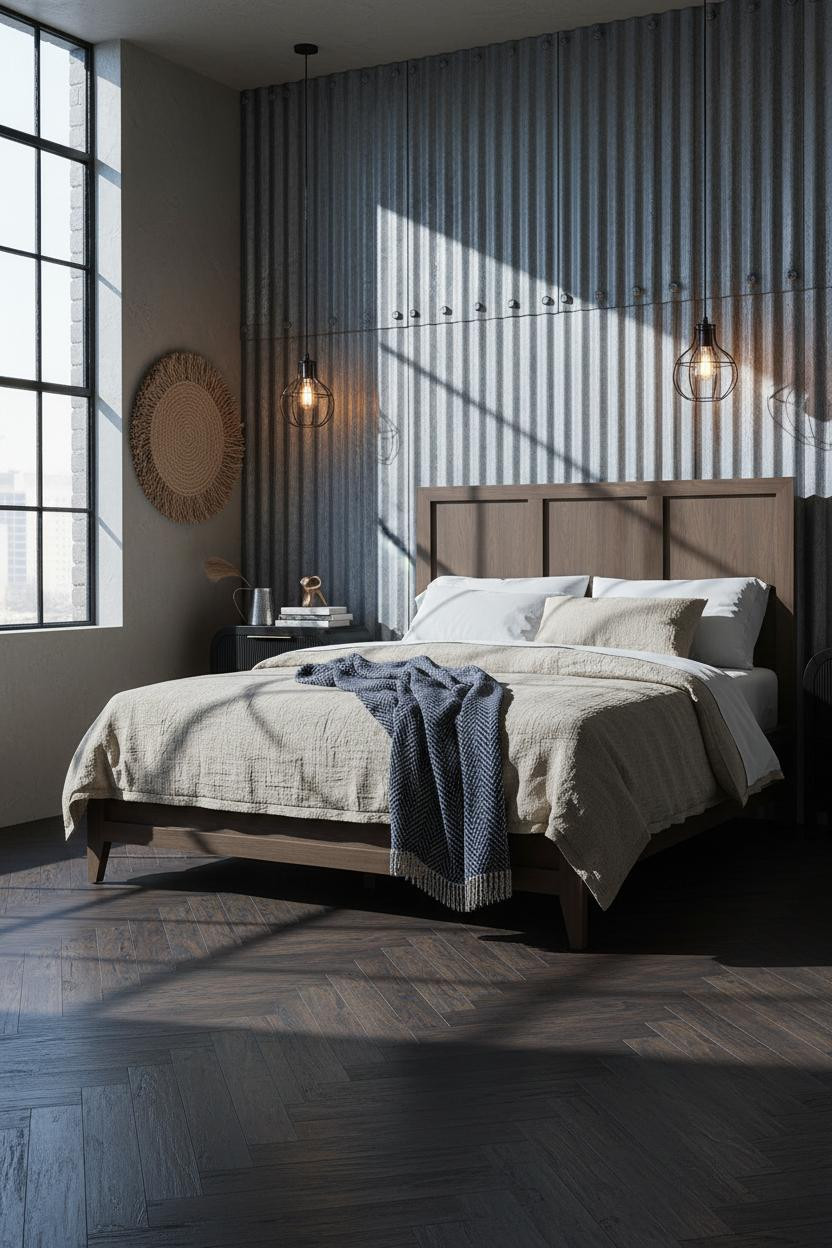

Divisive choice. Most people scroll past corrugated steel. I'd tell them to stop.
When raking light hits those ridges, the wall comes alive in a way that flat materials just don't. The corrugated raw steel catches parallel shadows across its face, giving you an architectural moment that costs far less than custom millwork.
Worth copying: Lay dark herringbone parquet and skip the rug entirely. The angular floor pattern and the ridged wall create enough visual rhythm that you don't need anything else on the ground plane.
When a Steel Window Wall Is the Whole Design
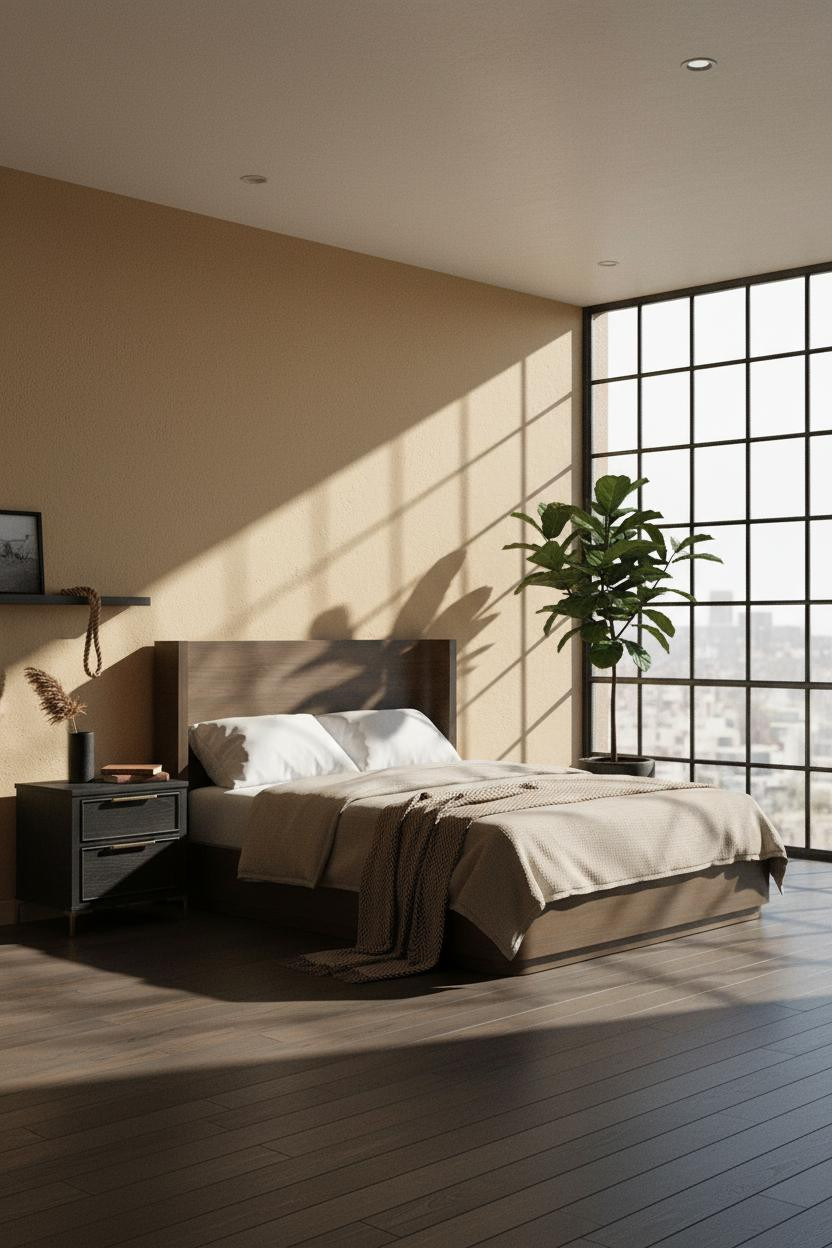
The room barely needs anything else. That's a real design achievement.
Why it feels masculine without being cold: Warm ochre plaster on the walls pulls enough amber into the room that the blackened steel muntins read as graphic contrast rather than harshness. The two temperatures fight, and that tension is the point.
The smarter choice: Keep the floor bare. Dark narrow-plank hardwood with no rug lets the geometric window shadows land cleanly, which is honestly where all the drama lives. See more on how to decorate your bedroom around a single strong architectural element.
Small Room, Big Vertical Move


In a small industrial bedroom, the divider has to work harder than just looking good.
What gives it presence: A floor-to-ceiling vertical slatted timber divider draws the eye upward, making the ceiling feel higher while adding enough dark grain texture to anchor the whole side of the room.
Pair it with bleached oak herringbone on the floor. The pale angular pattern keeps things from going too heavy, while still feeling genuinely raw.
Dark Plaster and a Concrete Ceiling Nobody Talks About Enough
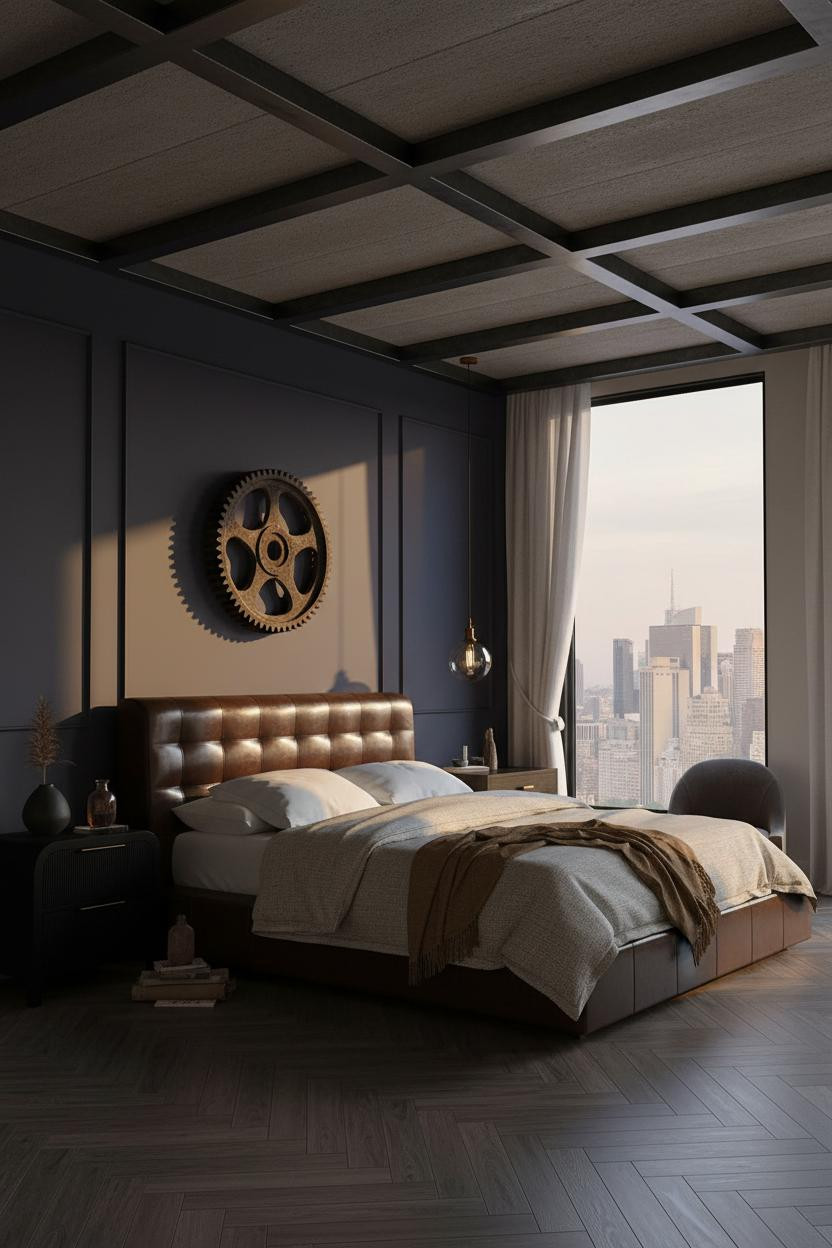

Most people obsess over the walls. I'd argue the ceiling is doing more work here.
Why it feels expensive: The coffered concrete ceiling with dark steel inset beams throws deep geometric shadow grids down into the room at night, making a flat ceiling read as architecture. It's a structural detail that genuinely earns its keep.
Don't ruin it with warm-toned bedding that fights the deep indigo plaster. Stay in the camel and oatmeal range. The room feels calm and cohesive when the textiles stay cool-adjacent.
The Exposed Truss That Makes a Bedroom Feel Like a Loft
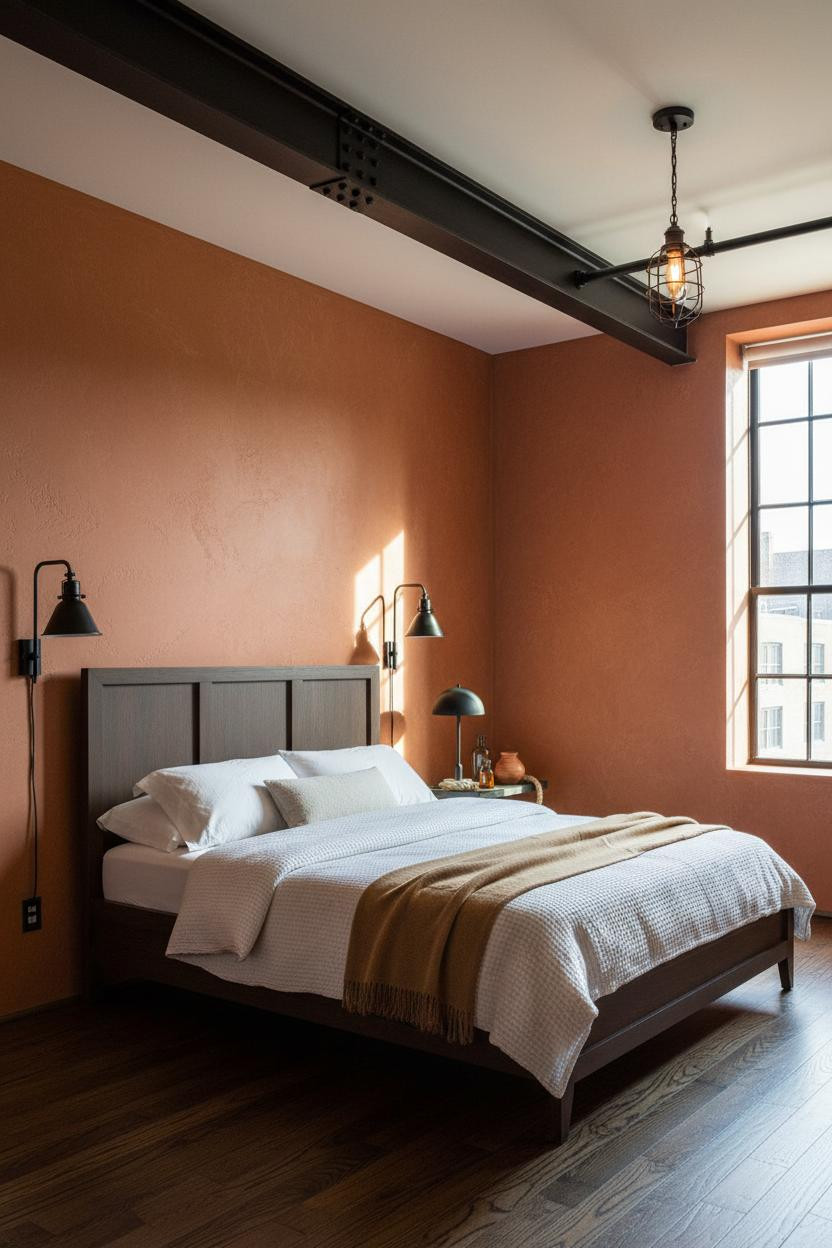
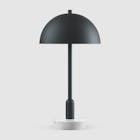
A black powder-coated steel truss across the ceiling is one of those moves that sounds extreme until you see it done well.
The riveted plates and welded seams aren't decoration. They're the honest structure of the building showing through, and that honesty is what makes an industrial chic bedroom feel genuinely collected rather than costumed.
The easy win: Add rust-orange plaster walls behind the truss to push warmth up into the steel. The friction between hot wall color and cold metal is the whole look.
Where people go wrong: Hanging anything decorative from the truss. Let it be structural. That's what gives it credibility.
Forest Green Plaster With a Salvaged Beam Overhead
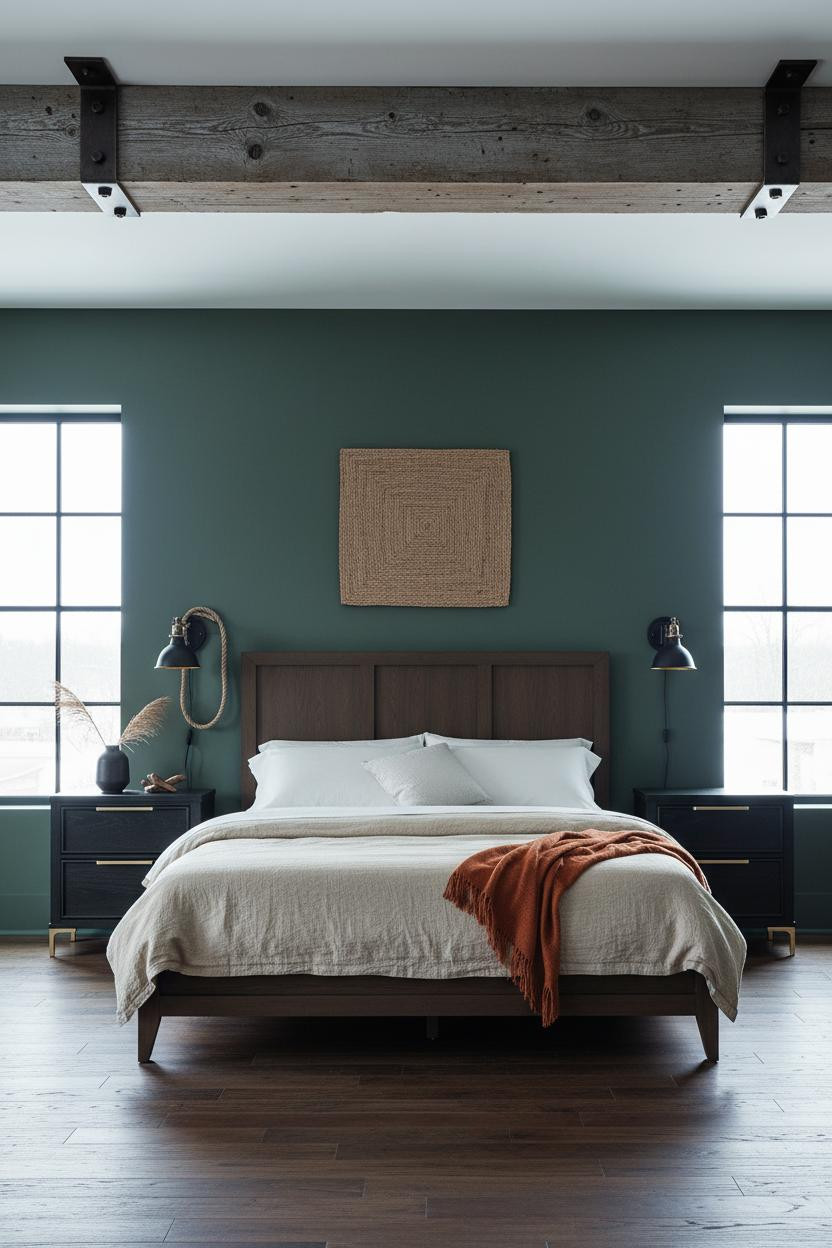
I keep coming back to this combination. It shouldn't feel as cozy as it does.
What creates the mood: Deep forest green matte plaster absorbs light in a way that makes the room feel intimate without going cave-dark. The salvaged Douglas fir beam above, with its visible age checks and silver-grey patina, gives the ceiling a weight and history the green needs to feel grounded. Check the full bedroom lighting design guide for getting the sconce warmth right against dark plaster.
Try this: Drape a burnt orange mohair throw at the foot of the bed. It's the only warm accent the room needs, and it reads beautifully against the green.
The Honey Beam That Brightens a Modern Loft Bedroom
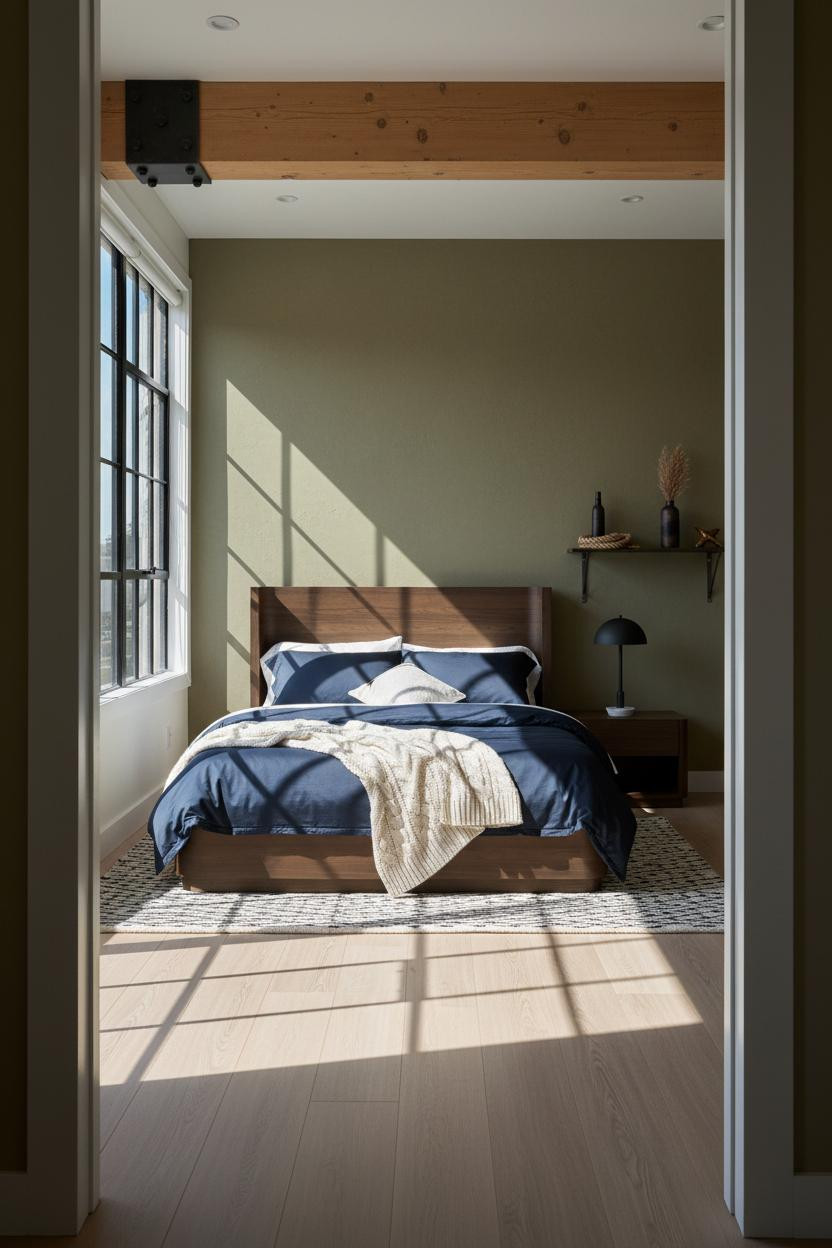
Not every rustic industrial bedroom has to be dark. This one proves it.
Why it lands: The honey-toned timber beam with iron support brackets sits against moss-green plaster walls, and the contrast is warm rather than moody. Bleached oak wide-plank flooring underneath catches morning light in a way that darker floors just can't.
What to borrow: Ground the bed zone with a black-and-white flat-weave rug. It's a graphic anchor that keeps all that warmth from feeling soft around the edges.
Steel Pipe Shelving Does the Work in a Compact Room
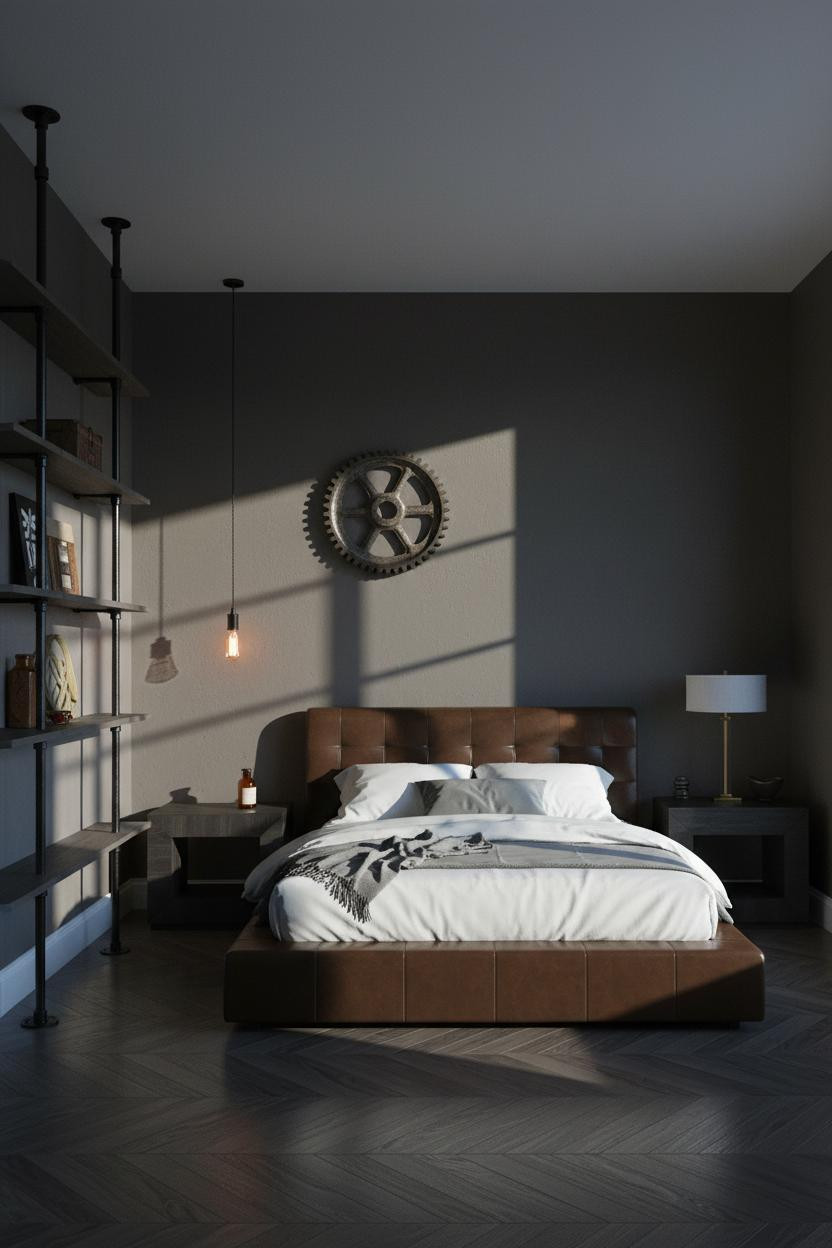
Having storage that looks intentional changes how you actually use a small room.
The real strength: Black powder-coated steel pipe shelving bolted with hex brackets casts sharp geometric shadows against dark mushroom plaster, so the functional piece also reads as the room's main visual element. Storage and architecture at the same time.
Avoid this mistake: Don't over-style the shelves. Worn leather books, one amber glass bottle, a coiled canvas strap. That's enough. Anything more tips into decorating rather than collecting.
Weathered Board-and-Batten With Black Iron Sconces
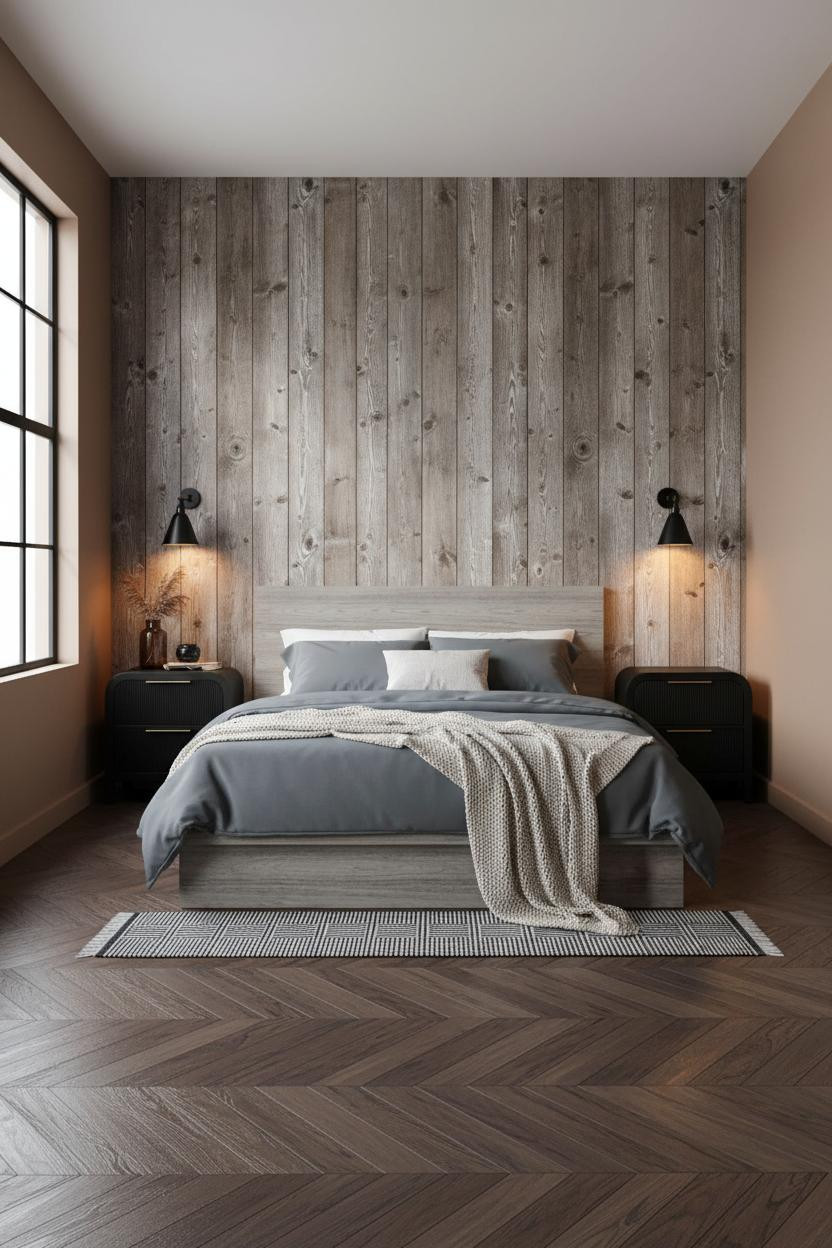

Floor-to-ceiling board-and-batten in weathered raw timber gives a farmhouse bedroom its industrial credibility. The vertical rhythm of those shadow grooves is surprisingly graphic, especially in a room that's otherwise calm.
Why the palette works: Warm clay plaster on the flanking walls keeps the silver-grey timber from reading cold. And paired black iron sconces throwing amber pools into the grain texture pull the whole wall forward in a way that overhead lighting never could. Read more on nightstand styling that holds up next to bold wall treatments like this.
The Pre-Dawn Look That Makes Dark Bedrooms Feel Alive
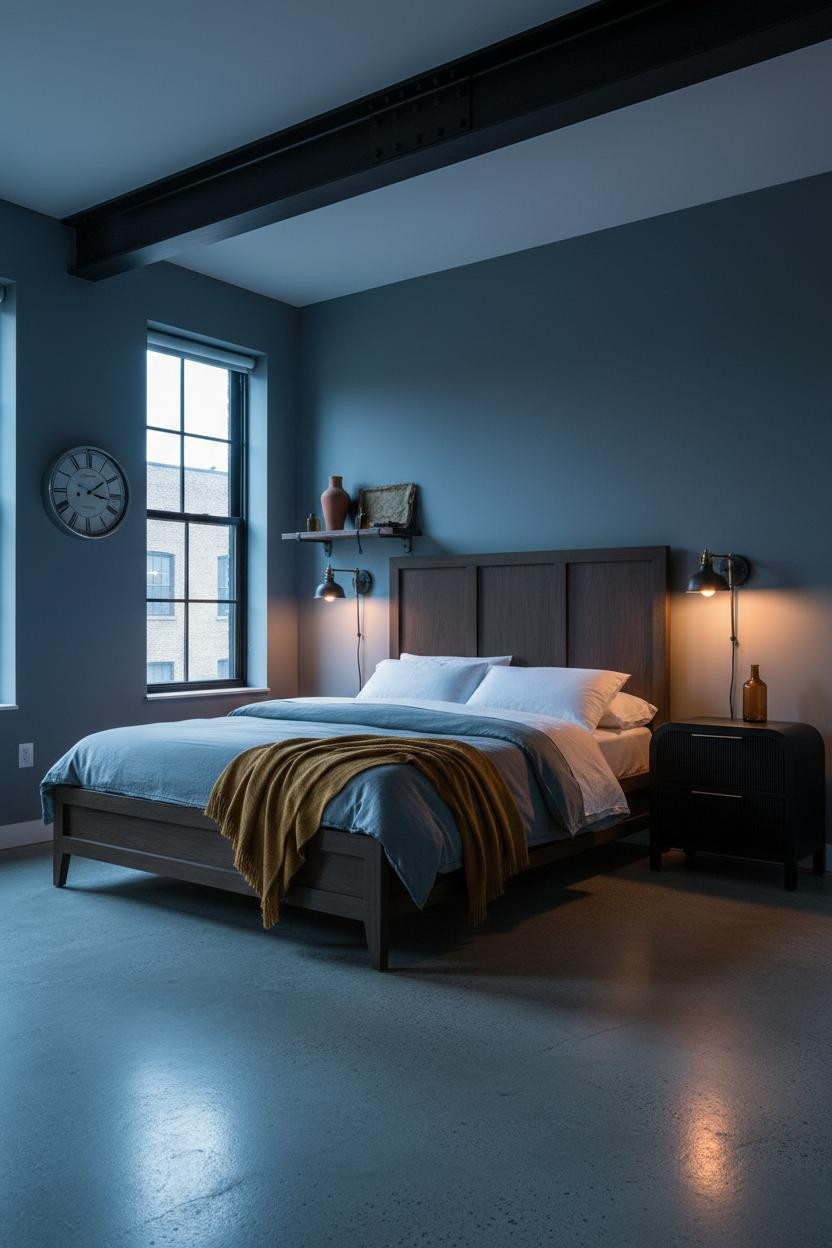
This is honestly the most committed version of dark industrial I've seen done well. Polished concrete floor, slate-blue plaster, an exposed steel I-beam overhead. Nothing soft about it except the blanket.
What carries the look: The horizontal I-beam with visible weld seams running the ceiling width grounds the room structurally without being decorative. It's the difference between a designed dark bedroom and a room that just feels dark.
Pro move: Add a mustard wool blanket as the single warm accent. Against slate-blue walls and polished concrete, that one color does everything.
Exposed Brick Is Still the Most Reliable Rustic Industrial Move

Fair warning: once you see a full-height brick wall behind a bed done like this, the renovated-smooth version never looks as good again.
What makes this one different: Rough mortar joints and weathered terracotta-and-ash brick tones catch late afternoon sidelight in a way that manufactured brick veneer simply doesn't. The room feels warm and lived-in rather than assembled, in a way that feels genuinely earned.
Wide-plank reclaimed oak flooring with natural patina underneath echoes the brick's age without competing. The finishing layer: a rust orange linen throw and a brass task lamp at the nightstand. Two decisions. Done. See the full master bedroom ideas collection for more examples of brick paired with warm metals.

Our #1 Pick
Saatva Classic Mattress
America's best-selling online luxury innerspring. 365-night trial, lifetime warranty, free white glove delivery.
Shop Saatva Classic
The Foundation Of Every Beautiful Bedroom
Raw plaster, reclaimed oak, blackened steel, all of it looks better when you actually want to be in the room. And that comes down to the bed itself.
The Saatva Classic is built around dual-coil support that holds its shape over years, not seasons. The cotton cover doesn't trap heat. And the Euro pillow top is the kind of soft that still has structure underneath. It doesn't collapse. It stays right.
Walls get repainted. Throws get swapped. The mattress stays.

The rooms worth saving aren't the ones with the most material. They're the ones where every choice was made on purpose, and the bed is where that starts. Good design ages well because it's made well.