
 by
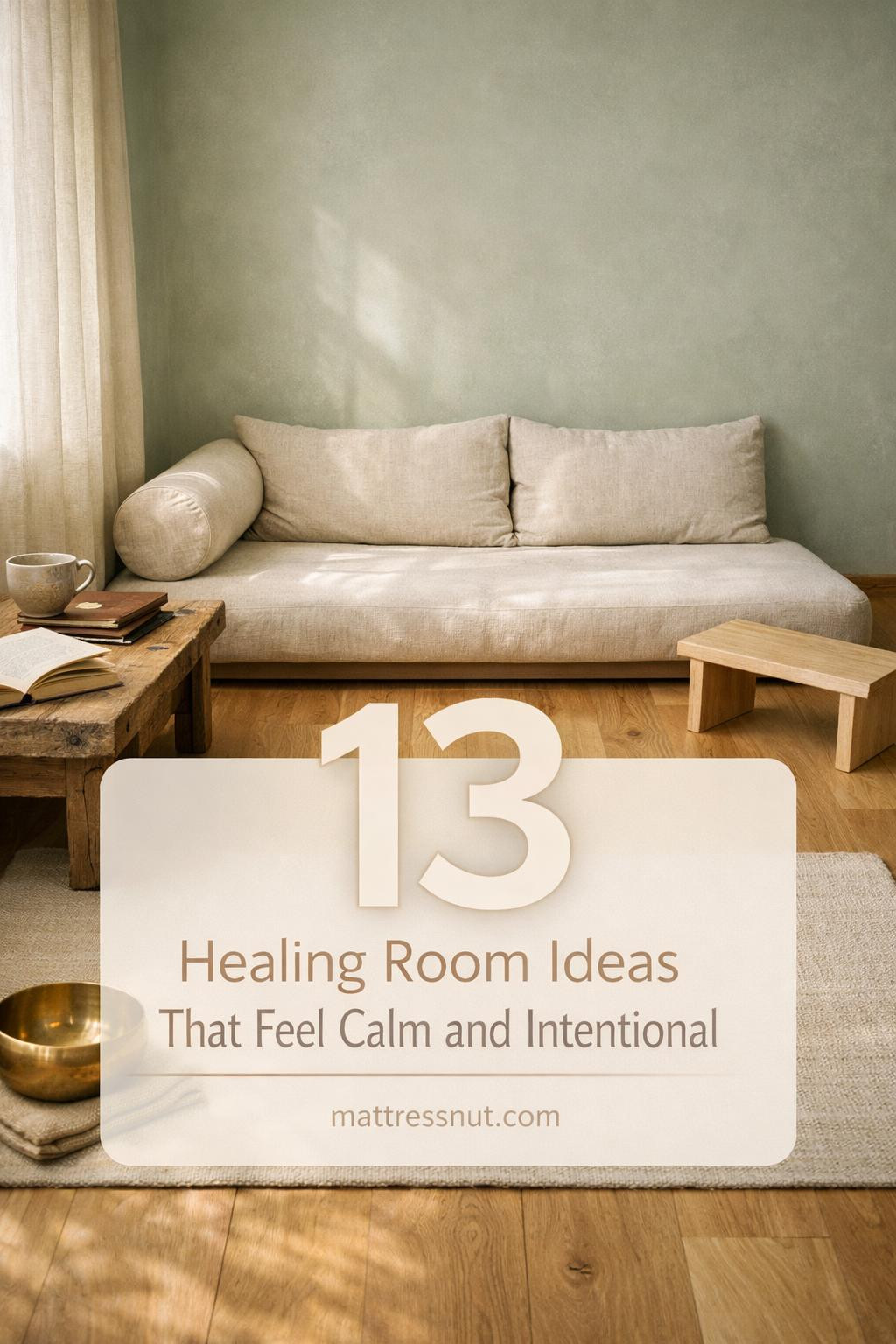
by Healing rooms work when they’re simple. Not cluttered with every crystal and candle you own—just the essentials that actually make the space feel intentional. Here’s what’s actually working right now.
The White Ceramic Singing Bowl Setup
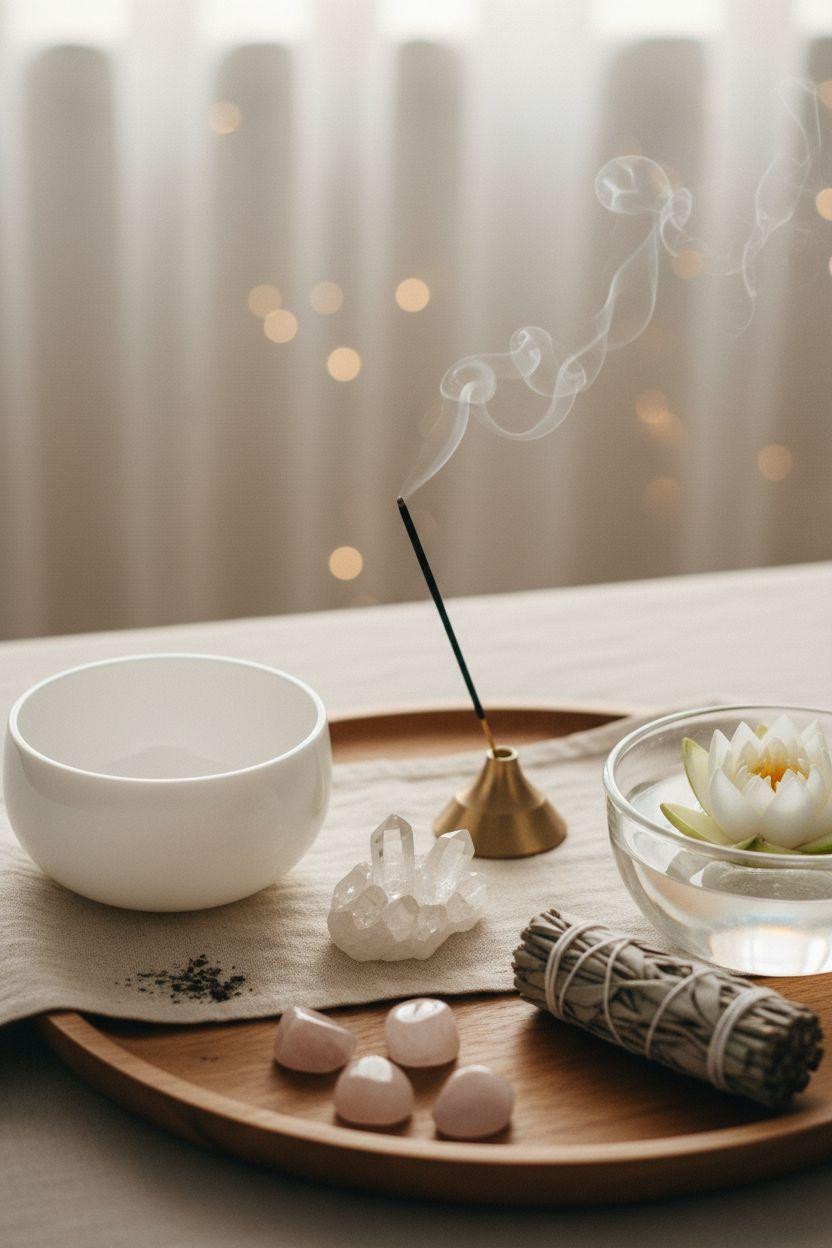
This is the minimalist altar move that keeps coming up. White ceramic singing bowl on linen, quartz catching morning light, one sandalwood stick—that’s it. The restraint is what makes it work. Plus, the smooth ceramic against the woven texture creates actual visual interest without trying too hard. Been using this exact setup for months and it still feels calm, not staged.
Sacred Geometry on the Meditation Wall

Hand-painted mandalas in deep purple and gold. The geometric precision grounds the space in a way that printed art never does. This corner pairs a Tibetan singing bowl with velvet cushions and an abalone shell for sage—layers that feel intentional, not random. The key is keeping everything at eye level when seated. Works because the colors are saturated but the layout stays minimal.
When the Crystal Chandelier Does All the Work
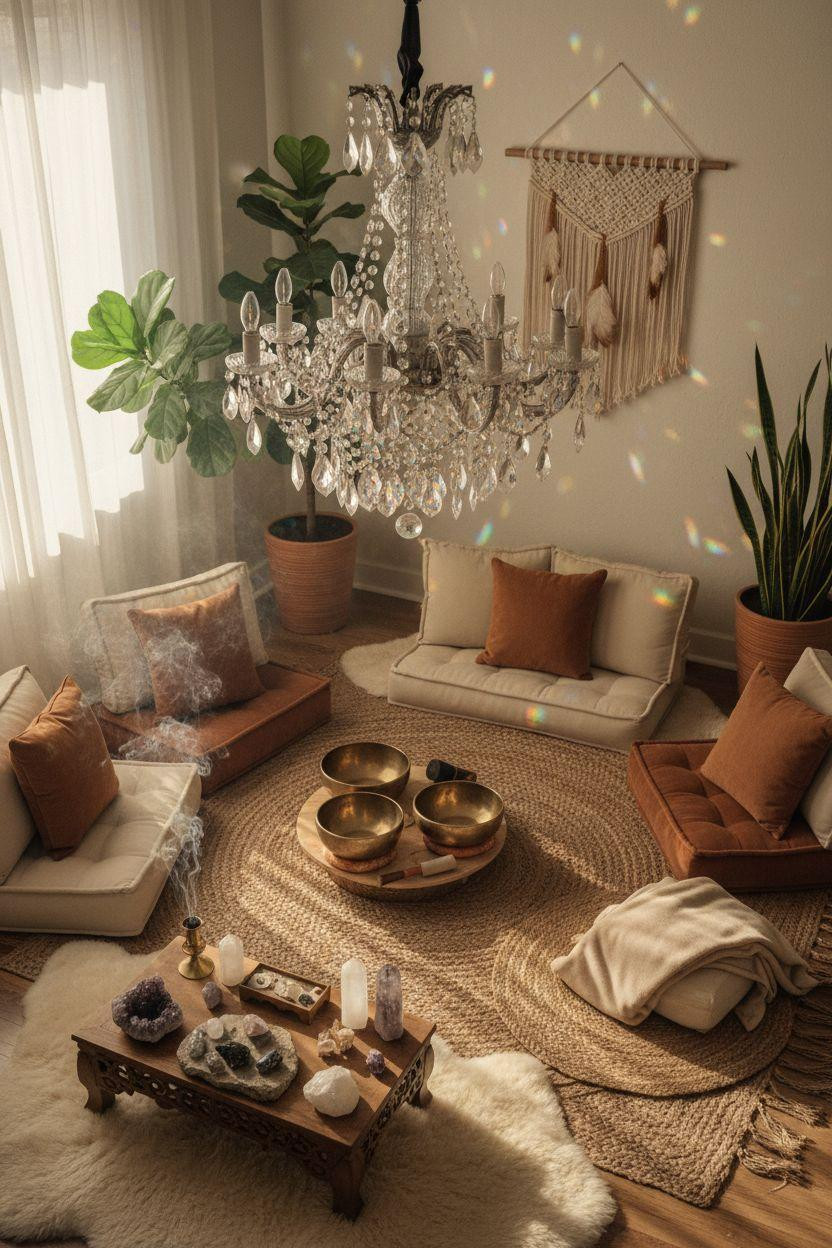
The chandelier move for sound healing rooms. Multi-tiered crystals catch afternoon light and throw patterns across cream cushions arranged in a circle. The prismatic effect is real—not just pretty, actually shifts the energy of the room. Pairs with singing bowls on wood platforms and a sheepskin rug for texture. If I had to pick one statement piece for a healing space, this would be it.
The Low Wooden Platform Meditation Corner
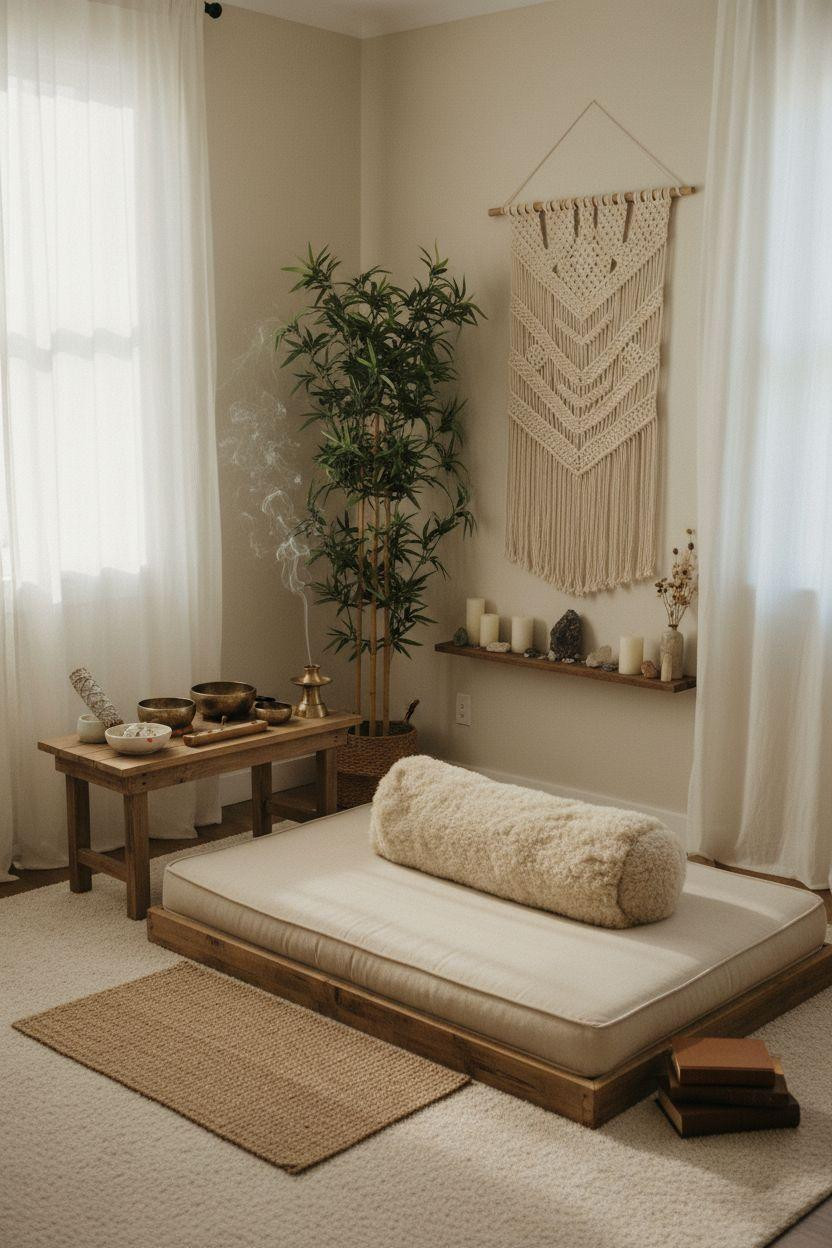
Reclaimed wood platform. Cream linen cushions. Bamboo in the corner. This layout works because everything sits low—forces a different relationship with the space. The floating shelves hold crystals and candles without cluttering the sightline. Honestly, the jute mat underneath is doing more work than it should, anchoring the whole setup. Total MVP for compact healing rooms.
Jewel Tones That Don’t Feel Heavy
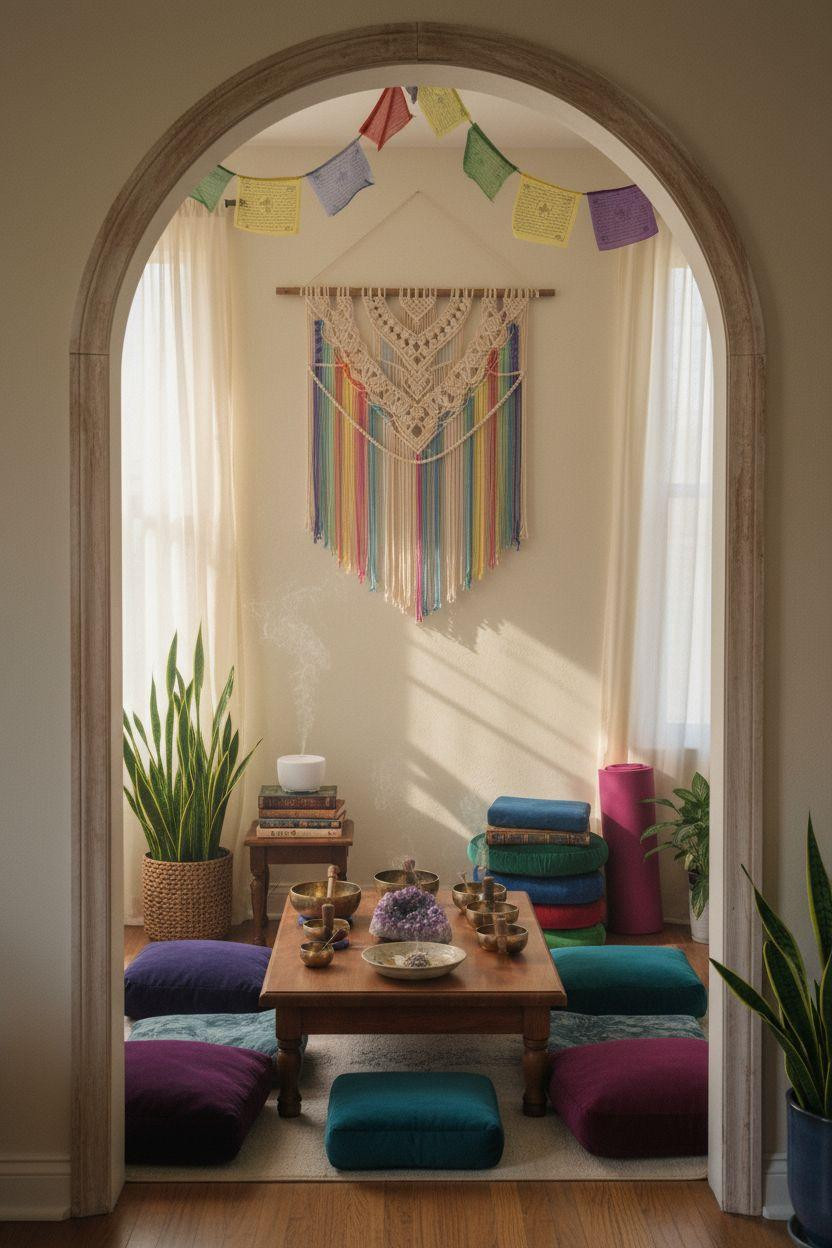
Deep purple and teal. Sounds intense but the cream base keeps it breathable. This setup uses jewel-tone cushions around a walnut altar, Tibetan prayer flags casting colored shadows, and a stack of meditation cushions that actually get used. The amethyst cluster isn’t just decor—it’s the anchor. Works if you’re tired of all-white healing spaces but still want calm.
Reclaimed Teak with Visible Grain
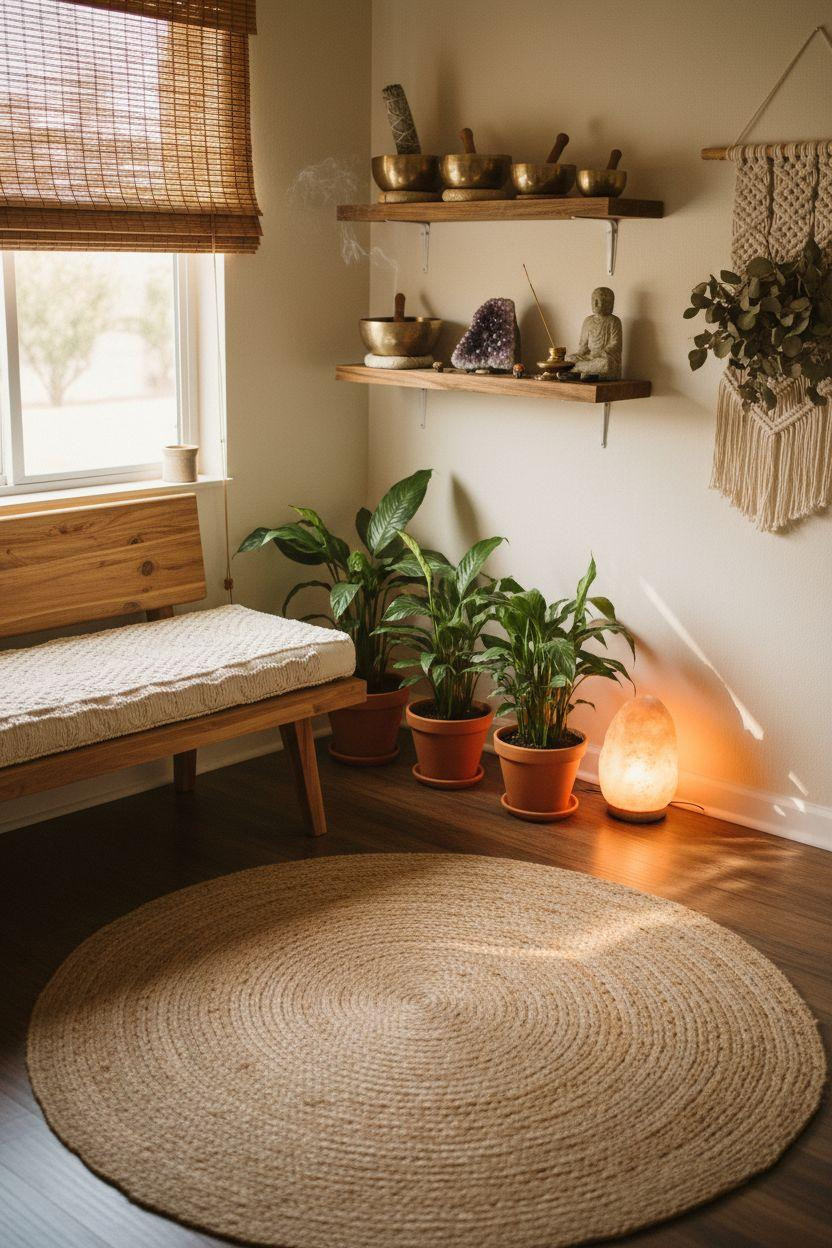
Teak meditation bench. Reclaimed wood floating shelf. The grain does all the talking here—no need to style it heavily. Singing bowls in varying sizes, sage bundle on ceramic, and a Himalayan salt lamp for that amber glow. Plus, the macrame with dried eucalyptus adds texture without competing with the wood. Been getting compliments for weeks on this exact corner setup.
Layered Floor Cushions on Jute
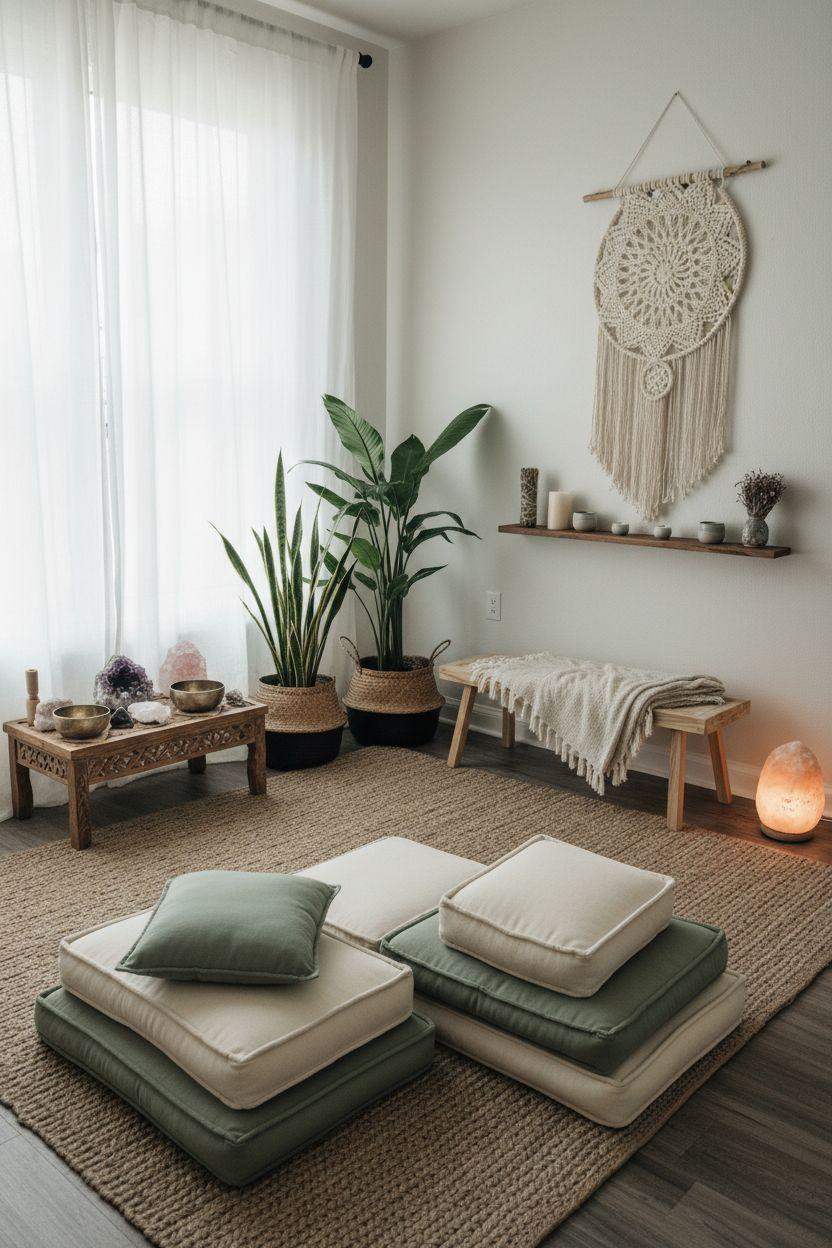
Cream and sage cushions stacked on jute. The layering is what makes this work—not one big meditation pillow, but three or four in slightly different tones. Low wooden altar with singing bowls, peace lily in a woven basket, and a salt lamp casting soft light. The throw blanket draped over the meditation bench keeps it from feeling too staged. Worth it for small healing spaces.
The Linen Cushion with Walnut Altar
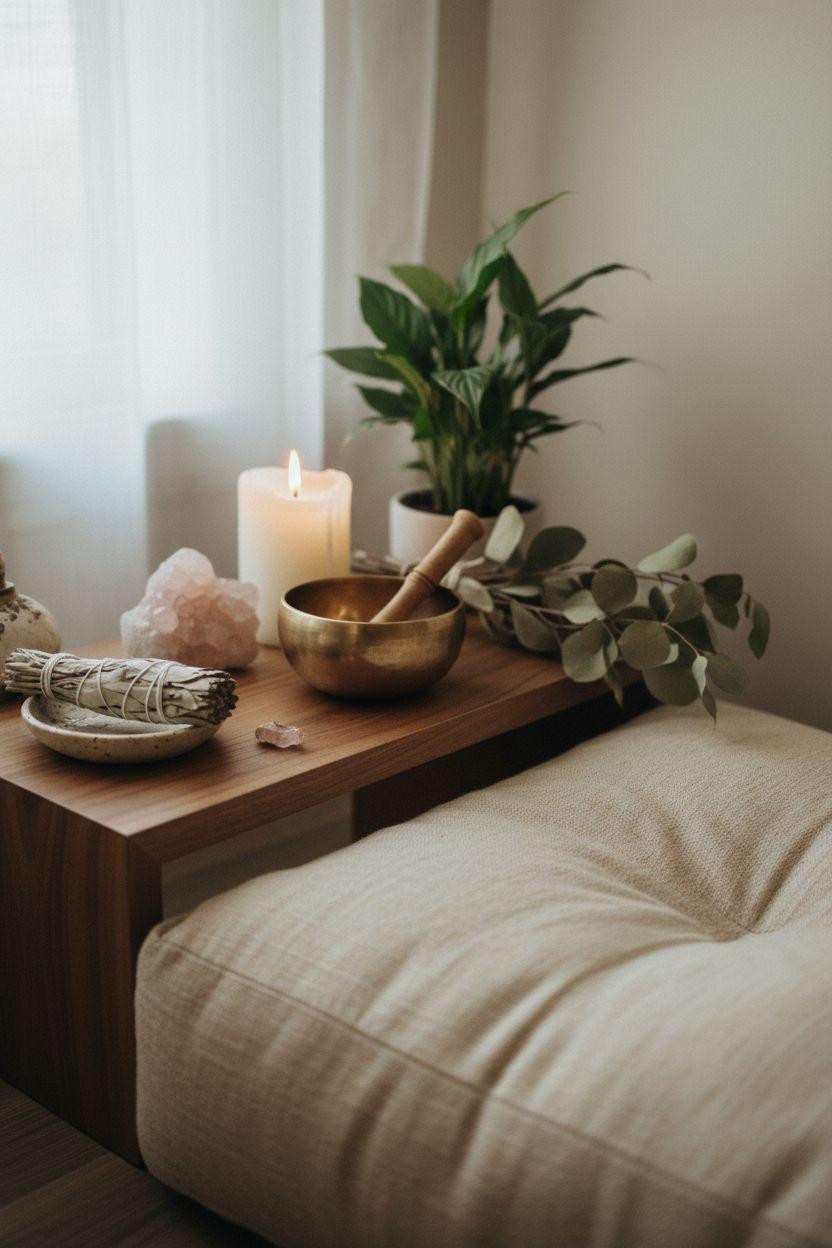
Handwoven linen meditation cushion. Walnut altar with smooth finish. Rose quartz cluster, brass singing bowl, white pillar candle—the classics, but arranged with intention. The eucalyptus bundle tied with cotton string adds just enough visual weight without cluttering the sightline. This setup gets the morning light just right. Honestly, the simplicity is what makes it feel expensive.
Selenite Tower as the Focal Point
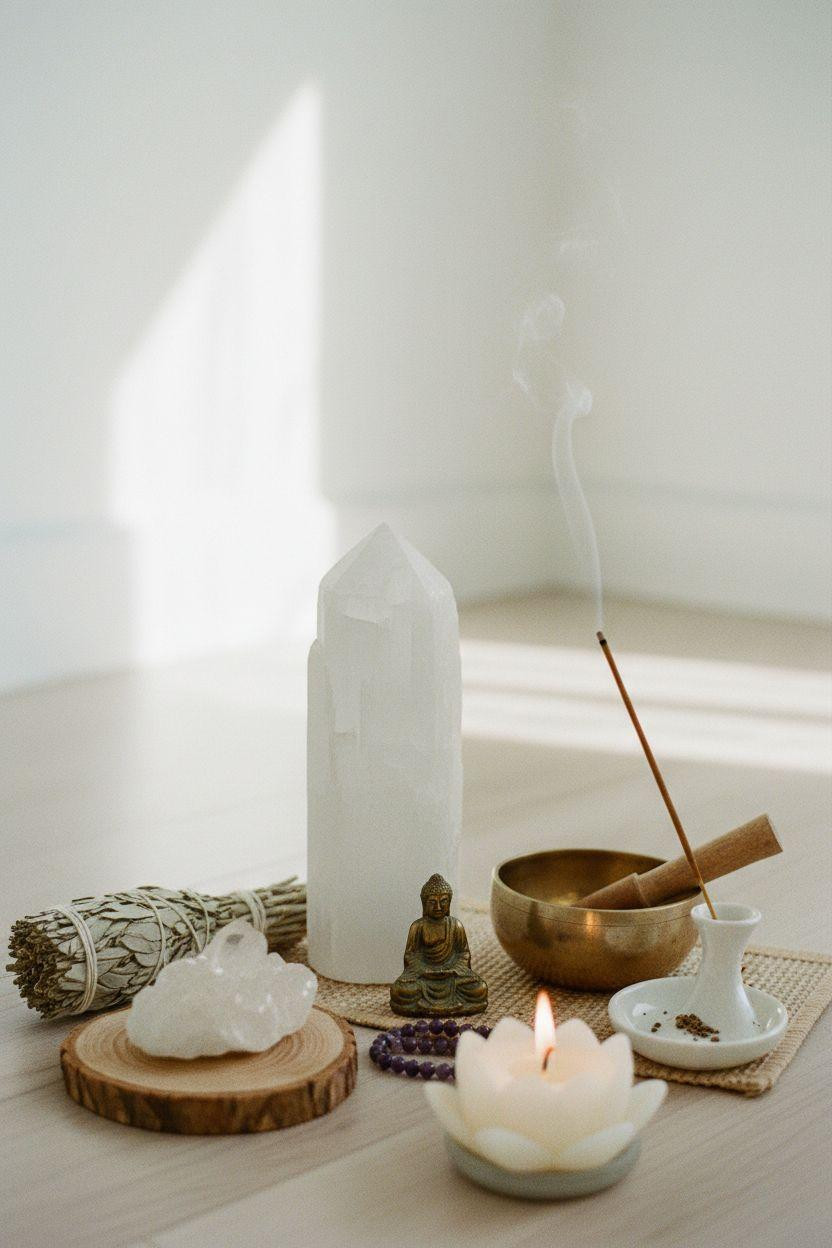
Selenite tower. That’s the move. Everything else—brass singing bowl, ceramic incense holder, white sage bundle—supports it without competing. Clear quartz on a wood slice, small Buddha statue, amethyst prayer beads. The white lotus candle burning softly keeps the energy moving. This altar works because it’s curated, not cluttered. Trust the process on the selenite placement.
Vintage Wood with Aged Patina
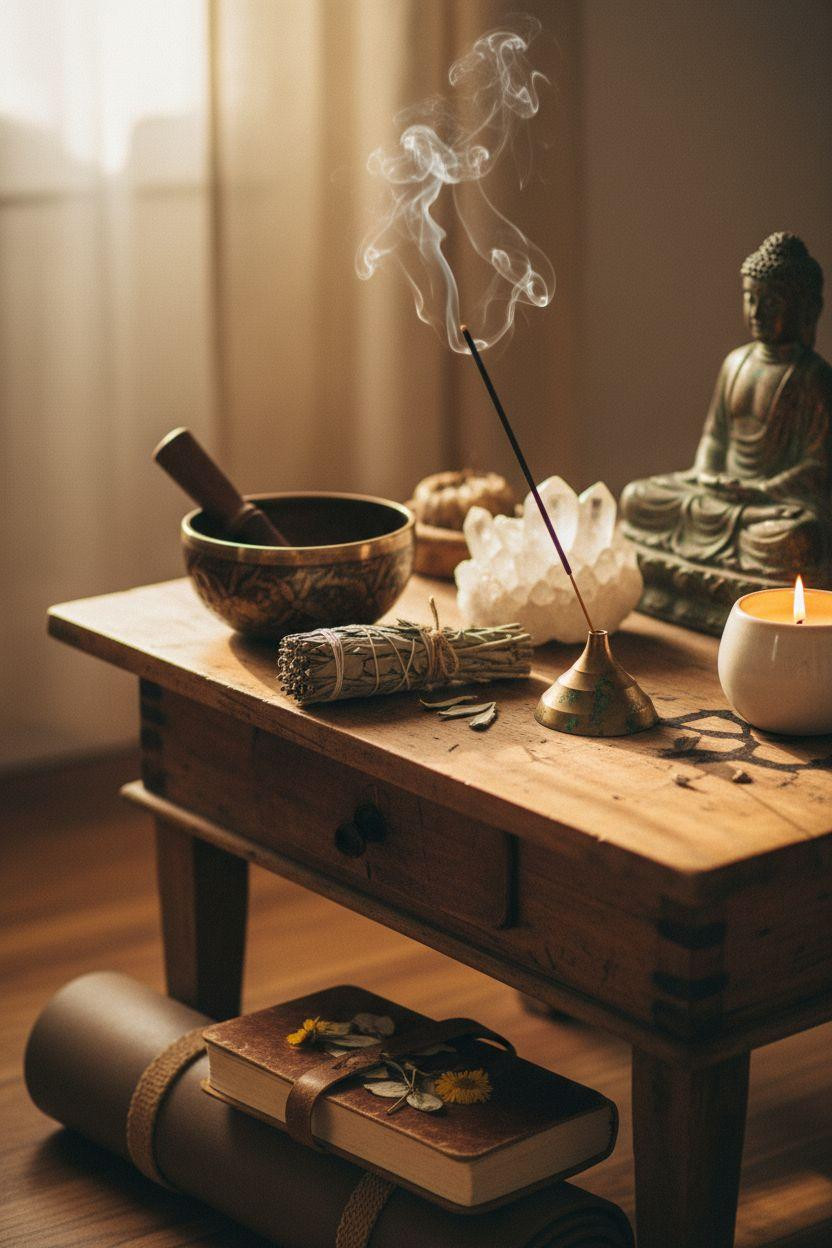
Vintage wooden altar with aged patina. The scratches and wear are part of the appeal—not something to hide. Hand-carved singing bowl, dried sage with twine binding, quartz catching light, brass incense holder with actual patina. The weathered bronze Buddha and aged leather journal complete the look. This corner has character that new pieces just can’t replicate. 10/10 recommend hitting estate sales for the altar table.
Moroccan Brass Lantern Casting Shadow Patterns
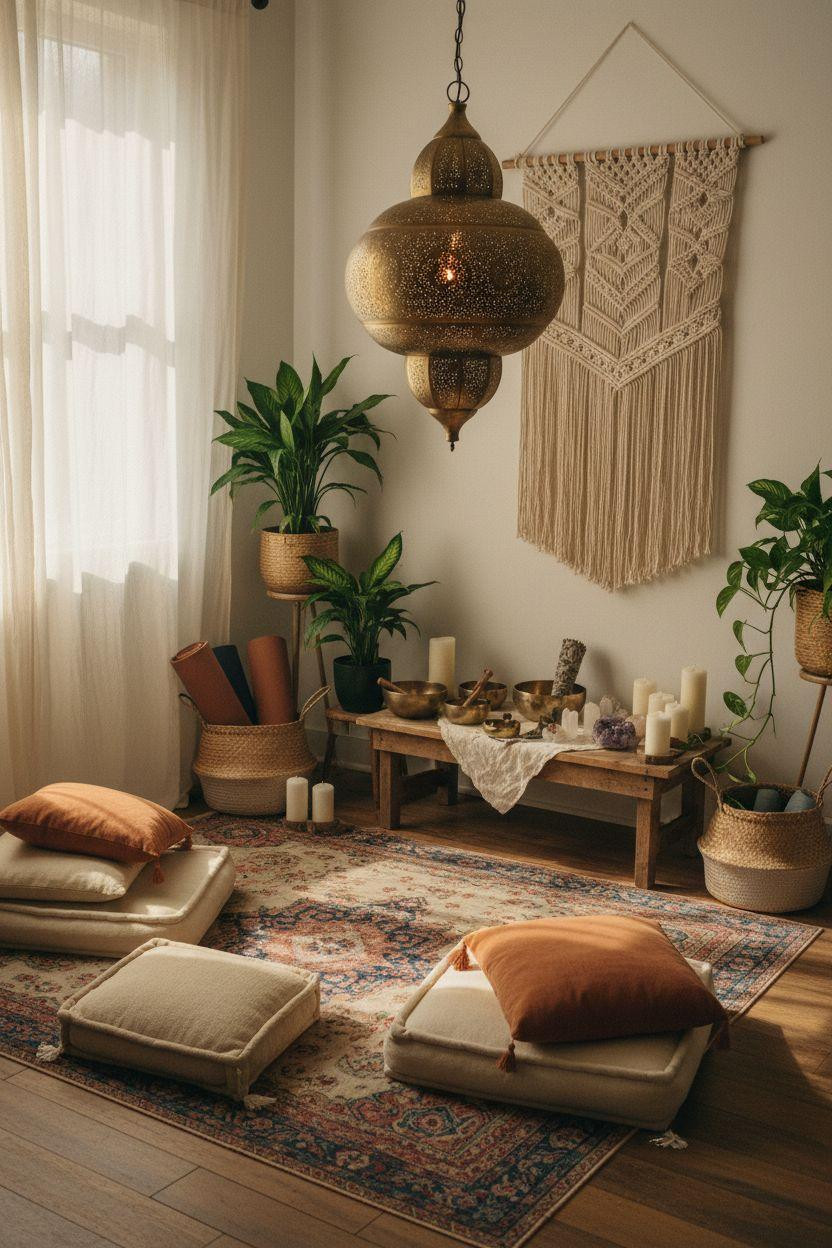
Oversized Moroccan brass lantern. The shadow patterns it throws across the floor are the entire vibe. Terracotta and cream cushions on a vintage Persian rug, altar table with singing bowls and candles, macrame on the wall. The woven basket holding rolled yoga mats keeps it functional. This setup works for larger healing spaces where the ceiling height can handle a statement pendant. Chef’s kiss for golden hour.
Natural Wood Elements with Layered Textures

Cream linen cushion on jute mat. Low wooden altar with singing bowl and sage bundle. Himalayan salt lamp casting amber glow. The layering of textures—woven jute, smooth wood, rough linen, polished crystal—is what makes this corner feel complete without being cluttered. Floating shelves hold rolled yoga mat and spiritual books. Dreamcatcher near the window adds movement. Honestly, the rattan basket with folded blankets is the unsung hero here.
Geometric Window Light Across the Floor
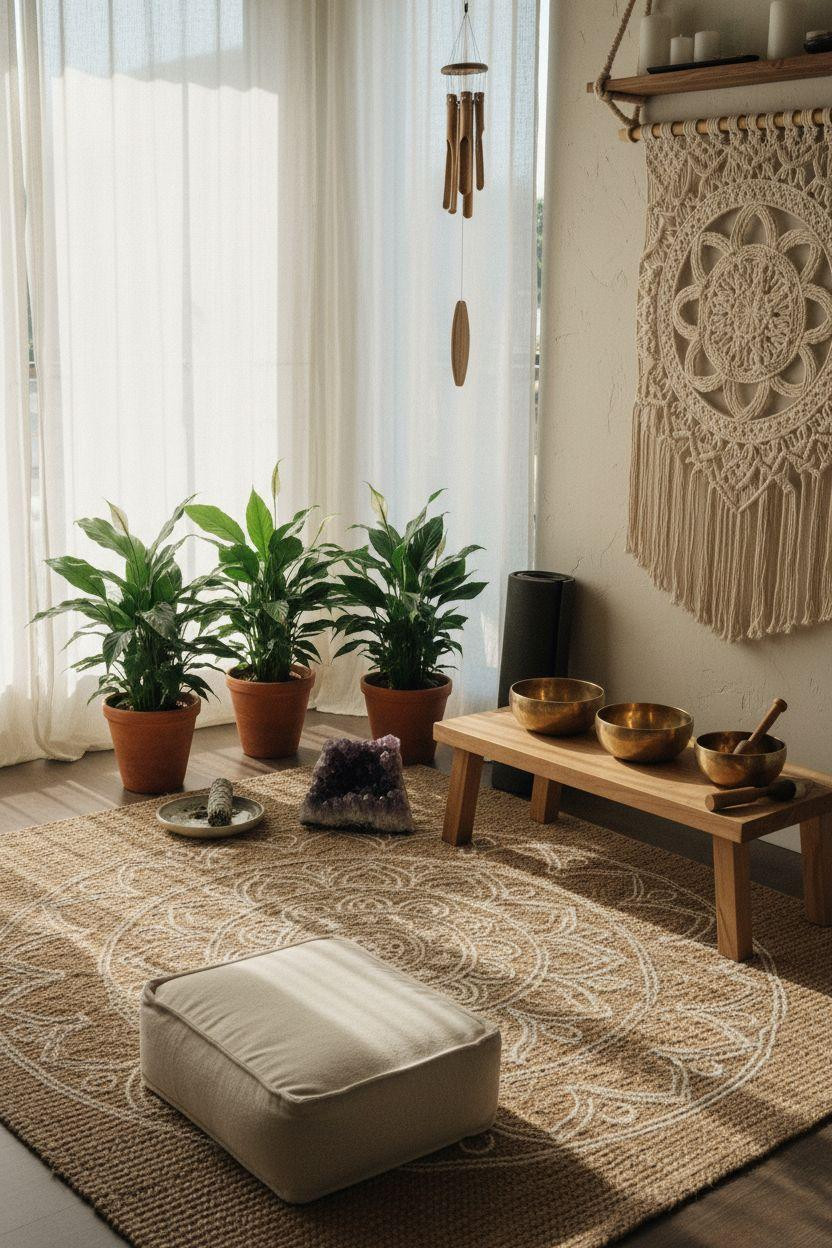
Morning light through tall windows. The geometric shadow patterns across the floor add dimension without any effort. Cream linen meditation cushion, Tibetan singing bowls on wood, rolled yoga mat, amethyst cluster. The jute rug with mandala pattern grounds the setup. Three peace lilies in terracotta pots keep it from feeling too minimal. This works if you have good natural light and don’t want to rely on lamps. The bamboo wind chimes are a nice touch.
If I had to start somewhere, I’d go with the white ceramic singing bowl setup or the selenite tower altar. Both are minimal enough to build on without feeling empty. The key is choosing one focal point and letting everything else support it—not compete with it.