
 by
by The first thing you notice in a great boho bedroom design is that nothing looks purchased all at once. It feels like the room grew slowly, one textile and one found object at a time.
These fifteen attic bedrooms do exactly that. Sloped ceilings, raw plaster, woven everything. Here's what actually makes them work.
The Attic Ceiling That Does All The Work For You
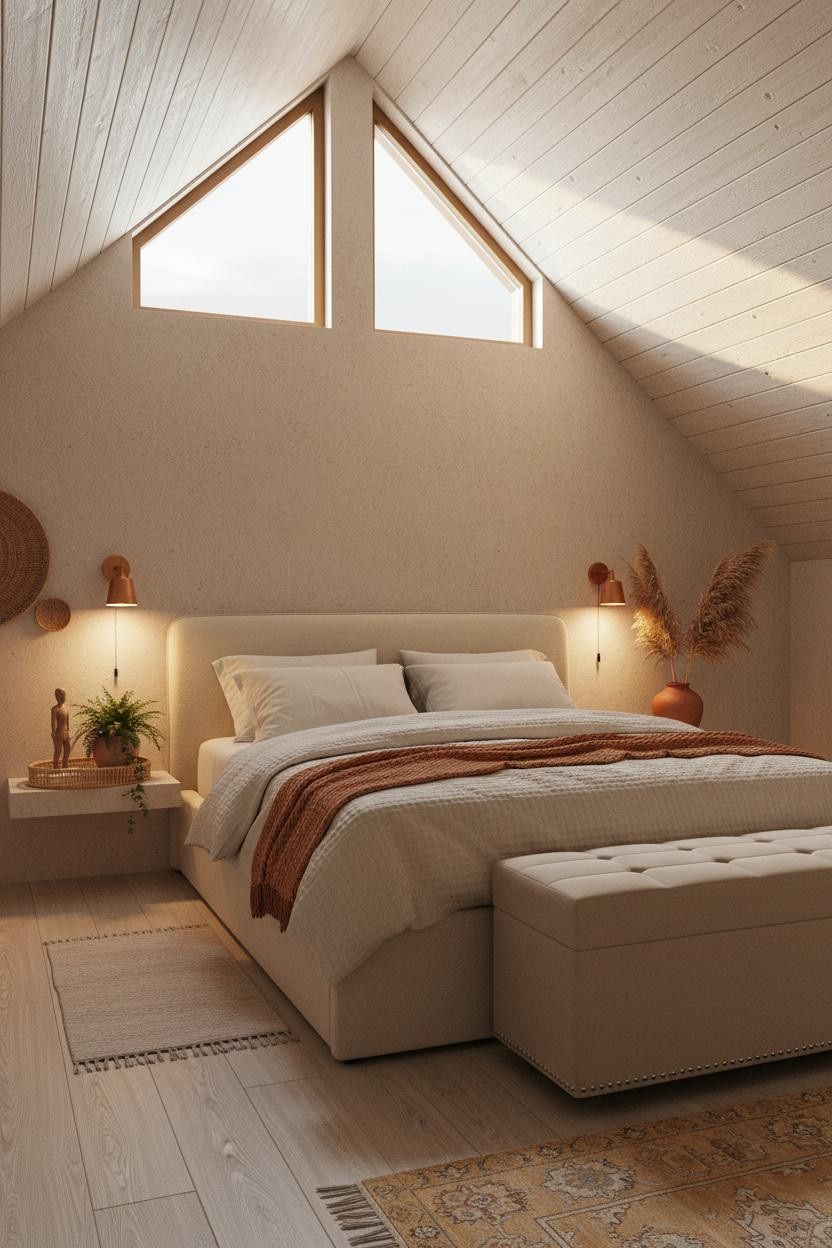

Whitewashed timber ceiling planks are honestly one of the best things you can do with an attic pitch.
Why it works: The whitewashed plank ceiling catches raking afternoon light along every board edge, so the grain itself becomes texture you can feel from across the room.
Steal this move: Ground it with a storage bench at the footboard and a kilim runner. The low horizontal line balances all that diagonal overhead.
Why A Herringbone Ceiling Changes Everything
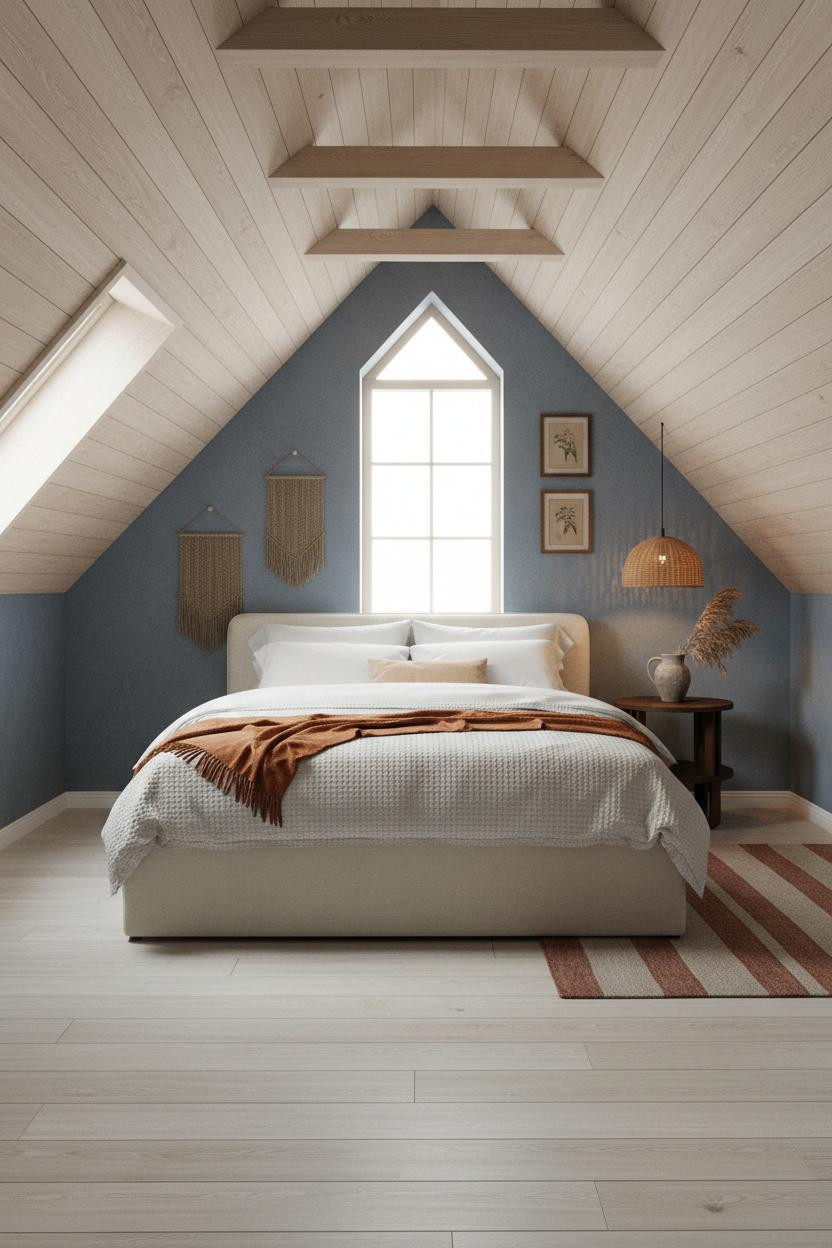

Bold choice. But the rooms that commit to a herringbone ash ceiling never feel generic.
The pattern creates directional movement that flat planks can't replicate, which keeps the eye moving even in a small attic pitch.
What makes it land: Pairing faded denim blue plaster walls with pale ash overhead keeps things from going too rustic. One cooler tone is all it takes.
The easy win: A rattan pendant at the ridge adds warmth to the grey-blue palette without requiring any structural changes.
The Arched Niche That Makes Everything Else Simple
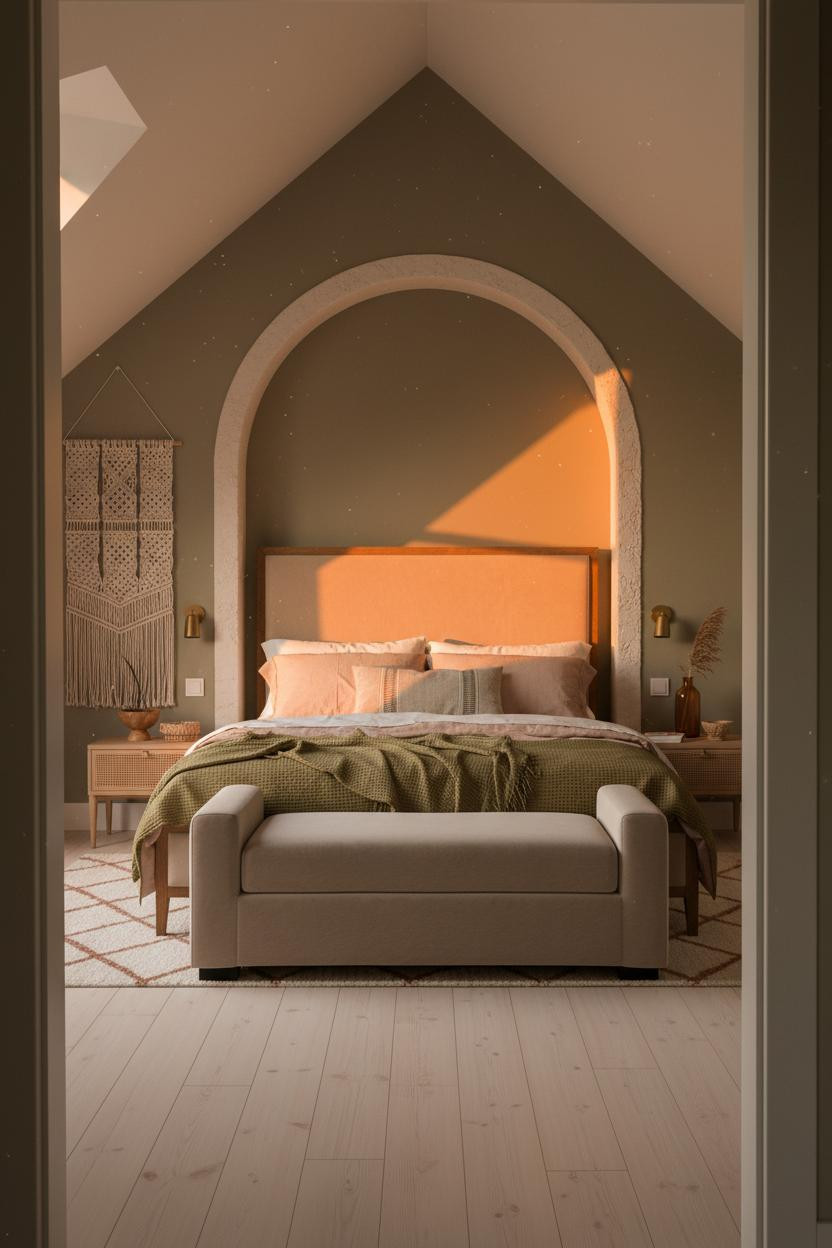


When a room has one strong architectural moment, the rest of the decor can breathe.
Why it looks custom: A hand-troweled arched plaster niche built into the sloped wall catches amber light on every troweled ridge, so the arch reads as both texture and architecture at once.
Worth copying: Center the bed under the arch and let a floor-to-ceiling macramé panel flank it. The vertical softness balances the hard curve without competing.
What A Dormer Window Does For A Boho Room
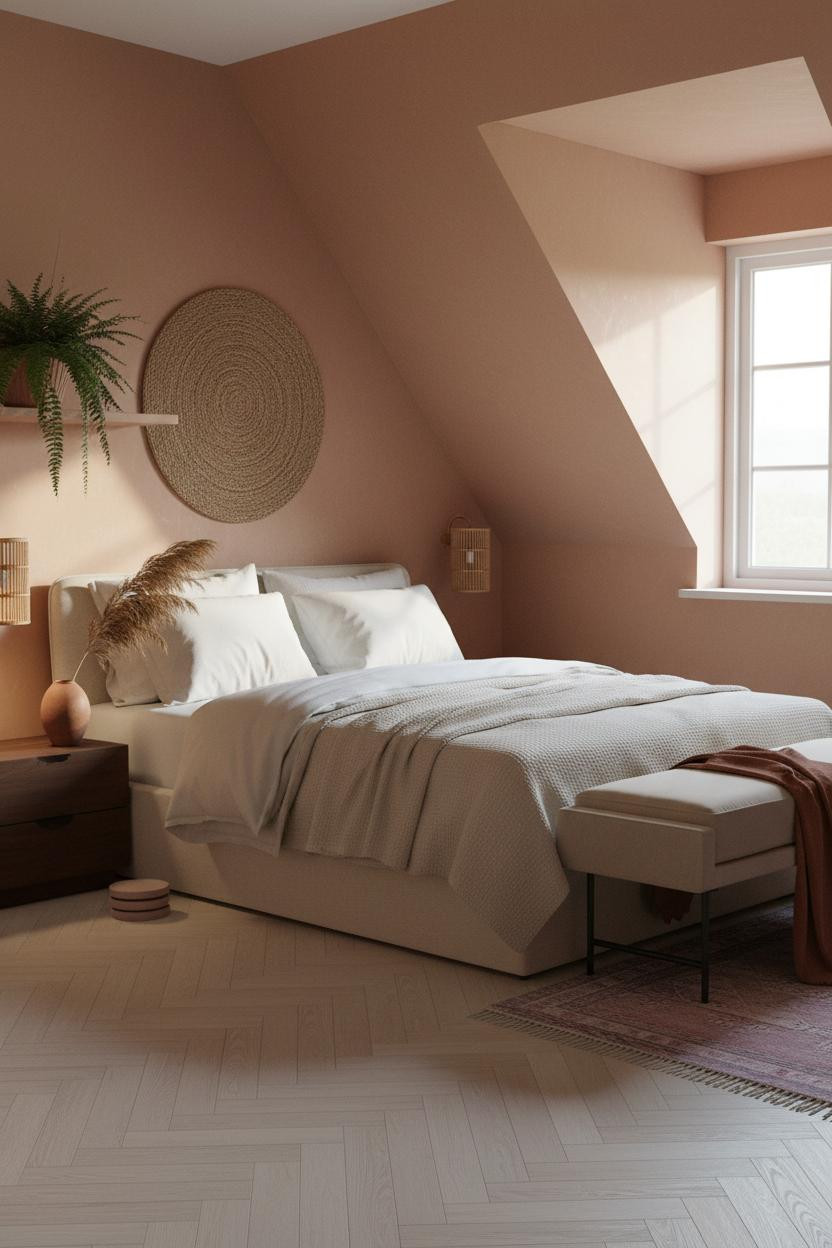
A terracotta-plastered dormer reveal is one of those details I keep saving. The niche depth catches shadow behind the divided panes, so the window becomes a light sculpture.
Design logic: The herringbone parquet floor running under a kilim runner grounds all that overhead movement from the sloped ceiling, while the warm plaster walls keep the palette from going cold.
The practical move: A jute wall hanging above the headboard and a rattan plug-in sconce give you layered light without any wiring work.
I Keep Coming Back To Board-And-Batten For Boho Rooms
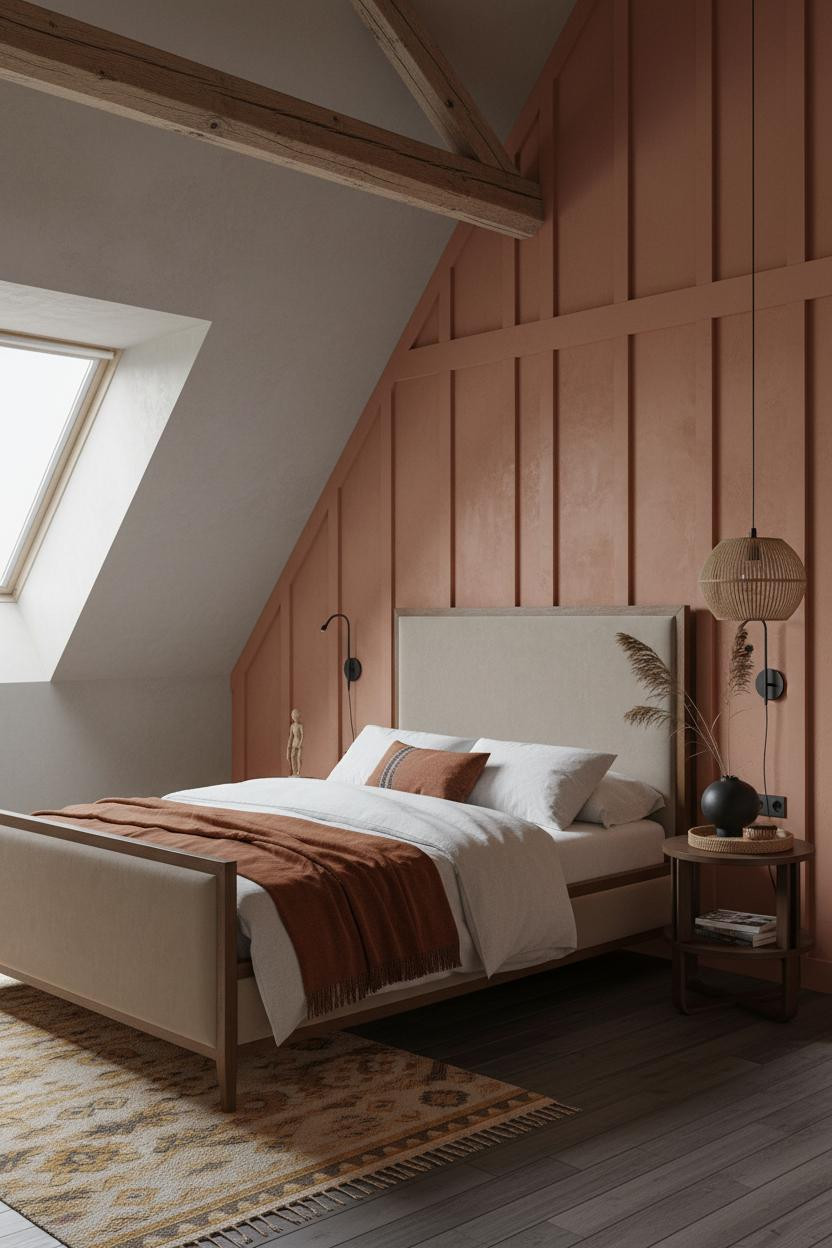
People underestimate what vertical battens do on an accent wall in an attic pitch.
Why it feels intentional: The terracotta board-and-batten wall draws the eye upward into the steep roofline, so the architecture works with the decor instead of just being overhead. Hand-troweled plaster between the battens catches oblique light, which adds depth that paint alone can't give you.
Avoid this mistake: Don't pair warm clay battens with cool grey bedding. The ochre and rust textile tones are what hold the palette together.
Raw Timber Rafters Are The Easiest Boho Upgrade
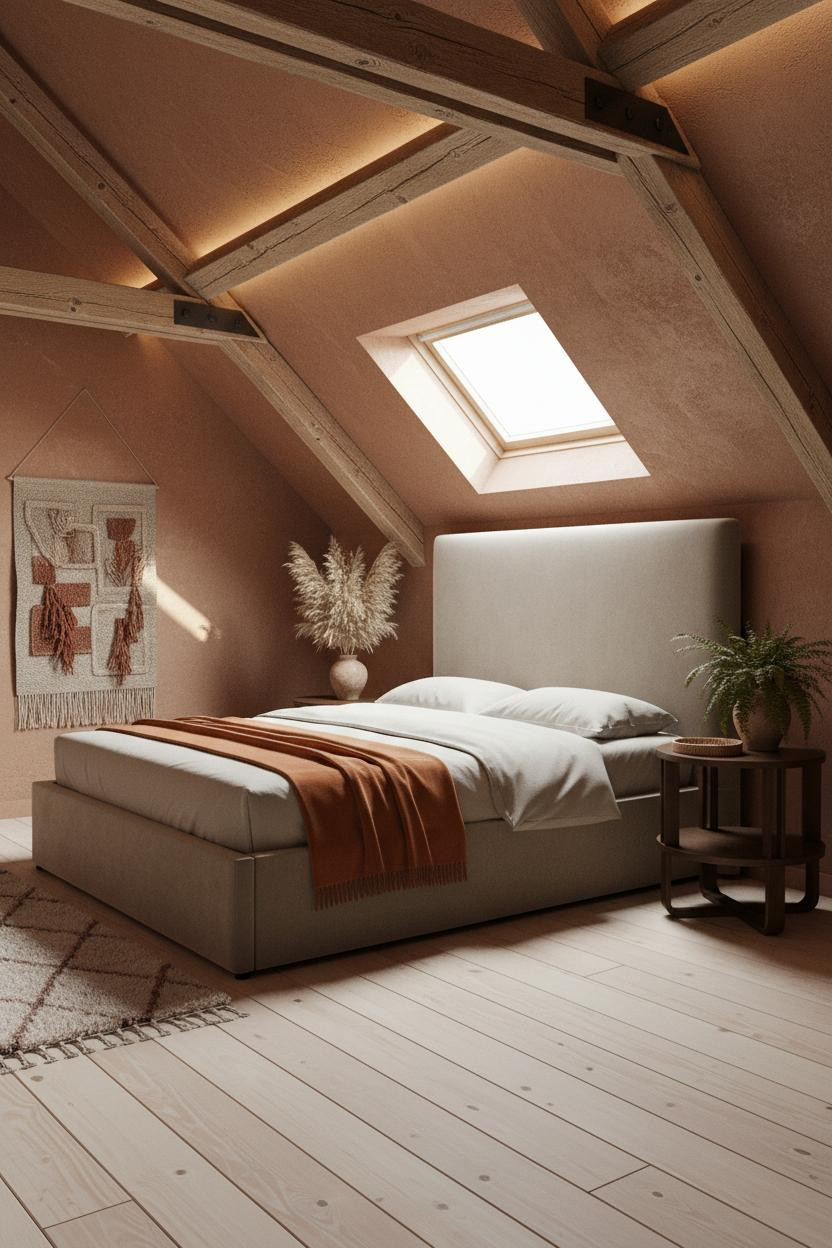

Nothing signals boho attic bedroom faster than exposed rafters, but the ones that actually work have a specific material quality to them.
The real strength: Raw-hewn beams with visible saw marks and dark iron tie bolts cast parallel shadow lines across the room below, which creates rhythm that no textile can replicate.
Pro move: Run a hidden LED cove along the ridge undersides. The warm wash at 3000K makes the grain glow at night in a way that feels genuinely atmospheric. See more about layered bedroom lighting that works with raw materials.
The Dark Accent Wall Risk That Actually Pays Off
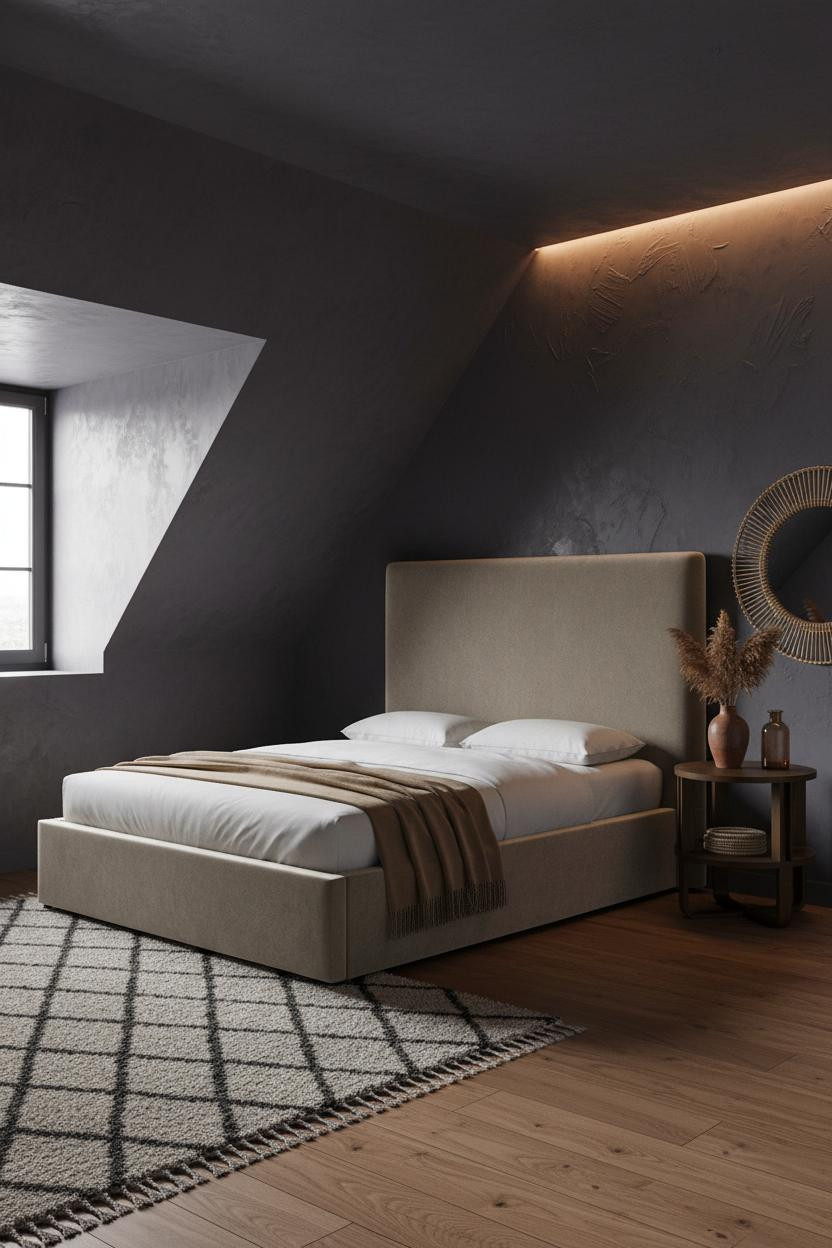
Fair warning. An indigo-plum plaster wall in an attic bedroom is divisive. But I think it's one of the more interesting moves in boho bedroom design right now.
Why it holds together: Visible trowel striations in deep indigo plaster mean the wall has movement even in flat light. The warm amber from a cove LED strip brings out the earthy undertone in the plum, which keeps it from reading cold.
What not to do: Don't add more pattern. A camel wool throw, ivory cotton bedding, and one rattan mirror is enough.
When The Window Wall Is The Whole Design
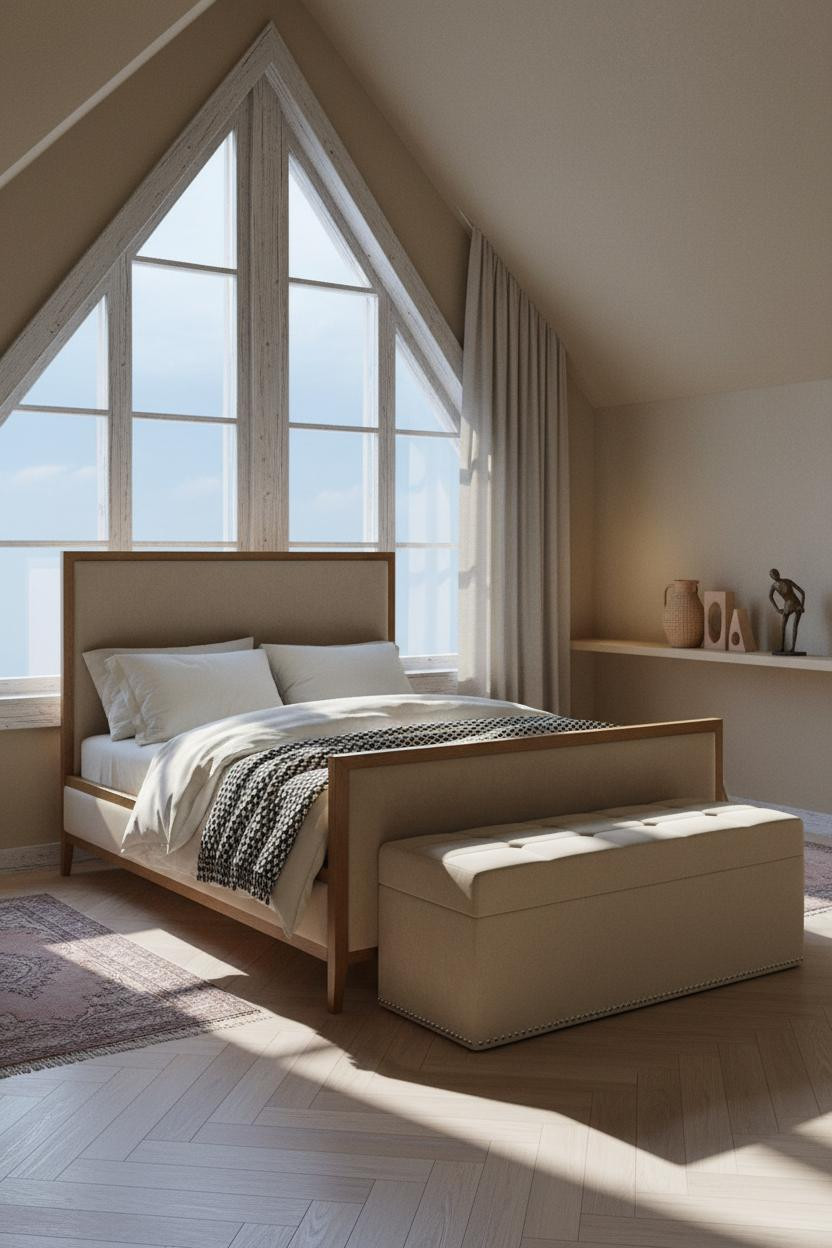
A full triangular gabled window wall in pale grey timber is the kind of architectural feature that makes everything else in the room feel considered.
What carries the look: The divided window panes throw a grid of cool morning light across pale ash herringbone parquet, giving the floor as much visual presence as the walls. The room feels collected rather than decorated because the architecture is doing the heavy lifting.
The smarter choice: Keep the textiles graphic. A black-and-white flat-weave throw over cream percale cuts through all the natural wood without adding warmth that fights the pale palette.
Ochre Plaster Walls That Feel Earned Not Trendy
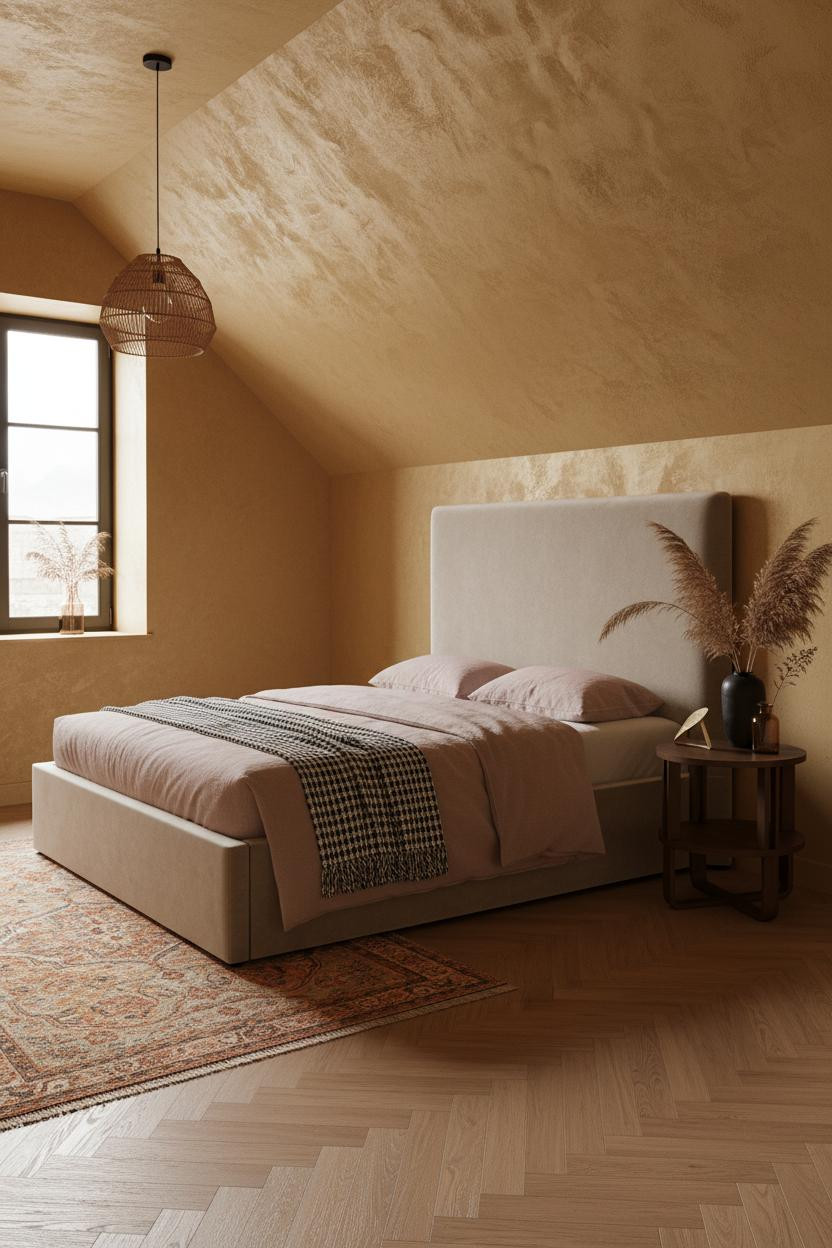
I was skeptical of gold-ochre plaster in an attic ceiling until I saw it with raking side-light. Shallow palette knife marks throw striations that shift as the light changes through the day.
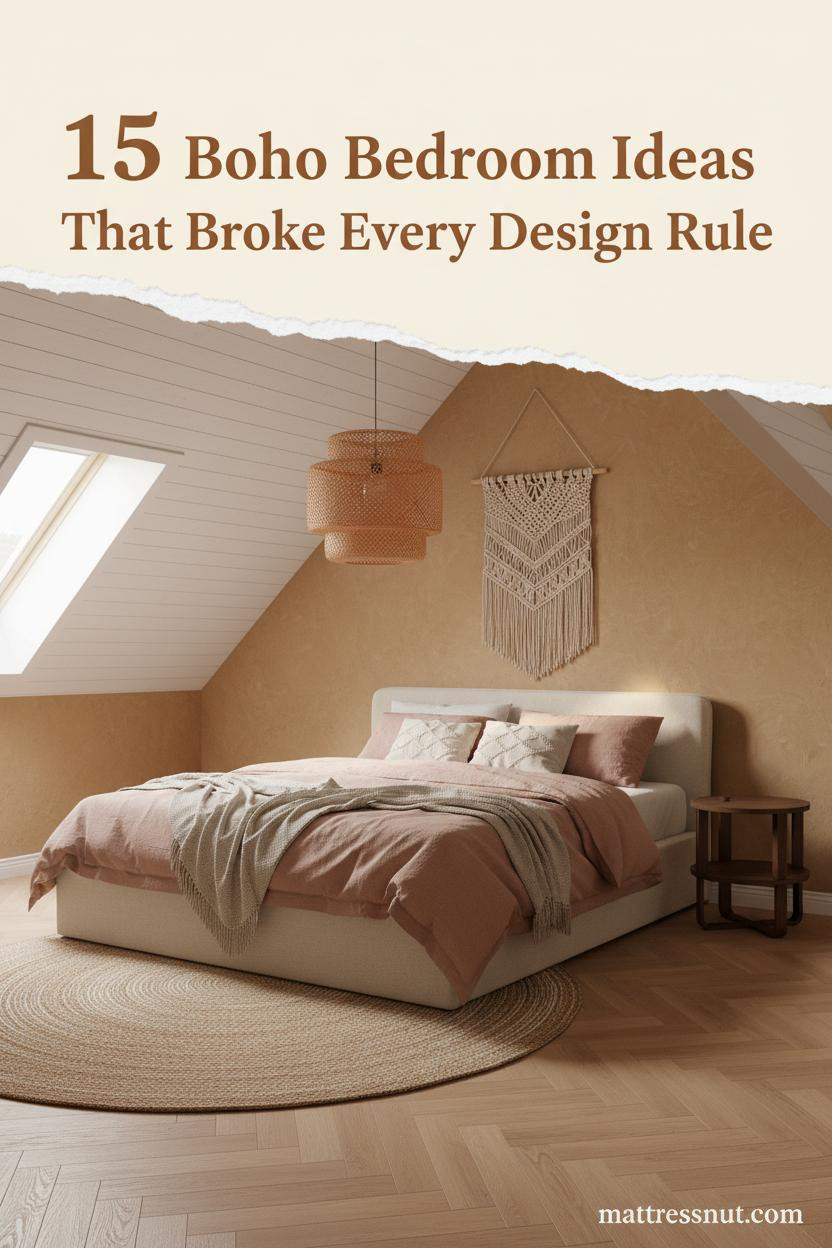
Why the palette works: Honey oak herringbone underfoot keeps the warm plaster from feeling heavy overhead, while dusty pink linen bedding threads a cooler note through the center of the room without breaking the warmth.
One smart swap: Replace any overhead pendant with a rattan lamp hung from the ridge beam. The warm amber pool it casts across the nightstand makes the whole room feel slower.
Why A Whitewashed Ceiling Stays Interesting Year-Round
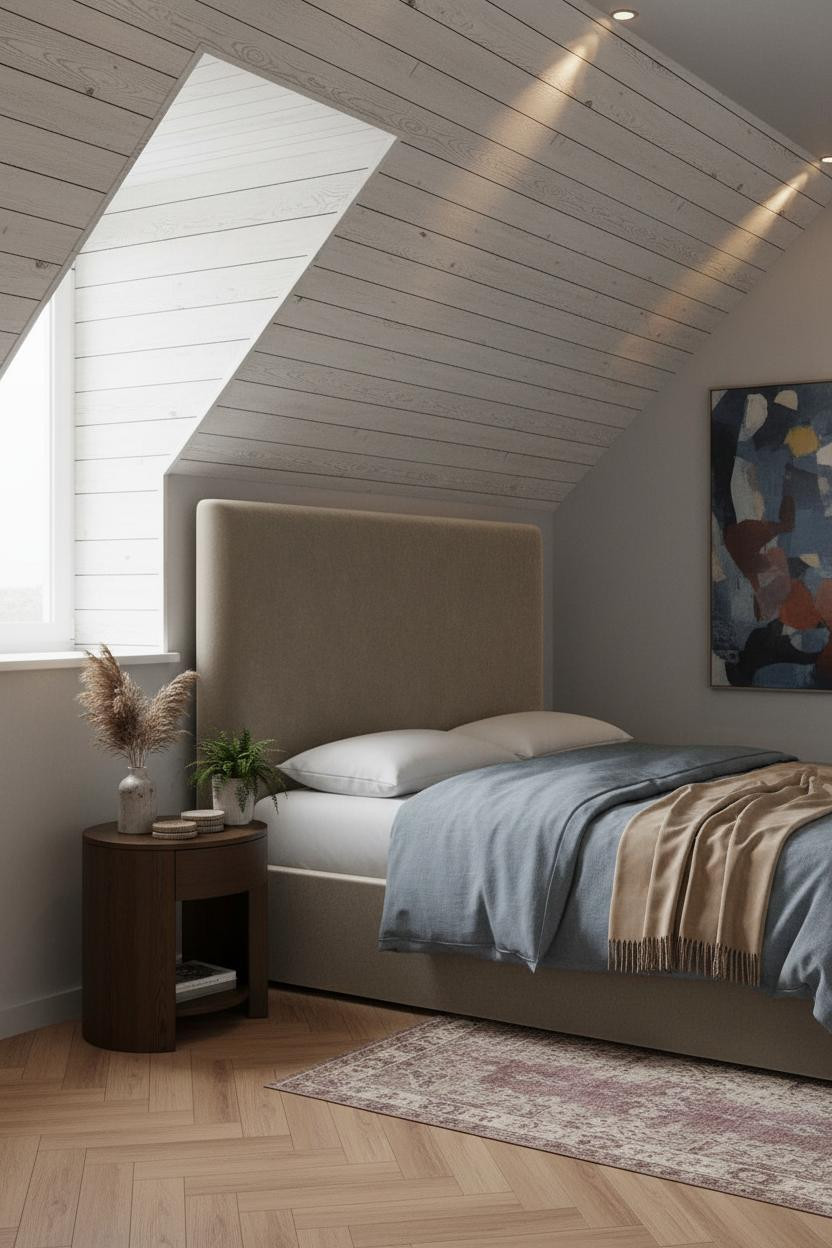

Nothing fancy. That's the point.
What gives it depth: Raw whitewashed plank boards running parallel to the ridge reveal deep grain texture under diffused light, creating a bold diagonal canopy while still feeling soft. Dove grey plaster walls keep the mood even without competing with the ceiling movement. And a camel wool throw draped unevenly off the footboard is the one piece of deliberate imperfection that makes the whole room feel lived-in rather than staged.
Honey Timber Rafters With A Wicker Mirror That Just Works
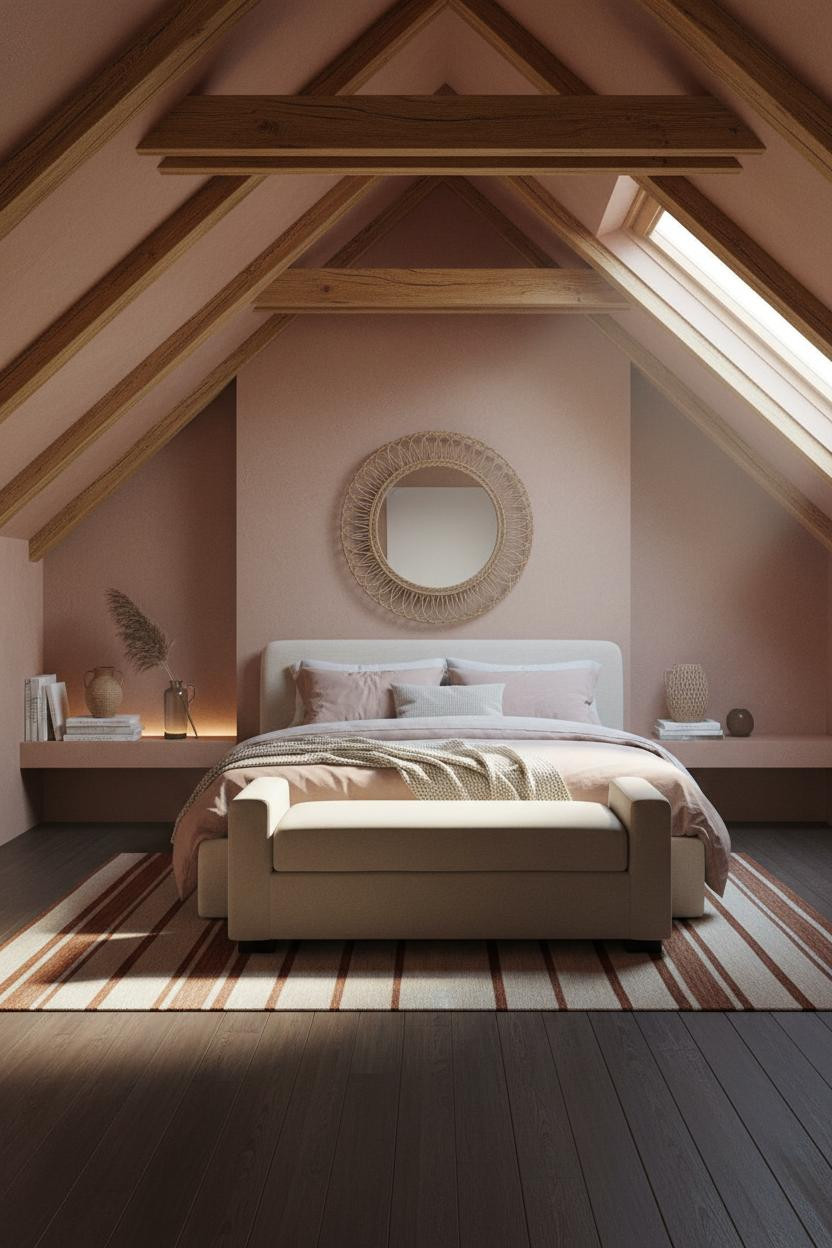
I almost scrolled past this one. Glad I didn't.
What creates the mood: Honey-stained exposed rafters cast soft parallel shadows downward, so the room feels proportioned and intimate while still feeling open. The oversized round wicker mirror echoes the rafter curve in a way that feels accidental rather than coordinated, which is exactly what boho rooms get right when they're working. And a dusty rose linen bedding layer keeps the warmth without going full terracotta.
A Japandi Accent Wall That Earns Its Boho Credentials
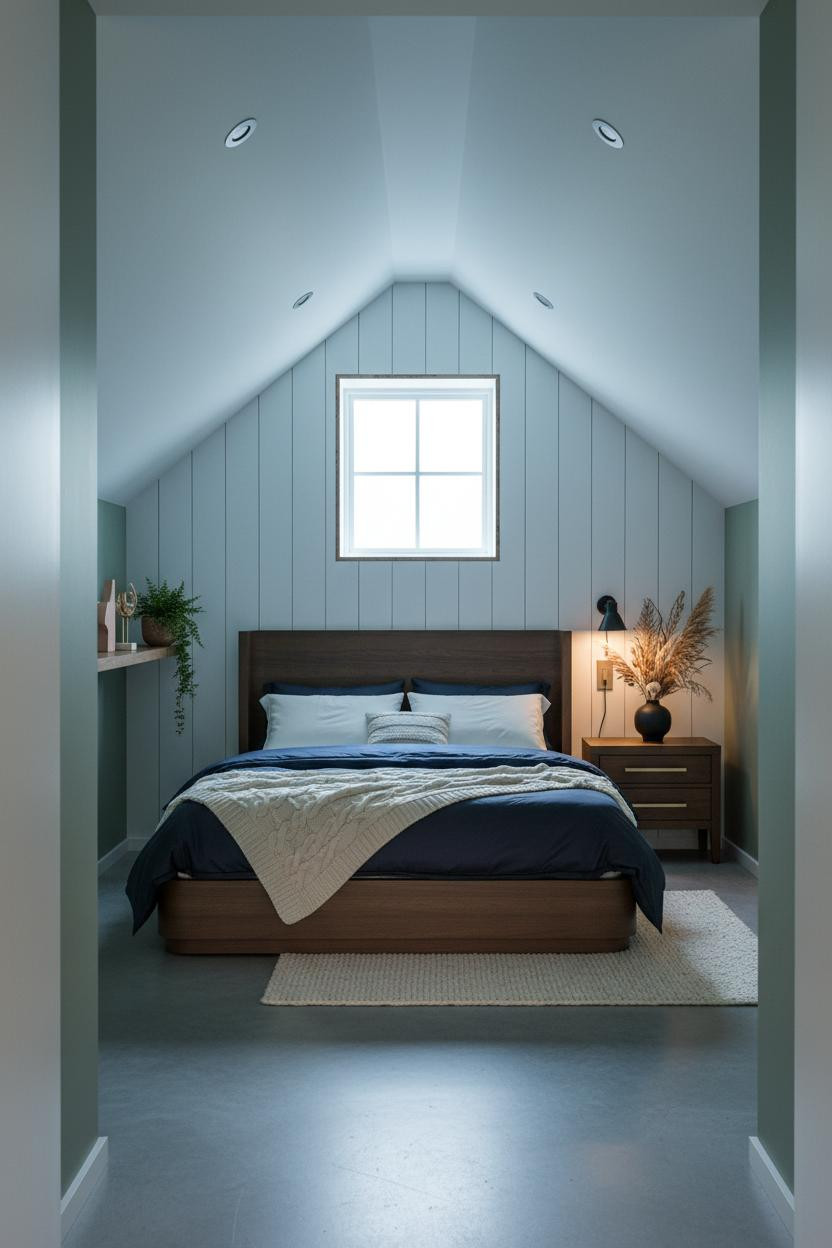


This is where Japandi bedroom design and boho actually meet, and it's more natural than it sounds.
What makes this one different: White-painted board-and-batten planks with slightly raw wood edges create rhythmic vertical lines that draw the eye up into the steep pitch, in a way that feels grounded instead of fussy. Muted moss green flanking walls soften the contrast while still letting the batten geometry land.
The key piece: Chunky cream wool at the footboard and navy sateen bedding are the two tones that bridge the Japandi restraint with the boho warmth. Don't add a third.
Sage Green Walls Under A Terracotta Ceiling
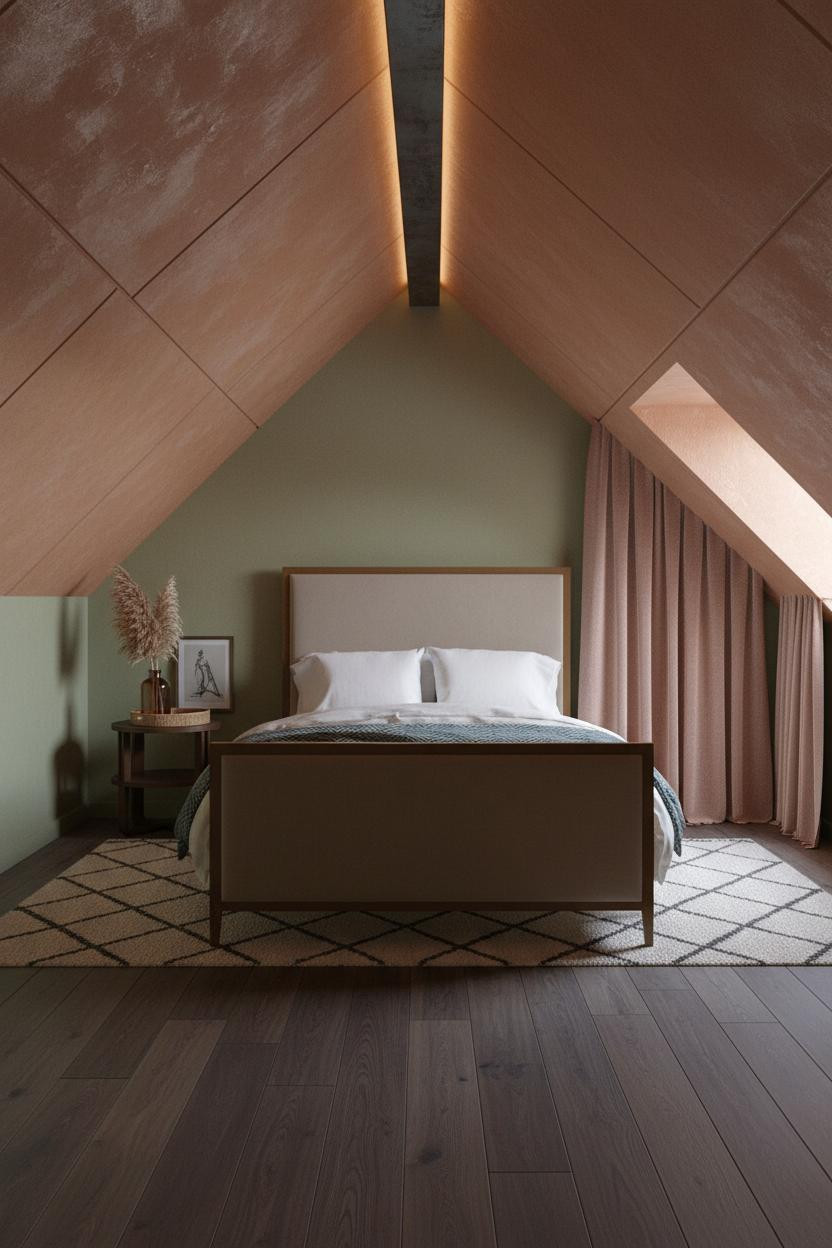
It shouldn't work on paper. Sage walls below a terracotta-tinted plaster ceiling sounds like it would clash. But the matte finish on both surfaces is what resolves it.
Why it feels balanced: Flat chalky finishes absorb light rather than bounce it, so the two warm-cool tones sit quietly together while the dark walnut wide plank floor anchors the whole palette at ground level.
Where to start: Floor-to-ceiling dusty rose linen curtains at the window wall. They soften the terracotta overhead and pull out the warmth in the walnut below, while still feeling relaxed.
Whitewashed Diagonal Beams That Earn Every Inch
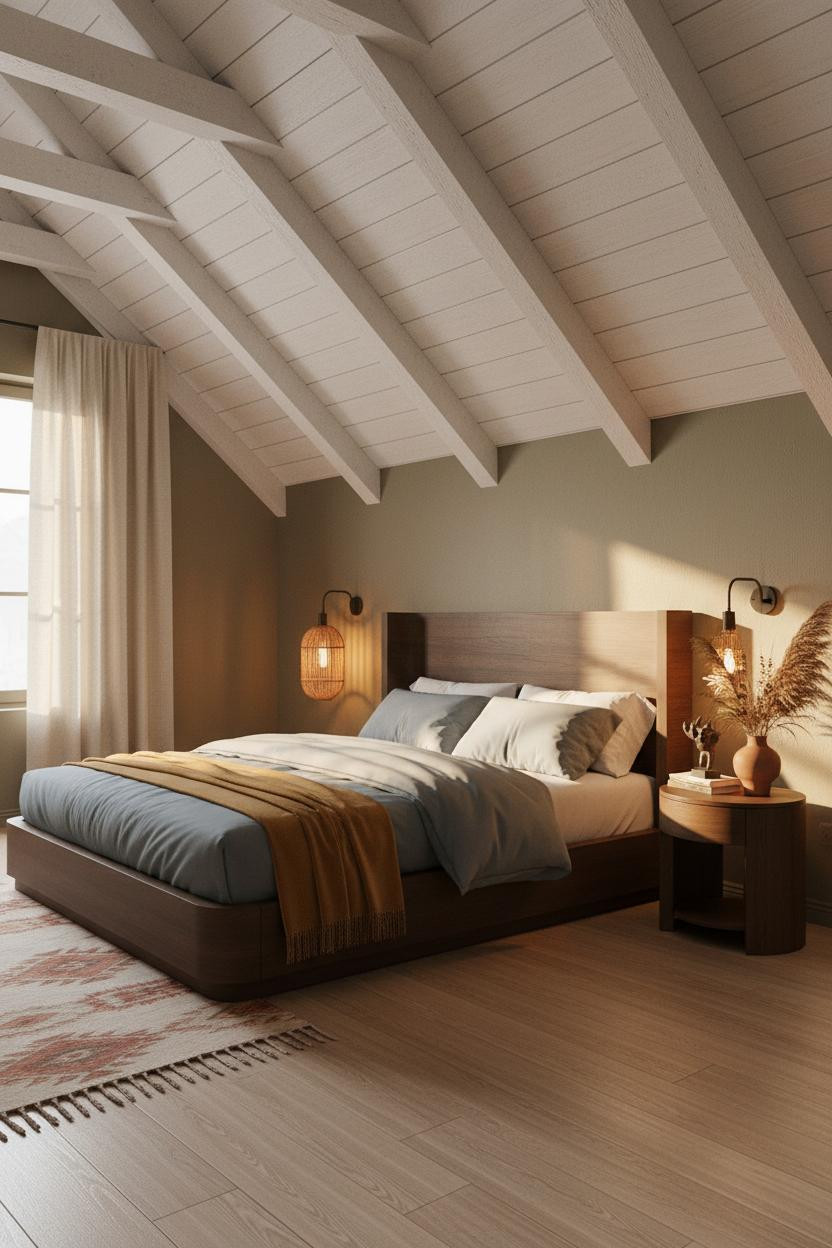
Late afternoon light through a dormer hits whitewashed diagonal timber beams differently than morning light does. The grain softens and the geometric shadow lines stretch long across the walls, which makes the room feel almost cinematic at golden hour.
What sharpens the room: Dusty olive plaster walls keep the whitewash from feeling bleached out, while a mustard wool blanket at the footboard pulls the warmth back down to eye level. The look only works if the curtain hem grazes the floor (just slightly off-center is actually better than perfect).
The Macramé Room That Doesn't Feel Like 2015
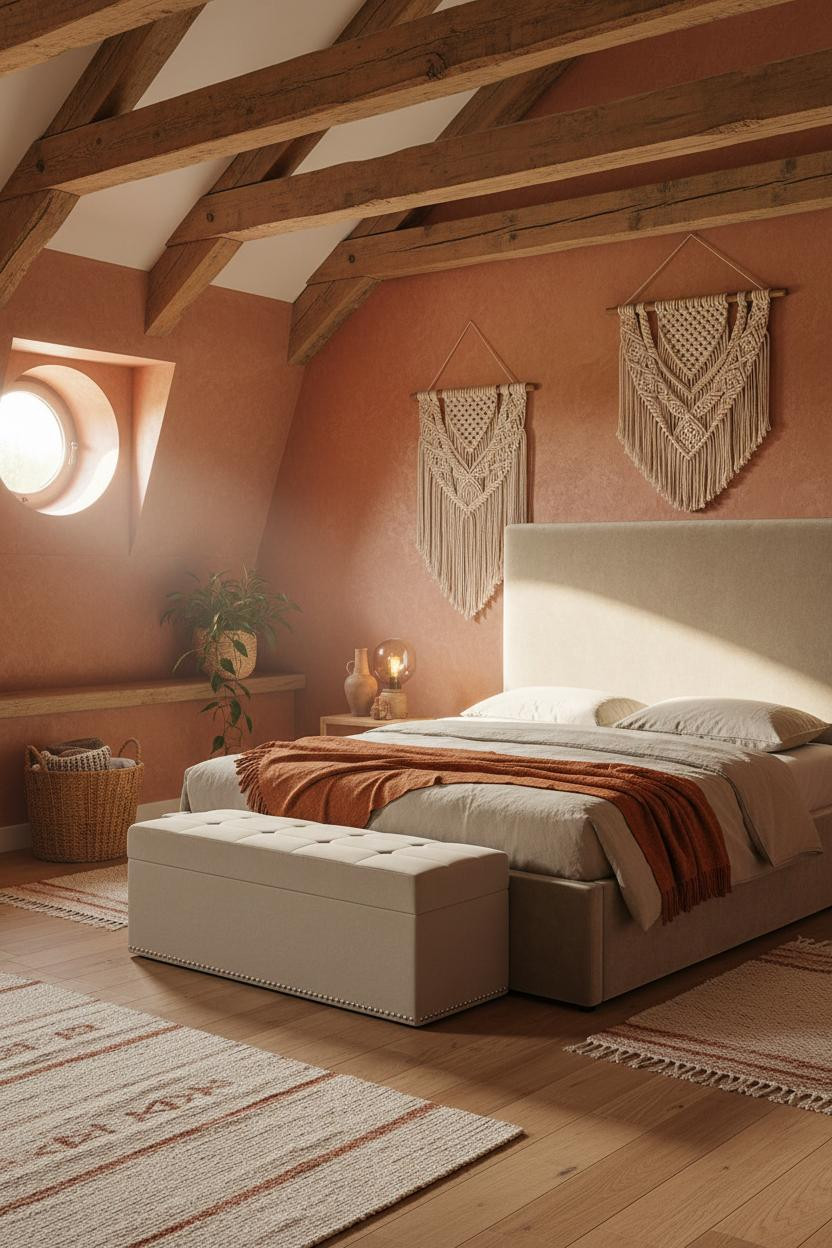
Admittedly, macramé is an easy way to make a boho room feel dated. But in an attic with exposed beams and terracotta plaster walls, it somehow earns its place.
Why it works here: The natural patina timber beams overhead create enough structural weight that a large macramé panel above the bed reads as art rather than trend. And the morning light through a porthole window casts macramé shadows across hand-applied plaster in a way that no framed print could replicate.
What to copy first: The layering order matters. Get the wall texture and beam tone right first, then let the textiles follow.

Our #1 Pick
Saatva Classic Mattress
America's best-selling online luxury innerspring. 365-night trial, lifetime warranty, free white glove delivery.
Shop Saatva Classic
The Foundation Of Every Beautiful Bedroom
Every attic bedroom in this list gets the surfaces right. Raw plaster, woven textiles, honest materials. But the rooms that feel genuinely restful have one more thing going for them: a bed worth sleeping in.
The Saatva Classic is what I'd put under all of this. Dual-coil support that holds its shape, a cotton cover that breathes through warm nights, and a Euro pillow top that's soft without going slack. Walls get repainted. Textiles get swapped. The mattress stays.

Good design ages well because it's made well. Start with the bed and let everything else follow from there.