
 by
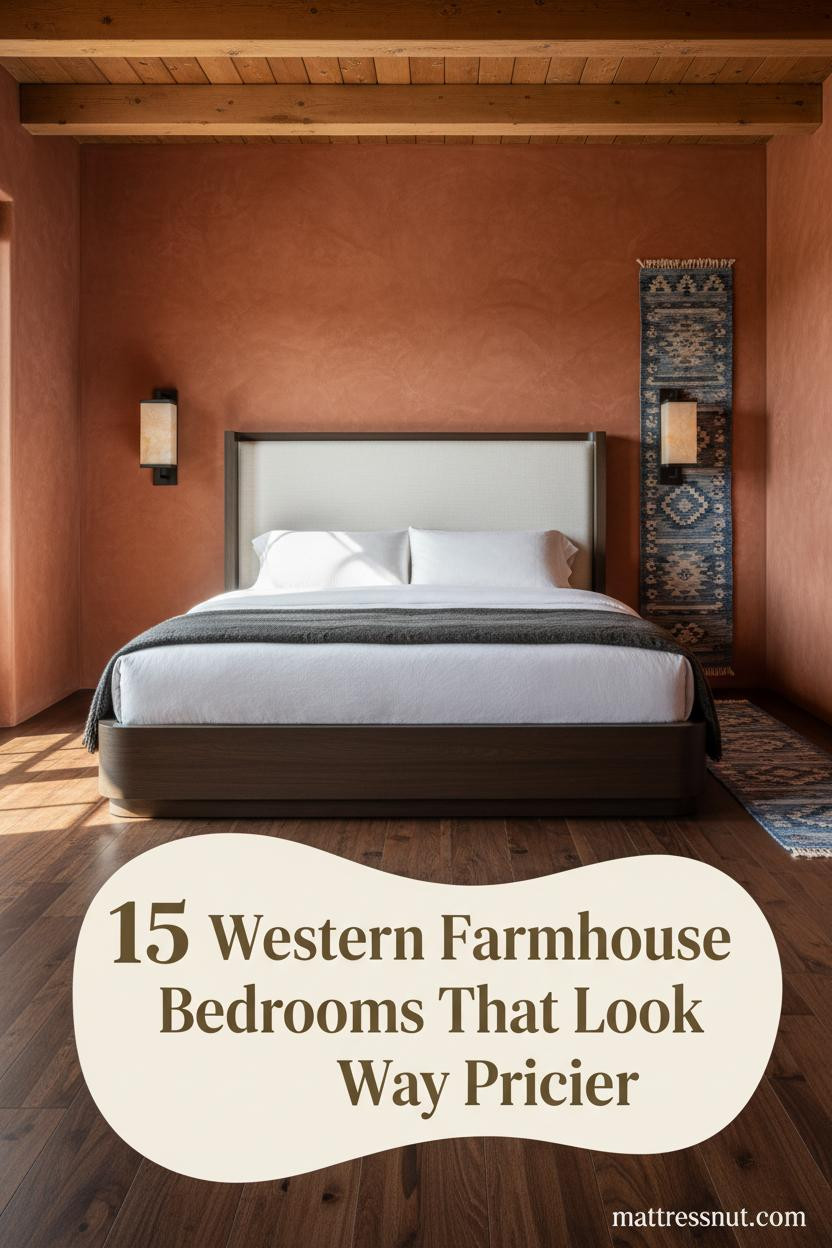
by The first thing you notice in the best Western farmhouse bedroom is what's missing. No matching sets. No theme-park cowboy kitsch. Just raw materials, warm light, and the kind of layered quiet that only comes from rooms built slowly.
These 15 rooms prove you don't need a ranch to get the look. You just need to know which moves matter.
Deep Terracotta Plaster That Feels Like Last Light
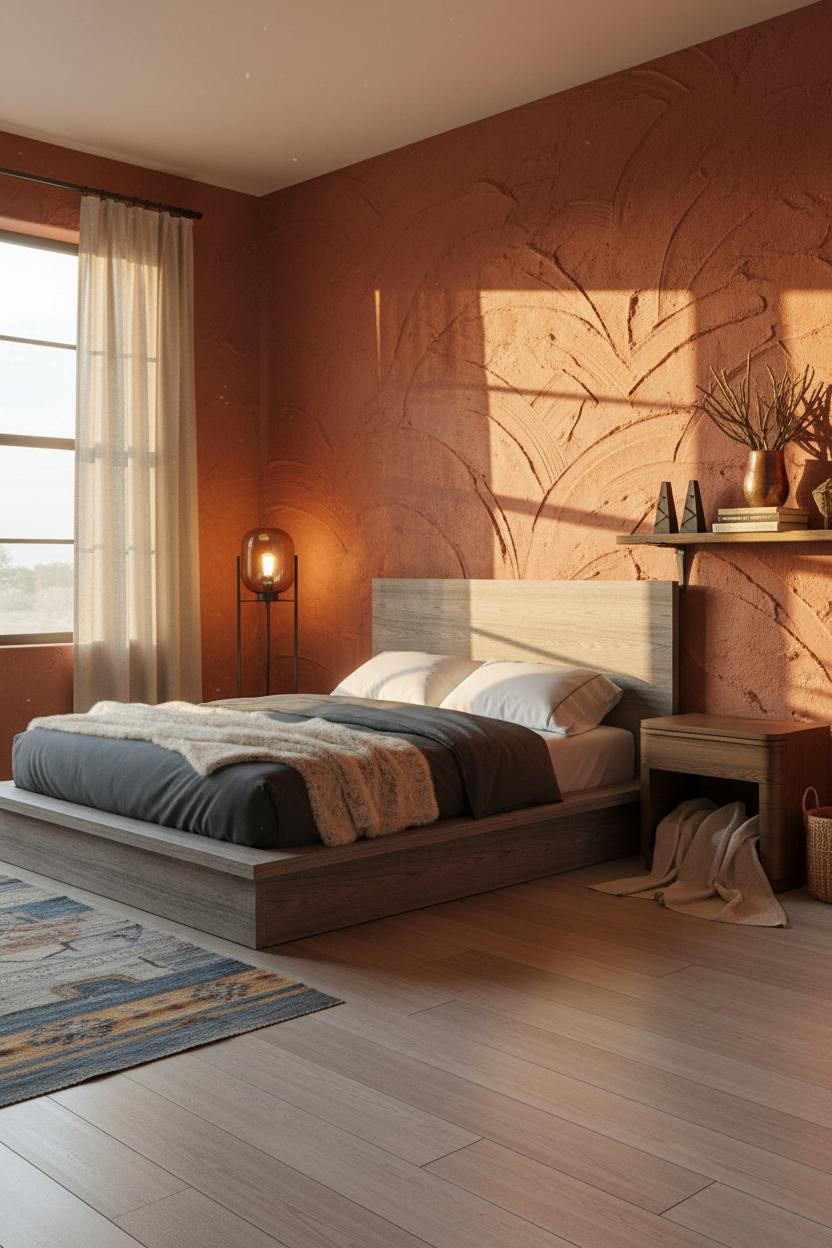


I keep coming back to this one. Something about hand-applied terracotta plaster with visible trowel drag marks makes the whole room feel like it was built, not decorated.
Why it works: The sand aggregate pressed into the surface catches raking light all day, so the wall changes from morning to evening in a way that flat paint simply can't do.
Steal this move: Pair the rust wall with a kilim runner in faded indigo and cream. The contrast grounds the warmth without tipping into heavy.
Exposed Timber and Forest Green That Hold Each Other Up
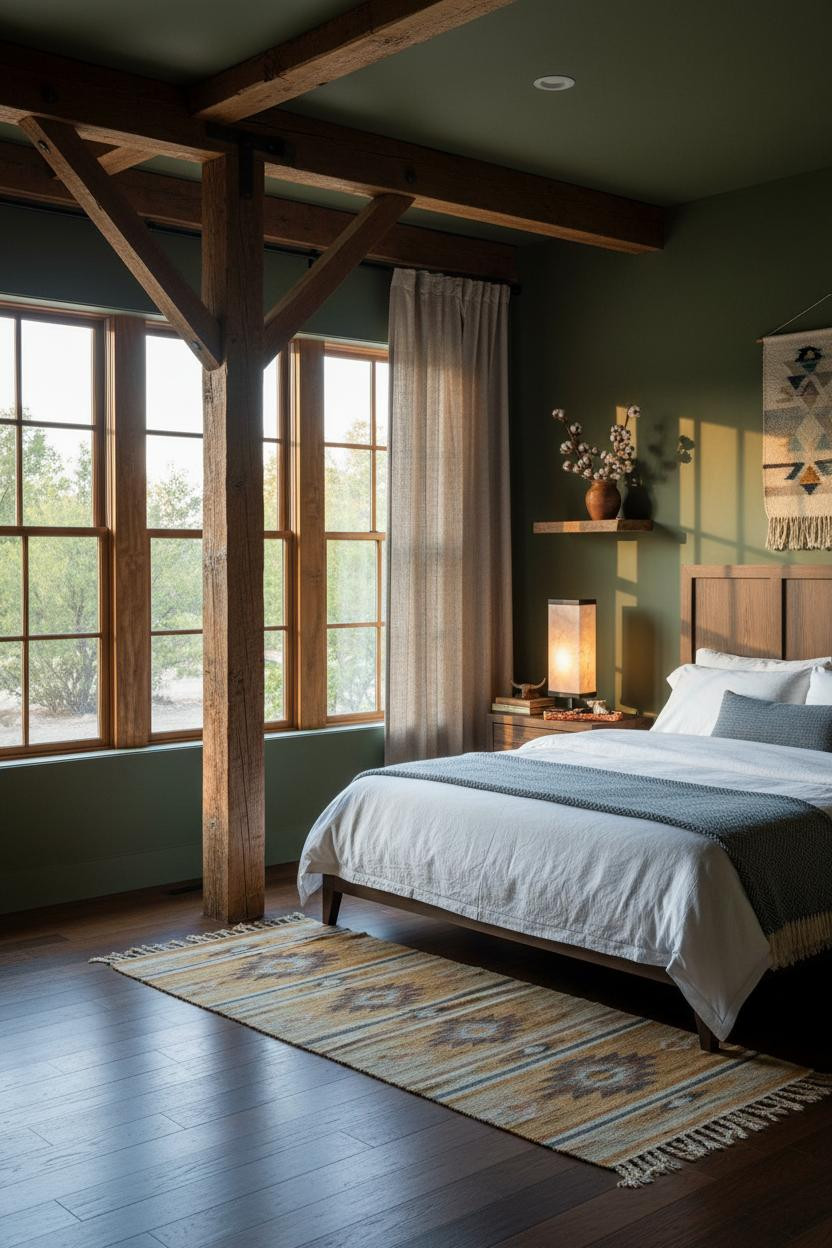

Bold choice. Deep forest green plaster with raw post-and-beam timber. But the people who commit to this combination never repaint.
The silvery weathered grain on the hand-hewn vertical supports pulls enough cool out of the green to keep the room from feeling closed in. Deep green walls actually need that kind of roughness beside them to breathe.
The easy win: Add a bedside lamp with an antique finish. That warm amber pool on dark walnut surfaces is the whole mood, honestly.
Cedar Shiplap With a Concrete Floor Underneath
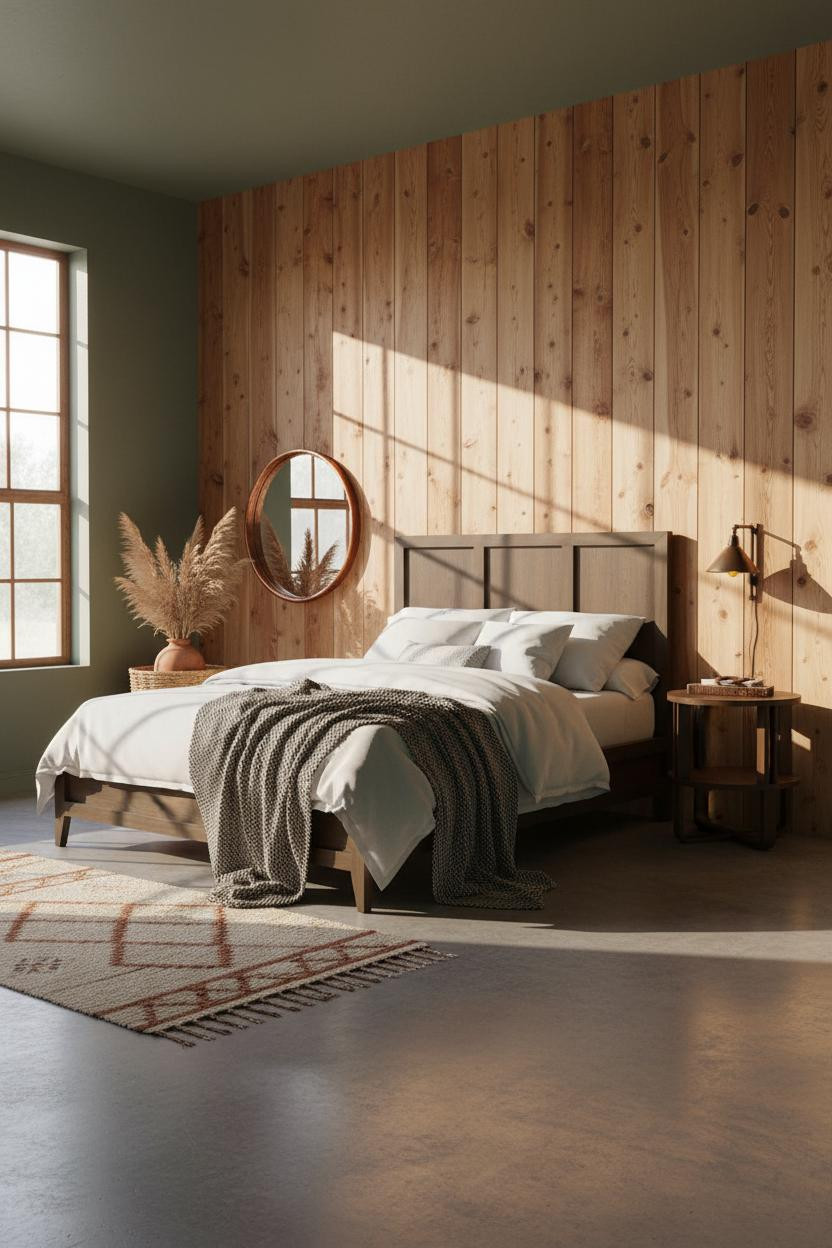

This one surprised me. Concrete floors in a bedroom sound cold, but the raw honey-amber of unfinished cedar shiplap above it makes the room feel warm and collected.
What makes it work: The shadow lines between cedar planks create enough visual rhythm that you don't need anything else on that wall. And the Moroccan diamond runner in cream and burnt sienna does the same job underfoot, bridging warm wood above and cool concrete below.
Pro move: Lean an oversized hammered-copper mirror against the shiplap instead of hanging it. That casual lean is very much a Western boho move and it works every time.
Rust Lime Plaster Meets Charcoal at Dawn
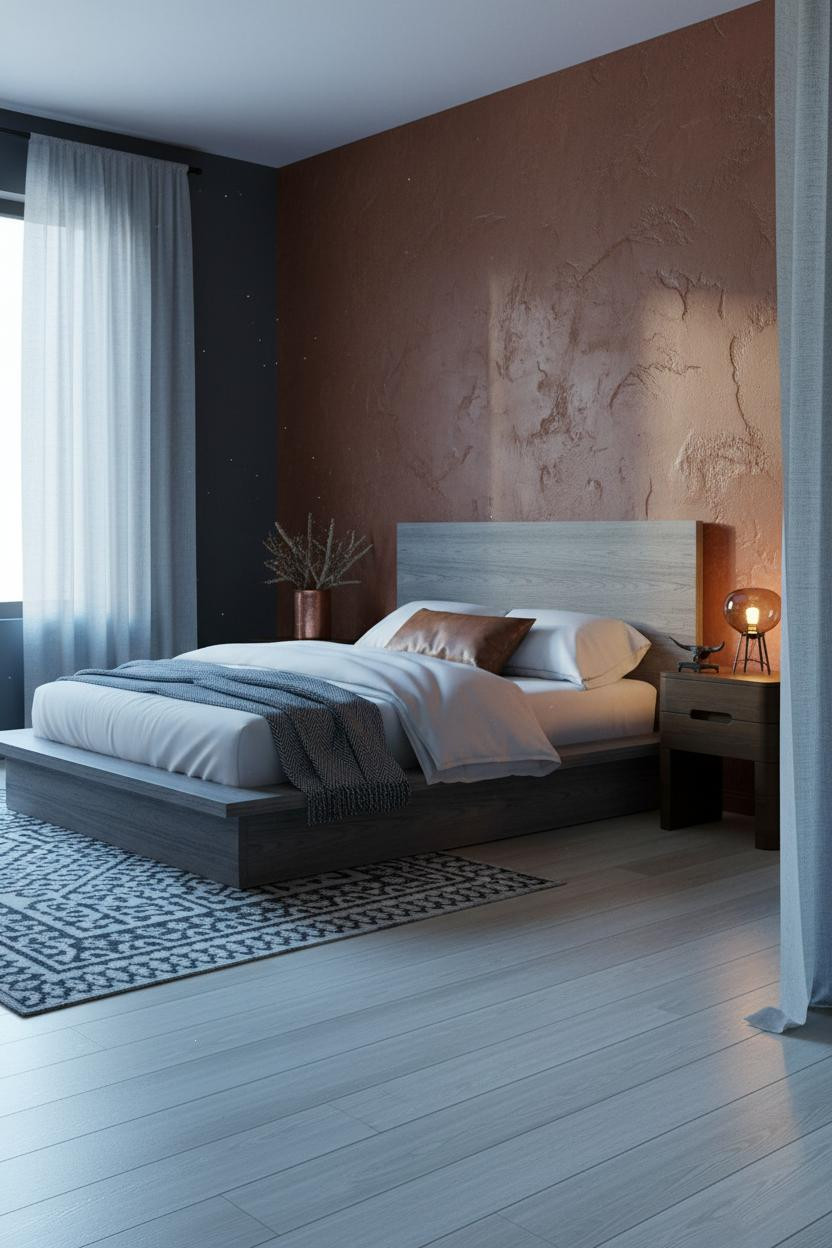

Deep charcoal flanking walls and a Venetian-style rust-bronze lime plaster behind the bed. It shouldn't feel balanced. But it does.
Design logic: Charcoal pulls the rust toward bronze rather than orange, which is what keeps this from reading like a bad '90s revival. The coarse sand aggregate in the plaster catches that pale morning flood and makes the wall look almost three-dimensional.
The graphic black-and-white flat-weave rug is load-bearing here. Skip it and the palette tips too warm. Don't ruin it with a patterned duvet. One graphic surface is enough.
Beadboard Wainscoting in a Sun-Bleached Frontier Lodge
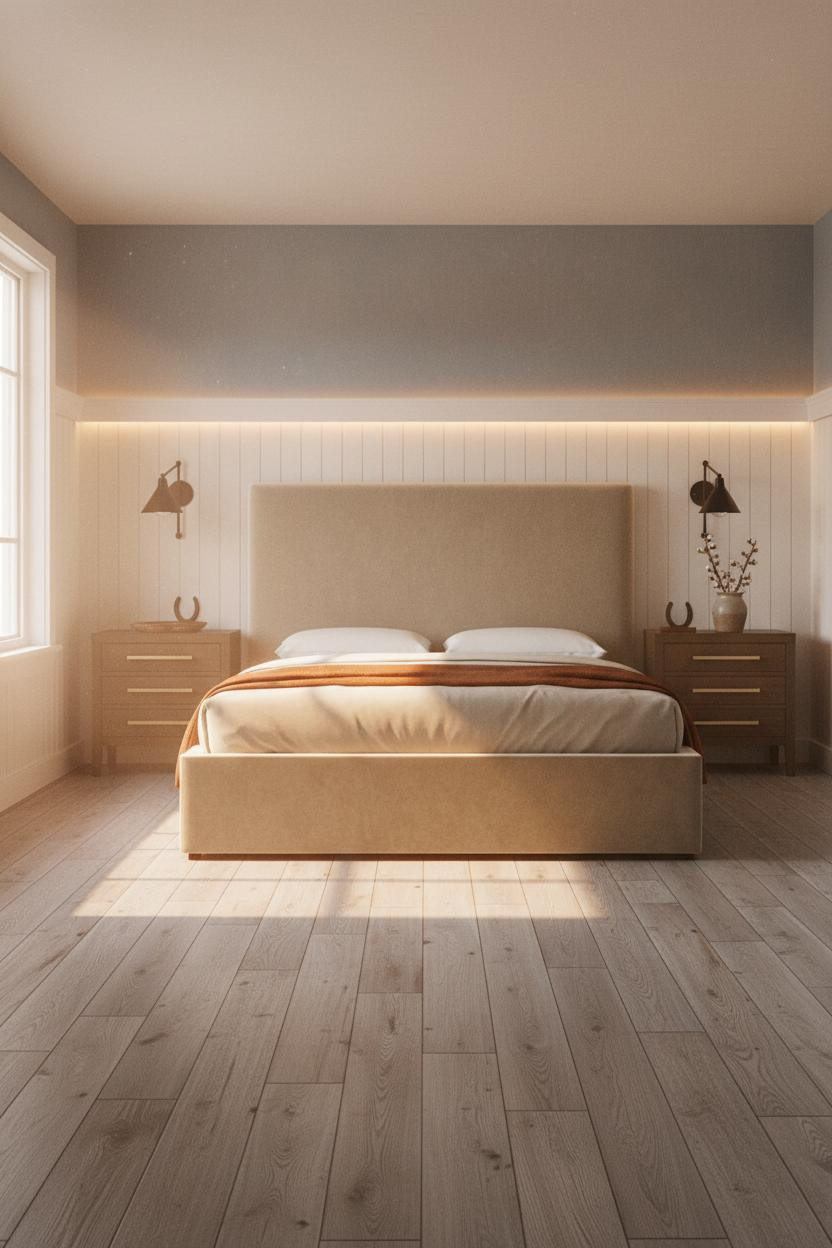


Nothing fancy. That's the point.
The lower half in antique linen-white raised beadboard and faded denim-blue smooth plaster above creates a horizontal line that acts like an architectural dado rail, just with more character than the real thing. The room feels calm and cohesive, like a lodge that's been slowly accumulated over decades rather than styled in an afternoon.
Worth copying: Lay reclaimed wide-plank flooring with the original nail holes showing. New floors look new. Old floors look earned.
A Gallery Wall That Earns Its Place Behind the Bed
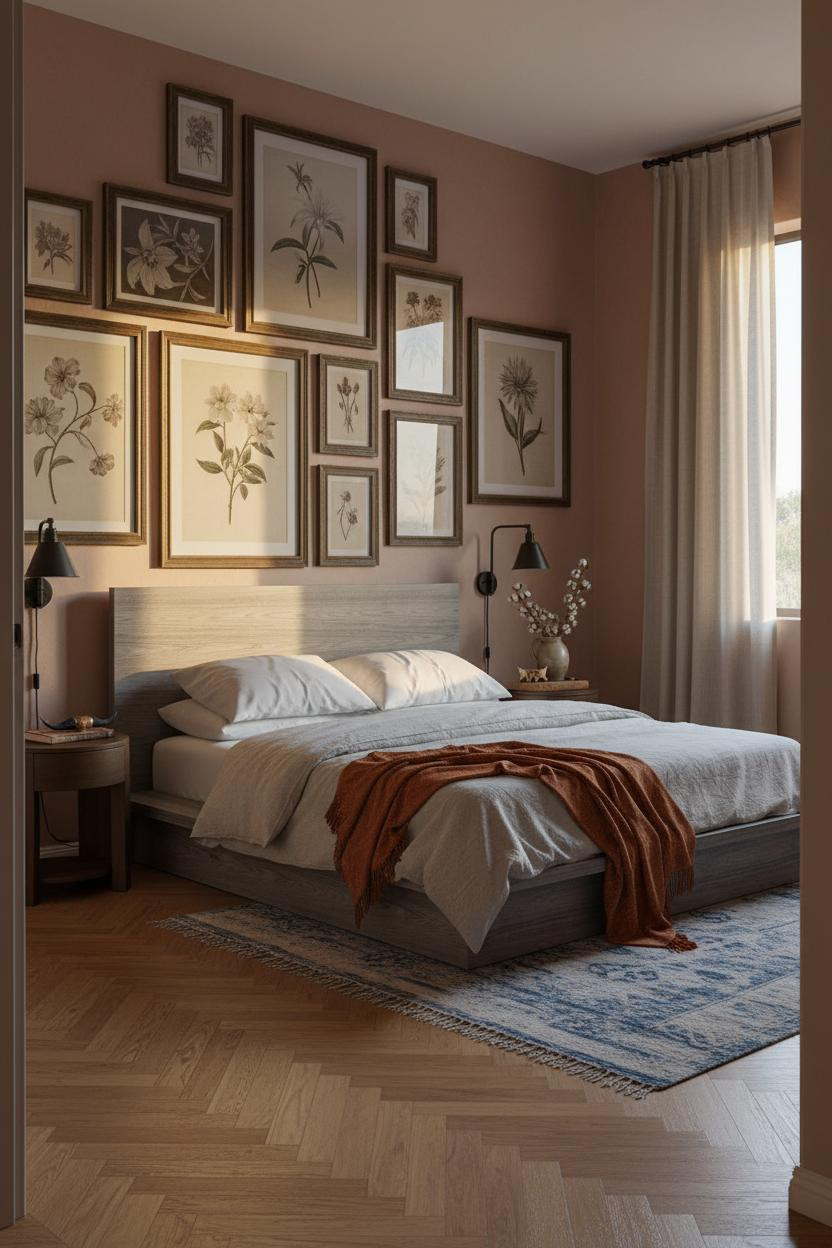
Gallery walls are divisive. This one works because it commits fully, spanning fourteen feet in mismatched reclaimed wood frames with sepia and hand-tinted botanical prints.
Why it lands: Warm dusty-rose plaster behind the frames softens what could feel crowded. The frames cast layered offset shadows across that wall, which gives the whole arrangement a three-dimensional quality. Boho farmhouse rooms use this same layering principle to make a wall feel lived-in rather than installed.
Where people go wrong: Matching frames. Mismatched sizes and finishes are what make this look collected rather than purchased.
Adobe Brick and Hammered Copper. Old School.
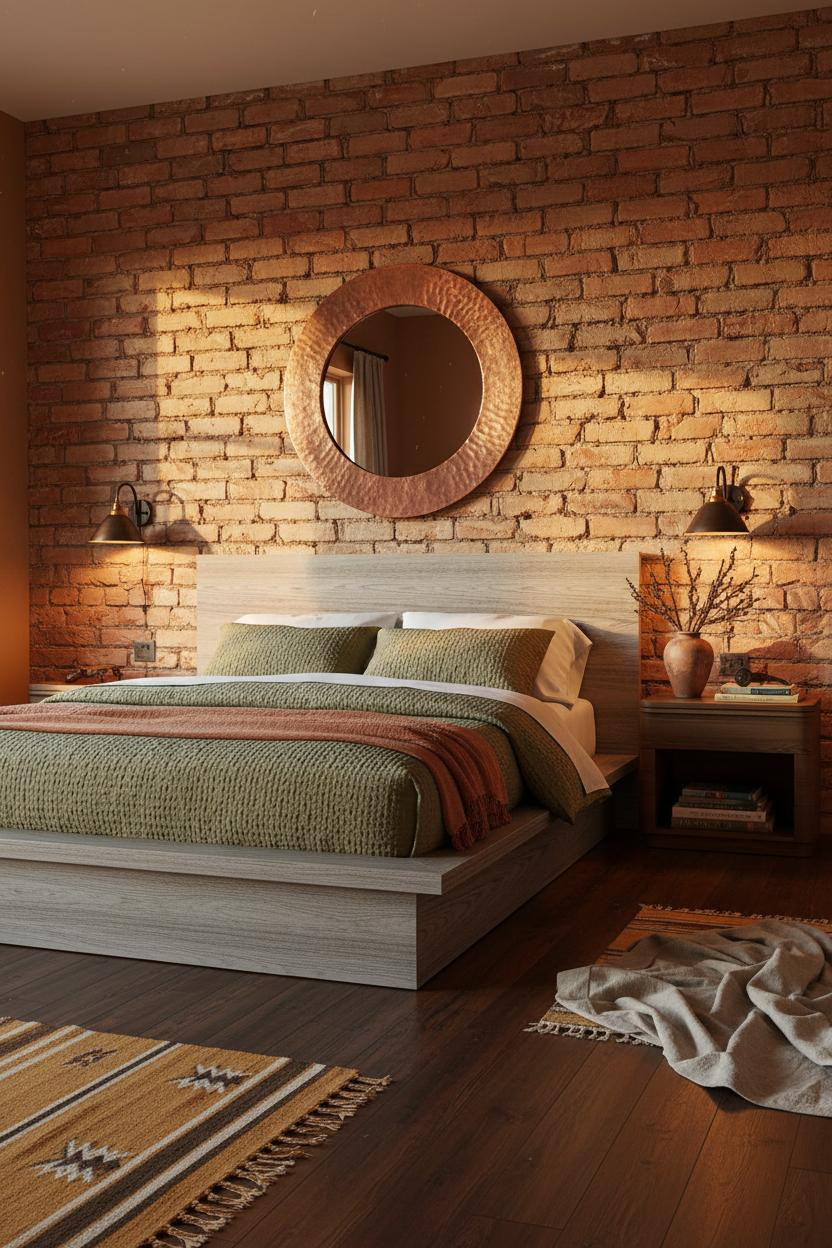
Hand-laid adobe brick with crumbling mortar edges is about as Western as it gets, and honestly it's harder to pull off than it looks.
What gives it presence: The iron-oxide variation across each course means no two bricks read the same color in late afternoon light. That natural irregularity is the difference between a real brick wall and a tile that pretends to be one.
An oversized round hammered-copper mirror above the bed reflects brick back into itself. The smarter choice here is always copper over brass. Brass tips too yellow. Copper stays warm and raw.
Herringbone Wood Wall With Indigo Blue on Either Side
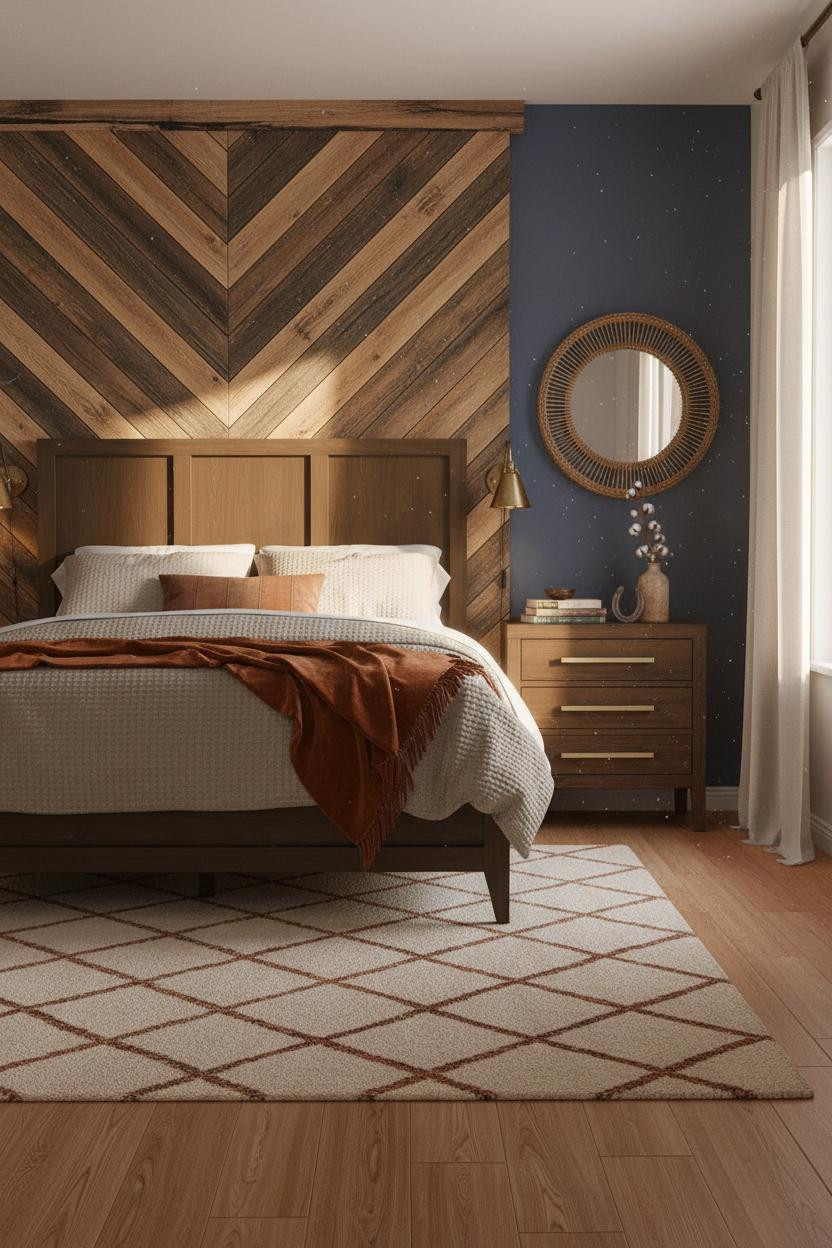
I almost scrolled past this one. Glad I didn't.
What makes this one different: The reclaimed wood herringbone pattern alternates honey and charcoal planks, so the wall carries its own tonal contrast without needing anything hung on it. Deep indigo flanking walls pull the charcoal planks forward and make the honey planks glow warmer by comparison. It's a small trick but it changes the entire reading of the room.
Avoid this mistake: Don't use new lumber for this. The hairline shadow lines only read correctly when the planks have actual grain depth. Fresh-cut wood looks flat.
Steel-Framed Ranch Windows That Do All the Work
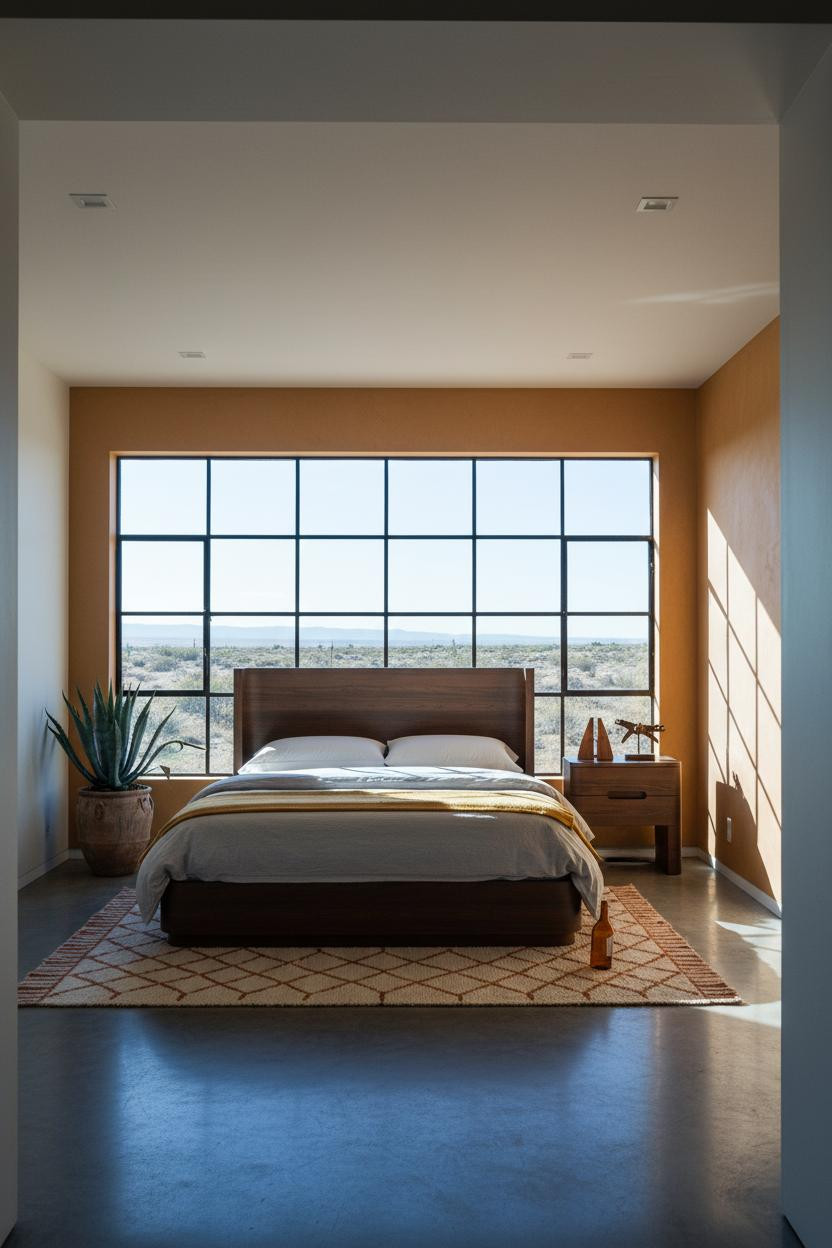

This is the version of Western chic that skips all the ornament. Just black steel Crittall-style window grids, warm ochre plaster, and polished concrete underfoot.
What carries the look: The graphic black grid against ochre plaster creates the same visual punch as a patterned wall, in a way that feels more architectural than decorative. The room stays warm without being heavy because the windows pull all that desert light inward. Natural light used this deliberately shapes the entire mood of a room.
Ideal if you want a master bedroom that reads as modern ranch rather than rustic cabin. The concrete floor is non-negotiable for this particular palette.
Butterscotch Adobe Plaster on a Dusty Rose Base
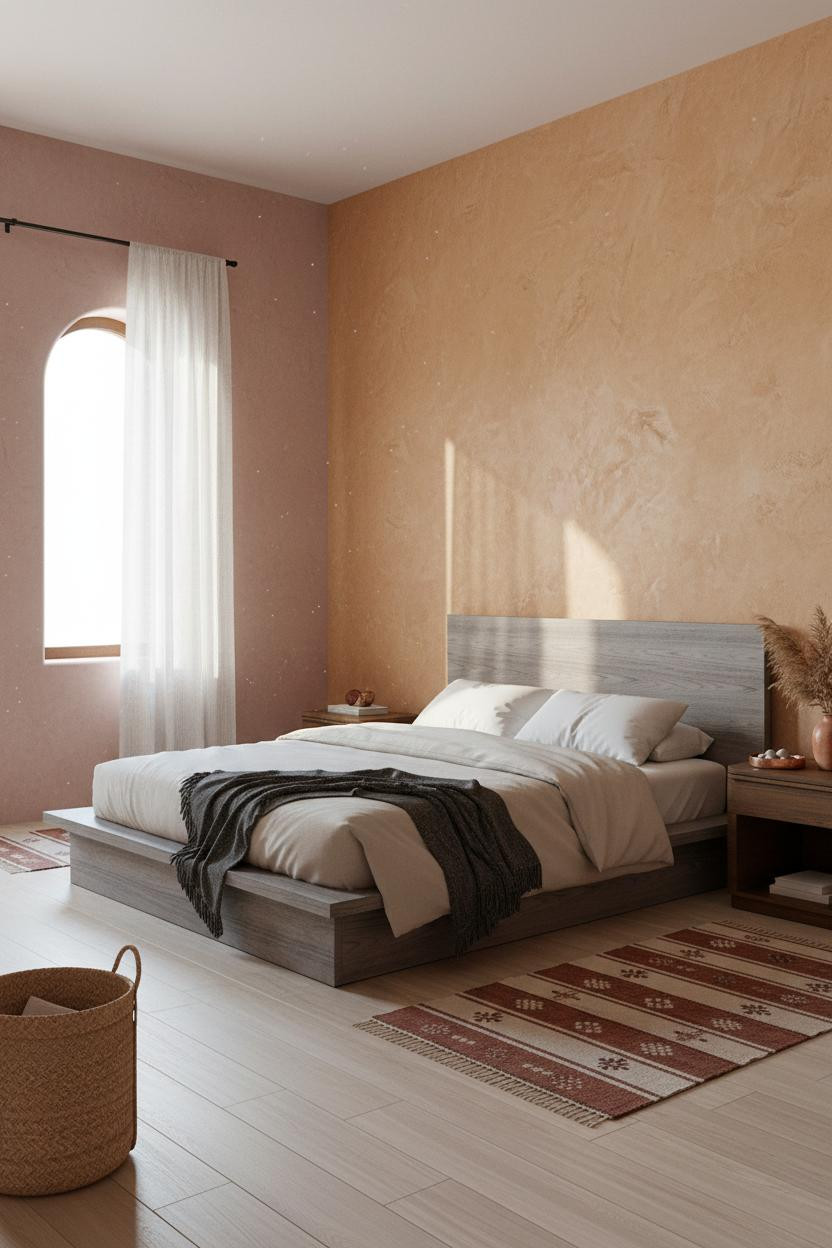
This is the most quietly Mexican hacienda room in the set, and I mean that as a compliment.
Why it feels intentional: Hand-troweled butterscotch adobe plaster with visible stroke marks behind the bed, and smooth dusty rose on the flanking walls. Those two finishes are close enough in warmth to coexist while still feeling like different surfaces. The side-rake light grazing the plaster texture does more work than any light fixture could.
What to borrow: The charcoal cashmere throw draped at the foot. One cool-toned textile in a warm room keeps everything from going too sweet.
Stacked Fieldstone That Earns Every Square Foot of Space
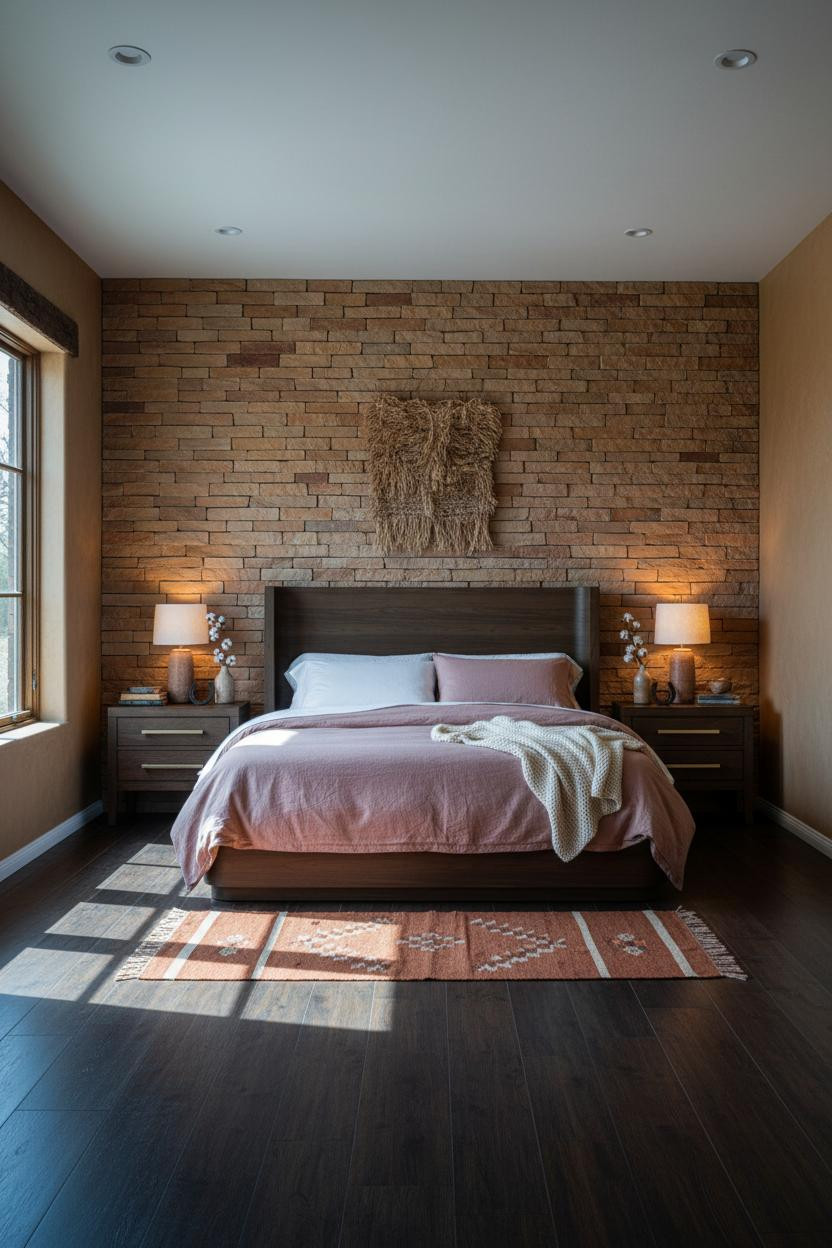
Twelve feet of stacked flat fieldstone in warm sandstone and ochre tones. Raw and honest. The room feels lived-in and intimate before you've added a single accessory.
The real strength: Deeply raked mortar joints throw each stone edge into shadow, so the wall has texture at every scale. Warm camel flanking walls keep the stone from reading cold, which is the common miss with natural stone in bedrooms.
The finishing layer: A sculptural woven wall hanging above the stone mantle shelf. It softens without competing, while still feeling appropriately frontier.
Moss Green Board-and-Batten With Navy Bedding
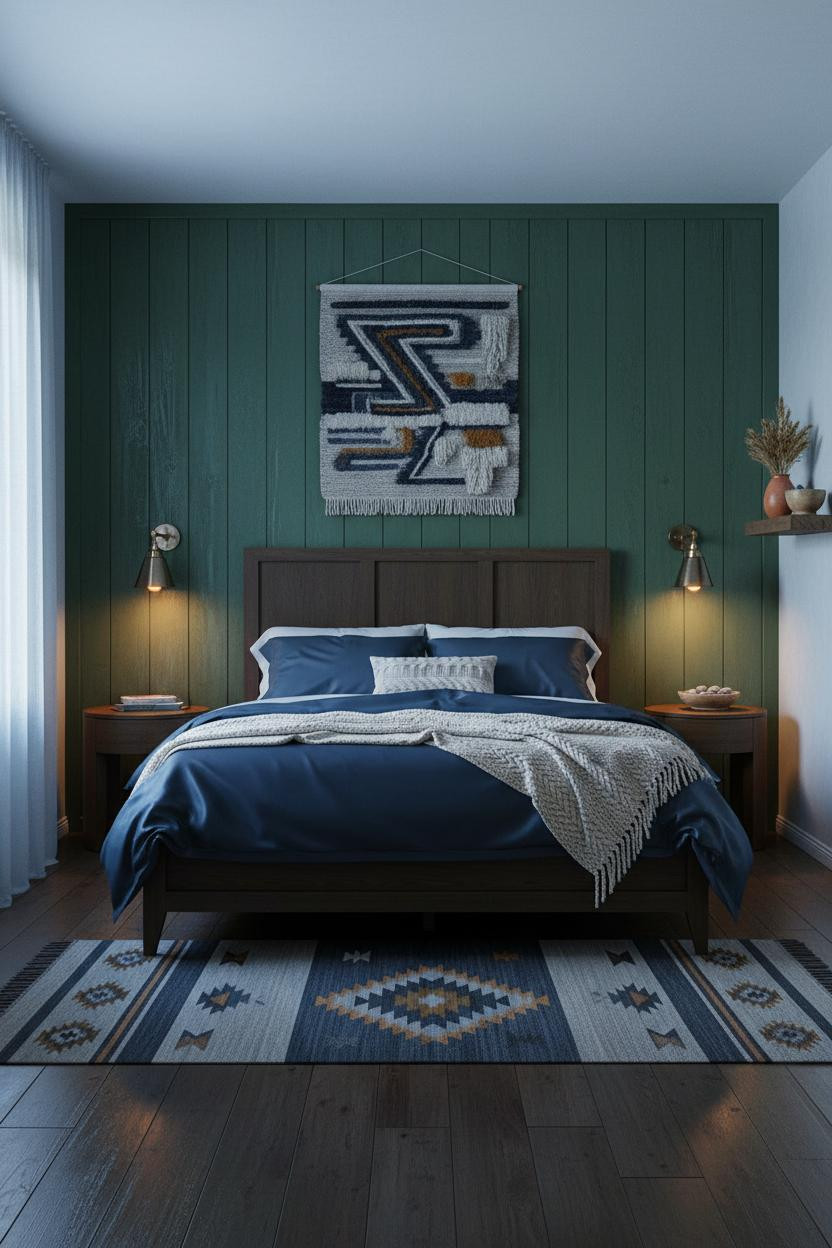
This is the room for people who want Western character without a single piece of leather or wrought iron.
Why it holds together: The dry-brushed linen-white finish on each deep moss green batten catches raking sconce light and adds just enough brightness to keep the wall from swallowing the room. Stone grey flanking plaster stays neutral so the board-and-batten does its job. Navy sateen duvet against moss green is a stronger combination than it sounds (the room feels grounded and raw, not twee).
One smart swap: Replace any centered overhead light with paired bedside sconces. The amber pools on either side are what actually make this palette work at night.
Whitewashed Timber Frame on Honey-Butter Plaster
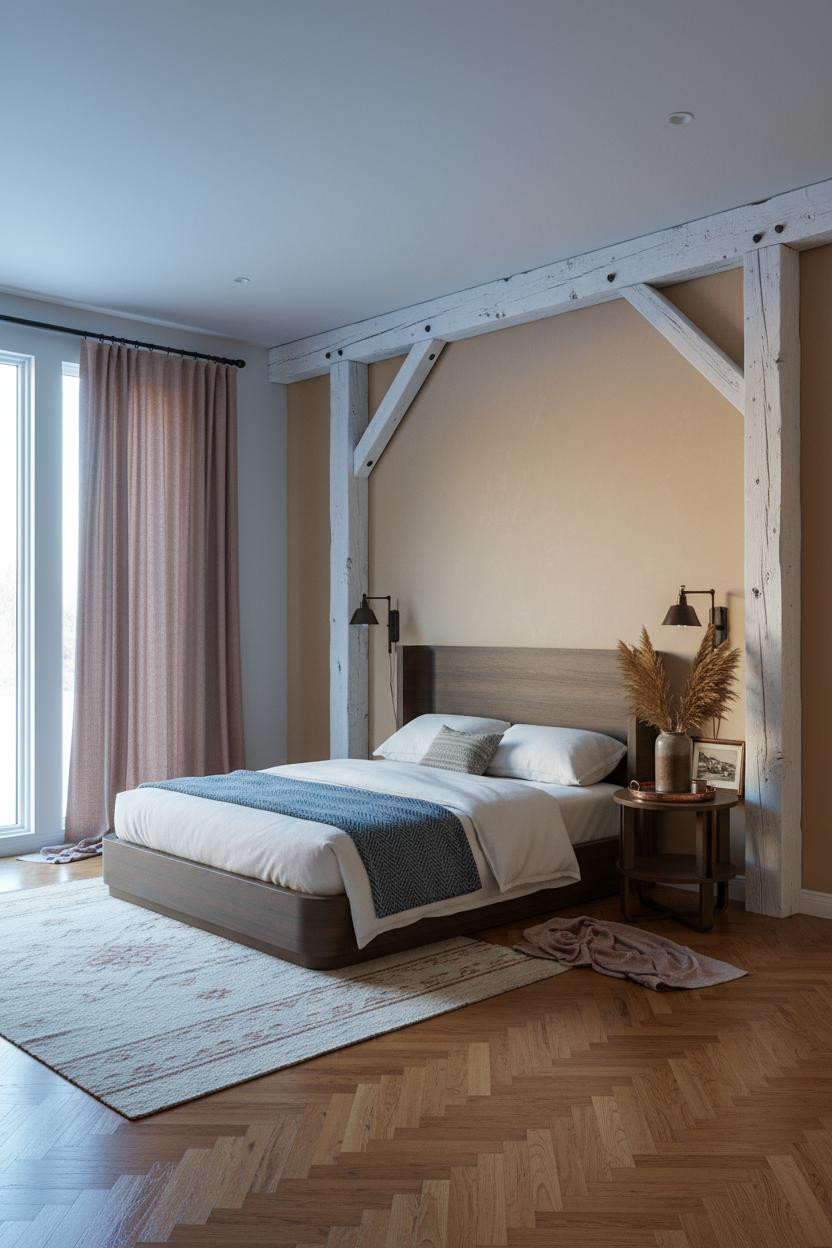
The whitewashed post-and-beam structural frame here does something most decorative beams can't: it actually looks structural because it is.
Why it looks custom: Weathered grain and silvery patina on the vertical posts catch morning light differently than the horizontal crossbeams, so the frame reads as three-dimensional architecture rather than applied trim. Honey-butter plaster behind it keeps the whole wall warm without competing.
Hang dusty rose linen curtains from an iron rod and let one panel pool at the base. The detail to keep: that uneven hem. It's the difference between styled and lived-in.
Sage Shiplap With a Bleached Oak Floor
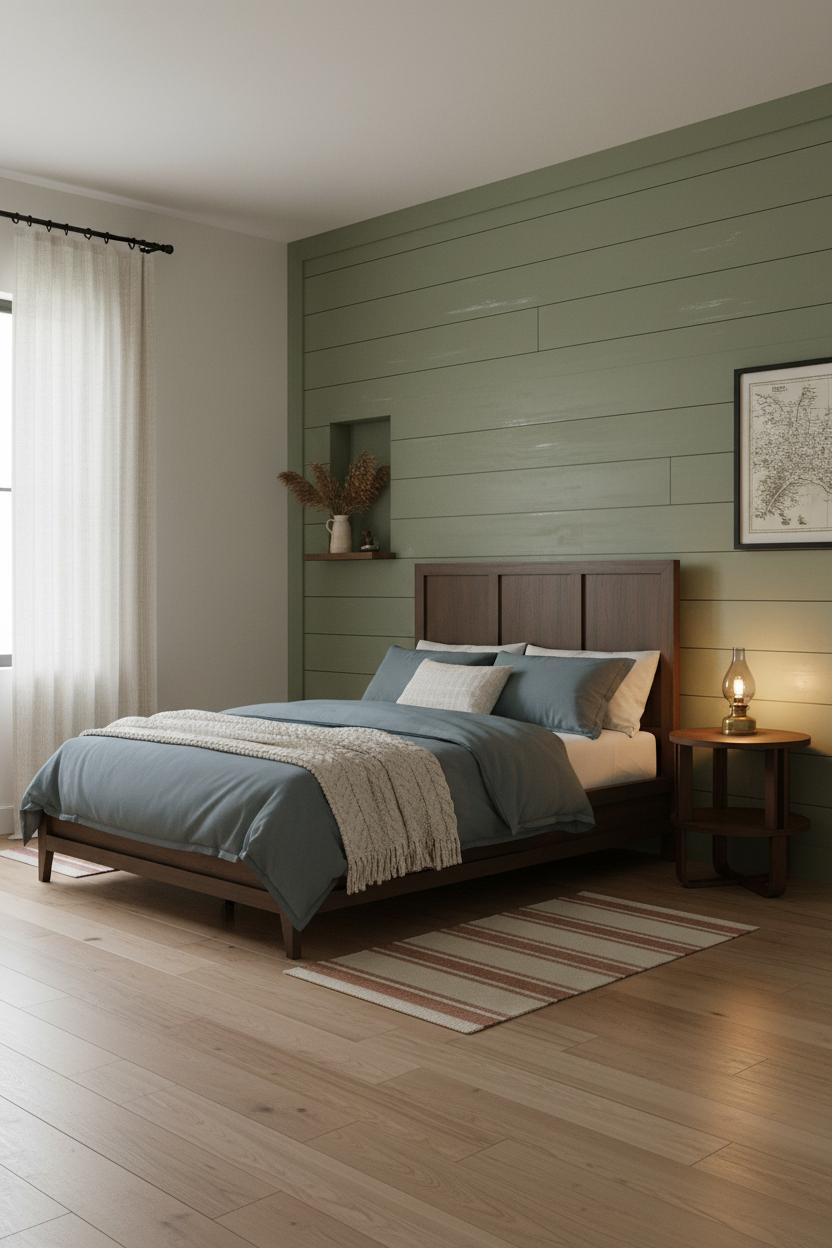
This is the most approachable room in the set. Admittedly, it's also the one I'd actually build first.
What softens the room: The hand-applied whitewash patina on the warm sage shiplap exposes wood grain underneath, so the wall reads as texture rather than just color. Cream plaster on the remaining walls and bleached oak flooring keep everything light. The rust and cream striped runner is just enough contrast to keep the palette from going flat.
The easiest upgrade: Swap any modern nightstand lamp for a vintage brass oil lamp. Small objects with age and provenance do more than new pieces ever will.
Exposed Timber Ceiling With a Terracotta Accent Wall
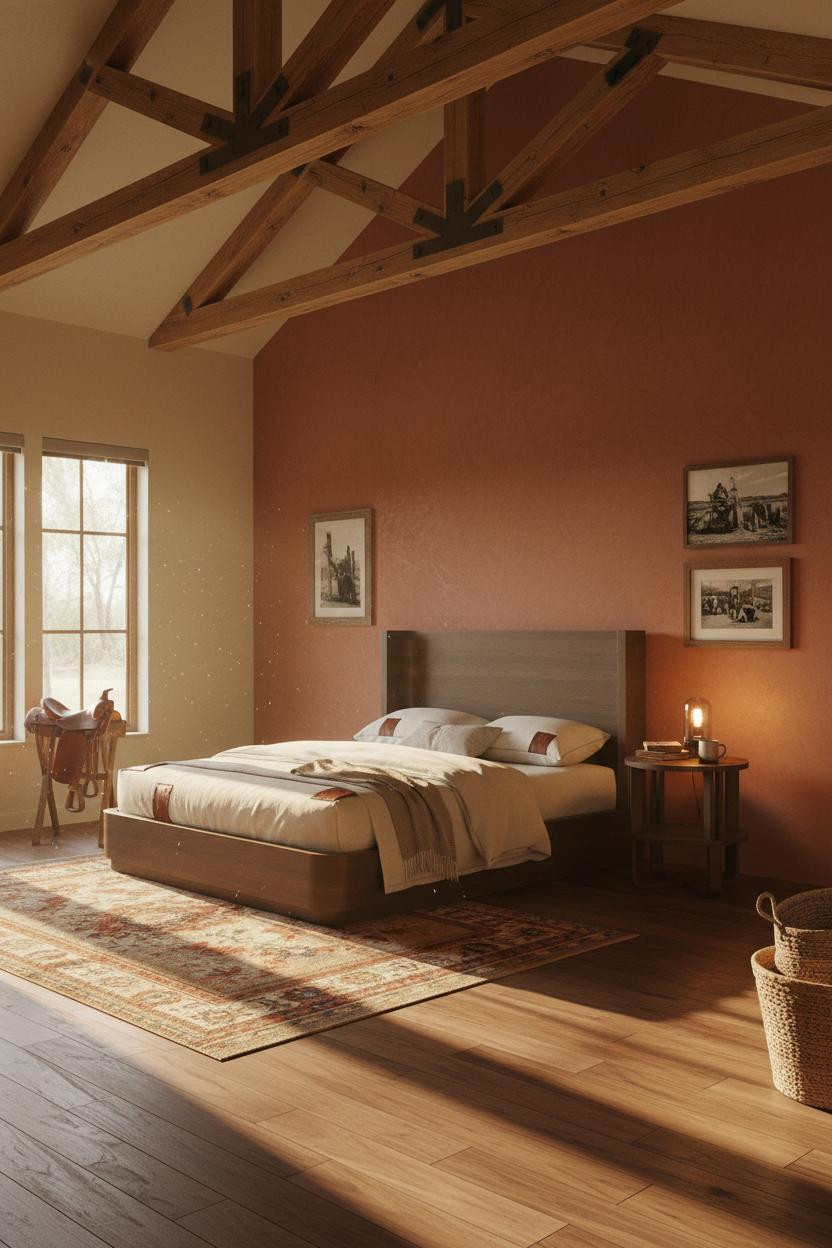
Hand-hewn honey-patina timber trusses with visible mortise joinery spanning sixteen feet overhead. This is the kind of architecture that changes what you're willing to spend on furniture (because suddenly nothing competes with the ceiling).
Why the palette works: Terracotta behind the bed and warm cream smooth plaster on the flanking walls create just enough contrast to anchor the bed within the room, while the wide-plank walnut floor connects to the ceiling timbers and pulls the whole vertical stack together.
What to copy first: The vintage Persian runner in rust and ivory tones underfoot. It's the piece that makes the whole room feel like it was assembled over years rather than purchased on a single afternoon.

Our #1 Pick
Saatva Classic Mattress
America's best-selling online luxury innerspring. 365-night trial, lifetime warranty, free white glove delivery.
Shop Saatva Classic
The Foundation Of Every Beautiful Bedroom
Every room in this list gets the walls right, the lighting right, the textiles right. But the part you actually feel at the end of the day is the bed itself.
The Saatva Classic is what belongs under all of it. Dual-coil support means the structure holds without pushing back, a breathable cotton cover that doesn't trap heat through the night, and a Euro pillow top that's soft enough to feel genuinely restful but firm enough to still feel right ten years in. Walls get repainted. Linen gets swapped out. The mattress stays.
Start with the bed. The rest figures itself out.

The rooms people save are the ones where nothing looks accidental. And the ones you actually want to sleep in are the ones where the bed feels as considered as everything else around it.