
 by
by Let's get this out of the way: if you bought your mattress in the last five years, you almost certainly don't need a box spring. And if you're using one anyway, you might be doing more harm than good.
Box springs were designed for a type of mattress that barely exists anymore. The old innersprings with bonnell coils needed that extra bounce from below. Modern mattresses - memory foam, hybrid, latex - need a flat, firm surface. A box spring's flexing coils work against them, creating uneven support that accelerates wear and can void your warranty.
So what should you use instead? Here's what actually works.
Why Box Springs Are Outdated
Traditional innerspring mattresses had thin comfort layers - maybe an inch of padding over open coils. They relied on the box spring to absorb shock. The two worked as a system.
Modern mattresses do all that work internally. A hybrid like the Saatva Classic has its own coil-on-coil support plus thick foam layers. Putting it on a box spring is redundant at best. At worst, the extra give creates pressure points and accelerates foam breakdown.
Most manufacturers now explicitly say: flat, rigid surface. No box springs. Ignore that and your warranty claim gets denied.
The 7 Best Box Spring Alternatives
1. Platform Bed Frame
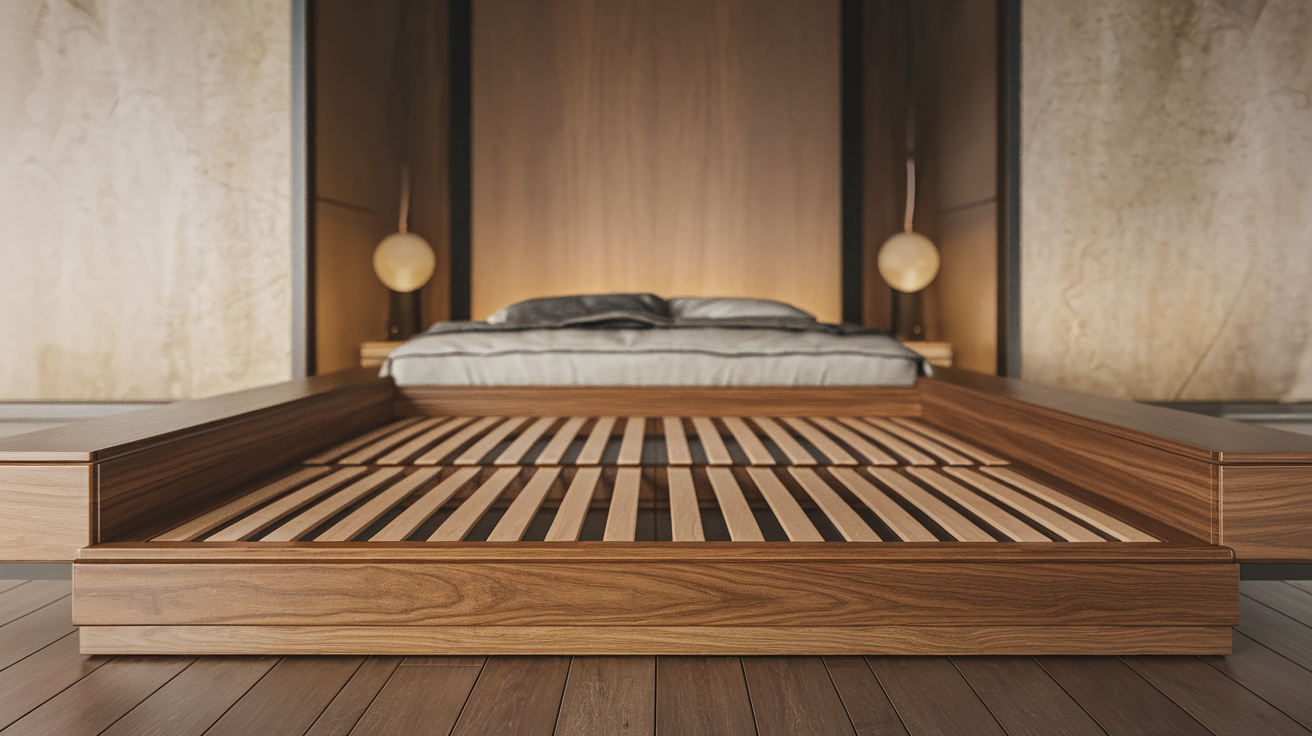
This is the one I recommend most often, and it's not close. A platform bed gives you a solid, flat surface with built-in slats or a panel - no additional foundation needed. Your mattress goes directly on top. Done.
Good platform beds use wooden or metal slats spaced 2 to 3 inches apart, with a center support bar for Queen size and larger. They range from $150 for a basic metal frame to $800+ for solid wood with headboard.
Pros:
- No extra foundation purchase needed
- Great airflow through slats prevents moisture buildup
- Lower profile than box spring setups - modern, clean look
- Compatible with virtually every mattress type
Cons:
- Cheap ones can have flimsy slats that bow under weight
- Storage space underneath varies - some sit very low
- Slat spacing matters: too wide and the mattress sags between them
2. Slatted Foundation (Bunkie Board)
A bunkie board is a thin (1 to 2 inch) flat panel - usually plywood or slats wrapped in fabric - that sits on your existing bed frame. Think of it as a box spring replacement that actually provides the flat support modern mattresses need.
These are great if you already have a metal bed frame and just need something between the rails and your mattress. They run $50 to $150 and are dead simple.
Pros:
- Cheapest option if you already have a frame
- Keeps a low profile - good for tall mattresses
- Provides the flat, firm support modern mattresses require
- Lightweight and easy to move
Cons:
- Solid panels restrict airflow (slatted versions are better)
- Needs a proper bed frame underneath - can't stand alone
- Some thin boards flex under heavy weight over time
3. Adjustable Base
If budget isn't a concern and you want to upgrade your sleep setup, an adjustable base is worth considering. These motorized frames let you raise your head and feet independently. Reading in bed, reducing snoring, easing back pain - an adjustable base handles all of it.
They work with most foam and hybrid mattresses (always check with the manufacturer first). Innerspring-only mattresses usually can't bend enough, which is another point against box springs and the old-school setup.
Pros:
- Customizable sleep positions - head elevation, zero gravity, etc.
- Helps with snoring, acid reflux, and circulation
- Many include massage, USB ports, under-bed lighting
- Premium sleep experience
Cons:
- Expensive - $800 to $2,500 for a Queen
- Heavy and hard to move
- Motors can fail (check warranty terms)
- Not compatible with every mattress
4. Solid Platform or Plywood Sheet
The budget champion. A 3/4-inch sheet of plywood cut to your mattress size, placed on a basic frame or even on the floor, gives you a perfectly flat, rigid surface. It costs $30 to $50 at any hardware store.
Is it elegant? No. Does it work? Absolutely.
Pros:
- Extremely cheap - $30 to $50
- Perfectly flat and rigid
- Easy to find at any home improvement store
- Can be cut to custom sizes
Cons:
- Zero airflow if placed on the floor (mold risk)
- Not aesthetically pleasing
- No built-in structure - needs a frame or risers
- Can be heavy and awkward to move in larger sizes
5. Metal Bed Frame with Slats
Not the old-school metal rail frame your parents had. Modern metal bed frames come with integrated slats and center support. They're lightweight, sturdy, and often fold for storage. Brands like Zinus make solid options starting around $80.
Pros:
- Affordable - $80 to $250
- Strong weight capacity (often 1,000+ lbs)
- Easy assembly - usually under 15 minutes
- Good under-bed storage clearance
Cons:
- Can feel industrial or cheap-looking
- Metal-on-metal contact may squeak over time
- Less stable than wood platform beds on hard floors
6. Floor Setup (No Foundation)
Putting your mattress directly on the floor. People do it. It works in a pinch. But I can't recommend it long-term.
The floor traps moisture underneath the mattress. In humid climates, mold can develop within weeks. And most manufacturers - including Saatva - won't honor warranty claims for floor use.
Pros:
- Free - no purchase needed
- Extremely firm support
- Minimalist aesthetic (if that's your thing)
Cons:
- Mold and mildew risk from trapped moisture
- Voids most mattress warranties
- Dust and allergens accumulate at floor level
- Hard to get in and out of bed
7. Wooden Foundation (Box Spring Replacement)
A wooden foundation looks like a box spring from the outside - fabric-covered, same height, sits on a bed frame - but instead of coils inside, it's a rigid wood structure. It's basically what modern mattress companies mean when they say "foundation."
If you want the traditional look and height of a box spring setup without the problems, this is your answer. Saatva sells their own version, and it's one of the better ones I've seen.
Pros:
- Drop-in replacement for a box spring - same dimensions and height
- Flat, rigid support that modern mattresses need
- Works with existing bed frames
- Professional, finished appearance
Cons:
- More expensive than a bunkie board ($100 to $300)
- Adds height that might not work with low-profile beds
- Heavier than most alternatives
Quick Comparison Table
| Alternative | Price Range | Best For | Airflow | Warranty Safe? |
|---|---|---|---|---|
| Platform Bed | $150-$800 | Most people | Excellent | Yes |
| Bunkie Board | $50-$150 | Existing frame owners | Fair | Yes |
| Adjustable Base | $800-$2,500 | Comfort seekers | Good | Yes |
| Plywood Sheet | $30-$50 | Tight budgets | Poor (on floor) | Yes (on frame) |
| Metal Frame + Slats | $80-$250 | Easy setup | Good | Yes |
| Floor (None) | Free | Temporary only | None | No |
| Wooden Foundation | $100-$300 | Traditional look | Fair | Yes |
How to Choose the Right Option
Here's my decision tree. It's simple:
Do you already have a bed frame? Get a bunkie board or wooden foundation. Cheapest path to proper support.
Starting from scratch? Buy a platform bed. One purchase, one setup, you're done.
Want premium features? Adjustable base. But only if you'll actually use the head/foot elevation - otherwise it's expensive furniture.
On a tight budget? Plywood on a basic frame. Not glamorous, but it works perfectly well.
And whatever you choose, check your mattress manufacturer's recommendations first. That 3-inch slat spacing rule applies to most brands, not just Saatva. If you're looking for the right bed frame to pair with a Saatva specifically, I wrote a whole guide on the best bed frames for Saatva mattresses.
A Note About Warranties
Most mattress warranties include language about "proper support." If your mattress develops a sag and you've been using it on an unapproved surface - floor, broken box spring, wide slats - the claim gets rejected. The company asks for photos of your setup, and if it doesn't meet specs, they deny the claim.
It's worth understanding your mattress return policy before making this mistake. Spend $50 to $200 on a proper foundation - it's insurance for a mattress that cost $1,000 or more.
Frequently Asked Questions
Can I use a box spring with a memory foam mattress?
Most memory foam manufacturers say no. Box springs have coils that create an uneven surface, which causes foam to break down faster and develop impressions. Use a platform bed or solid foundation instead.
What's the cheapest alternative to a box spring?
A 3/4-inch plywood sheet cut to your mattress size costs $30 to $50. Place it on a basic metal frame (not the floor) for proper airflow. It's not pretty, but it provides the flat, rigid support modern mattresses need.
Do I need a box spring for a hybrid mattress?
No. Hybrid mattresses like the Saatva Classic have their own internal coil system. They need a flat, firm surface - a platform bed, foundation, or adjustable base. A box spring adds unnecessary flex.
Will using the wrong foundation void my mattress warranty?
In most cases, yes. Mattress companies require "adequate support" per their specifications. If you file a warranty claim and your setup doesn't meet their guidelines - wrong slat spacing, no center support, floor use - they can and will deny it.
Is a platform bed better than a box spring?
For modern mattresses, yes. Platform beds provide the flat, rigid support that foam and hybrid mattresses require. They're also lower-profile, more affordable over time (no separate foundation purchase), and better for airflow than a box spring sitting on a frame.
- Mattress Finder Quiz - Find your perfect mattress in 60 seconds
- Mattress Size Guide - Visual size comparison and room requirements
- Mattress Age Calculator - Should you replace your mattress?
- Return Policy Comparison - 20 brands compared