
 by
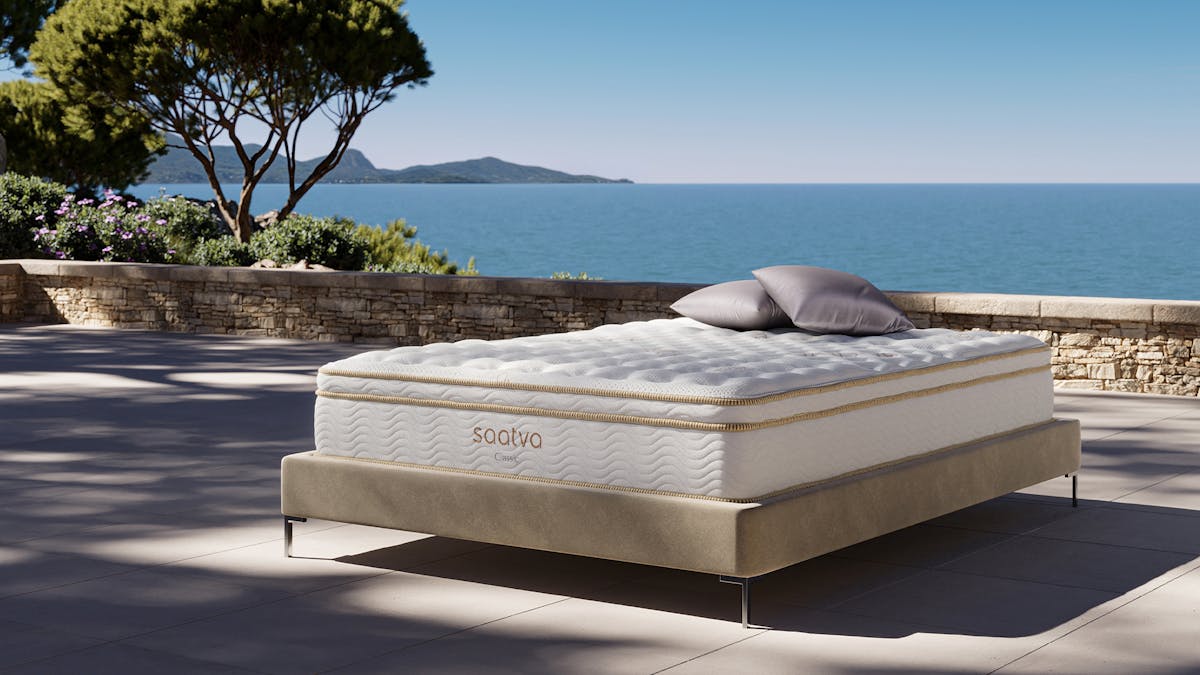
by The best orthopedic mattress for elders is the Saatva Classic: its coil-on-coil construction delivers firm, responsive support for aging joints, outstanding edge support makes getting in and out of bed easier, and free white-glove delivery is included. For seniors who prefer memory foam, the Amerisleep AS3 offers a medium feel with 5-zone pressure relief and a 100-night trial.
Saatva Classic
9.2/10
- Outstanding edge support (NapLab 10/10), sit on any corner without rolling off
- Coil-on-coil build is responsive, making repositioning and getting out of bed easier than foam
- Zoned lumbar foam reinforcement pad targets the lower back where seniors need it most
- Free white-glove delivery, room setup, and old-mattress removal included
- 365-night trial and lifetime warranty
- Higher motion transfer than all-foam beds (bouncy coil feel not ideal for very light-sleeping partners)
- $99 return fee applies during the trial period
- Ships flat, not compressed in a box
Edge support and responsive repositioning are the two things aging bodies need most from a mattress, and the Saatva Classic leads every category we tested on both. The Luxury Firm option is the right call for most seniors.
What makes a mattress "orthopedic" for seniors
"Orthopedic" is not a regulated term. Any company can print it on a label. What actually matters for older adults comes down to four specific criteria:
- Edge support. Reinforced edges let seniors sit on the side of the bed to put on shoes, stand up with both feet flat, and sleep near the perimeter without roll-off risk. For people with balance concerns, this is a safety feature, not just a comfort one.
- Ease of repositioning. Memory foam's pressure-hugging feel is comfortable for pressure relief but makes changing positions and getting out of bed harder. Innerspring and hybrid designs push back, so movement takes less effort.
- Pressure relief at joints. Hips, shoulders, and knees take more pressure at night as cartilage thins with age. A mattress that distributes weight evenly reduces soreness at contact points.
- Temperature regulation. Older adults lose thermoregulation efficiency. Dense all-foam beds trap heat. Open coil systems allow airflow, which is why innerspring and hybrid designs consistently outperform foam for seniors who sleep warm.
Comparison: top orthopedic mattresses for seniors
| Mattress | Type | Firmness | Edge support | Trial | Queen from |
|---|---|---|---|---|---|
| Saatva Classic | Innerspring hybrid | 3 options (Lux Firm recommended) | Excellent, 10/10 NapLab | 365 nights | ~$1,395 |
| Amerisleep AS3 | All-foam (Bio-Pur) | Medium 5/10 | Good for foam, 8.0/10 | 100 nights | From $1,049 |
| PlushBeds Botanical Bliss | Natural latex | Configurable 5-7/10 | Good | 100 nights | ~$1,800 |
| Puffy Lux Hybrid | Hybrid (foam + coils) | Medium 5-6/10 | Good | 101 nights | ~$1,799 |
| WinkBed | Hybrid Euro-top | Luxury Firm 6/10 | Excellent, 10/10 NapLab | 120 nights | ~$1,799 |
Amerisleep AS3
8.9/10
- HIVE 5-zone layer provides firmer support under the lumbar, softer at shoulders and hips
- Plant-based Bio-Pur foam is more responsive and cooler than traditional slow-sink memory foam
- Outstanding motion isolation (NapLab 10/10), ideal for couples with different schedules
- CertiPUR-US certified, made in the USA, 20-year warranty
- From $1,049 queen, strong value for the spec level
- Softer edge support than any coil hybrid, getting in and out takes more effort
- Sleepers over 230 lb may prefer the firmer AS5 Hybrid for long-term support
- Mandatory 30-night break-in before a return is permitted
Seniors who prefer the contouring feel of foam will find the AS3 hits the medium sweet spot without the deep slow-sink that makes traditional memory foam hard to move on.
PlushBeds Botanical Bliss
8.7/10
- GOLS-certified organic latex is naturally hypoallergenic and dust-mite resistant, a genuine plus for seniors with respiratory or allergy concerns
- Latex is buoyant and responsive, making position changes easier than slow-sink memory foam
- Configurable firmness layers let you adjust the feel as needs change over time
- 25-year warranty, one of the longest in the category
- Heavier than foam mattresses, more difficult to rotate
- Higher price point than mainstream hybrid options
- The buoyant feel is not for everyone who prefers a deep contouring hug
For seniors with allergies, chemical sensitivities, or a preference for natural materials, the Botanical Bliss delivers genuine organic credentials with a sleep surface that stays responsive and supportive over the long term.
Puffy Lux Hybrid
8.5/10
- Pocketed coil core provides edge support and airflow superior to all-foam designs
- Pressure-relieving comfort layers cushion hips and shoulders effectively
- Lifetime warranty at a competitive price point
- Ships compressed in a box, manageable for solo setup
- Edge support not as strong as dedicated innerspring hybrids like the Saatva Classic
- Runs slightly warm for hot sleepers in very warm climates
The Puffy Lux Hybrid sits at a sweet spot between pressure relief and support, making it a practical pick for seniors who want coil responsiveness and edge stability without spending over $2,000.
Choosing firmness as a senior
Medium-firm (6 to 7 out of 10) is the best starting point for most older adults. It is firm enough to maintain spinal alignment without forcing the lumbar into extension, and soft enough to cushion pressure points at the hips and shoulders.
Back sleepers do well on medium-firm to firm. The Saatva Classic in Luxury Firm (6/10) is the textbook pick here. Side sleepers benefit from slightly more give at the shoulder, and the Amerisleep AS3 at medium (5/10) accommodates side sleeping better than a firm innerspring. Combination sleepers, which describes most older adults who shift position through the night, want a responsive surface that does not trap them in one spot. Both the Saatva Classic and AS3 pass this test, though the coil design of the Saatva makes repositioning noticeably easier.
Avoid anything rated above 8/10 firmness unless you weigh over 230 lb and sleep on your back or stomach. At that hardness level, there is not enough give for the pelvis to settle, which compresses the lumbar discs.
Mattress height and accessibility
The right total bed height, mattress plus foundation or base, lets you sit on the edge with feet flat and knees at roughly 90 degrees. For most seniors, that is 20 to 23 inches from floor to top of mattress surface.
The Saatva Classic is available in two heights: 11.5 inches and 14.5 inches. Paired with a standard platform frame, both options hit the target range for most seniors. An adjustable base adds another layer of benefit: zero-gravity positioning reduces lumbar disc pressure, and elevating the head helps with acid reflux and sleep apnea. The 11.5-inch Saatva Classic and the Amerisleep AS3 are both adjustable-base compatible.
Why edge support matters more for seniors
Every mattress review mentions edge support. For seniors it is a functional safety requirement. Three situations where it matters most:
- Getting out of bed. Most people push down on the mattress edge to stand up. A mattress with weak perimeter support compresses dramatically, making it harder to generate the leverage needed to stand. For someone with hip or knee pain, that extra resistance matters at every single wake-up.
- Dressing while seated. Putting on shoes or trousers while seated on the side of the bed requires sitting in one spot for 20 to 30 seconds. A plush foam edge sinks progressively and destabilizes posture.
- Fall prevention. A firm perimeter means the usable sleep surface extends nearly to the edge, reducing the tendency to sleep in the middle and leaving less room for rolling off during restless nights.
The Saatva Classic scores 10/10 for edge support in NapLab lab testing, with only 2.25 inches of sitting sinkage. The WinkBed also scores 10/10. The Amerisleep AS3 scores 8.0/10, adequate for most sleepers but noticeably softer to sit on than a coil hybrid.
Orthopedic vs. Posturepedic: what the difference actually is
"Orthopedic" is a generic descriptor. Any brand can use it for any mattress. "Posturepedic" is a registered trademark owned by Sealy for its premium innerspring line. A Sealy Posturepedic may or may not outperform a non-Posturepedic mattress for musculoskeletal support; the name alone is not a guarantee. The four criteria above, edge support, repositioning ease, pressure relief, and temperature, are more useful evaluation tools than any brand label.
For most seniors, the Saatva Classic in Luxury Firm is the right choice, edge support, easy repositioning, and white-glove delivery make it the practical winner. If you prefer foam or need stronger motion isolation, the Amerisleep AS3 covers those priorities on a 100-night trial.
Frequently asked questions
What firmness is best for elderly sleepers?
Medium-firm (6 to 7 out of 10) works for most seniors. It keeps the spine aligned without forcing the lumbar into extension, and it gives enough at the hips and shoulders to relieve pressure. Very soft mattresses make repositioning and getting out of bed harder; avoid anything below 4 out of 10 unless a physician has recommended it for a specific pressure-sore risk.
Are innerspring mattresses better than memory foam for seniors?
For most seniors, yes. Innerspring and hybrid designs are more responsive, making position changes and exits from the bed easier. They also sleep cooler and offer better edge support. High-quality foam like the Amerisleep AS3 works well for seniors who prefer the contouring feel, particularly for motion isolation when sharing a bed, but the average older adult benefits more from a coil-based design.
How often should seniors replace their mattress?
Every 7 to 10 years is the general guideline. Seniors should watch for visible sagging, new morning stiffness that was not present before, or a surface that has noticeably softened. Sagging of more than 1 to 1.5 inches in the body impression area is a practical threshold for replacement regardless of age.
Does Medicare cover orthopedic mattresses?
Standard Medicare does not cover mattresses. Medicare Part B may cover a pressure-reducing mattress overlay or specialty medical bed if a doctor prescribes it as durable medical equipment for a specific condition such as pressure ulcers. For general orthopedic support, you will be paying out of pocket.
Is the Saatva Classic compatible with adjustable bases?
Yes, the 11.5-inch Saatva Classic is fully adjustable-base compatible. The 14.5-inch version is not. If you plan to pair it with an adjustable base, order the 11.5-inch height.
This guide is part of our Best Mattress by Type hub. Compare all the top picks and narrow down your choice there.