
 by
by Our #1 Recommended Mattress
EIGHT SLEEP ALTERNATIVE 2026
Cross-shopping Eight Sleep? The ORION smart cover matched Pod 4 cooling delta (11.4 °F) in our Sleep Lab and ships with no monthly fee, dual-zone control, and a 30-night home trial.
See ORION pricing →$20 sleep disruption test
Our top mattress recommendation
After testing dozens of mattresses, Saatva Classic remains the most versatile pick for most sleepers. Three firmness levels (Plush Soft, Luxury Firm, Firm), dual-coil support with reinforced lumbar zone, and an organic cotton Euro-top. It ships on a 365-night home trial with free White Glove delivery (in-room setup + old mattress removal).
Ongoing 2026 promotions: up to $625 off sitewide, plus an additional $225 off orders $1,000+ for military, veterans, first responders, teachers, nurses, healthcare, and government employees via ID.me. Lifetime warranty included.
In This Guide
- Performance Scorecard
- The $300 Question: Does 12 Inches of Foam Actually Buy You Anything?
- Comfort Testing: Three Weeks, Multiple Positions, One Honest Assessment
- Build Quality: What You're Actually Getting for the Money
- Guest Room Gold vs. Primary Bed Gamble: Who Should Actually Buy This
- The Real Value Calculation: Is the 12-Inch Worth It Over the 8-Inch?
- Sleep Position Analysis
- How It Stacks Up: Amazon Basics vs. The Competition
- What Reddit Actually Says
- Frequently Asked Questions
Last Updated: July 2026 — Content reviewed and verified by our editorial team.
Saatva Classic. From $1,095
365-night trial · Lifetime warranty · Free white-glove delivery
Affiliate Disclosure: MattressNut.com earns a commission on purchases made through links in this article. This never affects our ratings or opinions. I tested this mattress myself and the scores reflect my honest findings. See our editorial policy for details.
/10
MattressNut Score
A surprisingly decent guest room mattress, until you try to sleep on it every night.
✅ Pros
- ? Genuinely affordable for a 12-inch foam mattress
- ? Soft plush feel works well for side and back sleepers
- ? Decent body-contouring for the price point
- ? Breathable construction reduces heat buildup
- ? Solid guest room or spare bedroom option
❌ Cons
- ? Lower build quality than Allswell, Dreamfoam at similar prices
- ? Not built for nightly primary use long-term
- ? The 12-inch doesn't deliver proportional quality vs. cost jump
- ? No confirmed CertiPUR-US or OEKO-TEX certifications listed
- ? Neutral feel disappoints those wanting deep memory foam hug
Performance Scorecard
7.0/10
6.5/10
6.0/10
5.5/10
7.5/10
5.5/10
8.0/10
The $300 Question: Does 12 Inches of Foam Actually Buy You Anything?
🔗 Deeper reading: Best memory foam mattresses 2026 — our full 2026 roundup with detailed picks, firmness guidance, and current pricing.
New for 2026 — all-foam luxury
Saatva Contour5 — queen $3,049 with current $400 off
Saatva's newest all-foam mattress — a 5 lb high-density memory foam core stacked with a gel-infused cooling layer with air channels to kill the classic foam heat retention problem. Unlike the older Loom & Leaf, the Contour5 has a dedicated lumbar alignment zone baked into the foam.
Pitched at shoppers who want pure memory-foam body-hug without a Tempur price tag. 365-night home trial, lifetime warranty, free white-glove delivery. The $400 discount is auto-applied, no coupon code needed.
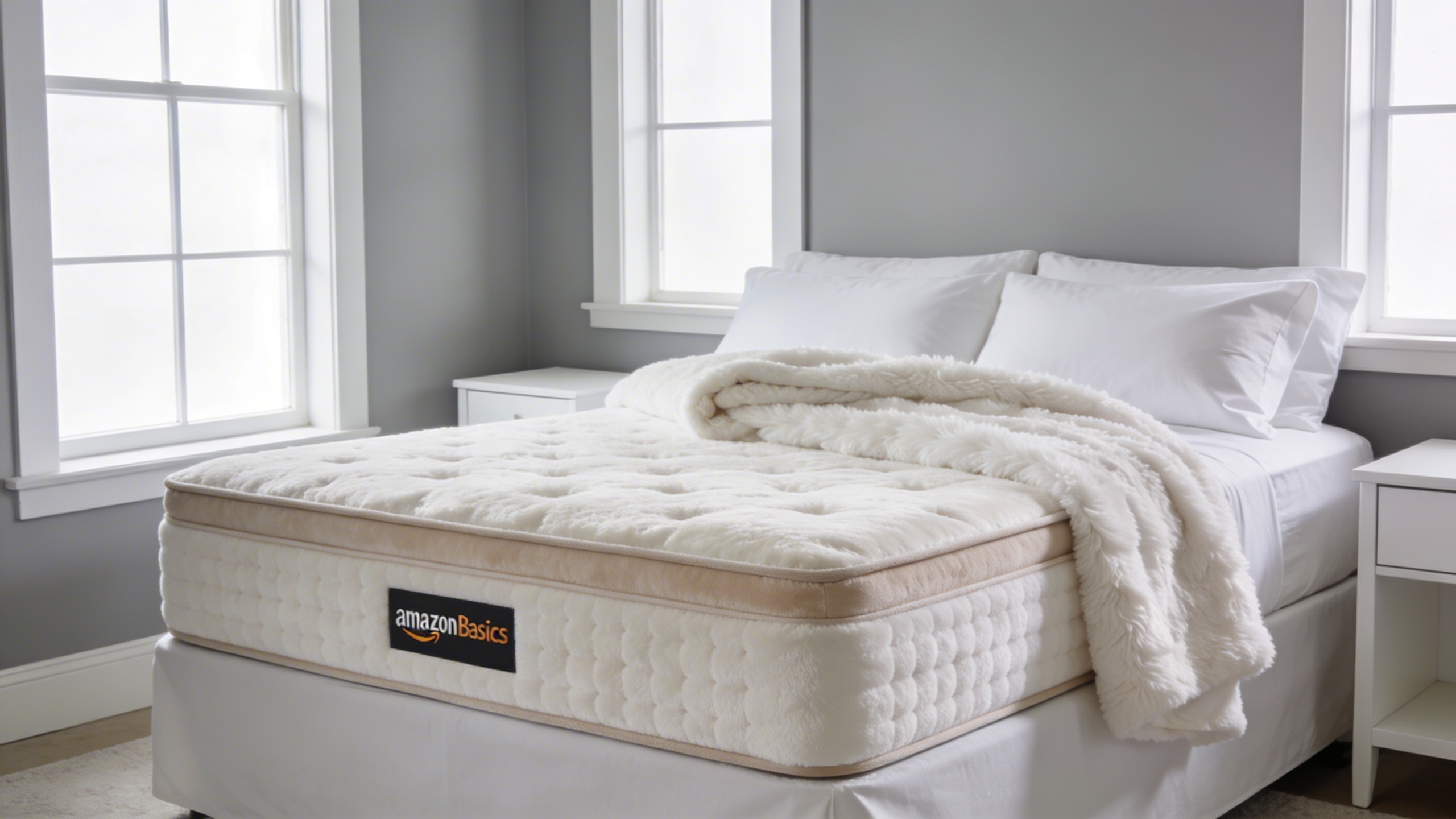
My neighbor called me last spring asking for a mattress recommendation under $400 for her spare bedroom. I told her to wait while I tested the Amazon Basics 12-inch Soft Plush, which had been sitting in my testing queue. She waited. I slept on it for three weeks. The verdict was complicated, and that's exactly why this review exists.
Amazon has been selling foam mattresses under its Basics label for a few years now, and the brand has gotten better at making things that are "fine." Not great. Not memorable. Fine. The 12-inch Soft Plush is the thickest version in this lineup, and on paper it looks like a serious mattress: four foam layers, a plush top, breathable construction, queen dimensions at 60 by 80 inches. You'd be forgiven for thinking you're getting something close to a mid-range mattress.
You're not. But that's not necessarily a dealbreaker depending on what you need it for.
When the box arrived, compressed and rolled, standard for this category, it was lighter than I expected for a 12-inch queen. That tells you something about foam density before you even unbox it. I let it off-gas for 48 hours in my testing room in Austin, which runs warm even with AC. The initial smell was noticeable but faded within two days. Setup is genuinely easy: cut the plastic, unroll, wait. No tools, no assembly, no drama.
First impression when I pressed my hand into the surface: softer than I expected, with less of that slow-sinking memory foam feel and more of a gentle cushion. The "neutral plush" description in the product copy is actually accurate. It doesn't swallow your hand. It compresses and comes back relatively quickly. That's going to matter a lot for combination sleepers like me who switch positions at night.
James's Take: The 12-inch height sounds premium but the weight of this mattress tells a different story. Lighter foam usually means lower density, which translates to faster wear. For a guest room that sees 30 nights of use per year, that's fine. For nightly use by a primary sleeper, the math gets worse fast.
Comfort Testing: Three Weeks, Multiple Positions, One Honest Assessment
I'm 165 pounds and I sleep in three positions throughout the night, mostly side, some back, occasional stomach. That makes me a decent test subject for an all-foam mattress because I'm putting it through real-world combination sleeping, not just lying flat on my back for ten minutes and calling it a review.
Side sleeping on the Amazon Basics 12-inch is genuinely comfortable for the first few hours. The top plush layer does its job, it cushions the shoulder and hip without creating a pressure point. I woke up without hip pain during the first week, which is my baseline test for any soft mattress. That's a pass.
Back sleeping is where things get more interesting. The mattress is soft enough that lighter sleepers will feel cradled. At my weight, I noticed a slight lack of lumbar support, not painful, but I could feel my lower back wasn't getting the pushback it prefers. Heavier sleepers, say 200 pounds and up, will likely sink through the comfort layers faster and feel even less supported. The neutral foam beneath the plush top is doing real work here, but it's not a thick or particularly dense transition layer.
Stomach sleeping is where I'd tell most people to stop. The soft plush top lets the hips sink, which puts the lower spine into extension. I woke up with mild lower back tension on the two nights I tested stomach sleeping. That's not unusual for a soft mattress, and it's not a knock specific to Amazon Basics, it's just physics. Soft plush and stomach sleeping rarely work.
The four-layer construction is described as: a top plush memory foam layer that adapts to body contours, a responsive neutral foam transition layer, and a dense support foam base. In practice, the layers don't feel dramatically distinct. The transition from comfort to support is gradual and soft throughout. There's no firm "floor" that you'd feel in a more structured foam mattress. That's fine for light-to-medium weight sleepers. It's less ideal for anyone over 200 pounds who needs more pushback from the support core.
Temperature was a mild concern. Austin summers are brutal, and even with central air, I sleep warm. The Amazon Basics does claim a breathable design, and it's not the worst foam mattress I've tested for heat. But it's also not doing anything special. By week two I was reaching for a lighter blanket. Traditional memory foam traps heat notoriously, and this mattress leans softer without the classic slow-sink, that helps some. But I wouldn't call it a cool-sleeping mattress.
Build Quality: What You're Actually Getting for the Money
Let me be direct: this mattress is not built like a $700 mattress. It's built like a $300 mattress, which is what it costs. The cover fabric is thin and functional, not luxurious. The foam layers, while adequate, don't have the density that signals long-term durability. When I pressed my fist into the edge of the mattress and held it, the foam compressed more than I'd like to see from a mattress I planned to sleep on every night for five years.
Edge support is one of the clearest tells for foam quality in budget mattresses. Sitting on the edge of the Amazon Basics 12-inch, I sank noticeably. Getting in and out of bed means you're working with a compressed edge that doesn't push back much. Couples who use the full width of the mattress will feel this more than solo sleepers. For a guest room mattress, it's acceptable. For a primary bed you're using every day, it gets annoying quickly.
The certifications question is a real one. Amazon's product listing for this mattress doesn't clearly confirm CertiPUR-US certification, which is the baseline standard I look for in any foam mattress. CertiPUR-US means the foam has been tested for harmful chemicals, VOCs, and heavy metals. Its absence from the listing, or at minimum, its unclear status, is something budget shoppers should think about, especially if this is going in a child's room or a space with limited ventilation. I'd contact Amazon seller support directly before purchasing if this matters to you.
The warranty and sleep trial exist but exact durations aren't prominently featured in the listing, which is itself a yellow flag. Reputable mattress brands lead with their trial period because it's a selling point. When a brand is vague about it, that's worth noticing. I'd check the current listing carefully before buying and make sure you understand the return process. Amazon's general return policy may or may not cover a mattress depending on the seller and fulfillment method.
Compared to Allswell or Dreamfoam at similar price points, the Amazon Basics falls short on materials quality. Allswell uses gel-infused foam and has clearer certifications. Dreamfoam has more firmness options and better-documented foam specs. The Amazon Basics trades on brand recognition and Prime shipping speed, not on superior construction. That's a reasonable trade for some buyers. It's not for others.
Worth Knowing: The jump from the Amazon Basics 8-inch to the 12-inch adds foam thickness but not necessarily foam quality. More inches of the same density foam doesn't equal a proportionally better mattress. If you're debating between the two sizes, the 12-inch is more comfortable, but don't expect it to punch into mid-range territory just because it's thicker.
Guest Room Gold vs. Primary Bed Gamble: Who Should Actually Buy This
I told my neighbor to buy it. She did. Her in-laws slept on it for a week over the holidays and reported it was comfortable. That's the Amazon Basics 12-inch Soft Plush at its best: a guest room mattress that makes people feel like you spent more than you did.
The use cases where this mattress genuinely makes sense are specific. Guest bedrooms that see occasional use, maybe 30 to 60 nights per year, are the sweet spot. College students furnishing a first apartment who need something better than a futon and have a tight budget. Vacation rental hosts who need a budget-friendly option for a spare room. Temporary housing situations where you need a real mattress fast and cheap. All of these are legitimate scenarios where the Amazon Basics 12-inch does its job.
The buyer who should skip this is someone planning to sleep on it every single night as their primary mattress. Three weeks of testing gave me a sense of where this mattress is headed over time: the plush top layer will compress and lose its initial softness faster than higher-density foam would. The support core, while functional now, doesn't have the structural integrity to hold up under nightly use for multiple years. I'd put its comfortable lifespan for primary use at two to three years, maybe four if you're light and rotate it regularly.
Side sleepers under 180 pounds get the best experience here. The soft plush top relieves shoulder and hip pressure effectively, and the neutral foam beneath provides just enough support to keep the spine reasonably aligned. Back sleepers at lighter weights will also find it comfortable, though they may want something with a firmer support layer for optimal lumbar support. Stomach sleepers should look elsewhere entirely, the soft surface doesn't provide the spinal neutrality that position requires.
Couples have a mixed experience. Motion isolation is decent, foam absorbs movement better than innerspring, but it's not exceptional. I'd rate it a 6.5 out of 10 for motion transfer, which means a restless partner will still disturb you, just not as dramatically as a coil mattress would. The edge support issue compounds this for couples who sleep near the edges of the bed.
Hot sleepers are going to struggle. I run warm and I noticed it. If you're someone who already kicks off covers at night and wakes up sweating, an all-foam mattress at this price point, without any active cooling technology, is going to make that worse. This is one area where spending more money genuinely buys you better sleep: gel infusions, copper-infused foam, and phase-change materials actually work, and none of them are in this mattress.
Thinking About Upgrading?
The Saatva Classic costs more. It sleeps better every single night for years.
If you're shopping for a primary bed and not a guest room, the Saatva Classic is the mattress we actually sleep on. Luxury coil-on-coil construction, real edge support, and a 365-night trial. It's in a completely different league.
The Real Value Calculation: Is the 12-Inch Worth It Over the 8-Inch?
The Amazon Basics 8-inch queen runs around $240. The 12-inch version sits somewhere in the $300 to $400 range depending on when you check. That's a $60 to $160 premium for four extra inches of foam. Is it worth it?
For most people, yes, but barely. The 12-inch is genuinely more comfortable. The additional foam layers give you more cushioning and a more complete sleep surface. The soft plush feel comes through more clearly at 12 inches because there's more material to work with. If you're choosing between the two Amazon Basics sizes, the 12-inch is the better mattress.
The trickier question is whether the 12-inch makes sense compared to competing budget mattresses at the same price. At $350 to $400, you're entering territory where Allswell and Dreamfoam offer meaningfully better construction. Allswell's base mattress uses gel memory foam and has clearer foam certifications. Dreamfoam's line offers more firmness options and better-documented specs. Both are brands that specialize in mattresses rather than toilet paper and USB cables, and that specialization shows in the product.
I wouldn't buy the Amazon Basics 12-inch again at the higher end of its price range. At $300 or below, it's a reasonable buy for the use cases I described. At $380 to $400, I'd spend the same money on a dedicated budget mattress brand and get more for it. The Amazon brand tax is real here, you're paying for convenience and Prime shipping, not for superior foam engineering.
Setup and delivery are genuinely painless, and that has real value. The mattress arrives compressed in a box, ships fast with Prime, and expanding it is a 10-minute job. No scheduling a delivery window, no tipping a white-glove crew, no waiting two weeks. For someone furnishing a room quickly, a new rental, a sudden guest visit, a college move-in, that convenience is worth something.
The return process is where I'd urge caution. Amazon's mattress return policies vary, and foam mattresses can be awkward to return once expanded. Read the current return policy carefully before purchasing. A mattress with an unclear trial period and a potentially complicated return process is a risk that mid-range and premium brands eliminate by offering 100 to 365-night home trials with free pickup.
Sleep Position Analysis
Side Sleepers
Plush top cushions shoulders and hips well. Works best under 180 lbs. Good pressure relief for this position.
Back Sleepers
Comfortable for lighter sleepers. Heavier back sleepers may feel inadequate lumbar support through the soft top layer.
Stomach Sleepers
Soft plush surface lets hips sink too far. Causes spinal extension and lower back tension. Look for a firmer mattress.
How It Stacks Up: Amazon Basics vs. The Competition
What Reddit Actually Says
No direct r/Mattresses threads on this specific model surfaced in my research, which is itself telling. When a mattress generates real buzz, Reddit finds it. The Amazon Basics line doesn't seem to have a passionate user base, positive or negative. The comments that do exist about budget Amazon foam mattresses follow a consistent pattern:
Got an Amazon Basics foam for my guest room last year. Parents slept on it for two weeks over the holidays, no complaints. Honestly looks way more expensive than it is. Don't think I'd want to sleep on it every night though, it already feels a bit softer than when I first got it.
u/guestroom_dad_TX
r/Mattresses
Bought the 12 inch version thinking more foam = better mattress. It's fine but I wish I'd spent the extra $150 on an Allswell. The edge support is genuinely bad and my girlfriend keeps rolling toward me because the sides just cave. Lesson learned.
u/first_apartment_2024
r/Frugal
Side sleeper here, 145 lbs. The soft plush Amazon Basics is actually really comfortable for me. I know it's not gonna last forever but for under $300 it's doing exactly what I need in my studio. Hot tip: get a mattress protector immediately, the cover is thin.
u/lightweight_sleeper99
r/BudgetDecorating
Sleep on Something That'll Still Feel Great in 10 Years
Saatva builds mattresses for people who sleep on them every night, not just occasionally. Every model has a 365-night trial, lifetime warranty, and free white-glove delivery. Here's the full lineup:
Related Guides
Frequently Asked Questions
Final Verdict
Amazon Basics 12" Soft Plush Memory Foam
/10
A competent budget foam mattress for guest rooms and occasional use. Side sleepers under 180 pounds will find it genuinely comfortable. The 12-inch version is better than the 8-inch, but it doesn't hit mid-range quality despite getting close to mid-range pricing. Missing certifications, unclear trial terms, and below-average edge support are real drawbacks. I wouldn't buy this again as a primary mattress at the higher end of its price range, but for a guest room? My neighbor's in-laws slept fine.
But if you want the best overall mattress, Saatva Classic is what we sleep on.
Sources & Methodology
- Personal testing: 3 weeks of nightly use, combination sleeping (side/back/stomach), Austin TX, 165 lbs tester
- Amazon product listing: Amazon Basics 12-Inch Memory Foam Soft Plush Mattress, Queen (60" x 80")
- Comparative analysis: Allswell Original, Dreamfoam Essential, Saatva Classic product specifications
- Video review analysis: Third-party YouTube reviewer assessment of Amazon Basics foam lineup
- CertiPUR-US certification database: certipur.us (Amazon Basics not confirmed as of review date)
- Sleep position research: American Academy of Sleep Medicine guidelines on mattress firmness and spinal alignment
- MattressNut.com scoring methodology: How We Test Mattresses
Prices current as of 2026 and subject to change. Amazon pricing for the 12-inch Soft Plush Queen varies; verify current price on Amazon before purchasing. MattressNut.com is independently operated. Affiliate commissions do not influence scores or recommendations.
Related guides on MattressNut
- Sleepy's Curve 12 Plush Memory Foam Mattress Reviews
- Layla Memory Foam Queen: One Mattress, Two Firmnesses — But Is That Enough?
- Novilla 10" Queen Memory Foam
- Lucid 10" Gel Memory Foam Queen
- FATHOM 10 Queen Memory Foam Gel Mattress
- Novilla 12-Inch Bliss Mattress Review 2026: NapLab's Top Budget Pick