
 by
by Our #1 recommendation for foam mattresses
Amerisleep AS3
Our starting point for a medium all-foam feel.
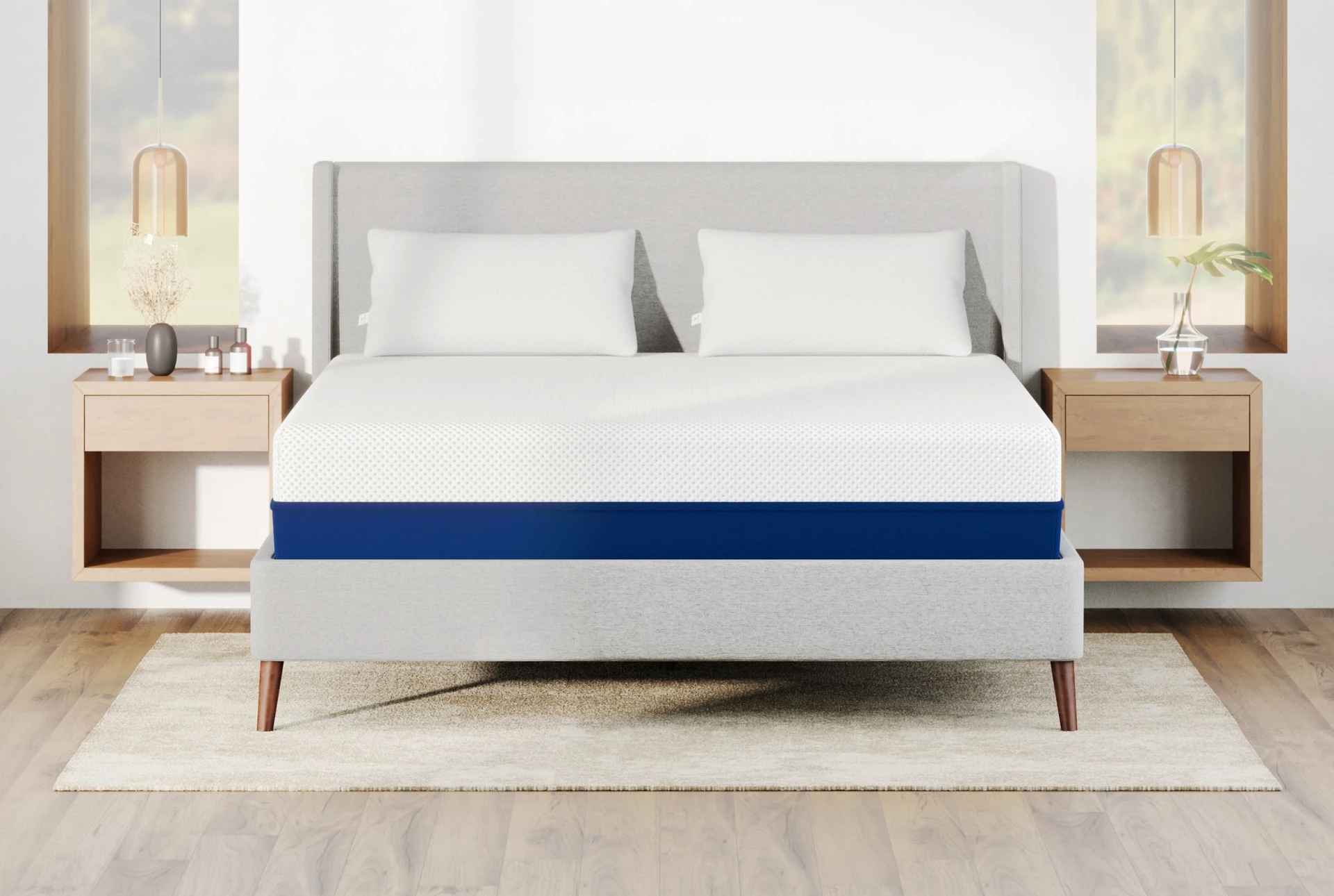
Our first recommendation for foam mattresses is the Amerisleep AS3. Choose the AS3 for foam contouring; budget $1,249 for a queen on sale. Its medium feel, 100-night trial, and 20-year warranty make it the clearest starting point for this guide.
Amerisleep AS3
9.1/10
- Bio-Pur partially plant-based open-cell foam sleeps cooler than traditional memory foam
- HIVE 5-zone layer firms under the lumbar and softens at shoulders
- Motion isolation rated 9.3/10, partners stay undisturbed
- CertiPUR-US certified, made in the USA
- 20-year warranty covers sag over 1.5 inches (years 1-10 full replacement)
- Softer perimeter than a hybrid, less supportive for edge sitting
- Sleepers over 230 lb may want the AS5 Hybrid for extra support
- 30-night mandatory break-in before a return is permitted
For most sleepers shopping for a queen all-foam mattress at $1,249 on sale, the AS3 hits medium (5/10) firmness, uses a zoned layer that actively supports the lumbar, and backs it with the longest standard warranty in the plant-based foam segment. The open-cell Bio-Pur construction runs cooler than competitors in independent lab tests.
Saatva Loom & Leaf
9.4/10
- 5.5 PCF high-density memory foam comfort layer, one of the densest in the all-foam category
- Spinal Zone gel-infused layer targets lumbar support directly, reducing lower back pressure
- Ships uncompressed, no off-gassing on delivery day
- Free white-glove delivery, setup, and old-mattress removal included
- 365-night trial and lifetime warranty, the longest in the category
- Heavier than a bed-in-a-box, requires white-glove delivery slot
- $99 return processing fee if returned during the trial
- Only two firmness options, no plush version
The Loom & Leaf is the premium benchmark in all-foam: high-density construction that lasts, a gel Spinal Zone layer that addresses lumbar support mechanically, and Saatva's class-leading 365-night trial. If you want a foam bed that feels genuinely luxurious and will not sag in 3 years, this is the clearest call.
Puffy Original
8.6/10
- Pressure relief rated excellent for side and back sleepers
- Strong motion isolation, comparable to premium all-foam beds
- Lifetime warranty at a mid-range price point
- 101-night trial with free returns
- Can sleep warm for hot sleepers without a cooling cover
- Pricier than discount foam brands at equivalent specs
- Less zoned support than AS3 or Loom & Leaf
The Puffy Original delivers a lifetime warranty and strong pressure relief at a price that undercuts the premium tier. Not as refined as the Loom & Leaf, but a solid pick for shoppers who want all-foam comfort without paying for luxury construction.
What makes a foam mattress worth buying in 2026
Foam mattresses account for the majority of mattresses sold online, which means the category spans everything from budget roll-packs under $400 to premium multi-layer beds at $1,700 and above. The gap in quality is wide. Three things separate the best foam mattresses from the rest: foam density, zoned support, and heat management.
Foam density: the number most brands hide
Density (measured in pounds per cubic foot) determines how long a foam mattress holds its shape. For comfort layers, 4 PCF and above is high quality and will resist permanent body impressions for 8 to 10 years. Under 3 PCF is budget grade and typically develops sagging within 3 to 4 years. The Saatva Loom & Leaf uses a 5.5 PCF high-density layer in the comfort zone, which is why its lifetime warranty is defensible rather than marketing language. For comparison, most mattresses sold at big-box retailers use 2 to 2.5 PCF foams that the warranty will not cover once impressions exceed the fine-print threshold.
Types of foam mattresses compared
| Foam Type | Feel | Best For | Heat Retention |
|---|---|---|---|
| High-Density Memory Foam | Deep contouring, slow response | Pressure relief, motion isolation, durability | Moderate (gel infusion helps) |
| Plant-Based Open-Cell Foam | More responsive, slightly firmer edge | Combination sleepers, hot sleepers | Lower than traditional |
| Gel Memory Foam | Similar to memory foam, slightly faster | Hot sleepers needing contouring | Moderate |
| Polyfoam (support core) | Neutral, firm | Support layer, not for comfort alone | Low |
| High-Density Latex (natural) | Bouncy, responsive | Durability, hot sleepers, organic | Very low |
Best foam mattresses compared
| Mattress | Type | Firmness | Queen Price | Trial | Warranty |
|---|---|---|---|---|---|
| Saatva Loom & Leaf | All-foam luxury | Relaxed Firm or Firm | ~$1,695 | 365 nights | Lifetime |
| Amerisleep AS3 | All-foam (Bio-Pur) | Medium 5/10 | $1,249 (queen, sale) | 100 nights | 20 years |
| Puffy Original | All-foam in-a-box | Medium / med-firm | ~$1,499 | 101 nights | Lifetime |
| Nectar Original | All-foam memory foam | Medium-firm 6/10 | ~$699 | 365 nights | Lifetime |
All-foam vs. hybrid: which to choose
All-foam mattresses win on motion isolation and pressure relief. A memory foam bed deadens movement so effectively that a restless partner rarely disturbs the other side. Hybrids win on edge support, bounce, and temperature, because the coil layer allows airflow that no all-foam construction fully replicates. The Saatva Loom & Leaf's gel-infused Spinal Zone layer and high-density construction close much of the temperature gap against hybrids. For sleepers over 230 lb, a hybrid core adds the support longevity that dense polyfoam alone cannot match at the same price.
Zoning and spinal support: what to look for
Most foam mattresses use a uniform layer of the same firmness from edge to edge. Zoned mattresses cut the transition foam into segments of varying thickness or density so that softer zones sit at the shoulders and firmer zones sit at the hips and lumbar. The Saatva Loom & Leaf uses a dedicated gel Spinal Zone layer that firms specifically under the lower back, and Amerisleep's HIVE layer uses hexagonal cutouts responding differently across five body zones. These targeted approaches are why both mattresses consistently outperform single-density foam beds in lumbar-support testing.
How to choose the right foam mattress firmness
For side sleepers under 180 lb, medium (5/10) is the sweet spot, which is where the Amerisleep AS3 sits. For back sleepers at average weight, medium to medium-firm (5 to 6.5/10) covers most needs. Stomach sleepers and heavier sleepers (230 lb and above) should target firm options or a hybrid with a coil support core. The Saatva Loom & Leaf in Firm (closer to 7-8/10) is the most tested recommendation for back sleepers who want firm all-foam construction. Never choose by firmness number alone: a 5/10 in a low-density foam will sag faster and feel like 4/10 within 18 months.
For most sleepers, the Saatva Loom & Leaf is the benchmark in all-foam: high-density construction, gel Spinal Zone lumbar support, and a 365-night trial with lifetime warranty. The Amerisleep AS3 is the best plant-based alternative for shoppers prioritizing cooling and zoned pressure relief at a lower entry price. Budget shoppers get genuine long-trial value with the Puffy Original or Nectar Original.
Frequently asked questions
Is memory foam or plant-based foam better?
Plant-based open-cell foams like Amerisleep's Bio-Pur run cooler and respond faster than traditional petroleum-based memory foam because wider open cells allow more airflow. The trade-off is slightly less deep contouring. Premium high-density memory foam like the Saatva Loom & Leaf uses gel infusion to manage heat and achieves a denser, more durable construction than most plant-based alternatives. For most sleepers, the right choice depends on whether you prioritize airflow (plant-based) or durability and feel (high-density memory foam).
How long does a foam mattress last?
A high-quality foam mattress with 4 PCF or higher comfort layers will last 8 to 10 years before developing permanent impressions. Budget mattresses using 2 to 2.5 PCF foams often sag within 3 to 4 years. The Saatva Loom & Leaf uses a 5.5 PCF comfort layer and is covered by a lifetime warranty. The Amerisleep AS3 uses a 4 PCF layer and carries a 20-year warranty. Both are defensible, not just marketing.
What CertiPUR-US certification means
CertiPUR-US certifies that foam is made without ozone-depleting chemicals, PBDE flame retardants, heavy metals, formaldehyde, and phthalates, and that volatile organic compound (VOC) emissions are below set thresholds. It is the baseline standard for any foam mattress worth considering. GREENGUARD Gold is stricter, certifying emissions across all materials including cover and fill layers, not foam alone.
All-foam or hybrid for back pain?
Zoned design matters more than the material type. The Saatva Loom & Leaf (high-density foam with gel Spinal Zone) and the Amerisleep AS3 (all-foam with HIVE zoning) both test well for back pain. Choose the Loom & Leaf for premium durability and lumbar targeting; choose the AS3 if you want plant-based materials and strong motion isolation at a lower price.
This guide is part of our Best Mattress by Type hub, where we compare every mattress category side by side.
Our #1 pick for foam mattresses: Amerisleep AS3
The 100-night trial is the time to decide whether Medium feels right.