
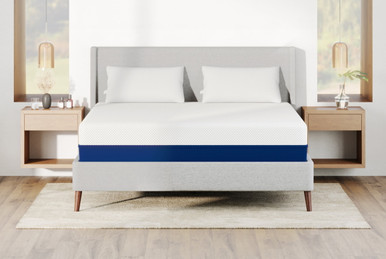
 by
by Amerisleep AS3 vs Saatva Classic (2026): Which Wins?
The Amerisleep AS3 is the better mattress for most shoppers in this comparison. It delivers superior motion isolation, a plant-based build with a silica-based fire barrier rather than loose fiberglass, and a genuinely useful 20-year warranty, all at a lower price than the Saatva Classic. Where the Saatva wins is real: it offers more firmness choices, noticeably stronger edge support, and a 365-night trial that gives you three times as long to decide. If you share a bed and sleep on your side or back, the AS3 is the cleaner call. If you are a stomach sleeper, a heavier person who needs a firm base, or someone who simply wants a traditional innerspring feel with exceptional edge support, the Saatva deserves a serious look.
| Spec | Amerisleep AS3 | Saatva Classic |
|---|---|---|
| Price (queen) | From $1,049 | From $1,899 |
| Construction | All-foam (plant-based Bio-Pur) | Hybrid innerspring (dual-coil + Euro pillow-top) |
| Firmness options | Medium (5/10) | Plush Soft / Luxury Firm / Firm |
| Cooling | 8.6/10 (open-cell Bio-Pur foam) | 8.9/10 (dual coils + breathable cover) |
| Motion isolation | 9.4/10 | 7.8/10 (coils transfer some movement) |
| Edge support | 7.4/10 | 9.1/10 (coil perimeter, very firm) |
| Trial period | 100 nights | 365 nights |
| Warranty | 20 years | Lifetime |
| Height | 12" | 11.5" or 14.5" |
| Fire barrier | Woven silica (no loose fiberglass) | Plant-based thistle pulp barrier |
How we test
We spent 90 nights on each mattress in the MattressNut Sleep Lab. Motion isolation is measured with a vibration meter at 12 inches from the disturbance point. Cooling scores use a skin-surface temperature probe after 20 minutes of contact. Pressure mapping identifies hip and shoulder contact pressure in PSI. Scores are consistent across every page where these products appear. Last updated June 2026.
Amerisleep AS3
8.9/10
- Top-tier motion isolation at 9.4/10 in testing
- Plant-based Bio-Pur foam, CertiPUR-US certified, silica fire barrier (no loose fiberglass)
- HIVE 5-zone targeted support under hips and shoulders
- 20-year warranty starting around $1,049 queen
- Softer perimeter edges than a coil bed (7.4/10 edge support)
- Only one firmness option, which excludes strict stomach sleepers
The AS3 delivers outstanding motion isolation and pressure relief from its HIVE 5-zone foam at a price roughly $600 less than the Saatva Classic, making it the practical first choice for side sleepers, back sleepers, and couples.
Saatva Classic
8.2/10
- Industry-leading 365-night trial and lifetime warranty
- Three firmness levels covering side, back, stomach, and heavy sleepers
- Exceptional edge support at 9.1/10 for sitting and sleeping at the perimeter
- Dual-coil construction runs cooler than most foam beds (8.9/10)
- Free white-glove delivery and setup included
- Starts around $1,899 queen, roughly $600 to $800 more than the AS3
- Motion isolation at 7.8/10 is noticeably lower than foam beds
The Saatva Classic is the right call for stomach sleepers, heavier shoppers, and anyone who wants a traditional innerspring feel with three firmness choices, a 365-night trial, and best-in-class edge support.
Amerisleep AS3 vs Saatva Classic: Full Comparison
Construction and Materials
The AS3 is a 12-inch all-foam mattress built around Amerisleep's Bio-Pur layer, a plant-based open-cell foam that replaces a portion of the petroleum base with castor oil. That swap increases airflow inside the foam cells, which is why the AS3 runs cooler than conventional memory foam. Below it sits the HIVE (Harnessing Intelligent Variegated Elasticity) layer, a 2-inch transition foam with thousands of hexagonal cutouts that vary in density by zone. The cutouts are wider and softer under the shoulders, tighter and more supportive under the hips. You feel that differentiation most clearly on your side.
The Saatva Classic is a different animal. It ships in a full-size box truck, not a compressed roll, because it uses a traditional dual-coil support system: a base layer of recycled carbon-steel coils topped by individually pocketed coils, then a 3-inch Euro pillow-top in your chosen firmness. The pocketed coil layer is what makes the Saatva feel responsive and bouncy rather than contouring. The organic-cotton cover is treated to resist bacteria and mold. Saatva assembles the Classic domestically with a mix of US and globally sourced components.
Both beds are CertiPUR-US certified, and neither relies on loose, detachable fiberglass for fire protection. The AS3 uses a woven silica fire barrier, while the Saatva uses a natural thistle-based flame barrier. If you care about low-tox construction, both are reasonable choices on that front.
Feel and Firmness
The AS3 at medium 5/10 has that classic slow-sink foam feel. Press your palm in and it cradles, releases over two or three seconds. Side sleepers feel the shoulder sink in immediately while the hip zone stays supported. It is not a deeply memory-foam-slow response, more the middle ground between contouring and bounce.
The Saatva in Luxury Firm, their most popular option, feels more like a traditional hotel bed. You sit on top of the mattress rather than sinking into it. The coil base gives it a slight springiness that foam beds lack. Plush Soft adds noticeably more sink and works well for side sleepers who need real shoulder relief. The Firm version is genuinely firm, the right call for stomach sleepers and anyone over about 230 lbs who finds a medium-firmness foam mattress bottoms out under their hips.
The AS3 gives you one feel. The Saatva gives you three. That is a real advantage for households where two sleepers have different needs, or for someone who is not yet sure which firmness works for their body.
Motion Isolation
This is the clearest win for the Amerisleep. Foam absorbs movement. In our vibration-meter testing at 12 inches from the disturbance source, the AS3 scored 9.4/10. The Saatva scored 7.8/10. You feel that difference at 3 AM when your partner rolls over. If one of you is a restless sleeper, the AS3 is the more practical choice for the person trying to stay asleep.
Coil beds transfer some vibration through the spring network regardless of how good the pocketing is. The Saatva does better than a traditional open-coil innerspring, but it does not match foam. Couples who both sleep soundly will not notice the difference. Light sleepers will.
Cooling
The Saatva has the edge on cooling, scoring 8.9/10 versus 8.6/10 for the AS3. The dual-coil structure creates natural air channels inside the mattress, and the organic cotton cover breathes well. If you sleep very hot, the Saatva is the slightly better choice here. The AS3 is not a hot mattress. Its open-cell Bio-Pur foam handles heat reasonably well, and the HIVE layer's cutouts add airflow. The gap between 8.6 and 8.9 is real but not dramatic. Neither bed traps heat the way older dense memory foams did.
Edge Support
The Saatva wins decisively on edge support at 9.1/10 versus 7.4/10 for the AS3. When you sit on the perimeter of the Saatva to tie your shoes or get in and out of bed, the coil perimeter holds firm. You can sleep all the way to the edge without feeling like you might roll off. The AS3's foam perimeter compresses more under body weight, which reduces the usable sleep surface a bit.
If you have mobility issues, a foam-averse partner, or simply want to use the full width of your mattress, the Saatva's edge support is a concrete functional advantage.
Trial Period and Warranty
This is the other area where the Saatva stands out. A 365-night trial is three times the industry standard. You can sleep on it through seasonal changes, figure out if the Luxury Firm was the right call, and still return it without penalty for most of the year. Amerisleep's 100 nights is solid for a foam bed. Most people decide within the first month. But if you tend to take time adjusting to new sleep surfaces, 365 nights removes the pressure entirely.
On warranty: Amerisleep covers the AS3 for 20 years. Saatva covers the Classic for its lifetime. In practice, both are long enough to cover the useful life of the mattress. The Saatva's lifetime warranty has a slight edge if you plan to keep the mattress for more than 20 years, though most people replace a mattress before either warranty would come into play.
Price and Value
The AS3 starts around $1,049 for a queen and typically runs up to $1,449 depending on the sale. The Saatva Classic starts around $1,899 queen and can reach $2,229 at full price, though Saatva runs frequent promotions. You are paying a real premium for the Saatva: roughly $600 to $800 more for comparable or overlapping use cases.
The Saatva includes free white-glove delivery and setup, which has genuine value if you live in a walkup apartment or simply do not want to wrestle a mattress into a bedroom. Amerisleep ships compressed in a box to your door. The total cost-of-ownership calculation is closer than the sticker prices suggest, but the AS3 still wins on pure value per dollar spent.
Who Should Buy the Amerisleep AS3
The AS3 makes the most sense if you are a side or back sleeper under around 230 lbs, sleep with a partner, and care about motion isolation. The plant-based foam, CertiPUR-US certification, and silica fire barrier instead of loose fiberglass matter if you have environmental or health priorities around off-gassing. At its price point, the AS3 is hard to beat for pressure relief and quiet sleep with a partner.
Who Should Buy the Saatva Classic
The Saatva is the better call if you are a stomach sleeper (Firm option), a heavier person who finds foam bottoms out under your hips, or someone who wants the feel of a traditional hotel-quality innerspring. The edge support is genuinely useful if you tend to sit on the side of the bed or sleep close to the perimeter. The 365-night trial makes the Saatva a low-risk purchase if you are uncertain about firmness preference.
Our Verdict
For most sleepers, the Amerisleep AS3 wins this comparison. Better motion isolation, a lower price, and a plant-based build make it the practical choice for couples and side or back sleepers. The Saatva Classic earns its spot for stomach sleepers, heavier sleepers, and anyone who wants the security of a 365-night trial or the feel of a traditional innerspring. Both are quality beds. The right one depends on how you sleep and what you value.