
 by
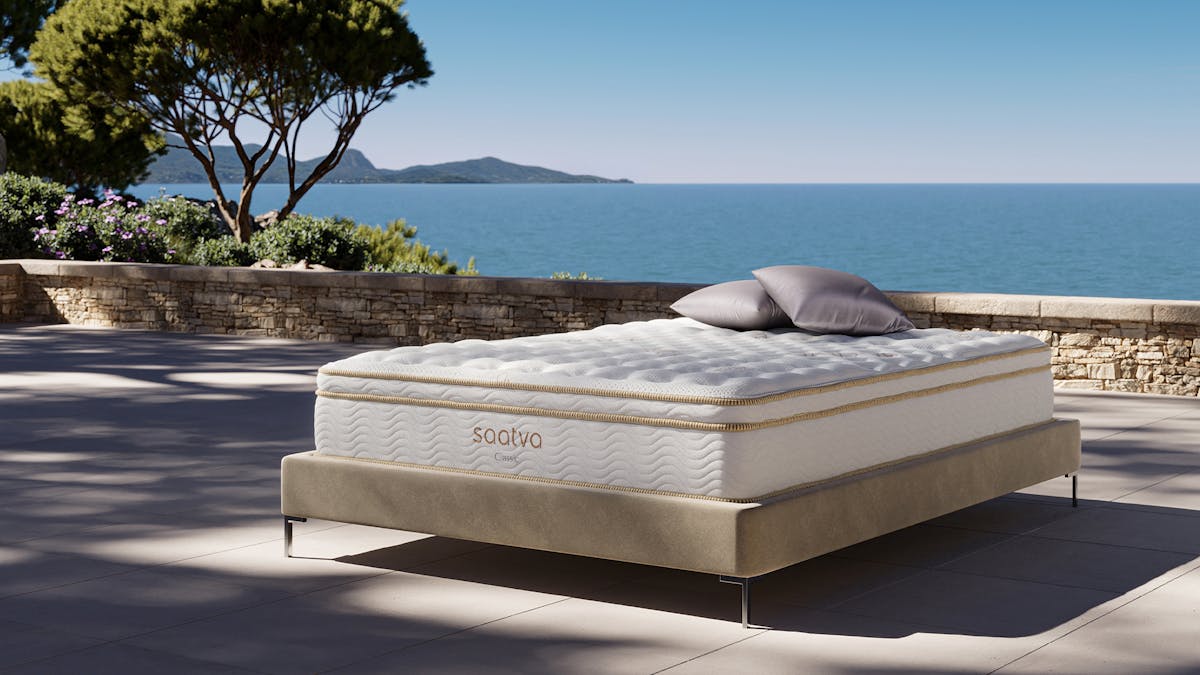
by The right choice between plush and firm comes down to how you sleep. Side sleepers and lighter adults do better on a plush or medium-plush surface that lets the shoulders and hips sink in enough to keep the spine straight. Back sleepers, stomach sleepers, and heavier adults do better on medium-firm to firm, which prevents the hips from sinking too deep and straining the lumbar spine. For most people, medium (5 to 6 out of 10) works across all positions. The Saatva Classic is our top pick: it comes in three firmness options (Plush Soft, Luxury Firm, Firm) so you can target the exact feel without guessing, backed by a 365-night trial. The Amerisleep AS3 is the best single-firmness alternative for sleepers who already know medium is right for them.
Saatva Classic
9.0/10
- Available in Plush Soft (~4/10), Luxury Firm (~6/10), and Firm (~8/10) so you pick the exact feel at checkout
- Dual-coil construction with a reinforced lumbar zone pad and industry-leading edge support
- 365-night trial lets you live with your firmness choice before committing, with free exchanges within the window
- Free white-glove delivery with in-room setup and old mattress removal included
- Lifetime warranty, made in the USA
- Below-average motion isolation due to coil bounce (not ideal for light-sleeping couples)
- Ships flat, not compressed in a box; $99 return fee if you change your mind during the trial
- Higher price than comparable DTC foam or hybrid options
The Saatva Classic is the most direct answer to the plush-vs-firm question because it removes the guesswork entirely. Whether you land on Plush Soft for side sleeping, Luxury Firm for back sleeping, or Firm for stomach sleeping, you get the same dual-coil construction with a lumbar support pad. The 365-night trial and free exchanges mean you are not locked in if you choose wrong on the first try.
Plush vs firm: what the numbers actually mean
Mattress firmness is rated on a scale from 1 (softest) to 10 (firmest). Most adult mattresses sold in the US fall between 3 and 8. Here is where the key feels land:
- Plush (3 to 4): thick comfort layers that allow deep contouring. Your hips and shoulders sink into the surface. Best for side sleepers under 130 lb and anyone with sharp pressure-point pain. Risk: heavier sleepers can sink too deep, causing the spine to bow.
- Medium-plush (4 to 5): soft enough to relieve shoulder and hip pressure, firm enough to keep most side sleepers aligned. Works for back sleepers under 130 lb.
- Medium (5 to 6): the most versatile range. Handles side, back, and combination sleeping for most adult body weights. The sweet spot the research points to for general comfort.
- Medium-firm (6 to 7): light contouring but strong pushback. Ideal for back sleepers, combination sleepers over 180 lb, and stomach sleepers under 130 lb.
- Firm (7 to 8): minimal sink. The spine stays close to the surface. Best for stomach sleepers, back sleepers over 230 lb, and anyone who wakes with lower back pain from a mattress that is too soft.
The most common mistake is buying based on the marketing label rather than the underlying construction. A mattress labeled "medium" by Brand A can feel like "firm" from Brand B. Always use the numerical score and, when available, independent lab firmness testing to compare.
Who should buy a plush mattress
A plush mattress makes sense when pressure relief is the primary need rather than broad spinal support. Three groups consistently do better on a softer surface:
- Strict side sleepers who do not shift to their back during the night. The shoulder and hip need to sink enough that the spine stays horizontal. On a firm surface, a 150 lb side sleeper will experience shoulder pressure above 28 mmHg, which is enough to restrict circulation and cause waking.
- Lightweight adults under 130 lb. Lighter bodies do not compress comfort layers the same way heavier bodies do. On a medium or firm mattress, a lighter sleeper barely activates the comfort layer and ends up lying on an essentially firm surface. A softer mattress compensates for the reduced compression.
- Adults with acute pressure-point pain at the shoulders, hips, or knees, where cushioning matters more than strict alignment for the short term.
Note that plush does not mean poor support. Well-constructed plush mattresses pair a soft comfort layer with a strong support core, so the hips and spine stay aligned even while the surface gives way under the shoulders. Poor-quality plush mattresses skip the strong core, and those are the ones that cause lumbar sagging and pain.
Who should buy a firm mattress
Firm mattresses keep the body on top of the surface rather than inside it. That matters for three groups in particular:
- Stomach sleepers. Lying face-down with a soft mattress lets the hips and abdomen sink lower than the chest, creating a pronounced arch in the lumbar spine. A firmer surface keeps the spine closer to neutral. Stomach sleeping on a plush mattress is one of the clearest paths to morning lower back pain.
- Back sleepers over 180 lb. Heavier back sleepers compress comfort layers more than lighter ones. On a plush or even medium mattress, the hips can sink past the lumbar, creating the same reverse arch as stomach sleeping. A medium-firm to firm surface maintains lumbar support as the hips settle.
- Hot sleepers who want maximum airflow. Firm mattresses, particularly innerspring or hybrid models, minimize the depth of the sleep impression and allow more air to move around the body. All-foam plush beds trap more heat because the body sinks into the surrounding foam.
The case for medium: why most people land here
Independent research consistently finds that medium-firm (roughly 5 to 7 out of 10) outperforms both softer and firmer options for the majority of adults. A 2015 study in Sleep Health (Jacobson et al.) showed significant reduction in back pain and improved sleep quality for participants who switched to a medium-firm mattress over 12 weeks, compared to their previous surfaces.
The reason medium works so broadly is structural: a true medium mattress provides enough cushioning to relieve shoulder and hip pressure in side sleeping while providing enough resistance to keep back sleepers from sinking into lumbar hyperflexion. Combination sleepers who switch positions during the night benefit the most, because a medium surface handles all three positions without a major compromise in any.
The practical implication: if you are not certain whether you want plush or firm, buy a medium and use the trial period to confirm. A medium is far easier to adjust with a topper than a plush mattress is to firm up.
Plush vs firm vs medium: quick comparison
| Category | Plush (3 to 4) | Medium (5 to 6) | Firm (7 to 8) |
|---|---|---|---|
| Best for | Side sleepers, lightweight adults | Combo sleepers, most adults | Stomach/back sleepers, heavy adults |
| Pressure relief | Excellent | Good | Poor for side, fine for back/stomach |
| Spinal support | Risk if hips sink too deep | Balanced across positions | Strong for back/stomach |
| Motion isolation | Very good (deep foam absorbs motion) | Good | Varies by material |
| Cooling | Can run warmer (body sinks in) | Moderate | Better airflow (less sinkage) |
| Durability risk | Thick comfort layers can compress over time | Balanced | Core maintains shape longer |
Amerisleep AS3
9.1/10
- HIVE 5-zone support system targets shoulders, lumbar, hips, legs, and feet independently
- Plant-based Bio-Pur foam relieves pressure without the heavy-sinking feel of slow-response memory foam
- Exceptional motion isolation for couples who share a bed
- CertiPUR-US certified; 20-year warranty is double the industry standard
- Single firmness option (medium); no plush or firm variant in the all-foam line
- Softer perimeter edges than a coil hybrid
- Sleepers over 230 lb may prefer the AS5 Hybrid for added support
The AS3 sits precisely in the middle of the firmness scale, which is where most adults land regardless of sleep position. The HIVE zoning adds targeted support under the lumbar without making the overall feel stiff. If you already know medium is right for you and prefer all-foam over innerspring, this is the pick.
Best plush mattress: for strict side sleepers
If you sleep exclusively on your side and want genuine plush contouring, the Amerisleep AS5 Hybrid is the strongest option. At a soft 3 out of 10, it is designed specifically for side sleepers and lightweight adults who need deep shoulder relief. The hybrid coil base provides more support than a pure foam plush bed, which reduces the risk of lumbar sagging that cheaper plush models suffer from.
Amerisleep AS5 Hybrid
8.5/10
- Soft 3/10 feel with deep contouring for side sleepers who need genuine plush cushioning
- Coil base provides better edge support and more durable long-term support than all-foam plush models
- Bio-Pur plant-based foam layer and CertiPUR-US certification
- Same 20-year warranty and 100-night trial as the AS3
- Too soft for stomach sleepers and most back sleepers over 150 lb
- Highest price point in the Amerisleep lineup
For side sleepers who find medium mattresses too firm and wake with shoulder or hip pain, the AS5 Hybrid is the plush pick we recommend. The coil base keeps the support strong even at a soft firmness level.
Choosing firmness by sleep position
Sleep position is the single most reliable predictor of which firmness level will work for a given sleeper:
- Side sleeping: needs 3 to 6 out of 10 depending on body weight. Lightweight side sleepers (under 130 lb) typically need 3 to 4. Average weight (130 to 200 lb) usually does well at 5 to 6. Heavy side sleepers (over 200 lb) often find medium-firm (6 to 7) works better because their weight activates the comfort layer more than a lighter person would.
- Back sleeping: needs 5 to 7. Too soft and the hips sink below the lumbar; too firm and the lumbar is unsupported because the natural curve cannot settle. The lumbar spine needs the surface to meet it partway, which is why medium and medium-firm both work well here.
- Stomach sleeping: needs 6 to 8. The hips need to stay at the same elevation as the shoulders. Any mattress below 6 will let the abdomen sink and arch the lumbar, which is the primary source of stomach-sleeper back pain.
- Combination sleeping: needs 5 to 6. Medium is the universal answer here, since any single position will not dominate enough to justify optimizing for it alone.
Body weight and firmness: how they interact
Body weight changes how a mattress feels without changing the firmness rating. A 130 lb person and a 250 lb person lying on the same medium-firm mattress will experience different effective firmness levels because the heavier person compresses the comfort layers more deeply.
A rough guide based on independent testing:
- Under 130 lb: add 1 to 2 points of softness to whatever the label says. A medium (6) may feel like a medium-firm (7) to a lighter adult. Choose a level softer than you think you need.
- 130 to 200 lb: mattress labels are reasonably accurate. The standard recommendation applies.
- Over 200 lb: subtract 1 to 2 points. A medium (5 to 6) may feel like a soft (4) under extra weight. Consider medium-firm to firm (6 to 8), and look for hybrids with stronger coil cores, which resist compression better than all-foam options over time.
Can you adjust firmness after buying?
You can soften a firm mattress more reliably than you can firm up a plush one. A 2 to 3 inch soft memory foam or latex topper on a medium-firm mattress adds noticeable plush cushioning. The reverse, placing a topper on a plush mattress, rarely adds meaningful firmness because the underlying mattress still moves.
This asymmetry has a practical implication: if you are choosing between medium-firm and firm and are unsure, lean toward the firmer option. You can add a topper to soften it. If you buy a plush mattress and find it too soft, you cannot fix it without replacing the mattress.
The same logic applies to the Saatva Classic's three-firmness structure: exchanging during the trial is free, but firmness is hard to change after the trial window closes.
For most adults, medium (5 to 6 out of 10) outperforms both plush and firm across sleep positions. The Saatva Classic is our top pick because it lets you choose Plush Soft, Luxury Firm, or Firm at checkout on a 365-night trial. The Amerisleep AS3 is the best all-foam medium alternative on a 100-night trial. For genuine plush, the Amerisleep AS5 Hybrid is the softest option with a strong support core.
Frequently asked questions
Is it better to sleep on a plush or firm mattress?
Neither is universally better. Side sleepers and lightweight adults typically sleep better on plush to medium surfaces because the shoulders and hips need to sink in enough to align the spine. Back sleepers, stomach sleepers, and heavier adults typically sleep better on medium-firm to firm surfaces that prevent the hips from dropping below the lumbar. Most adults fall in the medium range (5 to 6 out of 10), which handles all three positions without major compromise.
Does a firm mattress help back pain?
Depends on the cause. For stomach sleepers and heavy back sleepers, a firmer surface often relieves lower back pain by preventing lumbar hyperflexion. For side sleepers, a firm mattress can cause or worsen shoulder and hip pain by creating pressure instead of relieving it. Medium-firm (6 to 7) is the most broadly researched firmness level for back pain relief, though the right choice depends on your sleep position.
How long does it take to adjust to a new firmness?
Most people adapt within 2 to 4 weeks. Full adjustment, including any changes in pressure-point sensitivity and sleep quality, typically takes up to 60 days. This is why trial periods of at least 90 nights are worth prioritizing. Returning a mattress within the first two weeks often means you are returning it before the adjustment window closes, not because the mattress is wrong.
Can you make a firm mattress feel plusher?
Yes, within limits. A 2 to 3 inch memory foam or latex topper softens a firm or medium-firm mattress noticeably. Anything thicker than 3 inches tends to add so much cushioning that it undermines the support core below, recreating the problems of a too-soft mattress. A topper is a reasonable option for a medium-firm mattress that is slightly too firm; it is not a fix for a mattress that is fundamentally the wrong firmness for your sleep style.
Do hotels use plush or firm mattresses?
Most hotel chains use medium to medium-firm mattresses, typically in the 5 to 7 range, to accommodate the widest range of guest sleep positions. The hotel feel most people associate with luxury hotels is usually a Euro top or pillow top over a medium-firm base, which feels plush initially because of the cushioned surface layer but provides firm underlying support.
Saatva Classic
9.0/10
Three firmness options (Plush Soft, Luxury Firm, Firm), dual-coil construction with a zoned lumbar pad, free white-glove delivery, 365-night trial, and a lifetime warranty. The most practical pick when you are not certain which firmness is right for you.