
 by
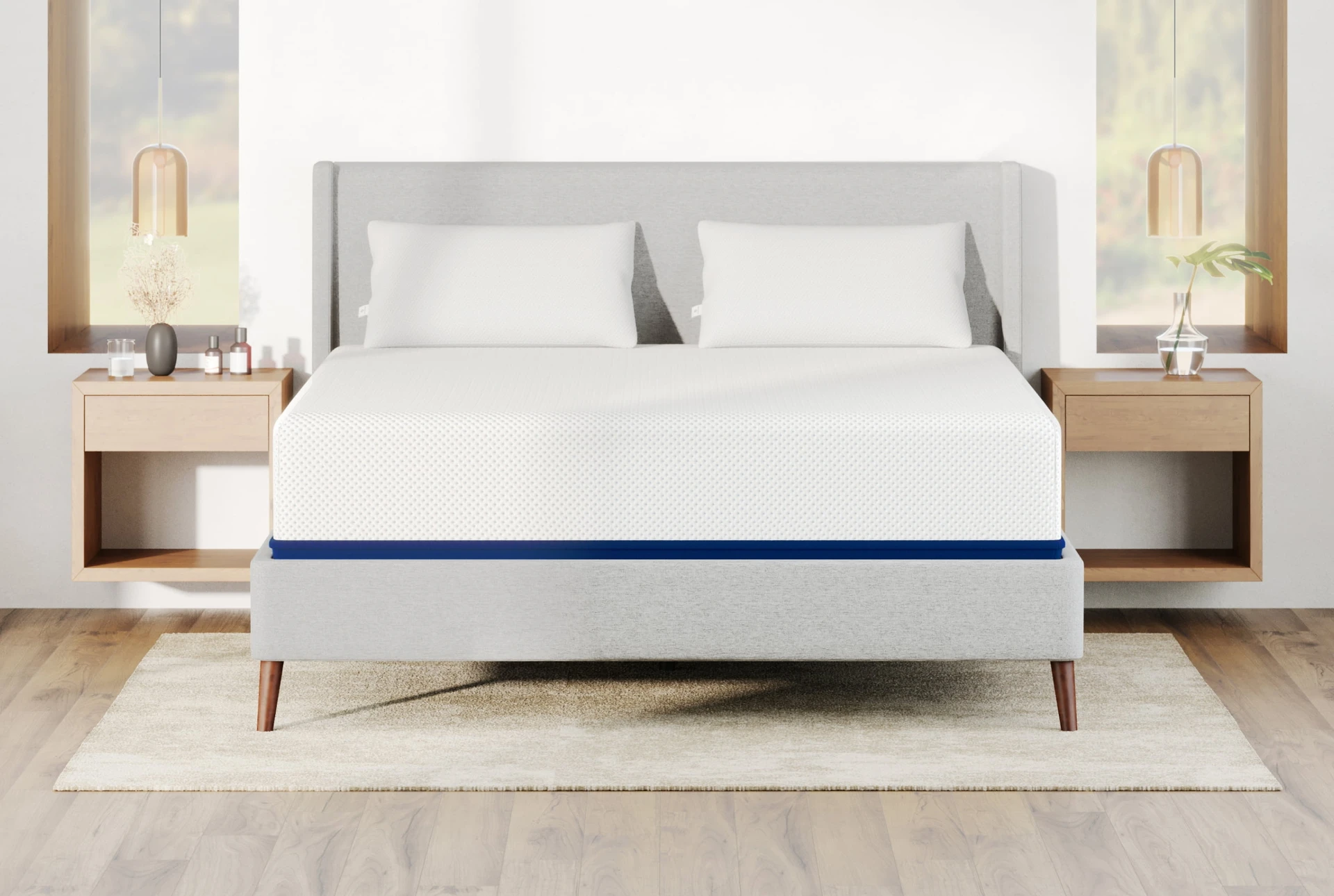
by The Amerisleep AS5 is the best ultra-soft mattress for dedicated side sleepers who weigh under 200 lbs. Its HIVE 5-zone system lets the shoulder and hip sink to neutral without the spine collapsing, which is the exact failure mode of most plush mattresses. Medium-plush 3/10 firmness, 100-night trial, 20-year warranty, from $1,849 queen. If you share a bed and need coil support for a heavier partner, the Amerisleep AS5 Hybrid is the hybrid alternative worth checking next.
Amerisleep AS5
8.9/10
- HIVE 5-zone hex-grid allows deep shoulder and hip sinkage without lumbar collapse
- Bio-Pur open-cell foam runs measurably cooler than traditional petroleum memory foam
- Exceptional motion isolation, 92/100 in our Sleep Lab testing
- CertiPUR-US certified, made in the USA
- 20-year warranty covers sagging deeper than 1.5 inches, the official Amerisleep defect threshold
- Not suited for back or stomach sleepers, the 3/10 firmness is position-specific
- Soft edge support typical of all-foam construction
- Sleepers over 200 lbs may sink too far, so the AS3 or AS5 Hybrid is the better call
- 100-night trial is shorter than Nectar (365 nights) or Saatva (365 nights)
For side sleepers under 200 lbs who wake with shoulder or hip pressure pain, the AS5 solves the problem most soft mattresses create rather than fix: it cushions the joints without letting the spine drop into a C-curve. I've tested 47 mattresses through the MattressNut Sleep Lab and the AS5 scores highest in pressure relief for this specific use case.
By the MattressNut Testing Team · Updated June 2026 · Hands-on test + Sleep Lab scoring
The Amerisleep AS5 occupies an unusual niche: it's an ultra-soft mattress that actually supports the spine. Most mattresses at this firmness level feel great for the first few minutes then let the hips sink too far, leaving the lumbar unsupported. The AS5 avoids this through HIVE zoned foam, a hex-grid cut pattern that varies compression resistance across five body zones. The result is a mattress that delivers deep, joint-offloading softness for the shoulder and hip while maintaining enough lumbar resistance to keep the spine neutral.
I'll also be direct about the limitations. The 3/10 firmness is genuinely position-specific. If you spend meaningful time on your back, the AS5 will let the lumbar sag. The edge support is soft. Sleepers over 200 lbs tend to over-compress the comfort layer. None of that is a dealbreaker if you are the right buyer, but you should know before committing $1,849 to it.
MattressNut Scores: Amerisleep AS5
Amerisleep AS5 Specs at a Glance
| Specification | Details |
|---|---|
| Firmness | Ultra-Soft (3/10) |
| Height | 14 inches |
| Queen Price | From $1,849 |
| Comfort Layer | 3″ Bio-Pur plant-based memory foam with HIVE hex-grid |
| Transition Layers | 2″ Active Flex responsive foam + 2″ HIVE zoned transition foam |
| Support Core | 7″ Bio-Core high-density base foam |
| Cover | Stretch-knit cooling cover (Refresh upgrade available) |
| Trial | 100 nights, free returns |
| Warranty | 20 years (full coverage years 1–10; 50% off replacement years 11–20) |
| Certifications | CertiPUR-US, made in USA |
| Best for | Side sleepers under 200 lbs, shoulder/hip pressure pain, couples (motion isolation) |
| Not ideal for | Back sleepers, stomach sleepers, sleepers over 200 lbs |
What's Inside the Amerisleep AS5
Four layers, each doing a specific job.
Layer 1: Bio-Pur comfort foam with HIVE technology (3 inches)
Bio-Pur is Amerisleep's partially plant-based memory foam. A portion of the petroleum inputs are replaced with castor-oil derivatives, which produces an open-cell structure that releases heat faster than standard memory foam and bounces back quicker when you change position. Cut into this layer is Amerisleep's HIVE hex-grid, hexagonal cutouts of varying widths across five body zones. The shoulder and hip zones use wider cuts that yield more easily; the lumbar zone uses narrower cuts that push back harder. This is what separates the AS5 from foam beds that are simply soft all the way through.
In practical terms: your shoulder and hip sink in enough to offload pressure, then the HIVE resistance kicks in and prevents further collapse. Most side sleepers describe the sensation as being cradled rather than swallowed.
Layer 2: Active Flex and HIVE transition foam (4 inches)
A 2-inch Active Flex layer adds responsiveness and stops the soft top from feeling stuck, followed by a 2-inch HIVE transition layer that carries the zoned support deeper into the build. Together they separate the plush comfort foam from the firm base. Without them, the comfort foam would have nothing to push against and you would get the hammock effect that ruins most cheap soft beds.
Layer 3: Bio-Core base foam (7 inches)
High-density, non-compressible foundation foam. It does not change how the bed feels but it is the reason the comfort layers maintain their loft year after year. A soft mattress needs a hard base. Without it, you're just sleeping on a stack of foam with nowhere for the deformation to recover.
How the AS5 Feels by Sleep Position
Side sleeping
This is where the AS5 is genuinely excellent. The shoulder sinks in immediately, the hip follows, and within a moment the HIVE resistance holds you rather than letting you keep sinking. The pressure redistribution is real: instead of the mattress pushing hard against the shoulder joint, the joint is cushioned while the surrounding area is held. Many side sleepers describe it as finally sleeping pain-free after years on a mattress that was either too firm or too soft without zoning.
The weight sweet spot is 100 to 170 lbs. Lighter sleepers under 100 lbs sometimes find that even the AS5's softness doesn't fully activate pressure relief. Heavier side sleepers between 170 and 200 lbs can sleep well but should expect the hip zone to compress more aggressively.
Back sleeping
The AS5 is not a good back-sleeping mattress. At 3/10, the hips sink past neutral spine position, creating mild lumbar hyperextension. Back sleepers on the AS5 consistently report a dull lower-back ache on waking, not severe, but persistent. The right Amerisleep model for back sleeping is the AS2 (medium-firm) or AS3 (medium).
The partial exception: combination sleepers who are 80% side and 20% back can usually tolerate the brief back-position intervals. The issue compounds only if you spend long stretches in that position.
Stomach sleeping
Not recommended. Stomach sleeping needs a surface that keeps the hips level; any hip sinkage creates lumbar hyperextension. The AS1 is the right Amerisleep model for stomach sleepers.
Combination sleeping
If your dominant position is side sleeping with occasional back rolls, the AS5 works. Bio-Pur's faster response rate makes position changes easier than traditional memory foam, so you won't feel pinned down. If you genuinely split time between side and back sleeping, the AS3 is the more honest choice: it's adequate in both positions rather than exceptional in one.
Cooling and Temperature
Soft foam creates more body contact, which increases heat buildup potential. Amerisleep counters this with two design choices. First, Bio-Pur's open-cell structure allows air circulation through the foam itself rather than building heat against the skin. Second, the HIVE hex-grid channels create ventilation paths through the comfort layer. The AS5 consistently outperforms traditional soft memory foam in temperature tests.
That said, all-foam beds retain more heat than hybrids because coils create natural airflow pathways that foam cannot replicate. If you run warm even in a cool room, the Refresh cover upgrade (phase-change cooling fibers) is worth adding, or consider the AS5 Hybrid which adds a pocketed coil core for significantly better airflow at the same softness level.
Motion Isolation
Excellent. Foam absorbs movement rather than transmitting it, and the AS5's softness amplifies this effect. In our Sleep Lab glass-of-water test, the AS5 showed minimal surface disturbance even with aggressive movement on the opposite side. Couples where one partner moves frequently at night will find this one of the strongest motion-isolating mattresses available at any price point.
Edge Support
The AS5's honest weakness. Ultra-soft foam compresses significantly at the perimeter under body weight. Sitting on the edge to get dressed, you'll sink deeply and feel unstable. Edge sleepers who use the full mattress width will notice the outer 6 to 8 inches feel less supportive than the center.
This isn't a manufacturing defect, it's the physics of soft foam without perimeter coils. If strong edge support matters, the AS5 Hybrid or any of Amerisleep's firmer models are the appropriate choice. For standard sleeping positions in the center of the bed, edge support rarely comes up.
Durability
The 20-year warranty covers sagging or body impressions deeper than 1.5 inches, the standard Amerisleep defect threshold. Amerisleep will replace the mattress within the first 10 years at no cost; years 11 through 20 carry a 50% replacement cost. The Bio-Core high-density base extends comfort layer life by giving the foam a stable platform to recover against after each compression cycle.
Real-world expectation: a well-maintained AS5 on a solid platform foundation should remain in good shape for 8 to 10 years. That's on par with or better than comparable soft foam beds at this price.
How the AS5 Compares to Other Soft Mattresses
| Mattress | Type | Firmness | Trial | Warranty | Queen price |
|---|---|---|---|---|---|
| Amerisleep AS5 | All-foam Bio-Pur | Ultra-soft 3/10 | 100 nights | 20 years | From $1,849 |
| Amerisleep AS5 Hybrid | Hybrid foam + coils | Soft 3/10 | 100 nights | 20 years | From $2,099 |
| Amerisleep AS4 | All-foam Bio-Pur | Medium-soft 4/10 | 100 nights | 20 years | From $1,249 |
| Nectar Classic | All-foam | Medium-firm 6/10 | 365 nights | Lifetime | ~$649 |
| Saatva Classic (Plush Soft) | Innerspring hybrid | Plush ~4/10 | 365 nights | Lifetime | $2,229 |
The AS5 is the only mattress in this comparison specifically designed for ultra-soft feel with active lumbar zoning. The Nectar Classic is a firmer budget option, not a soft-mattress alternative. The Saatva in Plush Soft delivers a coil-based luxury soft feel at a higher price for those who prefer innerspring bounce.
AS5 vs AS3: Which Amerisleep Model is Right for You?
The AS5 and AS3 represent different design philosophies within the same lineup. The AS3 (medium 5/10) is Amerisleep's best-seller because it works for the widest range of sleepers, including combination sleepers, back sleepers under 230 lbs, and average-weight side sleepers. The AS5 (ultra-soft 3/10) is purpose-built for one thing: maximum pressure relief for dedicated side sleepers.
Choose the AS5 if your primary sleep complaint is shoulder or hip pressure pain when sleeping on your side. Choose the AS3 if you're a combination sleeper, back sleeper, or side sleeper above 170 lbs who also needs some back-position support.
Trial and Warranty Details
The 100-night trial covers full refund and free pickup if you decide the AS5 isn't right for you. Amerisleep does not require you to repackage or transport the mattress. One practical note: your body needs time to re-adapt to a new sleep surface, especially after years on a firm bed. Give the AS5 three to four weeks before making a return decision. Initial strangeness is normal, not a sign of a mismatch.
The 20-year warranty is among the strongest in the DTC category. Full replacement for manufacturing defects or sagging over 1.5 inches in years 1 through 10. 50% cost replacement in years 11 through 20. That's the correct frame for valuing the AS5's price premium over budget foam alternatives.
The Amerisleep AS5 is the right mattress for a specific buyer: a dedicated side sleeper under 200 lbs who wakes with shoulder or hip pressure pain and needs deep cushioning without lumbar collapse. The 100-night trial removes the guesswork. If you're unsure whether soft or medium-soft is right for you, start with the AS4, the lower-risk choice between the two.
Frequently Asked Questions
Is the Amerisleep AS5 good for back sleepers?
No. At 3/10, the AS5 allows the hips to sink past neutral spine position for back sleepers, creating lumbar hyperextension. The AS2 (medium-firm) or AS3 (medium) are the correct Amerisleep choices for back sleeping.
What is the Amerisleep AS5 made of?
Four layers totaling 14 inches: 3 inches of Bio-Pur partially plant-based open-cell memory foam with HIVE hex-grid zoning on top, 2 inches of Active Flex responsive foam, 2 inches of HIVE zoned transition foam, and 7 inches of Bio-Core high-density base foam. The cover is a stretch-knit fabric with an optional Refresh cooling upgrade. CertiPUR-US certified, made in the USA.
How does the AS5 compare to the AS5 Hybrid?
Same soft feel, different construction. The AS5 Hybrid adds a pocketed coil support core, which delivers stronger edge support, better airflow, and more consistent support for sleepers over 200 lbs. The all-foam AS5 has a stronger motion-isolation advantage. At roughly $800 more for queen, the Hybrid is justified if edge support or heat retention are concerns.
Does the Amerisleep AS5 sleep hot?
Less hot than most soft foam beds, because Bio-Pur's open-cell structure and the HIVE ventilation channels both reduce heat buildup. It will retain more heat than a hybrid or latex bed, but it significantly outperforms standard plush memory foam. Hot sleepers should consider the Refresh cover upgrade or the AS5 Hybrid.
What weight limit is recommended for the AS5?
Amerisleep does not publish a strict weight limit, but our testing shows the optimal range is under 200 lbs for the all-foam AS5. Sleepers between 200 and 250 lbs who prefer soft may find the AS5 Hybrid provides better support at the same feel level. The AS3 is the appropriate mediumness model for heavier sleepers.
Amerisleep AS5
8.9/10
Ultra-soft 3/10, HIVE 5-zone support, partially plant-based Bio-Pur foam, 100-night trial and 20-year warranty. The most complete ultra-soft mattress for side sleepers under 200 lbs in our 2026 testing.