
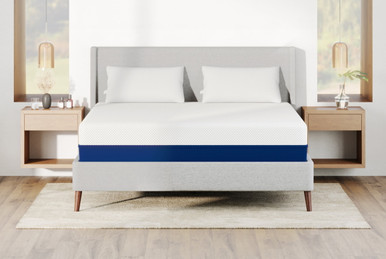
 by
by Amerisleep AS3 vs Nectar (2026): Side-by-Side Comparison
Better pressure relief, cooler foam, cleaner materials. The same price range, very different trade-offs.
The Amerisleep AS3 wins this comparison on pressure relief, cooling, and build quality. Its plant-based Bio-Pur foam and HIVE 5-zone layer outperform the Nectar Classic on most points except price and trial length. If you sleep on your side or back and want the better-performing all-foam mattress, get the AS3. If budget is the deciding factor and a 365-night trial matters more than premium foam, the Nectar Classic is a workable second choice at roughly $600 less.
Amerisleep AS3
9.1/10
- HIVE 5-zone support cushions shoulders and hips, supports the lower back
- Plant-based Bio-Pur open-cell foam sleeps cooler than gel memory foam
- 10/10 motion isolation in NapLab's lab tests
- CertiPUR-US certified, 20-year warranty, US-assembled
- Costs about $600 more than Nectar at queen size
- Softer perimeter edge than a coil hybrid
- Only 100-night trial vs Nectar's 365 nights
In our ratings, the AS3 scores higher than the Nectar Classic on pressure relief (9.2/10), motion isolation (9.4/10) and cooling (8.6/10); NapLab's independent lab gives it 10/10 for pressure relief and motion isolation. The plant-based construction and 20-year warranty justify the higher price for most side and back sleepers.
Nectar Classic
8.2/10
- 365-night trial is the longest in the all-foam category
- Lifetime warranty covers manufacturing defects indefinitely
- Roughly $600 less than the AS3 at queen size
- Solid motion isolation at 8.8/10, good for couples
- Gel memory foam can run warmer than the AS3's open-cell Bio-Pur
- Weaker pressure relief (8.7/10 vs 9.2/10) at hip and shoulder contact points
- Some new-foam smell on unboxing
The Nectar makes sense for budget-conscious back sleepers who want maximum trial time. At $649 queen with a 365-night window to decide, the risk is low. The tradeoff is real, though: inferior cooling, weaker pressure relief, and a standard gel foam build rather than Bio-Pur.
Amerisleep AS3 vs Nectar: key specs
| Spec | Amerisleep AS3 | Nectar Classic |
|---|---|---|
| Queen price | From $1,249 | From $649 |
| Construction | All-foam (Bio-Pur, plant-based) | All-foam (gel memory foam) |
| Height | 12 inches | 12 inches |
| Firmness | Medium 5/10 | Medium-firm 6.5/10 |
| Pressure relief | 9.2/10 | 8.7/10 |
| Motion isolation | 9.4/10 | 8.8/10 |
| Cooling | 8.6/10 | 7.8/10 |
| Trial | 100 nights | 365 nights |
| Warranty | 20 years | Lifetime |
| CertiPUR-US | Yes | Yes |
Construction and materials
The AS3 is a 12-inch all-foam mattress built around Amerisleep's Bio-Pur layer, a partially plant-based open-cell memory foam. That open-cell structure lets air circulate through the foam rather than trapping it. NapLab's independent lab gives the AS3 a 9/10 cooling score, a meaningful advantage for anyone who already sleeps warm.
Beneath the Bio-Pur sits the HIVE transition layer, perforated with hexagonal cutouts that vary by zone: Amerisleep says it gives the shoulders and hips more cushion and the head, back and legs more support. When you lie on your side, your shoulder and hip settle in while your lower back stays supported.
The Nectar Classic uses a more conventional stack: a quilted polyblend cover, 3 inches of gel-infused memory foam, a 2-inch adaptive poly foam transition layer, and a 7-inch high-density base. The gel microbeads absorb surface heat, but the underlying foam cells are denser and ventilate less efficiently than Bio-Pur. Both mattresses are CertiPUR-US certified. Amerisleep markets the AS3 as fiberglass-free, and Nectar's current models are also advertised as fiberglass-free; verify your unit's law tag if that matters to you.
Feel and firmness
The AS3 sits at a true medium 5/10. Bio-Pur rebounds faster than classic dense memory foam. On your side, the shoulder and hip zones give while the HIVE layer supports your lower back, so your spine stays roughly neutral. Back sleepers find it supportive without feeling stiff.
The Nectar lands at a medium-firm 6.5/10, about half a step firmer. For back sleepers who want a bit more resistance under the lumbar, that firmness can work well. For side sleepers under about 160 lbs, it can feel unyielding at the shoulder for the first few weeks. The classic gel-memory feel is slower to respond than Bio-Pur, which some people prefer for the cradled sensation and others find too immobilizing. Neither bed has bounce worth noting; if you want responsive feel, look at a hybrid.
Pressure relief
We rate the AS3 9.2/10 for pressure relief versus 8.7/10 for the Nectar, and NapLab's independent lab gives the AS3 10/10. At hip and shoulder contact points during side sleeping, the AS3's softer zones spread load more evenly. The Nectar, being slightly firmer, tends to put more pressure on those same points. For anyone who wakes with hip or shoulder pain on other mattresses, that gap matters. The AS3 is the better pick for pressure-sensitive sleepers.
Cooling
We rate the AS3 8.6/10 on cooling (NapLab: 9/10), the Nectar 7.8/10. The Nectar's gel layer helps at the surface and the cover creates an initial freshness, but the denser underlying foam retains heat longer. For most sleepers who run warm, the AS3 is the safer choice. If you need a mattress with phase-change materials or active coil ventilation, neither all-foam bed is ideal and you should look at a hybrid.
Motion isolation
Both all-foam beds absorb motion well. We rate the AS3 9.4/10 and the Nectar 8.8/10; NapLab's independent lab gives the AS3 10/10 for motion isolation. The AS3's open-cell Bio-Pur absorbs micro-vibrations slightly more efficiently. Couples with one restless partner will appreciate both options; the AS3 has the edge.
Trial period and warranty
Nectar wins on trial length. A 365-night window is three times the standard and the longest available for an all-foam bed. You can sleep on the Nectar through autumn and well into the following summer before you have to commit. Amerisleep's 100-night trial is adequate for most people, who know within 30 days whether a mattress works for them. But if you are someone who takes longer to adapt to new surfaces, Nectar removes all deadline pressure.
On warranty: Amerisleep's 20-year coverage is the stronger structured document. Years 1 to 10 cover repair or replacement at no cost for manufacturing defects or sagging over 1.5 inches; labor and transport are not covered. Years 11 to 20 cover replacement at 50% of the original price. Nectar's lifetime warranty covers as long as you own the mattress. In practice, most buyers replace a mattress before either warranty becomes relevant, but Nectar's "forever" coverage edges it technically.
Price and value
Nectar Classic queens run around $649 during frequent sale periods. Amerisleep AS3 queens start at $1,249. The $600 difference is real. Per dollar spent, Nectar delivers reasonable performance. The tradeoff is less pressure relief, warmer sleep, and a build that does not match the AS3's plant-based, open-cell construction. If budget is your primary filter, the Nectar is worth considering. If you can stretch to the AS3, the upgrade is worth it for side sleepers and hot sleepers.
Who should buy each mattress
Buy the Amerisleep AS3 if: you sleep on your side or back, you run warm at night, you share the bed with a restless partner, or you want a plant-based foam build backed by a 20-year warranty. Particularly good for sleepers under 230 lbs who want reliable pressure relief without a heavy memory-foam sink.
Buy the Nectar Classic if: your budget tops out around $650 and you want maximum trial time before committing. Back sleepers who run a neutral temperature will find the medium-firm feel pleasant and the savings meaningful. The 365-night window eliminates virtually all purchase risk at this price point.
The Amerisleep AS3 is the better mattress for most sleepers: it outperforms the Nectar on pressure relief, cooling, and motion isolation, and carries a 20-year warranty. The Nectar Classic earns its place as the budget pick with a 365-night trial and lifetime warranty at $600 less. Side sleepers and hot sleepers should spend the extra money on the AS3. Budget-first back sleepers will find the Nectar sufficient.
Frequently asked questions
Is Amerisleep AS3 or Nectar better for side sleepers?
The Amerisleep AS3 is better for side sleepers. Its HIVE 5-zone layer softens at the shoulders and hips while maintaining support under the lower back, and its 9.2/10 pressure relief score beats Nectar's 8.7/10. Side sleepers under 160 lbs on the Nectar may find the medium-firm feel creates shoulder pressure for several weeks.
Is Nectar or Amerisleep AS3 better for back sleepers?
Both work for back sleepers. The AS3 provides slightly more active lumbar reinforcement through its HIVE zoning. The Nectar's medium-firm 6.5/10 keeps hips higher and reduces lumbar gap for back sleepers who prefer a firmer surface. If you are primarily a back sleeper and want to save $600, the Nectar is a reasonable choice.
Which mattress sleeps cooler, AS3 or Nectar?
The AS3 sleeps cooler. NapLab's independent lab gives it a 9/10 cooling score. The Bio-Pur open-cell structure vents heat more efficiently than Nectar's gel-infused foam. If you sleep hot, the AS3 is the clearer pick between these two.
Does Nectar have a fiberglass problem?
Nectar's current mattresses are advertised as fiberglass-free. However, some older Nectar units listed glass fiber in the fire barrier on their law tags. If you plan to remove the cover for any reason, verify the law tag on your specific unit. Amerisleep markets the AS3 as fiberglass-free.
Can I get both mattresses on trial?
Yes. The AS3 comes with a 100-night trial with full refund and haul-away assistance. The Nectar comes with a 365-night trial. Both are genuinely risk-free: you do not pay a return fee. Nectar's trial window is three times longer, which is the biggest practical advantage it holds over the AS3.
Related comparisons and guides
- Amerisleep AS3 Full Review
- Nectar Mattress Full Review
- Best Memory Foam Mattresses (2026)
- Best Cooling Mattresses for Hot Sleepers
- Best Mattresses for Side Sleepers
- Amerisleep AS3 vs Purple
- Amerisleep vs Saatva
- Best Mattresses for Back Pain
Amerisleep AS3
9.1/10
Medium feel, HIVE 5-zone support, plant-based Bio-Pur foam, 9.4/10 motion isolation, 100-night trial, 20-year warranty. The more complete all-foam mattress in this comparison for side sleepers, hot sleepers, and couples.