
 by
by Our Recommended Pick
Saatva Classic uses CertiPUR-US certified foam with Guardin antimicrobial treatment on the cover.
Saatva Classic — CertiPUR Certified + Guardin Antimicrobial →
"Antimicrobial" appears on mattress marketing from budget foam rolls to $4,000 luxury models. It is one of the most loosely applied terms in the industry. Here is what it actually means — and what it does not.
What "Antimicrobial" Actually Means in a Mattress
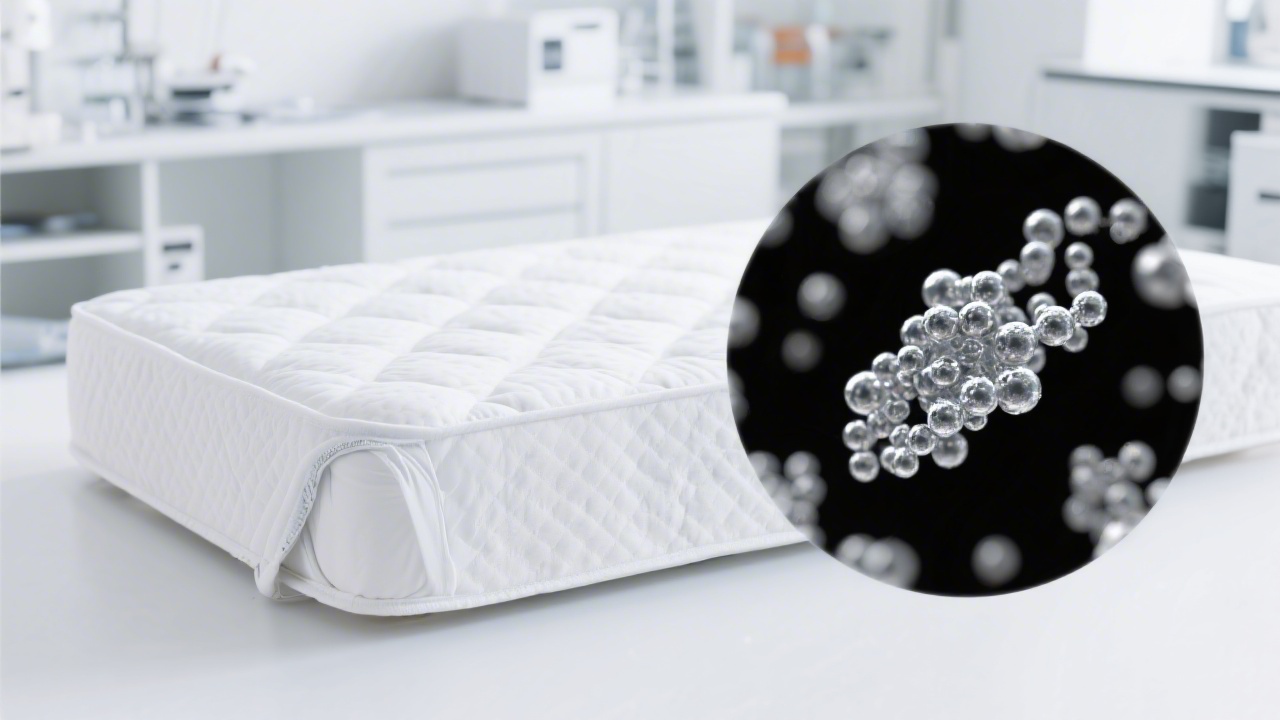
Antimicrobial means the product inhibits the growth of microorganisms — bacteria, mold, mildew, or fungi — on or in the material. It does not necessarily mean the mattress kills pathogens, sterilizes itself, or protects the sleeper from illness. The mechanism and durability vary widely by technology.
The Main Antimicrobial Technologies in Mattresses
Silver Ion Treatment
Silver ions (Ag⁺) disrupt bacterial cell walls and interfere with reproduction. This is the most evidence-backed antimicrobial technology used in textiles and foam. Silver ion treatments (such as Microban or Aegis) are bonded into the fabric at the fiber level and tested to show 99%+ bacterial reduction in laboratory conditions.
Durability: Silver ion treatments bonded at fiber level are generally durable through many wash cycles. Topical surface sprays are not. Ask whether the treatment is "built-in" or "applied."
Copper Infusion
Copper has natural antimicrobial properties and has been used in medical settings for surface treatment. In mattresses, copper is infused into foam (see our copper-infused mattress guide) or woven into fabric covers. Laboratory studies show copper-infused surfaces reduce bacterial counts, though the effect on the actual sleeper (rather than the material surface) is debated.
Bamboo / Charcoal
Bamboo-derived fabrics are sometimes marketed as antimicrobial due to bamboo kun — a natural bio-agent in raw bamboo. However, most processing required to create soft bamboo fabric destroys bio-antimicrobial activity. Activated charcoal is primarily an odor absorber, not a reliable antimicrobial agent. These claims are largely marketing.
CertiPUR-US and OEKO-TEX
These are safety certifications, not antimicrobial certifications. CertiPUR-US certifies that foam is made without certain harmful chemicals. OEKO-TEX Standard 100 certifies textiles are free from harmful substances. Neither certifies the presence or efficacy of antimicrobial treatment.
What Certifications Actually Mean Antimicrobial?
- OEKO-TEX STANDARD 100 with Appendix 6: Tests and limits the presence of biocidal compounds (which may include antimicrobials) — relevant but focused on safety, not efficacy claims
- EPA registration: If a mattress company claims pesticidal antimicrobial activity (killing organisms), the product must be EPA-registered. Most mattress companies avoid this claim specifically because EPA registration is expensive and rigorous.
- ISO 20743 / AATCC 100: Standard test methods for antimicrobial activity in textiles. A brand citing these tests has verified performance — look for brands that publish test results.
Does Antimicrobial Treatment Last a Mattress Lifetime?
This is the key question — and the honest answer is: often no, or at least not consistently. Surface treatments degrade with time, compression, and moisture exposure. Fiber-bonded technologies (silver ions bonded at the molecular level) are the most durable. The Guardin antimicrobial treatment used by Saatva, for example, is applied to the fabric and tested to retain efficacy through the product's rated life.
Budget mattresses often apply antimicrobial treatment topically — it may reduce bacteria in year one but perform much less reliably by year three.
Who Actually Needs Antimicrobial Features?
- Sleepers with allergies or asthma: antimicrobial and anti-dust-mite treatments have measurable benefit
- Those who sweat significantly during sleep: moisture accelerates microbial growth
- Parents of young children: mattresses that encounter more moisture and biological material benefit from antimicrobial covers
- Healthy adults without sensitivities: the benefit is real but modest in a well-ventilated bedroom
A quality mattress protector with antimicrobial treatment, combined with regular washing, provides more protection than the antimicrobial properties of the mattress beneath it.
Internal Links for Further Reading
Related: Copper-Infused Mattress Guide | Cooling Gel Mattress Guide | Hybrid Mattress Construction
Our Recommended Pick
Saatva Classic uses CertiPUR-US certified foam with Guardin antimicrobial treatment on the cover.
Saatva Classic — CertiPUR Certified + Guardin Antimicrobial →
Frequently Asked Questions
Is an antimicrobial mattress worth it?
For allergy sufferers and hot sleepers who perspire at night, yes — antimicrobial treatment measurably reduces bacteria and mold growth. For healthy adults in a well-ventilated room, the benefit is real but smaller than marketing suggests.
Does CertiPUR-US mean a mattress is antimicrobial?
No. CertiPUR-US certifies that foam does not contain certain harmful chemicals. It is a safety certification, not a performance certification. It says nothing about antimicrobial efficacy.
What is the most effective antimicrobial technology in mattresses?
Silver ion treatments bonded at the fiber level (such as Microban) have the strongest evidence base and the best durability. Copper infusion is also effective. Bamboo and charcoal claims are largely marketing.
Does antimicrobial treatment fade over time?
Surface-applied treatments fade. Fiber-bonded treatments (applied during fabric manufacturing) are more durable. Ask specifically whether the treatment is integral to the fiber or a topical application.
What is Guardin antimicrobial treatment?
Guardin is a permanent antimicrobial treatment applied to fabric during manufacturing. It is used by several premium mattress brands including Saatva. It inhibits bacteria and mold growth and is rated to remain effective through the product's lifespan when properly cared for.