
 by
by 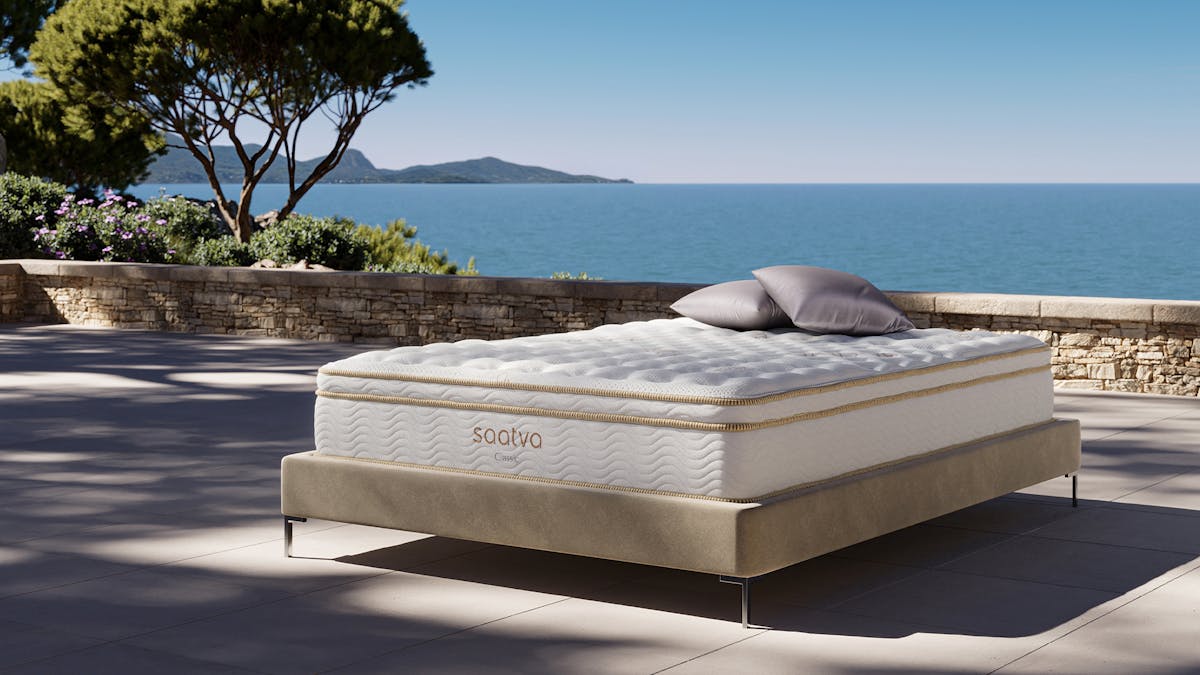
My verdict: A cooling gel mattress can feel modestly cooler than standard memory foam, especially when you first lie down. It is not the strongest option for a serious hot sleeper. Gel works best as one part of a breathable construction that also uses open-cell foam, a cooling cover, or a pocketed-coil support system.
If you want the pressure relief of foam and only sleep slightly warm, gel-infused foam can be a sensible upgrade. If heat regularly wakes you, I would put more weight on airflow and the overall mattress build than on the word “gel.”
Foam option worth considering: Amerisleep offers gel-based foam and hybrid constructions. The AS3 hybrid is the general all-rounder, the AS5 is positioned for plus-size sleepers, and the AS1 is the firmer choice for back support.
My airflow-first alternative: The Saatva Classic uses pocketed coils rather than depending on gel foam alone. That open support structure gives heat more room to escape throughout the night.
Saatva Classic, Coil Airflow Beats Gel
What a Cooling Gel Mattress Actually Does
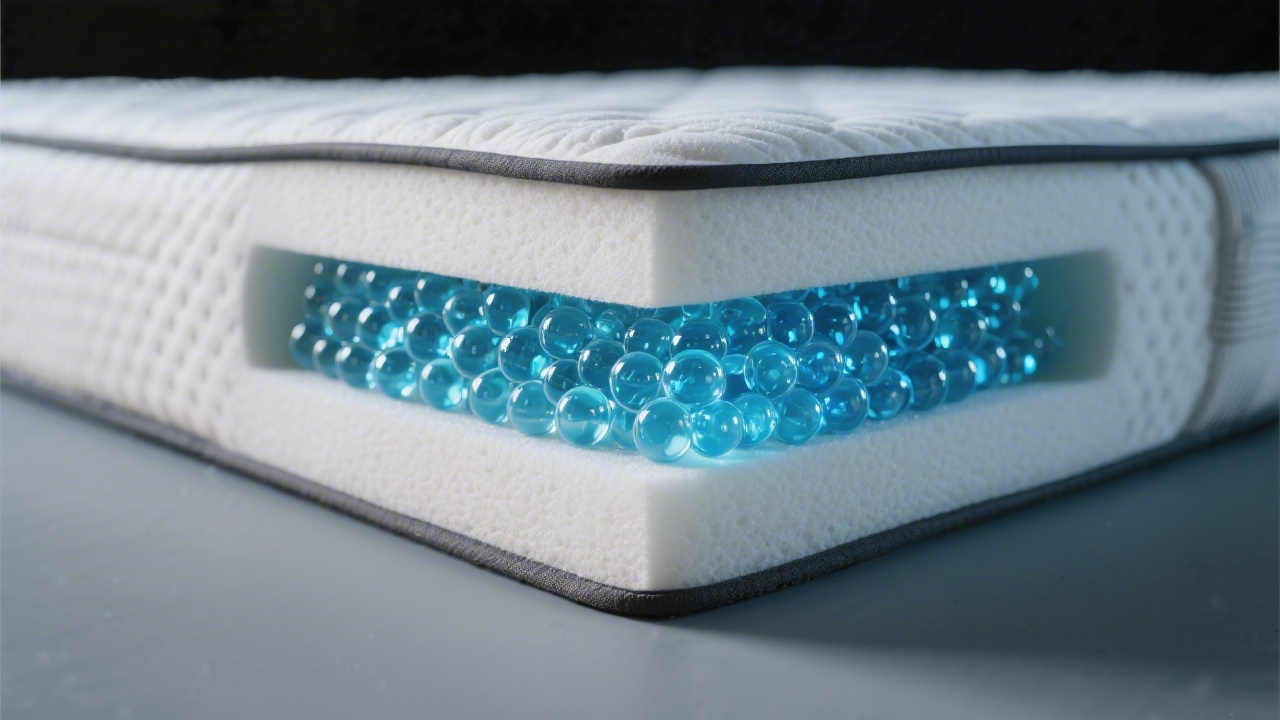
A cooling gel mattress is usually a foam mattress with gel beads, particles, or liquid gel incorporated into its comfort layer. The phrase sounds more dramatic than the material usually performs. Gel can help foam accept and spread heat, but it does not actively refrigerate the bed.
The construction beneath the gel matters just as much. Dense viscoelastic memory foam closely contours the body, which limits the space available for air movement. That close contact is useful for pressure relief, but it can also trap warmth around the sleeper.
Gel is more thermally conductive than ordinary foam, so it can move heat away from the immediate contact point faster. The effect is commonly strongest at the beginning of the night. Once the surrounding material has absorbed heat, the mattress still needs somewhere to release it.
That is why I treat “cooling gel” as a construction detail, not a complete buying verdict. An open-cell gel foam over coils is materially different from a thick, dense gel memory-foam slab over a solid foam core.
Gel Beads, Gel Swirls, and Phase-Change Materials
Manufacturers introduce gel into mattress foam in two main ways, and the distinction affects how I evaluate the cooling claim.
- Gel beads: Small polymer capsules are mixed into the foam before it sets. Some beads are designed to absorb heat through phase-change behavior. For a closer explanation of that process, see the full guide to phase-change materials.
- Gel layer or swirl: A gel compound is poured or blended into the foam, often leaving visible blue or green streaks. Its main job is to improve heat conduction through the immediate foam layer.
True phase-change material absorbs heat as it changes physical state. Gel swirl generally does not provide the same heat-storage mechanism. It can still improve the initial feel, but the marketing language often fails to explain which form is present.
I would ask the manufacturer what the gel actually is, where it sits in the mattress, and what surrounds it. A thin gel treatment buried beneath dense quilting may affect the sleeper less than a breathable surface foam placed directly under the cover.
How Much Cooling Gel Can Provide
Published thermal work cited in sleep-material discussions, including research referenced by the Sleep Research Society, reports surface-temperature differences of roughly 1–3°F compared with non-gel foam. That supports a real but limited benefit rather than the icy all-night effect implied by some advertising.
The difference is typically most noticeable during the first 20–30 minutes. Reviewers often describe this as an initial cool touch. After 30–60 minutes, accumulated body heat can exceed the gel’s heat-sink capacity unless the material includes effective phase-change components and the rest of the mattress can disperse the heat.
PCM-grade gel beads may extend the noticeable effect to approximately 60–90 minutes. Most budget constructions use gel swirls or particles rather than a substantial phase-change layer, so I would not assume that every blue-tinted foam offers the longer effect.
Room temperature, bedding, mattress protectors, body contact, and the thickness of the foam layers can all change how cool the mattress feels. A waterproof protector or heat-trapping comforter can blunt the benefit of a cooling surface.
How Gel Compares With Other Cooling Constructions
| Technology | How It Manages Heat | Duration of Effect | Cost Tier |
|---|---|---|---|
| Gel swirl or layer | Raises thermal conductivity near the sleeper | Initial only | Budget–mid |
| Gel beads with PCM | Uses phase-change heat absorption | 30–90 min | Mid–premium |
| Open-cell foam | Creates more space for air movement through the foam | Continuous | All tiers |
| Graphite infusion | Provides conductive pathways through the comfort material | Continuous | Mid–premium |
| Pocketed coils | Leaves open space for airflow through the support core | Continuous | Mid–premium |
This comparison explains why I do not shop by infusion alone. Gel, graphite, and copper influence heat conduction, while open cells and coils address airflow. A mattress that combines both approaches tends to have a more convincing cooling design than one relying on a gel label by itself.
What Usually Works Better Than Gel Alone
For a hot sleeper, coil-based airflow is the passive feature I prioritize. Pocketed coils leave substantial open space inside the mattress, allowing warm air to move away from the comfort layers. An all-foam bed cannot create the same internal air volume, regardless of the color or quantity of its gel infusion.
A hybrid still needs careful evaluation. Very thick memory-foam layers can dominate the feel and retain heat even when coils sit underneath. I favor a breathable cover, an open-cell comfort layer, and a coil core over a build that places deep, dense foam above the springs.
Copper and graphite are also used to improve thermal conductivity. Their real-world value still depends on concentration, placement, and the surrounding foam. You can compare the construction principles in the guides to graphite mattresses and toppers and copper-infused mattresses.
A phase-change cover can improve the initial surface feel because it sits closer to the sleeper than gel buried in the comfort foam. Like gel, however, it absorbs a limited amount of heat. It works more effectively alongside breathable layers than as a substitute for them.
Who Should Consider a Cooling Gel Mattress?
- Mildly warm sleepers: Gel may provide enough improvement if you occasionally feel warm but are not routinely awakened by heat.
- Memory-foam fans: It preserves the close contouring and pressure relief associated with memory foam while modestly improving heat movement.
- Budget-conscious shoppers: A well-built gel foam can be a practical step above basic closed-cell polyfoam, provided the price premium remains reasonable.
- People sensitive to a cold surface: Gel generally creates a mild initial change rather than an aggressively chilled feel.
Severe hot sleepers should be cautious. Gel alone is unlikely to address persistent night sweats or a warm sleep environment. A hybrid with coil airflow, a PCM-enhanced cover, or a graphite topper may be the more relevant construction choice.
The underlying cause of night sweats also matters. A mattress can influence heat retention, but it cannot address medical, hormonal, medication-related, or environmental causes of overheating.
What to Check Before Buying
- Cell structure: Open-cell foam allows more air movement than dense closed-cell foam. Gel in a restrictive foam is less persuasive than gel combined with an open structure.
- Gel type: Ask whether the mattress uses phase-change beads, particles, a poured layer, or a swirl. These terms should not be treated as interchangeable.
- Gel placement: Material near the sleeping surface has a more direct influence on initial temperature than an infusion buried deep in the bed.
- Comfort-layer thickness: Thick viscoelastic layers can hold more warmth around the body, even if they include gel.
- Cover material: Tencel or phase-change fabric can complement the foam, while thick synthetic quilting may reduce the cool-touch effect.
- Support core: Pocketed coils create continuous internal airflow that a solid foam base cannot match.
- Firmness and sink: A mattress that lets the body sink deeply creates more contact area. More contact can mean more pressure relief, but it can also increase heat buildup.
- Published specifications: Look for a clear layer breakdown from the manufacturer. Vague “advanced cooling” language tells me less than the actual foam and support-core construction.
Durability and Long-Term Cooling
The gel itself is not usually the first durability concern. The surrounding foam is. As memory foam softens and develops lasting impressions, the sleeper can sink farther into the comfort layer, increasing body contact and making the bed feel warmer.
Foam breakdown over 5–8 years can also compress the cell structure and reduce airflow. That does not mean every gel mattress follows the same timeline. Foam quality, sleeper weight, layer thickness, foundation support, and rotation practices all affect wear.
I would pay more attention to the quality of the entire comfort system than to the presence of gel. A durable open-cell foam over a stable support core is a better long-term proposition than low-quality foam carrying an elaborate cooling label.
My Cooling Gel Mattress Verdict
A cooling gel mattress is worth considering if you like memory foam and need a modest reduction in heat retention. It should feel cooler initially than comparable non-gel viscoelastic foam, but the difference generally narrows as the mattress absorbs body heat.
For stronger, more continuous cooling, I favor a breathable hybrid construction. The Saatva Classic’s pocketed-coil base gives warm air more room to circulate, so its cooling strategy does not depend on a temporary gel effect.
See the Saatva Classic and its coil construction
Frequently Asked Questions
Does gel memory foam sleep cooler than regular memory foam?
Yes, modestly. Published thermal findings cited in sleep-material research indicate an approximate 1–3°F surface-temperature improvement compared with non-gel foam. The difference is most apparent during the initial cool-touch period and tends to narrow as body heat accumulates.
How long does the cooling effect of gel mattresses last?
Gel swirl commonly provides an initial cooling sensation for roughly 20–30 minutes. PCM-grade beads may remain effective for approximately 60–90 minutes. Neither construction creates the continuous internal airflow available from an open coil layer.
Is gel foam good for back pain?
Gel does not determine spinal support. Support depends on foam firmness, density, ILD, layer thickness, and the support core beneath it. A gel mattress may provide suitable pressure relief and alignment, but the gel itself is a temperature feature rather than a back-support feature.
Do cooling gel mattresses lose their cooling effect over time?
Gel swirl’s basic conductivity is not expected to disappear quickly, but the mattress can feel warmer as its foam wears. Compressed cells, deeper sink, and lasting impressions may reduce airflow and increase the amount of foam touching the body.
Is a cooling gel mattress worth the price premium?
It can be worth a modest premium for mild-to-moderate heat retention, particularly if the mattress also has open-cell foam or a breathable cover. For severe overheating, I would direct more of the budget toward a hybrid with coil airflow.
Is a gel hybrid cooler than an all-foam gel mattress?
A gel hybrid generally has the construction advantage because its coil core contains open space for airflow. The final result still depends on the thickness and density of the foam above the coils, so the hybrid label alone is not enough.
Related MattressNut Guides
- Brooklyn Bedding Mattress Review (2026)
- Emma Mattress Review: 2026 Honest Verdict
- Nectar Promo Code 2026: Current Deals
My bottom line is simple: buy a cooling gel mattress for its full construction, not for the gel label. Gel can improve the first stretch of the night, while open-cell foam, breathable covers, and pocketed coils do more to help heat keep moving.