
 by
by See current i7 deals →
Use this guide to answer the practical question first. If the next step is replacing a worn mattress or upgrading sleep comfort, compare our top mattress picks before buying. Our top pick is Saatva Classic, with two backup options in the table below.
Best mattresses to compare
| Rank | partner option | Why it fits |
|---|---|---|
| #1 | Saatva Classic | Best overall mattress check |
| #2 | Puffy Cloud | Value comfort option |
| #3 | Amerisleep AS3 | Foam comfort option |
Editor's pick, non-toxic smart bed
Looking at Sleep Number? Two 2026 models worth testing
Sleep Number redesigned its lineup for 2026 around two new flagships, both CertiPUR-US certified and fiberglass-free:
- ComfortMode, $1,549 Queen, dual-zone air adjustability with a physical remote (no app required).
- ComfortNext, $2,699 Queen, smart bed with Responsive Air auto-adjustment and built-in sleep tracking.
Disclosure: we may earn a commission from these links at no extra cost to you.
Sleep Number i7 InnovationSeries
From $3,299 (Queen) · CertiPUR-US certified · No fiberglass · OEKO-TEX Standard 100 tested · 100-night trial · 15-year limited warranty
TL;DR
Sleep Number beds are not toxic in any regulatory sense. All current foam components are CertiPUR-US certified (no PBDEs, no heavy metals, low VOC), there is no fiberglass in any model since 2017, the fire barrier is FlameSAFE chemical-free, and air chambers are vulcanized rubber that finishes off-gassing within days. Our top non-toxic Sleep Number picks: i7 (premium hybrid), c4 (entry-level adjustable), and p5 (mid-tier performance).
Jump to section
- Our top non-toxic Sleep Number pick (2026)
- Do Sleep Number Beds Have Toxic Chemicals?
- Do Sleep Number Beds Have Fiberglass?
- Are Sleep Number Beds Certified?
- Are Sleep Number Beds Fire Retardant?
- Why Should Allergy Sufferers Avoid Sleep Number Beds?
- Are There Any Problems With The Sleep Number Bed?
- How to Choose A Non-Toxic Mattress?
- What Material Sleep Number Beds Made of?
- Do Sleep Number Beds Get Mold?
Our #1 Non-Toxic Sleep Number Pick
Sleep Number i7 InnovationSeries. From $3,299 Queen
100-night trial · 15-year limited warranty · CertiPUR-US certified foam · No fiberglass · OEKO-TEX 100 tested
Sleep Number is known for its new smart beds that can provide data about how you have slept during the night. You can access all the data using your smartphone, and with the app, you can control various features of your bed.
A common buyer question: are these mattresses safe? Sleep Number publicly claims the beds are hypoallergenic, but shoppers want independent confirmation before sleeping eight hours a night on a foam-and-air sleep surface.
In this guide we walk through the actual non-toxicity question, certificate by certificate, and explain why Sleep Number ends up as our top non-toxic adjustable smart bed pick for 2026.
Our top non-toxic Sleep Number pick (2026)
Do Sleep Number Beds Have Toxic Chemicals?
Short answer: no. The foam comfort layers in current Sleep Number models are CertiPUR-US certified, which means they have been independently tested for prohibited substances. The CertiPUR-US standard prohibits PBDE flame retardants, mercury, lead, and other heavy metals, formaldehyde, phthalates regulated by the CPSC, and CFCs. It also caps VOC emissions below 0.5 ppm.
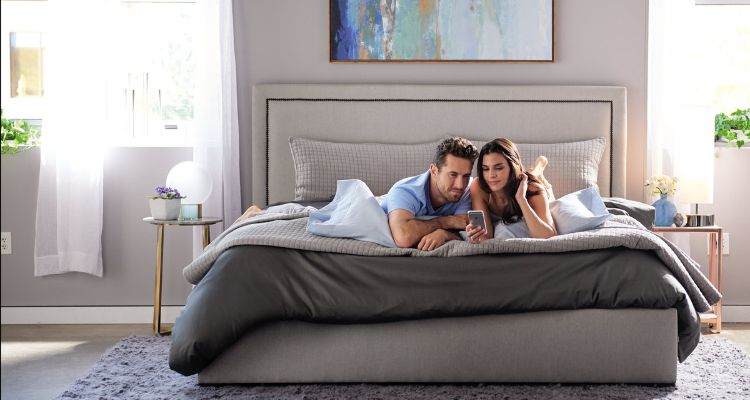
Sleep Number does not use certified-organic materials in its construction, but the brand has removed every category of substance that consumer-protection groups flag as a toxicity concern: no fiberglass, no PBDEs, no formaldehyde, no ozone-depleting compounds, no heavy metals.
If you are coming from a memory-foam-heavy mattress with strong off-gassing, the air-chamber-plus-foam Sleep Number construction will feel significantly less chemically active out of the box.
Do Sleep Number Beds Have Fiberglass?
No. Sleep Number removed fiberglass from its fire barrier in 2017 and has stayed fiberglass-free since. Current models use a knit-construction rayon/viscose flame barrier (Sleep Number markets it as FlameSAFE) that meets the federal flammability standard (16 CFR Part 1633) without fiberglass and without chemical flame retardants.
If you are comparing against budget bed-in-a-box brands sold on Amazon, this is a meaningful difference: many sub-$500 foam mattresses still use a fiberglass sock inside the cover. Sleep Number does not. You can also cross-reference our fiberglass-free mattress guide.
Are Sleep Number Beds Certified?
Yes. Sleep Number foams are CertiPUR-US certified (low VOC, no PBDEs, no heavy metals, no ozone depleters, no formaldehyde, no regulated phthalates), and the textile cover is OEKO-TEX Standard 100 tested. GREENGUARD Gold certification is in process for the ComfortNext line. Sleep Number is also a Made-in-USA manufacturer for the air chamber and foam components.
Are Sleep Number Beds Fire Retardant?
Yes, without the chemistry that worried buyers a decade ago. Sleep Number's FlameSAFE barrier is a tightly knit textile that physically blocks flame propagation rather than relying on chemical flame retardants or phthalates.
That keeps your exposure to fire-barrier chemistry as close to zero as the federal standard allows. The brand's stated philosophy is that healthier sleep leads to healthier lives, and the construction reflects that.
Why Should Allergy Sufferers Avoid Sleep Number Beds?
Most allergy sufferers do not need to avoid Sleep Number, the materials themselves are well tolerated. The historical concern is mechanical, not chemical: older Sleep Number generations had limited airflow inside the air chambers, and sleepers in very humid climates occasionally reported moisture build-up over multiple years.
Newer 2024-2026 models address this with a redesigned air-circulation path inside the chamber and an upgraded antimicrobial cover. If you sleep in a high-humidity environment, run a dehumidifier in the bedroom and rotate the mattress per the owner manual.
Bottom line: the mattress does not contain harmful chemicals; the only real maintenance consideration is humidity management, and current models have re-engineered the part of the design that previously caused complaints.
Are There Any Problems With The Sleep Number Bed?
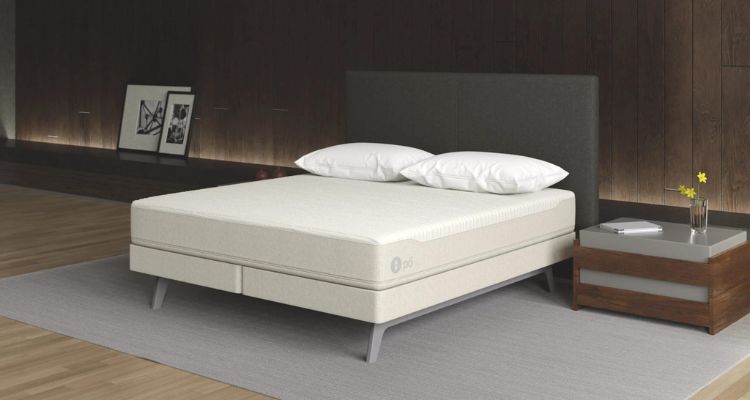
Sleep Number beds are not problematic on the materials side, CertiPUR-US foam, fiberglass-free, no chemical fire retardants. The most-cited owner complaints concern the mechanical components: pump longevity, sensor reliability on the older smart beds, and the requirement to use Sleep Number’s proprietary modular base rather than a standard platform.
For non-toxicity specifically, there is no material concern. The bed is built to a stricter chemical profile than most $1,000-$2,000 hybrids on the market.
How to Choose A Non-Toxic Mattress?
Start by listing the certifications you actually want to see: CertiPUR-US (foam), OEKO-TEX Standard 100 (textiles), and ideally GREENGUARD Gold (low VOC emissions). After that, layer in your sleep preferences (also check the best selling comfortable mattresses).
These include your typical sleep positions, whether you have back or joint pain (we cover the best mattresses for back pain), whether you sleep hot, motion isolation needs, and edge support.
If skin sensitivity or respiratory allergies are the priority, look specifically at fiberglass-free fire barriers and gel memory foam mattresses with CertiPUR-US foams. Sleep Number ticks both boxes.
What Material Sleep Number Beds Made of?
Sleep Number beds combine vulcanized-rubber air chambers (the support layer) with CertiPUR-US certified polyurethane foam comfort layers and a knit-textile cover. The cover blends Lyocell (a rayon spun from responsibly grown eucalyptus wood pulp) with Supima long-staple cotton. Both fibers are compostable, biodegradable, and Made-in-Green certified.
There is no nylon, polyester, or acrylic in the cover construction. The result is a non-toxic, low-VOC cotton-blend sleep surface sitting on top of an adjustable air bed.
Do Sleep Number Beds Get Mold?
Like any mattress used in a humid environment without rotation, Sleep Number beds can develop moisture issues over many years. The 2026 generation includes a redesigned air-circulation channel inside the chamber and an antimicrobial OEKO-TEX cover specifically to reduce this risk. Rotate the mattress per the owner manual, keep bedroom humidity in the 40-55% range, and the issue is essentially eliminated.
Key Takeaways: Sleep Number Toxicity, The Honest Answer
Chemical Composition and Toxicity
Sleep Number beds use CertiPUR-US certified foam (no PBDEs, no heavy metals, no formaldehyde, low VOC), vulcanized-rubber air chambers, and an OEKO-TEX 100 tested cover. They are not certified-organic, but on the standard non-toxicity benchmarks the brand passes cleanly. Compared to mid-tier bed-in-a-box competitors, Sleep Number's chemical profile is stricter, not looser.
Fiberglass: Zero
Sleep Number removed fiberglass from its fire barrier in 2017. The current FlameSAFE knit-textile barrier meets the federal flammability standard (16 CFR Part 1633) without fiberglass and without chemical flame retardants, one of the cleanest fire-barrier designs in the premium segment.
Certifications
CertiPUR-US (foam), OEKO-TEX Standard 100 (cover textiles), GREENGUARD Gold pending (ComfortNext). Together these third-party certifications cover the full chemical footprint a non-toxic shopper typically asks about.
Fire Retardancy Without Chemistry
Sleep Number meets fire safety regulations through a physical knit barrier, not chemical flame retardants or phthalates. Chemical exposure is at the floor of what current regulation requires.
Advice for Allergy Sufferers
The mattress materials themselves are well tolerated by allergy sufferers. The historical mold concern was a humidity-management issue in older generations and is largely resolved on the 2024-2026 redesign. Run bedroom humidity in the 40-55% range and the issue is preventable.
Material Composition
Lyocell from eucalyptus + Supima cotton in the cover; CertiPUR-US foam comfort layers; vulcanized-rubber air chambers. Eco-friendly and biodegradable on the textile side, low-VOC and chemically-clean on the foam side.
Final Thoughts
Sleep Number is not just non-toxic by regulatory definition, it actively goes beyond the federal floor on flame-barrier chemistry, foam emissions, and textile testing. It is one of the cleanest premium-segment options on the market for buyers who specifically want a chemical-light sleep surface.
For most non-toxic shoppers, our top three picks in the lineup are the i7 (premium hybrid, CertiPUR-US foam over dual air chambers), the c4 (entry-level adjustable air bed), and the p5 (mid-tier performance with upgraded materials).
Our Top Non-Toxic Sleep Number Picks
Sleep Number i7 InnovationSeries
CertiPUR-US foam · FlameSAFE chemical-free fire barrier · OEKO-TEX 100 cover · 100-night trial · 15-year limited warranty. Sleep Number is one of the few premium smart-bed brands to pair a third-party-certified chemical profile with full dual-zone adjustability and SleepIQ biometric tracking.
- Price: From $3,299 (Queen)
- Free shipping on smart beds (US)
- 100-night home trial on mattresses
- Active-duty military, veteran, first-responder, and teacher discount programs
- CertiPUR-US + OEKO-TEX 100 certified construction
Disclosure: we may earn a commission from this link at no extra cost to you.
| Sleep Number c4 Classic | $1,899+ | Shop |
| Sleep Number p5 Performance | $2,499+ | Shop |
| Sleep Number i7 InnovationSeries | $3,299+ | Shop |
Are Sleep Number Beds Toxic?
Sleep Number beds are not toxic in any regulatory or third-party-tested sense. The current generation passes the standard non-toxicity benchmarks shoppers ask about, CertiPUR-US for foam, OEKO-TEX Standard 100 for textiles, and a chemical-free FlameSAFE fire barrier.
The areas worth understanding before purchase:
- Off-gassing: New Sleep Number beds release a brief, mild chemical scent during the first 48-72 hours after setup. This dissipates fully in a ventilated room and is well below the CertiPUR-US 0.5 ppm VOC ceiling.
- Flame barrier: Sleep Number uses a knit FlameSAFE textile that meets 16 CFR Part 1633 federal flammability requirements without fiberglass and without chemical flame retardants, one of the cleanest designs in the premium segment.
- Air chambers: The bladders are vulcanized rubber. They finish their micro off-gassing within 48 hours and emit no measurable VOC after that.
To minimize even residual exposure, unpack and air out a new Sleep Number bed in a ventilated room for 48-72 hours before sleeping on it. Running a fan or opening windows speeds up the process significantly.
For most current buyers, the Sleep Number i7 InnovationSeries is the lineup pick that combines the cleanest material profile with full dual-zone adjustability and SleepIQ biometric tracking. Priced from $3,299 for a Queen, with a 100-night home trial and 15-year limited warranty.
Sleep Number: What Non-Toxic Buyers Should Know Before Purchasing
Shopping for a Sleep Number mattress with non-toxicity as the priority means weighing certifications, construction, and total cost together. Here is a practical framework for evaluating the lineup.
Questions to Ask Before Buying
- Which certifications do you actually need? CertiPUR-US covers foam, OEKO-TEX 100 covers textiles, GREENGUARD Gold covers full-product VOC emissions. Sleep Number has the first two across the lineup and is pursuing the third on ComfortNext.
- What is the trial period? Sleep Number offers 100 nights on mattresses. This is enough to sleep through full off-gassing and seasonal humidity changes before deciding.
- What does the warranty actually cover? Sleep Number's 15-year limited warranty covers the foam comfort layers, air chambers, and FlameSAFE fire barrier. The pump and electronics are covered for 2 years on a sliding scale.
- What about the base? Sleep Number requires its proprietary modular base, which adds to the total. Factor this into the comparison rather than ignoring it.
How Sleep Number Compares on Key Non-Toxic Metrics
The factors that matter most for long-term non-toxic satisfaction are: fire-barrier chemistry (is it physical or chemical?), foam certification (CertiPUR-US is the floor), and textile certification (OEKO-TEX Standard 100 ideally). Sleep Number passes all three on the current generation.
The Sleep Number i7 at $3,299 Queen benchmarks well on all three dimensions: CertiPUR-US foams, chemical-free FlameSAFE fire barrier, OEKO-TEX 100 cover, plus a 100-night home trial with free shipping on smart beds and a 15-year limited warranty.
Worried about toxins? Sleep Number i7 is CertiPUR-US certified, fiberglass-free, OEKO-TEX 100 tested.
Free shipping · 100-night trial · 15-year limited warranty
Related Guides
Saatva Classic
If this guide answered the sizing or setup question, this is the matching partner path to check next.