
 by
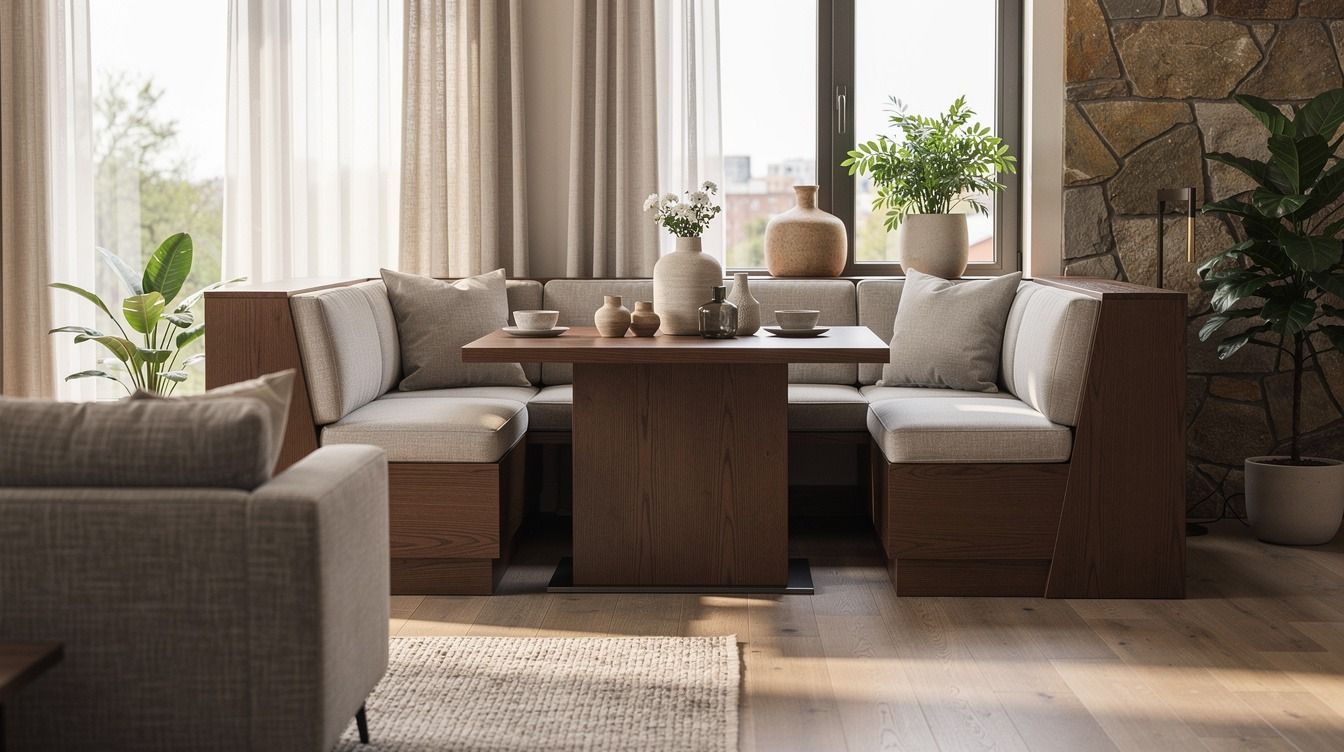
by Banquette vs. booth breakfast nook comes down to footprint, and in my living room the banquette won because it gave me back the clear walking room I couldn't fake. I tried to force the booth idea anyway. For one weekend, my sofa, my window, and my patience were all losing to cardboard corners.
- I taped the living room nook footprint
- I tested booth corners with cardboard panels
- I chose a wall banquette for breathing room
I wanted that tucked-in breakfast booth kitchen feeling, but I needed the nook to live beside a real seating zone, not inside a separate room. So I tested everything at full scale, kept the parts that felt warm, and dropped the parts that made the room feel blocked.
Here's what it looked like before
Before I touched anything, the corner had the full hand-me-down living room problem. A square side table sat where chairs wanted to turn, the rug stopped short of the window wall, and my small dining setup floated in the room like it had missed its train. The sofa was deep enough to dominate the zone, and every attempt at adding a kitchen nook booth made the whole arrangement feel narrower than it was.
What bothered me wasn't style first. It was traffic. You'd step in with coffee and clip a chair leg.
You'd try to sit and notice the table edge was fighting the sofa arm. I even considered pushing everything tighter, but that never works in a living room.
Once I started treating the nook like part of the seating plan, not a bonus corner, the answer got much clearer.
- I taped the living room nook footprint
- I tested booth corners with cardboard panels
- I chose a wall banquette for breathing room
- I kept the booth idea for deeper corners
- I marked window height before ordering cushions
- I picked a pedestal table for easier slides
- I sized the bench for two dinner plates
- I added a return seat for booth coziness
- I skipped high booth backs near the sofa
- I wrapped the banquette base in warm oak
- I used channel tufting for diner booth energy
- I matched cushion depth to living room chairs
- I tucked storage drawers under the banquette
- I hung one pendant above the nook table
- I layered sconces to soften the booth corner
- I chose washable linen for the bench cushions
- I styled the table like a living room vignette
- I photographed the traffic gap beside the banquette
- I kept the booth mood without closing in
1I taped the living room nook footprint
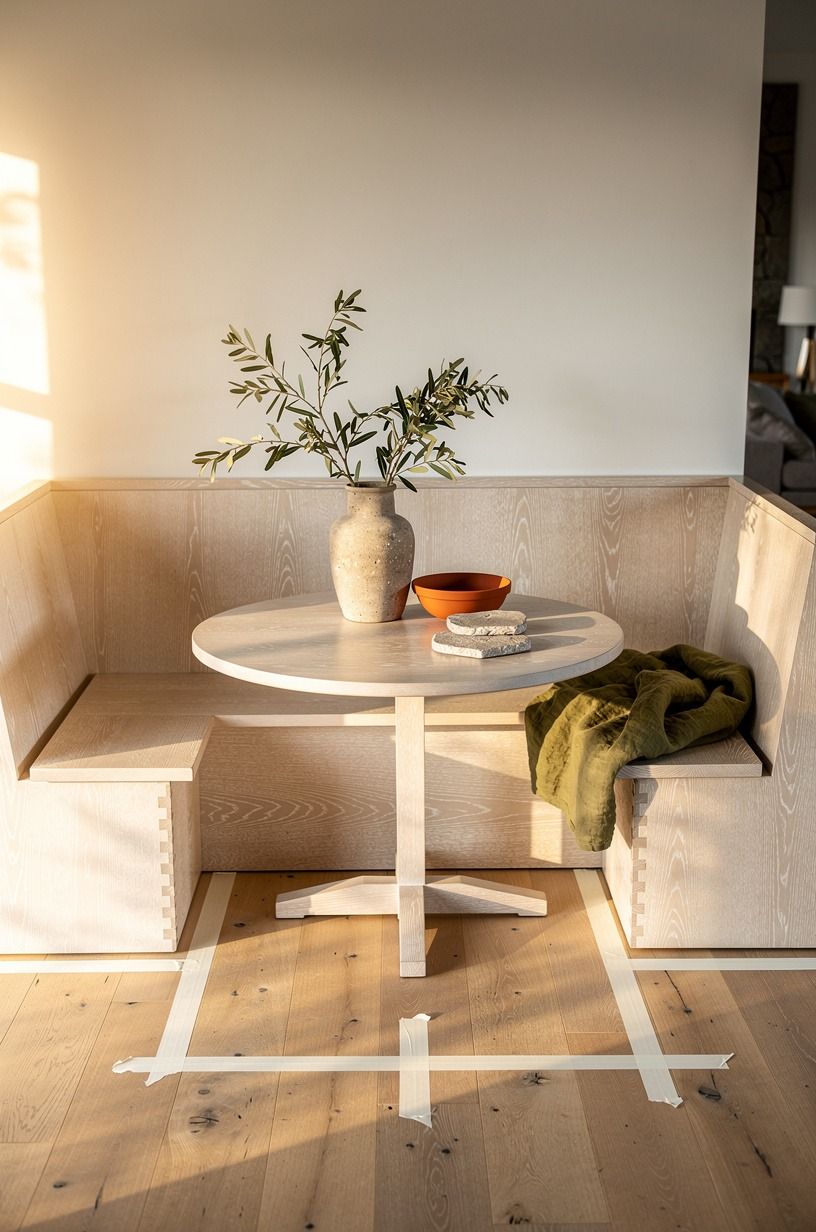
The first thing I did was tape the entire footprint on the floor, and if you are choosing between banquette seating and a booth, you should too. Blue painter's tape gave me a fast outline for the centered table, the bench line, and the booth return I thought I wanted. I marked the shape beside the sofa and immediately saw how a full booth would eat into the path you need to move naturally through the room.
Then I dropped in the mood details so the test felt real. I imagined a cerused white oak bench, a round pedestal table, and a soft booth return, not just abstract rectangles.
That matters because your eye reads warmth differently once the materials get specific. If you are planning a bright corner, these sunroom breakfast nook ideas for light filled mornings helped me think through how a nook should sit in daylight.
And yes, the tape looked ridiculous. It also saved me from ordering the wrong shape.
2I tested booth corners with cardboard panels
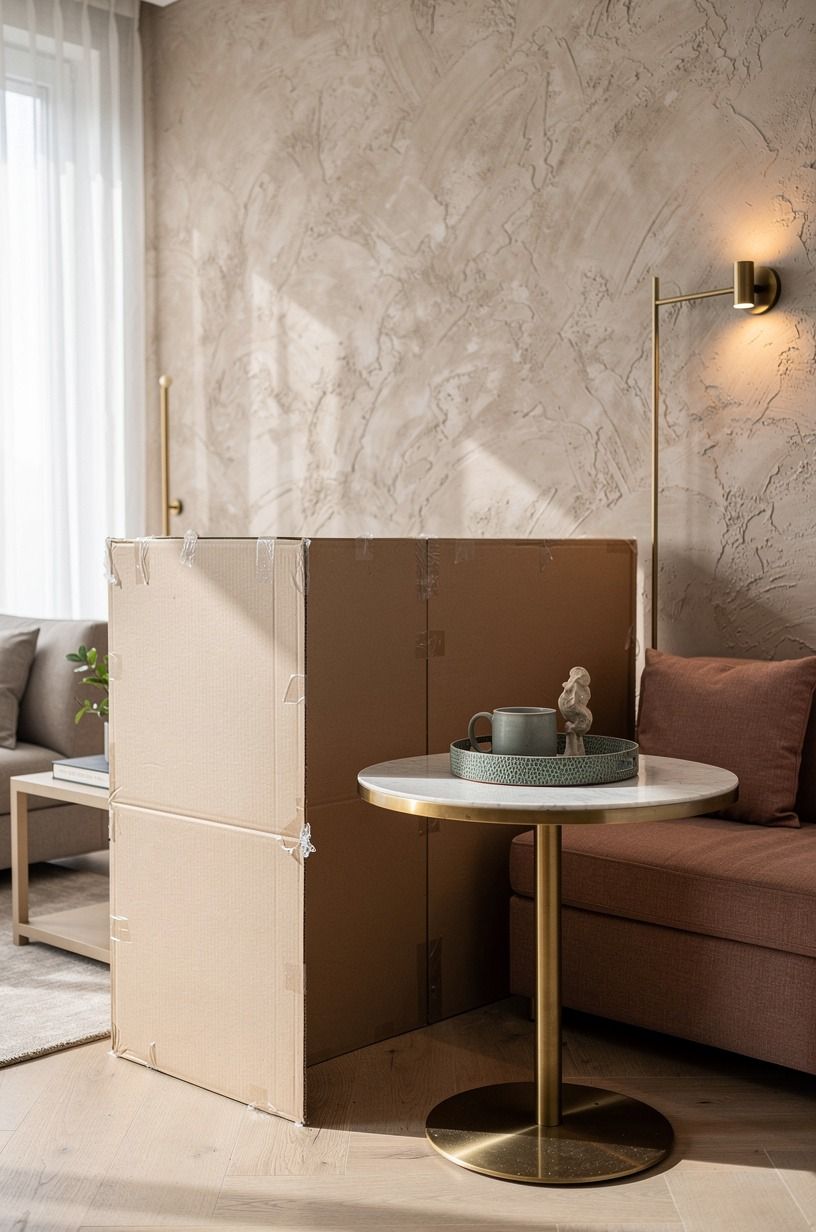
Cardboard panels told the truth faster than any mood board. I cut two tall sheets, stood them where booth sides would land, and physically stepped into the mockup with a plate and a mug in my hands.
If you are weighing a breakfast booth kitchen against a single-wall banquette, that body test matters more than a render. You feel the pinch in one second.
What surprised me was how much the booth corners changed the entry. The slim bench felt open, but the cardboard sides made the nook read like a little room inside the room. Cozy?
A bit. Clumsy? More than I expected. I kept thinking about small breakfast nook ideas that fit almost anywhere because the best small-space layouts don't just fit on paper, they let you pass through without turning sideways.
If you have kids climbing in from both sides, maybe that booth corner earns its keep. In my living room, it did not.
3I chose a wall banquette for breathing room
This was the turning point. Once I switched from booth fantasy to wall banquette reality, the nook started acting like part of the living room instead of a competing zone.
A single bench along the wall let the round table float in front of it, and that meant the sofa still had visual air around it. If you are mixing banquet nook ideas into a room that already holds lounge seating, breathing room is the whole game.
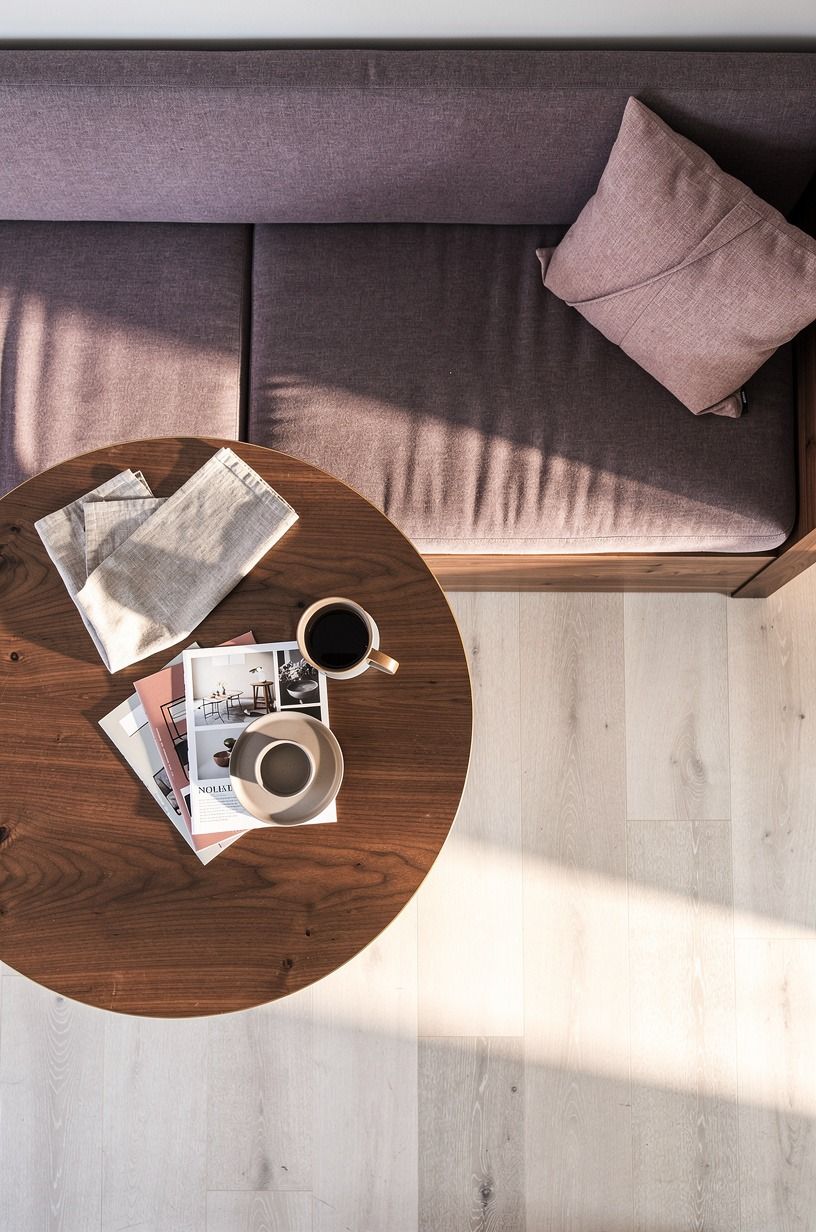
I sketched it overhead with a book-matched walnut seat, a round top, and a loose cushion, and the layout suddenly made sense. The wall banquette gave me the wraparound feeling with none of the boxed-in weight. I also liked that it let me keep a round table, which I talk about every chance I get because round vs rectangular breakfast nook table which fits best is not a fake debate.
Round tables are kinder in a tight circulation zone. You feel that every single day!
4I kept the booth idea for deeper corners
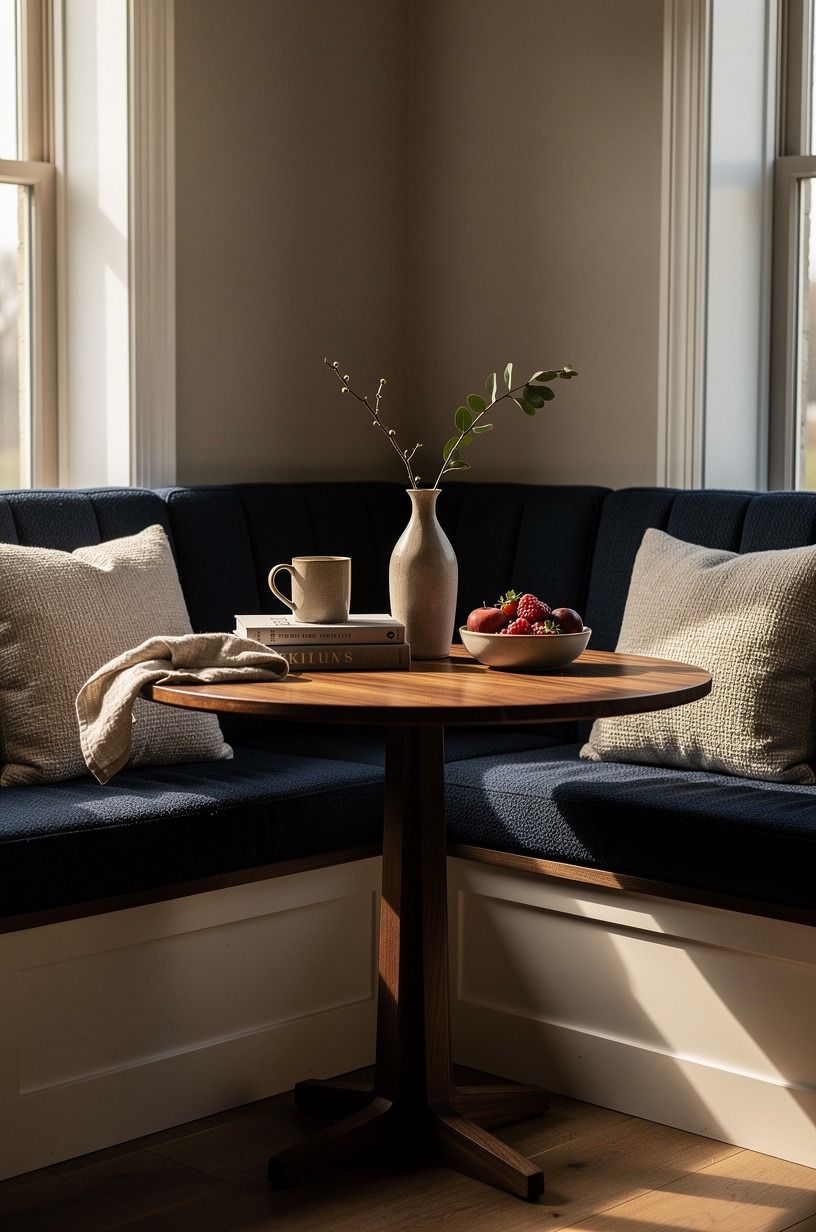
I did not fully break up with the booth concept. I just stopped forcing it where it did not belong.
In a deeper corner, especially one without a sofa line nearby, a booth can be fantastic because the extra return seat turns dead angle into usable seating. If you've got a tucked kitchen nook booth with real depth, I wouldn't talk you out of it.
The version I still like uses a navy wool seat wrap, a small walnut table, and one return bench that hugs the corner without trying to make a restaurant set at home. That is the difference.
You want booth mood, not diner cosplay. I saved a few ideas from large breakfast nook ideas for big families open kitchens because bigger rooms can carry that enclosing shape better than a living room edge can. My rule became simple: deep corner, maybe booth.
Shared living room wall, almost always banquette.
5I marked window height before ordering cushions
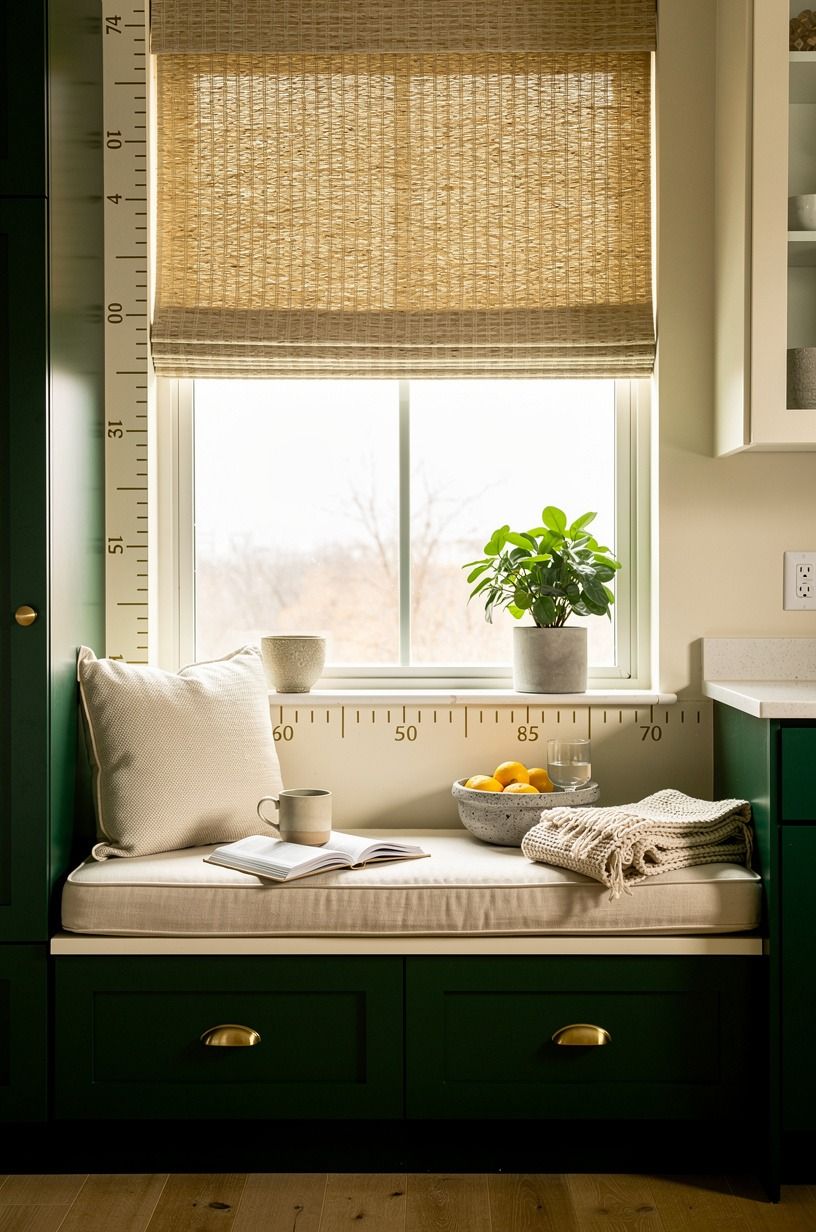
This is the part nobody respects until the cushions arrive too tall.
6I picked a pedestal table for easier slides
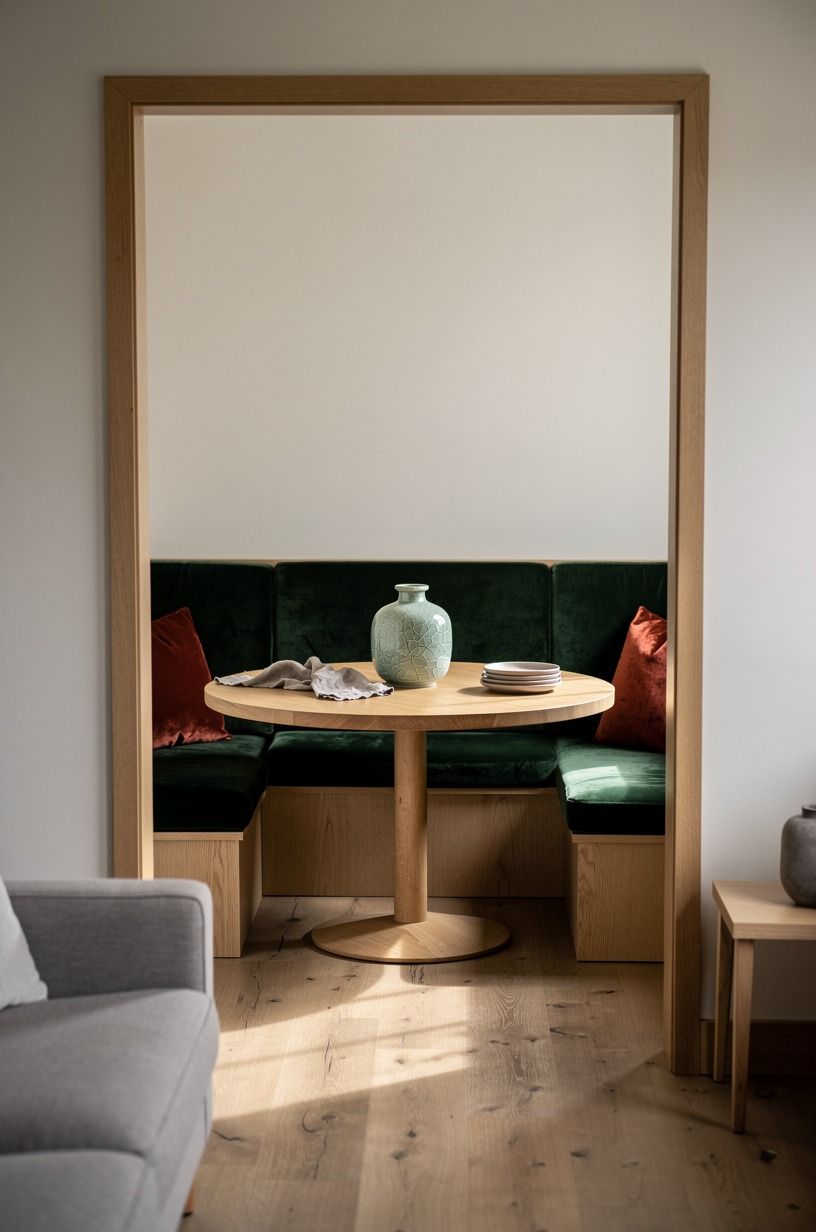
A pedestal base solved a problem I couldn't unsee once I noticed it. Four table legs look harmless until you are trying to slide in from the open side while also keeping the nook friendly to the living room path.
With a pedestal, chairs tuck cleaner, knees have less to dodge, and the whole center zone feels more relaxed. If you are styling banquette seating for everyday use, ease matters as much as looks.
I kept picturing a round pedestal with a soft edge and a bench beside it, framed through the doorway the way you actually see the nook on arrival. That is when the choice got obvious.
If you want more shape comparisons, round vs rectangular breakfast nook table which fits best lays out why curves save a lot of grief in compact rooms. But the short version is this: a pedestal lets you slide in without that awkward chair-leg shuffle, and once you've lived with that, you are not going back.
7I sized the bench for two dinner plates
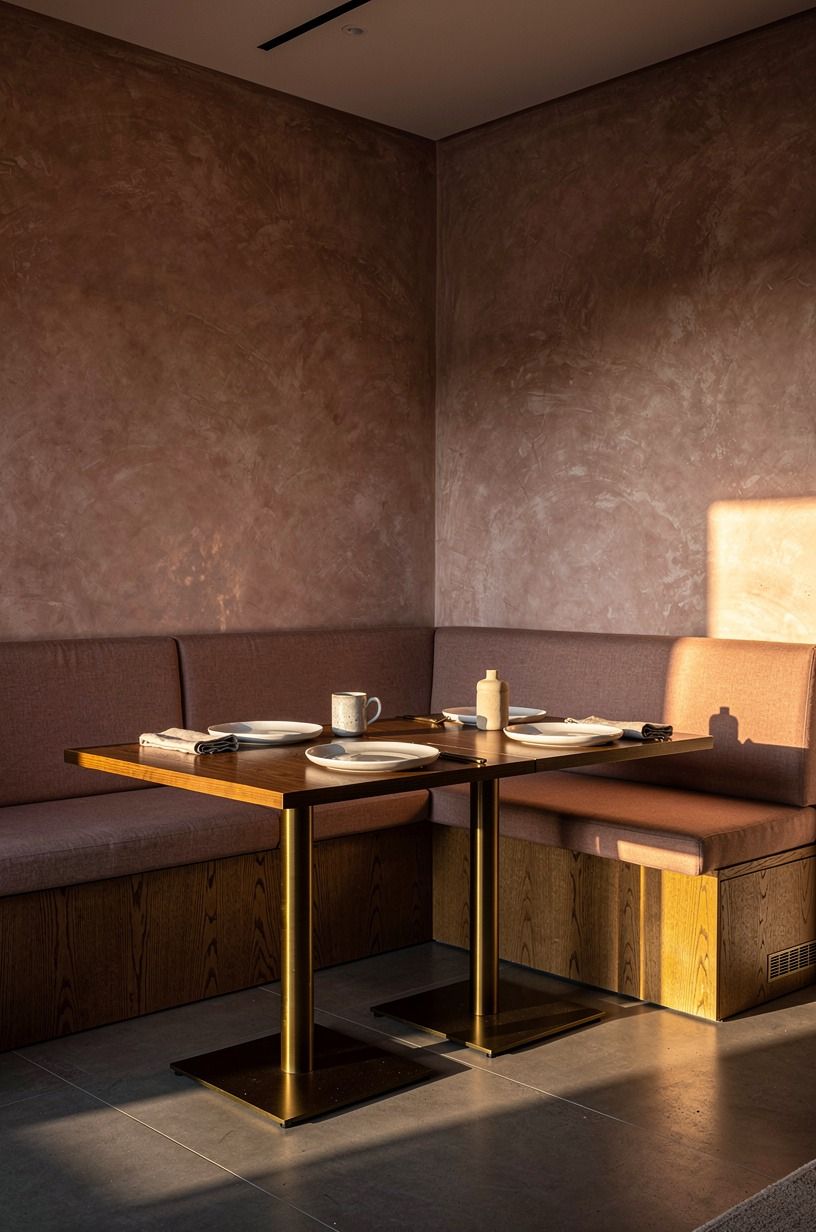
I stopped thinking in seat count and started thinking in table use.
8I added a return seat for booth coziness
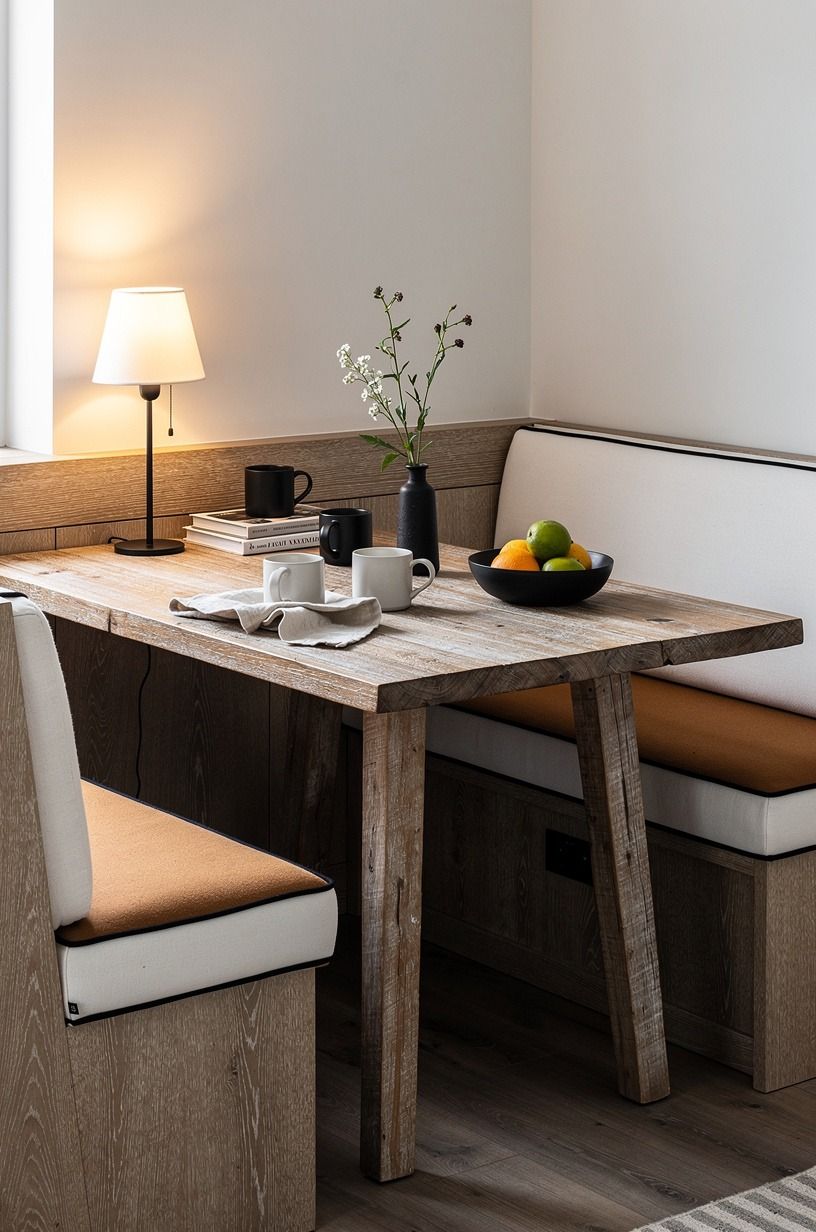
After all that anti-booth talk, I still wanted one move that gave me the tucked-in feeling. The answer was a partial return seat, not a full second wall.
That little L shape gave the nook the gentle hug I wanted without closing off the side facing the room. If you are craving breakfast booth kitchen energy, this is the compromise I'd tell you to test first.
The return also made styling easier because it created one corner for a throw pillow and a softer moment at the end of the bench. I kept the table small, the wood warm, and the lines low so the nook still felt connected to the sofa zone.
The versions I loved most echoed details from mid century modern breakfast nook ideas retro done right where the return reads architectural, not bulky. But here's the key: keep it partial.
Full booth walls are commitment. A return seat is warmth with an exit.
9I skipped high booth backs near the sofa
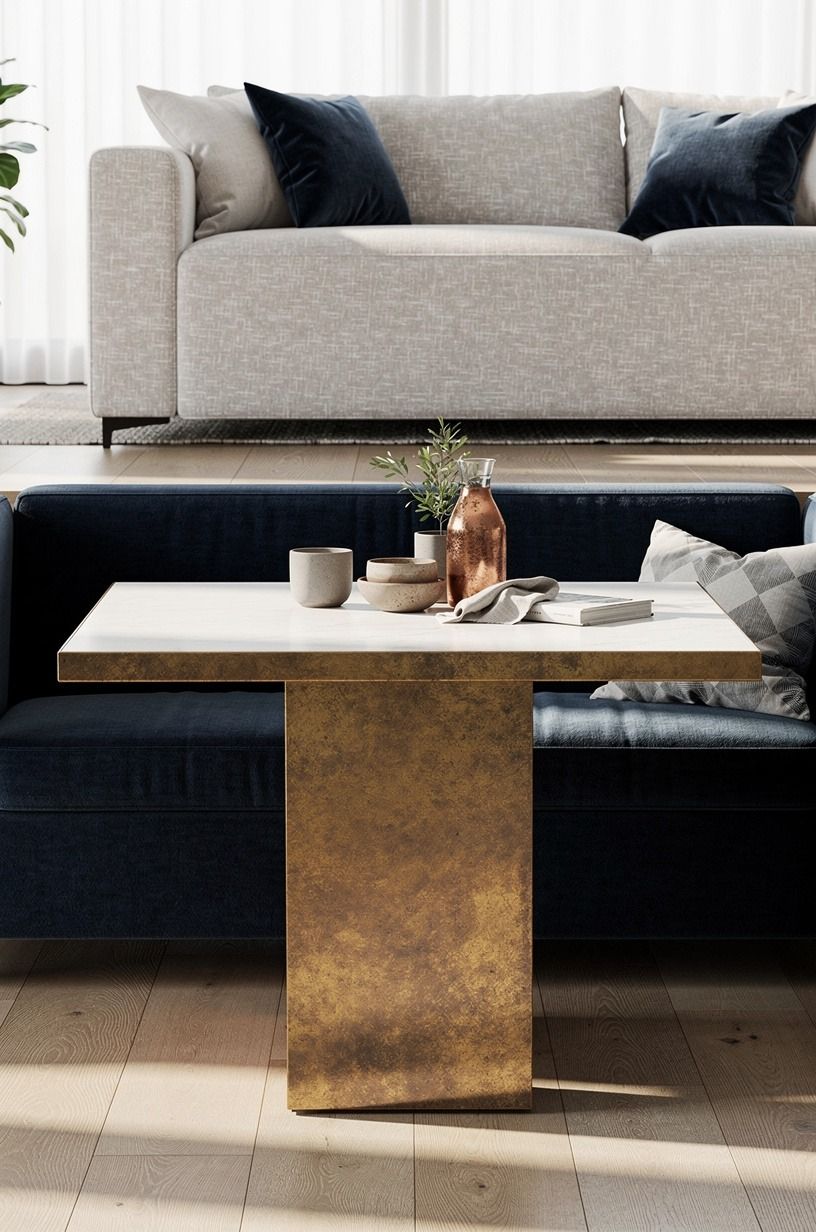
High booth backs look appealing when you are focused on the nook alone. Put them near a sofa, though, and they start reading like a barricade.
I knew I was done with that idea the minute I got low to the floor and looked across the room. The line of the back cut straight through the space where I wanted your eye to travel from the rug to the table to the window.
So I kept the back lower than my first instinct. That let the nook feel grounded without building a padded wall behind the table.
A low profile also played better with the nearby side chairs and the black accent table I already owned. I nearly painted the wall a deeper tone like Farrow & Ball Hague Blue No. 30, but in the end the lighter backdrop made the lower back feel even more open.
If you are placing the nook in a living room, don't copy restaurant scale. Your sofa will hate you for it.
10I wrapped the banquette base in warm oak
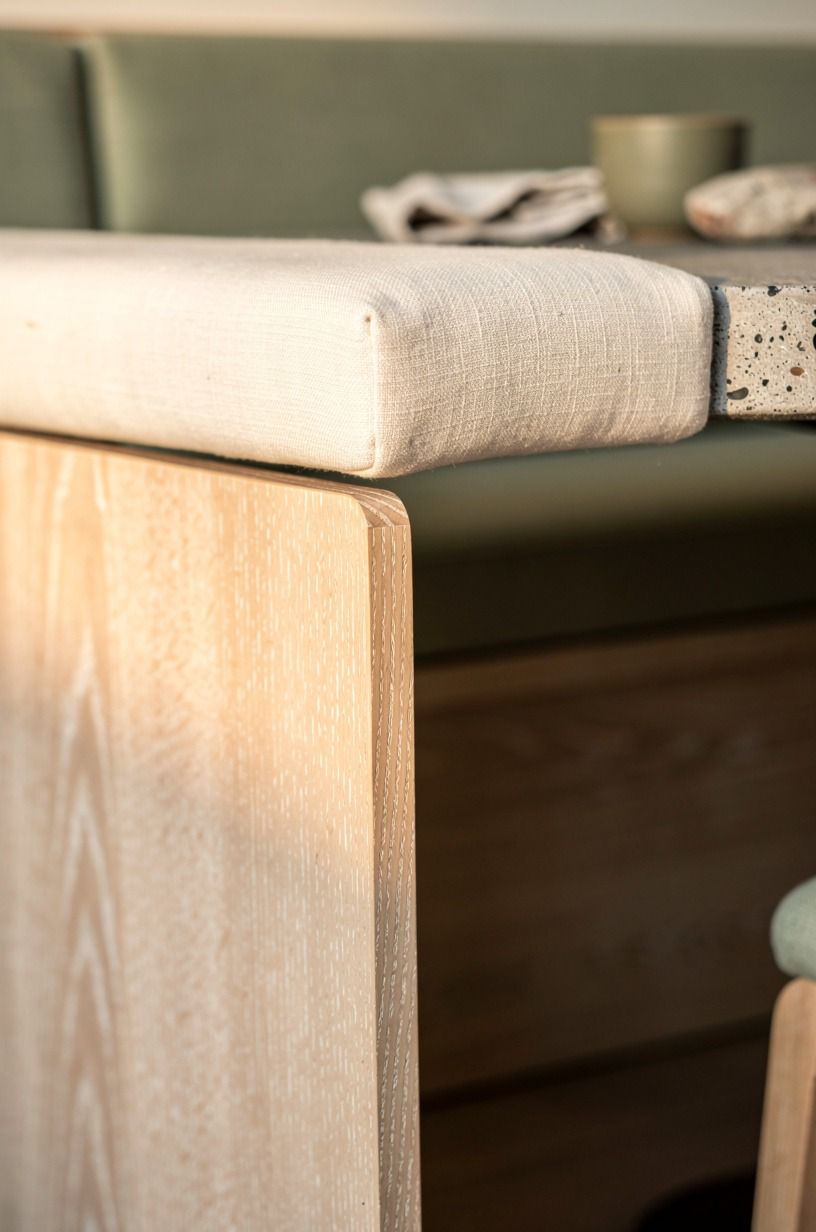
Once the layout was set, the base material became the thing that sold the nook as built in.
11I used channel tufting for diner booth energy
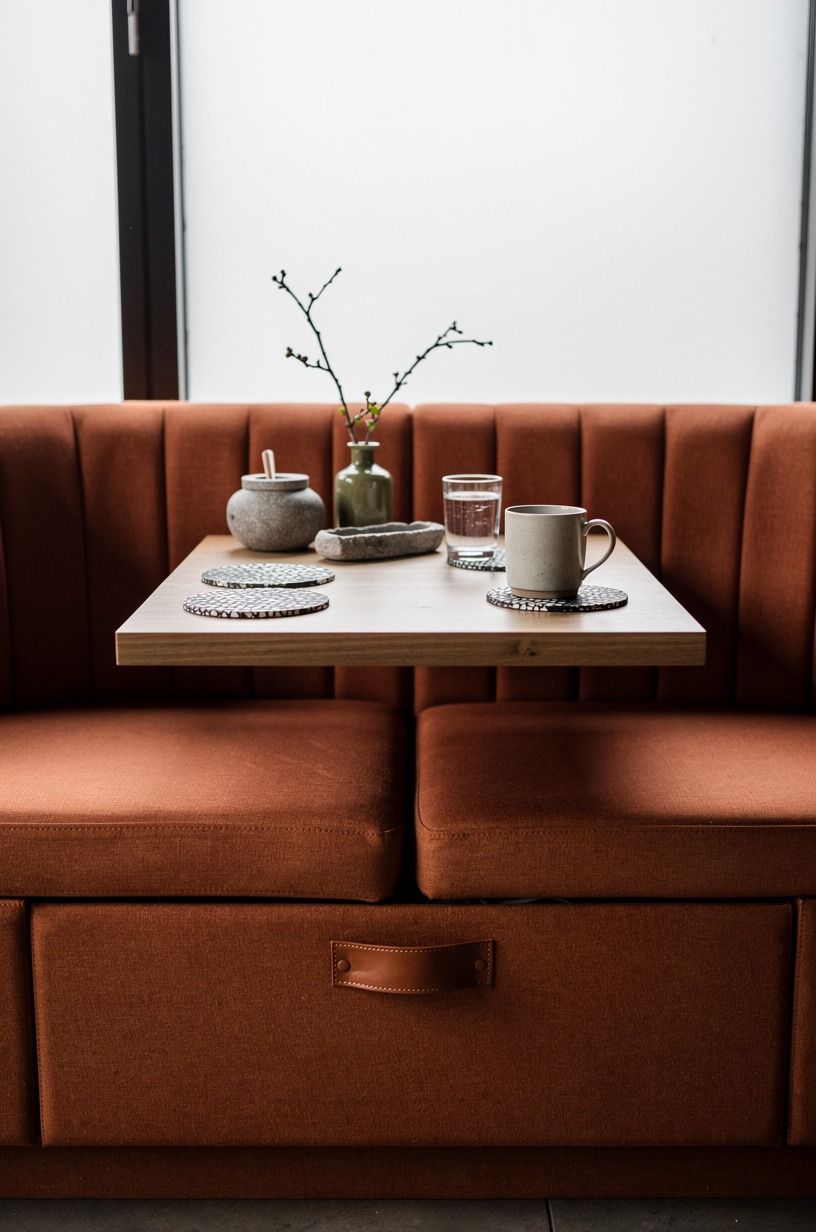
This was my one deliberate nod to booth history. I wanted a whisper of diner energy, not a theme.
Channel tufting gave me that because the vertical rhythm feels familiar, but it doesn't close the room in the way a massive backrest does. If you are chasing breakfast booth kitchen mood, texture can do what architecture doesn't have to.
I imagined the seat in terracotta mohair velvet, low to the ground, with the small table and window light pulling it away from novelty. The channels made the bench feel finished from across the room, especially when seen low and straight on. You can see a similar confidence in modern breakfast nook ideas with clean cozy style where the upholstery carries the personality instead of the footprint getting bigger.
But keep the tufting restrained. Thick overstuffed channels push you back into diner costume fast.
12I matched cushion depth to living room chairs
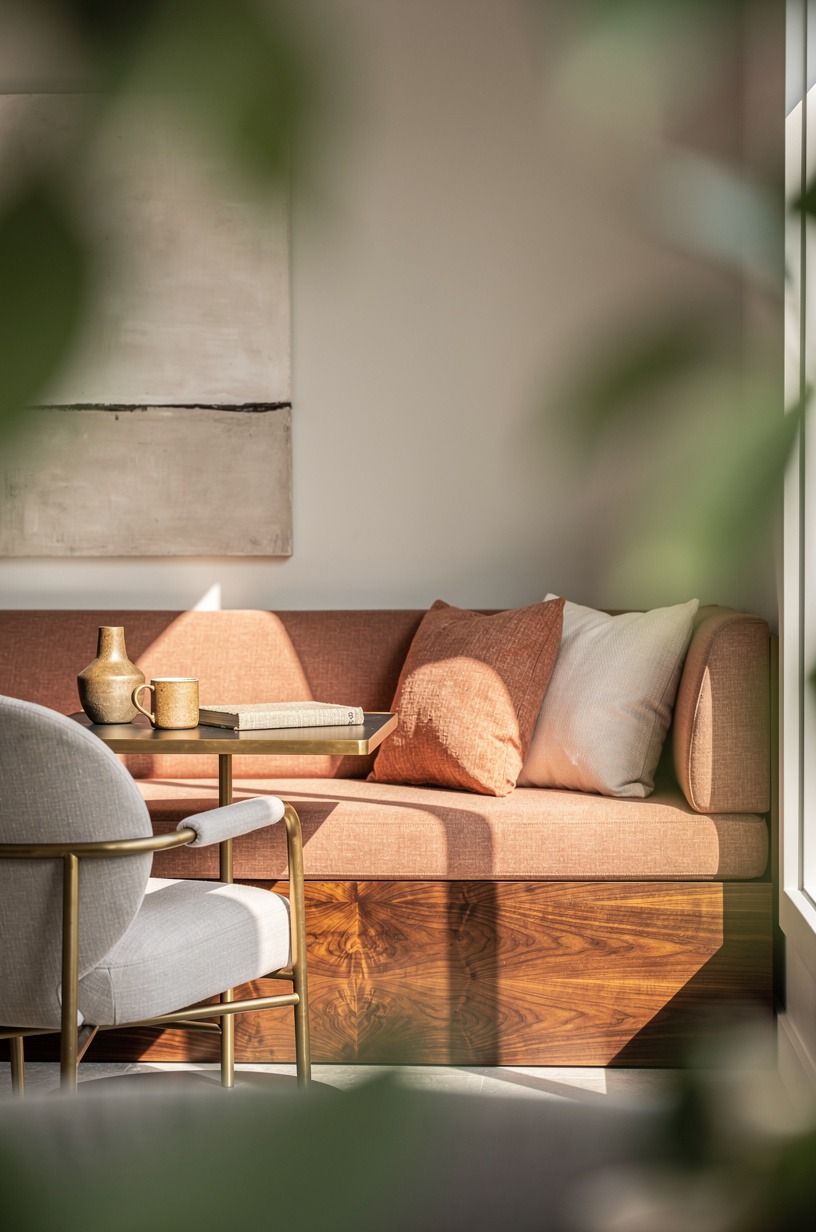
A nook inside a living room should talk to the other seats.
13I tucked storage drawers under the banquette
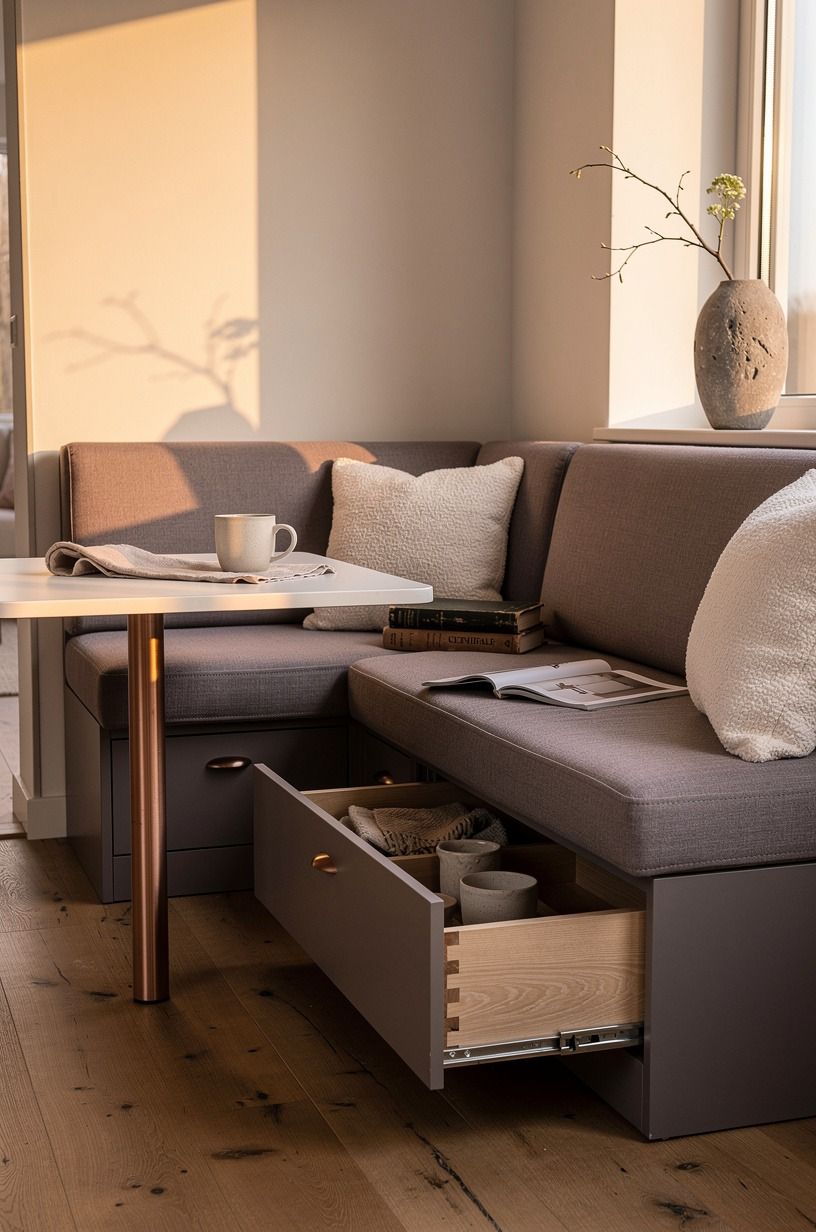
Storage was the banquette's biggest practical win over the booth. A booth can hide some base depth, sure, but a long wall bench gives you much cleaner access for drawers.
And if you are giving precious living room square footage to a dining nook, the nook should earn that footprint. Mine now holds placemats, candles, a tray, and the paper stuff that never has a glamorous home.
The key was making the drawers disappear into the base line instead of reading like kitchen cabinetry. I liked a wide-angle view here because you could see the whole setup doing double duty: bench above, drawers below, and still a small table centered in the scene.
I borrowed ideas from small breakfast nook ideas that fit almost anywhere because the smartest compact nooks always hide the boring things. If you are renting, baskets under an open bench can fake the function.
But if you can build drawers, do it. You'll use them constantly.
14I hung one pendant above the nook table
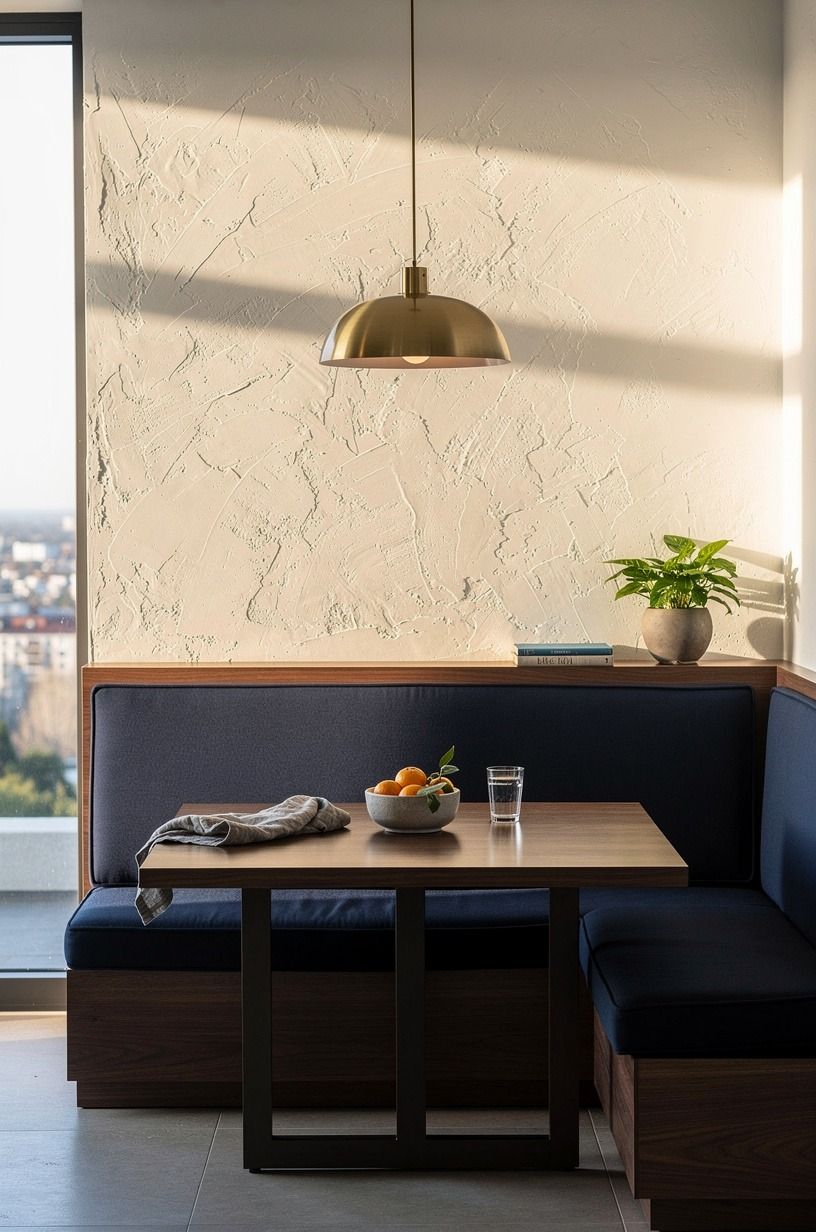
One pendant was enough. Two would have started a conversation with the living room chandelier that I did not want to referee.
A single centered pendant kept the nook distinct, but still quiet, and that balance matters when a dining moment sits beside your main lounge zone. If you are adding a kitchen nook booth feeling to a living room, overhead lighting should define the spot, not annex it.
I chose the idea of an unlacquered brass pendant because that metal gets softer with age and never looks too sharp against wood. Seeing it from a first-person angle while walking toward the nook helped, too.
You notice whether the light feels welcoming long before you study its shape. For more on keeping breakfast spaces from going cold, I loved the tone in sunroom breakfast nook ideas for light filled mornings. But the takeaway is simple: one pendant, centered low enough to matter, and warm enough that dinner doesn't feel like paperwork.
15I layered sconces to soften the booth corner
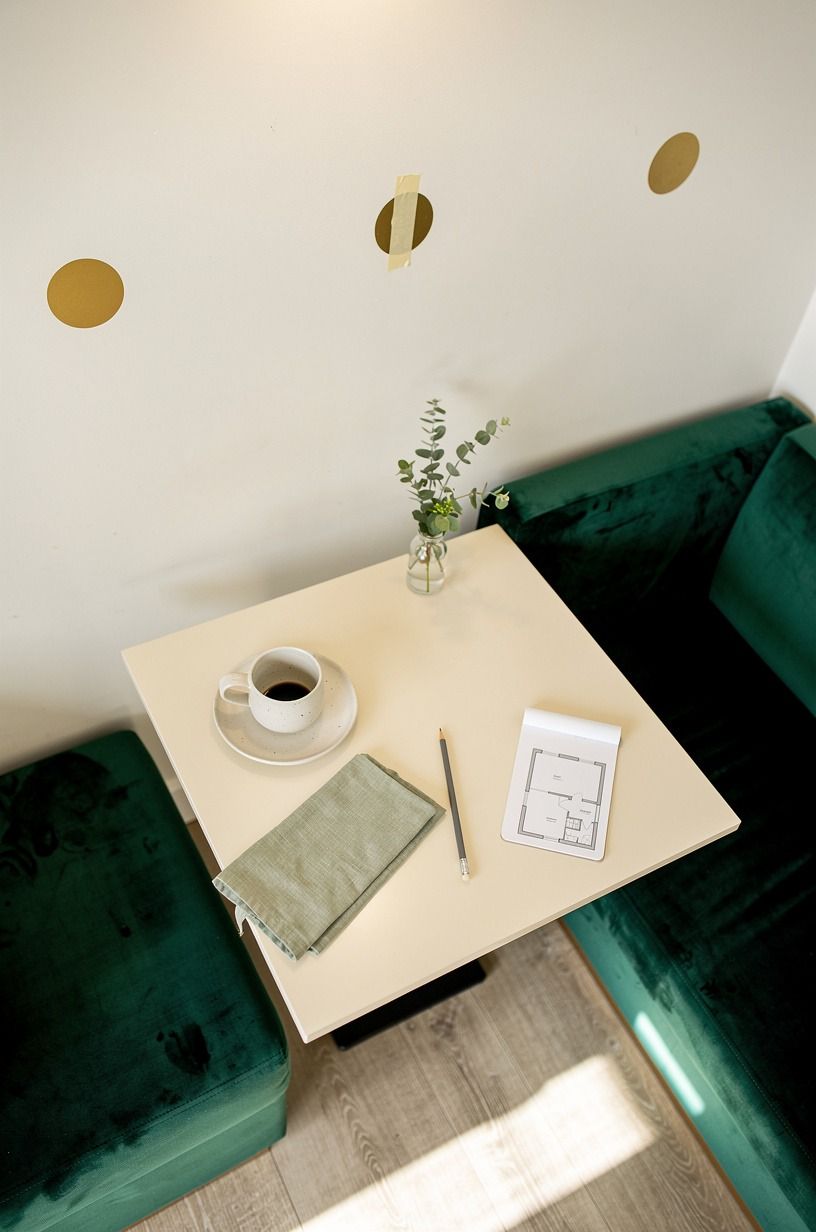
The pendant handled the middle. The corner still needed kindness.
So I added sconces in the plan, especially around the return seat where the nook could have gone visually flat at night. If you are borrowing booth language, you need side light to keep the corner feeling intimate instead of dense.
Light from one source alone makes benches look harder than they are.
I mapped the corner from above with emerald mohair velvet pads, gold sconce placement, and a small round table to keep the composition from stiffening up. Then I tested the idea against outdoor breakfast nook ideas for al fresco coffee of all things, because outdoor nooks often understand layered glow better than indoor ones do. Strange source, useful lesson.
And if you are choosing between a brighter pendant and softer side light, choose the sconces. They make the whole nook feel like it wants you to stay.
16I chose washable linen for the bench cushions
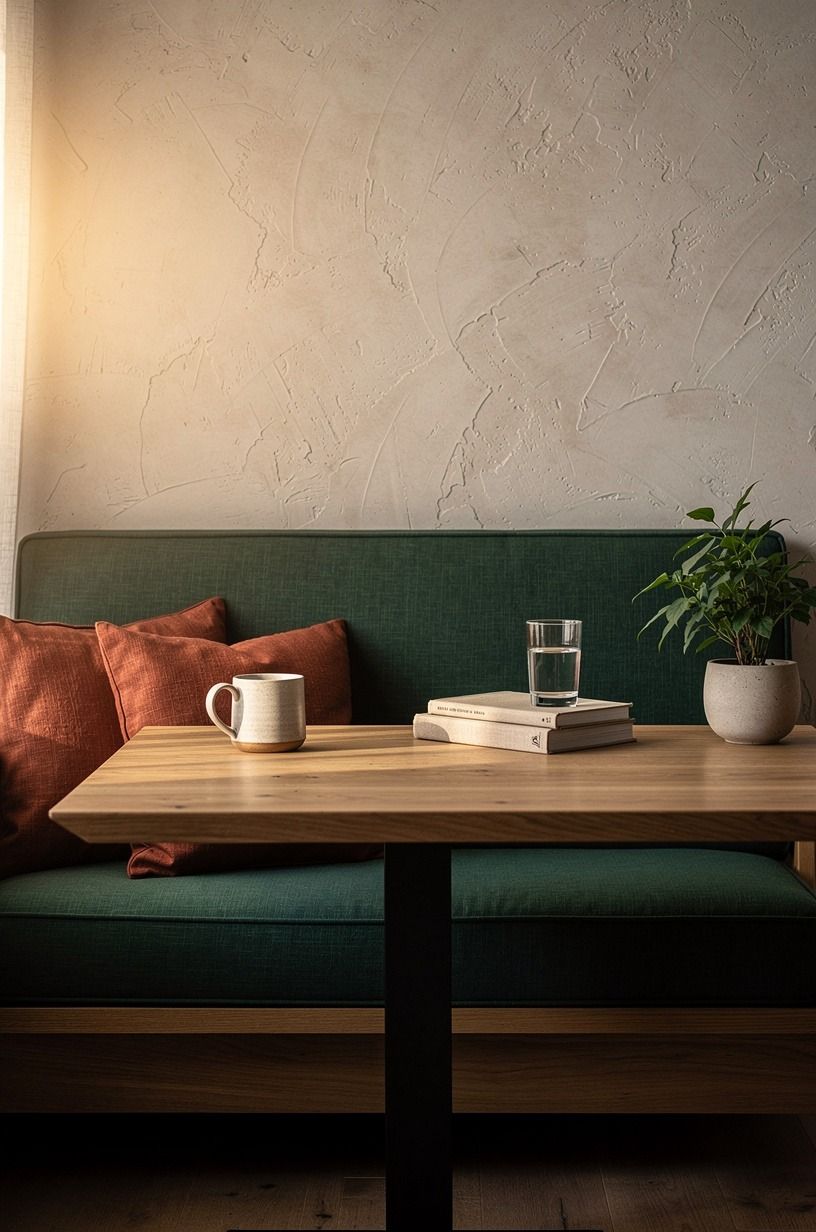
This choice was pure self-preservation. A living room nook gets coffee, pasta, books, guests, and the occasional collapsed afternoon.
Pretty fabric that can't survive any of that is just expensive stress. I went straight to washable linen because it wrinkles in a forgiving way and gets better when you stop trying to keep it crisp.
If you are making banquette seating that lives hard, washable beats precious every time.
The color mattered too. Forest green linen with rust pillows gave me richness without making the nook too dark, especially against warm wood. I also liked how that palette sat near Article Sven style camel leather pieces without trying to match them.
Modern breakfast nook ideas with clean cozy style pushed me to be bolder with fabric color, and I'm glad they did. But I wouldn't choose bright white here. You'd spend the whole year policing it instead of using the seat.
17I styled the table like a living room vignette
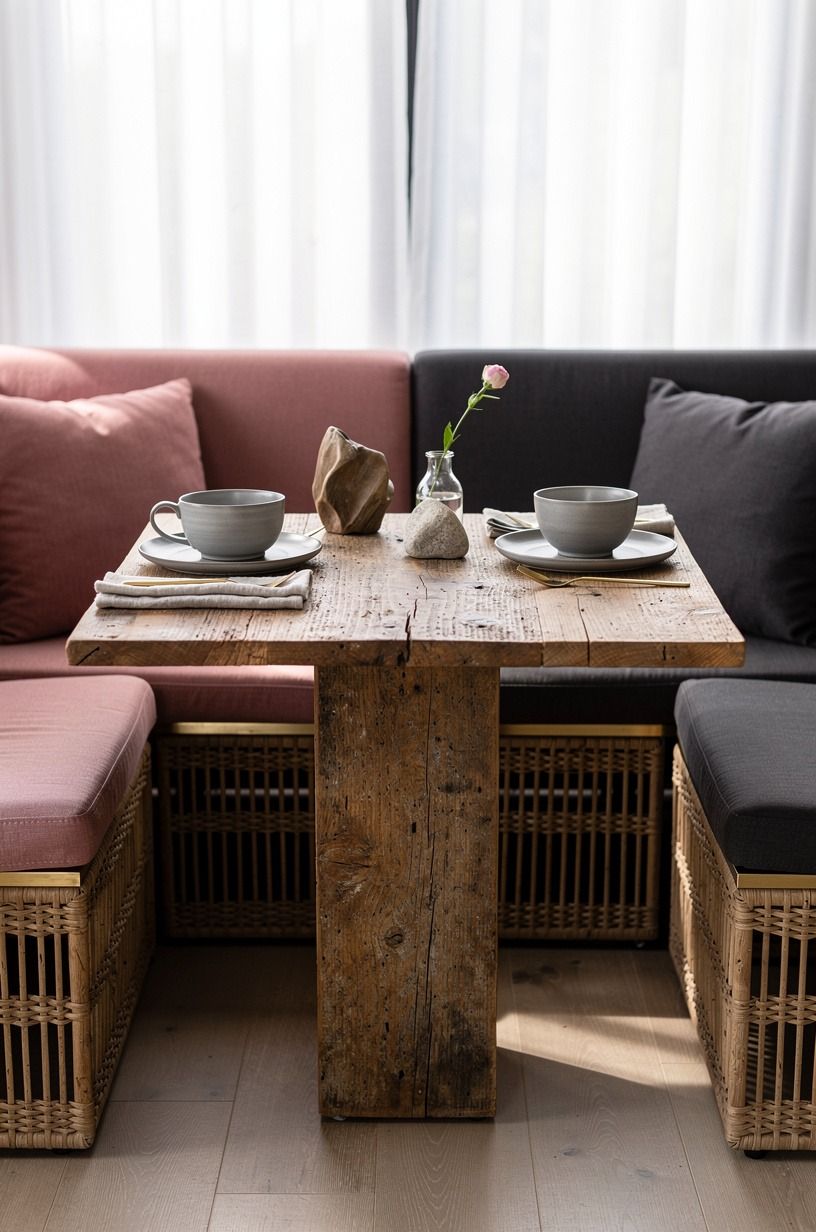
Once the seating was right, the styling had to stop acting like a kitchen table and start acting like part of the room. That meant fewer practical leftovers and more low, sculptural pieces you could glance at from the sofa without feeling visual static. If your nook sits in a living room, the tabletop has to behave like a side table with better manners.
So I kept it spare: a teak tabletop, one low bowl, one ceramic cup, one folded linen, and space left empty on purpose. Nothing tall enough to interrupt conversation. Nothing so busy it fought the coffee table across the rug.
I learned that restraint from mid century modern breakfast nook ideas retro done right, where the best tables look lived with, not staged within an inch of their lives. You want a vignette you can still eat at.
That is the line.
18I photographed the traffic gap beside the banquette
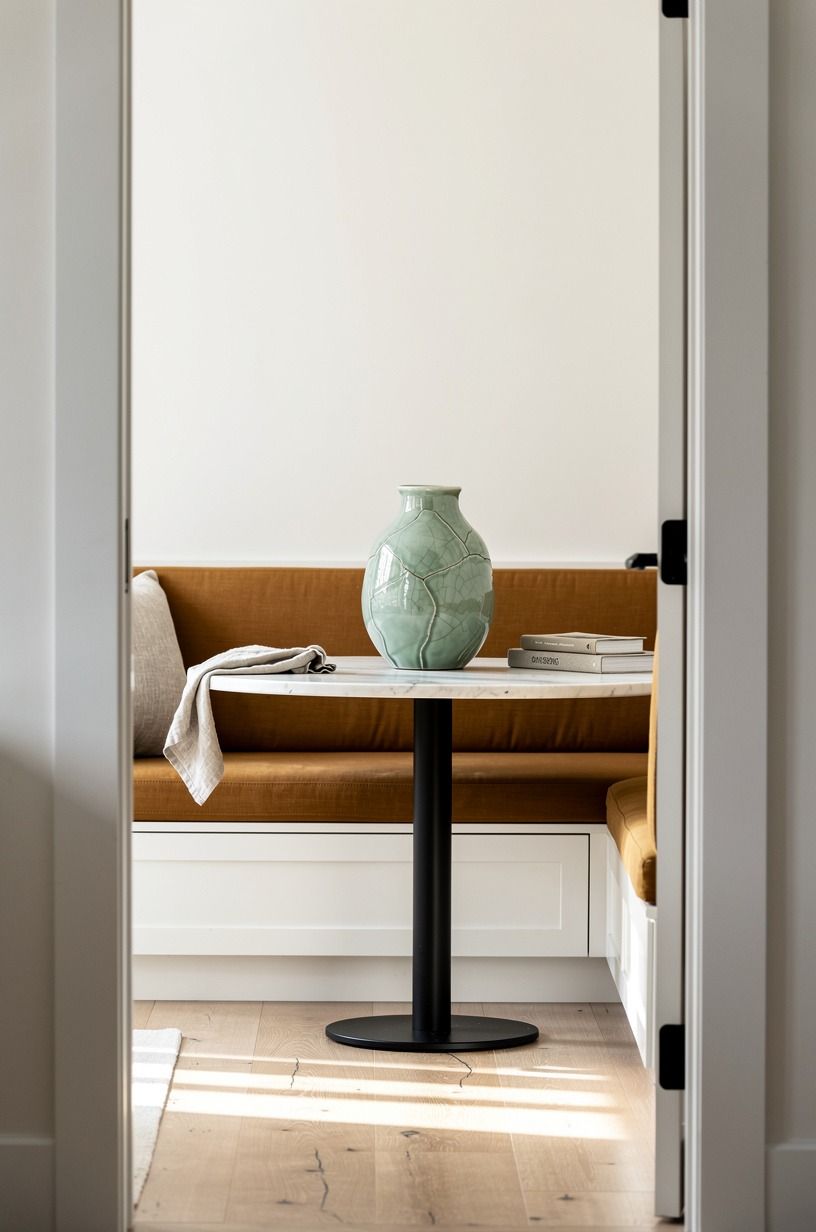
This may sound obsessive, but the photo of the traffic gap ended the debate for me. Looking through the doorway at the finished setup, I could actually see the clear path beside the bench, and it proved the banquette had solved the problem the booth couldn't.
If you are torn between forms, document the walkway. Your camera catches compression your brain tries to excuse.
The shot showed a warm white bench, camel cushions, the black accent table, and most important, air. Not dead emptiness.
Usable, comfortable air. That is what made the nook feel integrated with the rest of the living room. I kept circling back to small breakfast nook ideas that fit almost anywhere because the winning examples all protect circulation like it's part of the decor.
It is. Lose the path and the whole room pays for it.
You feel that immediately!
19I kept the booth mood without closing in
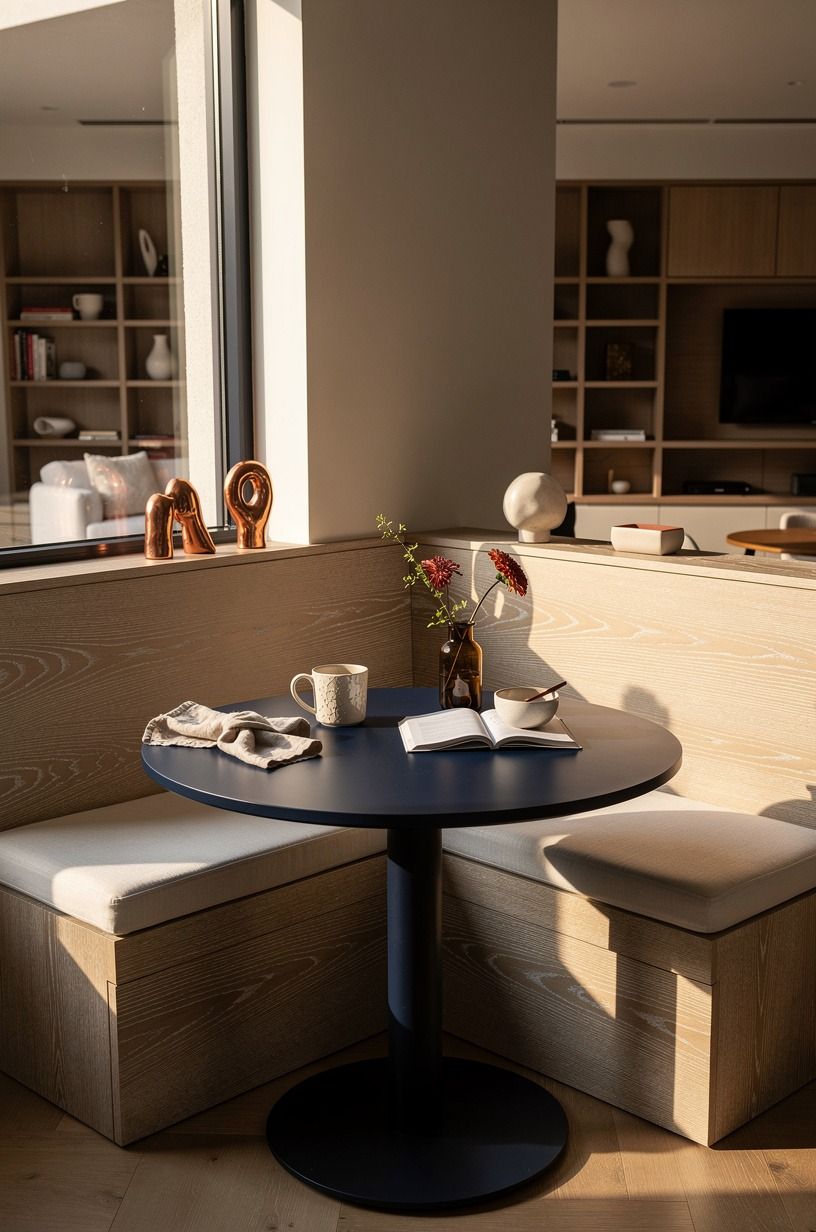
By the end, the answer wasn't banquette or booth in some pure category sense. It was banquette structure with booth mood layered onto it in smarter ways.
The partial return, the channel tufting, the warm oak, the pendant, the tucked lighting, the richer cushions, all of that gave me the closeness I wanted. The room still read open from corner to corner, which was the one result I couldn't compromise on.
So if you are asking yourself which direction to take, here's my honest order of operations. Save the booth for a deeper corner or a separate eat-in zone.
Use the banquette when the nook has to share space with a sofa, a rug, and real circulation. Large breakfast nook ideas for big families open kitchens can absolutely support a full booth. A living room usually can't.
Mine finally felt warm because I stopped trying to win the wrong argument.
The Two-Zone Nook Rule I Wish I'd Known Earlier
If a breakfast nook has to live beside your main seating area, I think you should treat it as a second zone inside the same room, not as a miniature room with its own walls and attitude. That is the rule I wish I had started with. Once I did, every decision got easier.
Lower backs made sense. Partial returns made sense. A pedestal table made sense.
The nook was not trying to become a diner. It was trying to belong.
I also learned that small-space comfort is not always about adding softness. Sometimes it is about removing interruption.
When the traffic line stays open, the nook feels calmer before you have even chosen fabric. When the cushion depth echoes your lounge chairs, the bench stops feeling like spare seating.
And when the table styling behaves like a living room vignette, not a breakfast command center, the whole corner reads intentional. You can still get the tucked-in mood.
You just do not need full booth walls to buy it.
My first instinct was to protect the nook at all costs, almost like I needed to prove it deserved floor space. That instinct was wrong.
The better move was to let the nook borrow authority from the living room instead of fighting for separate status. Once the bench shared the same wood tone, the same lighting temperature, and the same visual breathing room as the sofa side of the room, the whole plan settled down.
I stopped trying to make every edge do something. Relief!
And here is the honest part: the booth version photographed with more drama in my head, but the banquette version felt better in my body. You notice that on an ordinary Tuesday, not during a reveal photo. You walk by more easily.
You sit down without negotiating a corner. You see the window trim, the rug line, and the side chair all working together. That is what makes a nook feel expensive to me now.
Not enclosure. Editing.
How much it cost
I kept my plan inside the budget tier because I was solving layout first, not commissioning millwork. The typical US ranges below are the numbers I used to keep myself honest while I shopped, edited, and decided what really needed to be custom.
For my nook, the smartest savings came from choosing a wall banquette instead of a full booth build. I could put money into upholstery, lighting, and a better table base without spending custom-booth money on enclosure I did not need. If you are already buying living room pieces too, remember the other numbers that affect the whole zone: a sofa usually lands around 35 to 40 inches deep, a coffee table tends to sit 16 to 18 inches tall, and the rug under a seating area usually works best at 8x10 or 9x12.
Those dimensions help your nook relate to the room instead of floating beside it.
Why did the banquette feel better than the booth, the Open-Edge Rule?
Because the open edge kept doing visual work all day. That is my Open-Edge Rule, and I trust it now more than any mood-board promise. The moment one side stayed open to the living room, the nook felt easier to enter, easier to see across, and a lot more like part of the home than a copied-in set piece.
But the emotional shift mattered too. Booths can feel safe, but they can also feel predetermined. The banquette let me keep softness, pattern, and a little drama while still leaving room for life to move around it.
In a living room, that freedom is worth more than a perfectly enclosed corner.
A Few Things Worth Answering
What is the best Banquette vs. Booth Breakfast Nook: What's the Difference? for a small living room?
A wall banquette is the best pick for a small living room because it protects circulation and still gives you that tucked-in seat feeling. Look for a slim bench with a round pedestal table, then compare it with small breakfast nook ideas that fit almost anywhere before you commit.
- One wall bench - Round table - Low back profile
Where can I buy Banquette vs. Booth Breakfast Nook: What's the Difference? pieces on a budget?
Start with IKEA, Target Threshold, and Wayfair for the table, pillow, and lighting layer, then hunt Facebook Marketplace for the wood piece you can refinish. The best savings usually come from mixing one fresh purchase with one secondhand anchor instead of buying a full matching set.
- IKEA basics - Target accent pieces - Marketplace wood finds
How much does a Banquette vs. Booth Breakfast Nook: What's the Difference? makeover cost?
A typical makeover lands around the budget tier if you are reusing surrounding furniture and focusing on the nook itself, usually about $300 to $1,200. The free part is layout testing. Tape, cardboard, and moving pieces around cost almost nothing and can save you from one expensive wrong order.
- Tape test first - Reuse existing table if possible - Spend on upholstery last
Can I create a Banquette vs. Booth Breakfast Nook: What's the Difference? on a budget?
Yes, and the cheapest wins are usually the ones you feel fastest. Use a bench you already own, add washable cushions, and swap to one warm pendant or sconces for the mood. If you are stuck on shape, round vs rectangular breakfast nook table which fits best can keep you from wasting money on the wrong geometry.
- Existing bench base - Washable cushions - One warm light source
Is a Banquette vs. Booth Breakfast Nook: What's the Difference? worth it in a small space?
Yes, it's worth it because a small space benefits more from fixed seating than a big one does, especially when you need every inch to multitask. The move is keeping the open side clear so the nook helps the room function instead of stealing space from your sofa path.
- Fixed seat efficiency - Better wall use - Open edge for flow
Is Banquette vs. Booth Breakfast Nook: What's the Difference? a good idea for a rental?
Yes, a banquette approach is especially good for a rental because you can fake the built-in look without damaging much. Try a freestanding bench, peel-and-stick color behind it, removable sconces, and a washable cushion cover. You get the custom look without locking yourself into permanent construction.
- Freestanding bench - Peel-and-stick backdrop - Removable lighting
The Slide-Test Choice I'd Make First
If I had to pick one, I'd start with the wall banquette. The open side is what keeps the living room from feeling taxed, and no pretty booth detail can out-design a blocked path.
Pin this one for later. Your future coffee route will feel the difference.