

 by
Bed divider solutions work best when they give each person a clear zone without stealing every inch of floor space. I learned that after putting a bulky shelf between two beds and turning the room into a tunnel. You need privacy, light, and a direct path to the door. These clever ideas can give you all three!
- Hang linen curtains from the ceiling
- Why an Open Bookcase Can Work So Well
- Half-Height Slat Walls for Gentle Privacy
- Float a Headboard Between Two Sleeping Zones
- Canopy Frames Create an Intimate Nook
- Which Tall Plants Make a Living Screen?
- Stack a Cube Shelf at the Foot of the Beds
- Folding Screens Offer a Flexible Trial
- Paint Two Wall Zones With a Soft Boundary
- Rugs or No Rugs? Use Texture to Mark Territory
- Install a Curtain Around the Closet Side
- The Wardrobe Divide Adds Serious Privacy
- Frame the Space With a Three-Height Light Stack
- What Should a Real Divider Cost?
- Ribbed Glass Versus Solid Walls
- Roll a Painted Panel Into Place
- Pegboard Personal Walls Keep Small Items Close
- Build Two Zones Around One Shared Center
1Hang linen curtains from the ceiling
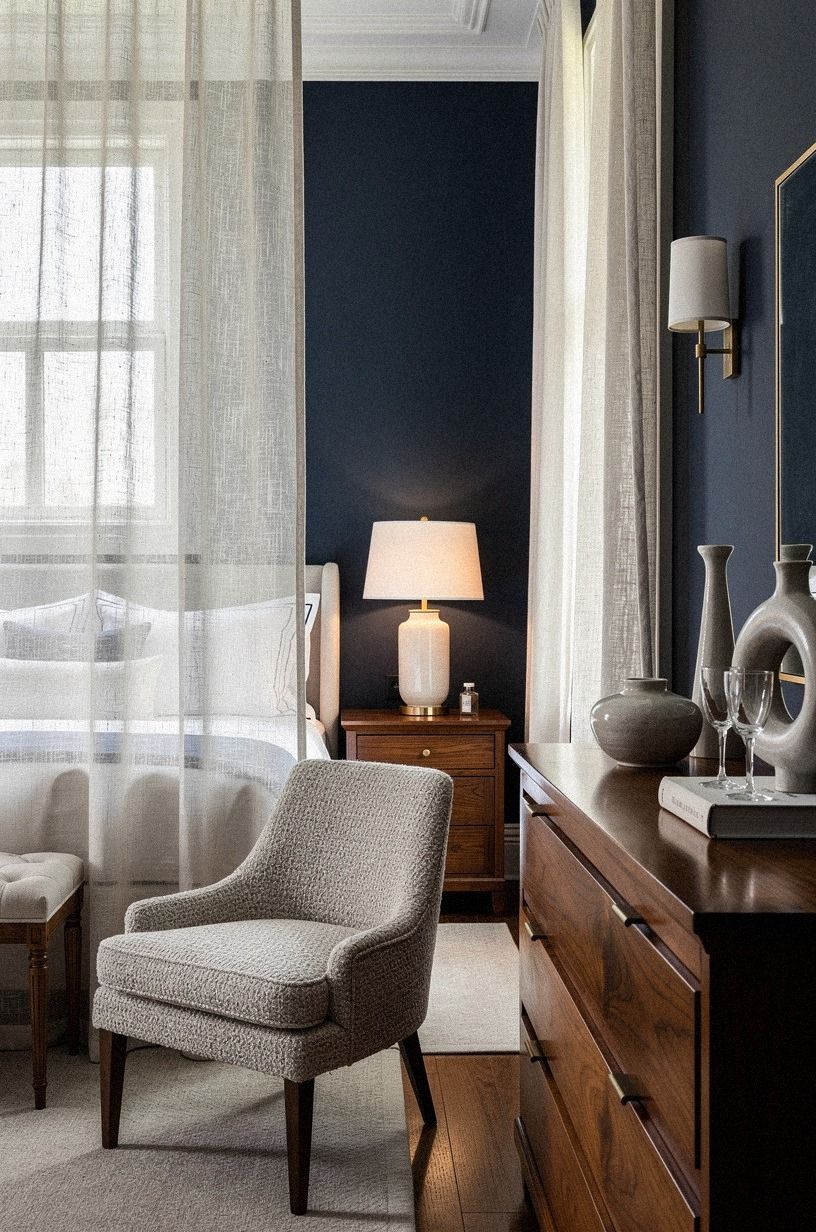
A ceiling-mounted curtain track creates one of the most flexible bed divider solutions for renters and homeowners. Choose organic bouclé panels in deep navy with white and walnut accents, then let them fall just above the floor. You’ll get a soft visual boundary without blocking daylight, and you can pull the fabric open whenever your room needs more air.
I’d skip heavy blackout curtains unless your sleep schedules are completely different. They’ll make a shared room feel smaller.
A pair of 96-inch panels with a slim white track looks lighter, and your eye can still read the full ceiling height. If you’re planning a twin arrangement, compare it with these twin cot bed divider ideas before you buy hardware.
2Why an Open Bookcase Can Work So Well
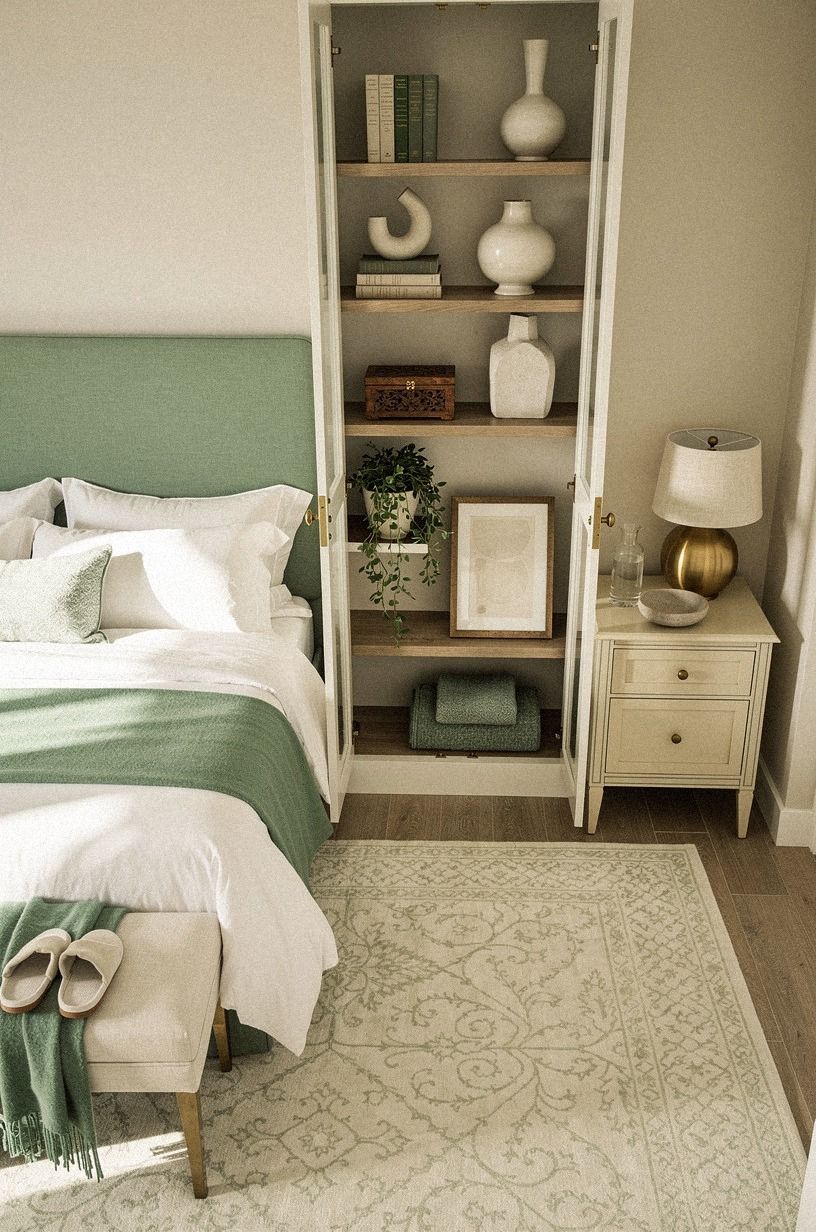
An open bookcase gives each sleeper storage, display space, and a boundary in one handsome move.
3Half-Height Slat Walls for Gentle Privacy
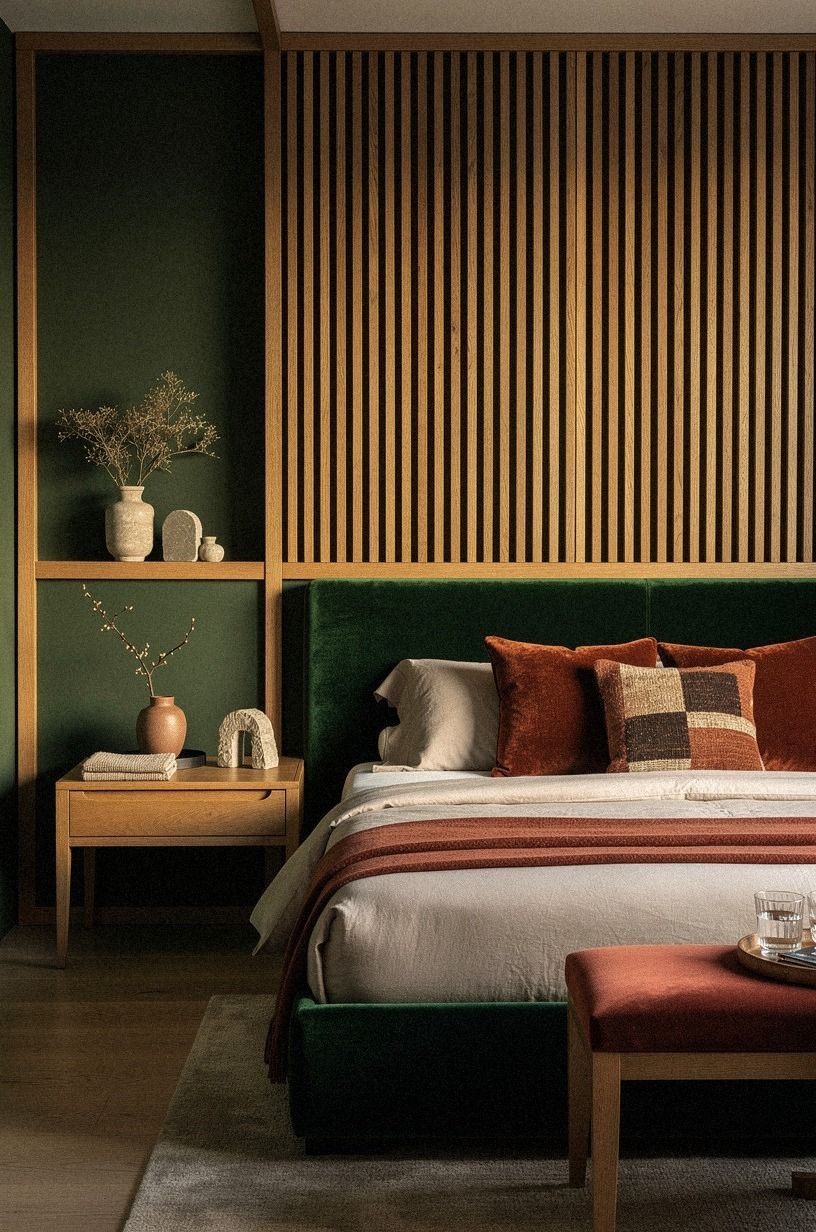
A half-height slat wall gives you privacy near the pillow without closing off the entire room. Use three-quarter-inch natural oak or painted poplar in a forest-green, rust, and natural-wood palette, with narrow gaps that let a little light pass through. I like a wall that ends around the top third of the mattress because it marks ownership without creating a visual barricade.
You’ll need to measure the bed first, then leave enough room for bedding to move freely. Your queen bed is 60 by 80 inches, so a divider placed beside it shouldn’t make the mattress feel squeezed.
Deep-pile mohair velvet brings tactile warmth through a nearby cushion or upholstered detail, but I’d choose natural oak if your room already has several grain patterns. This vintage wood bedroom shows why one strong wood tone is usually enough.
4Float a Headboard Between Two Sleeping Zones
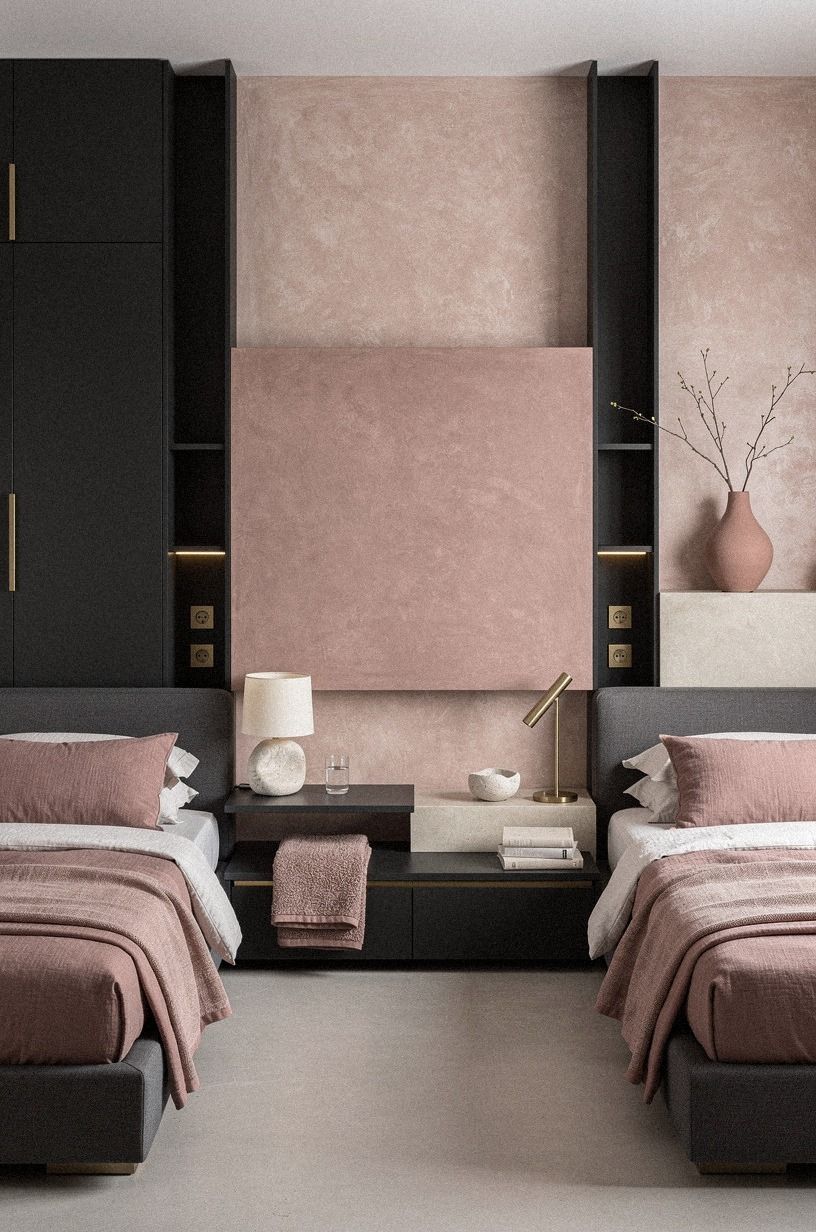
A broad headboard set against hand-applied Venetian plaster can act as a quiet divider when two beds face opposite directions or sit side by side. Choose a dusty-rose plaster finish with a charcoal console or low shelf behind it. The layered surfaces create visual softness, which helps when one person reads and the other is trying to sleep.
You’ll want the headboard to rise at least 8 to 12 inches above the mattress, but your room may need more height for a stronger boundary. Charcoal upholstery has tactile softness, although I’d avoid very pale finishes if your room includes children or pets.
A muted dusty rose color will feel serene against the plaster. Add one dimmable lamp with aged-brass details per side, and you won’t need to fight over the overhead light. It’s a surprisingly elegant fix!
5Canopy Frames Create an Intimate Nook
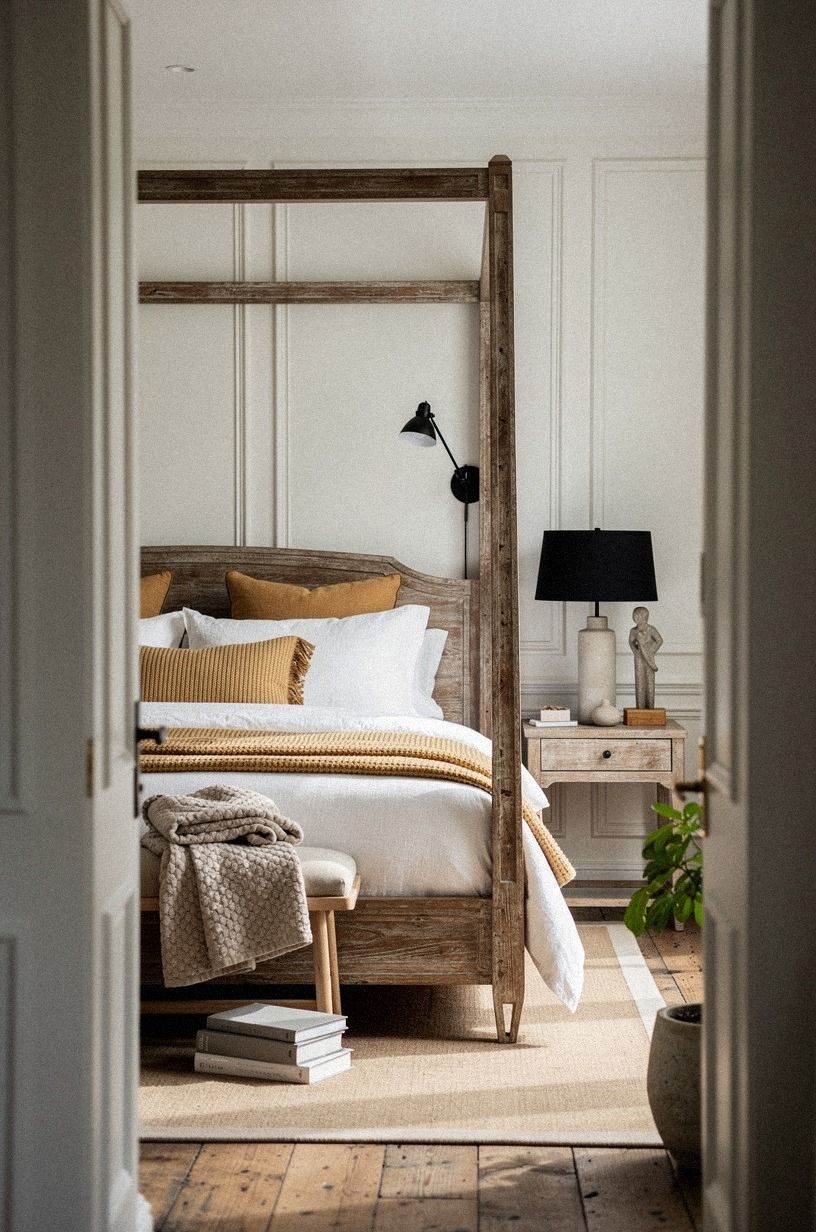
A canopy frame creates a small room within the room, which makes it one of the more intimate partition ideas for bedroom layouts.
6Which Tall Plants Make a Living Screen?
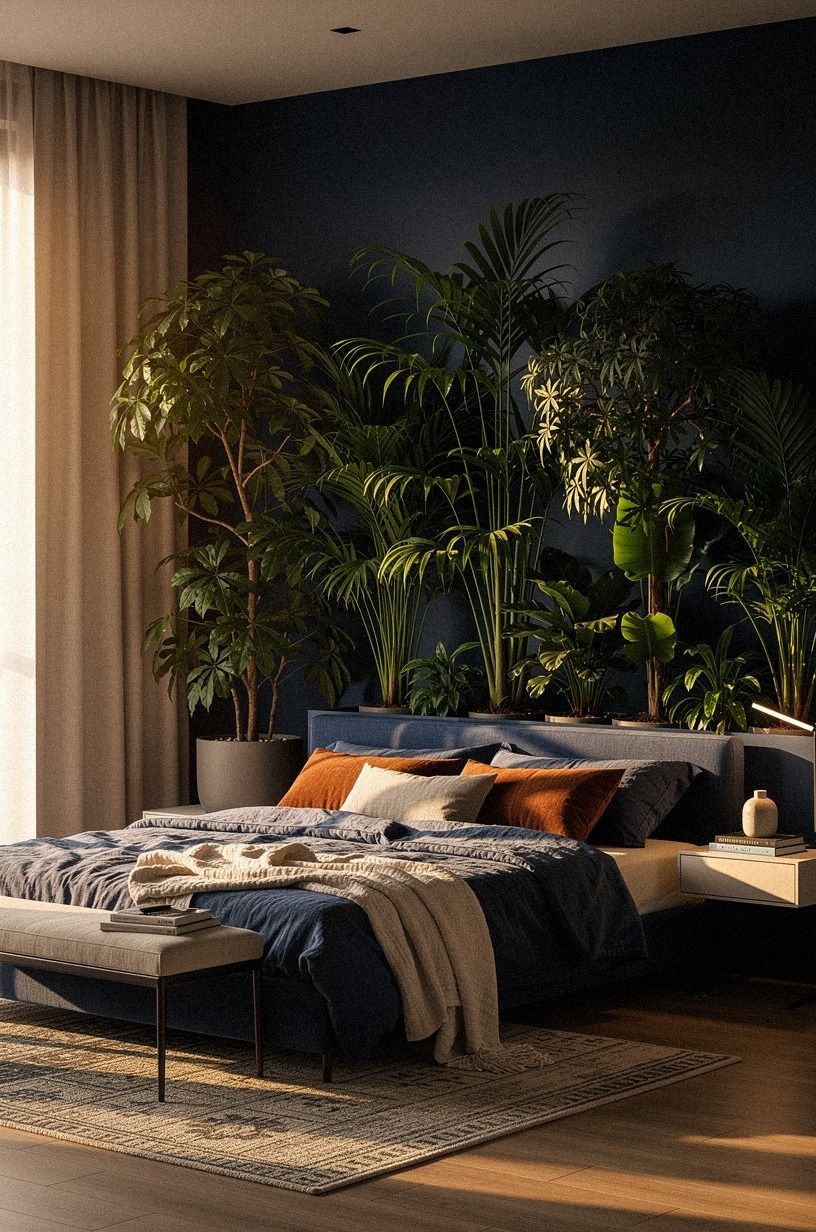
Tall plants can divide two beds without adding a hard architectural line. A row of mature fiddle-leaf figs, rubber plants, or bamboo palms creates a gentle, organic screen, especially beside a sunny window. Use ivory planters with copper accents, then vary the plant heights so the grouping doesn’t look like a hedge.
You’ll need to keep the leaves away from bedding and make sure your roommate agrees about watering. Your plant screen should have at least one lower opening, so the room doesn’t feel visually sealed.
I’d choose real plants over plastic ones here because leaves moving slightly in the air make the room feel peaceful. If light is limited, choose one tall plant and combine it with a washed Belgian linen panel in midnight blue instead of forcing a whole row to survive.
That small bit of movement can completely change the room!
7Stack a Cube Shelf at the Foot of the Beds
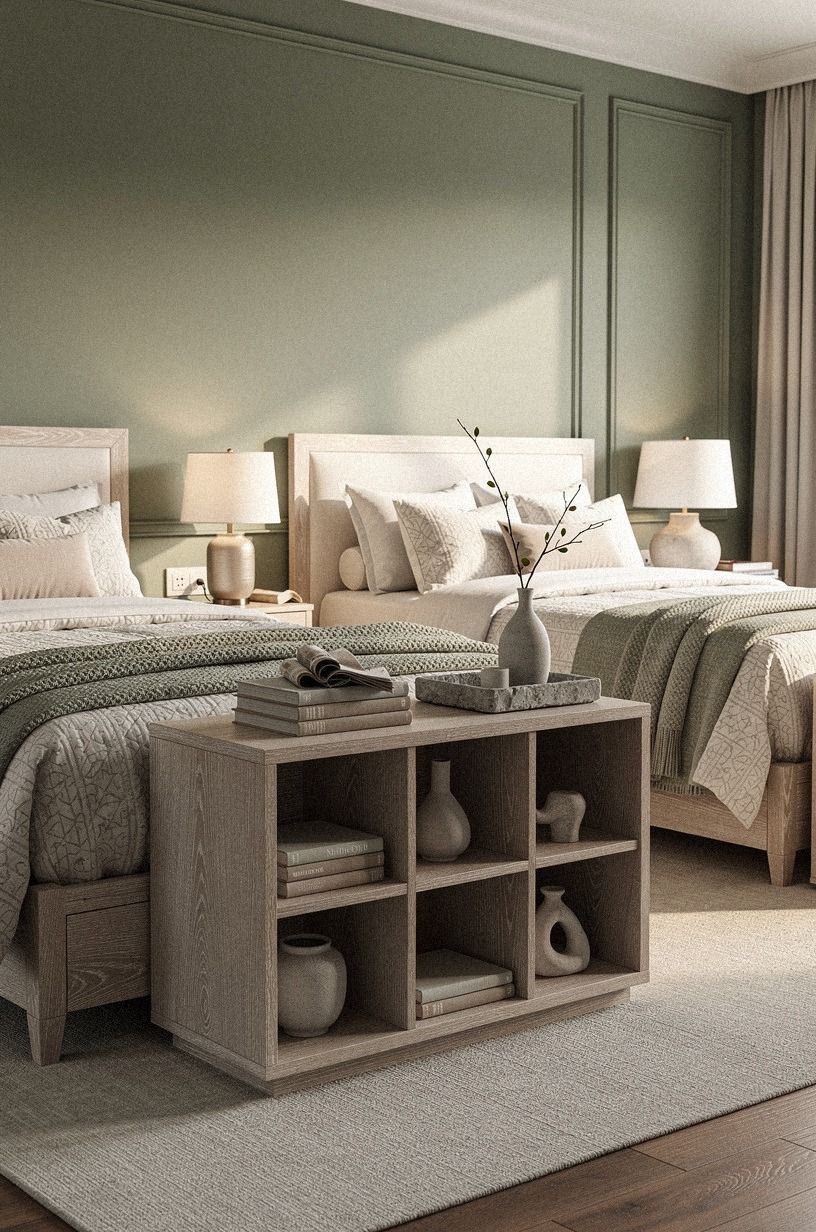
A low cube shelf at the foot of each bed can create two separate zones while keeping the center of the room open. Use cerused white oak or a similar natural-wood unit, then give each person two or three cubes for books, baskets, and folded blankets. A sage-green and warm-cream palette keeps the divider feeling useful rather than decorative, which matters in a small bedroom.
You’ll want to measure the clearance at the foot of the bed before choosing the shelf. A king bed measures 76 by 80 inches, so your walking lane may disappear faster than expected.
Keep the shelf below mattress height if you want an unobstructed view across the room. For a shared child’s room, these organic Montessori floor-bed ideas offer useful inspiration for keeping furniture low and reachable.

8Folding Screens Offer a Flexible Trial
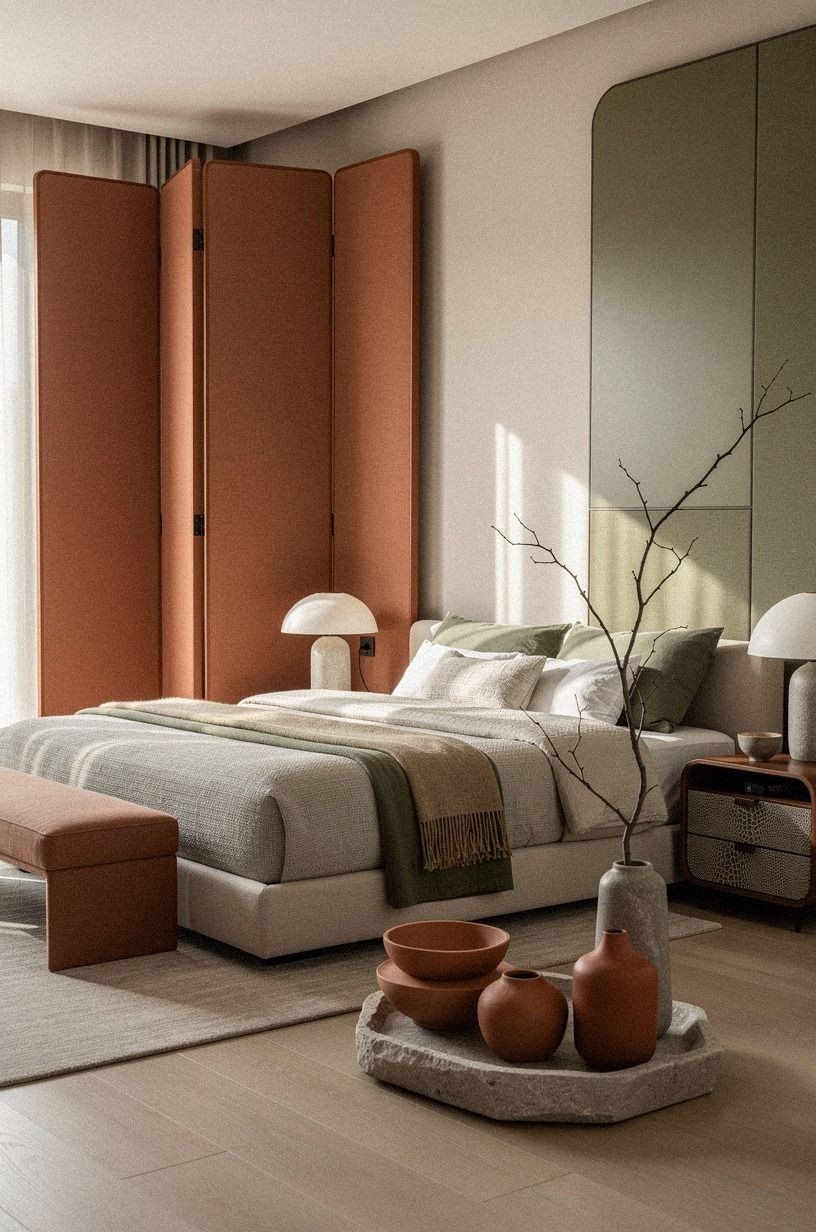
A folding screen is the fastest way to test a divider before committing to screws, tracks, or construction. Choose one in warm stone and olive with small shagreen accents, so it feels considered even when it is folded away.
9Paint Two Wall Zones With a Soft Boundary
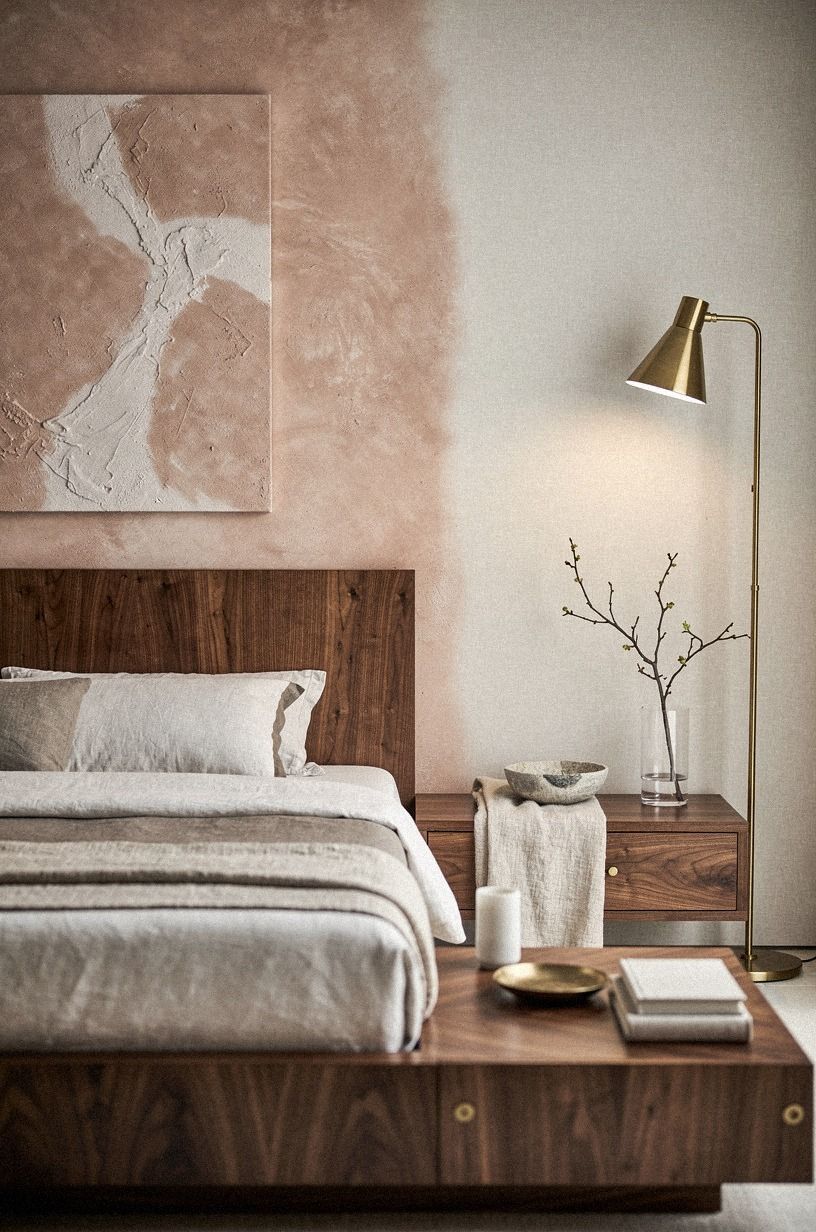
Paint can divide a room without taking up a single inch of floor space. Use one color behind each bed, then stop the paint line at the ceiling or carry it around the corner for a stronger zone. Farrow & Ball Setting Plaster No. 231 works beautifully for one side, while Benjamin Moore Pale Oak OC-20 keeps the other side light.
You’ll want the colors to share a warm undertone, or the room may look accidentally split. Your bed linens can repeat one shade across both zones so the room still feels intentional.
I’d skip a sharp black-and-white division because it tends to feel more like an office. For a gentle contrast, place a 24 to 28-inch nightstand beside each bed and let the furniture reinforce the painted boundary.
This vintage wood bedroom has the kind of grounded palette worth borrowing.
10Rugs or No Rugs? Use Texture to Mark Territory
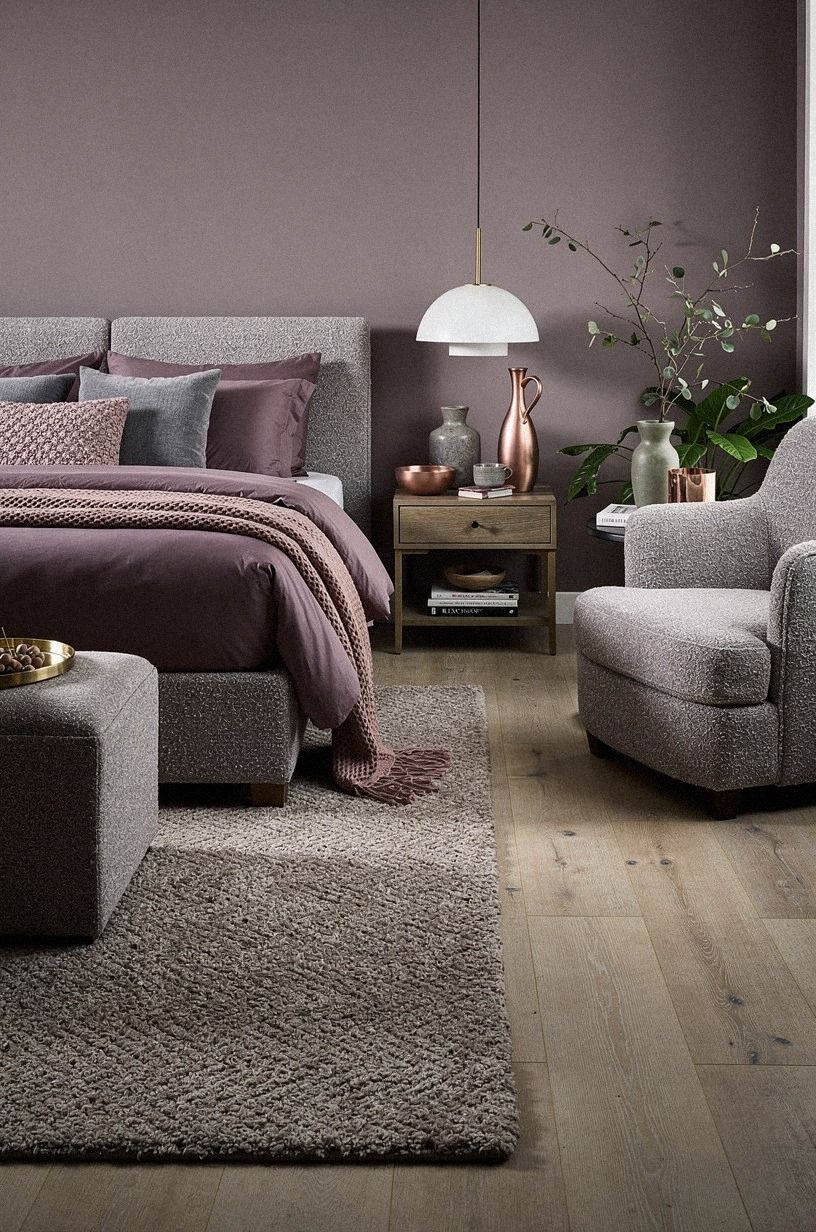
Two rugs can create two personal rooms even when the beds share one wall.
11Install a Curtain Around the Closet Side
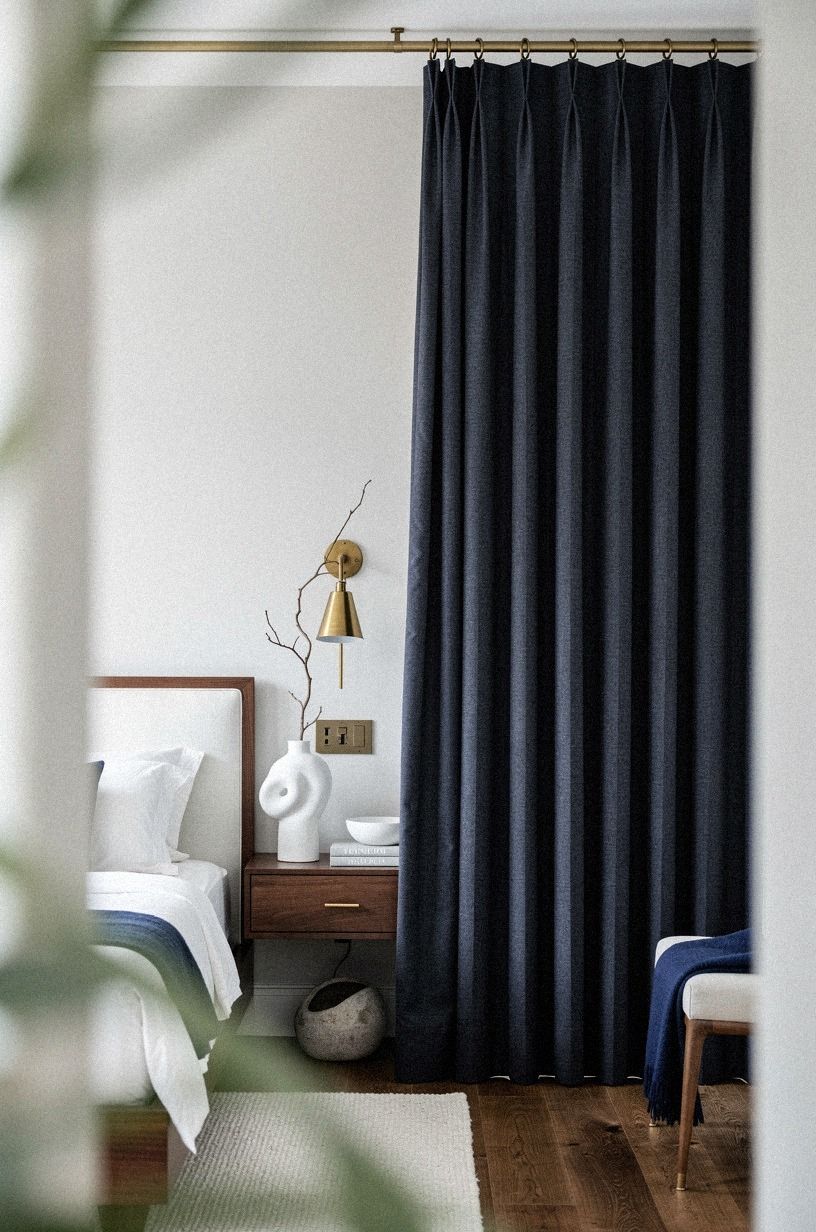
Sometimes the best divider is placed beside the closet, not between the beds. A ceiling track across one side of the room can hide wardrobes, hampers, and changing space while giving one person a private dressing zone. Use navy and white organic bouclé panels with walnut-toned details so the curtain feels like part of the bedroom rather than a temporary cover.
You’ll want at least 4 inches of clearance between the fabric and closet doors, or your clothes will catch when you pull the curtain. Your room will feel calmer if the hidden side holds the visual clutter.
I’d skip a patterned curtain here because the folds already create movement. If your bedroom has a cramped wardrobe, these storage-focused bedroom ideas can help you decide what deserves to stay visible.
12The Wardrobe Divide Adds Serious Privacy
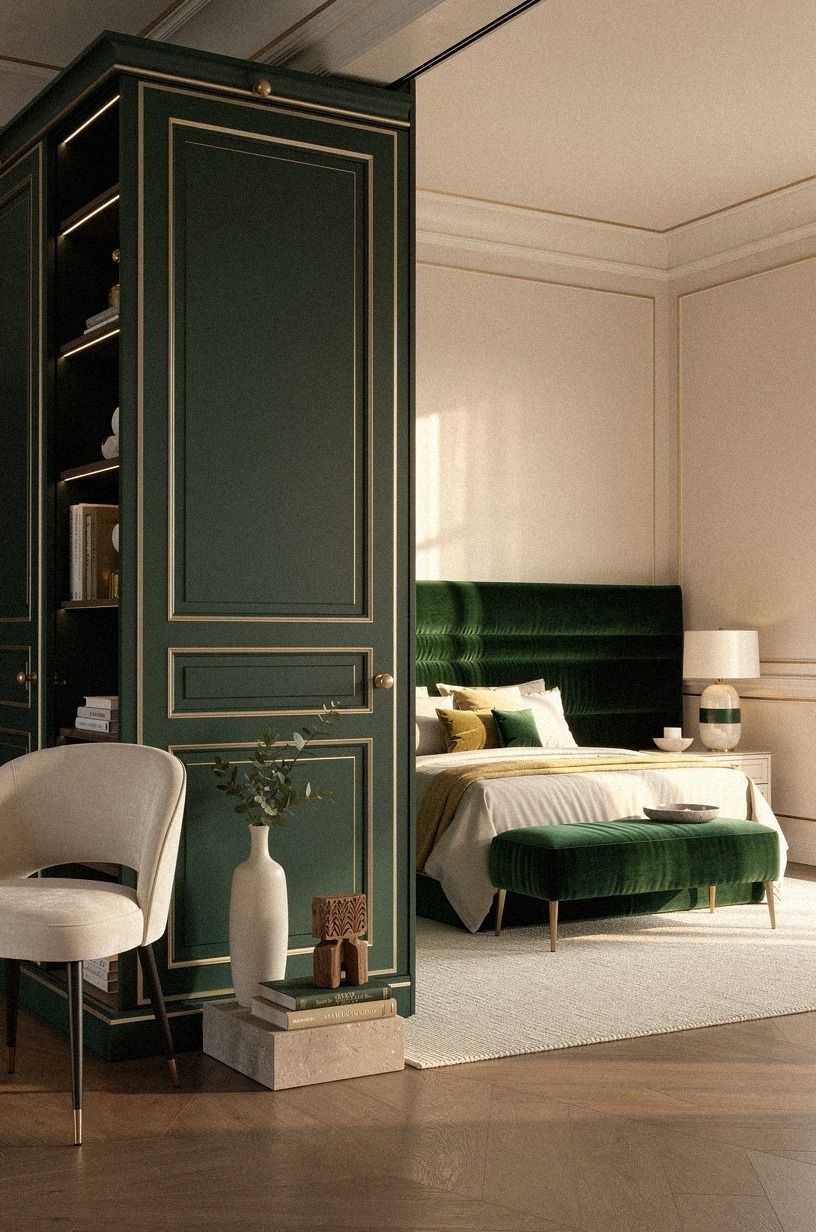
A wardrobe gives you the strongest privacy and the most storage, but it needs careful placement. Choose a shallow cream wardrobe with aged-brass hardware and a deep-pile mohair-velvet panel, then position the back toward the less visible bed. Add a slim mirror or artwork to the exposed side so it doesn’t look like unfinished furniture.
You’ll want to check ceiling height, door swing, and ventilation before moving in a large cabinet. Your room may need a gap behind the wardrobe for air to circulate, especially if the piece covers a radiator.
I’d avoid using two tall wardrobes back to back because they’ll make the room feel boxed in. One well-finished emerald-and-cream cabinet is enough to separate sleeping and dressing without sacrificing the floor.
Use these bedroom storage ideas if you need to make the cabinet earn its footprint.
13Frame the Space With a Three-Height Light Stack
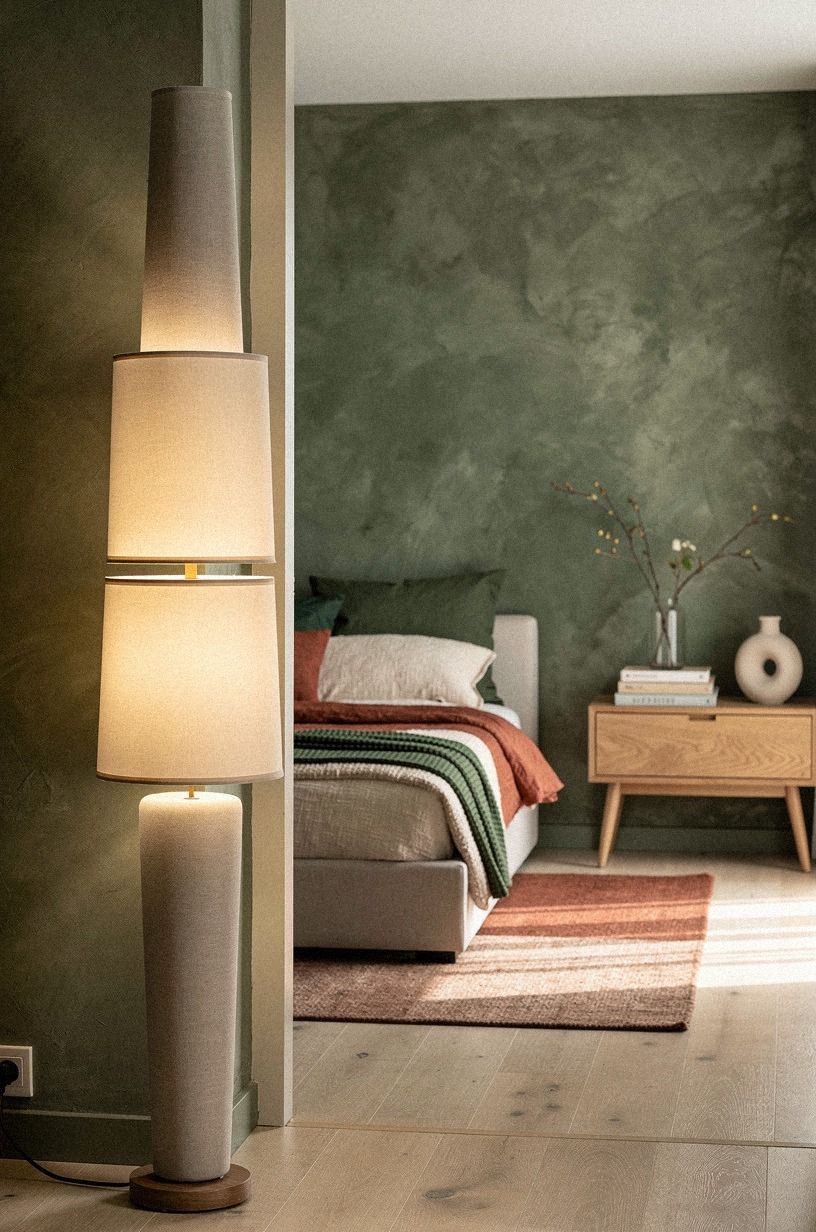
Lighting can separate two beds more subtly than furniture. Create a three-height light stack with a low bedside lamp, a mid-height wall sconce, and a taller floor lamp near the divider. A hand-applied Venetian plaster backdrop in forest green adds depth, while rust and natural oak keep the room from feeling clinical.
You’ll want each person to control their own light, so your switches should be easy to reach from bed. A dimmable wall sconce on each side is worth the wiring if you own the home.
Renters can use plug-in sconces and cable covers instead. I’d skip one bright ceiling fixture because it flattens every zone at once. The best shared bedrooms let one person wind down while the other can still read.
That kind of control feels luxurious, even when the setup is simple.
14What Should a Real Divider Cost?
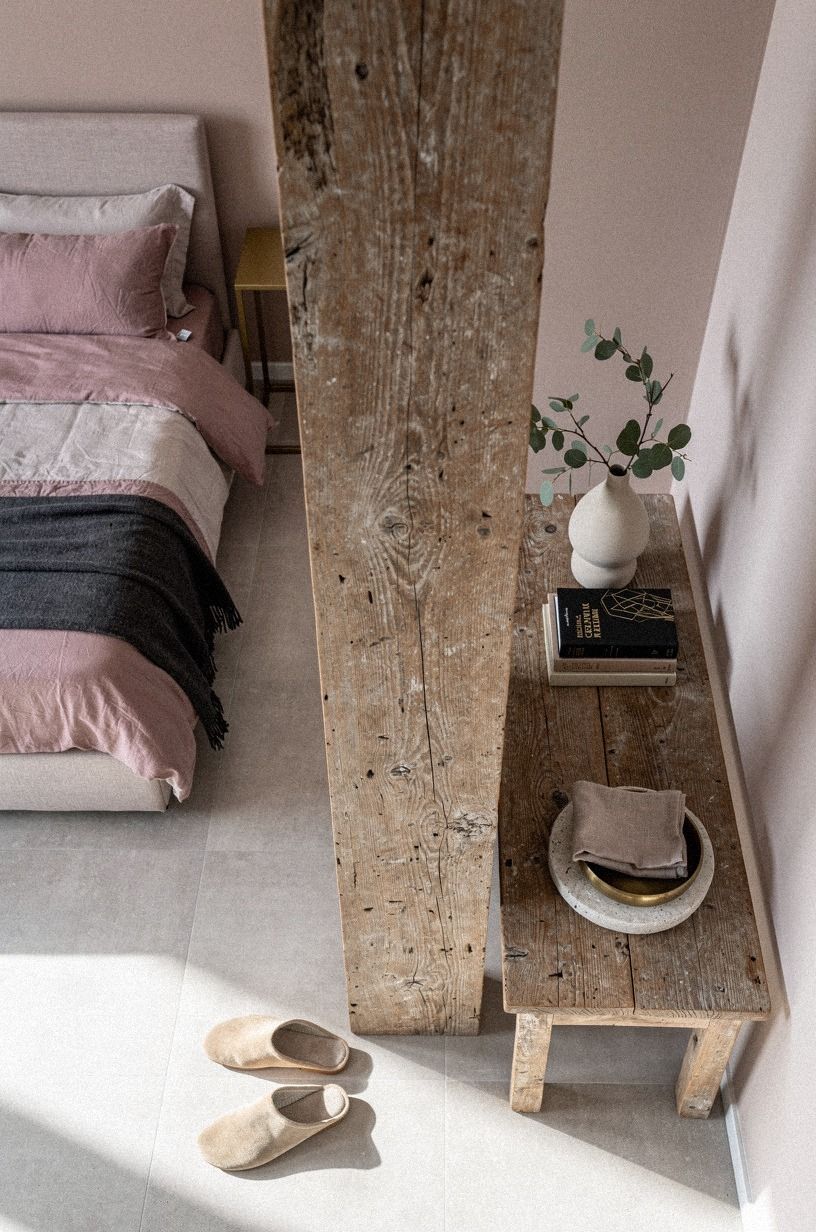
A bed divider makeover can cost very little or become a full room project, depending on whether you’re adding paint, furniture, and custom fabric. Start with what you already own. Your existing curtain rod, bookcase, or screen may only need a new arrangement, while a built-in partition belongs in a larger budget.
These typical US cost ranges can help you choose a sensible level. The middle tier is where many homeowners land, especially when the divider also adds storage or improves the room’s lighting.
You’ll notice that the divider itself isn’t always the expensive part. Your total rises when you change lighting, flooring, or built-in storage at the same time.
I’d start with paint and fabric before ordering a custom wall. You can learn a lot from living with a temporary boundary for one week.
If your bed arrangement feels awkward, compare the proportions with these twin versus double bed considerations before spending heavily.
15Ribbed Glass Versus Solid Walls
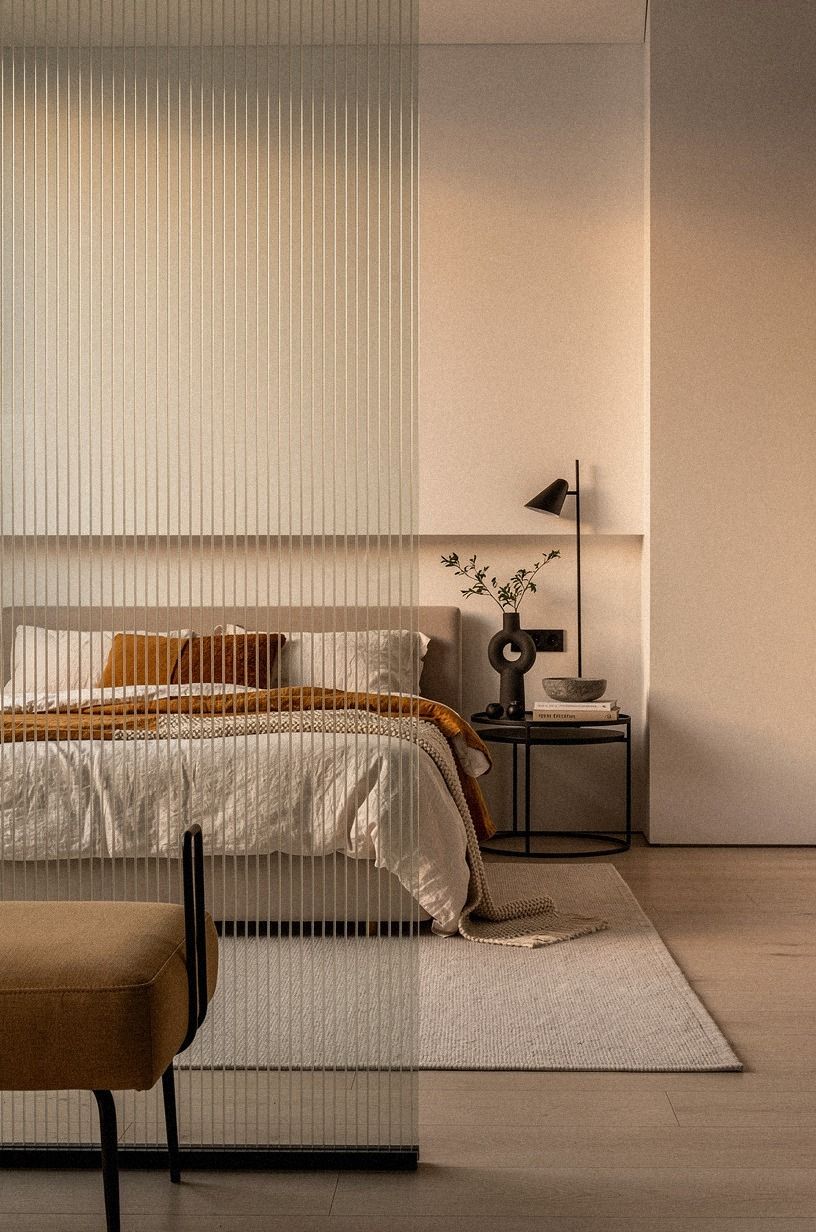
Ribbed glass gives you privacy while allowing daylight to pass between two sleeping areas. Pair it with warm-white trim, camel upholstery, and a touch of black so the room stays soft rather than stark. Washed Belgian linen can soften the nearby bed zone without closing it off.
16Roll a Painted Panel Into Place
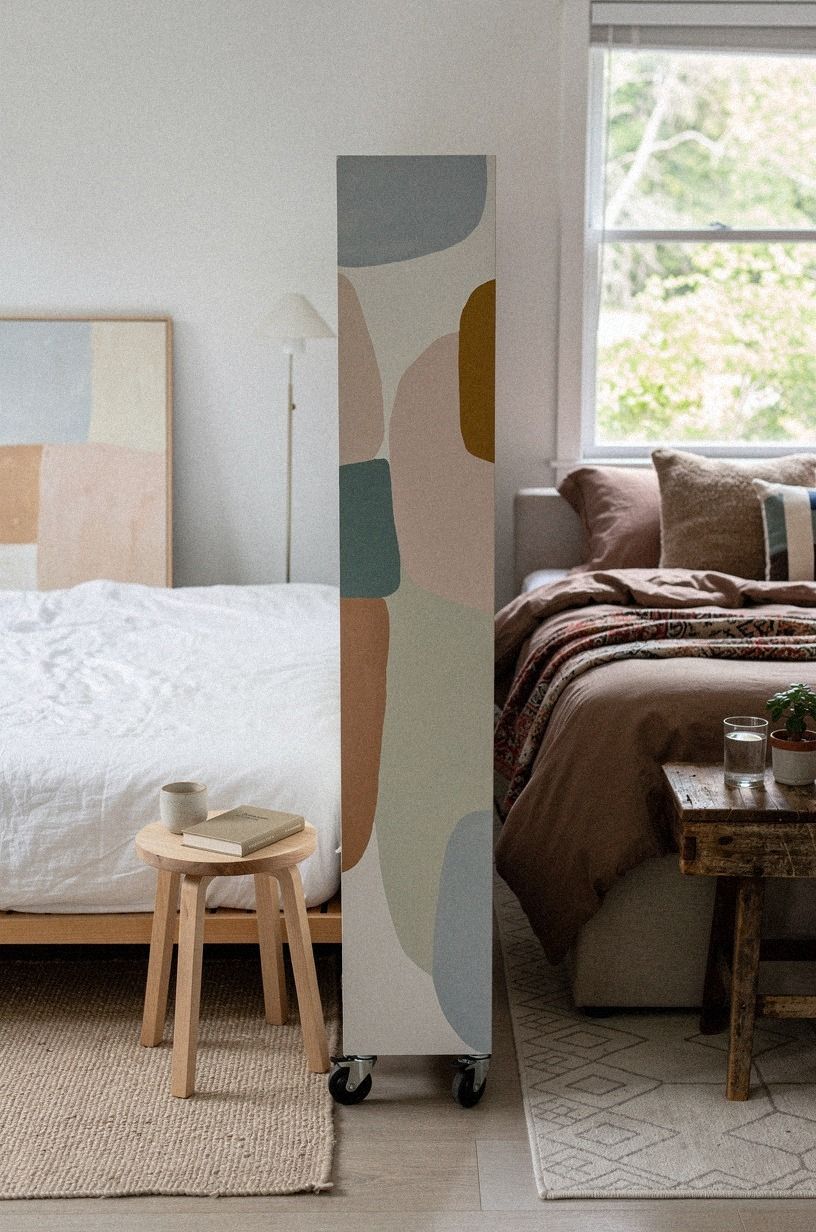
A rolling panel works when your bedroom needs to change during the day. Build or buy one large panel on locking casters, then cover it in cerused white oak or a midnight-blue finish. Push it beside the bed at night and roll it toward the wall when you want a larger shared room.
You’ll need enough weight at the base to stop the panel from drifting, but your floor should still allow easy movement. A panel in midnight blue with copper-toned hardware will create a stronger private nook than a pale neutral.
I’d skip a shiny finish because every lamp reflection will show. For renters, a lightweight ivory linen panel gives you much of the same flexibility without permanent marks.
You’ll appreciate that adaptability every morning.
17Pegboard Personal Walls Keep Small Items Close
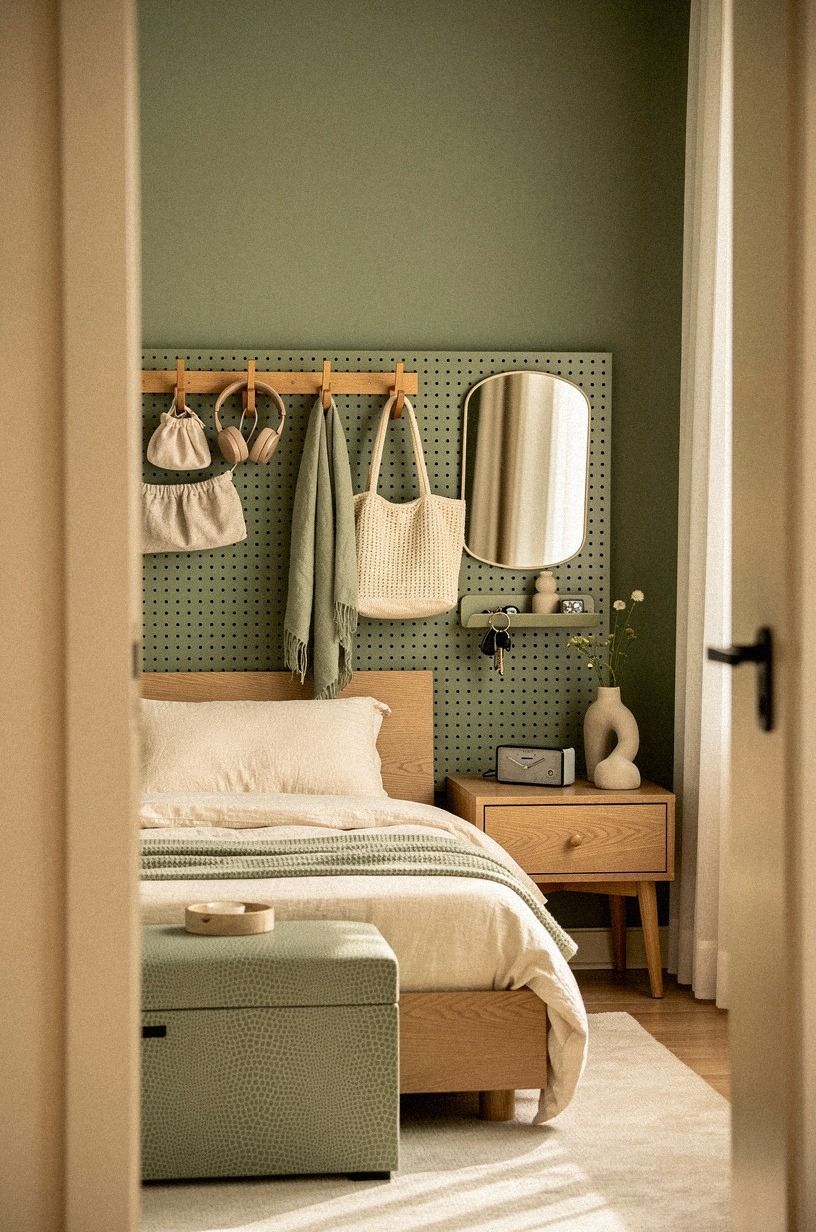
A pegboard divider gives each sleeper a place for headphones, books, bags, and small lights. Mount two finished panels back to back, or attach one to a narrow freestanding frame. Use natural wood with sage-green and warm-cream details, then add shagreen trays, oak shelves, and small baskets to organize the openings.
You’ll want to keep heavy objects low, especially if the divider is freestanding. Your bed zone will feel more private when the objects are useful rather than random decorations. I’d skip filling every hole, since the open spaces keep the room airy.
This approach works well for students and renters because the arrangement can change as routines change. Add one small reading lamp per side, and you’ll have a practical boundary without a bulky cabinet.
You can borrow the low, reachable spirit of these organic Montessori floor-bed ideas without copying the entire room.
18Build Two Zones Around One Shared Center
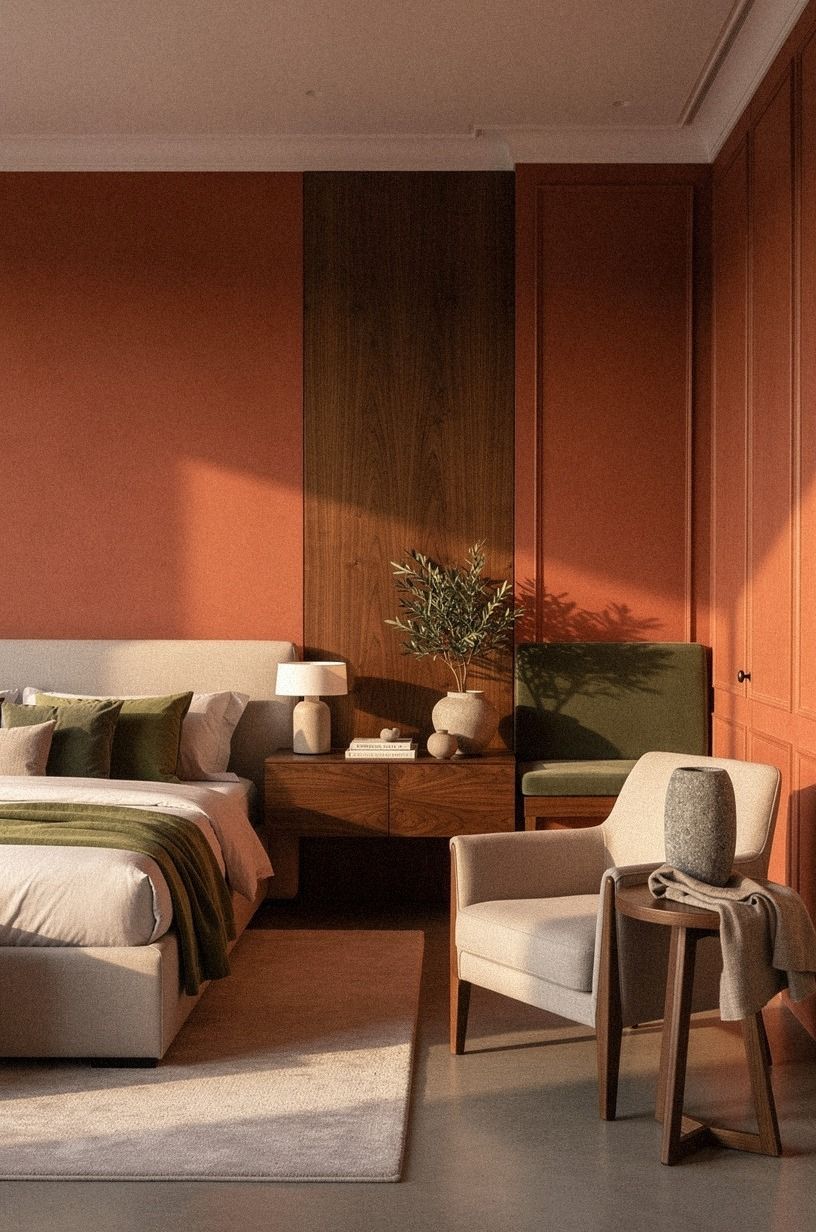
If the beds must stay close, create privacy at the edges and leave one shared center between them. A terracotta, stone, and olive palette with book-matched walnut can make that shared center feel intentional rather than leftover space.
The Boundary I’d Choose for a Real Shared Bedroom
I’ve tried making a shared bedroom feel private with furniture alone, and I made the predictable mistake. I bought the tallest shelf I could fit, filled it with baskets, and wondered why the room felt airless by bedtime. Storage solved one problem while creating another.
The divider had become the room’s main event.
What works better is a boundary with some permeability. Curtains, slats, ribbed glass, and open shelves let light move between people.
That matters because privacy shouldn’t require one person to sleep beside a dark wall. Your room still needs a sense of connection, especially if the people sharing it are siblings, partners, or friends.
I’m also firm about giving each sleeper control over light. One shared ceiling fixture creates unnecessary friction.
A small lamp, wall sconce, or plug-in pendant gives you a personal rhythm, and that costs less than rebuilding the room. The same goes for storage. Each person should have a defined surface and a place for daily items, even if the furniture isn’t identical.
These storage-focused bedroom ideas are useful when your clutter is the real source of tension.
The best divider is the one that supports the way you really live. If one person reads late, use fabric and directed lighting.
If clothing clutter causes tension, use a wardrobe or curtain. If the room is tiny, use paint and rugs before adding a structure.
And if you’re unsure, tape the proposed footprint on the floor for a week. You’ll learn more from walking around it than from staring at a furniture listing.
That practical test can save you an expensive, frustrating mistake!
The Questions I Get Asked Most
What is the best bed divider for a small bedroom?
A ceiling-mounted linen curtain or open IKEA KALLAX shelf is usually the best choice because it gives privacy without blocking all the light. You’ll get a clear personal zone, and your room can still feel airy.
Keep the divider shallow if your walking path is tight. These twin cot bed divider ideas can help you compare compact layouts.
Where can I buy bed divider pieces on a budget?
Look at IKEA, Wayfair, and Target first, then check Facebook Marketplace or a local thrift shop. You’ll often find folding screens, bookcases, and curtains for less than new pieces. A secondhand wood shelf can give your room more warmth than a low-cost glossy unit.
You may also find better proportions when you shop used.
How much does a bed divider makeover cost?
A small refresh can fit inside the typical $200 to $800 budget tier when you use paint, existing furniture, bedding, shades, and art. You’ll spend more for an upholstered headboard, rug, or custom drapes. Free rearranging and borrowed lamps can make the first version cost nothing.
Your smartest first step is to test the layout before ordering anything.
Can I create a bed divider on a budget?
Yes, and you can start with three low-cost moves: paint two wall zones, hang a tension rod with linen-look panels, and reposition a bookcase. Your existing rugs and lamps may already define each side.
Add one thrifted basket per person for practical storage. If your bedroom still feels crowded, these bedroom storage ideas can help you remove visual clutter.
Is a bed divider worth it in a small space?
Yes, because a small room benefits from clear zones. You’ll feel less crowded when each person knows where their bed, light, and belongings belong.
Keep the divider low or translucent, and leave a direct path from the door to the window. A linen curtain is often the easiest place to start.
Is a bed divider a good idea for a rental?
Yes. Use a tension rod, freestanding folding screen, open shelf, removable hooks, or peel-and-stick paint accents.
Your landlord won’t need to approve a temporary boundary, and you can take the pieces with you. Avoid anchoring tall furniture unless the lease permits it. A lightweight divider gives you privacy without creating a difficult move later.
Where I’d Start First
If I had to pick one, I’d start with a ceiling-mounted linen curtain. It gives you privacy without taking floor space, and you can open it when the room needs daylight. Pin the curtain idea for later and compare it with these bedroom divider layouts before buying fabric.