
 by
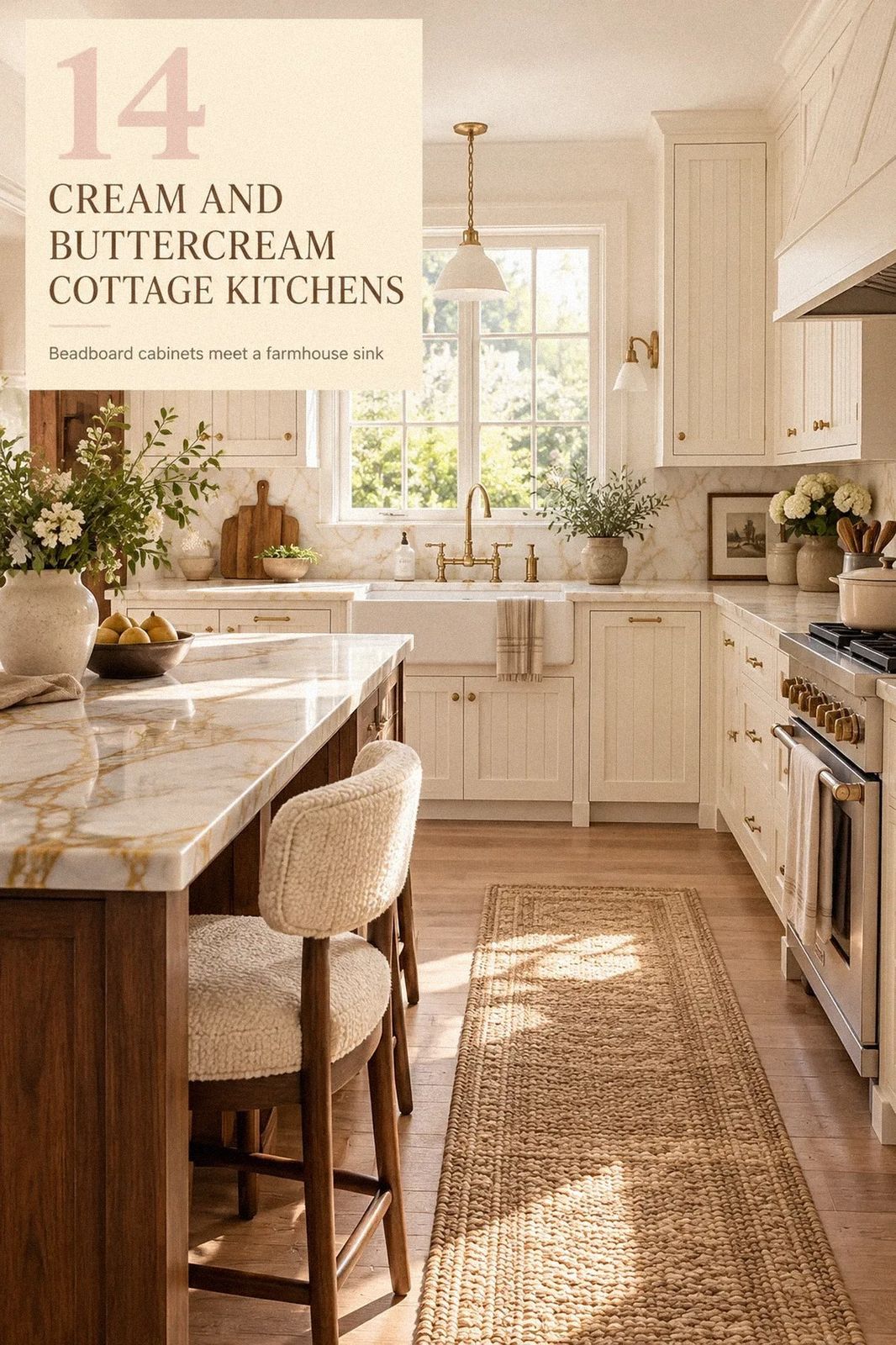
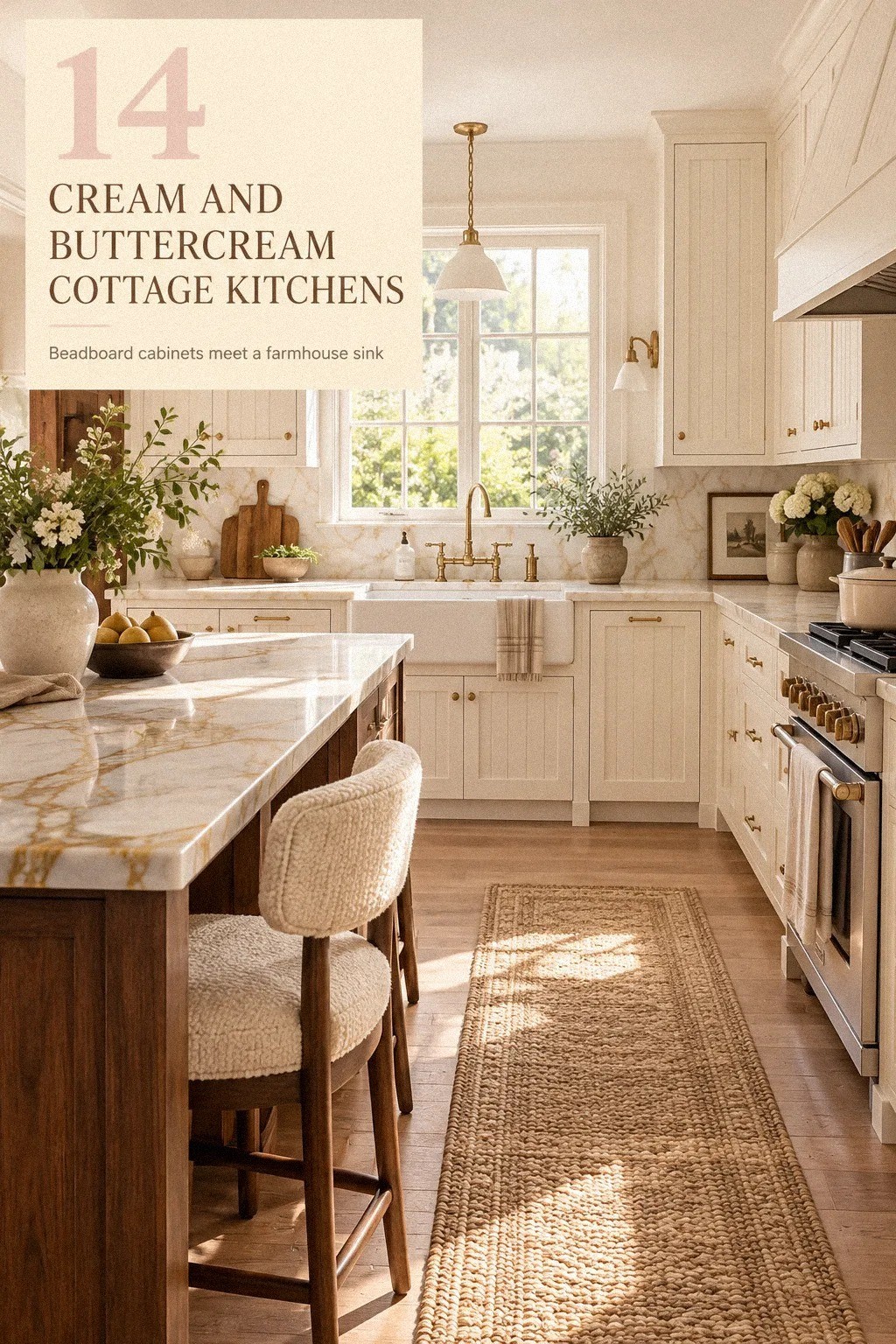
Cream and buttercream cottage kitchen ideas can make a kitchen feel warmer for about $300 to $1,500 without replacing every cabinet. I learned that after painting one room too yellow and watching it turn muddy by dusk. The fix was softer layering, better lighting, and a little restraint. Here's what I'd do now.
- Paint the Cabinets in Benjamin Moore White Dove
- Layer the Buttercream Light Ladder
- Mix Cream Cabinets With Cerused Oak
Editor's note: Start with the surface you see most, then add one grounding material, one tactile detail, and one warmer light source. That sequence keeps the room inviting without making every item compete for attention.
- Paint the Cabinets in Benjamin Moore White Dove
- Layer the Buttercream Light Ladder
- Mix Cream Cabinets With Cerused Oak
- Frame the Sink With a Cottage Apron Front
- Swap Hardware for Aged Brass
- Build the Two-Wood Rule
- Hang Linen Instead of Blocking the Light
- Swap a Busy Backsplash for Hand-Glazed Zellige
- Float a Shelf Above the Work Zone
- Anchor the Room With a Checkerboard Runner
- Layer the Three-Height Light Stack
- Paint One Wall in Farrow & Ball Studio Green
- Choose Cream Cabinets Over White Walls
- Prioritize the $100 Refresh Before Remodeling
1Paint the Cabinets in Benjamin Moore White Dove
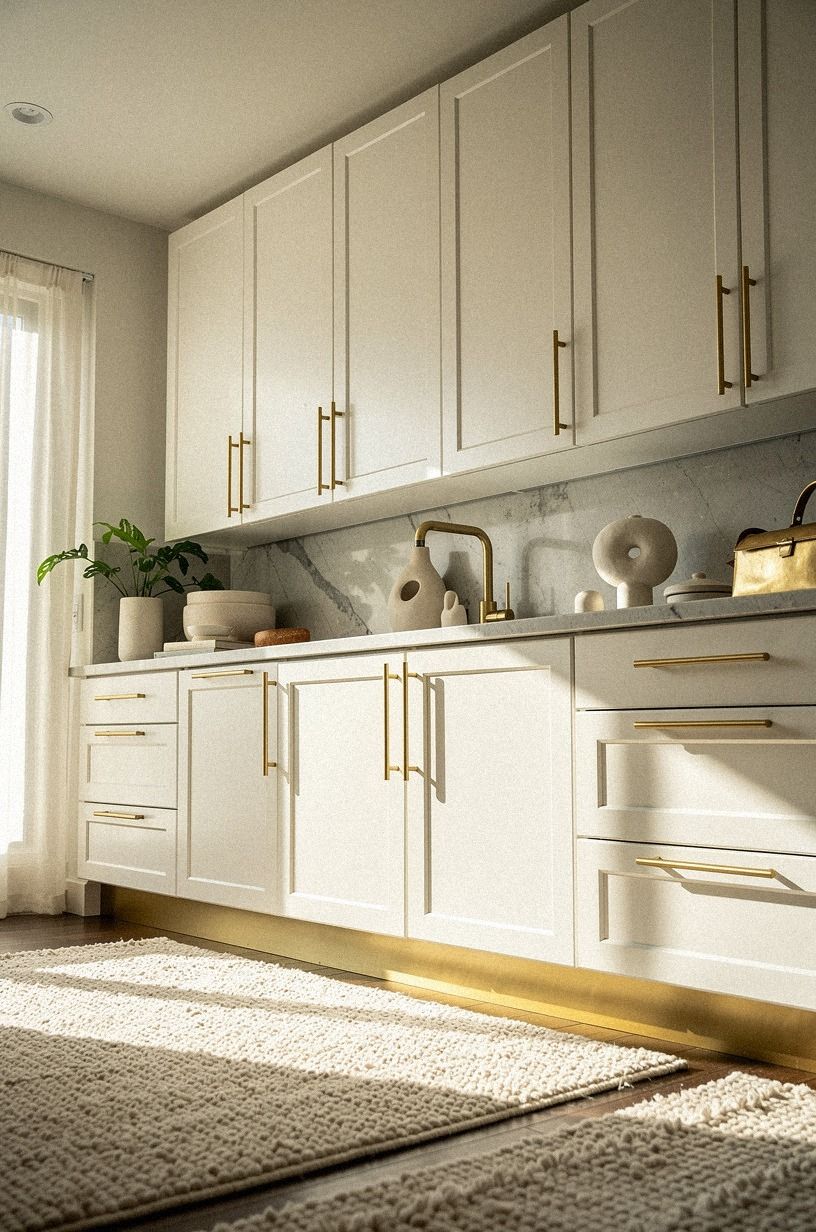
Benjamin Moore White Dove OC-17 gives cottage cabinets a creamy edge without making them look buttery or dated. You’ll want to test it beside your counter, backsplash, and floor because the same paint can look crisp in morning light and almost beige by late afternoon. I’d choose it over a stark white in a north-facing kitchen.
Paint only the doors if your cabinet boxes are sound. Your kitchen can gain a gentle, refined look while the existing wood stays intact inside the frames. A small foam roller, careful sanding, and new hinges can do more than a rushed full renovation.
And don’t skip the sample board. Paint one cabinet door, leave it near the sink for 48 hours, and watch how your lighting changes it. If you’re comparing white palettes, this white cottage kitchen guide will help you see why warmer whites age better than icy ones.
The finish matters, too. A durable satin or low-sheen enamel will handle fingerprints better than a flat wall paint. You’ll want the cabinet color to look soft, while the surface still feels washable after cooking.
Typical cost by tier (US averages):
2Layer the Buttercream Light Ladder
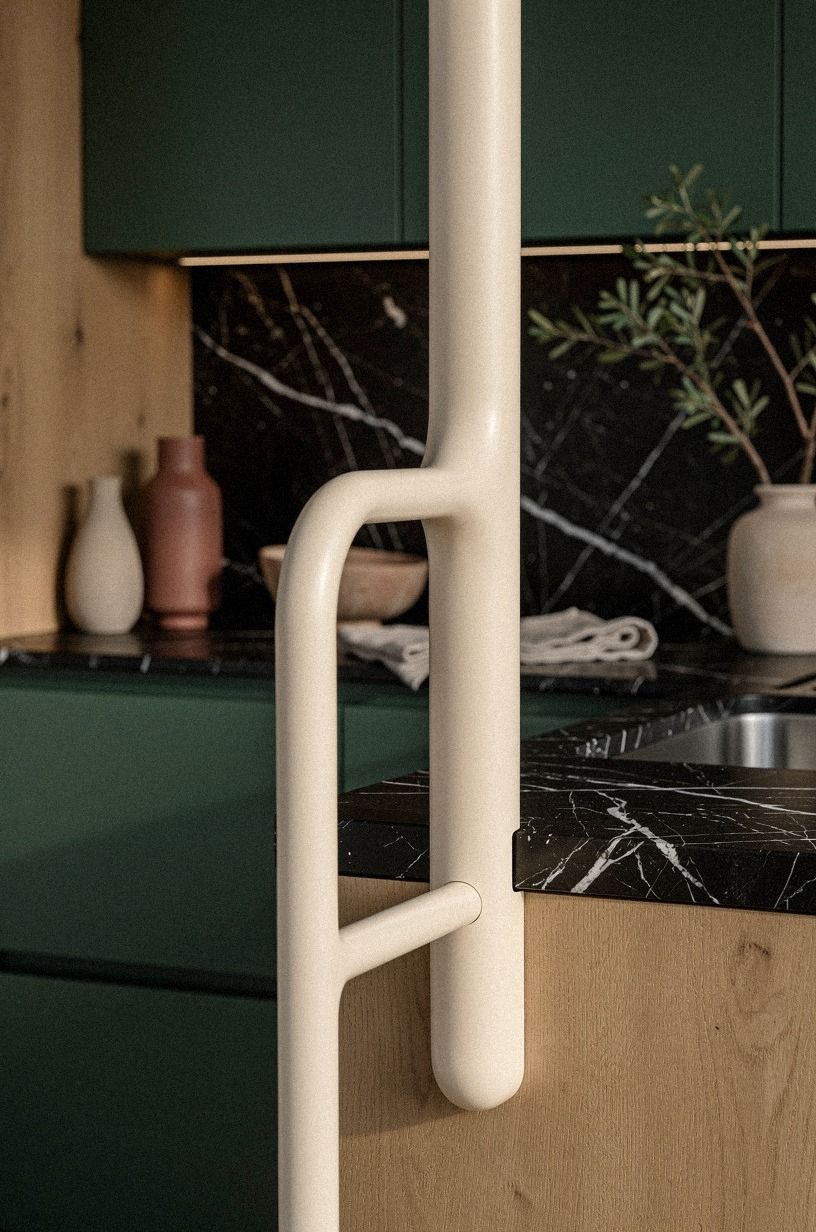
The Buttercream Light Ladder is my name for stacking three kinds of light: ceiling, under-cabinet, and table-level glow.
3Mix Cream Cabinets With Cerused Oak
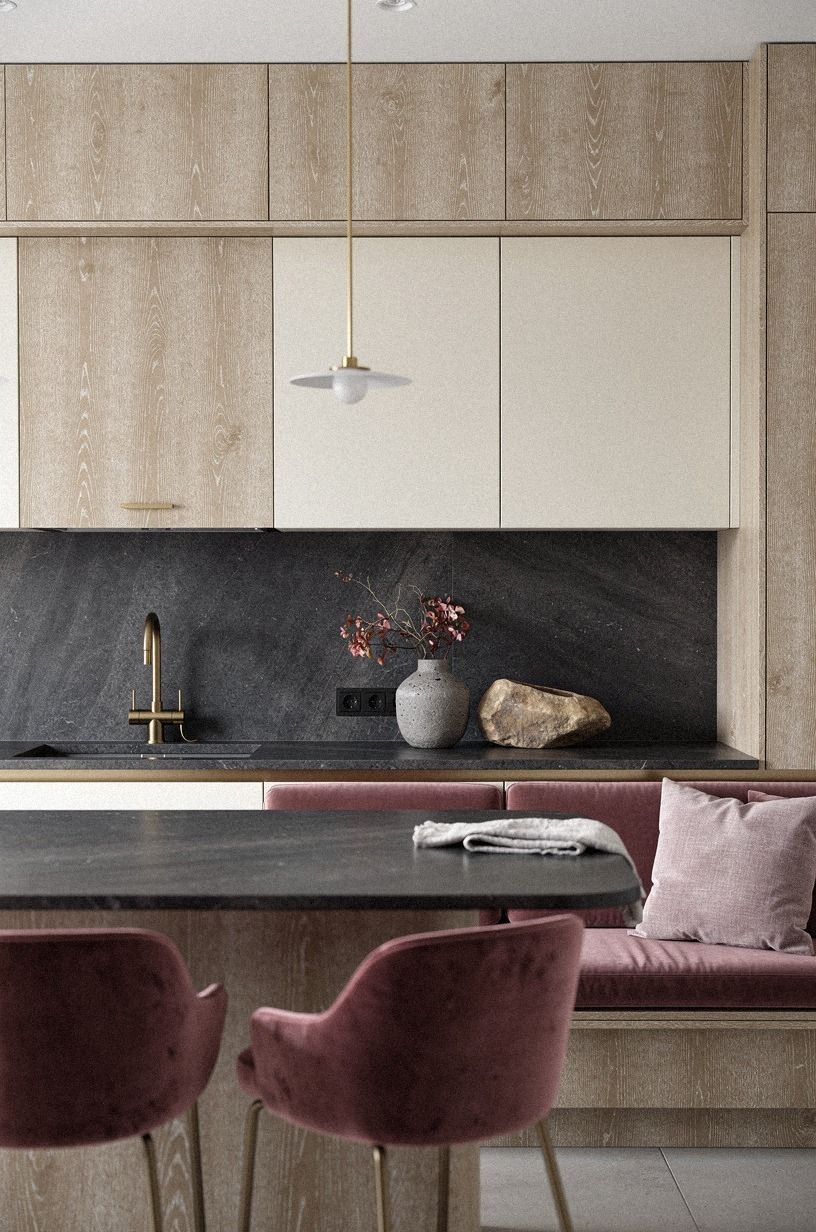
Cream cabinets become more charming when you bring in one honest tactile note. Choose deep-pile mohair velvet for a stool seat, bench cushion, or narrow breakfast nook, then let the plush surface soften the hard cabinetry. Your room will feel earthy and lived-in.
I prefer muted mohair velvet over shiny synthetic upholstery here. A dusty rose or deep charcoal tone can sit beside buttercream without making the room feel too sweet. Brass nearby adds a small point of warmth without competing with the texture.
A floating shelf above the coffee station is enough if your kitchen is small. Keep 12 to 15 inches between the counter and shelf when the wall allows it, and leave one section open for daily mugs. If you’re working with limited floor space, compare it with these tiny cottage kitchen ideas.
For a rental, bring in the material through a stool cushion, bench pad, or framed textile. You’ll get the visual warmth without drilling into cabinets or committing to a permanent treatment. One tactile accent is often all the room needs.
4Frame the Sink With a Cottage Apron Front
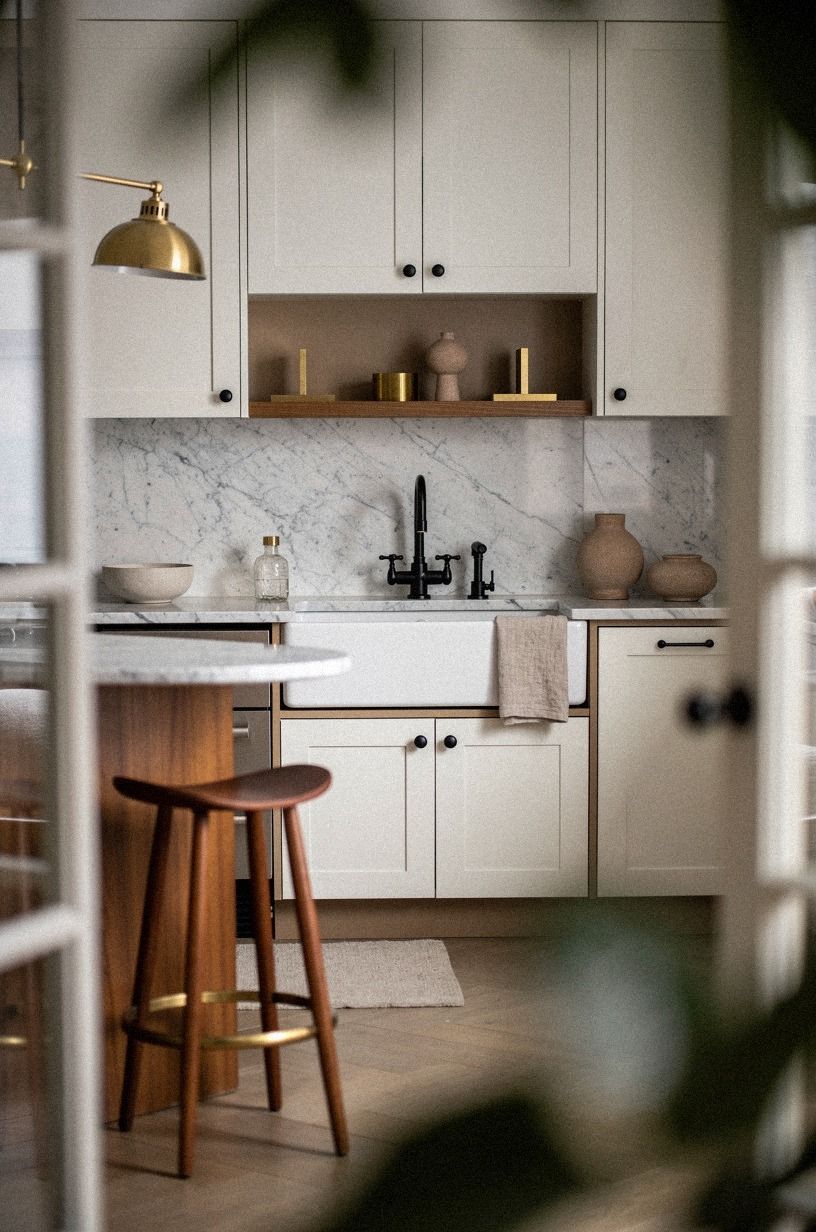
A cottage apron-front sink framed by Carrara marble with subtle grey veining gives a cream kitchen its strongest cottage signal, but it isn’t always the right purchase.
5Swap Hardware for Aged Brass
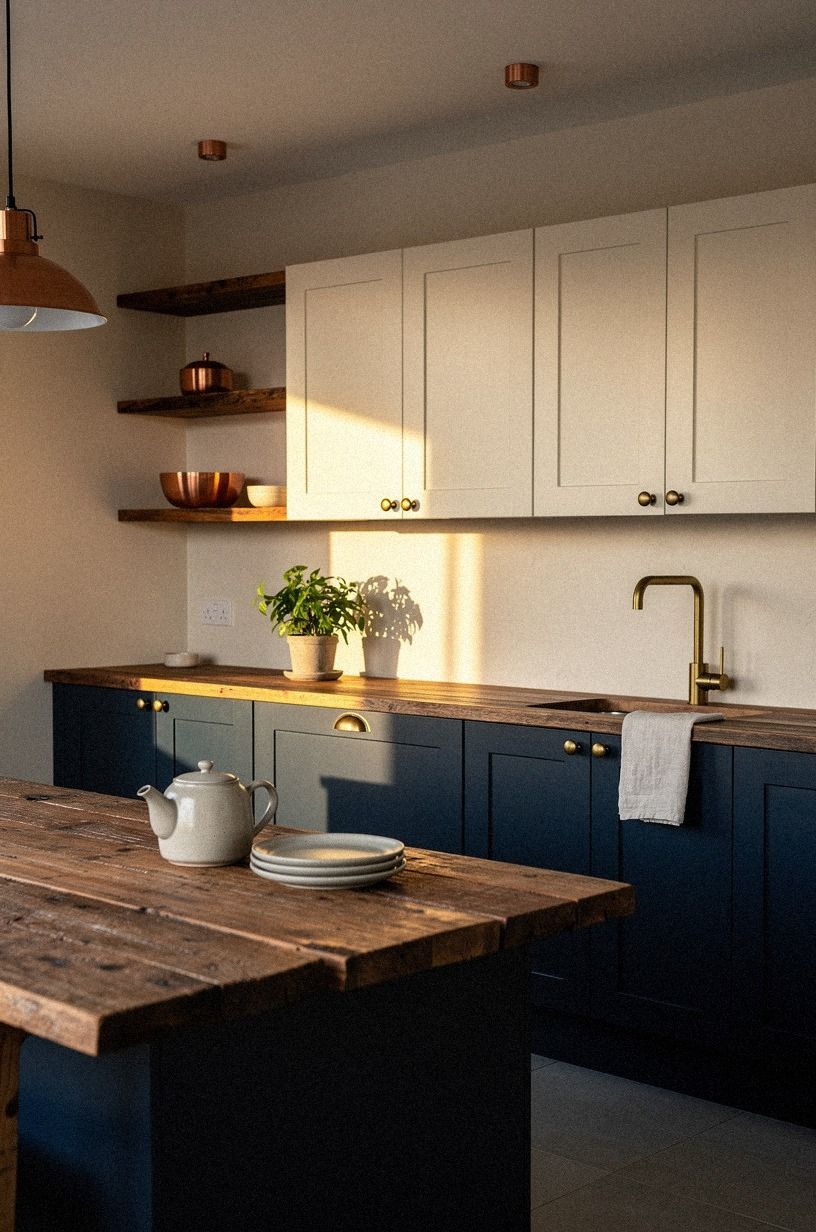
New hardware is the quickest way to make cream cabinets feel finished. Choose reclaimed weathered teak handles with a muted surface, not bright yellow lacquer. Your hands will notice the texture every day, and that small physical detail can make the kitchen feel more considered.
Use knobs on doors and pulls on drawers so your eye gets a quiet rhythm. I’d avoid mixing three metals in a compact kitchen because the room can lose its calm. A copper-toned faucet plus one supporting metal is enough for most cottage layouts.
You can spend less by replacing only the most visible pieces first. A thrifted wooden bowl, woven runner, and 10 matching pulls may give your kitchen more character than a costly decorative object. If you like handmade texture, pair the hardware with this rustic cottage kitchen guide.
Measure the existing hole spacing before ordering. Many drawer pulls use a standard distance, but older cabinets can vary. You’ll want the new pieces to install cleanly, since filling and redrilling every drawer adds time and frustration.
6Build the Two-Wood Rule
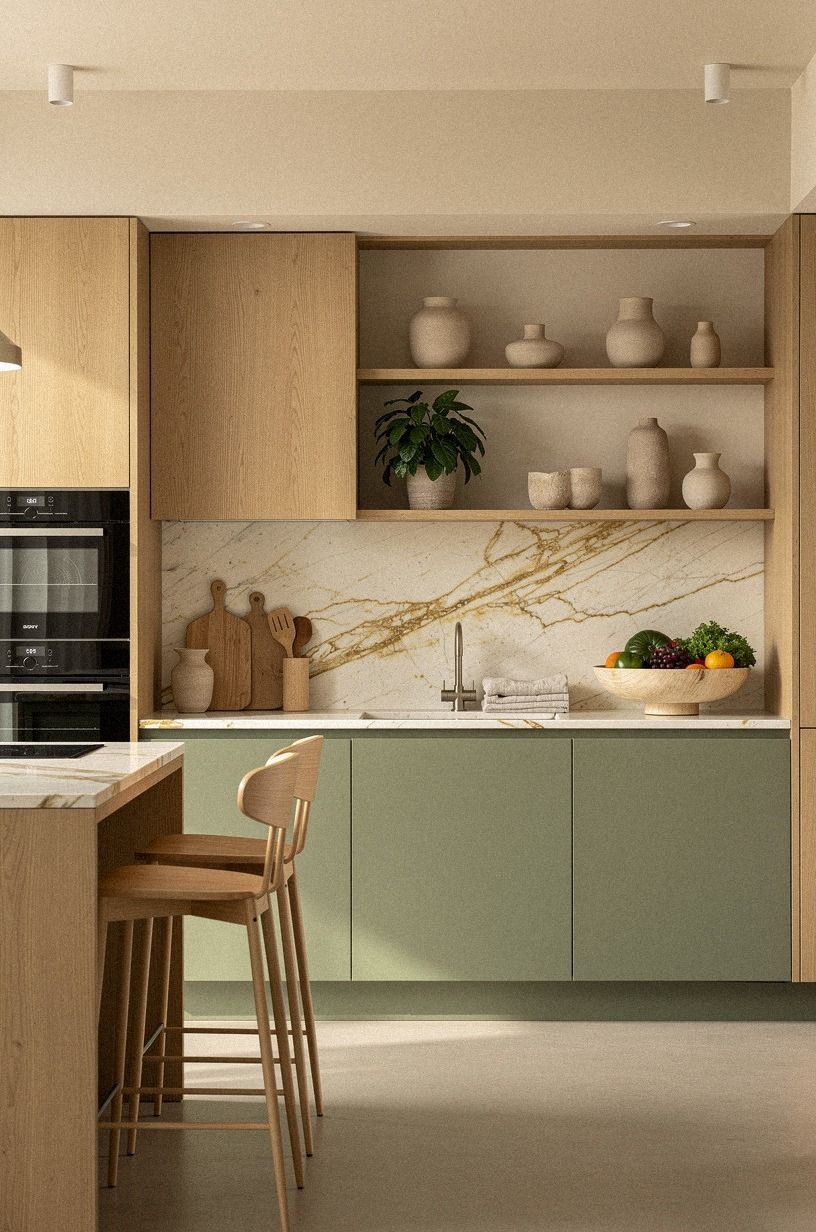
The Two-Wood Rule keeps a cream kitchen from becoming flat. Use one natural wood tone, then let Calacatta marble with gold veining provide a lighter, more luminous counterpoint. Your room will gain contrast without feeling heavy.
A natural-wood shelf with a Calacatta marble serving board is enough. Your stools might carry the wood tone while the counter handles the brighter contrast. I’d skip adding another strong grain unless your kitchen is large, because too many surfaces start to compete with the gentle paint color.
This approach works especially well in rentals. Add a removable wood tray, a marble serving board, and a dark frame instead of changing the counters. You don’t need every item to match, but you do need a clear relationship between them.
See these white cottage kitchen details for more ways to keep wood from feeling random.
Watch the undertones. The gold veining in Calacatta marble can sit beautifully beside warm cream and sage green, while a blue-white stone may make the cabinets look yellow. Test samples in daylight before buying a full slab or set of stools.
7Hang Linen Instead of Blocking the Light
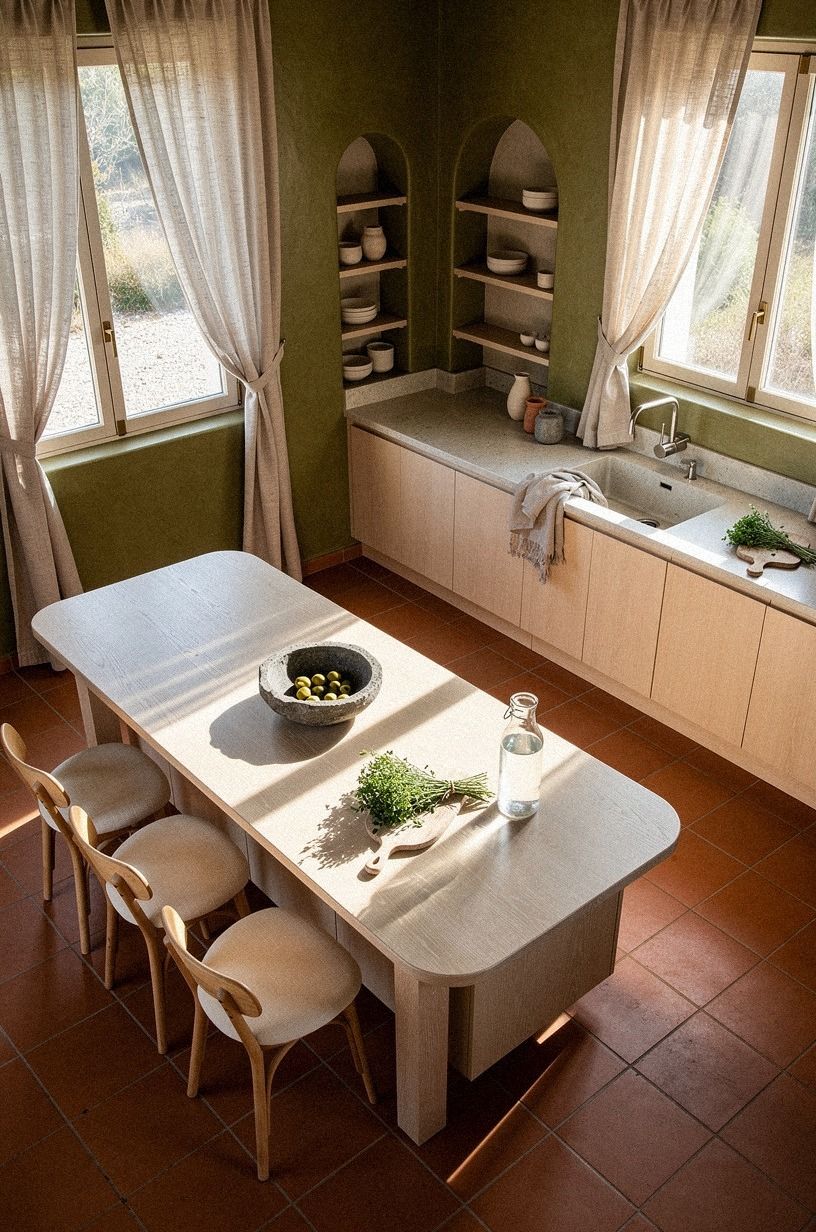
A café curtain hung from a cerused white oak rod softens a lower window without stealing daylight.
8Swap a Busy Backsplash for Hand-Glazed Zellige
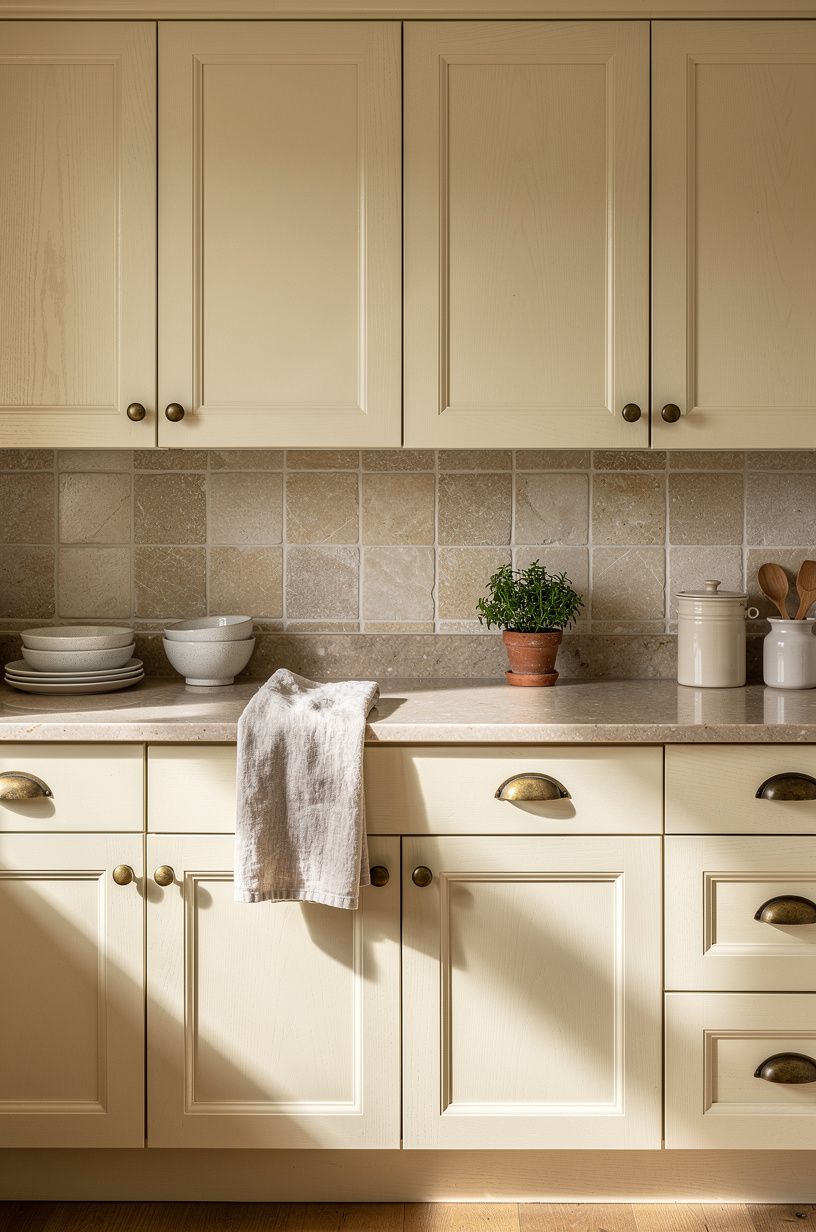
A backsplash is where cream kitchens can become quietly special. Use backlit translucent onyx if you want movement, because its soft glow and natural variation catch light across the wall. Your surface won’t look perfectly uniform, and that variation is what makes the room feel collected.
The standard backsplash gap is about 18 inches between counter and upper cabinets. You’ll want to measure before ordering the stone, especially around outlets and open shelves. A narrow run behind the range can deliver the cottage feeling without committing to a full wall.
I’d avoid a busy mosaic beside buttercream cabinetry. It may look captivating in a sample book, but your eye will have nowhere to rest.
If the stone is expressive, keep the grout lines and hardware restrained. This pink cottage kitchen example shows how a small color shift can make a backsplash feel more personal.
For a low-cost version, use a small onyx-look panel only in the most visible section and paint the remaining walls in a washable warm white. Peel-and-stick options can work behind a low-splash area, though you’ll want to check heat and moisture ratings before using them near a range.
9Float a Shelf Above the Work Zone
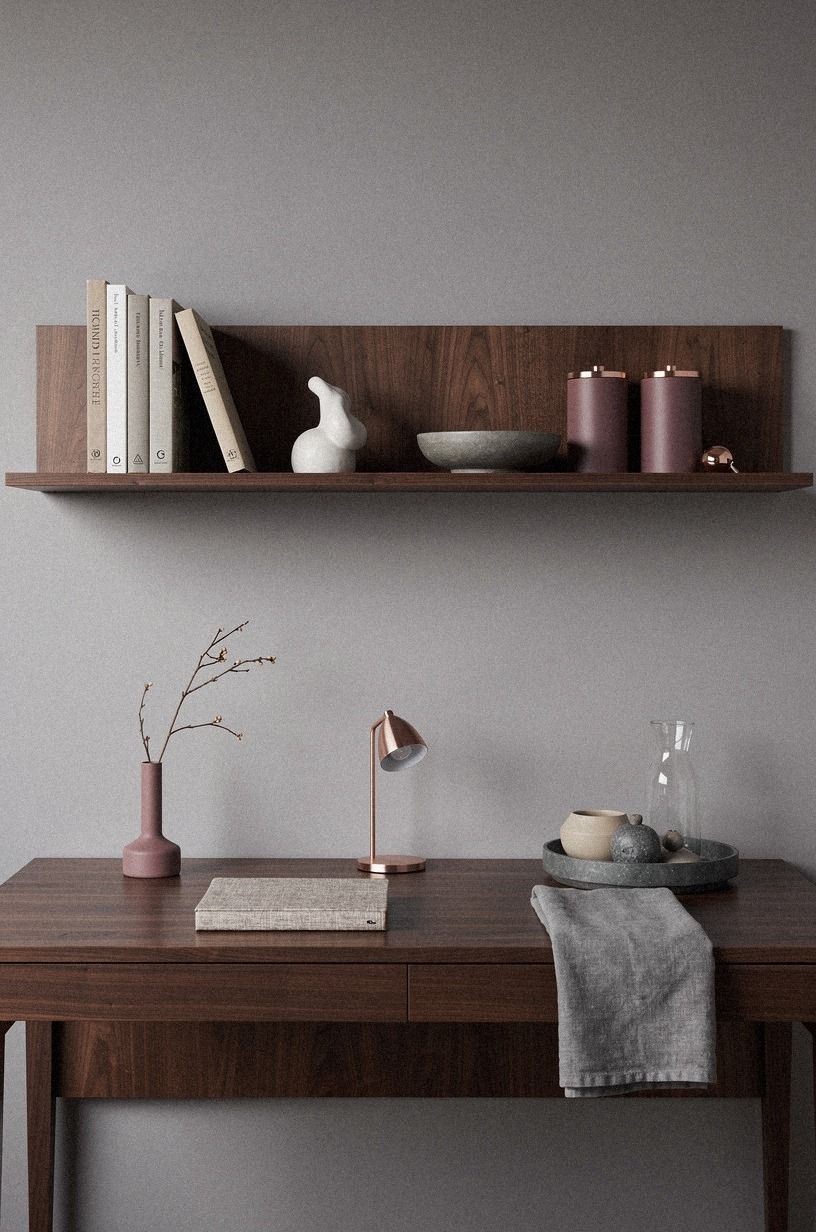
One book-matched walnut shelf can replace a bulky upper cabinet and make your kitchen feel airier. Your everyday bowls, jars, and cookbooks become part of the room instead of disappearing behind doors. I’d use this move only where you can tolerate a little dust.
Keep the shelf depth around 10 to 12 inches so it doesn’t crowd your head or elbow space. You’ll want the brackets to feel sturdy and slightly visible, especially in a cottage kitchen where a little hardware adds character. Leave breathing room between objects rather than filling every inch.
And choose items you use. A cream stoneware bowl, wooden spoon, and small crock will look better than a row of decorative containers nobody touches. If you’re styling a narrow wall, start with these sage cottage kitchen storage ideas and soften the palette with buttercream paint.
Before drilling, find the studs or use anchors rated for the shelf’s total load. Plates are heavier than they appear. You’ll want the shelf to feel relaxed, but the installation should be thoroughly secure.
10Anchor the Room With a Checkerboard Runner
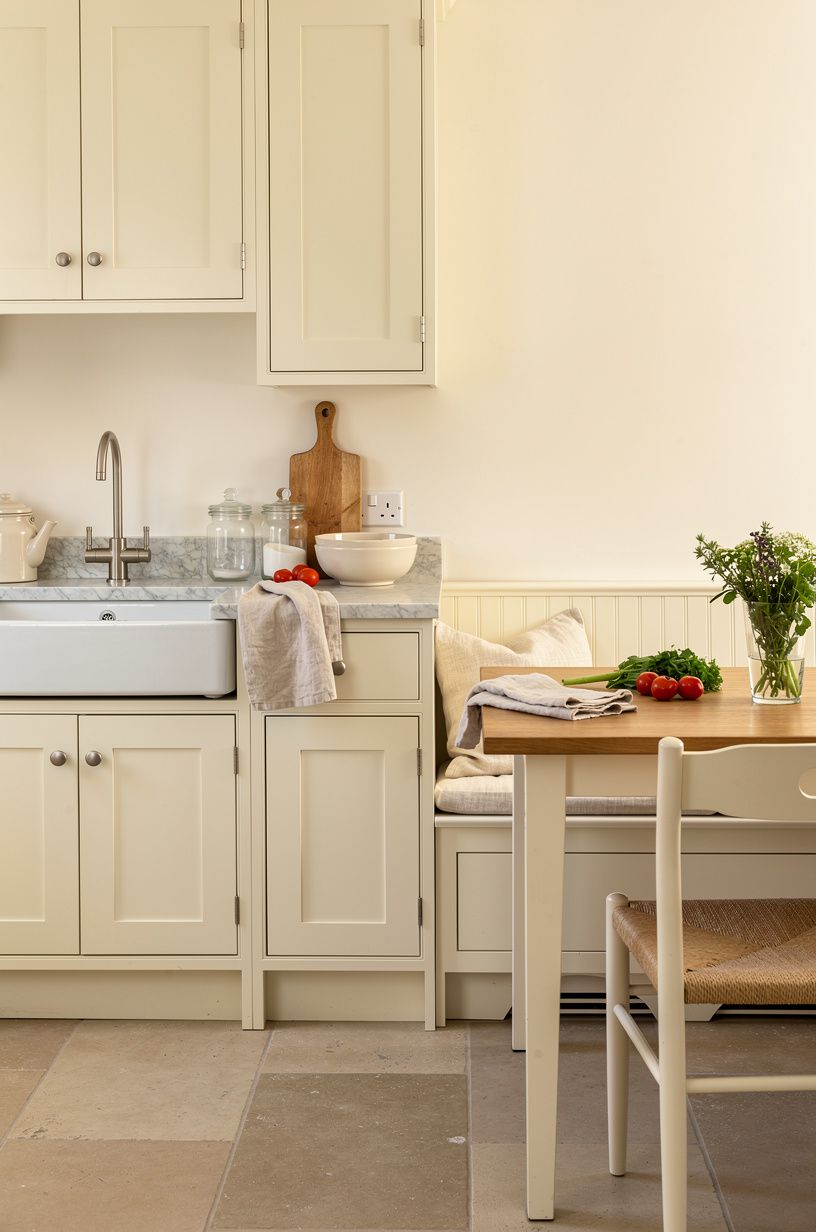
A warm travertine checkerboard floor gives cream cabinets enough pattern to feel grounded. Choose navy and white with walnut nearby rather than sharp black and white. Your floor will look more settled, and the kitchen will gain a rustic note.
Keep the checkerboard scale calm so the cabinet doors remain the focus. You’ll want enough room for your feet to stand comfortably while the dishwasher opens, so mark the proposed pattern on the floor before ordering stone. I’d choose a honed finish over a glossy one because crumbs and water are part of kitchen life.
This is also a smart place to test color. A navy or white square can tell you whether Sherwin-Williams Evergreen Fog SW 9130 belongs nearby, even if you never paint the cabinets green.
Your room doesn’t need another loud pattern. See these tiny cottage kitchen layouts for practical floor placement.
Seal the travertine according to the manufacturer’s instructions, especially near the sink and range. A honed surface will suit a busy household better than polished stone, while a softened pattern will hide daily marks. Function can look beautiful when the material is chosen honestly.
11Layer the Three-Height Light Stack
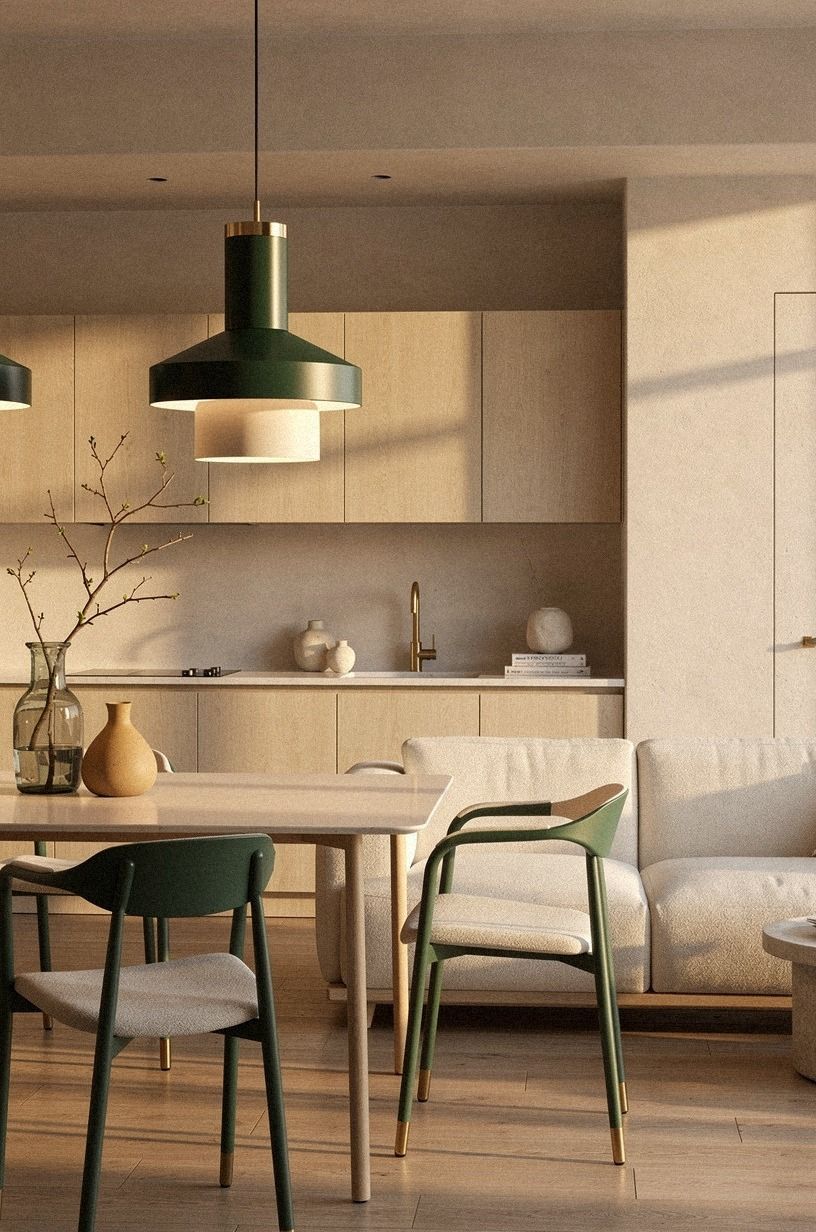
The Three-Height Light Stack uses one ceiling fixture, one counter-level glow, and one low object such as a lamp or candle. Your eye moves through the kitchen instead of stopping at the ceiling. An unlacquered brass table lamp near a breakfast nook can make the whole room feel calmer at night as the metal develops a natural patina.
Keep the lamp away from splash zones and choose a washable shade. You’ll want the cord hidden behind a basket or routed along the back edge of the counter, and you shouldn’t let decoration interfere with food preparation. Function matters more than a staged room.
But don’t buy three matching fixtures. Matching pieces can make a cottage kitchen feel overly planned.
I’d mix a linen shade with unlacquered brass and one painted ceramic detail so each light has its own texture. This rustic cottage kitchen guide has more ideas for adding warmth without covering every surface.
A plug-in picture light can brighten a dark wall without requiring electrical work. If you’re replacing a ceiling fixture, choose a dimmable option and confirm that your switch supports it. Evening comfort is part of the design, too.
12Paint One Wall in Farrow & Ball Studio Green
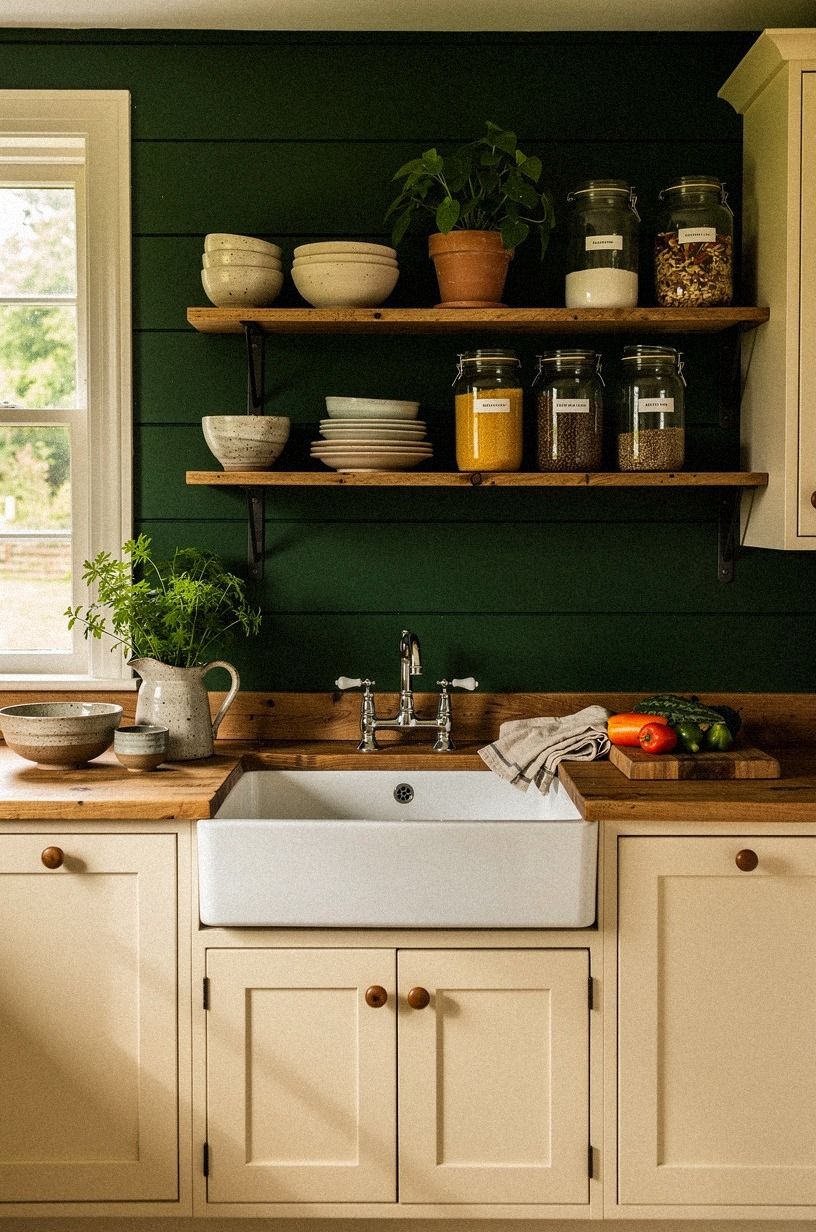
A single wall in Farrow & Ball Studio Green No.93 can give buttercream cabinets a bold, earthy counterpoint.
13Choose Cream Cabinets Over White Walls
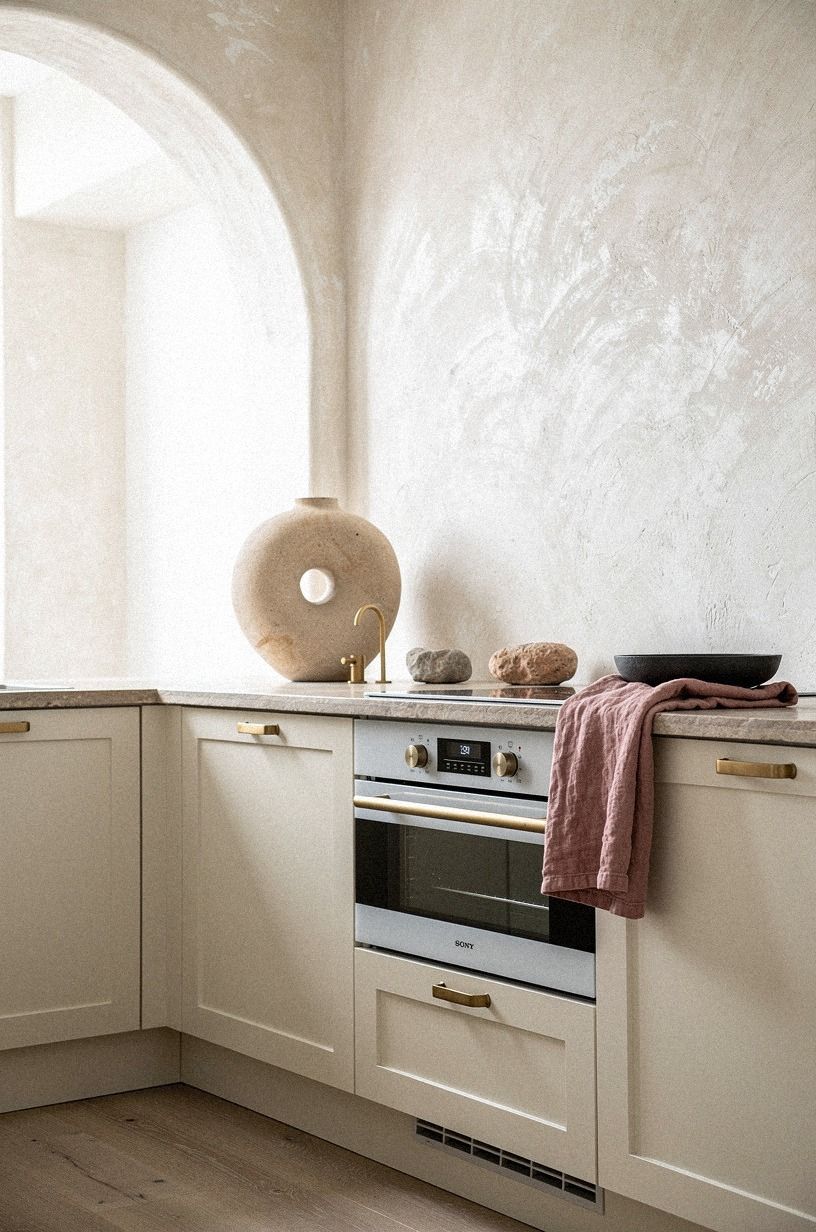
Cream cabinets over white walls can look gentle when the whites have different undertones. Your cabinetry should feel warmer, while the wall stays quiet enough to keep the room bright. I’d choose Benjamin Moore White Dove for the cabinets and a soft chalky white for the wall.
This contrast works best when one surface carries a third, natural note. Hand-applied Venetian plaster can bridge the two surfaces with subtle movement and a softly worked finish. You’ll want to avoid a blue-white wall because it can make the cabinets look yellow by comparison.
Why settle for a flat white box when two soft whites can give your kitchen depth? Keep your trim close to the wall color, then repeat the cabinet cream in pottery or linen. These small cottage kitchen ideas show how subtle contrast keeps a compact room inviting.
The floor can settle the palette. A pale oak, warm limestone-look tile, or faded checkerboard surface will support the cabinet color. Cool gray flooring may pull the whole room away from the gentle cottage feeling you’re trying to create.
If your kitchen has very little natural light, keep the walls lighter and bring cream into the lower half through cabinetry, curtains, and ceramics. You’ll preserve brightness while still getting warmth. It’s a calmer solution than painting every surface the same color.
14Prioritize the $100 Refresh Before Remodeling
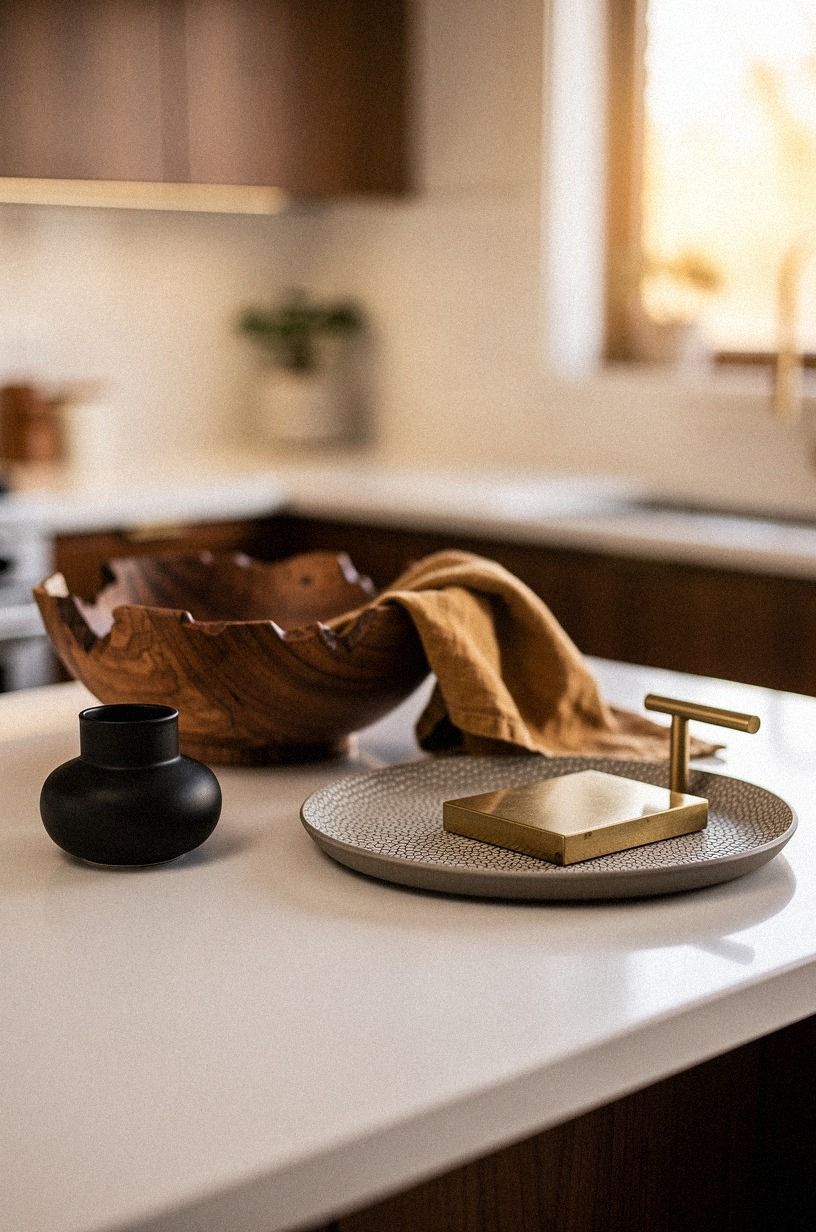
Start with the pieces your hands touch and your eyes meet first: hardware, a runner, paint samples, and one useful light.
The Cream Kitchen Rule I’d Keep
I used to think warmth meant adding more beige. Then I watched a buttercream kitchen become dull because every surface had the same value, the same texture, and almost the same yellow undertone.
The better answer was contrast. Your kitchen needs a quiet conversation between paint, wood, metal, fabric, and light.
I’d start with the surface that occupies the most visual space, usually the cabinets or walls. From there, choose one material with grain, one with sheen, and one with softness. Honed quartz can give you a calm counter, while linen and aged brass keep the room from feeling too polished.
The part I wouldn’t copy from every cottage interior is the open shelving. It looks charming, but it asks you to maintain a visual system every day.
If you’re busy, one shelf is enough. Your favorite mugs can live there, while the less photogenic appliances stay behind a door.
And I’d spend on lighting before decorative objects. A $40 lamp that throws a warm pool across the floor can change your evening more than another vase. You’ll notice it while washing dishes, eating toast, and walking through the room at midnight, which is when design proves whether it works.
There’s also a practical reason to keep the palette restrained. Cream and buttercream already reflect plenty of light, so your kitchen doesn’t need ten accessories to feel complete.
A woven basket, a wooden board, and a bowl of fruit may be all your counter needs. That restraint makes the room feel serene instead of staged.
If the room still feels too yellow, look at the bulbs first. Cool daylight can make warm cabinets appear muddy, while overly warm bulbs can exaggerate their golden side. A dimmable bulb around 2700K usually gives you enough flexibility for cooking, breakfast, and late-night cleanup.
The final layer should be personal. Keep the chipped bowl you actually use, the inherited stool that isn’t perfectly polished, or the small framed recipe that makes the room yours. Cottage style works when the kitchen feels lived in, cared for, and easy to return to.
The Questions Worth Answering First
What is the best Cream & Buttercream Cottage Kitchen Ideas for Soft Warmth for a small kitchen?
Benjamin Moore White Dove cabinets with one cerused oak shelf are my first pick. They give your room airy warmth without adding visual weight, and a narrow birch-effect storage unit can hold cookbooks or baskets if you need more storage. See these tiny cottage kitchen ideas for compact layouts.
Where can I buy Cream & Buttercream Cottage Kitchen Ideas for Soft Warmth pieces on a budget?
Look at IKEA, Wayfair, and Target for affordable lighting, runners, and hardware. You’ll also find useful pieces on Facebook Marketplace or at a local thrift shop, especially wood boards and ceramic bowls. This sage green cottage kitchen guide has more low-cost color ideas.
How much does a Cream & Buttercream Cottage Kitchen Ideas for Soft Warmth makeover cost?
A cosmetic update typically runs about $300 to $1,500 in the US, depending on paint, hardware, and labor. Your free changes can include editing counters, rearranging shelves, and washing cabinet fronts. For larger ideas, compare this yellow cottage kitchen makeover direction.
Can I create a Cream & Buttercream Cottage Kitchen Ideas for Soft Warmth on a budget?
Yes, and you can start with paint samples, second-hand wood, and new cabinet pulls. Try a removable runner, a tension-rod café curtain, and one warm lamp before buying anything permanent. Your kitchen may need less than you think if the counters are clear and the lighting is gentle!
Is a Cream & Buttercream Cottage Kitchen Ideas for Soft Warmth worth it in a small space?
Yes, because a small kitchen benefits from a limited palette and repeated materials. Use cream cabinets, one pale wood, and a narrow runner so your eye can travel without stopping.
You’ll want at least 42 to 48 inches of island clearance if you have an island, but don’t force one into the room. These small cottage kitchen layouts can help with proportions.
Is Cream & Buttercream Cottage Kitchen Ideas for Soft Warmth a good idea for a rental?
Yes. Peel-and-stick tile, removable hooks, tension rods, and portable lamps can add cottage warmth without damaging your walls. Your landlord-friendly changes might include linen curtains, aged-look hardware on existing holes, and a freestanding wooden stool.
This small cottage kitchen guide has useful ideas for working with tight proportions.
Where I’d Start First
If I had to pick one, I’d start with the lighting. A warm lamp and concealed under-cabinet glow make cream paint look richer after sunset, when your kitchen has to work hardest. Pin these rustic cottage kitchen ideas for later and change the bulbs tonight!