
 by
by |
Quick answer: The bedgear mattress protector range makes sense only after you match the exact line to your main concern. I would start with iProtect for straightforward spill protection, investigate Dri-Tec for moisture management, examine Ver-Tex for premium comfort claims, and consider Stretchwick when a secure stretch fit matters most. Do not buy from the family name alone. Confirm whether the specific listing says waterproof or merely water-repellent.
Updated July 2026 and reviewed for specification accuracy. |
My verdict on the bedgear mattress protector range is favorable but conditional. The lineup gives shoppers useful choices in surface fabric, moisture handling, and skirt design, but those choices are buried under names that sound more informative than they really are. I would skip any version whose current listing does not clearly identify its barrier, fit range, and care instructions.
This is a materials-based review, not a claim of measured cooling or overnight testing. I am looking at what each construction choice is designed to do, where the product descriptions leave room for confusion, and which details are likely to matter after repeated washing and regular use.
Which Bedgear line fits which problem?
iProtect: start here for straightforward protection
iProtect is the least complicated place to begin. Bedgear positions it around basic mattress protection rather than an elaborate comfort story. That makes it the most logical line to inspect when liquid resistance is the priority and you do not want to pay mainly for cooling-oriented fabric.
The important word is still waterproof. Check that it appears on the exact size and version in your cart, then read the exclusions and care requirements attached to that item. A warranty term can help establish the brand's support policy, but it does not tell you how the protector will feel under a fitted sheet or how carefully its barrier must be laundered.
Dri-Tec: focus on the barrier, not just moisture language
Dri-Tec descriptions emphasize moisture management. That can be relevant for sleepers who dislike a damp-feeling surface, but moisture-wicking fabric and waterproof construction do different jobs. Wicking spreads moisture through the face textile so it can disperse more readily. A waterproof membrane is intended to keep liquid from reaching the mattress.
Retailer descriptions have not always used identical barrier wording across Dri-Tec versions. If spills, accidents, or mattress-warranty protection are the reason for buying, do not treat the model name as proof of a full waterproof layer. Read the specification for the precise version being sold.
Ver-Tex: assess the premium claims carefully
Ver-Tex sits in the premium part of the family and is marketed with temperature-regulation and hypoallergenic language by Bedgear. Those descriptions may help narrow the search, but they should not be converted into a measured cooling result or a medical promise. The useful questions remain practical: What kind of barrier is used, how does the skirt fit, and what does the care label permit?
This line is easiest to justify if its current specifications solve more than one problem you genuinely have. If cooling language is irrelevant to you, compare the live price with the simpler line before paying for a feature emphasis you may not notice.
Stretchwick: prioritize fit and surface tension
Stretchwick is the line I would inspect first when bunching or corner movement is the complaint. Its descriptions center on cooling and a stretch-oriented fit. A flexible skirt can help a protector follow the mattress more closely, especially when the sleep surface is thick or moves on an adjustable base.
Stretch alone is not enough. The pocket must still match the complete height of the mattress and any topper. If the skirt is overextended, elastic tension can pull at the corners, distort the top panel, and shorten the useful life of the fit system.
| Line | Reason to inspect it | Detail to verify |
|---|---|---|
| iProtect | Straightforward spill protection | Barrier wording and care terms |
| Dri-Tec | Moisture-oriented surface fabric | Waterproof versus water-repellent construction |
| Ver-Tex | Premium temperature and allergen positioning | Exact protection, fit, and cleaning specifications |
| Stretchwick | Stretch fit and reduced bunching | Pocket compatibility with the complete bed |
I would not name one universal winner because these lines address different priorities. The simplest waterproof option can be the better purchase for a guest bed, while a sleeper bothered by dampness or loose fabric may care more about the face knit or skirt.
Pricing can also change the answer. Compare the current prices in the same shopping session and read the exact specifications beside them. A premium label is not evidence of stronger liquid protection, and a promotion does not fix a mismatch between your mattress and the protector.
Waterproof and water-repellent are different promises
A waterproof protector normally relies on a continuous functional layer intended to stop liquid from passing into the mattress. A water-repellent textile uses a finish that encourages moisture to bead or spread less readily. That finish can be useful, but it should not be treated as equivalent to a membrane when substantial spills are the concern.
Moisture-wicking is another separate idea. A wicking face fabric moves moisture away from one concentrated spot across a broader textile area. It may make the surface feel drier, yet it says nothing by itself about what happens when liquid reaches the underside.
This is why I read a protector description from the barrier outward. Marketing often starts with cooling because it sounds comfortable. Mattress protection starts with the layer between the fabric and the bed. If the listing spends several paragraphs discussing airflow but never states what blocks liquid, I would ask the retailer for clarification before ordering.
- For frequent spills: Require explicit waterproof wording on the exact item.
- For a damp-feeling sleep surface: Examine the face fabric and moisture-management description.
- For allergy concerns: Check the amount of mattress coverage and cleaning instructions instead of relying only on a hypoallergenic label.
- For adjustable beds: Give skirt recovery and pocket compatibility the same attention as the top fabric.
A fitted protector also differs from a complete zippered encasement. A fitted design covers the sleep surface and the areas reached by its skirt, while an encasement surrounds the mattress. Shoppers seeking broad allergen or pest isolation should confirm which construction they are actually buying.
If you are still sorting out the category itself, the practical differences are covered in our guide to choosing a waterproof mattress protector. For the Bedgear range, the immediate lesson is simple: never infer barrier performance from cooling or moisture language.
How the protector construction affects the bed
A protector has several functional areas. The face textile sits nearest the fitted sheet. Beneath it is the protective component. Around the perimeter, a skirt and elastic system hold the assembly on the mattress. Each area can solve one problem while creating a tradeoff elsewhere.
A softer knit may preserve more of a plush mattress feel, but the bonding method beneath it still matters. A flexible barrier tends to follow the textile more readily than a stiff film. Actual noise and feel also depend on how tautly the protector fits, what sheet is placed over it, and how much the mattress surface compresses.
Bedgear's descriptions emphasize breathable construction across the family. I read that as a design goal, not as a promise that airflow will equal an uncovered mattress. Any protective layer adds material between the sleeper and the bed. The meaningful comparison is how well the complete assembly balances liquid resistance, vapor movement, flexibility, and durability.
| Construction area | What it influences | What I would check |
|---|---|---|
| Face textile | Initial hand feel and moisture spread | Fiber description, texture, and care label |
| Protective layer | Liquid resistance, flexibility, and potential noise | Explicit waterproof wording and material disclosure |
| Skirt and elastic | Corner security and surface tension | Pocket depth, stretch recovery, and seam quality |
| Seams | Fit durability and covered area | Loose threads, puckering, and stressed corners |
The top panel should lie flat without pulling the mattress edges upward. Excess slack can gather beneath the sheet, while excessive tension can change the surface feel and strain the skirt. A technically impressive face fabric cannot rescue poor sizing.
Protection also has limits. A fitted protector is designed to reduce direct exposure to perspiration, skin oils, and accidental spills, but uncovered mattress areas remain uncovered. Check how far the protective material extends rather than assuming the skirt has the same barrier as the top panel.
Cooling claims need the right interpretation
Cooling language can describe a cool initial touch, improved moisture dispersal, or a construction intended to permit more vapor movement. Those mechanisms are not interchangeable. A fabric that feels cool when first touched may settle toward body temperature, while a wicking textile mainly addresses dampness.
Dri-Tec descriptions lean toward moisture management. Ver-Tex and Stretchwick are positioned more heavily around temperature-related comfort by Bedgear. None of those labels provides a measured result for your bedroom, sheets, mattress, or body. I would use them to choose which specification to investigate, not to predict an exact sleeping temperature.
The mattress underneath still has a large influence. Thick foam comfort layers can retain more body heat than an open coil surface, and dense sheets can restrict air movement above the protector. A protector may improve on a stiff bargain barrier without turning the rest of the bed into a cooling system.
Hot sleepers should separate heat from dampness before choosing. If the main complaint is a clammy sheet, moisture handling may be the useful feature. If the complaint is a warm mattress surface throughout the night, the protector is only one part of the bedding stack.
- Read cool-touch language as an initial surface characteristic.
- Read moisture-wicking language as a fabric-management feature.
- Read breathable as relative, not as equivalent to leaving the mattress uncovered.
- Do not sacrifice confirmed waterproofing if liquid protection is the reason for the purchase.
My order of priorities is barrier, fit, care compatibility, and then comfort fabric. That order prevents a pleasant-feeling protector from failing its main job or becoming unusable after routine laundering.
Noise, feel, and movement under the sheet
Crinkling usually comes from some combination of barrier stiffness, excess material, and friction between layers. A well-fitted protector has less loose fabric available to fold against itself. That is why skirt tension can matter nearly as much as the membrane when silence is the goal.
Bedgear's performance-knit approach is designed to feel less like rigid plastic, but no product description can predict how a protector will interact with every mattress and sheet set. A crisp sheet may make surface movement more noticeable. A deep, soft comfort layer may reveal tension from a protector that is slightly too small.
A protector is not a motion-isolation component in the way foam or pocketed coils can be. Its effect is secondary. Loose fabric may shift when a sleeper turns, while a taut panel tends to move with the mattress surface. Couples should therefore focus on fit and noise rather than expecting the protector to alter partner disturbance inside the mattress.
- Reject obvious bunching before placing the fitted sheet.
- Check that each corner sits below the mattress edge without extreme tension.
- Listen for noise while pressing and releasing the surface, not just while standing beside the bed.
- Keep the packaging and review the return policy before laundering the protector.
A slight change in hand feel is normal because another textile and barrier now sit over the comfort layers. The question is not whether the protector becomes literally invisible. It is whether the change is small enough for the protection gained.
Fit and mattress depth come before cooling fabric
Measure the full sleep setup, including any topper that will sit beneath the protector. The relevant height is not the mattress label alone. Added padding raises the corners and consumes skirt depth, which can leave an otherwise suitable protector under constant tension.
Bed Planet's Bedgear collection lists an 18-inch fit specification, according to bedplanet.com. Confirm that the specification applies to the exact line and size selected rather than treating it as a family-wide measurement.
A pocket can also be too generous. Extra depth may allow the top panel to migrate or wrinkle, especially on a slick mattress cover. Stretch recovery is useful because it lets the skirt accommodate the bed while continuing to draw the face fabric flat.
- Measure the mattress with its topper and padding in place.
- Compare that result with the exact size chart for the selected line.
- Check that split and adjustable configurations use independently moving protectors where needed.
- Inspect corner seams after fitting for whitening, distortion, or pulled stitches.
Adjustable bases add another demand. The skirt must follow repeated bending without climbing off a corner or dragging the top panel sideways. Stretchwick's fit emphasis makes it relevant here, but compatibility still depends on the actual mattress stack and listed pocket range.
Washing and long-term durability
The sewn-in care label should control every cleaning decision. Bedgear listings commonly describe machine washing and lower-heat drying, but instructions can differ by line and production version. Do not apply one model's directions to another merely because both carry the same brand.
Heat matters because flexible barrier materials and their bonds can be more sensitive than ordinary sheets. An aggressive dryer setting may stress the functional layer even when the face fabric looks unchanged. Cleaning chemicals can also affect finishes, so use only what the exact label permits.
Fit contributes to durability as well. A loose protector repeatedly folds in the same areas. An overstretched one keeps seams and elastic under load. The better fit is the one that stays flat without pulling hard at the corners.
- Before washing: Check the label and close or secure anything the instructions identify.
- After washing: Inspect the barrier for peeling, cracking, pinholes, or separated seams.
- After fitting: Confirm that the skirt has recovered and the top panel lies flat.
- During ownership: Investigate any damp transfer instead of assuming the surface spill was contained.
A warranty is not a lifespan prediction. Coverage depends on the written terms, exclusions, purchase documentation, and whether care instructions were followed. Read those terms while the protector is still returnable, not after a problem appears.
I would also inspect the retailer's return rules before the first wash. Bedding policies can distinguish between unopened, fitted, and laundered products. If fit or texture is uncertain, knowing that policy ahead of time prevents an avoidable dispute.
How I would choose the right Bedgear line
Begin with the failure you most want to prevent. A shopper worried about a substantial spill has a different priority from someone mainly bothered by a damp-feeling sheet. Once that need is clear, the model names become easier to filter.
Then verify the product at the listing level. Retail inventory can preserve older descriptions or place similar versions beside each other, so the exact item in the cart matters more than a broad family summary.
- Define the job. Decide whether liquid protection, moisture comfort, temperature-oriented fabric, or secure fit leads the decision.
- Read the barrier wording. Require a clear waterproof claim if that performance is essential.
- Measure the complete bed. Include the topper and any permanent padding.
- Check the care label. Make sure the permitted routine works with how you normally handle bedding.
- Compare current terms. Review price, returns, and warranty language for the exact seller and item.
That process may lead to a simpler model than the marketing initially suggests. I see that as a good result. A protector earns its place by staying on the mattress, surviving appropriate care, and providing the stated kind of barrier, not by carrying the longest feature list.
Who should buy Bedgear and who should skip it?
Bedgear is most relevant for shoppers who care about how a protector feels as well as what it blocks. The moisture and stretch-oriented lines give those shoppers more specific options than a generic one-model range.
It is less compelling if you want the lowest-cost basic barrier and have no interest in performance fabric. It is also a poor fit for anyone unwilling to check version-specific language. The overlap between waterproofing, repellency, wicking, and cooling is too important to leave to assumption.
Shoppers seeking allergy support should be especially precise. Ver-Tex carries hypoallergenic positioning from Bedgear, but that wording is not a medical outcome and does not reveal how much of the mattress is enclosed. Coverage, washing instructions, and the exact materials deserve closer attention.
| Your priority | My advice |
|---|---|
| Clearly stated spill protection | Begin with the simplest waterproof-oriented listing and verify its exact barrier. |
| A less clammy surface | Examine moisture-management fabric without confusing it with waterproofing. |
| Reduced bunching | Prioritize skirt recovery and an accurate pocket match. |
| Broad enclosure | Confirm whether you need a fitted protector or a separate encasement design. |
My overall recommendation is conditional rather than negative. Bedgear offers useful distinctions, but shoppers need to decode them. Buy the construction that addresses your actual problem and ignore premium wording that does not improve that fit.
FAQ
Is the Bedgear mattress protector actually waterproof?
The bedgear mattress protector family should not be treated as one universal waterproof specification. Bedgear presents iProtect and Ver-Tex with waterproof protection, while Dri-Tec wording can vary by version across retailer listings. If full liquid protection is essential, including for incontinence, confirm the barrier on the exact item before buying.
Do Bedgear protectors sleep hot?
Bedgear positions Dri-Tec, Ver-Tex, and Stretchwick around moisture or temperature-related comfort, but those descriptions do not establish a measured result for every bed. Any protective layer can affect the bedding stack. Choose the comfort fabric only after confirming barrier type and fit.
How do you wash a Bedgear mattress protector?
Follow the sewn-in instructions for the exact line. Listings commonly describe machine washing and lower-heat drying, while some versions may call for different handling. Avoid assuming that a care routine from another Bedgear product applies to yours.
Will a Bedgear protector fit a thick mattress?
Several listings emphasize flexible or stretch-oriented skirts, but compatibility depends on the exact pocket specification and the complete height of the bed. Measure the mattress with its topper in place, then compare that measurement with the selected model's size chart.
Are Bedgear protectors suitable for allergies or kids' beds?
Ver-Tex is marketed with hypoallergenic language by Bedgear, but that claim should not be treated as medical guidance or proof of full mattress enclosure. For a child's bed, prioritize secure fit, explicit liquid protection, and the exact care directions. Our separate guide discusses whether waterproof mattress protectors are safe for babies and the additional fit questions that infant bedding requires.
One optional alternative for category comparison
|
If you decide to compare beyond this lineup, the Saatva Waterproof Protector is an optional category reference, not an automatic winner. Judge its current official listing by the same barrier, fit, care, and policy questions used here. The broader criteria are explained in our waterproof mattress protector review. |
ONE VERIFIED ALTERNATIVE
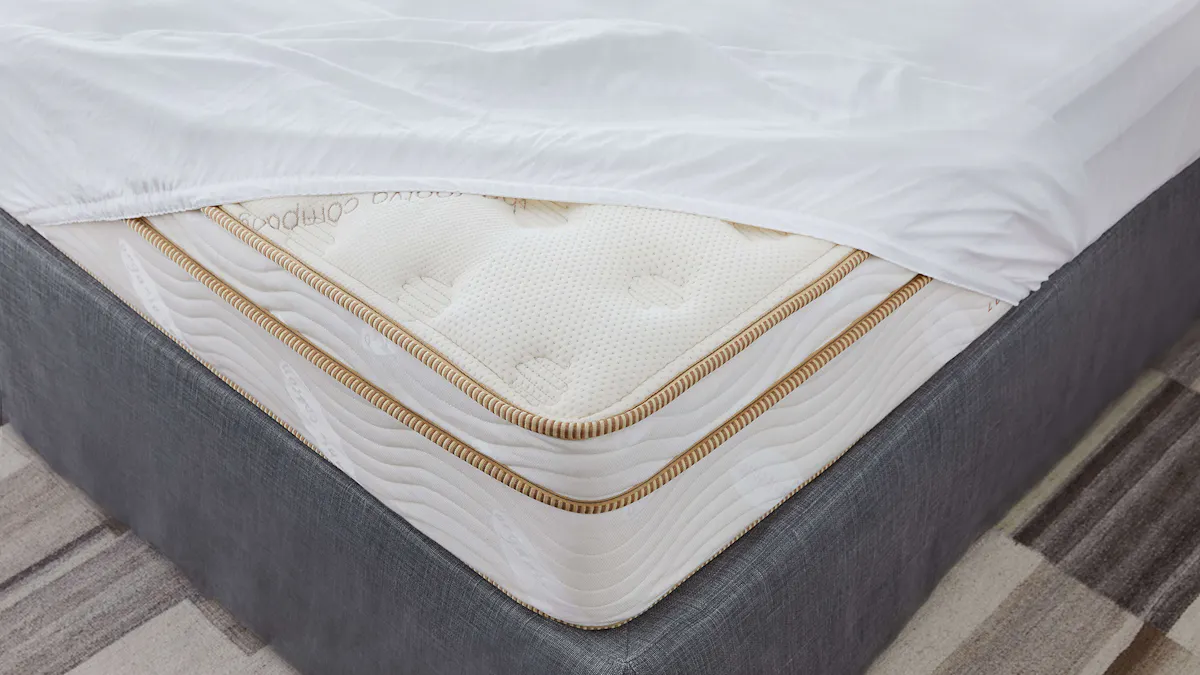
Not quite the right fit? The Saatva Waterproof Protector is worth a look as an alternative. Check today’s price, sizing and return terms on the official product page before you order.
Saatva Waterproof Protector
- If you decide to compare beyond this lineup, the Saatva Waterproof Protector is an optional category reference, not an automatic winner
Final verdict
Bedgear's lineup is strongest when you shop by construction rather than by tier. iProtect gives spill-focused shoppers the clearest starting point, Dri-Tec puts moisture language under the spotlight, Ver-Tex adds premium comfort positioning, and Stretchwick makes fit the central question. Each can make sense for the right bed, but none should be purchased without checking the exact version.
My final advice is to read the barrier first, measure the complete mattress, and make sure the care routine fits your household. If those details line up, a Bedgear protector can be a sensible layer between your sheets and mattress without asking a model name to do the work of a specification.