
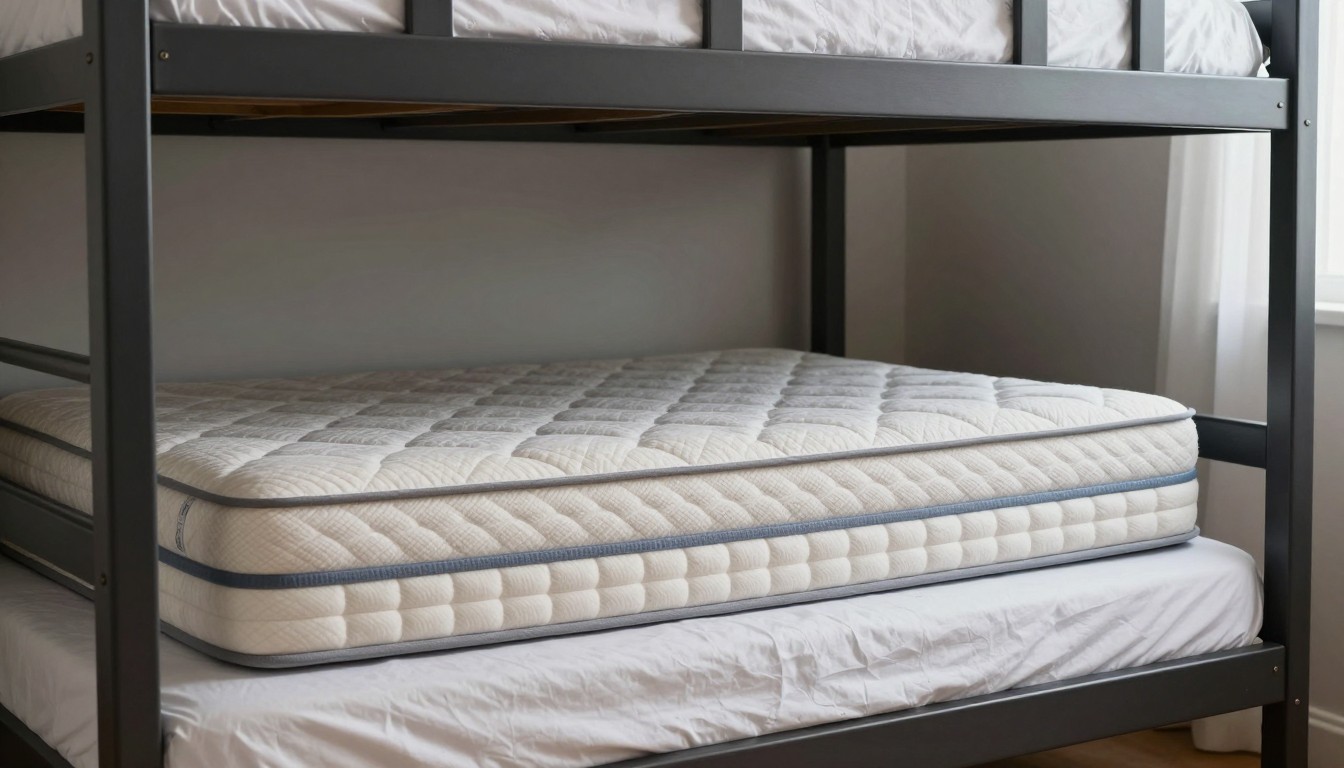
 by
by Quick answer: A bunk bed and futon works best in a small room when the frame suits its users, the folding deck locks securely, and the futon mattress is chosen for how often it will be slept on.
Updated July 2026. |
My verdict on a bunk bed and futon is straightforward: it’s a smart layout for a room that needs seating as much as sleeping space, but the convertible hardware and futon mattress deserve more scrutiny than the frame’s styling. I’d skip this format for permanent sleepers who don’t need a sofa, since a standard bunk avoids the daily conversion and lets each level use a conventional mattress.
The strongest setup is rarely the flashiest one. I look for sensible frame joinery, a secure futon latch, clear manufacturer instructions, and a mattress that can bend without becoming a flattened crease. Those details determine how stable, quiet, and comfortable the setup feels after regular use.
How bunk-and-futon configurations actually work
A familiar configuration places a twin sleeping platform above a full futon deck. The lower section folds upright for seating and opens flat when needed as a bed. That arrangement can replace a separate couch and guest bed, which is why it appeals to shared bedrooms, dorm-style spaces, and multipurpose rooms.
More compact versions pair the upper bunk with a narrower futon deck. Extra-tall, multi-level designs also exist, but they create additional questions about ceiling clearance, ladder access, frame movement, and making the upper beds. A product photo can make those layouts look less imposing than they feel in a furnished room.
The conversion mechanism is the defining part of the design. Some decks use sliding guides, while others pivot around hinge plates attached to the main frame. In either case, the deck should move without binding and should settle positively into its upright position. A vague or awkward latch can turn the sofa into the most frustrating part of the room.
- For frequent seating: prioritize an easy conversion and a backrest angle that feels usable.
- For frequent sleeping: prioritize mattress construction and a deck that feels even when open.
- For occasional guests: a simpler frame may be enough, provided its instructions match the intended users.
Assembly is more involved than it is with a fixed bunk because the lower deck has moving parts that must align. A helper makes the work more manageable. Before tightening everything fully, square the main frame, confirm the deck moves freely, and follow the fastening sequence in the manufacturer’s manual.
Metal and wood frames have different weak points
Metal frames tend to be easier to move and less visually bulky. Their tubes can handle everyday bumps, but movement may travel through the structure when someone climbs the ladder or turns on the upper mattress. Bolted joints can also develop noise if fasteners loosen or washers shift.
Wood frames carry more visual and physical mass. That can help a setup feel planted, particularly on a smooth floor. The material alone doesn’t prove quality, though. A solid-looking frame can still rely on shallow screws or weak connection blocks, while a simpler frame may use better bolts and metal brackets.
The joint I inspect most closely is where the folding deck meets the stationary frame. Repeated conversion concentrates force there. On a wood frame, I favor substantial metal hinge plates secured through structural members. On a metal frame, welded mounting points generally inspire more confidence than small brackets clamped around a tube.
| Construction detail | What I look for | What gives me pause |
|---|---|---|
| Main joints | Bolts, locking hardware, and clearly braced corners | Structural pieces held mainly by shallow screws |
| Futon hinge | Visible plates or mounts tied into the frame | Small attachment points with unclear support |
| Sofa latch | A positive lock that is easy to verify | A backrest that relies on friction or feels vague |
| Ladder connection | A firmly attached ladder with stable rungs | Movement where the ladder meets the rail |
Finish quality matters most at contact points. Metal coatings can wear around ladder rungs and hardware, while wood can show dents at exposed corners. Those cosmetic issues aren’t the same as structural failure, but damaged finish should be addressed before moisture reaches bare material.
I’d choose between metal and wood based on joinery, room layout, and how often the frame may be moved. A well-connected metal frame can be a better buy than decorative wood with weak hardware. A properly braced wood frame can be the quieter choice for a setup intended to stay in place.
Safety depends on the exact frame manual
The upper bunk and lower futon deck are separate load cases. Don’t assume a limit shown prominently on a sales page applies to the entire structure or to every sleeping level. Find the manufacturer’s stated guidance for each platform, along with its rules for mattresses, guardrails, ladders, and intended users.
If teens or adults may use the upper level, the frame must explicitly accommodate that use under its published terms. My guide to how much weight bunk and loft beds can hold explains why the sleeper, mattress, bedding, and ordinary movement all matter when reading a posted limit.
Top-mattress height also deserves attention. A mattress that is too tall for the frame can reduce the effective guardrail height, even if it fits the platform length and width. Use the mattress guidance in the manual rather than choosing the thickest option that physically fits.
- Verify the required guardrail arrangement and check that every rail attaches firmly.
- Confirm that the ladder position works with doors, furniture, and the room’s walking path.
- Inspect the upper slats or deck for secure attachment and even support.
- Test the futon latch without anyone sitting or lying on the deck.
- Follow the manufacturer’s age, mattress, and occupancy restrictions.
Hardware deserves another check after assembly and periodically during use, following the care instructions. Folding, climbing, and ordinary frame movement can change how firmly connections seat. If a joint continues to loosen, squeak, bend, or shift after proper tightening, stop using that part of the frame and contact the manufacturer.
Room behavior matters too. The ladder shouldn’t become a clothes rack, and the upper rails shouldn’t support improvised hooks or hanging furniture. Keep the conversion path clear so the futon can open without striking a dresser, trapping bedding, or forcing someone to pull from an awkward angle.
The futon mattress is a separate construction decision
A polished product photo doesn’t tell you what is included. Some frames are sold without mattresses, while others may be pictured with cushions or bedding that aren’t part of the package. Read the included-components section and the assembly manual before assuming the upper mattress or futon pad comes with the frame.
The lower mattress has to do something a conventional mattress doesn’t: bend repeatedly and remain useful in both sofa and bed positions. A mattress that feels plush while flat may fight the fold, while a very flexible pad may let the sleeper notice gaps or hardware underneath. Compatibility comes before softness.
Layered construction gives you more to evaluate than a generic “foam” or “fiber” description. Foam can provide pressure relief, while cotton, wool, or other resilient fibers can influence flexibility and surface feel. What matters is how the layers are arranged, held together, and approved for use on a folding deck.
Thickness affects both sleeping comfort and conversion effort. A more substantial futon can create better separation from the deck, but additional bulk may make the backrest harder to raise or prevent it from settling correctly. My guide to how thick a futon mattress should be covers the tradeoff without assuming that thicker is automatically better.
The Nut’s construction rule: choose the frame for stability, but choose the futon mattress for the person who will actually sleep on it. The lower mattress isn’t an accessory if the bed will be used regularly.
Feel changes between positions. In sofa mode, the mattress bends and layers stack against the seat and back deck. When flat, those same materials must spread across the hinge area. Check the manufacturer’s folding directions, because some mattresses have a preferred orientation or require a particular side to face upward.
Temperature depends on the whole build rather than a single marketing label. A dense foam core, a lofty fiber layer, the cover, bedding, and room airflow all influence how warm the surface feels. I wouldn’t infer cooling performance from a thin cover description alone.
Motion can enter through both the mattress and the frame. A responsive futon may transmit a partner’s movement across the lower deck, while a flexible metal structure can carry movement from the ladder or upper bunk. Tight connections and a properly seated mattress help, but this format won’t isolate the sleeping areas like separate beds in separate frames.
| Mattress question | Why it matters |
|---|---|
| Is it approved for folding? | A conventional mattress may not flex or recover as the deck requires. |
| Does it fit the exact deck? | Overhang and gaps can interfere with support and conversion. |
| How is the fill retained? | Tufting or internal attachment can help control shifting through repeated folds. |
| What care does it require? | Rotation, airing, and cleaning instructions affect practical ownership. |
If a listing mentions CertiPUR-US foam or OEKO-TEX materials, verify that the claim applies to the exact component and model being sold. A certification logo beside a broad collection description isn’t a substitute for model-specific documentation.
For regular sleep, I’d rather buy a sound frame without a bundled pad and choose a compatible futon mattress deliberately. For occasional use, an included pad may be adequate, but it should still fit the deck, fold correctly, and keep the sleeper from pressing directly into hard frame components.
Measure the room in every operating position
Start with ceiling clearance. Add the upper mattress mentally when judging how much sitting room the sleeper will have, and account for lights, fans, sloped ceilings, and trim. An extra-tall configuration can fit the floor plan while still making the upper bunk unpleasant to enter or use.
Next, measure the lower deck while fully open. The futon projects farther into the room as a bed than it does as a sofa, and the person converting it needs standing space. Marking the open footprint on the floor can expose conflicts with a dresser, desk chair, closet door, or main walkway.
Mattress labels must match the actual platforms. Many setups pair a twin upper mattress with a full futon mattress, while other frames use different combinations. Compare your exact frame documentation with the mattresses you own or plan to buy. The guide to what size mattress a bunk bed takes explains the sizing checks for the upper level.
- Mark the frame footprint with the futon folded upright.
- Extend the marked area to represent the deck in bed position.
- Check ladder entry and the route used to make the upper bed.
- Open nearby doors, drawers, and desk chairs inside the planned layout.
- Confirm that vents, outlets, and controls remain accessible.
Wall placement changes daily usability. A corner can make the frame feel contained, but it may also make upper sheets difficult to change. An end-mounted ladder can preserve side access, while a side ladder may work better where the foot of the bed faces a wall. The right choice comes from the room, not the product photo.
Flooring deserves a quick check before assembly. A heavy frame may mark soft flooring, while a lighter structure can shift on a smooth surface. Use floor protection that is compatible with the flooring and doesn’t undermine the frame’s footing or create an uneven base.
Comfort includes sofa use, not just sleep
A lower futon spends much of its life as a seat in many homes. Seat depth, back angle, and the mattress’s ability to stay in position matter during the day. A mattress that slides forward or bunches at the hinge can make a structurally solid frame feel cheap.
Edge support works differently here than it does on a conventional mattress. The perceived edge may come from the futon fill, the deck rail, or both. Sit carefully during the initial setup and confirm the mattress doesn’t roll away from the frame or expose a hard rail where legs rest.
The upper sleeper affects the lower seating experience. Climbing can shake a lightly braced frame, and movement overhead may be noticeable to someone using the sofa. If the lower area will function as a study or lounge space, frame rigidity matters beyond nighttime comfort.
| Use pattern | Priority | Likely compromise |
|---|---|---|
| Sofa most of the time | Secure latch and supportive seated shape | A bulky mattress may be harder to convert |
| Bed most of the time | Even deck support and suitable mattress layers | The room loses convenient daytime seating |
| Frequent conversion | Smooth hardware and manageable mattress weight | Moving joints require closer maintenance |
Don’t ignore bedding storage. Pillows, sheets, and blankets need somewhere to go before the deck becomes a sofa. If the room has no closet space, the daily conversion can create clutter even when the mechanism itself works well.
Futon bunk, standard bunk, or trundle?
A convertible lower deck earns its space only if daytime seating has real value. If the room needs permanent beds and nobody wants a sofa, a standard bunk is simpler. Each level stays ready for sleep, and neither mattress has to tolerate regular folding.
| Option | Daytime function | Sleep setup | Ownership tradeoff |
|---|---|---|---|
| Bunk with futon | Provides a lower sofa | Comfort depends heavily on the folding mattress | More moving hardware and regular conversion |
| Standard bunk | Dedicated sleeping space | Uses conventional mattresses on fixed decks | No built-in seating |
| Trundle bed | Keeps the spare bed tucked away | Lower mattress remains close to the floor | Requires open floor space beside the main bed |
A trundle avoids the elevated upper platform and can suit a room with limited ceiling clearance, but it doesn’t create a couch. It also needs a clear rollout path. My trundle vs bunk bed breakdown goes deeper into that decision.
For permanent shared sleeping, I lean toward a standard bunk. For a guest room that also serves as a study or lounge, the futon version has a stronger purpose. A trundle makes sense where the spare sleep surface is occasional and keeping the room visually open matters more than seating.
Durability comes down to hinges, joints, and the fold line
The conversion hardware handles concentrated movement every time the futon changes position. Inspect mounting plates for bending, fasteners for movement, and guides for uneven wear. Lubricate only where the manufacturer permits it, since an unsuitable product can attract dirt or affect surrounding finishes.
The mattress fold line is the other predictable wear area. Leaving the futon upright for long stretches keeps the same section compressed. If the care instructions allow it, opening the mattress flat, airing it, and changing its orientation can distribute wear more evenly.
Main posts and rails may remain serviceable even after the lower mattress feels tired. That makes replaceability valuable. A frame built around a standard, clearly specified futon size is easier to refresh than a proprietary deck that accepts only an unusual cushion.
- Keep the assembly instructions and hardware identification sheet.
- Check structural fasteners according to the manufacturer’s maintenance guidance.
- Address damaged slats, bent mounts, or unreliable latches before continued use.
- Follow the mattress maker’s instructions for rotation, airing, and cleaning.
- Replace worn parts only with components approved for the exact frame.
I’d spend for better connection hardware before decorative trim. A simple frame with accessible fasteners and replaceable parts has a clearer long-term path than an ornate design whose hinge assembly is hidden or difficult to service.
A restrained shopping note
For optional commercial context after you’ve settled the required construction, the page labeled Futon Best Selling groups futon mattresses on The Futon Shop site. Treat that only as a browsing reference, then verify each mattress’s fill, folding compatibility, care directions, and fit against the documentation for your exact deck.
Where I’d put the budget: sound frame joints first, secure conversion hardware next, and a compatible mattress suited to the expected sleep use. Decorative details come after those fundamentals.
FAQ
Is a bunk bed with a futon suitable for adults?
A bunk bed and futon can suit an adult only where the manufacturer explicitly permits that person’s use on the relevant level. Check the upper platform and lower deck separately, include the mattress in your assessment, and follow every restriction in the frame manual.
Do bunk beds with futons include mattresses?
Some packages may include a mattress or pad, while others are frame-only. Photos aren’t enough to settle the question. Read the included-components section and confirm the exact model contents with the seller before ordering.
Can a futon mattress be used for nightly sleep?
It can be, provided the mattress is designed for folding, fits the deck, and gives the sleeper suitable support while flat. A thin bundled pad shouldn’t be assumed to offer the same construction or comfort as a futon mattress selected for regular sleep.
How difficult is a futon bunk to assemble?
It is generally more involved than a fixed bunk because the folding deck, hinges, and latch must align with the main structure. Use a helper, follow the fastening sequence, keep the frame square during assembly, and test the conversion before the bed is occupied.
Should I choose a metal or wood futon bunk?
Choose by connection quality rather than material alone. Metal tends to be easier to move but may transmit more movement through loose joints. Wood tends to feel more substantial, but weak screws or poorly supported hinge plates can undermine that advantage. Inspect the structural drawings and futon mount closely.
ONE OPTION WORTH COMPARING
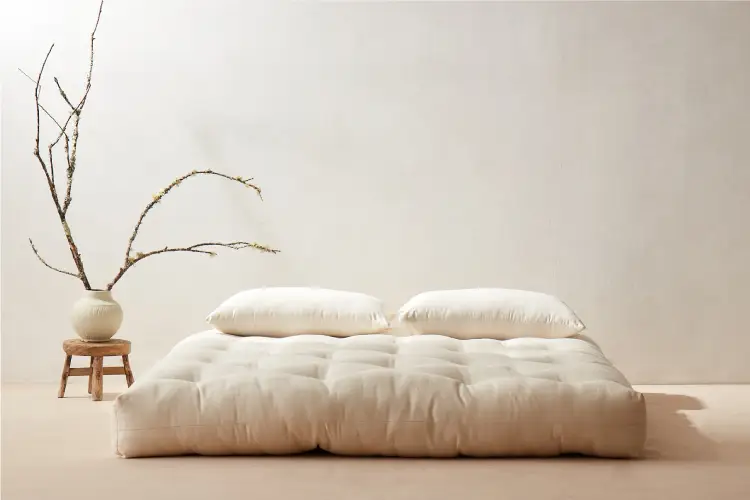
Shopping as well as reading? Here is one current option worth comparing: the Futon Best Selling. Check today’s price, sizing and return terms on the official product page before you order.
Futon Best Selling
- Confirm the manufacturer’s requirements for the upper bunk and lower futon deck separately
- Measure the room with the futon open, not just with it folded into sofa position
My final verdict
A futon bunk is worth considering when the lower sofa will genuinely be used and the room has enough clearance for safe access and full conversion. It is less persuasive where every sleeper needs a permanent bed or where opening the futon would block the room’s main path.
Bottom line: Buy the frame and folding mattress as connected parts of one system. Verify the manual, inspect the hinge and latch design, measure the open layout, and give the futon mattress enough attention to make the lower deck comfortable for its real job.