
 by
by Quick answer: The right low priced mattress is the cheapest specified model that suits your sleep preferences and has usable return terms. Skip vague construction, unsupported quality language and a sale badge that does all the persuading.
- Sleep Foundation defines the strongest affordable options as mattresses that balance cost and quality.
- Mattress Nerd says paying less needn’t mean giving up sound construction and materials.
- RTINGS pairs its affordable selections with guidance on choosing a suitable mattress.
Updated July 2026 · Reviewed for accuracy
Low priced mattresses can be sensible purchases, but the sticker price tells me almost nothing about comfort, construction or ownership value. I’d focus on what’s inside, whether the feel suits you and what happens if the mattress doesn’t work out. The cheapest acceptable option is better value than a mystery mattress bought solely because its discount looked dramatic.
What “low priced” should actually mean
A crossed-out list price says nothing about the foam, coil unit or return terms beneath the cover. It may get your attention, but it isn’t evidence of value. The figure that matters is the current checkout total for the size you need, considered alongside the construction and included services.
I separate “low priced” from “cheap.” Low priced describes what you pay. Cheap describes a product that cuts something you care about, perhaps material transparency, comfort, support, service or return flexibility. An affordable mattress can be basic without being a poor fit.
That distinction matches the better buying guidance available. Sleep Foundation frames affordability as a balance of cost and quality, while Mattress Nerd argues that a lower price doesn’t automatically require sacrificing construction and materials. Neither framing treats the smallest price tag as a complete verdict.
My value test
- The seller explains the main materials and their order.
- The firmness and feel make sense for your preferences.
- The complete delivered cost stays within your budget.
- The return and warranty terms are available before purchase.
- You aren’t paying extra for marketing language you can’t verify.
Price also needs context. A mattress with room delivery, clear support requirements and a workable return process can represent a different proposition from a boxed mattress sold with minimal service. My guide to why mattresses can cost so much explains the broader factors that may sit behind a higher asking price.
That doesn’t mean additional services are automatically worth buying. It means you should identify them before deciding that one mattress is expensive and another is a bargain. Pay for features or service you’ll use, not for a prestige label.
Read the construction before judging the price
A layer order such as cover, comfort material and support core gives you something real to question. A description built only from words such as “luxury,” “advanced” or “premium” doesn’t. Those terms don’t identify the material, how much is used or what supports it.
Start with the support core. The listing should make clear whether the mattress relies on foam, coils or another structure. If coils are used, look for meaningful details about the coil format, zoning and edge treatment. If those details aren’t disclosed, record them as unknown rather than filling the gaps with assumptions.
Then inspect the comfort section. “Memory foam” or “responsive foam” is only a material label. It doesn’t reveal the complete layer arrangement, foam density or how much of the mattress is made from that material. If density and individual layer information are missing, you can’t make a precise durability comparison from the listing alone.
| Construction shown | What to verify | What the description lets you judge |
|---|---|---|
| All-foam design | Layer order, foam types, density disclosure and support requirements | Whether the seller has provided enough detail for a meaningful foam comparison |
| Coil-based design | Coil format, cushioning materials, zoning and edge construction | How clearly the support unit and surrounding materials are explained |
| Hybrid design | The exact comfort materials above the coils and the details of the support unit | Whether “hybrid” describes a transparent build or merely supplies a marketable label |
| Vague multilayer design | The identity and purpose of every major layer | Very little until the seller provides better specifications |
Total mattress height shouldn’t settle the issue. A taller profile doesn’t tell you how the materials are allocated, and it doesn’t turn undisclosed foam into durable foam. Layer-level information is more useful than an impressive silhouette.
I apply the same discipline to covers and manufacturing language. Find out what the cover is made from, whether it can be removed and what cleaning method the seller permits. A country-of-origin statement is a separate question from layer quality; our explainer on how mattress manufacturing locations are disclosed shows the kind of brand-level check buyers can make.
Ask the seller before buying
- What material forms the support core?
- What are the comfort layers, in order?
- Are foam density, layer depth or coil details disclosed?
- Is the cover removable, and how should it be cleaned?
- What type of bed frame or foundation is required?
A seller may not publish every technical detail. That isn’t proof that the mattress is bad, but it limits what you can responsibly conclude. I’d price that uncertainty into the decision instead of treating missing specifications as favorable evidence.
Match the mattress to how it will be used
A guest-room mattress used occasionally doesn’t face the same use pattern as a bed slept on every night. The right level of spending depends partly on frequency of use, who will sleep there and which comfort compromises are acceptable.
For a daily bed, start with your normal sleeping position and familiar comfort preferences. If your shoulder or hip feels crowded on firmer surfaces, don’t buy an extra-firm model merely because it’s cheaper. If you dislike sinking into softer beds, a deeply cushioned listing may be the wrong bargain.
Treat firmness names as seller descriptions, not interchangeable measurements across every brand. Read how the manufacturer describes the feel, then check whether the return policy gives you a reasonable way out if that description doesn’t match your experience. A mattress can be well made and still feel wrong to a particular sleeper.
Priorities by use case
- Daily sleeping: Favor construction disclosure, a suitable feel and clear ownership terms.
- Guest room: Look for a broadly approachable feel and simple care requirements.
- Shared bed: Consider how sensitive each sleeper is to movement, edge feel and differences in firmness preference.
- Temporary setup: Check weight, handling, support requirements and whether the mattress will be moved or stored.
Couples should discuss disagreements before shopping. If one person wants a firmer surface and the other prefers deeper cushioning, the lowest-priced model may magnify the compromise. A returnable mattress with a more neutral feel may be the lower-risk purchase, provided the written policy supports that assumption.
Also check the usable sleeping area if you tend to sit or sleep near the perimeter. Don’t infer reinforced edges from a quilted border or a product photograph. Look for a construction explanation or ask the seller directly.
Temperature preferences deserve the same restraint. Cooling labels are easy to print, but a label alone doesn’t tell you how a complete mattress will feel in your room. Consider the whole sleep setup, including bedding and room conditions, and avoid paying more solely for an unexplained cooling term.
Compare the complete deal, not the sale badge
The same mattress can look inexpensive on a product page and less attractive once delivery, required support and return costs enter the calculation. Compare finalists at the same size, with the same services included and at the same stage of checkout.
Separate included services from optional ones. Room delivery, setup, old-mattress removal, a foundation and a protector may affect the final total. None is automatically essential, but a fair comparison requires you to account for anything you genuinely need.
Read the return policy before ordering. Confirm when the trial begins, whether used mattresses are eligible, who arranges collection and whether fees are deducted from the refund. A generous-sounding policy can still be awkward if its conditions don’t fit your home or location.
Put these items side by side
- Current checkout price for the same mattress size
- Delivery method and services included
- Required frame or foundation
- Return eligibility, collection process and possible fees
- Warranty coverage, exclusions and claim procedure
- Construction details that are confirmed rather than assumed
The warranty deserves its own reading. Find out what the manufacturer defines as a defect, which changes are excluded and whether using the wrong support can affect coverage. A long-sounding warranty has limited practical value if the relevant problem isn’t covered or the claim process is unclear.
Mattress Nerd’s value guidance keeps price in the discussion without separating it from construction and materials. I agree with that approach. A budget is a real limit, but it should narrow the field rather than replace every other buying criterion.
Save a copy of the product description and policies that applied when you ordered. Listings and terms can change, and a saved record gives you something concrete to consult if a specification or service question arises later.
My buying checklist and final verdict
A listing that names no layer materials gives you no sound basis for evaluating construction. Eliminate that uncertainty early. There’s little value in spending hours comparing mattresses whose sellers won’t explain what they are made from.
Begin with a firm spending limit based on the delivered total. Write down the feel you prefer, the size you need, your bed-frame setup and any service you require. Those are buying constraints, not details to resolve after payment.
Next, remove listings that miss your non-negotiables. This is faster and more reliable than choosing a favorite from photographs and then trying to excuse its weak points. A low-priced mattress should survive the same basic scrutiny as a costly one.
Warning signs I wouldn’t ignore
- The description relies on proprietary names without identifying the underlying materials.
- The sale language is detailed, but the construction language is vague.
- The comparison uses different sizes, services or checkout conditions.
- The return policy is unavailable until after purchase.
- The seller can’t explain the required foundation or warranty exclusions.
- Comfort claims are presented as universal rather than subjective.
If verified owner reviews are available, use them to identify recurring questions worth investigating. Don’t treat a glowing comment or an angry complaint as a controlled comparison. Look for descriptions tied to a clear use case, then confirm objective policy or construction details with the seller.
I’d rather buy a simple mattress with understandable materials than a more elaborate model built from undisclosed layers. Complexity isn’t automatically quality, just as a low price isn’t automatically value. Transparency makes the tradeoffs visible.
My verdict is straightforward: low priced mattresses are worth considering when their construction, fit and ownership terms stand up without help from the discount banner. Buy the least expensive mattress that meets your real requirements. If the listing leaves essential questions unanswered, keep the money and keep looking.
ONE OPTION WORTH COMPARING
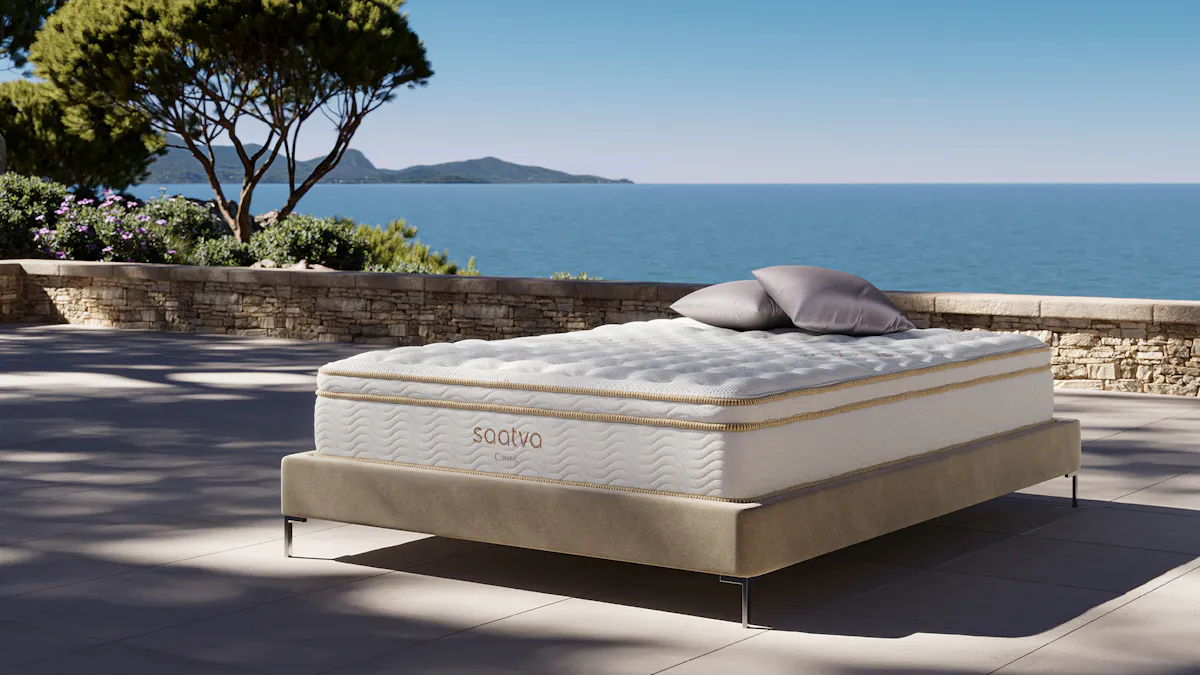
Shopping as well as reading? Here is one current option worth comparing: the Saatva Classic. Check today’s price, sizing and return terms on the official product page before you order.
Saatva Classic
- 365-night home trial and lifetime warranty, per saatva.com
- Handcrafted in the USA, free white-glove delivery
- Flexible financing available
FAQ
Are low priced mattresses always poor quality?
No. Price alone can’t establish material quality, comfort or durability. Judge the disclosed construction, suitability for your preferences and written policies before deciding whether a low price represents value.
Which mattress construction is best on a limited budget?
There’s no universal winner between foam, coil-based and hybrid designs. The better choice is the construction that suits your preferred feel and is described clearly enough for you to understand what you’re buying.
Is a thicker mattress automatically better?
No. Overall height doesn’t reveal foam density, individual layer allocation or coil construction. I’d give more weight to a clear layer breakdown than to a tall profile used as a quality claim.
Should I buy a low-priced mattress online or in a store?
Neither channel wins by default. Compare the complete price, available construction information, delivery method and return process, then choose the seller whose terms are clearest and most practical for you.
How long should a low-priced mattress last?
No defensible lifespan can be inferred from price alone. A durability assessment requires meaningful material details, a clear construction and an understanding of how often and under what conditions the mattress will be used.